
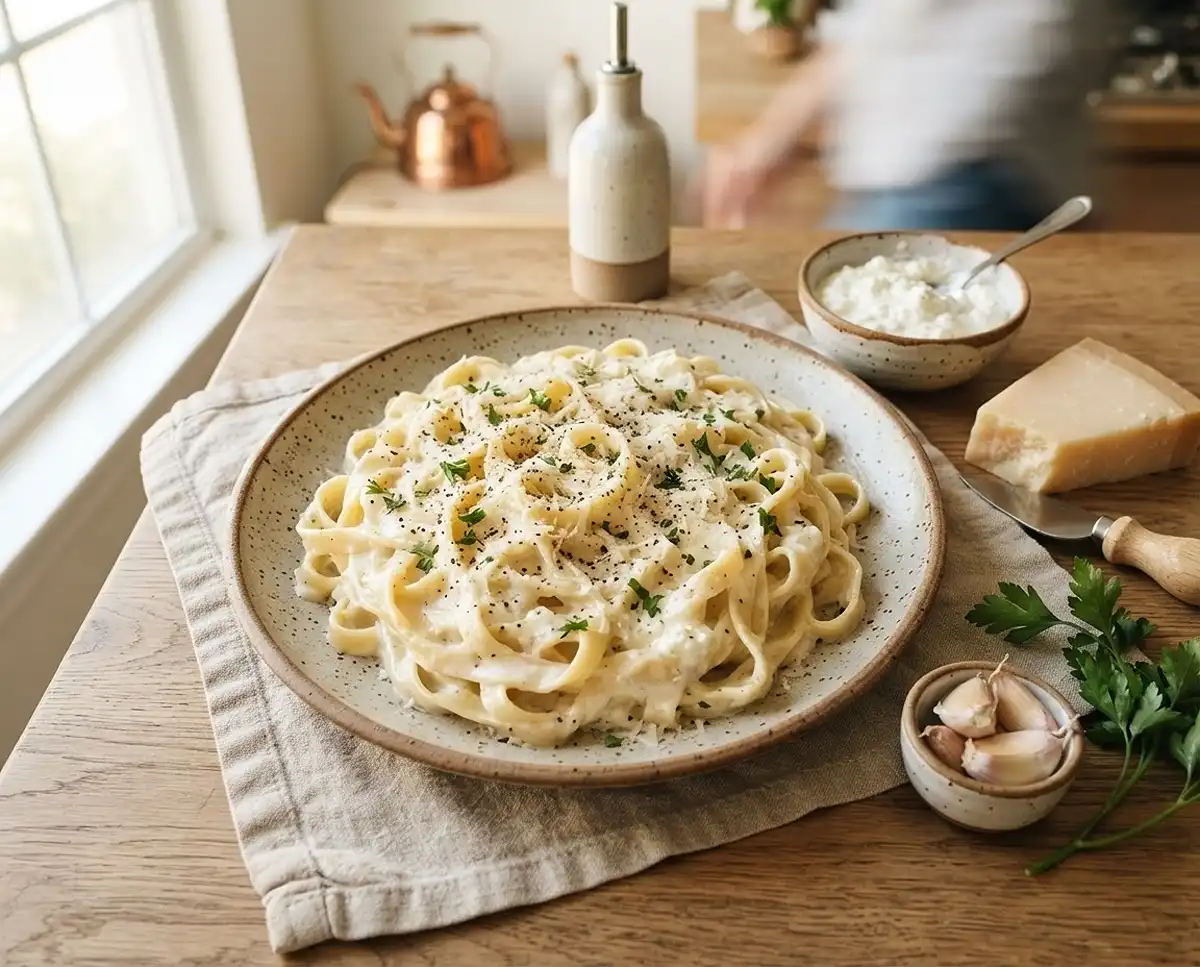
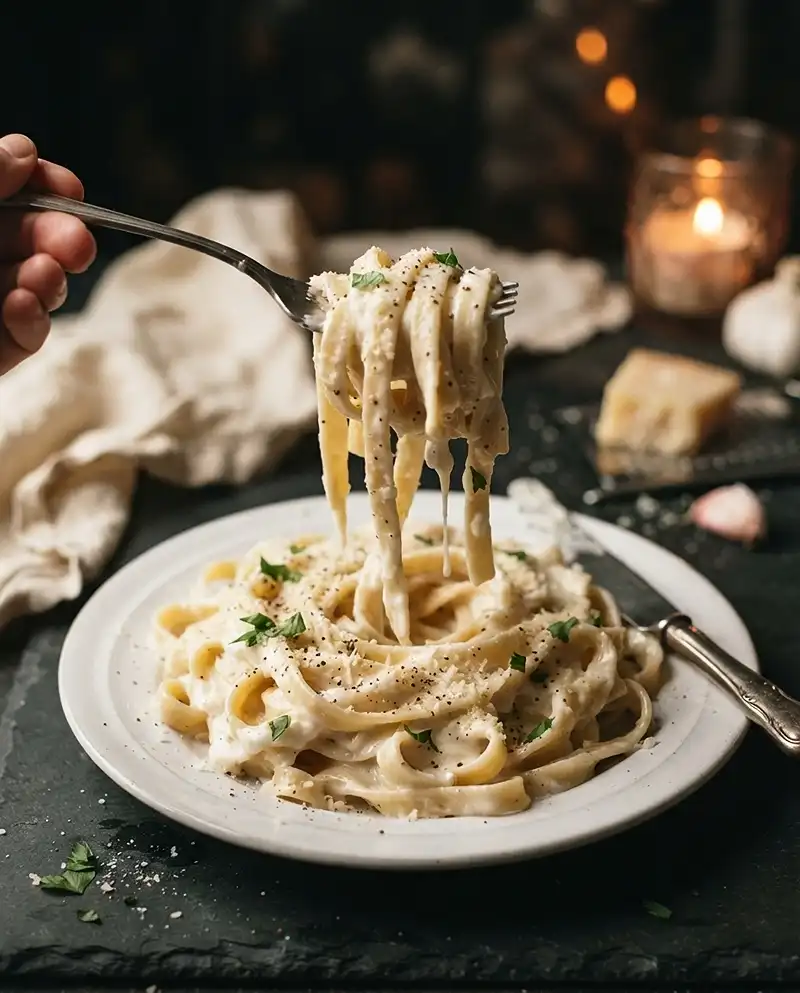
This alfredo cottage cheese sauce recipe is creamy, high-protein, and ready in about 15 minutes flat, no heavy cream, no butter bomb, no guilt. Here’s exactly how I make it on a random Tuesday.
Okay so real talk: the first time someone told me to blend cottage cheese into pasta sauce, I made a face. A cottage cheese alfredo sauce? Sounded like a fitness influencer’s fever dream. But I tried it anyway on a lazy weeknight, and honestly, it kind of ruined regular alfredo for me a little bit.
I’d just come back from the gym, staring down a tub of cottage cheese and half a box of pasta, not really wanting to choose between “healthy” and “actually good.” Turns out I didn’t have to choose. Ten minutes later I was standing at the stove eating straight out of the skillet, which is always a good sign.
Table of Contents
Quick Overview: Why This Sauce Works
This is a cottage cheese alfredo sauce easy enough for a Tuesday night, but tastes rich enough for a Sunday dinner. It blends up silky smooth, clings to noodles like it’s supposed to, and sneaks in a ridiculous amount of protein without tasting like a protein shake pretending to be dinner.
No roux, no cream, no babysitting a pot while whisking your arm off. Just a blender, a skillet, and pasta water doing its magic trick. It’s the kind of cottage cheese alfredo sauce high protein eaters have been quietly obsessed with for a while now, and I get why.
What really sold me is how forgiving it is. Traditional alfredo can seize up or turn greasy if the heat is even slightly off, but this version basically wants to work in your favor. Keep it gentle, and it comes together almost every single time.
Alfredo Cottage Cheese Sauce
Equipment
- Large pot
- Blender or food processor
- Wide skillet
- Colander
- measuring cups
- measuring spoons
- Tongs or spoon
Ingredients
Pasta
- 8 oz fettuccine noodles or pasta of choice
Cottage Cheese Alfredo Sauce
- 16 oz low-fat cottage cheese about 2 cups; saltiness varies by brand
- ½ cup grated Parmesan cheese plus more for serving
- ½ cup milk 2% milk used; add more as needed to loosen sauce
- 1 clove garlic roughly chopped, about 1 teaspoon
- as needed kosher salt taste before adding because cottage cheese and Parmesan can be salty
- to taste freshly ground black pepper
- for topping fresh parsley chopped
Instructions
- Bring a large pot of salted water to a boil. Cook the fettuccine or pasta of choice according to package directions until al dente.
- Before draining the pasta, reserve 1 cup of the starchy pasta water. Drain the pasta and set it aside.
- While the pasta cooks, add the cottage cheese, grated Parmesan, milk, and chopped garlic to a blender or food processor.
- Blend until completely smooth, with no visible curds or lumps. The sauce should look pale, creamy, and silky.
- Pour the blended cottage cheese sauce into a wide skillet over low heat.
- Add the drained pasta to the skillet and toss gently to coat. Add splashes of reserved pasta water as needed until the sauce is silky and clings to the noodles.
- Keep the heat low while combining the sauce and pasta. Do not boil the sauce, or it may tighten, split, or turn grainy.
- Taste the pasta before adding salt, since cottage cheese brands vary in saltiness. Season with kosher salt only if needed.
- Finish with freshly ground black pepper, chopped parsley, and extra Parmesan cheese if desired. Serve warm.
Notes
What You’ll Need
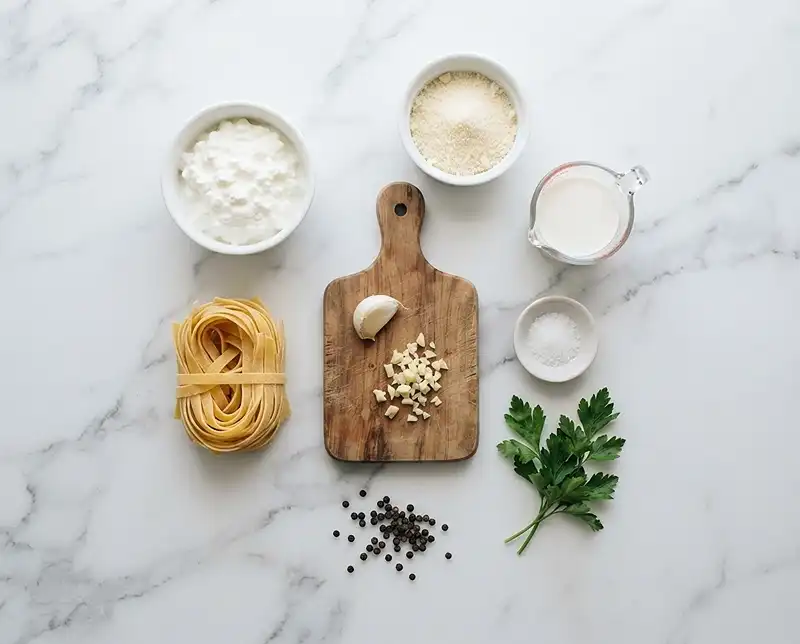
Here’s the full lineup for this alfredo sauce made with cottage cheese recipe. Nothing fancy, nothing you can’t grab at a regular grocery store.
| For the Pasta | Amount |
|---|---|
| Fettuccine noodles (or pasta of choice) | 8 ounces |
| For the Sauce | Amount |
|---|---|
| Low-fat cottage cheese | 1 (16-ounce) container, about 2 cups |
| Grated Parmesan cheese, plus more for serving | ½ cup |
| Milk (I used 2%) | ½ cup |
| Garlic clove, roughly chopped | 1 clove, about 1 teaspoon |
| Kosher salt | As needed |
| Fresh parsley, chopped | For topping |
| Freshly ground black pepper | To taste |
Quick note on the cottage cheese: brands vary a lot in saltiness, which matters more than you’d think here. Some are basically pre-salted for you, others need help. We’ll deal with that in a second.
Why Cottage Cheese Works So Well Here
Cottage cheese has a mild, slightly tangy flavor and a naturally creamy texture once it’s blended, which is exactly why it disappears so seamlessly into sauces. It’s also loaded with protein per serving compared to heavy cream, which is basically just fat and calories with none of the nutritional payoff.
Combine that with a good, punchy Parmesan and a little garlic, and you get something that tastes like it took way more effort than it actually did. Nobody at your table needs to know how easy this alfredo sauce made with cottage cheese recipe really is.
How to Make Alfredo Cottage Cheese Sauce
Step 1: Cook the Pasta (and Save That Water)
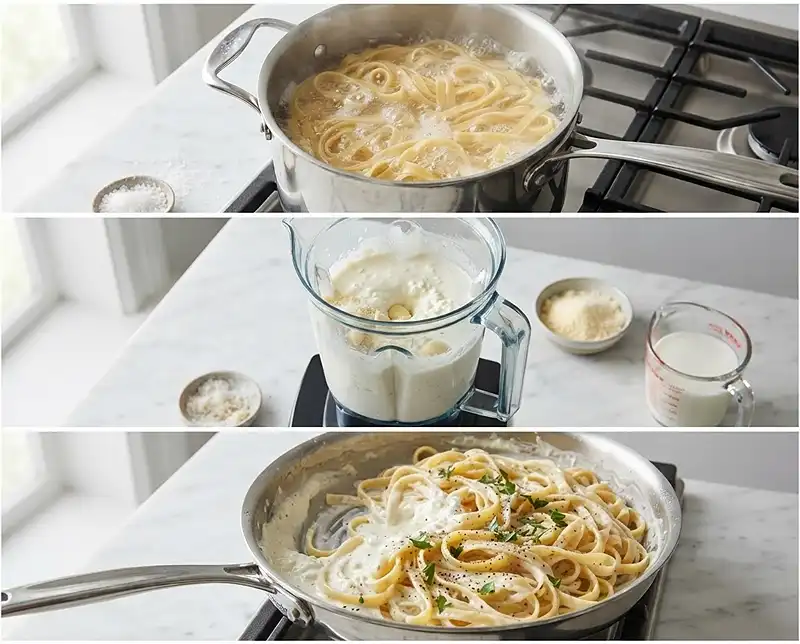
Bring a large pot of salted water to a boil and cook your pasta according to the package directions, until it’s al dente. Before you drain it, scoop out and save 1 cup of that starchy pasta water. Don’t skip this, it’s basically the glue that makes the whole sauce come together later.
Step 2: Blend the Sauce
While the pasta cooks, toss the cottage cheese, Parmesan, milk, and garlic into a blender or food processor. Blend until it’s completely smooth, no lumps, no curds, just a pale, creamy sauce that looks suspiciously like real alfredo. This step is oddly satisfying to watch happen.
Step 3: Bring It Together
Pour your blended sauce into a wide skillet over low heat. Add the drained noodles and toss gently to coat everything, thinning things out with splashes of that reserved pasta water until it’s silky and clings to the pasta the way you want.
Here’s the one rule that matters most: keep the heat low. If this cottage cheese alfredo sauce gets too hot too fast, it can tighten up and curdle on you, and nobody wants grainy alfredo. Low and slow, my friend.
Step 4: Taste, Season, Serve
Give it a taste before you add any salt, since cottage cheese brands are all over the map on saltiness. Add kosher salt only if it actually needs it. Finish with cracked black pepper, a scatter of fresh parsley, and extra Parmesan if you’re feeling generous with yourself, which you should be.
Tips, Variations, and Troubleshooting
Getting That Silky Texture
The blender step is non-negotiable if you want this cottage cheese alfredo sauce easy and smooth instead of chunky. A high-powered blender gets it velvety in under a minute. A food processor works too, it just might need an extra thirty seconds of patience.
Easy Swaps and Add-Ins
Want more protein without any extra effort? Toss in shredded rotisserie chicken or some sautéed shrimp at the very end. Sneaking in veggies works great too, wilted spinach or steamed broccoli both melt right into this sauce like they belong there.
If you’re out of fettuccine, this works with basically any pasta shape you’ve got. Penne, rigatoni, even spaghetti if that’s what’s in the pantry. This alfredo cottage cheese sauce recipe really doesn’t care what shape it’s clinging to.
If Your Sauce Curdles or Splits
If the sauce looks grainy or separated, your heat was probably too high. Pull it off the burner immediately, stir in a splash of cold pasta water, and whisk gently. It usually smooths right back out. Next time, just keep that flame on low the whole way through.
Boosting the Protein Even Further
This is already a cottage cheese alfredo sauce high protein eaters love, thanks to the cottage cheese and Parmesan combo. If you’re chasing bigger numbers, a scoop of unflavored protein powder blended in with the sauce is surprisingly undetectable in flavor.
What to Serve It With
This sauce is rich enough to stand on its own, but it also plays nicely with a simple green salad or some roasted vegetables on the side. Garlic bread is basically mandatory in my house, mostly for scraping up any sauce left behind in the skillet.
If you want to turn this into more of a full meal, grilled chicken or seared salmon on top works beautifully. The mild flavor of the sauce means it never fights with whatever protein you’re pairing it with.
Storage, Reheating, and No-Waste Ideas
| Method | How Long It Lasts |
|---|---|
| Refrigerator (airtight container) | Up to 3 days |
| Freezer | Not recommended, sauce can separate when thawed |
To reheat, warm it gently in a skillet over low heat with a splash of milk or reserved pasta water to loosen it back up. Skip the microwave on high power if you can, since blasting it with heat is the fastest way to end up with a grainy texture.
No-waste tip: leftover sauce makes a fantastic dip for garlic bread, or a spread for a next-day pasta bake. Got extra cottage cheese left in the tub? It’s also the star of this high-protein cottage cheese pizza crust, so nothing has to go to waste.
Cottage cheese itself is a genuinely solid protein source, if you want the full nutritional breakdown straight from the source, USDA FoodData Central has all the numbers.
Alfredo Cottage Cheese Sauce Recipe FAQs
Can I make this cottage cheese alfredo sauce ahead of time?
Yes, you can blend the sauce up to 2 days ahead and store it covered in the fridge. Warm it gently over low heat with a splash of milk before tossing with freshly cooked pasta.
Does cottage cheese alfredo sauce actually taste like cottage cheese?
Not really. Once it’s blended smooth and mixed with Parmesan and garlic, it tastes rich and cheesy, closer to a lightened-up traditional alfredo than anything else.
Can I use full-fat cottage cheese instead of low-fat?
Absolutely, full-fat cottage cheese works just as well and will make the sauce slightly richer. Just adjust the milk a touch since full-fat versions can be a bit thicker.
Why did my sauce turn out grainy?
Grainy sauce almost always means the heat was too high. Keep it on low the entire time you’re combining it with the pasta, and stir in extra pasta water if it starts to look tight.
Is this cottage cheese alfredo sauce high protein enough for a post-workout meal?
Yes, between the cottage cheese and Parmesan, one serving packs a solid amount of protein, making it a satisfying option after a workout.
Final Thoughts
This alfredo cottage cheese sauce recipe is one of those rare wins where “healthier” doesn’t mean “sadder dinner.” It’s creamy, it’s fast, and it makes weeknight pasta feel like an actual treat instead of a chore.
If you give this a try, snap a photo and share it on Pinterest, I’d genuinely love to see your version. Drop a comment and let me know what you thought, or if you tried any fun swaps of your own.
Looking for more easy kitchen wins? Check out this boiled egg peeling hack or these fun meringue ducks for your next kitchen project.
And if you’re into crispy desserts, this air fryer meringue is a fun one too.