
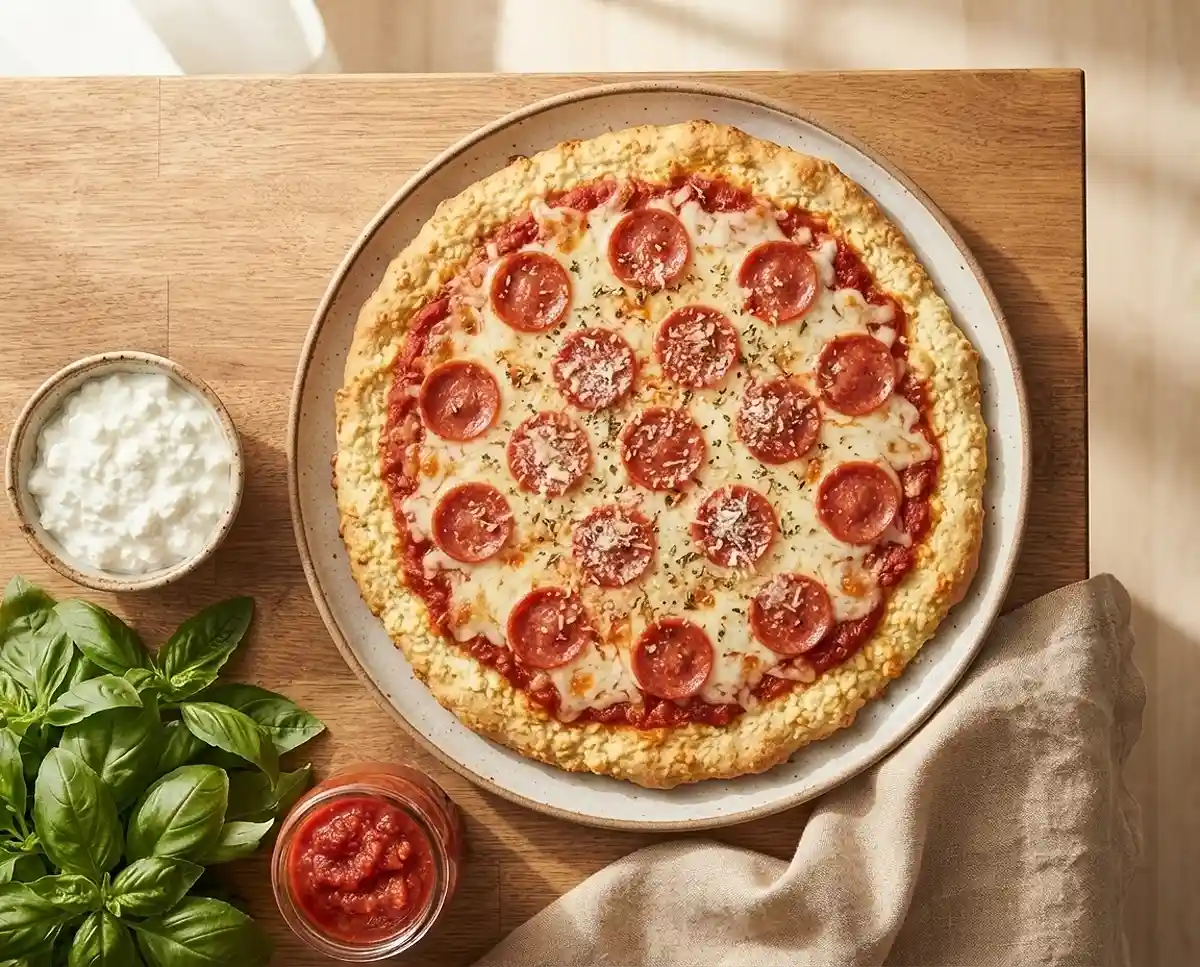
This high protein cottage cheese pizza crust is the easy, blender-free way to get a golden, cheesy pizza night without the carb coma. Just five pantry staples, one pan, and pizza that actually loves you back.
Okay so real talk, I was today years old when I finally admitted my regular pizza habit was wrecking my macros, and I was NOT willing to give up pizza night to fix it. Enter this high protein cottage cheese pizza crust, which honestly tastes way better than it has any right to.
Table of Contents
Why You’ll Love This High Protein Cottage Cheese Pizza Crust
Here’s the quick rundown before we get into the fun part. This high protein cottage cheese pizza recipe swaps out the flour-heavy dough for a simple cottage cheese and egg base, so you get all the cheesy, saucy pizza vibes with a serious protein boost.
No yeast, no rising time, no kneading your countertop into a flour tornado. You just mix, spread, bake, top, and bake again. It’s basically a weeknight cheat code.
- Naturally high in protein thanks to cottage cheese and eggs
- Lower in carbs than a traditional pizza crust
- Ready with pantry staples, no special equipment needed
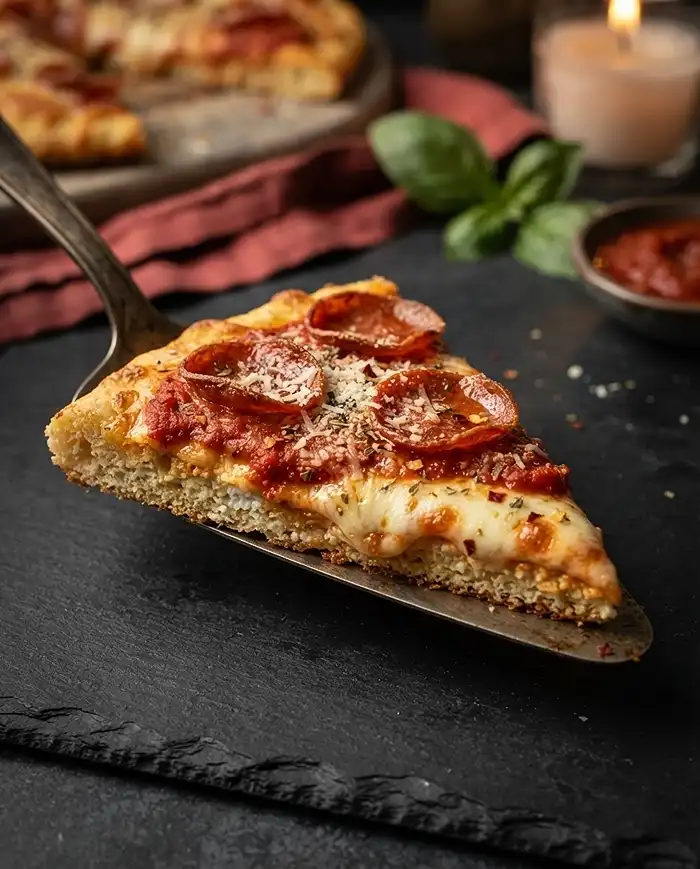
- Crispy edges, soft middle, totally customizable toppings
If you like the idea of turning simple ingredients into something a little unexpected, you’ll probably also enjoy this fun meringue ducks recipe, which is proof that basic ingredients can go a long way.
High Protein Cottage Cheese Pizza Crust
Equipment
- Sheet pan
- Parchment paper
- Large mixing bowl
- spatula
- Spoon
- measuring cups
- measuring spoons
- Paper towel
- Knife or pizza cutter
Ingredients
Cottage Cheese Pizza Crust
- 1 cup cottage cheese low-fat small curd recommended; pat dry with a paper towel if watery
- 2 large eggs room temperature blends easier
- ¼ cup flour of your choice all-purpose flour used; gluten-free blend may be substituted
- 1 tsp onion powder
- 1 tsp garlic powder
- ½ tsp dried oregano
- to taste black pepper optional
Toppings
- ½ cup pizza sauce or marinara use your favorite jarred sauce
- ¾ cup low-fat pizza cheese blend or shredded mozzarella
- 2 oz turkey pepperoni or your favorite pizza topping
- 1 tbsp grated parmesan optional, for garnish
Instructions
- Preheat the oven to 350F and line a sheet pan with parchment paper. Do not skip the parchment, because the cottage cheese crust can stick to bare metal.
- In a large bowl, add the cottage cheese, eggs, flour, onion powder, garlic powder, dried oregano, and black pepper if using.
- Stir everything together with a spatula until fully combined. The mixture does not need to be blended smooth; an even texture is enough.
- Transfer the crust mixture onto the prepared sheet pan. Use a spoon or spatula to spread it into a circle, keeping it thick enough to hold its shape and stay soft in the middle.
- Bake the crust for 25 to 30 minutes, or until slightly golden brown on top.
- Remove the crust from the oven and let it rest for 1 to 2 minutes so it can firm up before adding toppings.
- Spread the pizza sauce evenly over the baked crust, leaving a small border around the edge if desired.
- Sprinkle the low-fat pizza cheese blend or shredded mozzarella over the sauce, then layer the turkey pepperoni on top.
- Return the pizza to the oven and bake for another 5 to 7 minutes, or until the cheese is fully melted and lightly bubbling at the edges.
- Finish with grated parmesan if using, then slice and serve warm while the cheese is melted and stretchy.
Notes
Ingredients You’ll Need
This high protein cottage cheese pizza crust recipe uses two little groups of ingredients: the crust itself, and the toppings that make it feel like actual pizza. Nothing fancy, nothing hard to find.
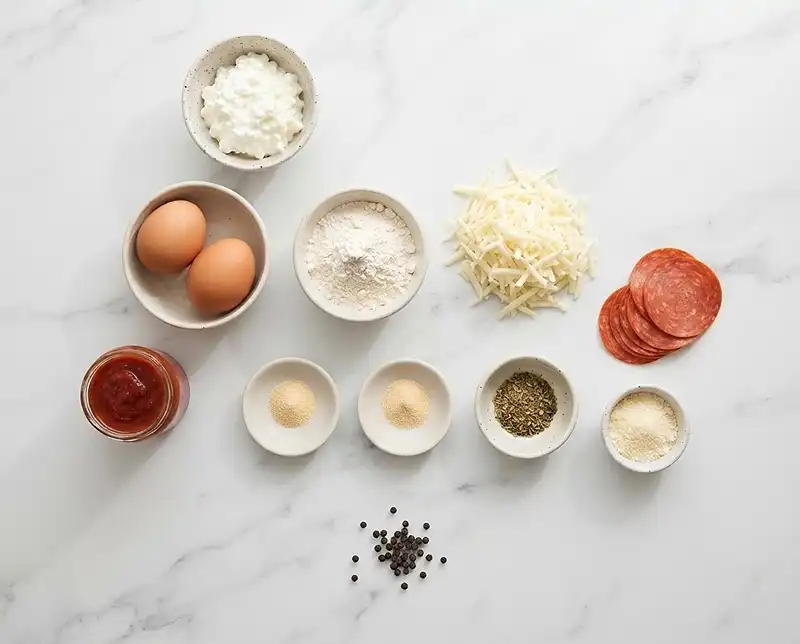
For The Crust
| Ingredient | Amount | Notes |
|---|---|---|
| Cottage cheese | 1 cup | I used low-fat, small curd |
| Large eggs | 2 | Room temperature blends easier |
| Flour of your choice | 1/4 cup | I used all-purpose |
| Onion powder | 1 teaspoon | |
| Garlic powder | 1 teaspoon | |
| Dried oregano | 1/2 teaspoon | |
| Black pepper | Optional | To taste |
For The Toppings
| Ingredient | Amount | Notes |
|---|---|---|
| Pizza sauce or marinara | 1/2 cup | Use your favorite jarred sauce |
| Low-fat pizza cheese blend | 3/4 cup | Or shredded mozzarella |
| Turkey pepperoni | 2 ounces | Or your favorite topping |
| Grated parmesan | 1 tablespoon | Optional, for garnish |
The cottage cheese is really the star of this high protein cottage cheese pizza recipe, since it’s what gives the crust its structure and that protein punch without needing a bunch of processed substitutes.
According to Healthline’s overview of cottage cheese benefits, it’s a solid source of protein and calcium in a pretty small serving.
How To Make High Protein Cottage Cheese Pizza Crust
This part is genuinely so simple, you could do it half asleep on a Tuesday, which honestly is exactly when I usually make it.
Mix The Crust Base
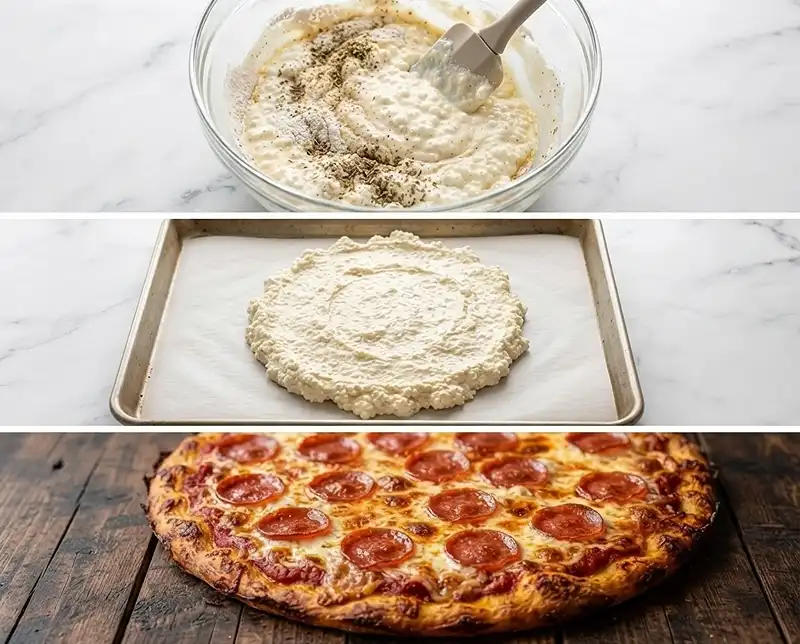
Preheat your oven to 350 degrees F and line a sheet pan with parchment paper. This is not the time to skip the parchment, trust me, cottage cheese crust and bare metal pans are not friends.
In a large bowl, add the cottage cheese, eggs, flour, onion powder, garlic powder, and dried oregano. A little black pepper here is optional but honestly kind of great.
Grab a spatula and stir everything together until it’s fully combined. You don’t need to blend it smooth, just a nice, even texture is all you’re after here.
Shape And Bake The Crust
Transfer the mixture onto your prepared sheet pan. Using a spoon or spatula, spread it out into a circle, kind of like you’re frosting a very lazy cake.
“Don’t spread it too thin,” is the one tip I’ll really hammer home here, because a thin crust turns crackery instead of pizza-like. You want enough thickness to hold its shape and stay a little soft in the middle.
Bake for 25 to 30 minutes, or until it turns slightly golden brown on top. Pull it out and let it sit for a minute or two, it needs a second to firm up before toppings go on.
Add Toppings And Finish Baking
Spread the pizza sauce evenly over your baked crust, leaving a little border around the edge if you’re feeling fancy. Then sprinkle that pizza cheese blend all over, right to the edges.
Layer on the turkey pepperoni, then slide it back into the oven for another 5 to 7 minutes, or until the cheese is fully melted and maybe just barely bubbling at the edges.
Finish it off with a sprinkle of grated parmesan or a pinch of chili flakes if you’re feeling spicy. Slice it up and dig in while it’s warm and the cheese is still doing that stretchy thing.
Expert Tips, Variations, And Troubleshooting
Expert Tips
Pat your cottage cheese with a paper towel first if it looks watery, since extra liquid can make the crust take longer to set. Small curd cottage cheese blends into a smoother texture than large curd, so grab that if you have a choice at the store.
Let the crust rest those extra couple minutes after the first bake. It firms up as it cools slightly, which makes it way easier to top and slice without it falling apart.
Variations To Try
Swap the turkey pepperoni for cooked chicken sausage, sautéed veggies, or even a handful of baby spinach if you want to sneak in some greens. This high protein cottage cheese pizza recipe is genuinely a great base for whatever you’ve got in the fridge.
Try adding a pinch of red pepper flakes or Italian seasoning into the crust mixture itself for extra flavor. You can also swap all-purpose flour for a gluten-free blend if that fits your kitchen better.
Troubleshooting
If your crust seems soggy in the middle, it probably needed a few extra minutes in the first bake, ovens really do vary that much. Every oven runs a little different, so treat the bake time as a range, not a rule.
If it’s cracking as you slice it, that usually means it was spread a touch too thin. Next time, aim for a slightly thicker circle and give it that full resting time before topping.
Storage, Reheating, And No-Waste Tips
| Method | How Long | Notes |
|---|---|---|
| Refrigerator | Up to 3 days | Store in an airtight container |
| Freezer | Up to 1 month | Wrap slices individually before freezing |
| Room temperature | Not recommended | Refrigerate within 2 hours of baking |
To reheat, pop slices in the oven or air fryer at 350 degrees F for about 8 to 10 minutes, until warmed through and the cheese is soft again. The microwave works in a pinch, but you’ll lose that nice crisp edge.
Got leftover cottage cheese from the tub? Stir it into scrambled eggs, blend it into a pasta sauce, or use it as a dip base with some herbs mixed in. Nothing here needs to go to waste.
If you’re into other clever kitchen tricks that make cooking easier, you might like this boiled egg peeling hack, it’s a total game changer for meal prep days.
Frequently Asked Questions
Can I make this high protein cottage cheese pizza crust ahead of time?
Yes, you can bake the crust portion up to a day in advance and store it covered in the fridge. Add sauce, cheese, and toppings right before the final bake.
Does this crust taste like cottage cheese?
Once it’s baked and topped with sauce and cheese, the cottage cheese flavor mostly disappears. What’s left is a mild, slightly savory base that carries the toppings really well.
Can I blend the cottage cheese for a smoother crust?
Absolutely, if you prefer a smoother texture, pulse the cottage cheese in a blender or food processor before mixing it with the other ingredients. It is not required, but it does make for an even more uniform crust.
Is this recipe good for meal prep?
Yes, this high protein cottage cheese pizza recipe reheats well, making it a solid meal prep option. Bake a batch, slice it, and reheat individual portions throughout the week.
Can I double the recipe for a bigger crowd?
Definitely, just double the ingredients and use a larger sheet pan or two pans. You may need a few extra minutes in the oven since the crust will be thicker.
Conclusion
This high protein cottage cheese pizza crust proves you really can have pizza night and still hit your protein goals without feeling like you’re eating cardboard. It’s simple, it’s cheesy, and it comes together with stuff you probably already have in the fridge.
If you’re curious about how versatile eggs and simple ingredients can be, this air fryer meringue recipe is another fun one to try.
And if you want to dig deeper into the nutrition side of things, the USDA FoodData Central database is a great resource for checking exact protein counts.
Give this high protein cottage cheese pizza crust a try this week, and if you love it as much as I do, pin it on Pinterest so you don’t lose the recipe. I’d genuinely love to hear how it turns out for you in the comments below.
