
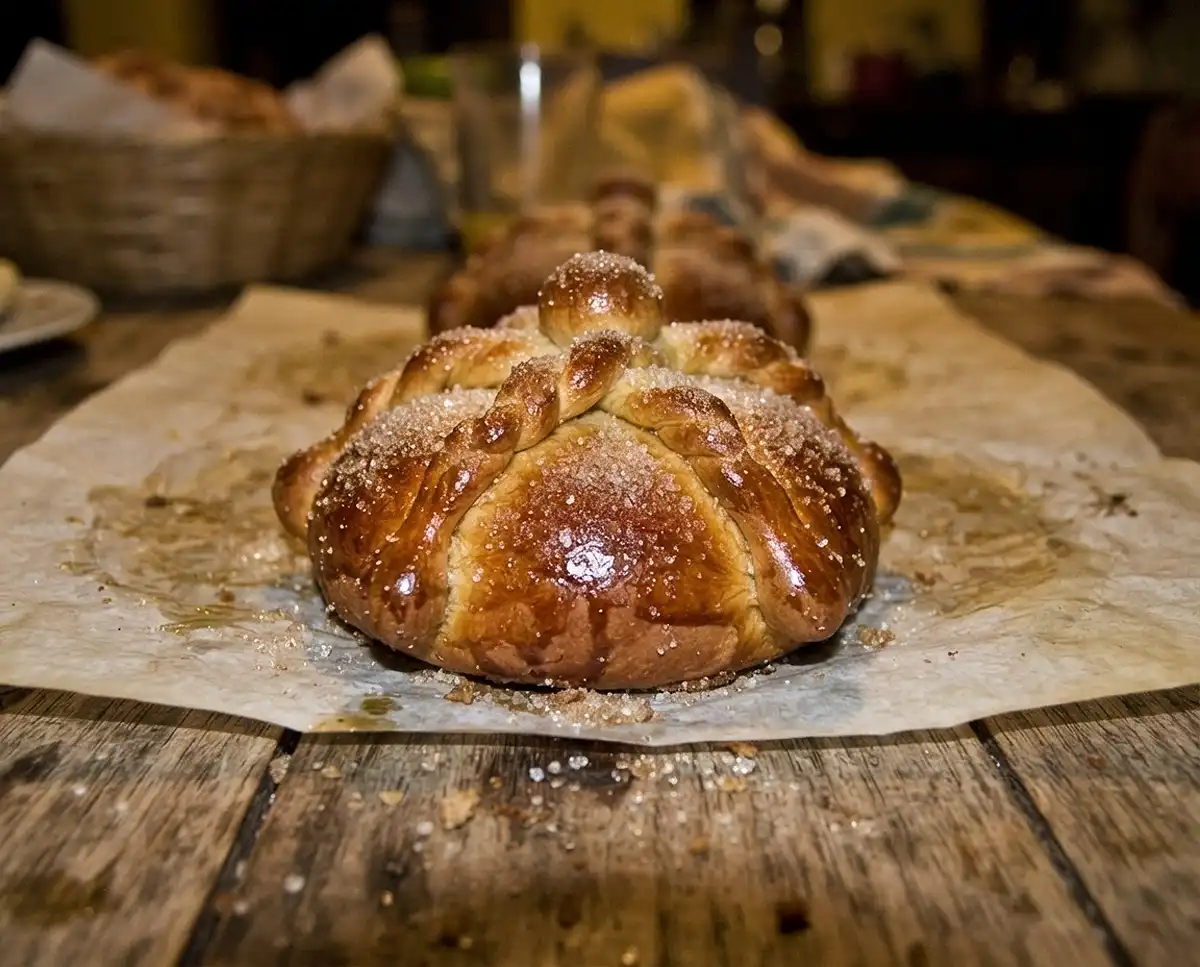
This pan de muerto recipe makes soft, orange-scented Mexican bread with a sugar crust you’ll want to make again and again. Get the full walkthrough.
Okay, confession time: I started this pan de muerto recipe to be fancy for a holiday, and now I make it just because. The dough is buttery, the orange zest smells like sunshine, and the sugar crust crackles in the best way. It smells so good my neighbors might show up uninvited.
Table of Contents
Here’s the Deal With This Pan de Muerto Recipe
Pan de muerto is the Mexican bread that appears around Día de los Muertos, and it’s basically a cozy sweet bread wearing a bone costume. The dough is enriched with butter and eggs, perfumed with orange zest and anise, and finished with a sugar coating that crunches when you bite in.
Here’s why this one works. The dough is soft without being fussy, the bones are easier to shape than they look, and the flavor is warm, citrusy, and just sweet enough. It’s the dead bread recipe I’d hand to any friend who’s nervous about yeast.
A little context makes it even better. Families set this bread on ofrendas for los muertos, then share it with the living.
The Smithsonian has a great read on how Mexico’s bread of the dead blends Indigenous and Catholic traditions, and it’ll make every bite feel a little more meaningful.
Pan de Muerto Recipe: Fluffy Mexican Bread You’ll Love
Equipment
- Stand mixer with dough hook (optional)
- small bowl
- Large mixing bowl
- Instant-read thermometer
- Large baking sheet
- Parchment paper
- Fine grater or zester
- Pastry brush
- Kitchen scale (optional)
Ingredients
Dough
- ½ cup + 1 tablespoon granulated sugar divided
- 2 ¼ teaspoons active dry yeast
- ⅔ cup whole milk warmed to 110-115°F
- 2 ½ cups bread flour
- 2 ½ cups all-purpose flour
- 1 teaspoon fine salt
- 1 teaspoon anise seed
- 1 cup unsalted butter melted
- 4 large eggs
- 2 teaspoons orange zest about 2 medium oranges
- oil or cooking spray for greasing the bowl
Topping
- 2 tablespoons unsalted butter melted
- 1 teaspoon orange zest about 1 orange
- ½ cup granulated sugar for sprinkling or rolling
Instructions
Dough
- In a small bowl, whisk 1 tablespoon of the sugar with the yeast and warm milk. Cover and let it sit for 10 minutes, until very foamy.
- In a stand mixer bowl, whisk together the bread flour, all-purpose flour, remaining sugar, salt, and anise seed. Add the melted butter, eggs, orange zest, and yeast mixture. Mix with the dough hook on medium-low for 6 to 8 minutes, or knead by hand, until the dough is smooth and elastic.
- Put the dough in a large greased bowl, cover with plastic wrap, and let it rise in a warm spot until doubled, about 2 hours.
Shape and Bake
- Line a large baking sheet with parchment. Divide the dough into 6 equal pieces and cut about a quarter off each one to use for decorations. Roll the larger pieces into smooth balls and space them a few inches apart on the sheet.
- From each small piece, pinch off a cherry-tomato-sized ball. Roll the rest into a 12-inch rope and cut it in half. Pinch each rope in three spots to look like a bone. Lay 2 bones over each loaf in an X, pressing the ends firmly into the base, then press the small ball into the center.
- Cover loosely with a kitchen towel and let the loaves rise for 1 ½ hours, until puffy.
- Preheat the oven to 350°F. Bake for 35 minutes, until golden brown. If the bones darken too fast, tent them loosely with foil at around 25 minutes. Let the loaves cool for 30 minutes.
Topping
- Whisk the melted butter with the orange zest. Brush it generously over the cooled loaves, then sprinkle with sugar or roll them in it.
Notes
Pan de Muerto Ingredients (and a Few Strong Opinions)
I grouped everything so you can set up your counter like a proper baking show. Measure it all before you start, because yeast dough waits for no one.
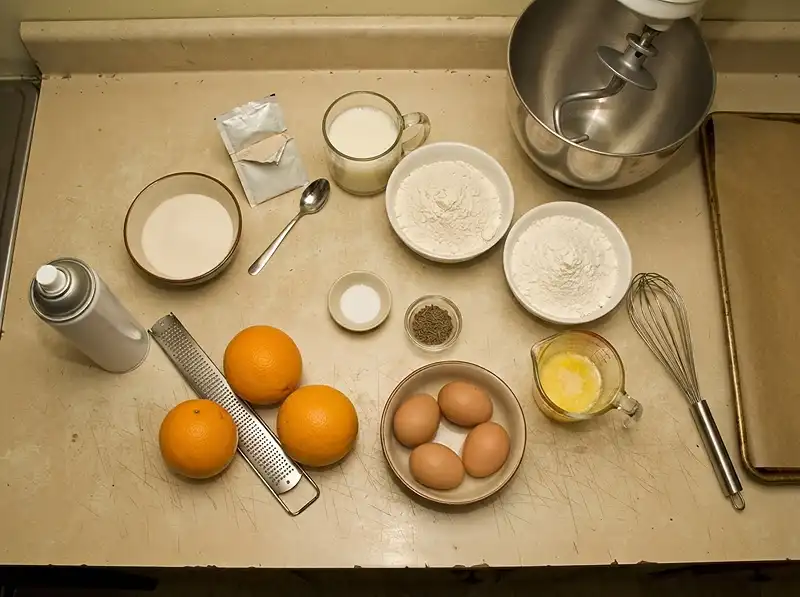
Dough Ingredients
| Ingredient | Amount | Quick note |
|---|---|---|
| Granulated sugar, divided | ½ cup + 1 tablespoon | 1 tablespoon wakes the yeast, the rest sweetens the dough |
| Active dry yeast | 2 ¼ teaspoons | Check the date, old yeast is a sad yeast |
| Warm whole milk | ⅔ cup (110-115°F) | Warm like a bath, never hot |
| Bread flour | 2 ½ cups | Gives the loaves that bouncy chew |
| All-purpose flour | 2 ½ cups | Keeps the crumb tender |
| Fine salt | 1 teaspoon | Balances the sweetness |
| Anise seed | 1 teaspoon | The quiet, licorice-y signature |
| Unsalted butter, melted | 1 cup | Yes, a whole cup, and yes, it’s worth it |
| Large eggs | 4 | Richness and golden color |
| Orange zest | 2 teaspoons (about 2 medium oranges) | Zest only, skip the white pith |
| Oil or cooking spray | As needed | For greasing the rising bowl |
Topping Ingredients
| Ingredient | Amount | Quick note |
|---|---|---|
| Unsalted butter, melted | 2 tablespoons | The glue for the sugar |
| Orange zest | 1 teaspoon (about 1 orange) | A second hit of citrus perfume |
| Granulated sugar | ½ cup | For sprinkling or rolling |
A few quick thoughts on the stars. Anise is what makes this classic Mexican bread taste like itself, so don’t leave it out unless you truly hate licorice. Fresh orange zest also matters more than you’d think, because bottled stuff just can’t deliver that perfume.
Using both bread flour and all-purpose flour is my favorite trick here. The bread flour brings structure so the loaves hold their shape, while the all-purpose keeps this sweet bread soft instead of tough. It’s a little like having your cake and chewing it too.
How to Make Pan de Muerto Step by Step
Take a deep breath. This looks like a lot on paper, but it’s just a few relaxed stages with plenty of waiting around. That’s when you get to sip coffee and smell your kitchen turning into a bakery.
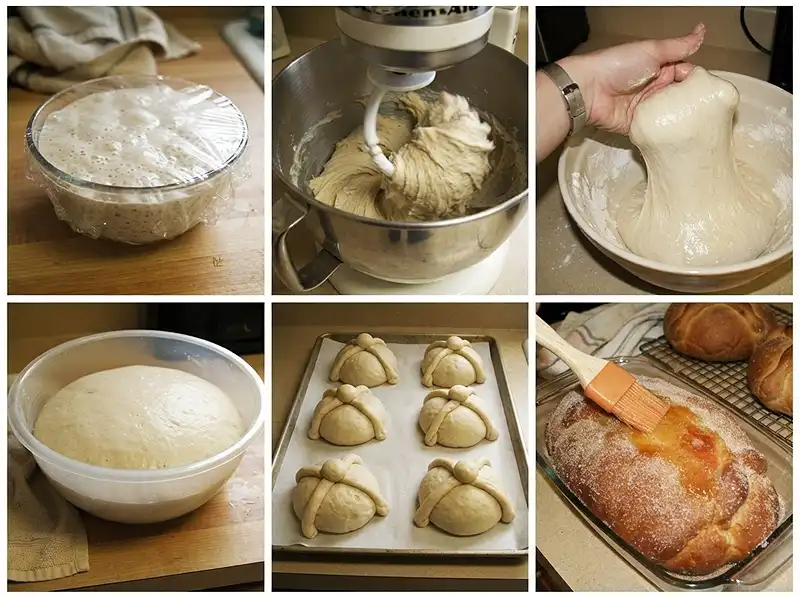
Stage 1: Wake Up the Yeast
In a small bowl, whisk 1 tablespoon of the sugar, the yeast, and the warm milk. Cover with plastic wrap and let it bloom for 10 minutes, until very foamy. If it looks flat and sleepy, start over, because dead yeast makes dead bread, and not the delicious kind.
Stage 2: Mix and Knead the Dough
In your stand mixer bowl (or a big bowl if you’re going by hand), whisk the bread flour, all-purpose flour, remaining sugar, salt, and anise seed. Then add the melted butter, eggs, orange zest, and that foamy yeast mixture.
Attach the dough hook and mix on medium-low for 6 to 8 minutes, or knead by hand. You’re looking for a dough that’s smooth, elastic, and pulls away from the bowl. Trust me, the stretchy, glossy look is worth waiting for.
Stage 3: First Rise
Move the dough to a large greased bowl and cover it with plastic wrap. Let it rise in a warm spot until doubled, about 2 hours. This is the perfect time to put on a podcast and pretend you’re relaxed.
Stage 4: Shape the Loaves and Bones
Line a large baking sheet with parchment paper and set it aside. Divide the dough into 6 equal pieces, then cut about a quarter off each one and set those smaller pieces aside. They’re your future bones.
Roll each big piece into a smooth ball and place them a few inches apart on the baking sheet. Spacing matters here, because these puppies will puff up.
Now pinch a cherry-tomato-sized piece off each small piece and roll it into a ball. You’ll end up with 6 little balls, one per loaf. Roll what’s left of each small piece into a rope about 12 inches long, then cut it in half so each loaf gets 2 bones.
Pinch each rope in three evenly spaced spots so it gets little knobs, like a bone. Lay 2 bones over each loaf in an X, pressing the ends down at the base. Then press a ball into the center, right where the bones cross.
Stage 5: Second Rise
Cover the loaves loosely with a kitchen towel and let them rise for 1 ½ hours. They should look puffy and pillowy, like they just woke up from a great nap.
Stage 6: Bake
Preheat the oven to 350°F. Uncover the loaves and bake for 35 minutes, until golden brown. If the bones start to darken too fast, loosely tent them with a small piece of foil around the 25-minute mark.
Pull the bread out and let it cool for 30 minutes. I know the smell will test your willpower, but don’t skip this part. Warm bread melts butter right off, and you want that topping to stay put.
Stage 7: Brush and Sugar
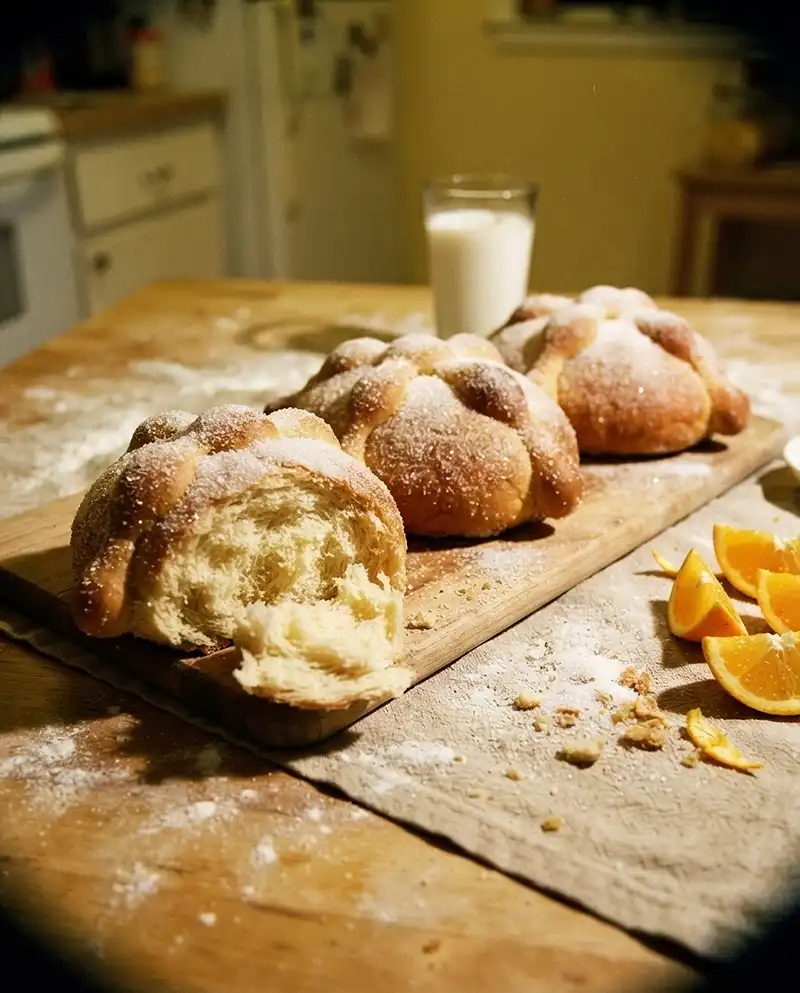
Whisk the melted butter and orange zest in a small bowl. Brush it all over the loaves, then sprinkle or roll them in the sugar. That glossy, sparkly finish is the whole reason this pan de muerto recipe looks so dramatic.
Pro Tips for the Best Pan de Muerto Recipe
Weigh your dough pieces if you have a kitchen scale. Equal loaves bake evenly, and nobody has to fight over the big one. It also makes your tray look like you know what you’re doing.
Check your milk with a thermometer. Aim for 110 to 115°F, because too hot kills the yeast and too cool means a slow, sulky rise.
Press the bone ends firmly into the base of each loaf. If they’re loose, they can pop away from the dough while baking. A little pinch goes a long way.
Zest your oranges before you juice them, and use a fine grater. Zest the orange all the way around, but stop at the white pith, which is bitter.
Fun Variations
Vegan Pan de Muerto
Want a vegan pan? You can try swapping the milk for an unsweetened plant milk and the butter for a good vegan baking butter. The eggs are the tricky part, since they give richness and structure, so use a baking-friendly egg replacer. Expect a slightly different crumb, and treat it as an experiment rather than a guarantee.
Gluten Free Pan de Muerto
For a gluten free version, look for a 1:1 gluten-free bread flour blend that includes xanthan gum. The dough will feel softer and stickier than regular dough, and the loaves tend to be a bit denser. Shape with lightly oiled hands and keep a close eye on the bake time.
Mini Loaves
Make smaller loaves for a party or a snack board. Smaller loaves bake faster, so start checking them well before the 35-minute mark. They’re adorable, and they keep portion fights to a minimum.
More Citrus, Less Anise
Not an anise person? Add a little extra orange zest and use a touch less anise seed. You’ll still get a cozy sweet bread with plenty of personality.
Pan de Muerto Troubleshooting
My dough didn’t rise. Usually the yeast was old or the milk was too hot or too cold. Make sure your yeast gets foamy in the first step, and give the dough a warm, draft-free spot to rest.
My bones are burning. That’s what the foil trick is for. Tent them loosely around the 25-minute mark, and the loaves will finish baking without the bones getting too dark.
My loaves came out dense. Under-kneading or cutting the rise short are the usual culprits. Wait until the dough has truly doubled, and knead until it’s smooth and elastic.
The sugar won’t stick. Let the bread cool for the full 30 minutes, then brush on the butter generously before sugaring. A buttery surface is the key to a sparkly crust.
Storing, Reheating, and Using Up Leftover Pan de Muerto
Here’s how to keep this pan de muerto recipe tasting fresh.
| Method | How to do it | How long |
|---|---|---|
| Room temperature | Wrap loosely or keep in an airtight container | 2 to 3 days |
| Freezer | Wrap tightly in plastic, then foil or a freezer bag | Up to 3 months |
| Fridge | Not my favorite, it can dry the bread out | Only if you must |
To reheat, warm a loaf in a 300°F oven for about 8 to 10 minutes, loosely wrapped in foil. A short zap in the microwave also works in a pinch. Either way, you’ll get that fresh-baked aroma back.
Got stale loaves? Turn them into French toast, or cube them for a dessert bread pudding. If you love bread pudding, you’ll probably also like this hot honey jalapeno cornbread pudding for a savory-sweet twist.
Craving more baking projects? Try these brown butter banana bread cinnamon rolls when you want another soft dough to play with. And for an easy win, this 3-ingredient banana bread without flour or oats is a great quick bake.
Pan de Muerto Recipe FAQs
What is pan de muerto?
Pan de muerto, or “bread of the dead,” is a sweet Mexican bread made around Día de los Muertos. It’s often placed on ofrendas to honor loved ones who have died. The bone-shaped decorations on top are a symbolic nod to those remembered.
Do I only make it for Day of the Dead?
Not at all. Mexican bakeries make it mainly around the holiday, but this sweet bread is delicious any time of year. According to Mexico News Daily, it appears in shops in the weeks before the holiday.
Can I bake it ahead of time?
Yes. Bake the loaves a day ahead, let them cool completely, and store them airtight. Brush on the butter and sugar the day you serve them so the crust stays sparkly.
Can I make this vegan or gluten free?
You can experiment with both. Check the variations above for starting points, and expect a slightly different texture than the classic version. Plant-based and gluten-free swaps change how the dough behaves, so keep notes for next time.
Why does this bread have anise?
Anise adds a subtle, warm flavor that’s classic in traditional versions. It pairs beautifully with orange zest. If you’re sensitive to licorice, use a little less and add extra zest.
Go Bake It, Friend
Now it’s your turn. Try this pan de muerto recipe and let me know how it turns out! Save it on Pinterest so you can find it next time the bread craving hits, and tell me in the comments how your loaves turned out and who you shared them with.