
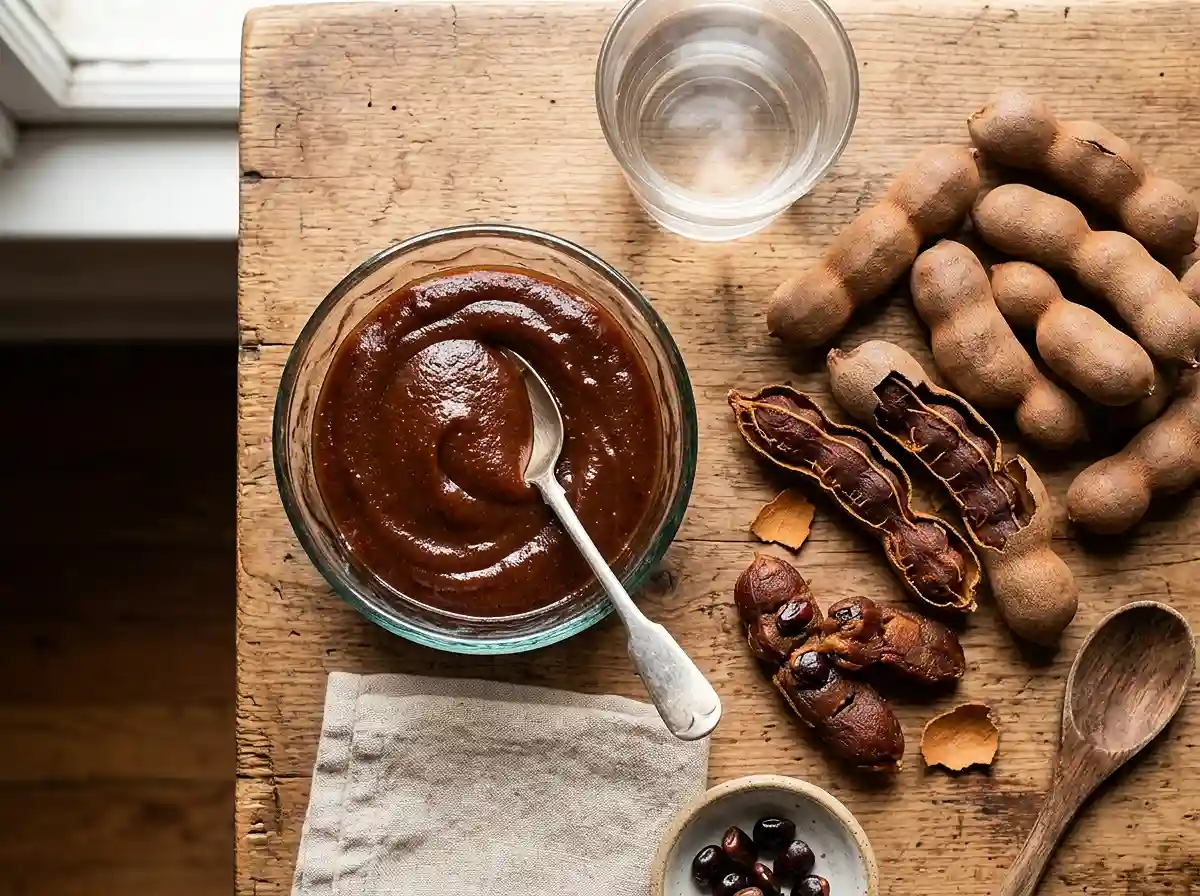
If you’ve ever bought a tiny jar of tamarind paste at the store and winced at the price, this one’s for you. Making homemade tamarind paste is so simple it almost feels like cheating.
I stumbled onto this recipe after a trip to the market left me with a bag of fresh tamarind pods and zero idea what to do with them. Spoiler: it turned out to be one of the best kitchen experiments I’ve ever had.
Table of Contents
Why You’ll Love This Tamarind Paste Recipe
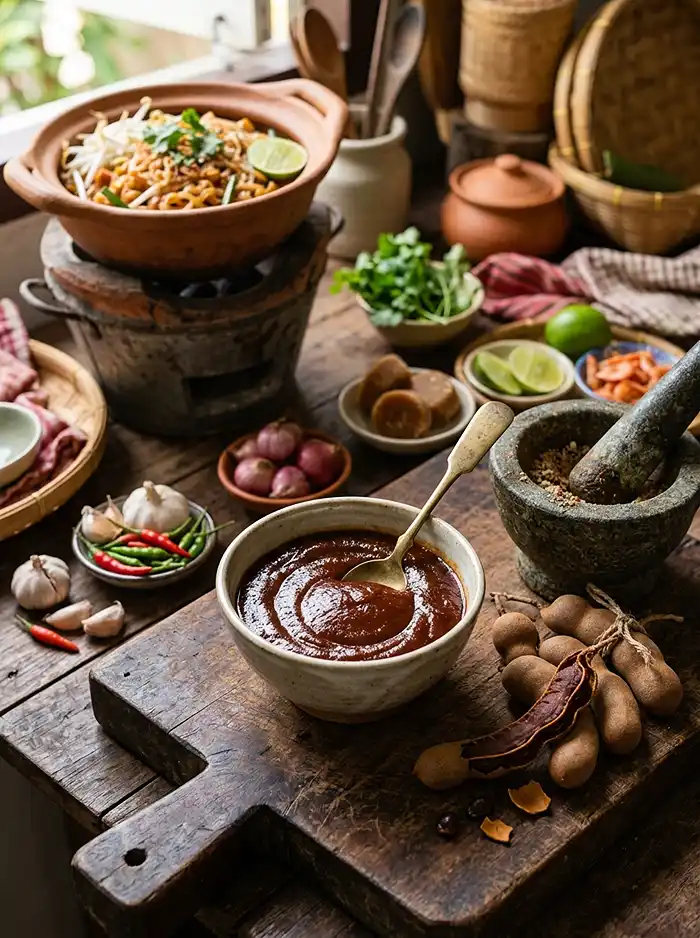
This recipe gives you a rich, tangy, deeply flavorful tamarind paste using just two ingredients: fresh tamarind pods and hot water. That’s it. No preservatives, no mystery additives — just pure, bold tamarind flavor.
The result is a versatile paste you can stir into sauces, marinades, chutneys, and drinks. Once you make your own, you’ll never go back to the store-bought stuff.
It’s also a great base if you’re planning to make Mexican-style tamarind paste, which has its own fantastic regional twist.
How to Make Tamarind Paste at Home
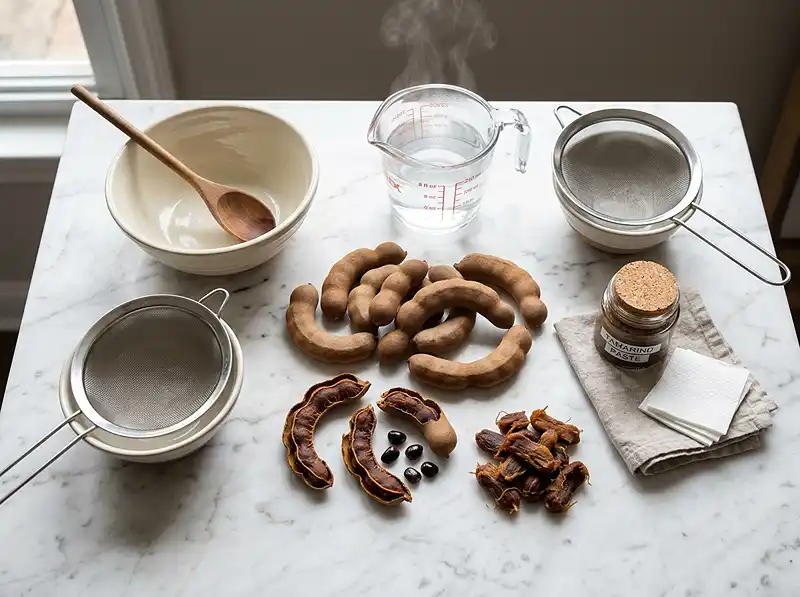
Equipment
- Non-reactive bowl
- Fine-mesh strainer
- Spoon
- Jar or airtight container
- Pot or kettle (for boiling water)
Ingredients
Main ingredients
- 12 pods Fresh tamarind pods with 4–6 seeds per pod
- 1 cup Boiling water 8 fl oz
Instructions
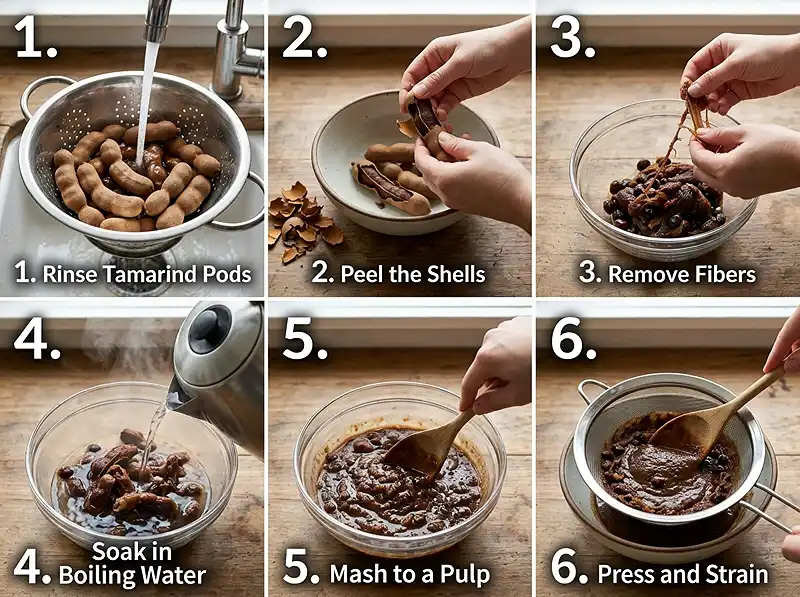
- Rinse the tamarind pods under cool water and gently scrub to remove any debris. Crack open the shells and remove the sticky pulp, discarding the shells and fibers.
- Place the tamarind pulp in a non-reactive bowl and pour boiling water over it until fully submerged. Let it soak for 20–30 minutes until softened.
- Mash the soaked pulp thoroughly to create a thick liquid, then strain it through a fine-mesh sieve, pressing to extract as much paste as possible. Discard seeds and fibers.
- Adjust consistency by adding water for a thinner paste or letting it sit to thicken. Store in an airtight container in the refrigerator.
Notes
Ingredients You’ll Need
The beauty of this recipe is the short ingredient list. Here’s everything laid out clearly:
| Category | Ingredient | Amount |
|---|---|---|
| Main | Fresh tamarind pods (4–6 seeds per pod) | 12 pods |
| Liquid | Boiling water | 8 fl oz (1 cup) |
When picking your tamarind pods, look for ones with a dry, crackly brown shell. That’s a sign the pulp inside is ripe and full of that signature sour-sweet punch.
Avoid pods that look greenish or feel very soft and mushy — those either aren’t ripe yet or have gone past their prime.
Step-by-Step Instructions for Homemade Tamarind Paste
Let’s walk through this together. I promise it’s more satisfying than it sounds, and your kitchen is going to smell incredible.
Step 1: Rinse and Peel the Tamarind Pods
Start by rinsing your 12 tamarind pods under cool running water. Give them a gentle scrub to knock off any dust or debris from the outer shell.
Now comes the fun part — crack open those shells. You can snap the pod with your hands or give it a gentle squeeze. Peel away the brittle shell and pull off any stringy veins running along the sides.
What you’re left with is the soft, sticky, dark-brown pulp. That’s the good stuff. Place the peeled pulp into a non-reactive bowl (glass or stainless steel works great — avoid aluminum, which can react with the acidity).
“Think of peeling tamarind like shelling pistachios — a little meditative, totally worth it.”
Repeat this with all 12 pods until you’ve got a nice pile of pulp ready to go.
Step 2: Soak the Pulp in Boiling Water
Pour your 8 fl oz of boiling water directly over the tamarind pulp in the bowl. Make sure all the pulp is submerged.
Let it soak for 20–30 minutes. The hot water softens the pulp and makes it easy to work with. You’ll notice the water turning a beautiful deep amber color — that’s a great sign.
Give it a gentle stir halfway through if you’d like. This helps the water penetrate all the pulp evenly and speeds things along.
Step 3: Mash and Strain the Pulp
Once the pulp has soaked and softened, use your hands or the back of a spoon to mash it thoroughly into the soaking water. Really work it until you’ve got a thick, murky liquid.
Now set a fine-mesh strainer over a clean bowl and pour the mixture through it. Press down firmly with a spoon to push as much pulp through as possible.
What’s left in the strainer? Seeds and any remaining fibers — toss those. What’s in your bowl is your freshly made tamarind paste. Rich, tangy, and completely homemade.
Step 4: Adjust the Consistency
If you want a thicker paste (great for marinades or chutneys), let it sit uncovered for a few minutes so some extra moisture evaporates. For a thinner consistency (perfect for sauces or drinks), just stir in a splash more water.
There’s no wrong answer here — it depends on what you’re using it for. I usually keep mine on the thicker side so it’s more versatile.
Expert Tips, Variations, and Troubleshooting
Tips for the Best Tamarind Paste
Use boiling water, not just warm water. Hot water breaks down the pulp much faster and gives you a smoother, more concentrated paste.
Don’t skip the straining step. Even if the mashed pulp looks smooth, the strainer catches fibers and seed fragments that would ruin the texture of your finished paste.
If you want a really smooth, restaurant-quality result, strain it twice. The second pass makes a huge difference in texture.
Flavor Variations Worth Trying
Want to make a spiced tamarind paste? Add a pinch of cumin, chili powder, or black salt during the mashing step. It gives you a bold, Indian-style concentrate perfect for homemade chutney.
For a sweeter version, stir in a teaspoon of jaggery or brown sugar after straining. This balances the tartness and works beautifully in drinks and desserts.
You can also use tamarind paste as a substitute for Worcestershire sauce in a pinch — just use half the amount since the paste is more concentrated.
Troubleshooting Common Issues
Paste too thick? Add boiling water a tablespoon at a time and stir until you reach your desired consistency.
Paste too thin? Simmer it gently in a small saucepan on low heat for 5–10 minutes. It’ll thicken right up as the extra water cooks off.
Too sour? A tiny bit of sugar or honey stirred in after straining will mellow the tartness without losing that signature tangy depth.
Storage Instructions
Good news: tamarind paste stores really well. Here’s a quick guide so nothing goes to waste:
| Storage Method | Container | How Long It Lasts |
|---|---|---|
| Refrigerator | Airtight glass jar | Up to 3–4 weeks |
| Freezer | Ice cube tray, then zip bag | Up to 6 months |
| Room temperature | Not recommended | Use within 1 day |
Reheating and No-Waste Kitchen Ideas
To use refrigerated tamarind paste, just spoon out what you need — no reheating required for most recipes. If it’s thickened up in the fridge, stir in a tiny splash of warm water to loosen it.
The freezer cube method is a game-changer. Pour the paste into an ice cube tray, freeze until solid, then transfer the cubes to a zip-lock bag. Each cube is roughly one tablespoon — perfect for measured portions.
Don’t toss those strained seeds and fibers! According to research on tamarind nutrition, the seeds have their own culinary uses. You can dry and roast them as a snack or grind them into flour for specialty baking.
Ways to Use Your Homemade Tamarind Paste
Now that you’ve got this gorgeous jar of tamarind paste sitting in your fridge, let’s talk about how to use it. The possibilities are honestly kind of wild.
Stir a spoonful into soups, stews, or braised meats for a hit of background sourness that makes everything taste more complex. It’s especially great in lentil dishes, Thai peanut sauces, and Pad Thai.
Use it as a base for marinades on chicken, shrimp, or tofu. Mix it with garlic, ginger, a dash of soy sauce, and a squeeze of lime — you’ve got one of the best marinades you’ve ever tasted, I’m telling you.
Feeling adventurous in the kitchen? Whip up some tamarind-glazed pancakes by pairing your paste with something sweet. Check out this easy crepe recipe using pancake mix for a fun pairing idea.
Or if you’re a crepe lover, drizzle a little sweetened tamarind paste over this authentic French crepe recipe — the tangy-sweet contrast is absolutely worth trying.
And yes, tamarind paste works in drinks too. Mix it with water, sugar, and a pinch of salt for a classic agua fresca. Refreshing doesn’t even cover it.
Tamarind Paste FAQs
Can I use tamarind concentrate instead of making tamarind paste from pods?
Yes, you can — tamarind concentrate is a more processed version that’s already been strained and reduced. It’s convenient, but it can taste sharper and less nuanced than fresh paste.
Homemade tamarind paste from pods has a fresher, more complex flavor that’s worth the extra 30 minutes. If using concentrate as a substitute, use about half the amount called for in any recipe.
Is tamarind paste the same as tamarind sauce?
Not quite! Tamarind paste is the base concentrate, while tamarind sauce usually has added ingredients like sugar, spices, or water to make it pourable and ready to use as a condiment.
Think of tamarind paste as your raw ingredient and tamarind sauce as the finished product. You can easily turn paste into sauce by thinning it and seasoning to taste.
Where can I buy fresh tamarind pods?
Fresh tamarind pods are usually found in Asian grocery stores, Latin or Caribbean markets, and international food sections of larger supermarkets. They’re often sold in bags or by weight.
If you can’t find fresh pods locally, look for tamarind pulp blocks — they work just as well for making paste and are available at most Indian grocery stores.
How do I know if my tamarind paste has gone bad?
Fresh tamarind paste should smell tangy and earthy. If it develops an off or fermented smell, visible mold, or an unusual color change, it’s time to toss it and make a fresh batch.
Properly stored in an airtight jar in the fridge, it should last 3–4 weeks without any issues. The freezer method is your best bet for longer storage.
Can I use this tamarind paste in lemon crepe recipes or sweet dishes?
Absolutely! A small amount of tamarind paste adds a lovely tartness that pairs well with citrus-forward recipes. Check out this lemon crepe recipe for inspiration — a thin drizzle of sweetened tamarind paste on top is a surprisingly delicious twist.
Just balance it with a bit of honey or sugar since the paste on its own is quite sour. Start small and taste as you go.
Final Thoughts: Make a Batch This Weekend
Honestly, once you make your own tamarind paste, you’ll wonder why you ever bought it pre-made. It’s fresher, more flavorful, completely customizable, and costs a fraction of the jarred version.
Whether you’re using it in savory dishes, tangy drinks, or sweet crepe pairings, this little jar of homemade goodness is going to earn a permanent spot in your fridge.
Go ahead and give it a try this weekend — it’s one of those recipes where the effort is low and the payoff is seriously high. And if you love it as much as I do, save this recipe to Pinterest so your friends can make it too!
Drop a comment below and let me know how your tamarind paste turned out. Did you try a variation? Use it in something unexpected? I’d love to hear all about it.