
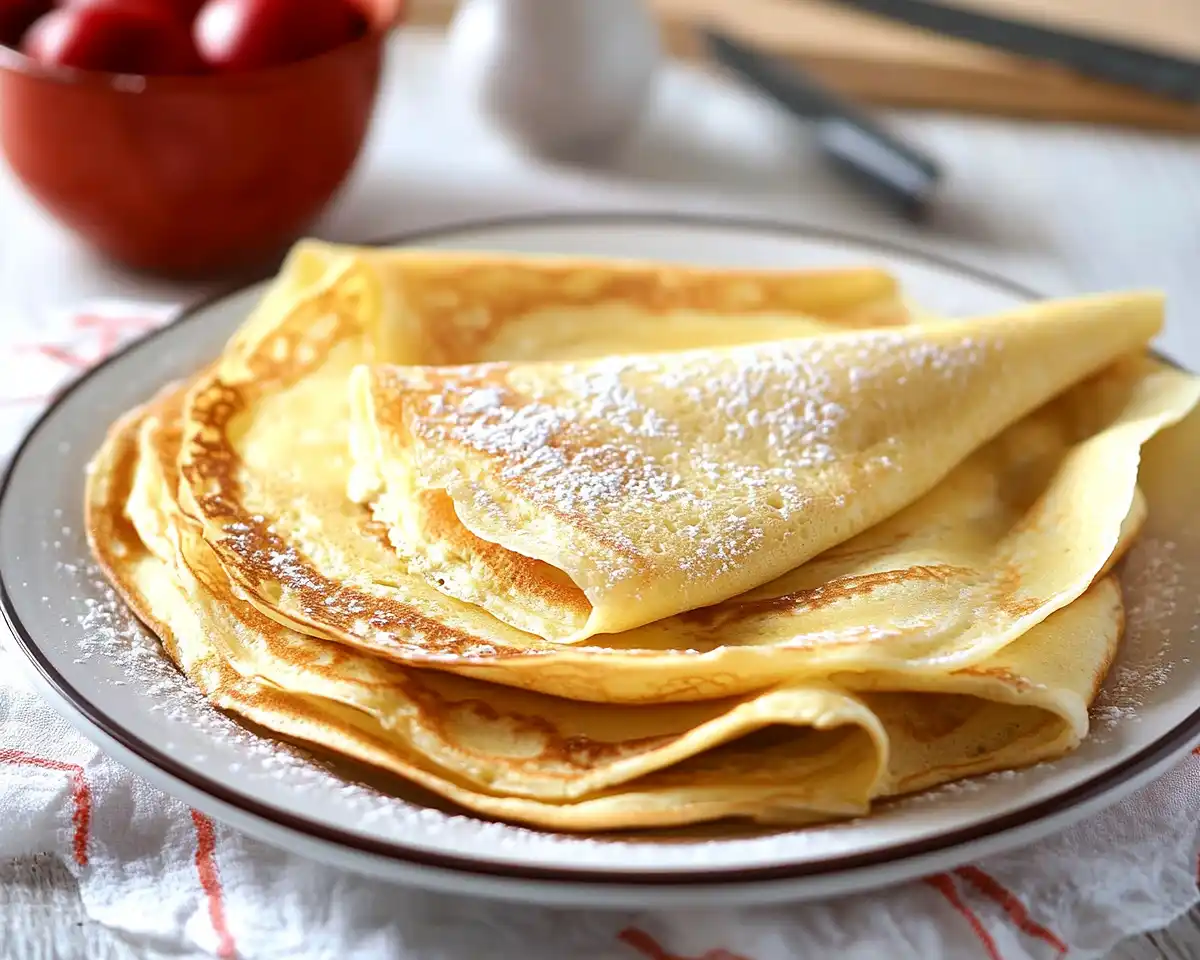
Forget everything you thought you knew about crepes being complicated or fussy. This authentic French crepe recipe is the real deal — simple, thin, golden, and absolutely delicious. I made these for Sunday brunch and honestly couldn’t stop eating them.
There’s something magical about standing at the stove, swirling batter in a hot pan, and watching a classic French crêpe come to life. It feels fancy, but I promise — it’s easier than scrambled eggs.
Once you nail this classic, store-bought breakfasts won’t compare—and if you stop here, you’ll miss more traditional crepe recipe ideas.
Table of Contents
Why You’ll Love This Authentic French Crepe Recipe
This isn’t just any crepe recipe — it’s the authentic French crêpes recipe that Parisian grandmothers actually use. No fancy equipment, no weird ingredients. Just pure, simple perfection.
The batter comes together in minutes, the crepes cook fast, and the results are paper-thin, lacy-edged, and absolutely dreamy. Sweet or savory — these classic French crepes do it all.
Whether you’re hosting a weekend brunch or just craving something a little bit special on a Tuesday, this recipe delivers big. And yes, it really is ready in 15 minutes.
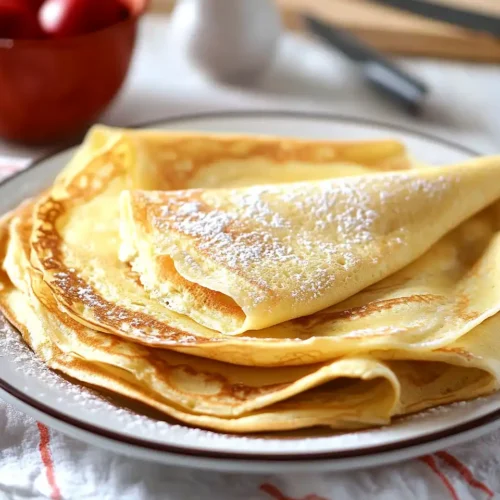
Authentic French Crepes
Equipment
- Mixing bowl
- Whisk or electric mixer
- Non-stick skillet or crepe pan
- spatula
Ingredients
Dry Ingredients
- 1 ¾ cups White wheat flour
- ¼ teaspoon Salt
- 1 teaspoon White sugar optional
Wet Ingredients
- 3 large Eggs
- 2 cups Milk
- 2 tablespoons Unsalted butter (melted) or vegetable oil
Flavoring
- 1 tablespoon Vanilla extract optional
Instructions
- In a large mixing bowl, combine flour, eggs, salt, melted butter, sugar, and vanilla if using.
- Gradually whisk in the milk until the batter becomes smooth and lump-free.
- Heat a non-stick skillet or crepe pan over medium-high heat and lightly butter it.
- Pour about 1/4 cup of batter into the pan and quickly swirl to spread it thinly.
- Cook for 1-2 minutes per side until lightly golden, then repeat with remaining batter.
- Serve warm with sweet or savory fillings of your choice.
Notes
Ingredients for Classic French Crepes
Here’s everything you need for these authentic French crêpes. Nothing complicated, I promise — it’s all pantry staples.
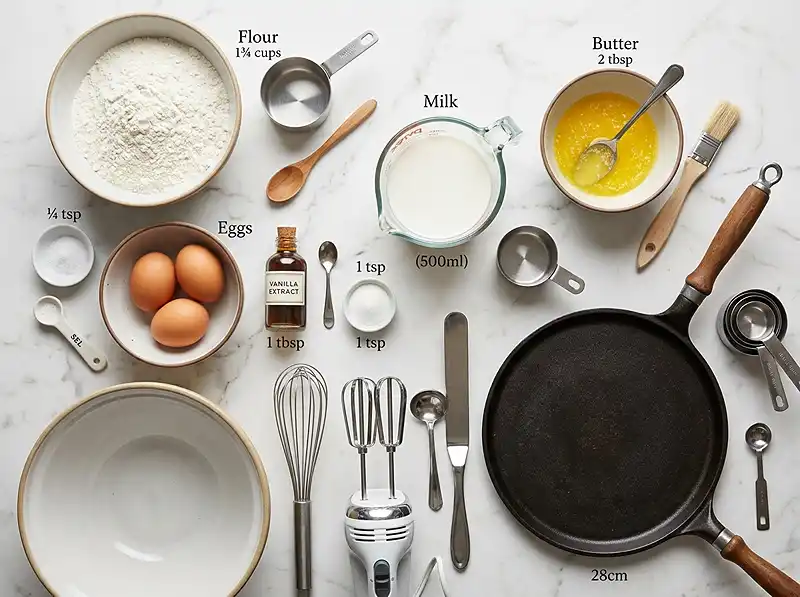
| Category | Ingredient | Amount |
|---|---|---|
| Dry | White Wheat Flour | 1 3/4 cups |
| Dry | Salt | 1/4 teaspoon |
| Dry | White Sugar (optional) | 1 teaspoon |
| Wet | Eggs | 3 large |
| Wet | Milk | 2 cups |
| Wet | Unsalted Butter (melted) or vegetable oil | 2 tablespoons |
| Flavoring | Vanilla Extract (optional) | 1 tablespoon |
Quick note on the sugar and vanilla: Leave them out if you’re going savory (think smoked salmon fillings or cheese). Keep them in for sweet crepes with jam, Nutella, or fresh fruit.
How to Make an Authentic French Crepe Recipe Step by Step
Ready to channel your inner Parisian? Let’s do this. The whole process is genuinely straightforward — just follow these steps and you’ll have gorgeous classic French crepes in no time.
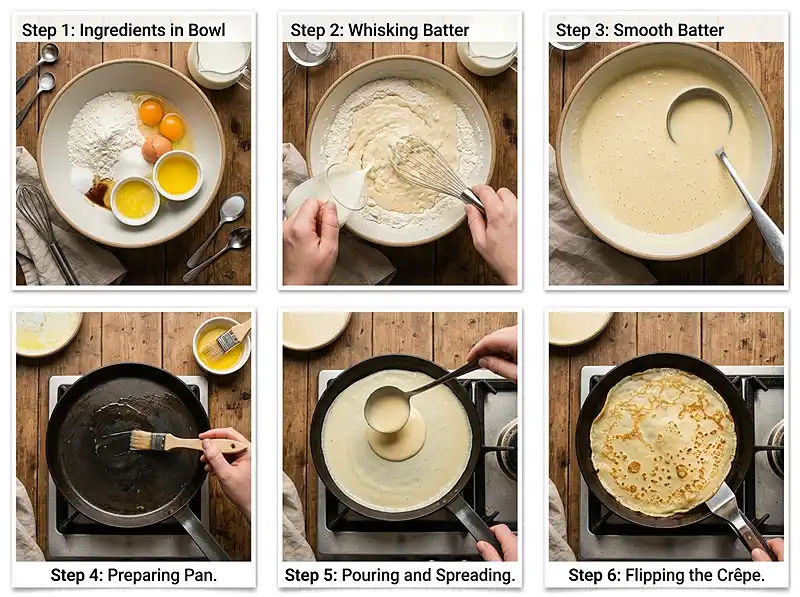
Step 1: Make the Batter
Grab a large mixing bowl and add the flour, eggs, salt, melted butter, vanilla extract, and sugar (if using). Don’t worry about perfection at this stage — just get everything in there.
Now, using a whisk or electric mixer, gradually beat in the milk. The “gradually” part really matters here. Adding the milk slowly prevents lumps and gives you that silky-smooth batter that’s the signature of a proper French crêpe recipe.
“The batter should look like thin cream — smooth, pourable, and lump-free. If you see lumps, keep whisking. A smooth batter is everything.”
Pro tip: Let the batter rest for 20-30 minutes if you have time. This relaxes the gluten and makes your crepes even more tender. But if you’re hungry right now? Skip it — they’ll still be amazing.
Step 2: Heat the Pan
Heat a crepe pan or a non-stick skillet over medium-high heat. Add a tiny knob of butter and let it melt and coat the pan. You want the pan hot — like, properly hot — before the batter goes in.
How hot is hot enough? A drop of water should sizzle and dance when it hits the surface. If nothing happens, give it another minute. Getting the heat right is the difference between a pale, sad crepe and a beautifully golden one.
Step 3: Pour and Swirl
Pour or scoop about 1/4 cup of batter into the center of the pan. Then immediately lift the pan off the heat and tilt it in a circular motion to spread the batter as thinly as possible.
This swirling motion is the most “French” part of the whole experience. Work quickly — you’ve got about 3 seconds before the batter sets. Don’t worry if your first one is imperfect. The first crepe is always the test crepe. It’s basically the chef’s snack.
Step 4: Cook Until Golden
Cook the crepe for about 1-2 minutes on the first side, until the edges start to look dry and lightly golden. You’ll see the surface go from shiny to matte — that’s your cue.
Flip it gently using a thin spatula (or go full Parisian and flip it with a flick of the wrist if you’re feeling brave). Cook for another 1-2 minutes on the second side until it’s lightly browned in spots.
Slide it onto a plate and repeat with the remaining batter. Stack the crepes as you go — they won’t stick together, I promise.
Step 5: Fill and Serve
Now the fun part! Serve your authentic French crêpes hot with whatever fillings make your heart sing. Nutella and banana, lemon and sugar, strawberry jam, whipped cream — the world is your crepe.
For a savory twist, try them alongside a slice of classic Quiche Lorraine for a full French-inspired spread.

Expert Tips for the Best Authentic French Crepes
Getting the Batter Right
The biggest crepe mistake? Not beating the batter enough. You want it completely smooth and free of lumps. An electric mixer makes this effortless, but a good old-fashioned whisk works too — just be patient.
The consistency should be thinner than pancake batter — more like heavy cream than cake batter. If yours seems too thick, add a splash of milk to thin it out.
Pan Temperature is Everything
Too cool and your crepe will be rubbery. Too hot and it’ll burn before you can spread it. Medium-high heat is the sweet spot for this classic French crepe recipe. Once you nail the temperature, the rest is easy.
Re-butter the pan every 2-3 crepes. A little goes a long way — you just want a thin, even coat, not a puddle of butter.
The Swirl Technique
If you’re new to crepes, tilt the pan in a slow, confident circle right after pouring the batter in. Speed matters here — the batter starts to cook almost instantly. A dedicated crepe spreader can help with even thickness, but the pan tilt method works perfectly.
Variations on This French Crepe Recipe
Savory Galettes
Skip the sugar and vanilla and use buckwheat flour instead of white wheat flour. These hearty savory crepes are traditional in Brittany, France, and pair beautifully with eggs, cheese, and ham. It’s breakfast and dinner in one.
Chocolate Crepes
Add 2 tablespoons of unsweetened cocoa powder to the dry ingredients for a rich chocolate twist. These are incredible with chocolate-covered strawberries on the side. Dessert goals, honestly.
Dairy-Free Version
Swap the milk for oat milk or almond milk and use coconut oil instead of butter. The texture is slightly different but still lovely. This version works great if you’re cooking for guests with dietary restrictions.
Shortcut Version
In a hurry? Check out this crepe recipe using pancake mix — it’s a clever shortcut that still delivers great results when you’re short on time.
Troubleshooting Your Classic French Crepes
Crepes Are Tearing
If your crepes keep tearing when you flip them, they probably need another 30 seconds on the first side. The edges should look completely dry before you flip. Also check that your pan is well-seasoned and properly buttered.
Crepes Are Too Thick
Thin out your batter with a little extra milk, and make sure you’re swirling quickly enough after pouring. The batter needs to cover the whole pan in a thin, even layer before it sets.
Crepes Are Sticking
This usually means the pan isn’t hot enough, or there’s not enough butter. Give the pan more time to preheat and be generous (but not excessive) with the butter between batches. A good non-stick pan is your best friend here.
Storage and Reheating Guide
One of the best things about this authentic French crepe recipe is that the crepes store really well. Make a big batch and you’ve got easy breakfasts sorted for the week.
| Storage Method | How To | How Long |
|---|---|---|
| Room Temperature | Stack with parchment paper between, cover with foil | Up to 2 hours |
| Refrigerator | Stack with parchment, wrap in plastic or store in airtight container | Up to 3 days |
| Freezer | Stack with parchment paper between each crepe, place in zip-lock bag | Up to 2 months |
Reheating Tips
To reheat, simply warm them in a dry non-stick pan over medium heat for about 30 seconds per side. You can also microwave them for 20-30 seconds wrapped in a damp paper towel — they’ll stay soft and pliable.
Frozen crepes? Thaw them overnight in the fridge or pop them straight into a warm pan from frozen — just give them a little more time.
No-Waste Kitchen Ideas
Got leftover crepes that are a bit torn or ugly? No problem. Tear them into strips and layer them in a baking dish with cheese and sauce for a savory crepe lasagna. Or roll them up with cream cheese and smoked salmon for elegant little bites inspired by smoked salmon brunch ideas.
Authentic French Crepe Recipe FAQs
Do I really need to rest the batter?
Resting for 20-30 minutes gives gluten time to relax, resulting in more tender crepes. That said, many home cooks (including me, on busy mornings) skip this step and the crepes still turn out great. It’s a “nice to have,” not a dealbreaker.
Can I make the batter ahead of time?
Absolutely — and honestly, this is a great idea. You can make the batter up to 24 hours in advance and store it covered in the fridge. Just give it a good stir before using, as the flour may settle. This makes weekend brunch practically effortless.
What’s the difference between crepes and pancakes?
The biggest difference is thickness and leavening. Pancakes use baking powder to puff up, while authentic French crêpes have no leavening at all — they’re meant to be thin and flat. Crepe batter is also much thinner and more egg-heavy than pancake batter. You can explore a simple classic crepe recipe if you want to compare side by side.
Why does my first crepe always come out bad?
This is completely normal — even professional chefs call it the “test crepe.” The first one seasons the pan and helps you gauge the heat and batter consistency. Eat it in the kitchen as a cook’s reward and don’t worry about it. Every crepe after that should be smooth sailing.
Can I make these gluten-free?
Yes! Substitute a 1:1 gluten-free flour blend for the white wheat flour. The texture will be slightly more delicate, so be extra gentle when flipping. Many bakers recommend letting gluten-free crepe batter rest a full 30 minutes for the best results.
Try This Authentic French Crepe Recipe Today
There you have it — the only authentic French crepe recipe you’ll ever need. Simple ingredients, easy technique, and results that feel genuinely special every single time.
Whether you go sweet or savory, these classic French crepes are the kind of recipe you’ll come back to again and again. They’re quick, versatile, and honestly just a little bit magical.
Give this French crêpe recipe a try this weekend and let me know how it goes! I’d love to hear what fillings you used. Drop a comment below or tag me on social — and if you loved it, share it on Pinterest so more people can find it. Happy crepe-making!