
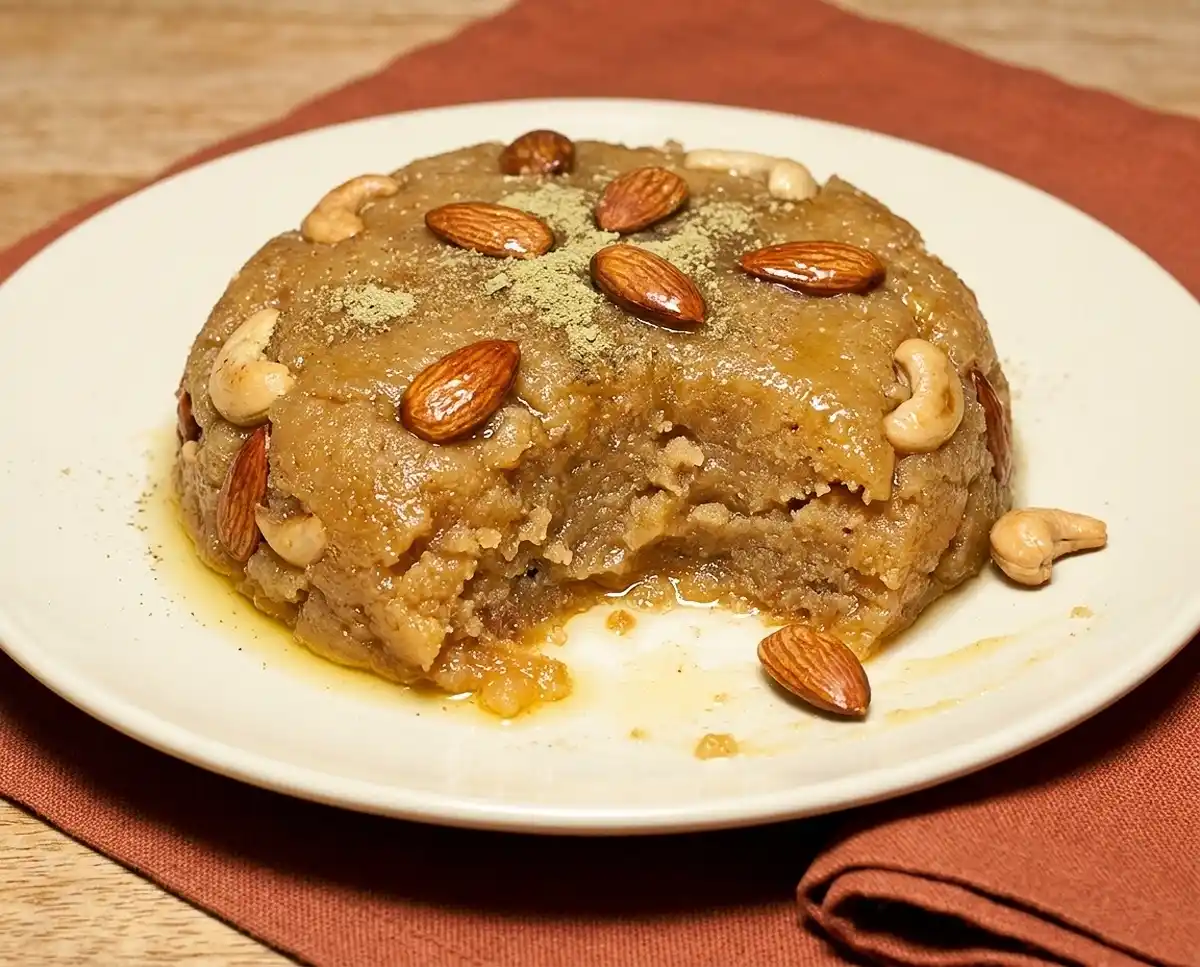
Quick bread halwa is a soft, spoonable Indian sweet made with milk bread, ghee, and a creamy nut paste. Simple, comforting, and easy to follow step by step.
There’s a moment in this recipe, right when the bread turns golden in the ghee, when the whole kitchen smells like a festival. Toasty, nutty, a little sweet. It’ll pull everyone in from the other room before you’ve even added the milk.
That’s the magic of bread halwa. A few humble slices of bread, some ghee, milk, and sugar turn into something rich and glossy that tastes like you fussed for hours. You didn’t. I’ll show you how.
Table of Contents
Why This Quick Bread Halwa Is a Keeper
Most halwas ask you to grate, soak, or stir for what feels like forever. This one starts with something you probably already have: sliced bread. No grating, no soaking, and nothing fancy to hunt down.
The texture is what gets people. It’s soft and rich, somewhere between a pudding and a fudge, and it holds together on the spoon without turning stiff or dry.
It also does that wonderful thing where it looks like a mess halfway through and then pulls itself together at the very end. I’ll warn you about that part when we get there, so you won’t panic.
If you like the idea of turning everyday bread into something special, you might also enjoy this banana bread latte. It’s lovely next to a small bowl of warm halwa.
Quick Bread Halwa with Golden Ghee-Roasted Milk Bread
Equipment
- Kadai or heavy-bottomed pan
- Saucepan
- Grinder or blender
- Cutting board
- Knife
- Spoon or spatula
Ingredients
For the bread and ghee
- 7 slices bread milk bread, sides left on
- ½ cup ghee 2 tablespoons reserved for the end
For the milk and sugar
- 2 cups milk roughly half a litre
- ⅔ cup sugar 1/2 cup plus 2 tablespoons
For the nut paste
- 8 almonds (badam)
- 10 cashews
- 3 pods cardamom
- water a little, to make the paste
Instructions
- Cut the bread slices into small, even pieces. You don’t need to trim the sides.
- Heat 1/2 cup ghee in a kadai or heavy-bottomed pan. Set 2 tablespoons aside for the end.
- Roast the bread pieces on low to medium heat, turning often, until golden and nutty-smelling. If they start turning dark brown, lower the heat.
- In a separate pan, bring 2 cups milk and 2/3 cup sugar to a boil, stirring until the sugar dissolves. Pour it over the roasted bread.
- Bring to a boil, then turn the heat to low and cook a few minutes. Mash the bread with the back of a spoon as it softens. It will look gooey at this stage, and that’s normal.
- Grind the almonds, cashews, and cardamom into a fine powder. Add a little water and grind again into a smooth paste.
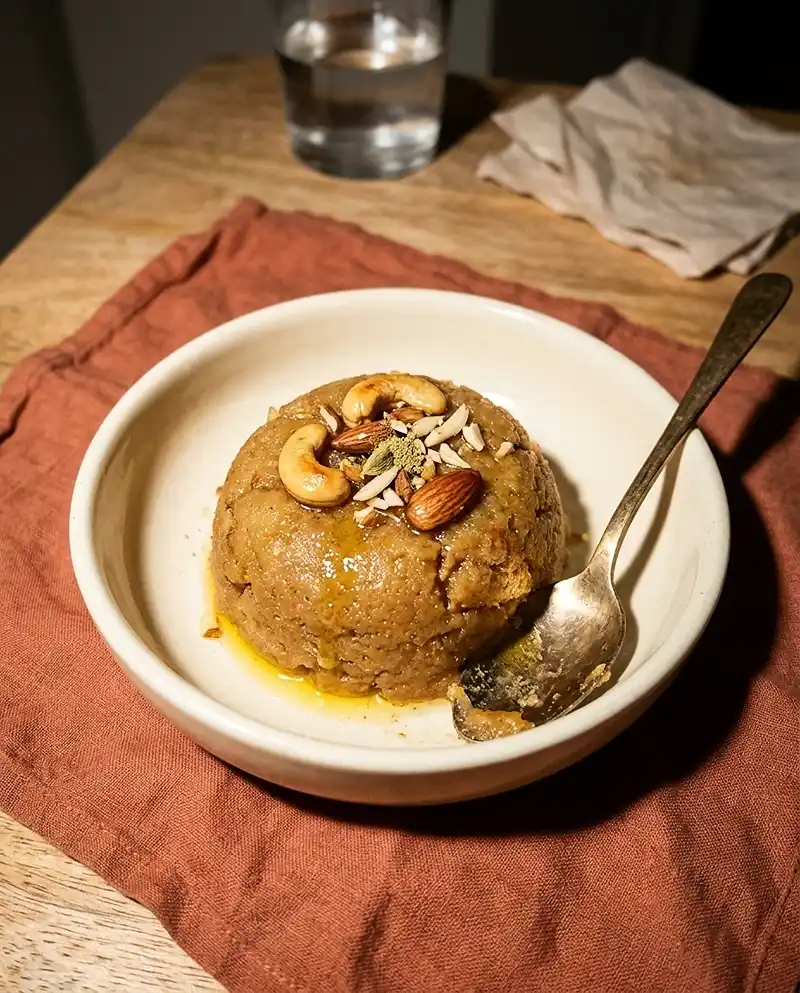
- Stir in the nut paste and the 2 tablespoons of reserved ghee. Keep mixing and mashing until the mixture thickens and ghee oozes out at the edges. If you like, top with cashews and almonds fried in ghee.
Notes
Quick Bread Halwa Ingredients
The ingredient list is short, so each one counts. Here’s everything grouped by what it does in the pan.
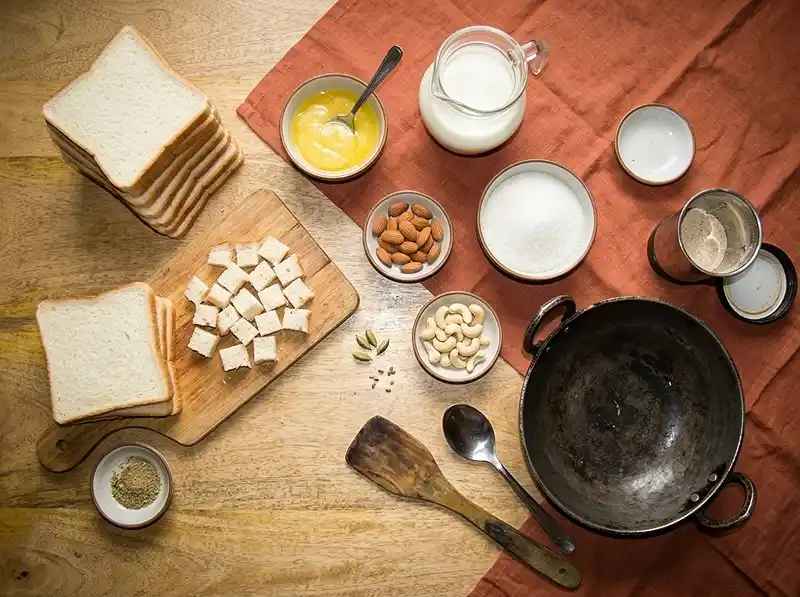
| Ingredient | Amount | Quick note |
|---|---|---|
| For the bread and ghee | ||
| Bread slices | 7 | I used milk bread. I left the sides on and had no trouble. |
| Ghee | 1/2 cup | Set 2 tablespoons aside for the end. Please don’t change the amount. |
| For the milk and sugar | ||
| Milk | 2 cups | That’s roughly half a litre. |
| Sugar | 2/3 cup | Same as 1/2 cup plus 2 tablespoons. |
| For the nut paste | ||
| Almonds (badam) | 8 | Ground to a powder first, then made into a paste. |
| Cashews | 10 | These keep the paste creamy. |
| Cardamom pods | 3 | Grind them right along with the nuts. |
| Water | A little | Just enough to turn the powder into a paste. |
A few notes on the ingredients
Milk bread is soft and slightly sweet, which suits a halwa well. It’s what I used, and it roasted up beautifully. Any soft sliced bread should be a good stand-in for plain bread halwa, though the flavor will shift a little.
Real ghee, the clarified butter used across South Asian cooking, is the heart of this dish. It gives the bread that deep, nutty roast and makes the finished halwa glossy.
The cashew and almond paste is the quiet hero. It’s what turns a gooey pan of soft bread into proper halwa, so don’t skip it.
How to Make Quick Bread Halwa, Step by Step
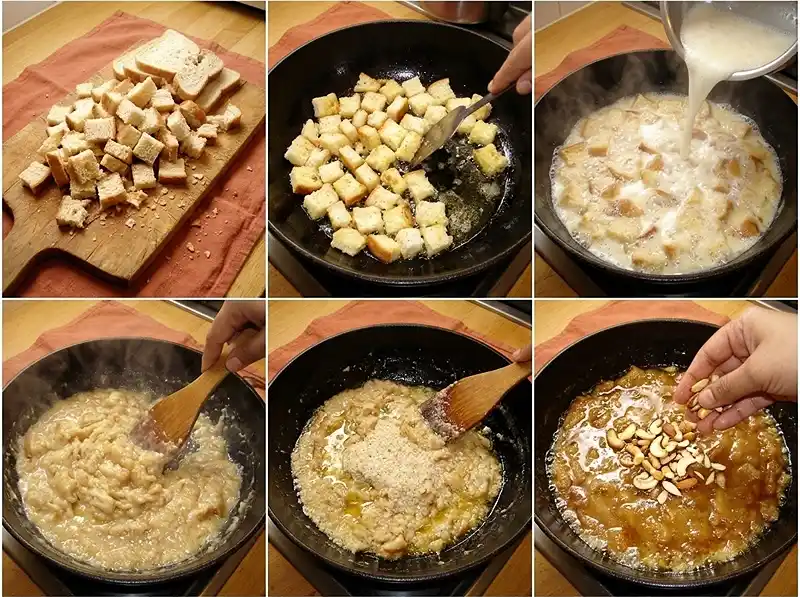
Cut the bread into tiny pieces
Cut the slices into small, even bits. Smaller pieces roast evenly and mash down easily later. There’s no need to trim the sides. I left them on and it turned out just fine.
Warm the ghee and set a little aside
Heat a kadai or any heavy-bottomed pan and add the ghee. Before you go any further, spoon out 2 tablespoons and set it aside. You’ll need it at the very end, and it’s easy to forget once things get busy.
Roast the bread until golden
Add the bread pieces to the pan on low to medium heat. This is the step to be patient with. You want golden, not dark, so keep the flame gentle and turn the pieces often. A good toss now and then helps too.
Listen for the soft sizzle and watch the color. The pieces should smell toasty and nutty, a bit like warm biscuits. If they start getting dark brown, lower the heat right away.
Boil the milk with the sugar
While the bread roasts, bring the milk and sugar to a boil in a separate pan. Stir until the sugar dissolves completely. Then pour the hot sweet milk over the roasted bread.
Cook and mash the bread
Bring everything to a boil, then turn the flame down to low. Let it cook for a few minutes. As the bread softens, mash it with the back of your spoon until it breaks down.
Right about now, it’ll look very gooey and loose. That’s normal. Until the nut paste and ghee go in, it won’t look much like halwa, so don’t worry.
Grind the nut paste
Grind the almonds, cashews, and cardamom into a fine powder first. Then add a little water and grind again to make a smooth paste. Go easy with the water. You only need enough to bring it together.
Bring it all together
Stir the nut paste into the cooked bread, then add the 2 tablespoons of ghee you saved. Keep mixing and mashing the whole time. Here’s the part that feels like magic. The gooey mixture slowly thickens and starts to come together.
Keep going until you see the ghee oozing out at the edges. That’s your sign the halwa is ready. If you like, fry a few extra cashews and almonds in a little ghee and scatter them on top for crunch.
Tips, Swaps, and Variations
Tips for the best texture
Keep the heat low while roasting the bread. Golden is the goal. Darker bread can make the halwa taste a bit bitter.
Don’t be tempted to cut back on the ghee, or to add extra. The amount in the recipe is what gives you the right consistency. Too much or too little can leave the halwa sticky.
Keep stirring and mashing at the end. It’s tempting to walk away, but this is when the halwa decides to behave.
Swaps and variations
Any soft sliced bread can work if you don’t have milk bread. The result may taste a touch different, but the method stays the same.
For extra texture, top the finished halwa with a few fried cashews and almonds. It’s a small touch that makes the whole pan feel a bit more special.
Craving more bread-based comfort? Try serving a small bowl of halwa alongside a cup of tea, or pair a different kind of treat with a classic South Asian flatbread for a meal that mixes sweet and savory.
When Things Go Sideways
My halwa looks too wet
Don’t panic. Before the nut paste and reserved ghee go in, the mixture is meant to look gooey. Add them, keep stirring, and give it a few more minutes on low heat.
My halwa feels sticky
This usually comes down to the ghee. Stick to the amount in the recipe, and keep mixing and mashing until the ghee starts to ooze out. That’s when the texture settles.
My bread turned dark
If the pieces got too dark, the halwa will taste a bit sharp. Next time, keep the flame low and turn the bread more often. Golden is what you’re after.
How to Store Bread Halwa
Bread halwa is made with milk, so treat it like any other dairy-based leftover. Here’s a simple guide, based on general USDA leftover food safety guidance.
| Where | How long | Tip |
|---|---|---|
| Room temperature | Up to 2 hours | After that, it’s time to put it away. |
| Refrigerator | 3 to 4 days | Keep it in a covered, airtight container. |
| Freezer | Up to 3 to 4 months | Freeze in small portions. I haven’t tested this one, so texture may vary. |
Reheating
Warm a portion in a small pan over low heat with a spoonful of milk, stirring until soft and glossy again. A microwave works too. Heat in short bursts and stir between each one so it warms evenly.
Ideas for leftovers
Spoon cold halwa between two slices of toasted bread for a very indulgent snack. Or stir a little into warm milk for a sweet, nutty drink.
You can also roll small portions into little balls and top each with a cashew. They’re great for tucking into a lunchbox.
Frequently Asked Questions
What kind of bread works best for quick bread halwa?
I used milk bread, and it worked beautifully. Any soft sliced bread should be a good alternative, though the flavor may be slightly different.
Do I need to remove the bread sides?
No. I left the sides on and had no problem. Just cut the bread into small pieces so everything roasts and mashes evenly.
Why does my bread halwa look so gooey?
That’s normal. Before you add the nut paste and the reserved ghee, the mixture will look very loose. Keep mixing and mashing, and it will turn into halwa.
How do I know when the halwa is ready?
Look for ghee oozing out at the edges while you mix and mash. That’s your sign it has reached the right consistency.
How much is 2 cups of milk?
Two cups of milk is roughly half a litre.
Time to Make Your Own Quick Bread Halwa
Halwa comes in many forms across the world, and you can read more about its long history in this overview of halva. This bread version is one of the friendliest to start with.
If you try it, I’d love to hear how it turned out. Leave a comment and a rating below, and tell me what bread you used.
And if you’d like to keep it handy, pin this quick bread halwa to your Pinterest board so you can find it the next time a sweet craving hits. Pair it with a pot of tea, and you’re set. Maybe even a jar of bread and butter pickles on the table for the savory side of the meal.