
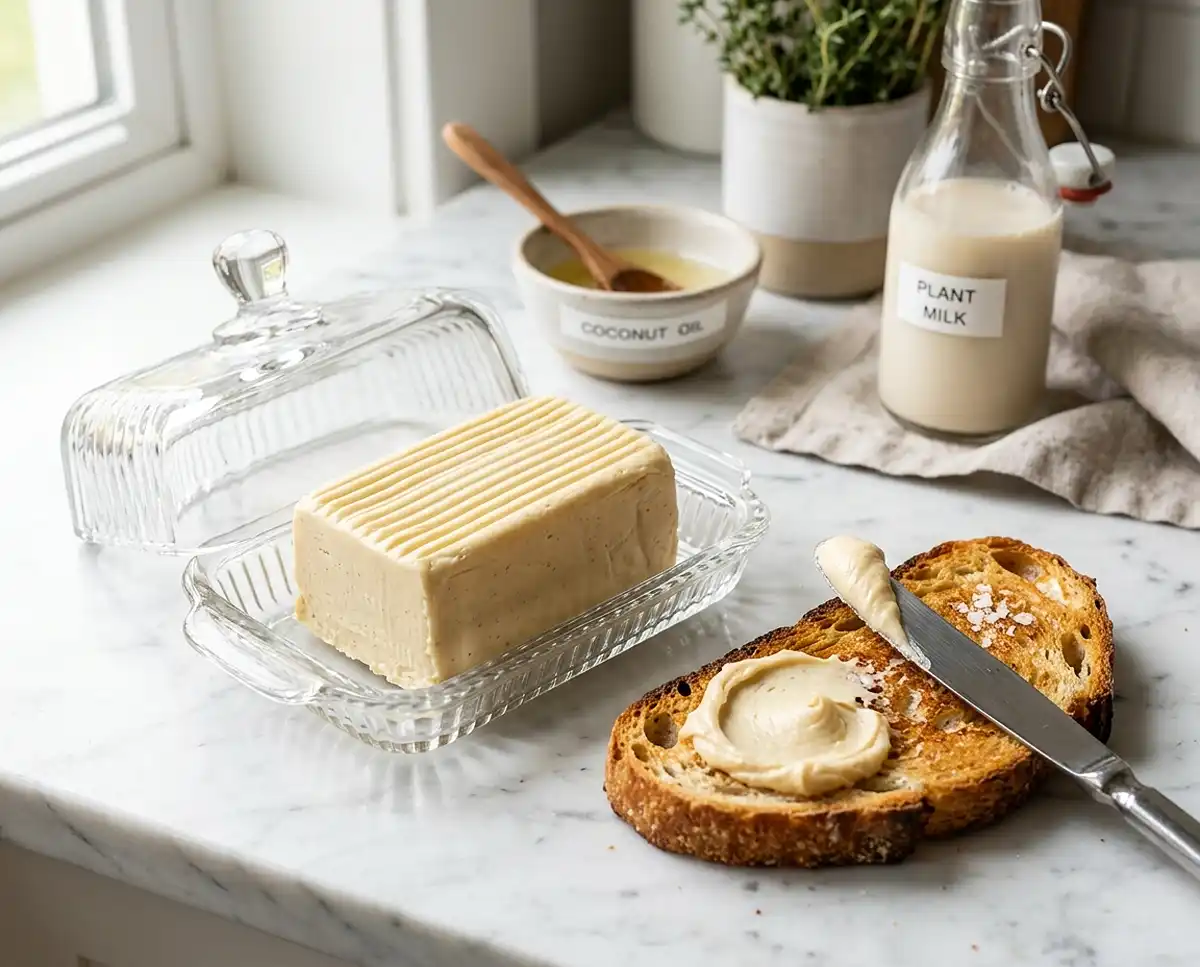
Make creamy, spreadable vegan butter at home with this easy miyoko’s oat butter recipe — no fancy equipment needed, just a blender and a few pantry staples.
Okay, real talk — the first time I tried Miyoko’s cultured oat butter at the store, I literally stood in the dairy aisle reading the label like it had the secrets of the universe on it. It was SO good. Rich, creamy, and somehow buttery without a single drop of dairy.
Then I saw the price tag. And I thought… I can figure this out at home. Spoiler: I did, and this miyokos oat butter recipe is now a weekly staple in my kitchen.
Table of Contents
What Makes This Recipe Worth Your Time
This miyoko oat milk butter recipe gives you a rich, spreadable, dairy-free butter that melts beautifully on toast, sautees veggies like a dream, and tastes like the real thing.
It’s made with just a handful of ingredients — coconut oil, a liquid oil of your choice, cold plant milk, and a pinch of salt. That’s it. No weird additives, no mystery ingredients.
The texture is luxuriously creamy when spread cold, and it melts just like dairy butter when it hits a warm pan. If you’ve been eyeing Miyoko’s at the store, this is your sign to just make it yourself.
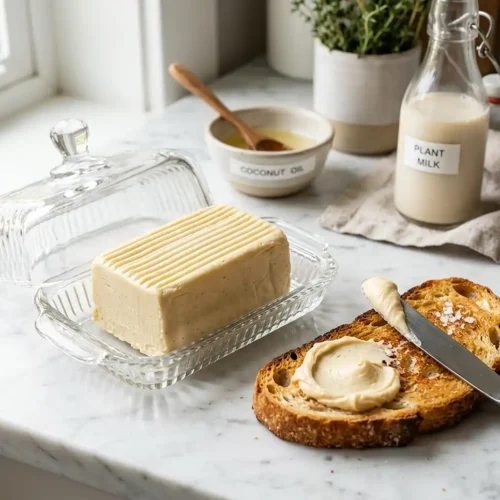
Miyoko’s Oat Butter Recipe
Equipment
- Blender
- measuring cups
- measuring spoons
- Small saucepan or microwave-safe bowl
- Airtight container
- Silicone butter mold or small loaf pan
- Plastic wrap or parchment paper
Ingredients
Solid Fat
- ¾ cup refined coconut oil melted but not hot; refined is best for neutral flavor
Liquid Fat
- 1 cup avocado oil, sunflower oil, or safflower oil chilled; avocado oil is recommended for a silky neutral result
Plant Milk
- ½ to 1 cup oat milk, soy milk, or cashew milk cold; use unsweetened, unflavored, full-bodied oat milk for the closest Miyoko’s-style result
Seasoning
- ½ to 1 teaspoon salt optional, to taste
Optional Flavor Additions
- 1 pinch turmeric optional, for golden butter color
- ½ teaspoon apple cider vinegar optional, for a cultured tang
- plain vegan yogurt optional, a small spoonful for a cultured tang
- fresh herbs optional, finely minced chives, rosemary, or dill for herb butter
- nutritional yeast optional, a small amount for savory depth
Instructions
- Gently melt the refined coconut oil until just liquid. It should be lukewarm, not hot or steaming.
- Make sure the liquid oil is well chilled in the refrigerator. It should be cold but still pourable.
- Add the melted coconut oil and chilled liquid oil to a blender.
- Blend briefly, just until the oils are fully combined and slightly opaque. Do not over-blend at this stage.
- With the blender running on medium speed, slowly drizzle in 1/2 cup of cold plant milk.
- Continue blending until the mixture thickens and turns creamy, similar to a loose mayonnaise.
- If you want a softer, more spreadable butter, add more cold plant milk a splash at a time until the texture looks creamy and smooth.
- Add salt to taste while blending, if using.
- For optional flavor variations, blend in a pinch of turmeric for color, apple cider vinegar or vegan yogurt for tang, or nutritional yeast for savory depth.
- Pour the blended butter into an airtight container, silicone butter mold, or small loaf pan lined with plastic wrap or parchment paper.
- Smooth the top, then refrigerate for 1 to 2 hours, or until firm and spreadable.
- Once set, use like store-bought vegan butter for spreading, sautéing, baking, or finishing vegetables and toast.
Notes
Ingredients You’ll Need
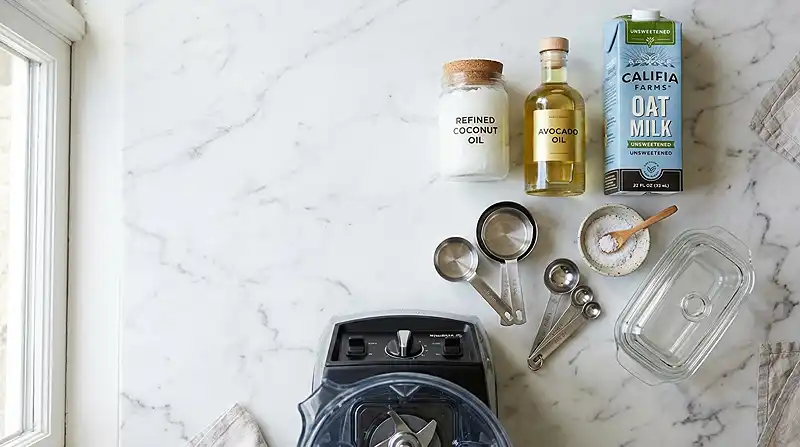
Here’s everything laid out cleanly. You’ll notice there’s some flexibility in the amounts — that’s intentional. More on that in the tips section below.
| Category | Ingredient | Amount |
|---|---|---|
| Solid Fat | Refined coconut oil (melted, not hot) | 3/4 cup |
| Liquid Fat | Avocado, sunflower, or safflower oil (chilled) | 1 cup |
| Plant Milk | Oat milk, soy milk, or cashew milk (cold) | 1/2 to 1 cup |
| Seasoning | Salt (optional, to taste) | 1/2 to 1 tsp |
A quick note on the plant milk: for the closest match to Miyoko’s cultured oat milk butter, go with an unsweetened, unflavored oat milk that has a good creamy body. Brands with a thicker consistency work best here.
For the liquid oil, avocado oil is my personal favorite — it’s neutral in flavor and gives a really silky result. Sunflower and safflower work great too if that’s what you have on hand.
How to Make Miyoko’s Oat Butter Recipe Step by Step
This whole process takes maybe 10 minutes of active work. The rest is just waiting for the fridge to do its thing. Let’s walk through it.
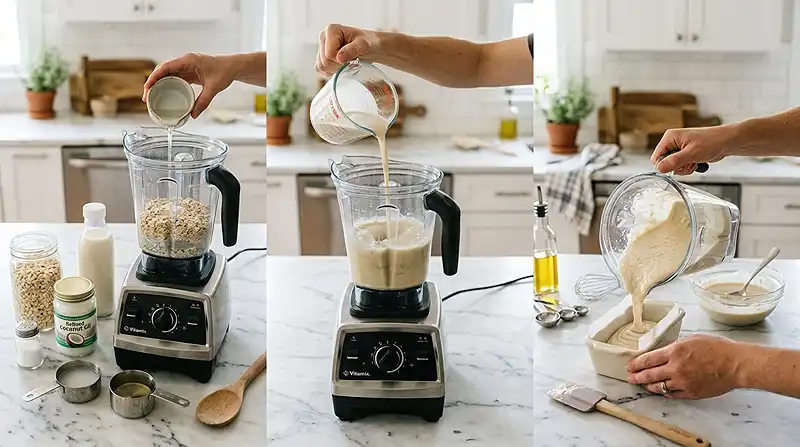
Step 1: Prepare Your Oils
Gently melt your refined coconut oil until it’s just liquid — not piping hot, just lukewarm. You want it fluid but not steaming.
At the same time, make sure your liquid oil is well chilled in the fridge. It should be cold and pourable, not at room temp. This temperature contrast is what helps the emulsification happen properly.
Pro tip: refined coconut oil is key here. Unrefined (virgin) coconut oil has a strong coconut flavor that will come through in your butter. Refined is neutral and tasteless — perfect for mimicking dairy butter.
Step 2: Blend the Fats Together
Pour both oils into your blender — the melted coconut oil and the chilled liquid oil. Blend them briefly, just until fully combined. You’ll see the mixture turn slightly opaque and smooth.
Don’t over-blend at this stage. You’re just integrating the fats, not emulsifying yet. Think of it like introducing two ingredients before the real magic happens.
Step 3: Emulsify with Plant Milk
Here’s where the miyokos oat milk butter recipe really comes to life. Keep the blender running on medium speed and slowly drizzle in your cold plant milk, starting with just 1/2 cup.
Watch the mixture — it should start to thicken and turn creamy, almost like a loose mayo. If it’s still too thin or you want a softer, more spreadable consistency, add more plant milk a splash at a time.
If you’re adding salt, now’s the time. Add it while blending and taste as you go. Some people love a lightly salted butter; others prefer it plain. You do you.
“The moment the mixture shifts from oily to creamy is genuinely satisfying — like watching science happen in real time.”
Step 4: Set It in the Fridge
Pour your blended butter into a container, a silicone butter mold, or even just a small loaf pan lined with plastic wrap. Smooth the top if you want it to look pretty.
Refrigerate until firm — usually 1 to 2 hours. The coconut oil is what solidifies the butter as it cools, giving it that familiar firm-but-spreadable texture.
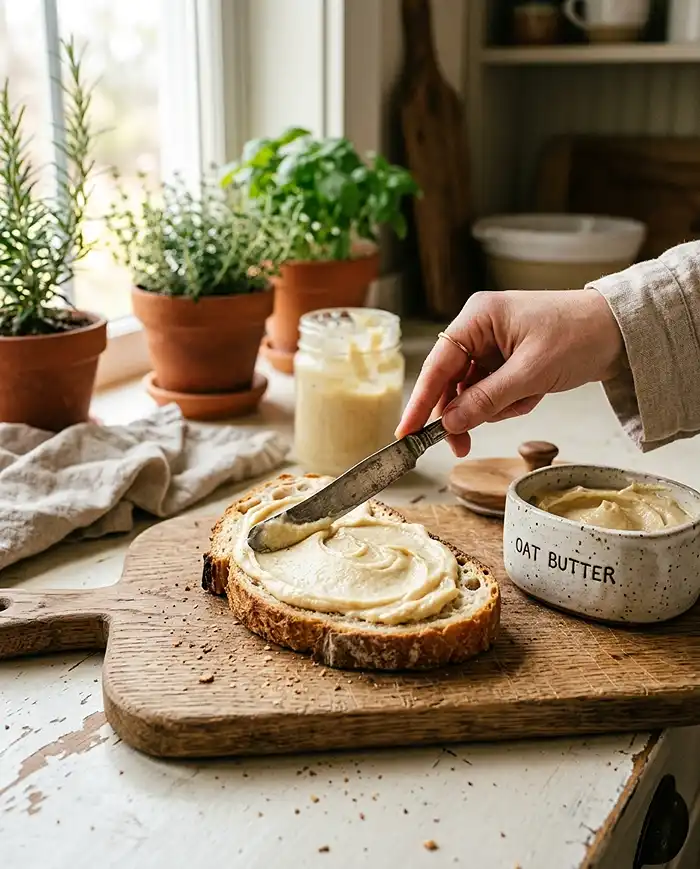
Once set, it’s ready to use just like any store-bought vegan butter. Spread it on warm toast, use it in baking, or drop a pat on steaming veggies.
Expert Tips, Variations, and Troubleshooting
Getting the Texture Just Right
Firmness is all about the coconut oil ratio. More coconut oil equals a firmer butter — great if you want those satisfying sliceable pats. More liquid oil makes it softer and more spreadable straight from the fridge.
If your butter comes out too soft even after chilling, try adding a bit more coconut oil next batch. Too firm and hard to spread? Dial back the coconut oil and increase the liquid oil slightly.
Flavor Variations Worth Trying
Once you’ve nailed the base miyoko oat milk butter recipe, you can start playing with flavors. A tiny pinch of turmeric adds a lovely golden color that looks just like dairy butter.
Want a cultured, tangy flavor closer to the store-bought version? Add 1/2 teaspoon of apple cider vinegar or a small spoonful of plain vegan yogurt before blending. It makes a noticeable difference.
You can also try herb butter by folding in finely minced fresh herbs like chives, rosemary, or dill after blending. This is incredible melted over a hearty buffalo chicken salad sandwich or spread on crusty bread.
Troubleshooting Common Issues
If your butter separates in the fridge — with an oily layer on top — it means the emulsification didn’t fully take. The fix is to re-blend it, making sure the plant milk goes in slowly and the blender is running the whole time.
If it’s grainy or waxy, your coconut oil was probably too hot when you blended it. Make sure it’s cooled to lukewarm before combining with the chilled liquid oil.
Butter too bland? Don’t skip the salt — even a tiny amount makes a huge difference in flavor. You can also add a drop of nutritional yeast for a subtle savory, almost cheesy depth.
Storage Instructions
| Storage Method | Container | How Long It Lasts |
|---|---|---|
| Refrigerator | Airtight container or butter dish | Up to 2 weeks |
| Freezer | Wrapped in parchment, then sealed bag | Up to 3 months |
Reheating and No-Waste Ideas
To use frozen butter, just move it to the fridge overnight and it’ll be ready to spread by morning. No microwave needed — the texture holds up perfectly through a slow thaw.
If you have a small amount left at the end of the week that’s starting to look a little tired, melt it down and use it as a cooking fat. It’s fantastic for sauteing onions, making garlic bread, or finishing a pasta sauce.
You can also use leftover butter to make compound butter rolls — just soften it, mix in herbs or spices, roll in parchment, and freeze. Great alongside a classic chicken and egg salad sandwich for a full spread.
What to Do with Your Homemade Vegan Butter
This miyokos oat milk butter recipe works beautifully in baking anywhere a recipe calls for vegan butter — cookies, pie crusts, muffins, you name it. The fat ratio is close enough to commercial vegan butter that it substitutes 1:1.
It’s also wonderful as a finishing butter stirred into mashed cauliflower, drizzled over popcorn, or mixed into protein-packed cottage cheese bowls for a richness boost.
For baking science geeks: the coconut oil provides the saturated fat structure needed for flaky textures, while the liquid oil keeps everything tender. It behaves remarkably like dairy butter in most applications.
Miyoko’s Oat Butter Recipe FAQs
Can I use a different plant milk besides oat milk?
Absolutely. Soy milk and cashew milk both work well in this miyoko oat milk butter recipe. For the closest result to Miyoko’s store-bought version, stick with oat milk that has a creamy, full-bodied texture. Avoid thin, watery milks as they can affect the emulsification.
Why did my butter turn out grainy or waxy?
This usually happens when the coconut oil is too hot when blended. Make sure it’s cooled to lukewarm before combining with the chilled liquid oil. Temperature contrast is key to a smooth, creamy result.
Is refined coconut oil really necessary, or can I use virgin?
Refined is strongly recommended for this miyokos oat butter recipe. Virgin coconut oil has a noticeable coconut flavor that comes through in the finished butter. Refined coconut oil is completely neutral and lets the buttery flavor shine through without any tropical taste.
Can I use this butter for baking?
Yes, it works well as a 1:1 substitute for vegan butter in most baking recipes — cookies, muffins, pie crusts, and more. The coconut oil provides the saturated fat structure that baked goods need, while the liquid oil keeps the texture tender.
How is this different from store-bought Miyoko’s oat butter?
The store-bought version is cultured, which gives it a subtle tangy complexity. This homemade miyokos oat milk butter recipe skips the culturing step for simplicity, but you can add a small splash of apple cider vinegar or vegan yogurt to get a similar tangy flavor profile.
Final Thoughts
Honestly, this miyokos oat butter recipe changed how I think about vegan butter. It’s cheaper, fresher, and weirdly satisfying to make yourself — like a little kitchen science experiment that ends with delicious results.
Whether you’re dairy-free by choice or necessity, this recipe delivers that rich, creamy, spreadable butter experience without compromise. Give it a try this weekend — I promise it’s easier than you think.
If you make this recipe, I’d love to hear how it went! Leave a comment below, save it to your Pinterest boards for later, and share it with any butter-loving friends who might want to try making their own.
