
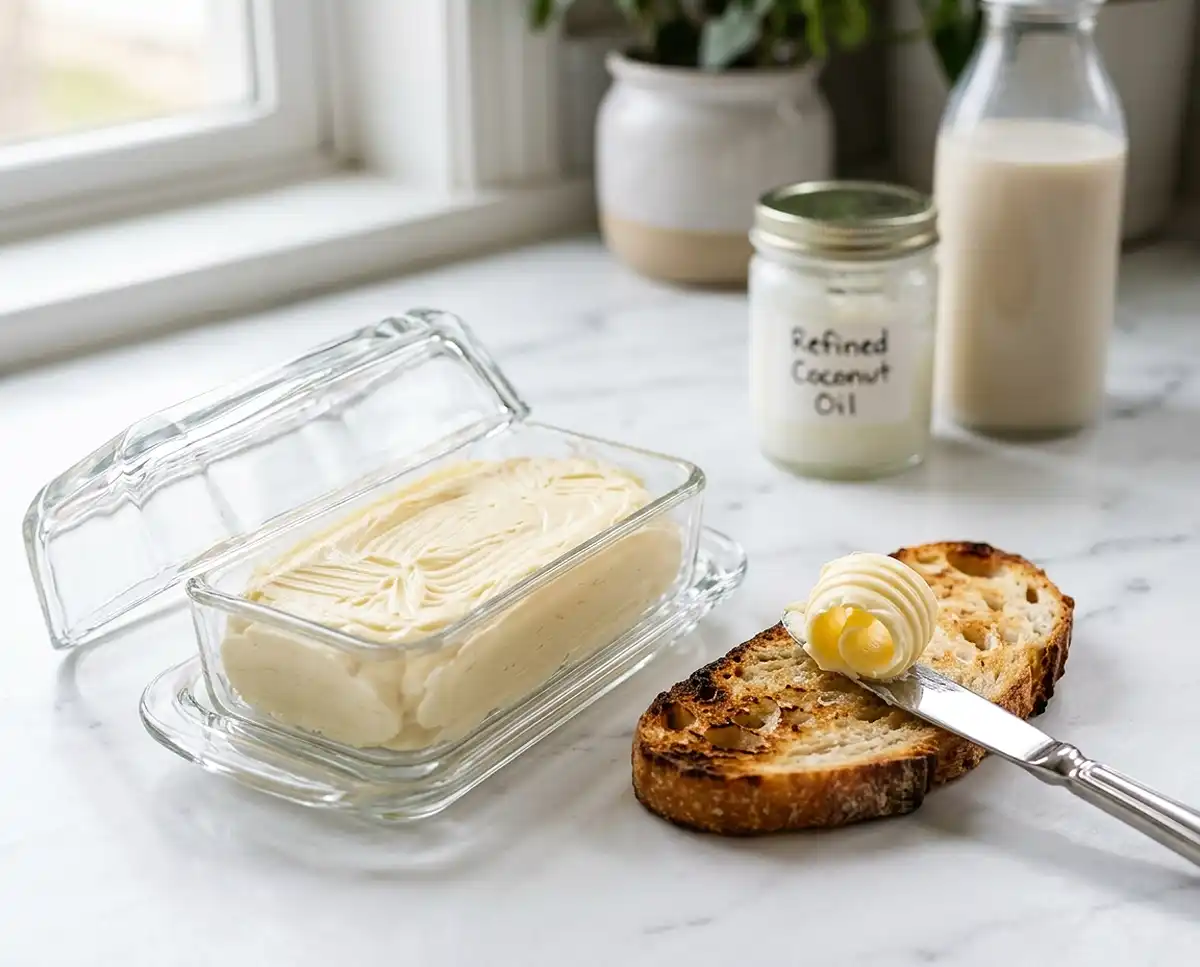
Make rich, creamy vegan butter at home with this easy miyoko butter recipe. Just 3 ingredients, no dairy, and it spreads, melts, and bakes just like the real thing.
I still remember the first time I made this at home. I was honestly skeptical — can a few oils and some plant milk really taste like butter? One bite of warm toast later, I was completely won over.
This miyoko butter recipe is based on Miyoko Schinner’s 3-ingredient vegan butter approach, and it’s one of those recipes that feels almost like a magic trick. Simple, fast, and way more satisfying than anything from a tub.
Table of Contents
Why You’ll Love This Recipe
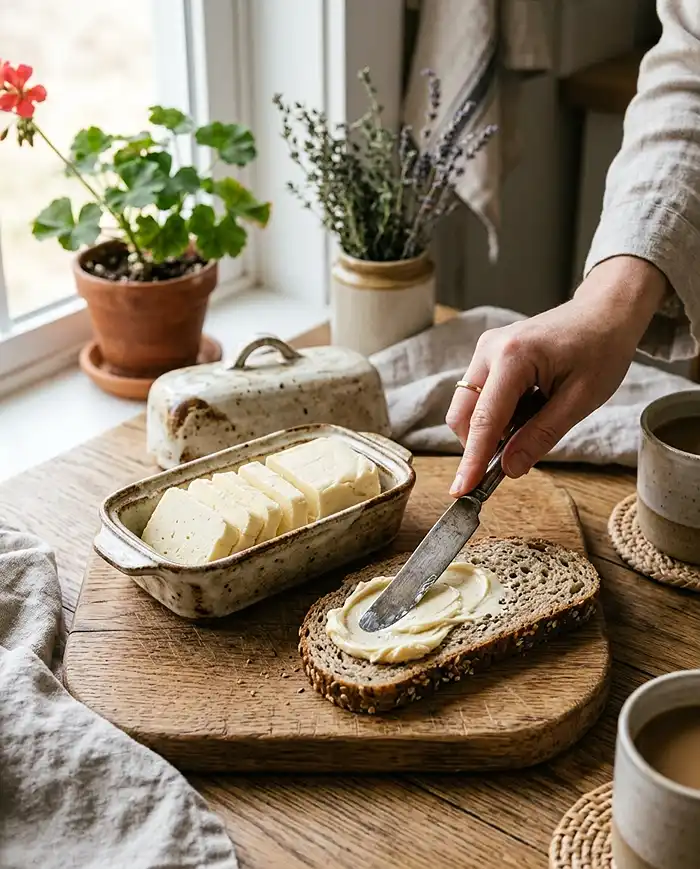
This miyoko vegan butter recipe delivers a rich, creamy spread with a neutral flavor that works beautifully on toast, in baking, and anywhere you’d normally reach for dairy butter.
It comes together in under 10 minutes of hands-on time. No fancy equipment, no weird ingredients — just oils, plant milk, and a blender.
If you’ve been eyeing Miyoko’s oat butter recipe for a while, this version is a great starting point before you experiment with other variations.
Miyoko Butter Recipe
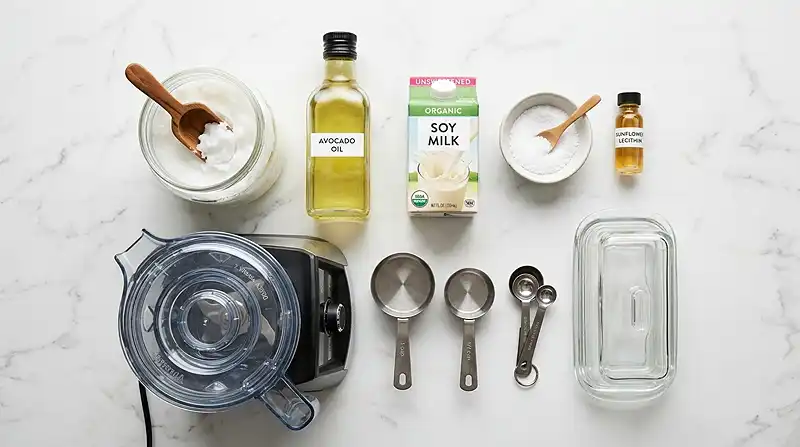
Equipment
- Blender or immersion blender
- Tall blending container
- measuring cups
- measuring spoons
- Small loaf pan, silicone mold, or glass jar
- Airtight container
Ingredients
Solid Fat
- ¾ cup refined coconut oil melted but not hot; use refined to avoid coconut flavor
Liquid Fat
- 1 cup liquid oil avocado oil or sunflower oil, very cold from the fridge
Emulsifier / Base
- ½ to 1 cup plant-based milk cold; soy milk works best, but plain unsweetened oat, almond, or cashew milk can work
Seasoning
- 1 pinch salt optional, to taste
Optional Add-In
- 2 teaspoons liquid lecithin optional, improves firmness and sliceability, especially for baking
Instructions
- Add the melted but not hot refined coconut oil to a blender or tall container if using an immersion blender.
- Pour in the very cold liquid oil. The temperature contrast between the cooled coconut oil and cold liquid oil helps the emulsion form properly.
- With the blender running on low, slowly pour in 1/2 cup of cold plant-based milk.
- Blend until the mixture thickens to a pale, creamy, mayonnaise-like consistency, about 1 to 2 minutes.
- If you want a softer, more spreadable butter, add more cold plant milk a little at a time, up to 1 cup total, and blend until smooth.
- Add a pinch of salt if desired and blend for a few seconds to combine. If using liquid lecithin for firmer butter, blend it in now.
- Pour the mixture into a small loaf pan, silicone mold, glass jar, or airtight container.
- Refrigerate for at least 2 to 3 hours, or until the butter firms into a solid, scoopable texture.
- Use as a 1:1 substitute for vegan or dairy butter for spreading, sautéing, baking, sauces, mashed potatoes, or finishing vegetables.
Notes
What You Need: Ingredients Breakdown
The beauty of Miyoko Schinner’s 3-ingredient vegan butter recipe is its simplicity. Every ingredient plays a specific role, so it’s worth understanding what each one does before you start.
| Ingredient Group | Ingredient | Notes |
|---|---|---|
| Solid Fat | 3/4 cup refined coconut oil | Melted but not hot. Use refined — not unrefined — to avoid a coconut flavor. |
| Liquid Fat | 1 cup liquid oil (avocado or sunflower) | Must be very cold straight from the fridge before blending. |
| Emulsifier / Base | 1/2 to 1 cup plant-based milk | Soy milk works best for its higher protein and fat. Oat or other unsweetened milks work too. |
| Seasoning | Pinch of salt | Optional, but recommended. Add to taste. |
| Optional Add-In | 2 tsp liquid lecithin | Improves firmness and sliceability, especially for baking. |
A quick note on the coconut oil: refined is key here. Unrefined coconut oil has a noticeable coconut scent and taste that will come through in your miyokos butter recipe — and that’s not what we’re going for.
As for the liquid oil, cold temperature matters a lot. Warm oil won’t emulsify properly and you’ll end up with a greasy, separated mess rather than a creamy butter.
How to Make Miyoko’s Vegan Butter Recipe
The process is simple: blend, season, and chill. That’s really it. Here’s how to do it right so your miyoko’s vegan butter recipe sets up perfectly every time.
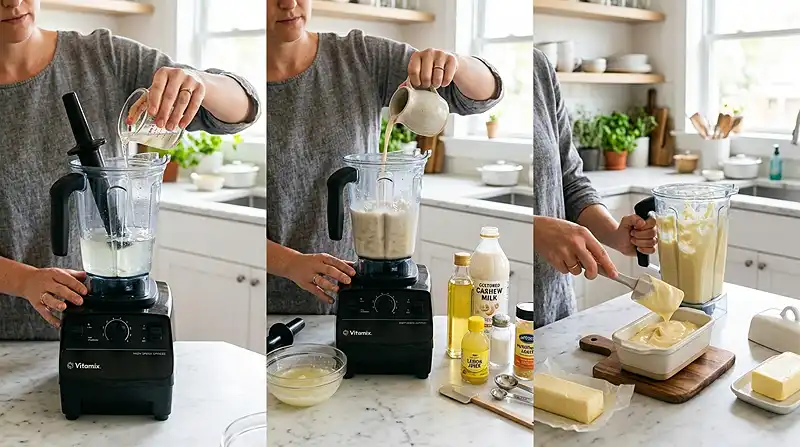
Step 1 — Combine Your Oils
Add your 3/4 cup of melted (but not hot) refined coconut oil into a blender or a tall container if using an immersion blender.
Pour in 1 cup of very cold liquid oil. That temperature contrast is what sets up the emulsion, so don’t skip chilling your liquid oil beforehand.
Step 2 — Add the Plant-Based Milk
With the blender running on low, slowly pour in 1/2 to 1 cup of cold plant milk. Go slow — this is where the magic happens.
Soy milk is the gold standard here for Miyoko’s vegan butter recipe. It’s higher in both protein and fat compared to other plant milks, which helps the emulsion hold together beautifully.
If you’re using oat milk or another variety, that’s totally fine — just make sure it’s plain, unsweetened, and cold.
Step 3 — Blend Until Thick
Keep blending until the mixture thickens up to a mayonnaise-like consistency. It should look pale, creamy, and just a little glossy.
This usually takes about 1 to 2 minutes depending on your blender. If it’s still looking loose and liquid-y, keep going — it’ll get there.
“When the texture looks like a thick, pourable cream, you’re almost done. Give it a little taste — it already smells incredible.”
Step 4 — Season It
If you’d like a salted butter vibe, add a small pinch of salt and blend for just a few more seconds to incorporate it evenly.
For baking purposes, you might want to skip the salt so you have more control over the seasoning in your final dish.
Step 5 — Chill to Set
Pour the mixture into a container — a small loaf pan, a silicone mold, or just a glass jar all work great.
Pop it into the fridge and let it firm up for at least 2 to 3 hours. It’ll go from a pourable cream to a solid, scoopable butter that holds its shape.
If you want butter sticks for baking, pour into a stick-shaped silicone mold before chilling. It makes portioning so much easier.
Expert Tips for the Best Results
Temperature Is Everything
This miyoko butter recipe lives and dies by temperature. Your coconut oil should be melted but cooled down — think warm, not hot. Your liquid oil and plant milk should be cold from the fridge.
If the oils are too warm when you blend, the emulsion won’t hold and you’ll get separation. If that happens, pop the whole thing in the fridge for 15 minutes and try blending again.
Adjust Firmness to Your Needs
Want a firmer butter, more like a stick for baking? Use closer to 1/2 cup of plant milk. Want a softer, more spreadable butter? Use the full cup.
For baking specifically, adding 2 teaspoons of liquid lecithin is a great move. It acts as a natural emulsifier that helps the butter hold its shape even when warm.
Use Soy Milk for Best Emulsification
Not all plant milks behave the same in this miyoko’s butter recipe. Soy milk consistently gives the most stable emulsion because of its naturally higher protein content.
That said, oat milk, almond milk, and cashew milk can work — just stick to plain, unsweetened versions and make sure they’re cold.
Variations Worth Trying
Herb and Garlic Compound Butter
Once your butter is set, stir in minced fresh garlic, chopped parsley, and a squeeze of lemon juice. Spread it on warm bread or melt it over roasted vegetables for an instant upgrade.
Brown Butter Style
Gently heat your finished butter in a small pan until it foams and turns golden. It’ll develop a nutty, toasty flavor that’s amazing drizzled over pasta or pancakes.
Cinnamon Honey Spread
Mix softened miyoko vegan butter with a drizzle of maple syrup and a pinch of cinnamon. It’s the kind of thing that makes you want to make toast just as an excuse to eat it.
Pair it with one of these hearty dishes on the side — like this buffalo chicken salad sandwich or a satisfying chicken and egg salad sandwich — for a well-rounded meal.
Troubleshooting Common Issues
Butter Won’t Firm Up
If your butter is still liquid after chilling for several hours, the emulsion likely didn’t set properly. Try placing it in the freezer for 30 minutes, then transferring it back to the fridge.
Next time, make sure your liquid oils were cold enough before blending and that your coconut oil wasn’t too hot when you added it.
Grainy or Separated Texture
A grainy texture usually means the coconut oil solidified too quickly during blending — often because the liquid oil was too cold or added too fast.
You can rescue it by gently warming the mixture and re-blending from scratch. Patience during the pour is key.
Too Much Coconut Flavor
Double-check that you used refined coconut oil, not unrefined. Refined coconut oil has the coconut flavor removed during processing.
If you used unrefined by accident, the coconut taste will be noticeable. It’s not harmful, but it won’t taste like butter — more like a tropical spread.
How to Use This Vegan Butter
This miyoko’s vegan butter recipe is incredibly versatile. It replaces dairy butter in a 1:1 ratio for most everyday uses — spreading, sauteing, and baking all work well.
One thing to keep in mind for baking: this butter is softer and melts a little faster than store-bought dairy butter. Keep it well-chilled before using in pastry doughs or cookies.
It works beautifully in sauces, as a finishing butter on vegetables, or stirred into mashed potatoes. If you’re on a health-conscious streak, check out these cottage cheese bowls for weight loss — a great protein-packed pairing.
Storage Guide
| Storage Method | Container | How Long |
|---|---|---|
| Refrigerator | Sealed glass jar or airtight container | 3 to 4 weeks |
| Freezer | Silicone mold or freezer-safe container | Up to 3 months |
| Butter Sticks (frozen) | Wrapped in parchment, stored in a zip bag | Up to 3 months |
Reheating and No-Waste Tips
To soften straight from the fridge, leave it at room temperature for 10 to 15 minutes. It softens quickly and spreads easily.
If you’re using it to saute, melt it gently over low-medium heat. Because it has a lower melting point than dairy butter, it can burn if the heat is too high.
Have leftover butter nearing the end of its shelf life? Use it up by making compound butter rolls, stirring it into a pan sauce, or blending it into a creamy salad dressing. Nothing needs to go to waste.
According to Healthline’s overview of plant-based diets, swapping animal-based fats for plant-based alternatives can have meaningful health and environmental benefits — and this butter is a delicious way to make that switch.
Miyoko Butter Recipe FAQs
Can I use any plant milk for this miyoko butter recipe?
Soy milk works best because of its higher protein and fat content, which helps create a stable emulsion. Oat milk, almond milk, and cashew milk can work too — just make sure they’re plain, unsweetened, and cold from the fridge before use.
How does this compare to store-bought Miyoko’s butter?
Miyoko Schinner’s 3-ingredient vegan butter recipe is a homemade take on the concept behind her brand. The store-bought version uses a more complex fermentation process for a deeper flavor, but this homemade version is a great everyday alternative that costs a fraction of the price.
Can I use this miyoko vegan butter for baking?
Yes, it substitutes dairy butter in a 1:1 ratio for most recipes. It does melt a bit faster, so keep it cold before adding to pastry doughs. Adding 2 teaspoons of liquid lecithin to the recipe improves firmness and helps it hold up better in baked goods.
Why did my butter not set firm in the fridge?
This usually happens if the oils were too warm during blending or the plant milk wasn’t cold enough. Try freezing for 30 minutes, then moving back to the fridge. Next time, ensure your liquid oil is very cold before starting.
How long does homemade miyoko’s vegan butter last?
Stored in a sealed container in the fridge, it keeps well for 3 to 4 weeks. You can also freeze it in stick molds or a freezer-safe container for up to 3 months.
Conclusion
This miyoko butter recipe is one of those kitchen wins that feels a little unbelievable until you try it. Three simple ingredients, a blender, and a few hours in the fridge — and you’ve got real, creamy, spreadable vegan butter.
Whether you’re going fully plant-based or just curious about cutting back on dairy, this is a recipe worth keeping in your regular rotation.
Give it a try this week and let me know how it goes! Leave a comment below with your favorite way to use it — and if you make it, please share it on Pinterest so others can find this recipe too.