
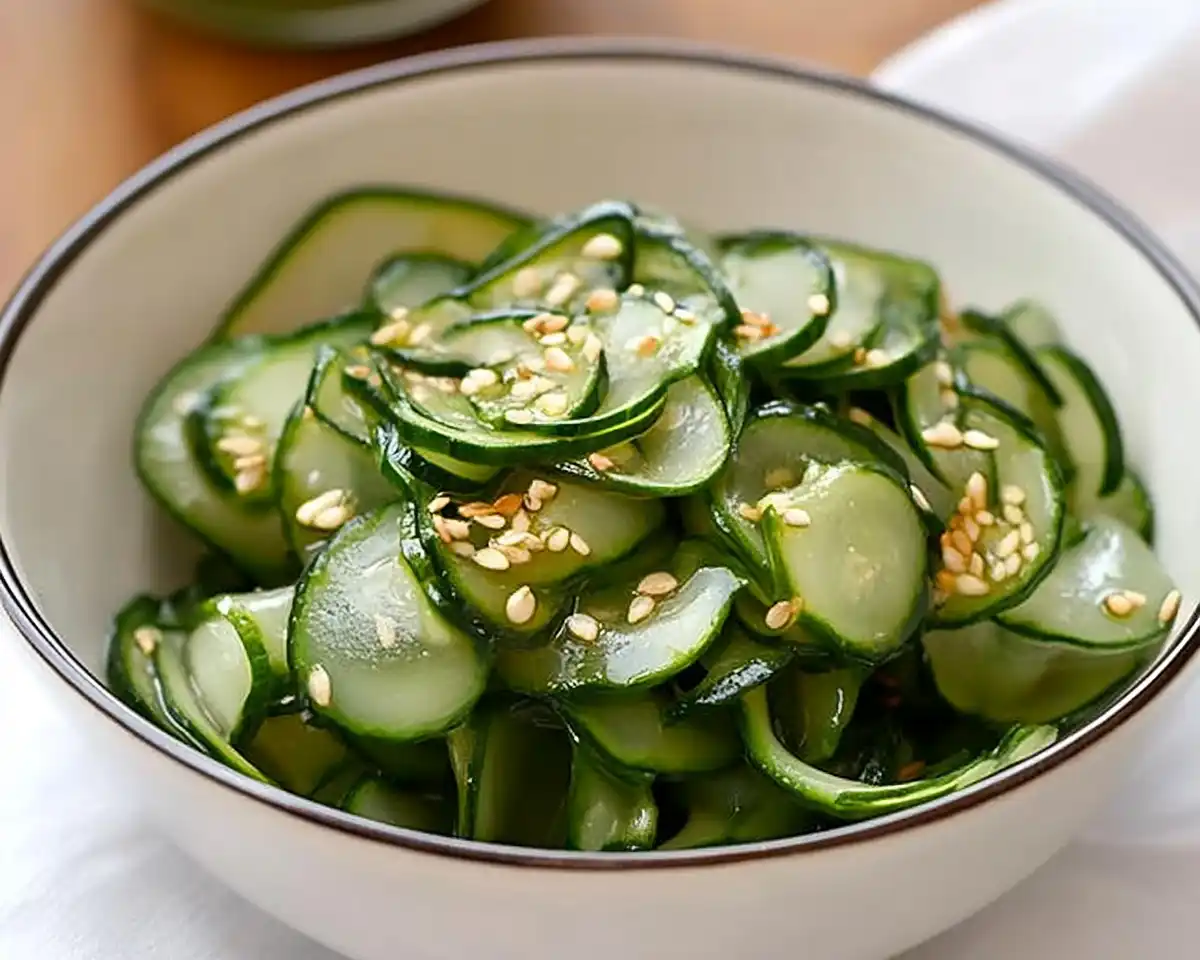
This bright, tangy Japanese cucumber salad sunomono recipe is exactly what your summer table has been missing — refreshing, ridiculously easy, and honestly kind of addictive.
I first had sunomono at a tiny ramen shop tucked into a side street, and it arrived in a little ceramic dish like a palate-cleansing gift. I’ve been making it at home ever since, tweaking the dressing until it hit that perfect sweet-salty-tangy balance.
Table of Contents
What Is Sunomono, Exactly?
Sunomono literally means “vinegared things” in Japanese — so yes, it’s basically a cucumber pickle salad, but way more elegant than that sounds. It’s a traditional Japanese side dish served in small portions alongside rice, sushi, or grilled proteins.
The star of the show is thin-sliced cucumber bathed in a light rice vinegar dressing. It’s cool, crisp, and just a little sweet. Think of it as the salad that makes everything else on the plate taste better.
Why You’ll Love This Recipe Japanese Cucumber Salad
There’s no cooking involved. Zero. You’re basically slicing, salting, squeezing, and mixing. It’s the kind of recipe that feels fancy but takes almost no effort — and that’s my love language.
The texture is the real magic. By drawing out moisture with salt first, the cucumbers stay crisp and firm even after marinating, never watery or limp. That little step makes all the difference.
It also pairs beautifully with heavier dishes. Serving something rich like teriyaki or fried tofu? A small bowl of this sunomono Japanese cucumber salad recipe cuts right through the richness and refreshes your palate.
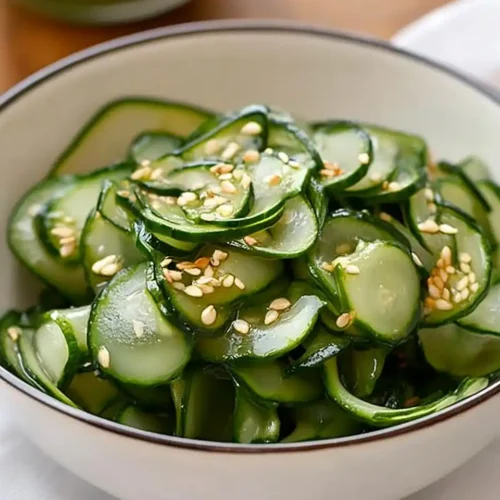
Japanese Cucumber Salad Sunomono
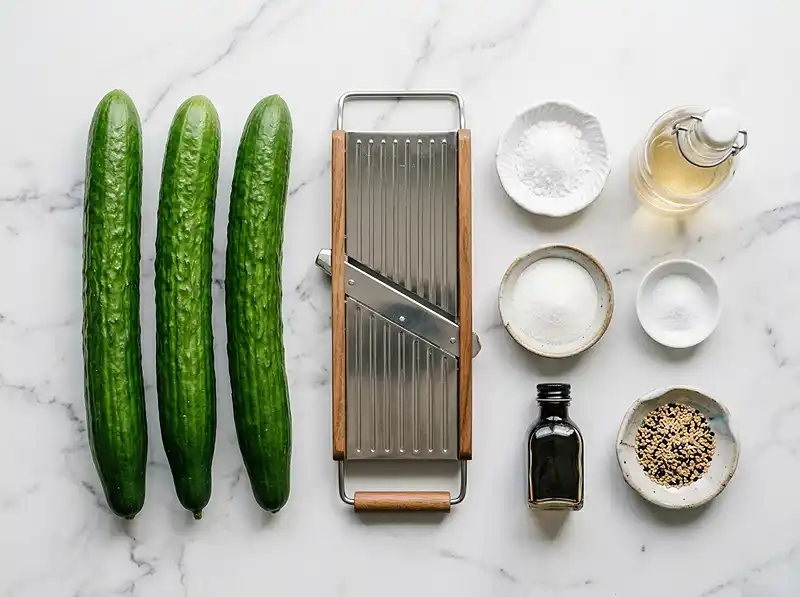
Equipment
- Mandolin slicer
- Mixing bowl
- Colander
- Whisk
Ingredients
Produce
- 3 medium Japanese or Persian cucumbers
Salting
- 2 tsp Salt to draw out moisture
Dressing
- 2.25 tbsp Rice vinegar
- 0.75 tbsp Sugar
- 0.2 tsp Salt
- 0.2 tsp Soy sauce
Garnish
- 0.75 tsp Sesame seeds
Instructions
- Slice the cucumbers as thinly as possible, ideally using a mandolin slicer for uniform pieces.
- Toss cucumber slices with salt and let sit for 10 minutes to draw out excess moisture.
- Rinse cucumbers thoroughly, drain, and firmly squeeze out remaining water.
- Whisk together rice vinegar, sugar, salt, and soy sauce until fully dissolved.
- Combine cucumbers with dressing and refrigerate for at least 1 hour to marinate.
- Garnish with sesame seeds just before serving and enjoy chilled.
Notes
Ingredients You’ll Need
Everything here is simple and easy to find. Japanese or Persian cucumbers work best because they have thin skin, fewer seeds, and a firm, satisfying crunch that holds up well to the dressing.
| Category | Ingredient | Amount |
|---|---|---|
| Produce | Japanese or Persian cucumbers | 3 medium |
| Salting | Salt (to draw out moisture) | 2 tsp |
| Dressing | Rice vinegar | 2.25 tbsp (31.5 g) |
| Dressing | Sugar | 0.75 tbsp (10 g) |
| Dressing | Salt | 0.2 tsp (0.65 g) |
| Dressing | Soy sauce | 0.2 tsp (1.05 g) |
| Garnish | Sesame seeds | 0.75 tsp (2.2 g) |
A note on vinegar: always use rice vinegar, not regular white vinegar. Rice vinegar is milder and slightly sweet, which gives sunomono its signature gentle tang. According to Healthline’s overview of rice vinegar, it also has a lower acidity than most other vinegars, making it perfect for delicate dressings like this one.
Step-by-Step Instructions
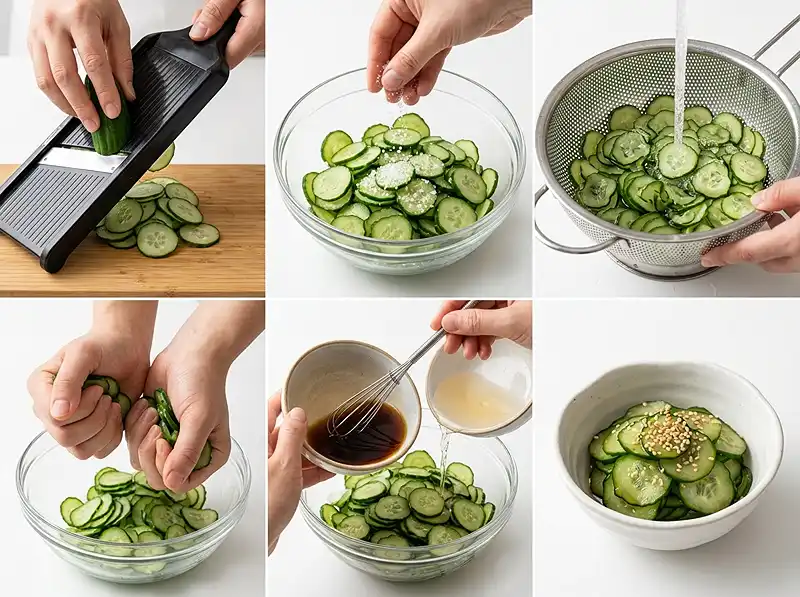
Step 1: Slice the Cucumbers Paper-Thin
Grab your cucumbers and slice them as thinly as you can — we’re talking almost translucent. A mandolin slicer is your best friend here for getting those perfectly uniform, delicate rounds.
No mandolin? No problem. A sharp knife works fine, just take your time. Thinner slices soak up the dressing better and give you that tender-yet-crisp bite that makes sunomono so satisfying.
Step 2: Salt and Wait
Transfer your cucumber slices to a medium bowl and sprinkle over the 2 tsp of salt. Toss with your hands to coat every slice evenly, then let it sit for 10 minutes.
This step might feel optional but it really isn’t. The salt pulls out excess moisture so your dressing doesn’t get diluted. You’ll be amazed how much water comes out of those innocent-looking cucumbers.
“Don’t skip the salting step — it’s what separates a watery, bland salad from a bright, punchy one.”
Step 3: Rinse, Drain, and Squeeze
Rinse the salted cucumbers under cold water to wash off all that salt. Give them a good, thorough rinse — you don’t want the salad to taste like the ocean.
Now drain them in a colander, then pick up handfuls and squeeze firmly. Really squeeze. The cucumbers can take it, and getting rid of that water is key to a well-dressed, flavorful salad. Don’t be shy here.
Step 4: Mix the Dressing
In a small bowl, whisk together the rice vinegar, sugar, salt, and soy sauce until the sugar dissolves completely. This takes about 30 seconds of stirring — easy.
The dressing is light but surprisingly complex. The soy sauce adds just a whisper of umami depth without making it taste “soy-saucey.” It’s a subtle thing, but you’d miss it if it weren’t there.
If you love umami-forward dressings, you might also enjoy drizzling a little homemade eel sauce over the finished salad for a sweet-savory twist.
Step 5: Marinate and Chill
Pour the dressing over the squeezed cucumbers and toss to combine. Now — patience. Let everything marinate in the fridge for at least 1 hour.
Overnight is even better. The cucumbers absorb all those tangy, sweet flavors and the whole thing just mellows into something deeply satisfying. Trust the process.
Step 6: Garnish and Serve
Right before serving, sprinkle the sesame seeds over the top. Don’t add them earlier or they’ll get soggy and lose that lovely little crunch.
Serve cold, straight from the fridge, in small side bowls. A pair of chopsticks and a clean white dish make it feel like a proper Japanese appetizer — which it absolutely is.

Expert Tips for the Best Sunomono Japanese Cucumber Salad Recipe
Choosing the Right Cucumber
Japanese cucumbers are the classic choice — they’re slender, nearly seedless, and have very thin skin you don’t need to peel. Persian cucumbers are a widely available substitute that works just as well.
Avoid regular English cucumbers if you can. They’re larger with more seeds and higher water content, which makes it harder to get that clean, crisp texture we’re going for.
Getting the Dressing Balance Right
The dressing in this recipe japanese cucumber salad is intentionally subtle. If you like it tangier, add an extra half tablespoon of rice vinegar. Prefer it sweeter? Bump the sugar up slightly — just don’t go overboard or it’ll taste like a dessert.
Always taste the dressing before adding it to the cucumbers. Dip a finger in and adjust. Cooking is personal, and your palate knows best.
Make It Your Own: Fun Variations
Add thin slices of wakame (dried seaweed) for a more traditional izakaya-style sunomono. Just rehydrate the wakame in cold water for 5 minutes, drain, and toss it right in with the cucumbers.
Thinly sliced radishes or shredded carrots also add gorgeous color and extra crunch. This salad is very forgiving with add-ins — feel free to experiment.
For a protein boost, add cooked shrimp or sliced imitation crab. It transforms this side dish into a light, complete starter. According to cucumber’s nutritional profile, cucumbers are hydrating and low in calories, making this a naturally healthy base for any additions you choose.
Troubleshooting Your Sunomono
Salad Is Too Watery
This almost always means the cucumbers weren’t squeezed thoroughly enough after rinsing. Go back and squeeze harder next time — and make sure you let them sit with the salt for the full 10 minutes.
If the salad is already assembled and watery, pour off the excess liquid from the bottom of the bowl, then toss again. It happens, no shame in it.
Dressing Tastes Too Sour
Add a tiny pinch more sugar and stir. Rice vinegar’s tanginess can vary slightly by brand, so a small sugar adjustment usually fixes this right away. Add in small increments and taste as you go.
Cucumbers Are Soggy
Over-marinating can sometimes soften the cucumbers more than you’d like, especially if the slices were very thin. For best texture, aim to eat the salad within 24 hours of making it.
Storage Instructions
| Storage Method | Container | Duration |
|---|---|---|
| Refrigerator | Airtight container | Up to 2 days |
| Freezer | Not recommended | — |
Sunomono is a fresh dish that doesn’t freeze well — the cucumbers turn mushy when thawed. Stick to the fridge and enjoy it within two days for the best texture and flavor.
Reheating and No-Waste Ideas
This salad is served cold, so no reheating needed. If the cucumbers have released more liquid overnight, just drain it off and give the salad a quick toss before serving.
Got leftover marinated cucumbers that are getting a little soft? Chop them finely and stir them into a grain bowl, rice dish, or use as a topping for avocado toast. The tangy flavor still shines even when the texture is more relaxed.
Looking for more refreshing salad ideas? This sunomono pairs wonderfully alongside a creamy classic like this Martha Stewart potato salad for a fun fusion spread.
FAQs About Japanese Cucumber Salad Sunomono Recipe
Can I make sunomono ahead of time?
Yes, and honestly it gets better as it sits. Make it the night before serving for the deepest flavor. Just hold off on adding the sesame seeds until right before you bring it to the table.
What can I serve with this sunomono Japanese cucumber salad recipe?
It’s a classic pairing with sushi, ramen, teriyaki chicken, or any Japanese-inspired meal. It’s also surprisingly good alongside grilled fish or even a simple bowl of steamed rice. Its bright acidity cuts through rich or heavy flavors beautifully.
Can I use regular white vinegar instead of rice vinegar?
Technically yes, but the result will be sharper and more harsh. Rice vinegar has a gentler, slightly sweet acidity that’s essential to the delicate flavor of authentic sunomono. It’s worth picking up a bottle — it’s inexpensive and lasts forever in the pantry.
Is this recipe japanese cucumber salad gluten-free?
Almost! The only ingredient to watch is the soy sauce. Swap it for tamari or a certified gluten-free soy sauce and the entire dish becomes naturally gluten-free. Everything else is already safe.
Why are my cucumbers not crispy?
Most likely the cucumbers weren’t salted and squeezed thoroughly enough, or they were over-marinated. The crisp texture relies on removing as much moisture as possible before the dressing goes in. Also, using Japanese or Persian cucumbers rather than standard varieties makes a big difference in final texture.
Ready to Make the Best Japanese Cucumber Salad?
This japanese cucumber salad sunomono recipe is one of those dishes you’ll find yourself making on autopilot — a handful of simple ingredients, barely any effort, and a result that feels genuinely special every time.
Whether you’re serving it alongside a full Japanese dinner or just want something bright and refreshing to snack on, sunomono always delivers. It’s proof that the best food doesn’t have to be complicated.
If you’re building out a Japanese-inspired spread, you might also love this stunning swirl pie for a showstopping dessert finish.
Tried this recipe? I’d love to hear how it turned out! Drop a comment below with your thoughts, any fun variations you tried, or questions you have. And if you loved it, please share it on Pinterest so more people can discover this simple, gorgeous little salad. It really does deserve more attention.
