
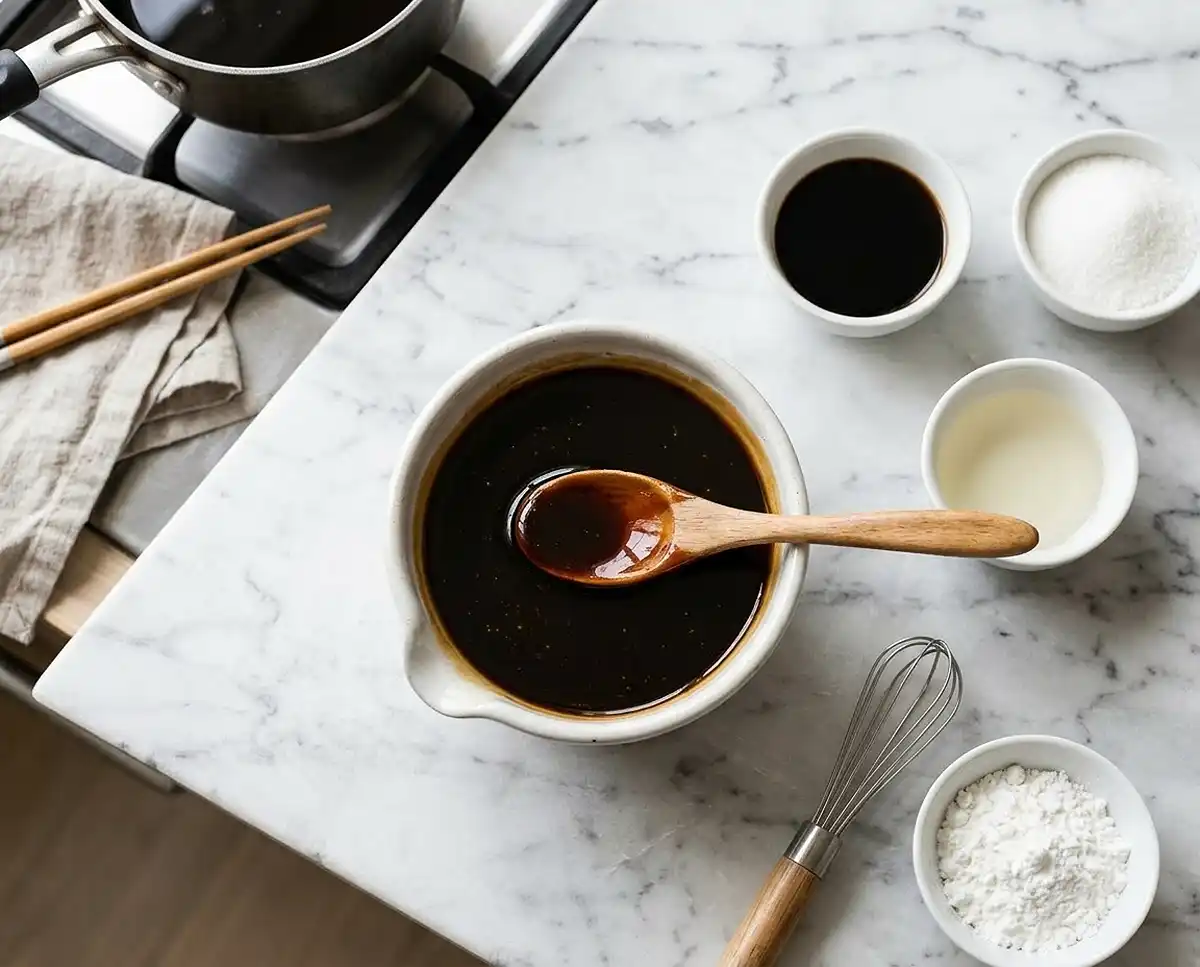
This rich, glossy eel sauce recipe is everything you want in a Japanese condiment — sweet, savory, and deeply umami. Learn how to make eel sauce at home with just 4 simple ingredients.
Honestly, the first time I drizzled homemade unagi sauce over a sushi roll, I couldn’t believe something this good came together in under 20 minutes. It’s one of those recipes that makes you feel like a total kitchen genius.
Table of Contents
What Is Eel Sauce?
Eel sauce, also known as Unagi Sauce, is a thick, sweet-savory Japanese glaze. Despite the name, it contains no eel whatsoever — it just gets its name from being the traditional sauce served over grilled eel (unagi) dishes.
So what is eel sauce made of? Just three pantry staples plus one thickener: soy sauce, sugar, mirin, and a touch of cornstarch. That’s it. Simple, right?
You’ve probably tasted it drizzled over sushi rolls or dipping sauce at your favorite Japanese spot. The good news is that the homemade version is just as good — and honestly, even better when it’s fresh.
Why You’ll Love This Eel Sauce Recipe
This is one of those sauces that quietly upgrades everything it touches. It’s sticky, glossy, and has that perfect balance of sweet and savory that keeps you going back for another dip.
- Only 4 ingredients needed
- Ready in under 20 minutes
- No special equipment required
- Stores well for weeks in the fridge
- Versatile — use it on sushi, grilled meats, veggies, and more
It also pairs beautifully with other simple crowd-pleasers. If you enjoy easy homemade sauces and sides, you might also love this classic homemade potato salad for your next gathering.
Homemade Eel Sauce
Equipment
- Saucepan
- Whisk
Ingredients
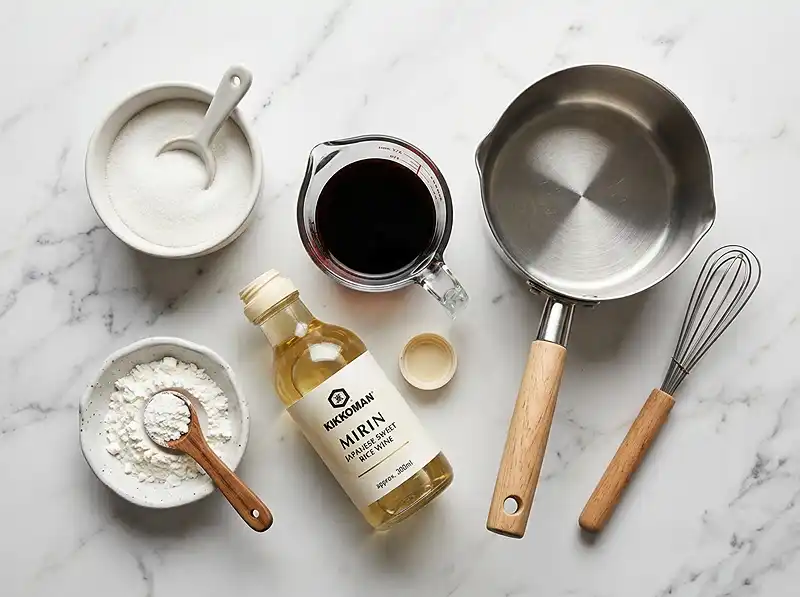
Eel Sauce Ingredients
- ½ cup Soy sauce Regular or low-sodium
- ½ cup Granulated sugar White sugar works best
- ½ cup Mirin Japanese sweet rice wine
- 2 teaspoons Cornstarch For thickening the glaze
Instructions
- In a saucepan over medium heat, whisk together soy sauce, sugar, mirin, and cornstarch until fully combined and smooth.
- Cook the mixture while whisking occasionally until it begins to simmer and thicken, about 8 minutes, then reduce heat to low.
- Continue cooking until the sauce reaches a glossy, syrupy consistency that coats the back of a spoon, about 12–19 minutes total cooking time.
- Remove from heat, let cool to thicken further, then transfer to a jar or airtight container.
Notes
Eel Sauce Ingredients
Let’s talk about what goes into this sauce. Every eel sauce ingredient plays a specific role, and the balance between them is what makes the final result so addictive.
| Ingredient | Amount | Notes |
|---|---|---|
| Soy sauce | 1/2 cup | Use regular or low-sodium |
| Granulated sugar | 1/2 cup | White sugar works best |
| Mirin | 1/2 cup | Japanese sweet rice wine |
| Cornstarch | 2 teaspoons | For thickening the glaze |
Soy sauce brings the salty, umami backbone. Mirin adds a subtle sweetness and that signature Japanese flavor. Sugar balances everything out, and cornstarch gives you that gorgeous, glossy, spoon-coating consistency.
Can’t find mirin? You can learn more about it and substitutions from Serious Eats’ guide to mirin — it’s a really helpful read if you’re new to Japanese cooking.
What to Serve with Eel Sauce
Once you’ve made a batch, you’ll want to put it on everything. Here are some of the best ways to use it:
- Grilled eel (the classic pairing)
- Coconut shrimp for a sweet-savory contrast
- Sushi rolls as a drizzle or dipping sauce
- Asian cucumber salad for a refreshing bite
How to Make Eel Sauce
Now for the fun part. Here’s exactly how to make eel sauce from scratch — it’s genuinely one of the easiest homemade sauces you’ll ever attempt.
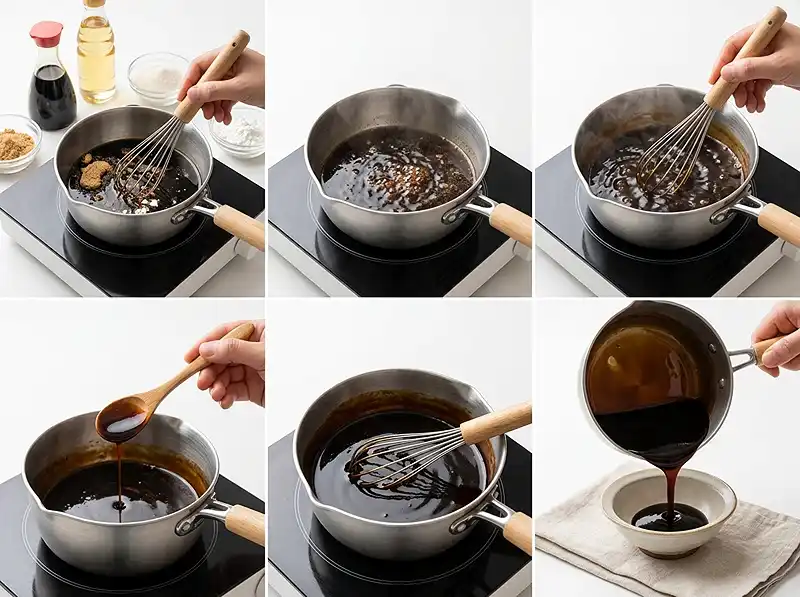
Step 1: Combine Your Ingredients
Set a small saucepan over medium heat. Add the soy sauce, granulated sugar, mirin, and cornstarch all at once, then whisk them together until fully combined.
Make sure there are no lumps of cornstarch hanging around — whisking right from the start helps everything dissolve evenly before the heat does its thing.
Step 2: Cook and Thicken
Keep whisking occasionally as the mixture heats up. You’ll notice it start to bubble and simmer around the 8-minute mark — that’s your cue to whisk more actively.
After about 8 minutes, reduce the heat to low and continue cooking. The sauce will thicken slowly and turn semi-opaque. You’re looking for a consistency that coats the back of a spoon and doesn’t drip off quickly like water.
“The sauce will occasionally bubble and simmer — that’s actually a good sign. Whisk through those bubbles to help the sauce reduce down beautifully.”
Step 3: Watch for the Right Consistency
Total cook time is around 12 to 19 minutes. Don’t rush it — cooking low and slow gives you a better, more even result than cranking the heat.
Keep in mind: the sauce will thicken a bit more as it cools. So pull it off the heat when it’s slightly thinner than your target consistency. Let it rest for a few minutes before tasting.
Step 4: Cool and Store
Once off the heat, let the sauce cool to room temperature before transferring it to a jar or airtight container. It’ll become even glossier and more syrupy as it cools — totally normal and completely delicious.

Expert Tips for Perfect Unagi Sauce
Don’t Skip the Whisk
Whisking is your best friend here. It keeps the cornstarch from clumping and helps those bubbles break down as the sauce reduces. A silicone whisk works great and won’t scratch your pan.
Low and Slow Wins
High heat might seem faster, but it can scorch the sugar and leave you with a bitter sauce. Medium heat, then low — that’s the move. Patience is a secret eel sauce ingredient nobody talks about enough.
Taste as You Go
Want it sweeter? Add an extra teaspoon of sugar. Prefer it saltier and more savory? A splash more soy sauce does the trick. This recipe is very forgiving and easy to adjust.
Variations and Substitutions
Is Eel Sauce Gluten Free?
Standard eel sauce is not gluten free because traditional soy sauce contains wheat. But the fix is simple: swap in tamari or a certified gluten-free soy sauce, and you’ve got a completely gluten-free unagi sauce that tastes just as good.
Always check your mirin label too, since some brands add small amounts of wheat. For a fully gluten-free version, look for a mirin that’s specifically labeled gluten-free.
Lower Sugar Option
You can reduce the sugar slightly, though it will affect the balance and thickness. Try cutting it to 1/3 cup as a starting point and adjust from there. The sauce will be a bit thinner and more savory-forward.
Honey Variation
Swapping half the granulated sugar for honey gives the sauce a slightly floral, more complex sweetness. It’s a fun twist that works especially well when drizzling over grilled chicken or roasted vegetables.
Storage Instructions
Good news: homemade eel sauce keeps really well. Here’s how to store it properly so it stays fresh and flavorful.
| Storage Method | Container | How Long |
|---|---|---|
| Refrigerator | Airtight jar or bottle | Up to 3 weeks |
| Freezer | Freezer-safe container | Up to 3 months |
Reheating Tips
The sauce thickens quite a bit in the fridge. To loosen it up, simply place the jar in a bowl of warm water for a few minutes, or microwave it in 10-second bursts, stirring between each one.
If it gets too thick, stir in a tiny splash of warm water or soy sauce to bring it back to your preferred consistency.
No-Waste Kitchen Ideas
Got a little leftover in the jar? Don’t let it go to waste. Drizzle it over scrambled eggs, toss it with roasted broccoli, or use it as a glaze on salmon before baking. It turns ordinary weeknight dinners into something you’d actually want to photograph.
It also makes a surprisingly great dip for this easy homemade baked beans recipe — sweet and savory is always a winning combo.
Troubleshooting
My Sauce Is Too Thin
If it’s still quite runny after 15 minutes, your heat might be too low. Bump it up slightly and keep whisking. Also remember it continues to thicken as it cools — give it 10 minutes off the heat before deciding it needs more time.
My Sauce Tastes Bitter
Bitterness usually means the sugar scorched slightly. Lower the heat next time and keep stirring. If it’s just mildly bitter, a small pinch of sugar stirred in while warm can help balance it out.
My Sauce Is Too Thick
If you accidentally over-reduced it, don’t panic. Whisk in a teaspoon of warm water at a time until you reach the right consistency. It’ll smooth right back out.
Eel Sauce Recipe FAQs
What is eel sauce made of?
Eel sauce is made of just four ingredients: soy sauce, granulated sugar, mirin, and cornstarch. The combination creates a thick, sweet-savory glaze with a deep umami flavor.
Does eel sauce contain real eel?
Nope, not a single piece. Despite the name, eel sauce contains no eel at all. It simply gets its name because it’s the traditional sauce served with Japanese grilled eel (unagi) dishes.
Is eel sauce the same as unagi sauce?
Yes, eel sauce and Unagi Sauce are the same thing. “Unagi” is the Japanese word for freshwater eel, so the names are used interchangeably. You might also see it called “nitsume” at some sushi restaurants.
How long does homemade eel sauce last?
Stored in an airtight container in the refrigerator, homemade eel sauce lasts up to 3 weeks. You can also freeze it for up to 3 months. Just thaw it overnight in the fridge and warm it gently before using.
What can I use instead of mirin?
If you don’t have mirin, a combination of dry sherry or rice vinegar with a small amount of extra sugar works as a substitute. The flavor won’t be identical, but it’ll still produce a tasty sauce. Check out this Food Network guide to mirin substitutes for more options.
Final Thoughts
Once you make your own eel sauce at home, you won’t want to go back to the bottled stuff. It’s faster than a grocery run, uses ingredients you probably already have, and the flavor is genuinely better — fresher, richer, and totally customizable.
Whether you’re drizzling it over sushi rolls, grilled shrimp, or sneaking spoonfuls straight from the jar (no judgment here), this unagi sauce recipe is a keeper.
And if you’re in the mood for more easy, crowd-pleasing recipes, this honey banana bread recipe is another one the whole family will love.
Tried this eel sauce recipe? Leave a comment and review below — it means the world to a small food blog and helps other home cooks find the good stuff. Share it on Pinterest so your friends can discover it too!