
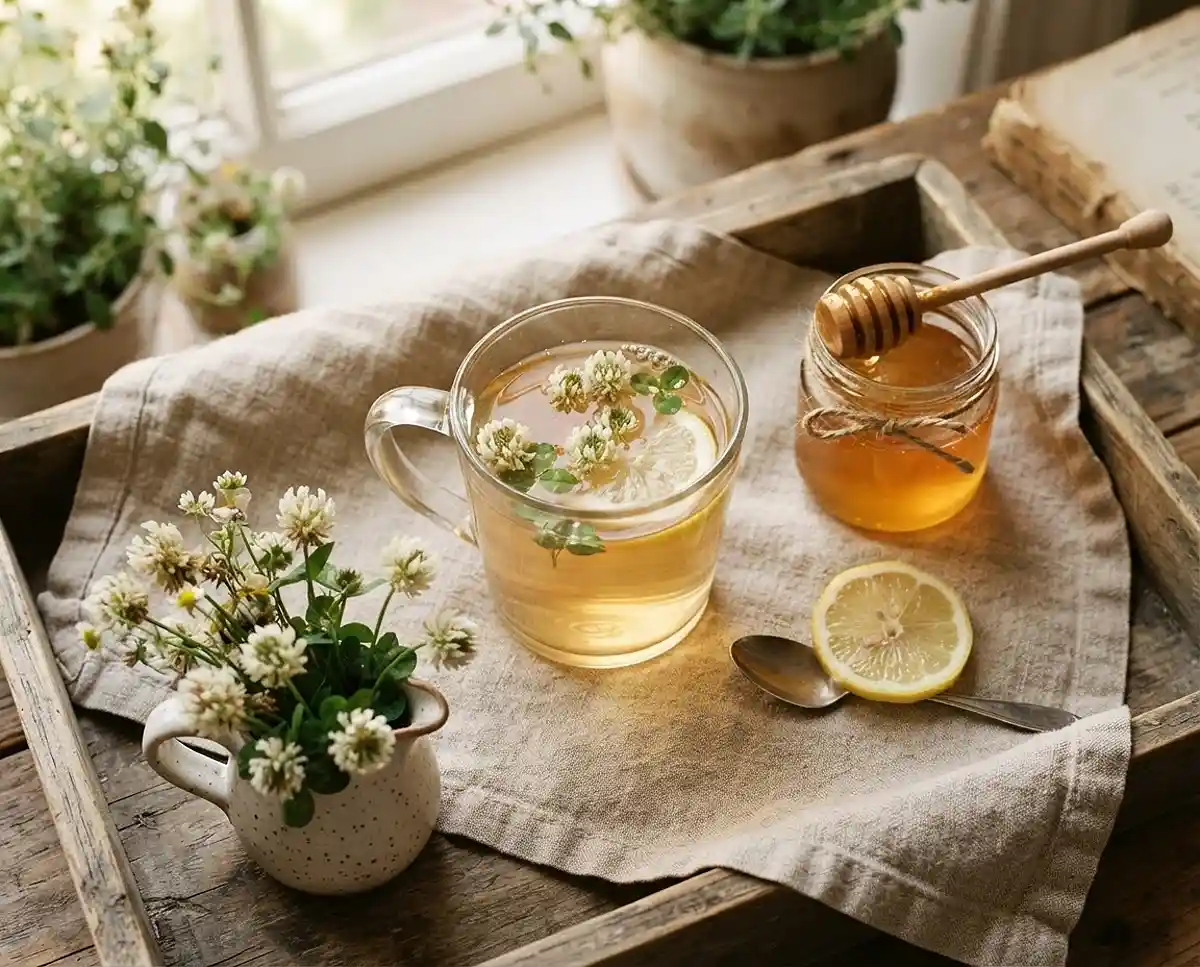
Turn those little white clover blossoms taking over your lawn into a cozy, calming cup. This white clover tea recipe takes 10 minutes, costs basically nothing, and might just be the easiest homemade tea you’ll ever make.
Okay, so here’s the thing. I used to look at my yard full of clover and think “ugh, weeds.” Then my grandma told me those little white puffs make one of the sweetest, most soothing teas around, and honestly? She was so right, and now I can’t walk past a clover patch without thinking about tea.
Table of Contents
Why You’re Going to Love This Clover Tea
This white clover tea recipe is about as low-effort as it gets. You’re basically just picking flowers and pouring hot water over them, and somehow the result tastes faintly sweet, a little grassy, and weirdly comforting, kind of like chamomile’s more laid-back cousin.
It’s free (assuming you’ve got a lawn or a park nearby), it’s naturally caffeine-free, and it’s the kind of tea recipe that makes you feel like a tiny bit of a wizard for turning “weeds” into something you’d actually want to sip. Secondary bonus: it smells incredible while it steeps.
People have actually been brewing clover tea for generations, way before “foraged drinks” became a trendy thing on social media. Herbalists have long used dried clover blossoms as a mild, everyday tea, and honestly, once you try it, it’s easy to see why the tradition stuck around.
There’s also something kind of grounding about this whole process. You step outside, you pick a few flowers with your own hands, and ten minutes later you’re holding a warm cup of something you made from scratch, no store trip required. It’s a tiny ritual, but it’s a nice one.
White Clover Tea Recipe
Equipment
- Small bowl or basket
- Saucepan or teapot
- Fine-mesh strainer
- Cup or teapot
- measuring cups
Ingredients
White Clover Tea
- 15-20 blossoms White clover flowers fresh, pesticide-free, for one serving
- 2 cups Hot water just off the boil, not rapidly boiling
Optional Add-Ins
- Honey optional, to taste
- Lemon optional, a squeeze for brightness
- Fresh mint leaves optional, for a cooling twist
- Lemon balm or chamomile optional, for a more layered herbal tea
Instructions
- Gather 15 to 20 fresh white clover blossoms from a clean, untreated area that has not been sprayed with pesticides, herbicides, or weed killer.
- Choose fresh, fully open, puffy white blossoms and avoid any flowers that look brown, wilted, or damaged.
- Heat 2 cups of water in a saucepan or teapot until just off the boil.
- While the water heats, gently rinse the clover blossoms under cool water to remove dust or tiny bugs.
- Place the rinsed clover blossoms in a cup or teapot and pour the hot water over them.
- Cover and steep for 5 minutes, until the tea turns lightly golden and smells sweet and slightly grassy.
- Strain out the clover blossoms.
- Add honey or a squeeze of lemon if desired, then sip warm.
- For iced tea, let the strained tea cool completely, then pour over ice.
Notes
What You’ll Need for This Clover Tea Recipe
Grab these before you head outside. This ingredient list is short on purpose, because the magic here is really just clover and hot water doing their thing.
Don’t overthink the quantities either. This tea recipe is forgiving, so if you come back with a few extra blossoms or a few less, your tea will still turn out just fine either way.
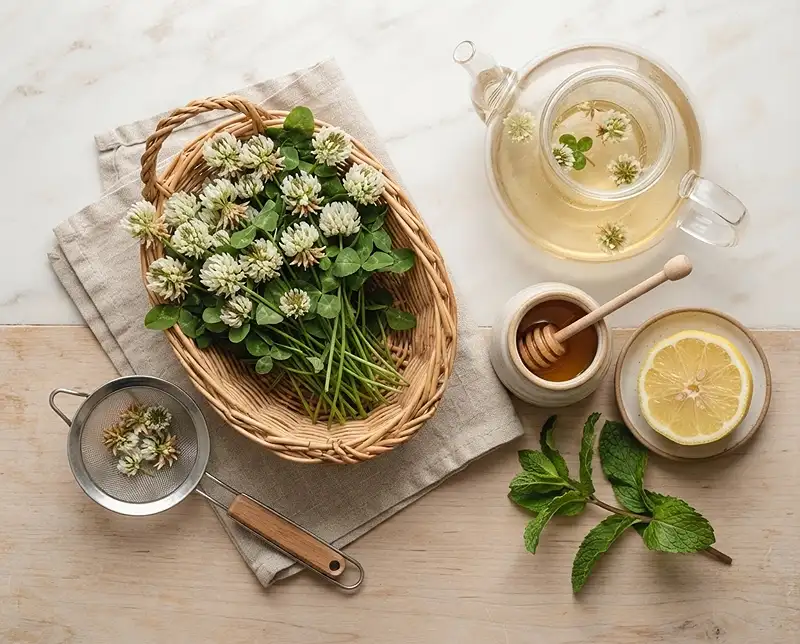
| Ingredient | Amount | Notes |
|---|---|---|
| Honey | Optional, to taste | Adds warmth and a little extra sweetness |
| Lemon | Optional, a squeeze | Brightens up the flavor nicely |
Let’s Make This Clover Tea Recipe
Here’s the whole process broken down into easy steps. None of this requires any special equipment, just a pot, a strainer, and a little patience while it steeps.
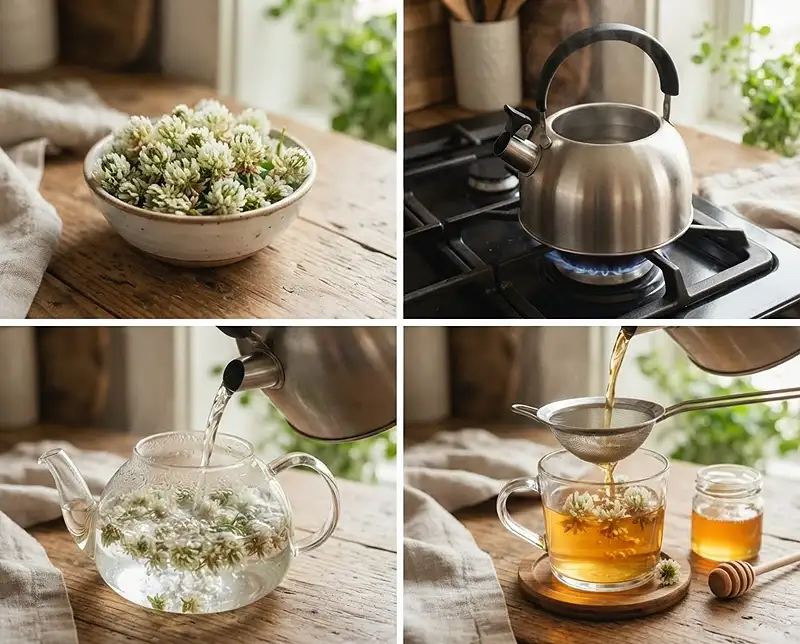
Step 1: Go on a Tiny Foraging Adventure
Head outside and gather about 15-20 white clover blossoms for one serving of tea. Only pick from spots you know haven’t been sprayed with pesticides or weed killer. Your own backyard is usually the safest bet.
“Pick the puffiest, whitest blooms you can find,” is basically my grandma’s golden rule, and it’s never steered me wrong.
If you want a little extra confidence with identification before you forage, this Iowa State University Extension guide to white clover is a solid, no-nonsense reference.
White clover is the low, creeping kind with round white flower clusters, not to be confused with taller pink or red clover varieties. The little three-leaf shape underneath is your other giveaway, and once you spot it once, you’ll start noticing clover patches everywhere.
Bring a small bowl or basket outside with you, it makes the whole process feel a little more like an actual harvest instead of just plucking flowers off your lawn. Take your time and pick blossoms that look fresh and fully open, not brown or wilted at the edges.
Step 2: Heat Your Water
Heat 2 cups of water in a saucepan or teapot until it’s just off the boil. You want it hot enough to pull out that mild, honeyed clover flavor, but not so aggressively boiling that it turns bitter.
While the water heats up, give your clover blossoms a gentle rinse under cool water. This washes away any dust or tiny bugs hiding in the petals, no judgment, it happens to all of us who forage.
Step 3: Steep Like You Mean It
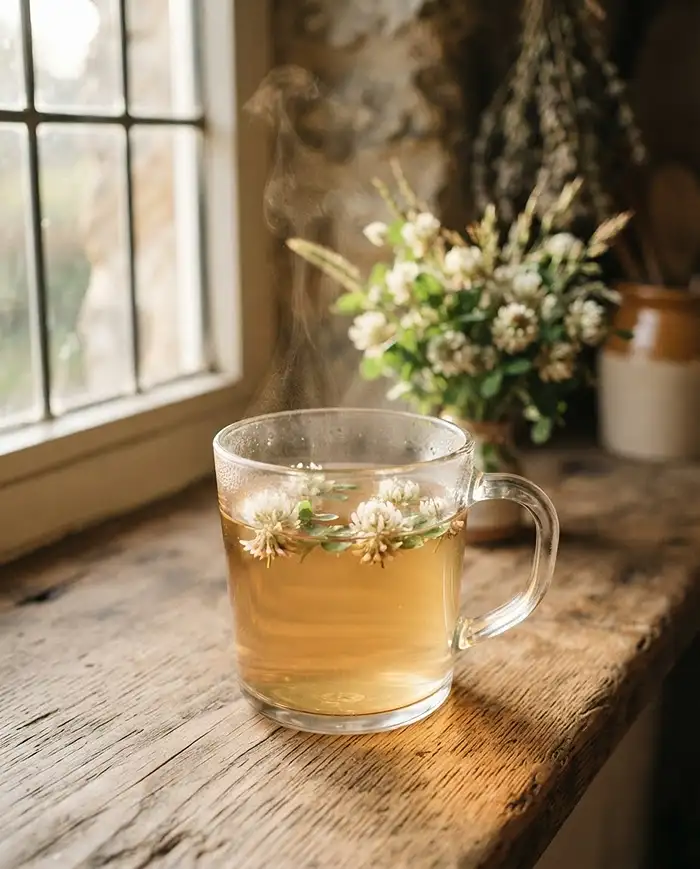
Pour the hot water over your clover blossoms and let them steep for 5 minutes. Watch the water slowly take on a soft golden color, and take a second to enjoy that sweet, slightly grassy smell filling the kitchen.
Cover your cup or teapot while it steeps if you can. This traps in the aroma and keeps the water hot enough to fully draw out that mellow clover flavor by the time you’re ready to strain.
Step 4: Strain, Sweeten, Sip
Strain out the flowers, then add honey if you’re in the mood for something a little sweeter. Curl up, take a sip, and enjoy the fact that you just made tea from your own front yard.
Tips, Twists, and Troubleshooting
A few notes from my many, many cups of trial and error, so your clover tea recipe comes out great the first time around.
Getting the Flavor Just Right
If your tea tastes weak, use fresh blossoms and don’t skimp on the count, closer to 20 flowers gives a stronger, more noticeable flavor. If it tastes bitter, your water was likely too hot or you steeped it too long, so aim for 5 minutes and no more.
Fun Variations to Try
Add a few mint leaves while steeping for a cooling, refreshing twist. A little lemon and honey turns this into a soothing bedtime drink, similar in spirit to how a coconut cloud matcha latte feels cozy and comforting in its own way.
Want it iced? Let the tea cool completely, then pour it over ice for a refreshing summer sipper that pairs beautifully with a slice of something sweet on the side.
Feeling a little fancy? Try blending clover blossoms with a touch of dried chamomile or a few lemon balm leaves for a more layered, garden-inspired tea recipe. It’s a small tweak that makes the flavor feel a lot more special.
Common Clover Tea Mistakes
Skipping the pesticide check is the biggest one, so always forage from clean, untreated areas. Using wilted or brown blossoms instead of fresh white ones is another common slip that mutes the flavor considerably.
Over-steeping is another sneaky mistake. Leaving your clover in the water much past 5 minutes can start pulling out a slightly bitter, tannic taste, so set a timer if you tend to get distracted like I do.
Storing Your White Clover Tea
This tea recipe is best enjoyed fresh, but here’s how to handle leftovers or extra dried blossoms without any waste.
| Item | Storage Method | How Long It Lasts |
|---|---|---|
| Brewed clover tea | Covered, in the refrigerator | Up to 2 days |
| Fresh clover blossoms | Loosely wrapped in a damp paper towel, fridge | 1-2 days |
| Dried clover blossoms | Airtight jar, cool and dark spot | Up to 6 months |
To reheat, just warm your leftover tea gently on the stove or in the microwave, no need to steep it again.
If you’ve got extra blossoms that are starting to look a little tired, toss them into a simple syrup for pancakes or drizzle over a slice of something buttery, kind of like how leftover glaze works on cinnamon rolls with brown sugar and butter.
No-Waste Kitchen Ideas
Already brewed your tea for the day but have leftover blossoms? Dry them on a towel for a day or two, then store them for your next cup, nothing has to go to waste around here.
Used clover flowers after straining aren’t totally done either. Toss the spent blossoms into your compost bin, or scatter them back into the yard where they’ll break down naturally and feed the soil right where they came from.
Frequently Asked Questions
What does white clover tea taste like?
It has a mild, slightly sweet flavor with grassy and faintly vanilla-like notes, similar to a gentle chamomile tea.
Is white clover tea safe to drink every day?
In moderate amounts it’s generally considered fine for most healthy adults, but check with your doctor first if you’re pregnant, nursing, or on blood-thinning medication.
Can I use dried clover instead of fresh?
Yes, dried white clover blossoms work great in this tea recipe. Use about 1 to 2 teaspoons of dried flowers per cup of hot water.
Where’s the safest place to forage clover for tea?
Your own untreated lawn or garden is ideal. Avoid roadsides, golf courses, or any area that might have been sprayed with pesticides or herbicides.
Can I mix clover tea with other herbs?
Definitely, mint, lemon balm, or a bit of chamomile all blend nicely with clover for extra flavor and a more layered tea recipe.
Conclusion
This white clover tea recipe is proof that some of the best drinks are hiding in plain sight, right there in your own backyard. It’s simple, it’s soothing, and it costs you basically nothing but a few minutes outside.
If you give this clover tea recipe a try, snap a photo and pin it on Pinterest so other backyard foragers can find it too. And if you’re craving more fun sips and treats afterward, this watermelon juice recipe or these playful Dubai chocolate tacos are worth a look too.
I’d love to hear how your tea turned out, so drop a comment below and let me know. For more on clover’s edible uses and its natural antioxidant properties, the Plants For A Future database and this peer-reviewed study on clover flower extracts are both great further reading.