
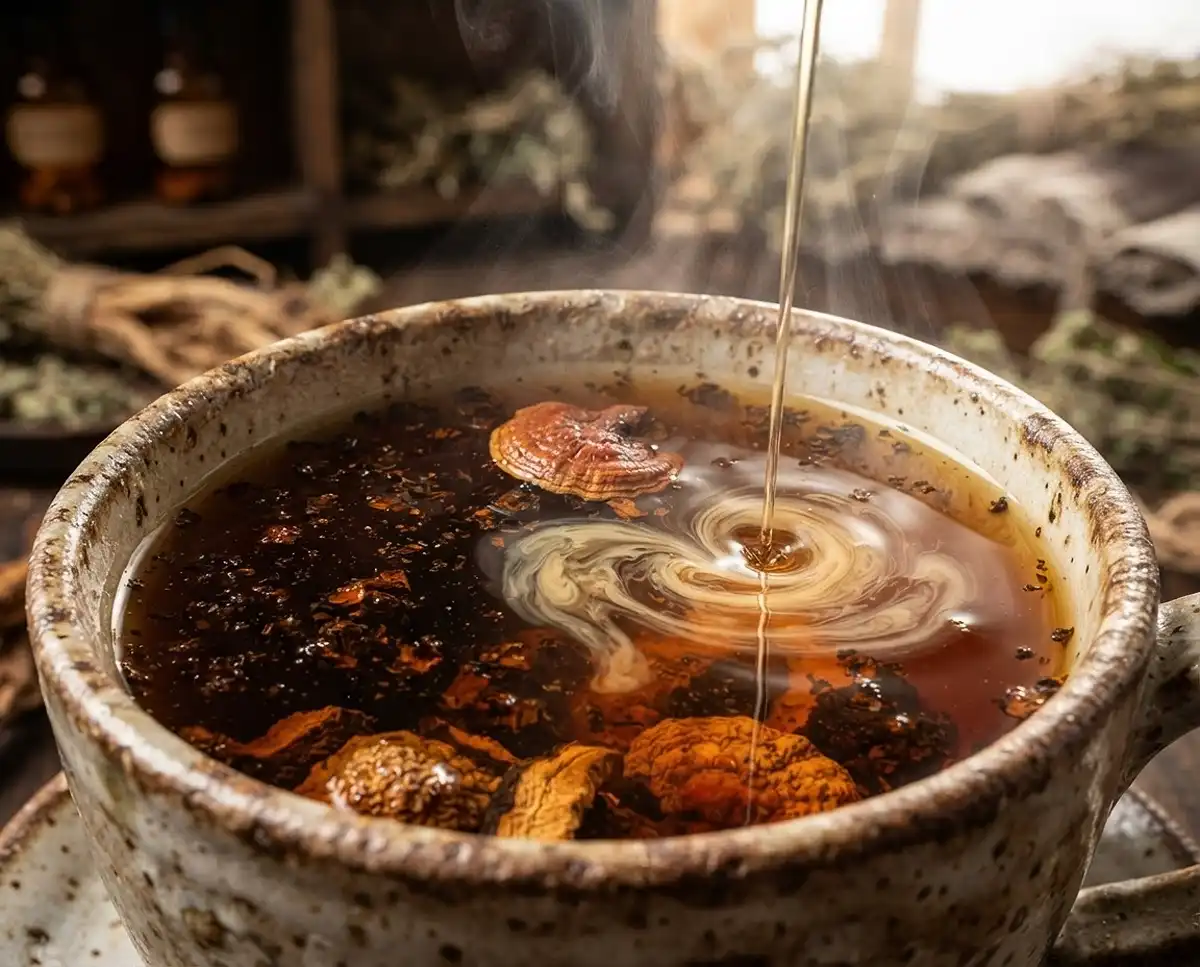
Learn how to make mushroom tea at home with this cozy, five-minute recipe using Chaga, Reishi, Lion’s Mane, and more for a calming daily ritual you’ll actually look forward to.
Okay, real talk: I used to think “mushroom tea” sounded like something only granola influencers drank. Then my aunt handed me a mug of Chaga tea during a stressful week and I got it immediately.
Now it’s basically my nightly wind-down thing, right up there with putting on cozy socks and ignoring my phone.
Table of Contents
Quick Overview: Why You’ll Love This Mushroom Tea
This isn’t some complicated, ingredient-hunting project. It’s just dried mushrooms, hot water, and a little patience.
Here’s the deal with this recipe:
- Uses just 3 simple ingredients you can find online or at most health stores
- Ready in under 20 minutes, mostly hands-off steeping time
- Naturally caffeine-free, so it’s perfect for evenings
- Endlessly customizable with honey, lemon, or your favorite mushroom blend
- A genuinely cozy ritual, not just a health trend
If you’ve been Googling how to make mushrooms into tea and getting overwhelmed by conflicting advice, I promise this is the simple version. No fancy equipment, no weird techniques.
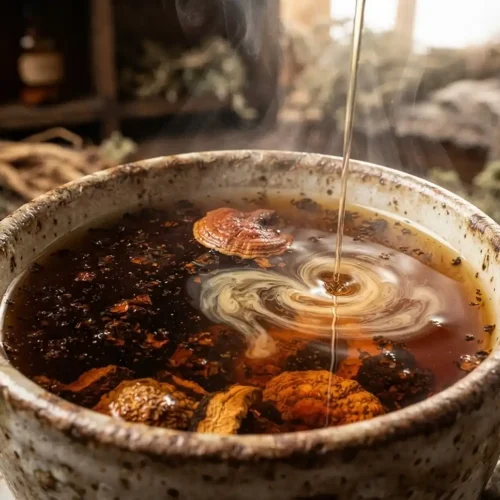
Mushroom Tea
Equipment
- kettle
- Teapot or heatproof mug with infuser
- Strainer
Ingredients
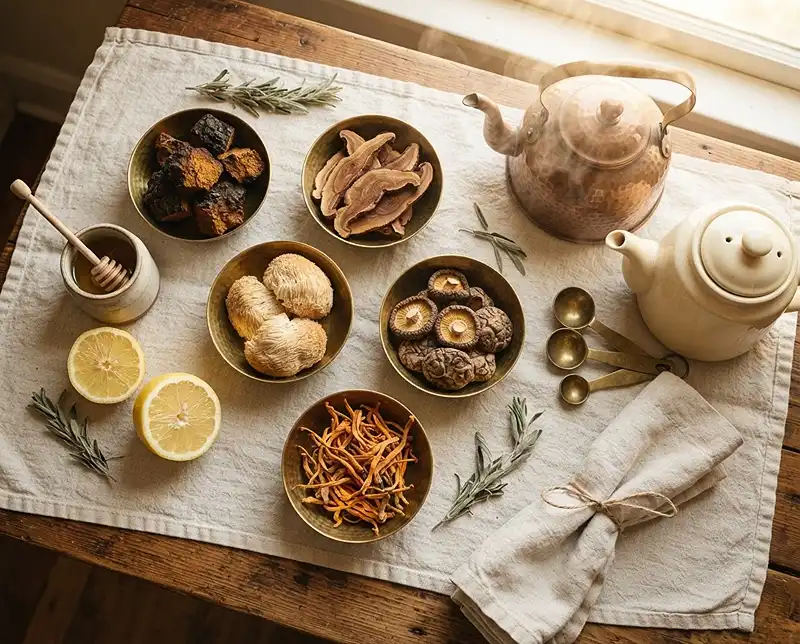
- 2-3 teaspoons Dried Chaga, Reishi, Lion’s Mane, Shiitake, or Cordyceps mushrooms (or a mix) Pick one or combine a few for a layered flavor
- 2 cups Water Filtered water makes a noticeably cleaner-tasting cup
- Honey or lemon Optional, to taste; adds sweetness or a little brightness
Instructions
- Grab a kettle and bring 2 cups of water to a full, rolling boil. Use filtered water if you’ve got it, as tap water can sometimes mute the earthy, woodsy flavor these mushrooms are known for.
- While the water heats up, measure out 2-3 teaspoons of your chosen dried mushrooms and drop them into a teapot or a heatproof mug with an infuser.
- Once your water is at a rolling boil, carefully pour it directly over the mushrooms in the teapot. Go slow to avoid splashing. You’ll notice the water start to shift color almost instantly.
- Let the mushrooms steep for 10-15 minutes. The longer steep time lets all that earthy, slightly nutty flavor really infuse into the water.
- After steeping, pour the tea through a strainer into your favorite mug, separating the liquid from the mushroom bits left behind. Save the leftover mushrooms for soups or broths.
- Customize it to taste. A spoonful of honey rounds out the earthiness, while a splash of lemon adds a little zing that cuts through the richness.
Notes
What You’ll Need: Mushroom Tea Ingredients
Here’s everything on the shopping list. Grouped so you’re not squinting at a random pile of ingredients trying to figure out what goes where.
| Ingredient | Amount | Notes |
|---|---|---|
| Dried Chaga, Reishi, Lion’s Mane, Shiitake, or Cordyceps mushrooms (or a mix) | 2-3 teaspoons | Pick one or combine a few for a layered flavor |
| Water | 2 cups | Filtered water makes a noticeably cleaner-tasting cup |
| Honey or lemon | Optional, to taste | Adds sweetness or a little brightness |
Quick note on the mushrooms themselves: these are all functional, food-grade mushrooms sold specifically for cooking and tea. If you’re wondering how to make magic mushroom tea and landed here expecting anything psychoactive, this isn’t that. We’re talking Chaga, Reishi, and their earthy, mellow cousins, the kind your grandma’s herbalist friend would approve of.
Step-by-Step: How to Make Mushroom Tea

Boil Your Water
Grab a kettle and bring 2 cups of water to a full, rolling boil. This part’s easy, just don’t wander off and forget about it like I definitely have.
My tip: use filtered water if you’ve got it. Tap water can sometimes mute the earthy, woodsy flavor these mushrooms are known for.
Add the Mushrooms to Your Teapot
While the water heats up, measure out 2-3 teaspoons of your chosen dried mushrooms and drop them into a teapot or a heatproof mug with an infuser.
Chaga chunks look a little like tree bark, so don’t panic if it’s not exactly Instagram-pretty at this stage. The magic happens once the water hits it.
Pour the Boiling Water Over the Mushrooms
Once your water is at a rolling boil, carefully pour it directly over the mushrooms in the teapot. You’ll notice the water start to shift color almost instantly, that’s a great sign.
“Go slow here,” is basically my only rule. Boiling water plus a wobbly hand is a recipe for a scalded thumb, and nobody wants that.
Let It Steep
Let the mushrooms steep for 10-15 minutes. This is the step people rush, and it’s the one that matters most if you’re learning how to make mushrooms into tea that actually tastes good.
The longer steep time lets all that earthy, slightly nutty flavor (and the good stuff inside the mushrooms) really infuse into the water. Use this time to do literally anything else, scroll your phone, stare out the window, whatever feels calming.
Strain and Serve
After steeping, pour the tea through a strainer into your favorite mug, separating the liquid from the mushroom bits left behind. Don’t toss those leftover mushrooms yet, more on that below.
At this point you’ve got yourself a warm, earthy cup of mushroom tea, ready to sip.
Customize It
This is where you make it yours. A spoonful of honey rounds out the earthiness, while a splash of lemon adds a little zing that cuts through the richness.
I go honey most nights, but lemon is clutch when I’m feeling like I need a citrusy pick-me-up instead of a cozy one.
Expert Tips, Variations, and Troubleshooting
Getting the Flavor Right
If your tea tastes flat or watery, you probably need a longer steep or slightly more mushroom per cup. Don’t be afraid to push steeping time to 20 minutes for a bolder cup.
Chaga tends to taste mellow and slightly sweet on its own, while Reishi can lean bitter, so if bitterness isn’t your thing, start with a smaller amount and adjust from there.
Mixing Mushrooms for Different Effects
One of the best parts of learning how to make mushroom tea is realizing you can blend types. Lion’s Mane and Reishi together makes a soothing evening blend, while Chaga and Cordyceps feels more like a gentle morning pick-me-up (minus the caffeine jitters).
Play around with ratios until you land on your personal favorite. There’s no wrong answer here.
Common Troubleshooting
Tea tastes too bitter? Cut back on the amount of mushroom or shorten your steep time slightly. Tea tastes weak? Increase steep time before adding more mushroom, since over-steeping is rarely the actual issue.
If you’re using powdered mushroom instead of dried whole pieces, you likely need less, since powder infuses faster and stronger. Start with half the amount and adjust to taste.
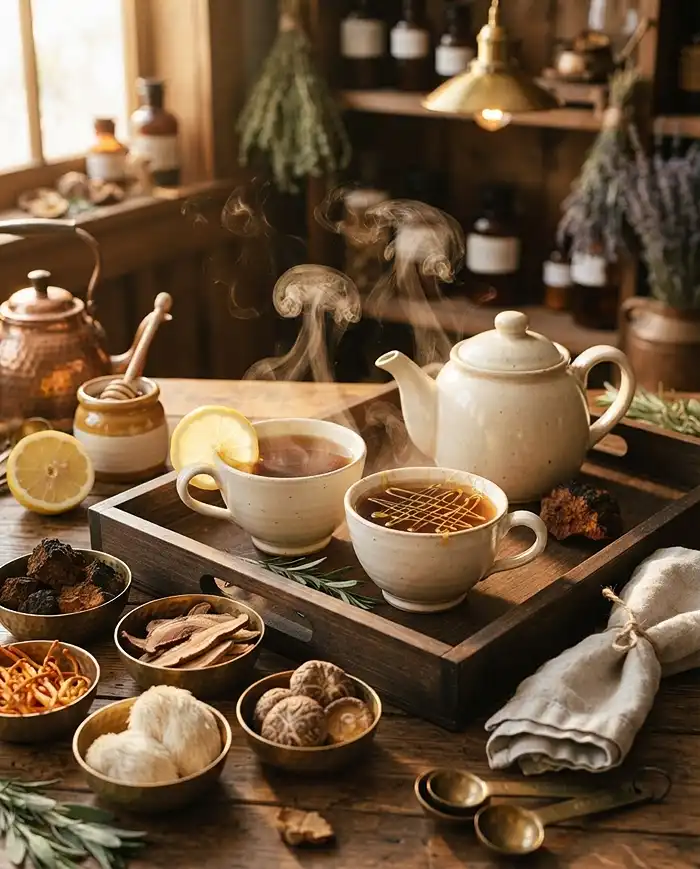
Storage, Reheating, and No-Waste Ideas
Made extra? Good thinking. Here’s how to keep it fresh.
| Storage Method | How Long It Lasts | Notes |
|---|---|---|
| Refrigerator (brewed tea) | Up to 4 days | Store in a sealed jar or container |
| Dried mushrooms (unbrewed) | Up to 1 year | Keep in an airtight container, away from light |
| Freezer (brewed tea, as ice cubes) | Up to 3 months | Great for blending into smoothies later |
To reheat, just warm it gently on the stove or in the microwave, avoid a hard boil so you don’t overcook the flavor.
For a no-waste move, don’t throw out those steeped mushroom bits. Toss them into soups or broths for an extra earthy depth, they’ve still got plenty of flavor left to give.
Frequently Asked Questions
Can I use mushroom powder instead of dried whole mushrooms?
Yes, powder works great and steeps faster. Start with about half the recommended amount since powder is more concentrated, then adjust to taste.
Does mushroom tea have caffeine?
No, this mushroom tea is naturally caffeine-free, which makes it a good option for evenings or anyone cutting back on caffeine.
What does mushroom tea taste like?
It’s earthy and mellow, sometimes slightly sweet depending on the mushroom. Chaga tends toward a mild, woodsy sweetness, while Reishi can taste a bit more bitter.
Can I make a big batch ahead of time?
Absolutely. Brew a larger pot and refrigerate it for up to four days, then reheat individual cups as needed.
Is this the same as magic mushroom tea?
No. This recipe uses functional mushrooms like Chaga, Reishi, and Lion’s Mane, which are food-grade and non-psychoactive, not psilocybin mushrooms.
Conclusion
And that’s really it, learning how to make mushroom tea comes down to good mushrooms, hot water, and a little patience while it steeps.
Once you’ve got the basic method down, it’s easy to riff on it, swap mushrooms, tweak steep time, and make it your own cozy ritual.
If you liked this, you might also enjoy this white clover tea recipe, another easy, soothing sipper. And if you’re craving something heartier after your tea, this copycat Outback walkabout soup recipe is worth a try too.
For more on the research behind these mushrooms, this National Geographic breakdown of mushroom supplements is a solid, balanced read. There’s also a good overview from Healthista on medicinal mushroom benefits if you want to go deeper.
Give this recipe a try, and if you love it, pin it on Pinterest so you can find it again next time you need a cozy night in. I’d love to hear how it turned out for you in the comments below.
