

Keju gruyere is nutty, melty, and totally worth it. Learn how it’s made, how to swap it, and how to cook a cozy croque monsieur at home tonight.
Confession time: I used to think keju gruyere was just fancy cheese for people with fancy pantries. Then I tasted a croque monsieur made with it, and the whole kitchen went quiet. Today I’m sharing the story behind this nutty Swiss beauty, plus two ways to cook with it.
Table of Contents
Quick Overview: Why Keju Gruyere Deserves a Spot in Your Kitchen
This post is part cheese lesson, part cooking adventure. You’ll get a full homemade gruyère-style cheese recipe for the brave, and a simple croque monsieur for everyone who just wants dinner to feel special.
Why bother with keju gruyere at all? It’s nutty, a little sweet, and it melts like a dream. One bite on toasted bread and you’ll understand why cooks have loved it for centuries.
Here’s what’s coming up:
- The story and flavor of real Swiss gruyère cheese
- A homemade gruyère-style cheese recipe, adapted from cheesemaker Jim Wallace
- A quick, cozy gruyère croque monsieur
- Tips, swaps, storage ideas, and answers to common questions
Meet Keju Gruyere: The Swiss Mountain Cheese
A Cheese With a Very Long Story
Gruyère is a hard cheese from Switzerland. Its name comes from the town of Gruyères in the canton of Fribourg. The producers’ group traces its history back to 1115, according to the official Le Gruyère AOP website.
Real Le Gruyère AOP can only be made in certain Swiss regions: Fribourg, Vaud, Neuchâtel, Jura, and parts of Bern. The rules are strict, too. Cows eat fresh grass in summer and hay in winter, and silage is banned.
The raw milk also has to be processed within 18 hours of milking, as explained in this Culture Cheese Magazine breakdown of Gruyère AOP. Talk about farm-to-table.
How the Real Thing Is Made
The method is simple but takes great care. Raw milk is heated in a copper vat, then cultures and rennet are added to form curds. The curds are cut into small grains, put into molds, and pressed.
The next day, the wheels soak in salt brine for 24 hours. Then they age on spruce planks, first at the dairy and later in cellars run by affineurs. That’s just a fancy word for cheese agers, and yes, it’s a real job.
Most keju gruyere ages 6 to 9 months, which makes it smooth and aromatic. Some wheels hang out for 18 or even 24 months, based on the Le Gruyère AOP producers’ site.
How the Flavor Changes With Age
Young gruyère is a little nutty and sweet, with an elastic texture. Older cheese turns more earthy and savory, and the texture gets denser and more crumbly. Think of it as cheese growing up and getting a bit more serious.
Unlike Emmental, gruyère has very small holes or none at all, as this gruyère cheesemaking guide points out. So no cartoon-mouse holes here.
It also melts beautifully, which is why it shows up in fondue, French onion soup, croque monsieur, gratins, and quiche. On a cheese board, it pairs well with cured meats, fruit jams, almonds, walnuts, dry white wine, and pilsner.
A Quick Buying Tip
In the US, “Gruyère” is often just the name of a style. To get the authentic Swiss cheese, look for “Le Gruyère AOP” right on the label. If it’s missing, you’re probably getting a gruyère-style cheese instead.
Finding Keju Gruyere in Indonesia
If you’re in Indonesia, keju gruyere can be expensive or hard to find. Don’t panic, because dinner isn’t canceled. For cooked recipes, Emmental, Comté, or a good aged Swiss-style cheese works really well instead.
Save the real gruyère for when you want that signature nutty flavor to shine. For the croque monsieur below, a good substitute still gives you that gooey, golden, bubbly top.

Keju Gruyere Guide: Cozy Croque Monsieur Made Easy
Equipment
- Small saucepan
- Whisk
- Skillet
- spatula
- Grater
- Butter knife
- Oven-safe baking sheet
Ingredients
Sandwich
- 4 slices bread
- 4 slices ham
- Dijon mustard for spreading
Cheese
- 100 g gruyère freshly grated, divided (or Emmental or Comté)
Béchamel
- 2 Tbsp butter
- 1 Tbsp flour
- 200 ml milk
Seasoning
- 1 pinch nutmeg
- salt and pepper to taste
Instructions
Make the Béchamel
- Melt the butter in a small pan and stir in the flour for 1 minute. Whisk in the milk until the sauce thickens. Season with nutmeg, salt, and pepper, then stir in half the gruyère.
Build and Toast
- Spread Dijon mustard on two slices of bread. Top each with ham and a little gruyère, then close with the remaining slices.
- Toast the sandwiches in a pan until golden on both sides.
Top and Broil
- Spread the béchamel on top and sprinkle with the rest of the gruyère. Broil (or use the oven’s top heat) for 3 to 5 minutes, until bubbly and browned. Watch closely so it doesn’t burn.
Notes
Keju Gruyere Ingredients
Ingredients for Homemade Gruyère-Style Cheese
Heads up before you start: this recipe is adapted from cheesemaker Jim Wallace and it’s a project. You’ll need a large pot, a cheese press, and a cool, humid place to age the cheese for many months. It makes about 3.6 kg (8 lb).
| Group | Ingredient | Amount |
|---|---|---|
| Milk | Full-fat milk | 30 liters (8 gallons) |
| Cultures | Thermophilic culture TA060 | 1/8 tsp |
| Cultures | Thermophilic culture LH100 | 1/32 tsp (or use 1 packet of C201 instead of both) |
| Cultures | Propionic shermanii | 1/32 tsp |
| Coagulant | Single-strength liquid rennet | 1 tsp (4.5 ml) |
| Brine | Water | 3.8 L |
| Brine | Salt | 1 kg |
| Brine | Calcium chloride | 1 Tbsp |
| Brine | White vinegar | 1 tsp |
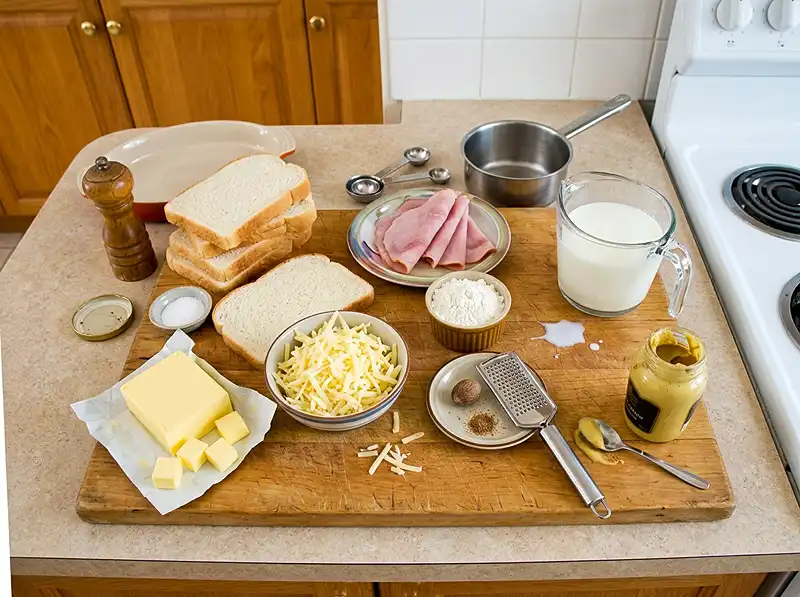
Ingredients for Simple Gruyère Croque Monsieur
Now for the weeknight-friendly one. A croque monsieur is basically a fancy ham and cheese sandwich wearing a creamy, bubbly béchamel blanket. You probably have most of this in your kitchen already.
| Group | Ingredient | Amount |
|---|---|---|
| Sandwich | Bread | 4 slices |
| Sandwich | Ham | 4 slices |
| Sandwich | Dijon mustard | For spreading |
| Cheese | Grated gruyère (or Emmental or Comté) | 100 g, divided |
| Béchamel | Butter | 2 Tbsp |
| Béchamel | Flour | 1 Tbsp |
| Béchamel | Milk | 200 ml |
| Seasoning | Nutmeg, salt, and pepper | A pinch of nutmeg, plus salt and pepper to taste |
How to Make Homemade Keju Gruyere Step by Step
Making your own keju gruyere is slow, a bit messy, and weirdly satisfying. Think of it as a long-term relationship with a wheel of cheese. Let’s walk through it.
Step 1: Ripen the Milk
Warm the milk to 32°C (90°F). Add the cultures and let it rest for 1 hour. This is the quiet part, so grab a coffee and enjoy the calm before the curd storm.
Step 2: Add the Rennet
Stir in the rennet gently, then leave the pot undisturbed for about 30 minutes. You’re waiting for a soft curd to form. Resist the urge to poke it, because it will look like a wobbly, creamy custard when it’s ready.
Step 3: Cut the Curd
Cut the curd into 2.5 cm (1 inch) pieces and let them rest a few minutes. Then cut them down to about 6 mm (1/4 inch). Stir gently to release the whey, and you’ll see the curds start to separate.
Step 4: Cook the Curds
Over 30 minutes, slowly raise the temperature to about 45.5°C (114°F). Keep stirring the whole time. The curds are done when they feel dry and springy between your fingers.
Pro Tip: Go slow with the heat. Rushing it is the fastest way to tough, rubbery curds.
Step 5: Drain and Pre-Press
Drain the whey down to the level of the curds. Put a plate on top with 4 to 5 kg of weight so the curds pack together. They’ll start to look like a loose, cozy blanket of cheese.
Step 6: Mold and Press
Move the curd mass, wrapped in cloth, into the mold. Press with about 11 kg (25 lb), then gradually increase to 23 to 45 kg (50 to 100 lb). Press for 18 to 24 hours in total.
Step 7: Brine the Cheese
Soak the cheese in the brine at 10 to 13°C for 24 hours, flipping it halfway through. Then rub the surface with dry salt for 2 to 3 days. The salt helps build flavor and a protective rind.
Step 8: Age Your Keju Gruyere
Keep the cheese at about 12 to 14°C and 85 to 87% humidity. Wipe off any mold with brine. Once a rind forms, wash it with a light brine 2 to 3 times a week.
Now comes the hardest part: waiting. The cheese is ready after 8 to 14 months, and every sniff of that earthy, nutty rind makes the wait feel a little shorter.
How to Make a Simple Gruyère Croque Monsieur
If 14 months of waiting sounds like too much, this is your recipe. It comes together fast and tastes like a Parisian cafe lunch.
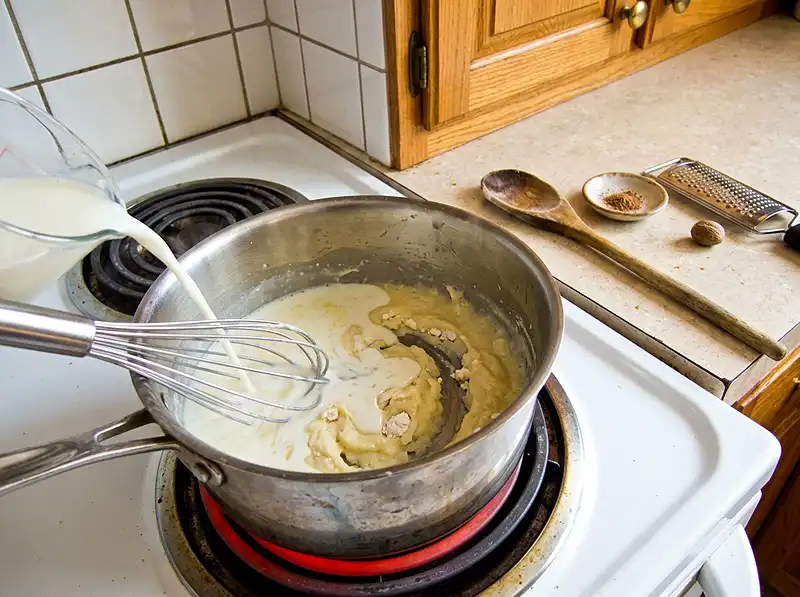
Step 1: Make the Béchamel
Melt the butter in a small pan, then stir in the flour for 1 minute. Whisk in the milk until the sauce thickens. Season with nutmeg, salt, and pepper, then stir in half the gruyère.
Step 2: Build the Sandwiches
Spread Dijon mustard on two slices of bread. Top each with ham and a little gruyère, then close the sandwiches with the other slices. A little mustard goes a long way, so don’t overdo it.
Step 3: Toast Until Golden
Toast the sandwiches in a pan until golden on both sides. You’ll hear that happy sizzle and smell buttery toast. That’s your cue that you’re on the right track.
Step 4: Top and Broil
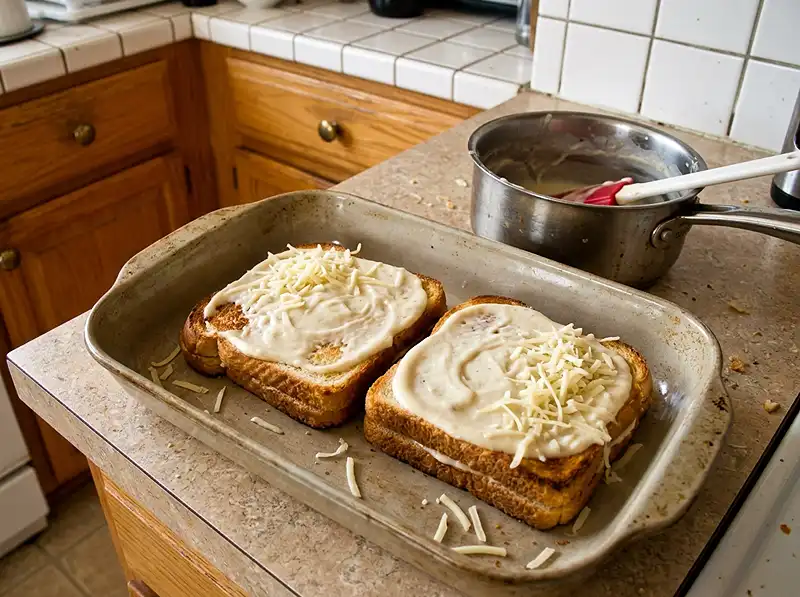
Spread the béchamel on top and sprinkle on the rest of the gruyère. Broil (or use your oven’s top heat) for 3 to 5 minutes until bubbly and browned. Keep a close eye on it, because it goes from golden to burnt fast.
Expert Tips, Variations, and Troubleshooting
Tips for Better Results
Use full-fat milk for the cheese, since fat equals flavor. Keep your tools clean and your temperatures steady, because small swings can change how the curds behave.
For the croque monsieur, grate your own cheese if you can. Freshly grated keju gruyere melts smoother than the pre-shredded kind.
Easy Variations
Short on gruyère? Swap in Emmental, Comté, or an aged Swiss-style cheese. Each one gives a slightly different flavor, but they all melt nicely in cooked dishes.
Want to go full cafe mode? Top the finished sandwich with a fried egg. That version is usually called a croque madame, and it’s wonderful for brunch.
The same keju gruyere also works in quiche, gratins, and French onion soup, so a little goes a long way.
Troubleshooting
Lumpy béchamel? Keep whisking and add the milk gradually. If lumps stay, pour the sauce through a fine sieve and carry on.
Soggy sandwich? Make sure the bread is toasted well before adding the sauce. Burnt top? Move the rack lower and shorten the broil time.
Seeing mold on your aging cheese? Wipe it off with brine, as in the aging step. Keep the humidity steady at 85 to 87% and wash the rind regularly once it forms.
Curds not setting after 30 minutes? Double-check your milk temperature and give the pot a little more time before you cut.
Storage, Reheating, and No-Waste Ideas

| Item | How to Store | How Long |
|---|---|---|
| Aged homemade cheese | Wrap in wax or parchment paper, then loosely in foil, in the fridge | Several weeks |
| Grated gruyère | Airtight container in the fridge, or freezer bag in the freezer | About 1 week in the fridge, up to 3 months frozen |
| Leftover béchamel | Airtight container in the fridge, with plastic wrap pressed on the surface | Up to 3 days |
| Assembled croque monsieur | Best eaten fresh; if needed, cover and refrigerate | Up to 1 day |
Reheating
Reheat a croque monsieur in a 180°C (350°F) oven for about 10 minutes, so the bread crisps up again. Skip the microwave, unless you enjoy sad, soggy sandwiches.
Warm leftover béchamel gently on the stove, whisking in a splash of milk if it has thickened too much.
No-Waste Kitchen Ideas
Got rind ends and cheese scraps? Toss them into soup as it simmers for extra savory depth, and fish out the rind before serving.
Leftover grated keju gruyere is perfect on scrambled eggs, baked potatoes, or a quick pasta. Stale bread makes great croutons for soup.
If you want more cheesy inspiration, try this Boursin bruschetta dip or these cottage cheese and spinach pancakes.
Craving more melty goodness? You’ll also love this Harrison Ford grilled cheese recipe for a comforting lunch.
Frequently Asked Questions
What is keju gruyere?
Keju gruyere is the Indonesian name for gruyère cheese, a hard Swiss cheese named after the town of Gruyères. It is nutty and slightly sweet when young, and more earthy and crumbly with age. It melts beautifully, so it is great for fondue, quiche, and croque monsieur.
How long does homemade keju gruyere take to age?
The homemade gruyère-style cheese in this recipe ages for 8 to 14 months at about 12 to 14°C and 85 to 87% humidity. Real Le Gruyère AOP usually ages 6 to 9 months, though some wheels age 18 or even 24 months.
What can I use instead of gruyère in Indonesia?
Gruyère can be expensive or hard to find in Indonesia. In cooked recipes like the croque monsieur, Emmental, Comté, or a good aged Swiss-style cheese works well instead.
How is gruyère different from Emmental?
Gruyère has very small holes or none at all, while Emmental is known for its larger holes. Gruyère also tends to have a nuttier, more savory flavor, especially as it ages.
How do I know I am buying real gruyère?
Look for “Le Gruyère AOP” on the label. In the US, “Gruyère” is often just the name of a style, so the AOP mark is the best sign of the authentic Swiss cheese.
Conclusion
Whether you’re brave enough to age your own keju gruyere or just want a cozy croque monsieur tonight, this nutty Swiss cheese is worth getting to know. And if you can’t find it, a good swap still gets you there.
Give these recipes a try and tell me how they turned out in the comments. I’d love to hear your cheesy wins and flops. If you loved it, save it to your Pinterest board so you can find it again later.
