
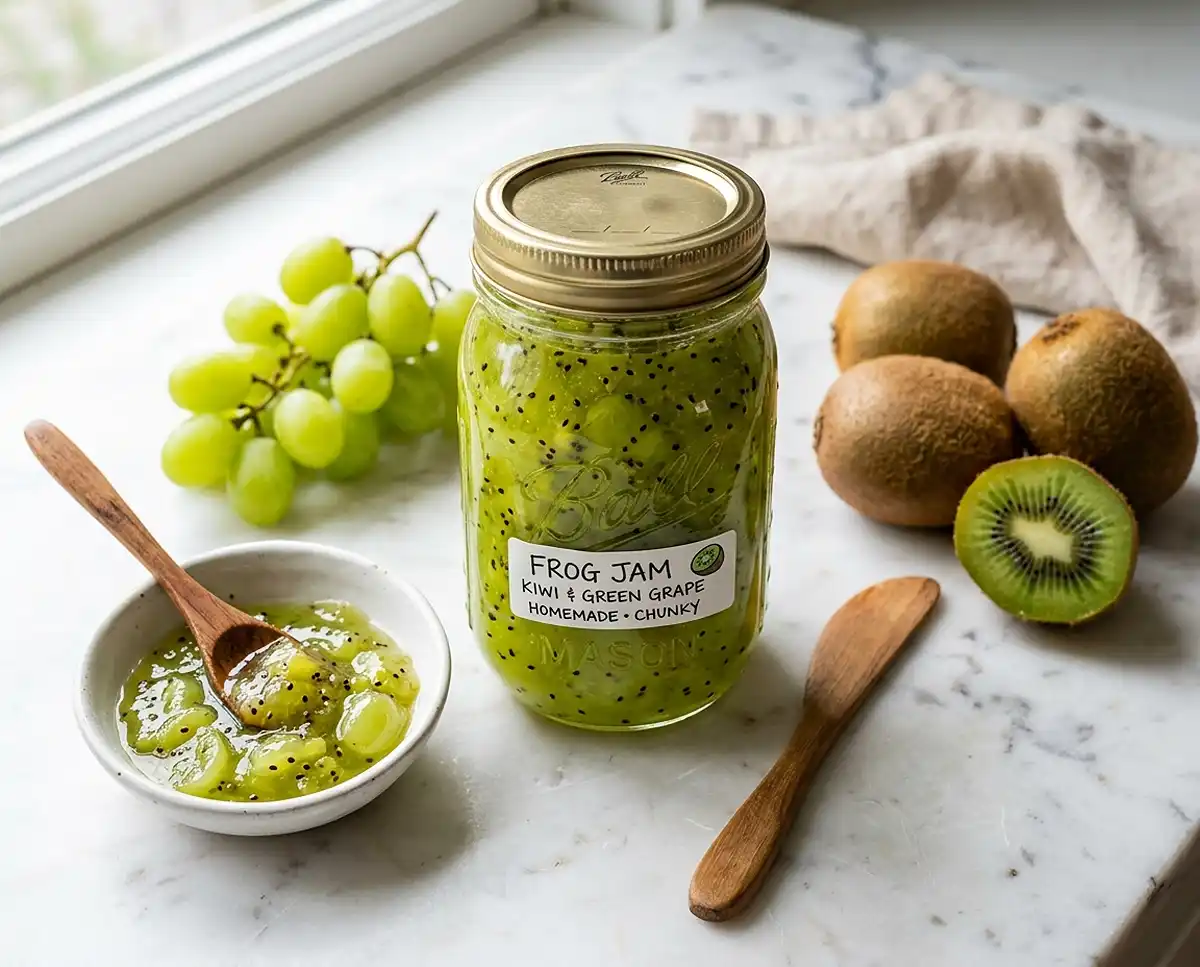
Welcome to the world of frog jam. This frog jam recipe is basically summer in a jar, and it’s way easier to make than the name suggests.
I stumbled onto this recipe on a rainy Saturday when my fruit drawer was overflowing with kiwis and nobody wanted to eat them plain. One batch later, I was texting everyone I know. It’s that kind of recipe.
Table of Contents
What Is Frog Jam, Anyway?
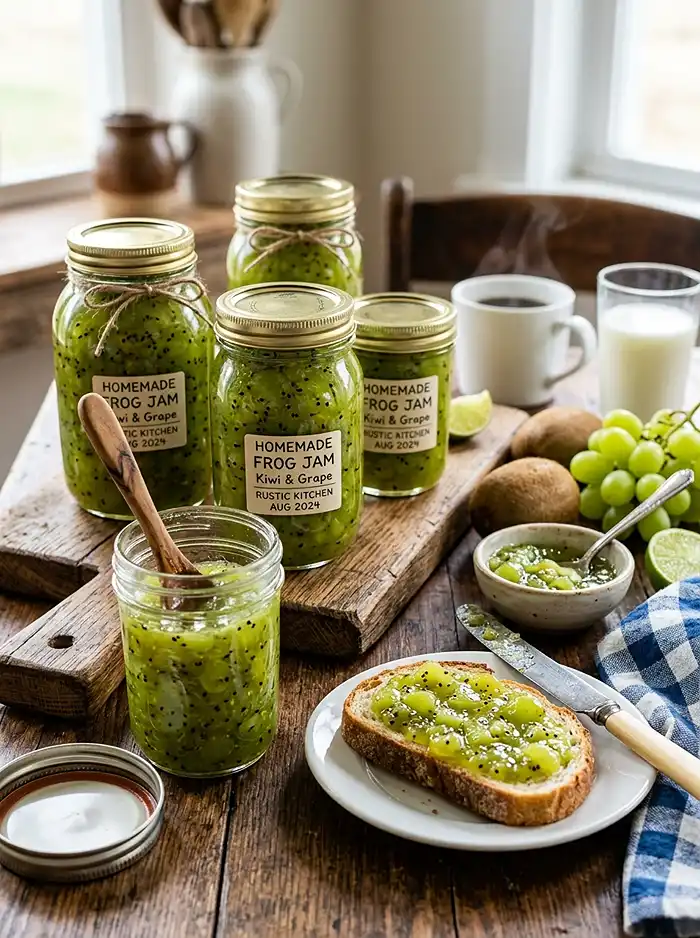
Frog jam gets its fun name from its vivid green color — think lily pad meets candy store. It’s a fresh, fruity spread made from kiwi and green grapes, brightened up with a splash of lime juice.
The result is a jam that’s tangy, a little tropical, and just sweet enough. It’s like nothing you’ll find on a grocery store shelf, which is exactly the point.
It pairs beautifully with buttered toast, cream cheese on bagels, or even spooned over sweet potato brownies with peanut butter for a wild but wonderful dessert twist.
Why You’ll Love This Frog Jam Recipe
This frog jam recipe delivers a bright, jewel-green spread that’s sweet and tangy all at once. It uses simple, fresh ingredients you can actually pronounce. And it comes together in under 30 minutes from start to finish.
No fancy equipment needed. No canning experience required. Just a pot, some jars, and a good mood.
It’s the kind of recipe that makes you feel like a kitchen genius, even if your last homemade jam attempt ended in a sticky disaster. Trust the process here — it works every time.
Irresistible Frog Jam Recipe
Equipment
- Large heavy-bottomed pot
- measuring cups
- Knife
- Cutting board
- wooden spoon
- Ladle
- Glass jars with lids
Ingredients
Frog Jam
- 2 pounds Kiwi fruit peeled and chopped
- 1 pound Green grapes halved
- 1 cup Granulated sugar
- ¼ cup Fresh lime juice
- 1 packet Fruit pectin standard packet
Instructions
- Peel the kiwis and chop them into small chunks. Slice the green grapes in half lengthwise.
- Add the chopped kiwi and halved grapes to a large heavy-bottomed pot. Stir in the sugar until evenly combined.
- Let the fruit and sugar mixture rest for 10 minutes to draw out the natural juices. Meanwhile, wash and prepare clean jars.
- Stir in the lime juice. Bring the mixture to a boil over medium-high heat, stirring occasionally. Boil for 5 minutes, stirring to prevent sticking.
- Add the fruit pectin and stir quickly. Return the mixture to a full boil and cook for exactly 1 minute.
- Remove from the heat and ladle the hot jam into clean jars, leaving about 1/4 inch headspace. Wipe rims, seal with lids, and let cool completely before refrigerating.
Notes
Ingredients You’ll Need
Here’s everything that goes into this frog jam recipe. The ingredient list is short, fresh, and totally approachable.
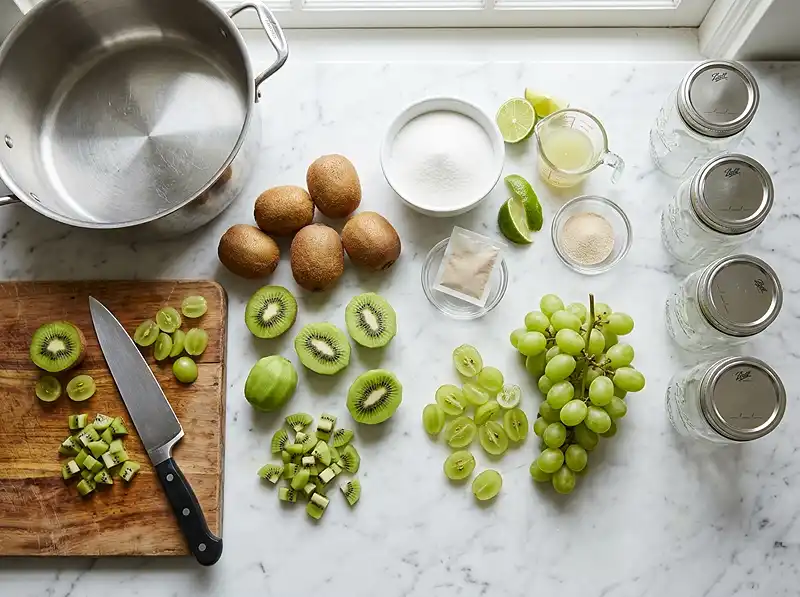
| Category | Ingredient | Amount |
|---|---|---|
| Fruit Base | Kiwi fruit, peeled and chopped | 2 pounds |
| Fruit Base | Green grapes, halved | 1 pound |
| Sweetener | Granulated sugar | 1 cup |
| Acid & Flavor | Fresh lime juice | 1/4 cup |
| Setting Agent | Fruit pectin (one standard packet) | 1 packet |
A note on the kiwis: Go for ripe but not mushy ones. They should give just a little when you press them. Overripe kiwis can make the jam too soft; underripe ones will be too tart even after cooking.
On the grapes: Seedless green grapes work best here. Thompson seedless are a great choice and easy to find year-round. Their mild sweetness balances the tang of the kiwi perfectly in this frog jam.
For the lime juice, fresh is always better. Bottled lime juice works in a pinch, but fresh gives you that bright, zingy flavor that makes this recipe shine. According to the National Center for Home Food Preservation, using the right acid level is key for safe, properly set jam — fresh citrus juice delivers that naturally.
How to Make Frog Jam: Step-by-Step Instructions
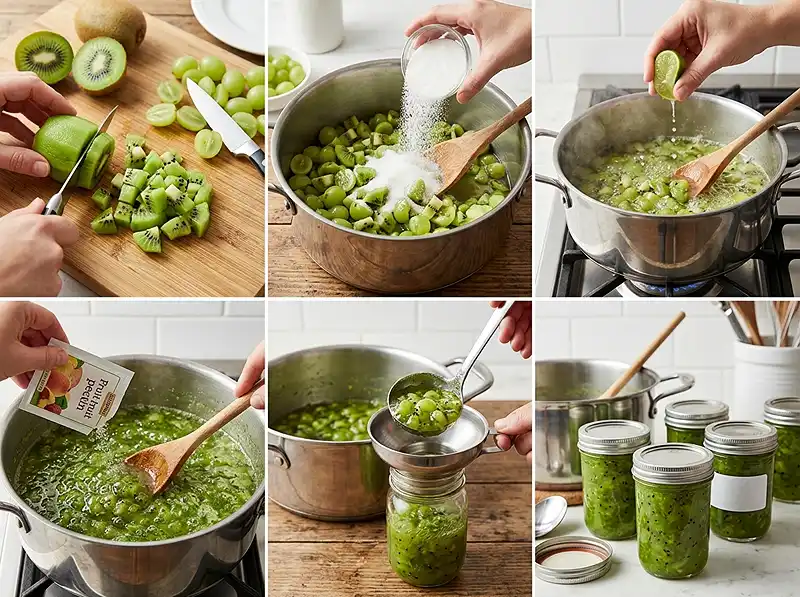
Making frog jam is genuinely simple. There’s a bit of chopping, a bit of stirring, and a whole lot of smelling your kitchen turn into a citrusy tropical paradise. Let’s walk through it.
Step 1: Prep Your Fruit
Peel your kiwis and cut them into small chunks — roughly half-inch pieces works great. You want them small enough to break down quickly in the pot but not so tiny they turn to mush before you even add the sugar.
Slice your green grapes in half lengthwise. This helps them release their juices faster once they hit the heat. Don’t skip this step — whole grapes take much longer to cook down.
Step 2: Start the Pot
Add all your chopped kiwi and halved grapes into a large, heavy-bottomed pot. A big pot matters here — the jam will bubble up quite a bit when it boils, and you do not want a volcanic green explosion on your stovetop. (Ask me how I know.)
Pour in your cup of sugar and stir everything together well. You’ll see the sugar start to pull moisture out of the fruit almost immediately. That’s exactly what you want.
Step 3: Let It Rest
After mixing in the sugar, step away for about 10 minutes. Let the fruit sit and macerate. This rest time draws out the natural juices from both the kiwi and grapes, giving you a more flavorful base.
Use this time to get your jars ready. Wash them with hot soapy water and rinse well. Warm, clean jars are essential for proper frog jam storage.
Step 4: Add Lime Juice and Heat It Up
After the rest, stir in your lime juice. Then bring everything to a boil over medium-high heat, stirring occasionally. You’ll notice the color turn from pale green to a deeper, jewel-toned emerald. That’s the magic happening.
Let the jam boil for a full 5 minutes. Keep stirring to prevent sticking, especially toward the bottom of the pot. The fruit will break down and the mixture will thicken slightly.
Step 5: Add the Pectin
Tear open your pectin packet and stir it in quickly. Once the pectin goes in, the jam will thicken up noticeably. Bring it back to a boil and let it go for exactly 1 more minute — no more, no less.
This is the moment where your frog jam goes from “fruit soup” to actual jam. Don’t skip the timing here. The University of Minnesota Extension notes that pectin needs a full boil to activate properly, so keep that heat high for the full minute.
Step 6: Jar It Up
Remove the pot from the heat and carefully ladle the hot frog jam into your clean jars. Leave about a quarter-inch of space at the top. Wipe the rims with a clean damp cloth, then seal the lids finger-tight.
Let the jars cool completely at room temperature before moving them to the fridge. You’ll hear that satisfying little “pop” as the lids seal down. That sound never gets old.
Expert Tips, Variations, and Troubleshooting
Tips for the Best Frog Jam
Use a wide, heavy-bottomed pot. More surface area means faster evaporation and a better set. Thin pots tend to scorch the bottom before the jam is ready.
Stir constantly during the final boil. The sugar concentration is high at this point, and it can stick and burn quickly if left alone.
Don’t double the batch on your first try. Jam chemistry is a little finicky — bigger batches don’t always set the same way as a single batch. Get comfortable with the recipe first, then scale up.
Fun Variations to Try
Add a kick: Stir in a pinch of finely grated fresh ginger with the lime juice. The heat pairs surprisingly well with the cool green fruit flavors in this frog jam recipe.
Herb it up: A few fresh mint leaves added during the cooking stage (then removed before jarring) give the jam a subtle, garden-fresh flavor.
Make it sweeter: Swap half the granulated sugar for honey for a more floral, complex sweetness. Keep the total amount the same so your pectin still sets properly.
Troubleshooting Common Frog Jam Problems
Jam didn’t set? Give it 24 hours in the fridge first — jam often continues to thicken as it cools. If it’s still too loose after that, you can reheat it, add another half packet of pectin dissolved in a tablespoon of water, and boil again for 1 minute.
Jam turned out too thick? You may have boiled it a little too long, or your fruit had unusually high natural pectin. Spread it generously — it’ll still taste incredible, and nobody’s ever complained about a thick jam on their morning toast.
Jam is too tart? Your kiwis might have been underripe. Next time, taste your fruit before starting and add an extra tablespoon of sugar if needed.
Storage Instructions
| Storage Method | Container | How Long It Lasts |
|---|---|---|
| Refrigerator (opened jar) | Sealed glass jar | Up to 3 weeks |
| Refrigerator (unopened, properly sealed) | Sealed glass jar | Up to 2 months |
| Freezer | Freezer-safe jar or container | Up to 6 months |
Reheating and Using Up Every Last Drop
To warm up refrigerated frog jam, just spoon it into a small saucepan over low heat and stir gently until it loosens up. Or microwave a small jar-friendly portion for about 15 seconds and stir. Warm frog jam over pancakes or waffles is honestly next-level good.
Got a jar that’s almost empty? Don’t rinse it out yet. Add a splash of sparkling water and a squeeze of fresh lime, shake it up, and drink it as a quick, lightly sweetened kiwi soda. Zero waste, maximum deliciousness.
The jam also makes a brilliant glaze for grilled chicken or pork. Brush it on during the last few minutes of grilling for a fruity, caramelized finish. If you love creative flavor combos, you might also enjoy this butterscotch budino recipe for another sweet, unexpected treat.
Serving Suggestions and Pairing Ideas
Frog jam is endlessly versatile. The obvious move is toast with a thick schmear of salted butter and a generous spoonful of this vibrant green jam on top. It’s beautiful and delicious.
But don’t stop there. Try it swirled into plain yogurt, layered in a parfait, or spread on a fluffy stack of egg-free baby pancakes for a fun and colorful breakfast.
It also works beautifully as a filling in layer cakes. The brightness cuts through rich frosting and keeps each bite feeling light. Pair it with a simple vanilla sponge or even a funfetti cake — speaking of which, this new funfetti cake mix recipe would make an incredible frog jam layer cake base.
Frequently Asked Questions
Why is it called frog jam?
Frog jam gets its name from its vivid green color, which resembles the bright, glossy green of a tree frog. There’s no actual frog involved — it’s purely a nod to the beautiful emerald hue the kiwi and grape combination creates when cooked down.
Can I use yellow kiwi instead of green kiwi in this frog jam recipe?
You can, but the color will change significantly — you’ll get a golden jam instead of the signature green. The flavor will also be slightly sweeter and less tart. If keeping that vibrant frog jam color is important to you, stick with standard green kiwis.
Does frog jam need to be processed in a water bath canner?
For short-term storage in the refrigerator or freezer, no water bath canning is needed. If you want shelf-stable jars that last unopened for up to a year at room temperature, you should process them in a water bath canner following standard canning guidelines from a trusted source like the USDA.
Can I reduce the sugar in this frog jam recipe?
You can reduce the sugar slightly, but keep in mind that sugar does more than sweeten — it helps the jam set and acts as a preservative. If you reduce it too much, your jam may not set properly and won’t last as long. Try a no-sugar-needed pectin if you want a lower-sugar version.
Can I freeze frog jam?
Yes, frog jam freezes really well. Let it cool completely, then transfer it to a freezer-safe jar or container, leaving a little space at the top for expansion. It will keep in the freezer for up to 6 months. Thaw overnight in the fridge before using.
Give This Frog Jam Recipe a Try
This frog jam recipe is one of those little kitchen projects that punches way above its weight. A handful of ingredients, less than 30 minutes of active time, and you walk away with jars of the most gorgeous, vibrant green jam you’ve ever made.
It’s the kind of thing that turns a regular Tuesday breakfast into something worth talking about. And trust me, people will ask you what that green stuff is.
If you try this frog jam recipe, I’d absolutely love to hear how it goes. Drop a comment below and let me know what you paired it with — and if you loved it, please share it on Pinterest so more jam lovers can find it. The more green jars in the world, the better.
