
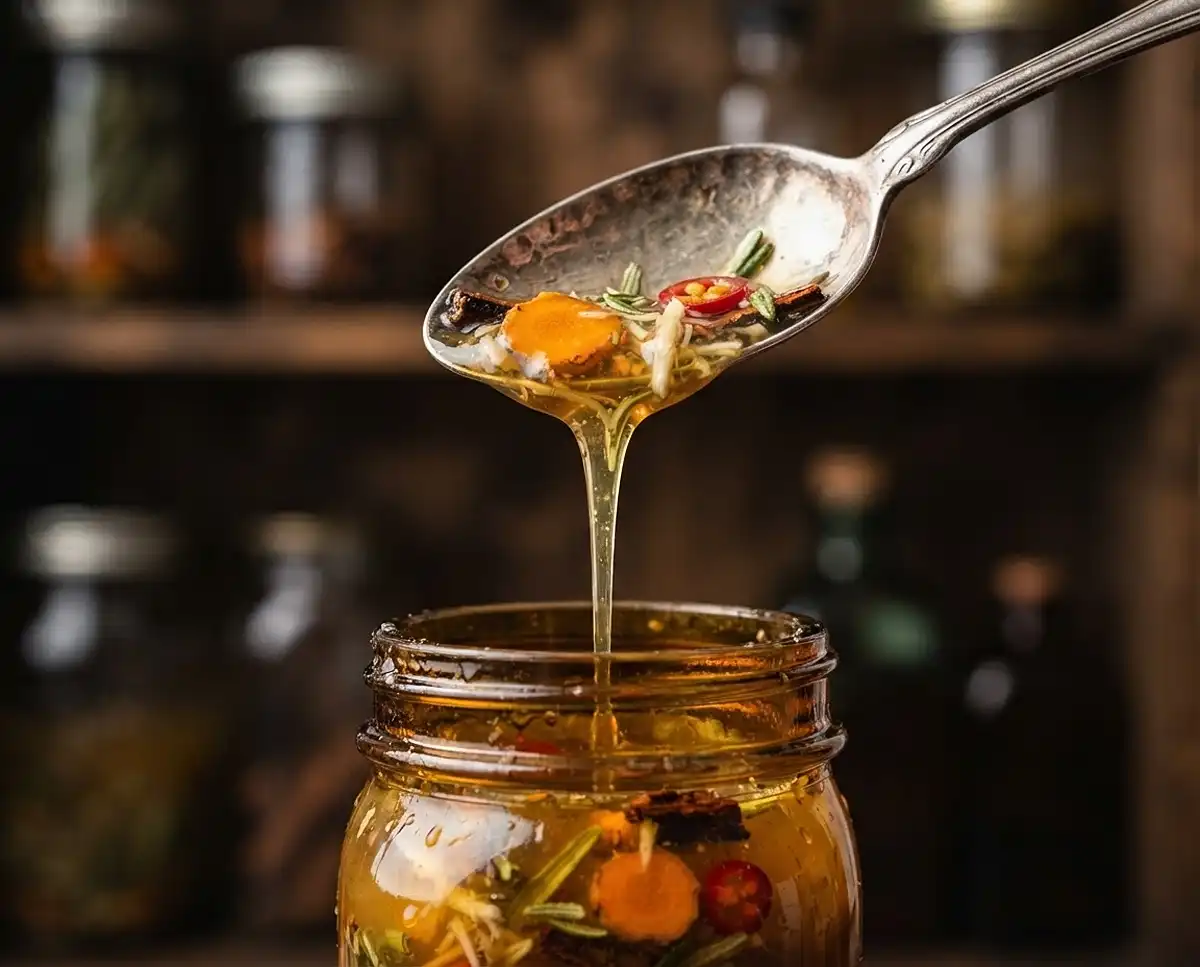
This fire cider recipe blends horseradish, ginger, turmeric, garlic, citrus, and honey into a spicy homemade tonic that’s stupidly easy to make and even easier to fall in love with.
Okay, real talk: the first time my neighbor handed me a jar of homemade fire cider, I thought she was messing with me. It looked like swamp water. But one tiny shot later, my sinuses cleared, my eyes watered, and I was hooked for life.
Ever since, I’ve kept a jar of this stuff brewing in my pantry all fall and winter. It’s spicy, it’s sour, it’s a little sweet, and it genuinely makes me feel like I’m fighting off whatever germs are floating around my house.
Table of Contents
Quick Rundown Before We Dive In
If you’ve never made a fire cider recipe before, here’s the gist: you’re basically infusing apple cider vinegar with a bunch of immune-loving roots, herbs, and citrus, letting it sit for a few weeks, then straining and sweetening it with honey.
- No cooking required, just chopping and patience
- Made with pantry staples plus a few fresh roots
- Naturally spicy, tangy, and slightly sweet
- Great as a daily shot, a cocktail mixer, or a salad dressing base
People love it for the same reasons folk medicine has loved apple cider vinegar tonics for generations. It’s not a miracle cure, but the fire cider benefits people talk about (immune support, digestion, warming you up from the inside) make a lot of sense when you look at what’s actually in the jar.
Fire Cider
Equipment
- 1.5 to 2 Quart Glass Jar with Lid
- Box grater or microplane
- Cutting board
- Sharp knife
- Vegetable peeler
- Fine mesh strainer or cheesecloth
- Parchment Paper (for metal lids)
- Airtight Storage Bottles or Jars
Ingredients
Base Liquid
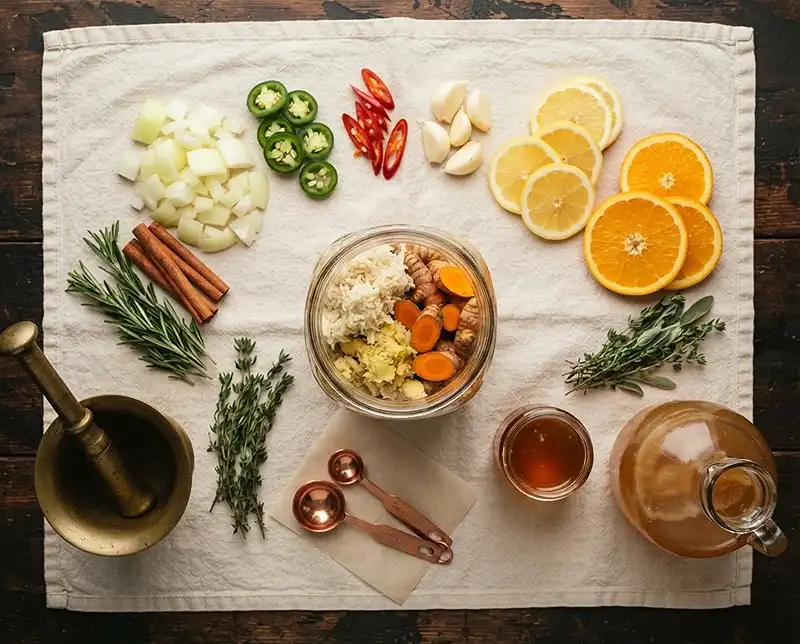
- 3 cups organic raw unfiltered apple cider vinegar plus more as needed to cover everything; the cloudy kind with the mother
Roots & Aromatics
- 7 oz fresh horseradish about 1 cup, peeled and grated or chopped
- 7 oz fresh ginger about 1 cup, grated or chopped
- 2 oz fresh turmeric about 1/4 cup, grated or chopped, or 1 tbsp turmeric powder
- 1 medium onion chopped
- 10 cloves garlic crushed or chopped
Citrus & Heat
- 1 lemon sliced
- 1 orange sliced
- 2-3 jalapeño peppers sliced, or 1/4 to 1/2 tsp cayenne powder
Herbs & Spices
- 3 cinnamon sticks
- 3 sprigs fresh rosemary about 0.1 oz
- 6 sprigs fresh thyme about 0.1 oz
- 1 tsp peppercorns optional
Sweetener (added after fermenting)
- ½ cup honey plus more to taste; or maple syrup for a vegan version
Instructions
- Peel and grate the horseradish. Fair warning, it’s basically nature’s tear gas, so crack a window or turn on the fan while you work.
- Grab a 1.5 to 2 quart jar and add the horseradish along with the sliced ginger, turmeric, jalapeños, onion, orange, lemon, and garlic. Add the fresh herbs, cinnamon sticks, and peppercorns on top.
- Pour the apple cider vinegar right over the top, making sure every single ingredient is fully submerged. Add more vinegar if needed, since exposed bits can spoil. If anything is poking out above the liquid line, push it down or pour in a splash more vinegar.
- Seal the jar. If your lid is metal, slide a piece of parchment paper underneath so the vinegar doesn’t corrode it, or use a plastic lid instead.
- Give the jar a good shake to mix everything together, then tuck it into a dark, cool spot like a pantry or cupboard for up to four weeks. Shake it once daily to keep things mixing and infusing evenly.
- After three to four weeks, strain the liquid through a fine-mesh strainer or cheesecloth, squeezing out every last drop from the solids.
- Stir in the honey until fully dissolved, then taste. Add more honey if you want it sweeter, aiming for that hot, spicy, sweet combination that makes fire cider so addictive.
- Pour the finished tonic into a clean, airtight jar or bottle and store until ready to use.
Notes
What You’ll Need for This Fire Cider Recipe
Here’s everything that goes into this best fire cider recipe, grouped so shopping and prepping feels less chaotic.
| Ingredient Group | Ingredient | Amount |
|---|---|---|
| Base Liquid | Organic raw unfiltered apple cider vinegar | 3 cups, plus more as needed to cover everything |
| Roots & Aromatics | Fresh horseradish, grated or chopped | 7 oz (about 1 cup) |
| Roots & Aromatics | Fresh ginger, grated or chopped | 7 oz (about 1 cup) |
| Roots & Aromatics | Fresh turmeric, grated or chopped (or 1 tbsp turmeric powder) | 2 oz (about 1/4 cup) |
| Roots & Aromatics | Medium onion, chopped | 1 |
| Roots & Aromatics | Garlic cloves, crushed or chopped | 10 cloves |
| Citrus & Heat | Lemon, sliced | 1 |
| Citrus & Heat | Orange, sliced | 1 |
| Citrus & Heat | Jalapeño peppers, sliced (or 1/4–1/2 tsp cayenne powder) | 2–3 |
| Herbs & Spices | Cinnamon sticks | 3 |
| Herbs & Spices | Fresh rosemary sprigs | 3 (about 0.1 oz) |
| Herbs & Spices | Fresh thyme sprigs | 6 (about 0.1 oz) |
| Herbs & Spices | Peppercorns (optional) | 1 tsp |
| Sweetener (added after fermenting) | Honey | 1/2 cup, plus more to taste |
A quick note on the horseradish and turmeric: fresh really is worth it here. It gives the fire cider that sharp, almost nose-tingling kick that makes people go “whoa” the first time they try it.
How to Make This Fire Cider Recipe
Prep the Powerhouse Ingredients
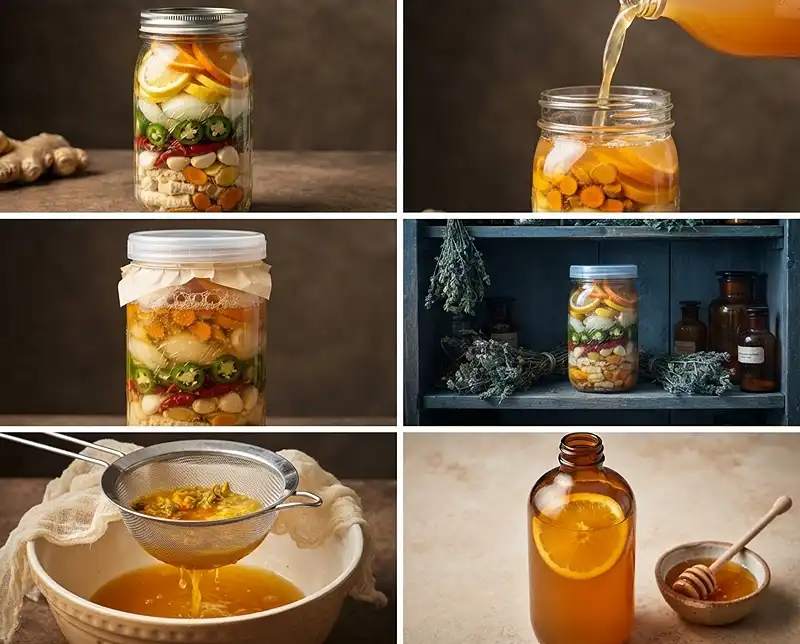
Start by peeling and grating your horseradish. Fair warning, it’s basically nature’s tear gas, so crack a window or turn on the fan while you work.
Once that’s done, grab a 1.5 to 2 quart jar and toss in the horseradish along with the sliced ginger, turmeric, jalapeños, onion, orange, lemon, and garlic. Add the fresh herbs, cinnamon sticks, and peppercorns on top.
Layer Everything Into the Jar
Now pour the apple cider vinegar right over the top, making sure every single ingredient is fully submerged. Add more ACV if you need to; exposed bits can spoil, and nobody wants moldy fire cider.
“Cover it completely” is basically the golden rule of this recipe for fire cider. If something’s poking out above the liquid line, push it down or pour in a splash more vinegar.
Seal It Up and Let It Work Its Magic
Seal the jar. If your lid is metal, slide a piece of parchment paper underneath so the vinegar doesn’t corrode it, or just use a plastic lid if you’ve got one lying around.
Give the jar a good shake to mix everything together, then tuck it into a dark, cool spot like a pantry or cupboard for up to four weeks.
I keep mine somewhere I’ll actually see it every day, because you need to shake it once daily to keep things mixing and fermenting evenly. Out of sight really does mean out of mind with this one.
Strain, Sweeten, and Bottle It Up
After three to four weeks, it’s go time. Strain the liquid through a fine-mesh strainer or cheesecloth, squeezing out every last drop from the solids.
Stir in the honey until it’s fully dissolved, then taste. Add more honey if you want it sweeter; you’re going for that hot, spicy, sweet combo that makes fire cider so addictive.
Pour your finished tonic into a clean, airtight jar and you’ve officially made a homemade batch of this Homemade Fire Cider Recipe from scratch. Give yourself a little pat on the back.

Tips, Variations, and Troubleshooting
Tips for the Best Batch
Use raw, unfiltered apple cider vinegar (the cloudy kind with “the mother” in it). It’s got more good bacteria and flavor than the clear stuff.
Also, don’t rush the fermenting time. The full three to four weeks is what lets all those roots and herbs really infuse into the vinegar.
Fun Variations to Try
Want it extra spicy? Add another jalapeño or a pinch more cayenne. Prefer it milder? Skip the peppers entirely and lean on the ginger and horseradish for warmth instead.
Some people swap the honey for maple syrup for a vegan-friendly version, or add a few slices of fresh beet for color and earthiness.
Common Troubleshooting
If you spot mold on top, it usually means something wasn’t fully submerged. Unfortunately, that batch needs to be tossed, so always double-check your liquid level.
If your fire cider tastes too harsh after straining, add a bit more honey. If it tastes flat, a splash more fresh lemon juice usually wakes it right back up.
Storage, Reheating, and No-Waste Ideas
| Storage Method | How Long It Lasts | Notes |
|---|---|---|
| Refrigerator | Up to 6 months | Keep sealed in an airtight jar or bottle |
| Cool, dry pantry | Up to 6 months | Store away from direct sunlight and heat |
| Strained solids | Don’t toss them yet | Great for compost, or steep in hot water for a quick spicy tea |
Since this is a vinegar-based tonic, there’s no reheating involved, just shake the jar before each use since ingredients can settle. If you want it warm, stir a spoonful into a mug of hot water for an instant spicy tea.
For a no-waste win, don’t throw out the strained pulp. It’s still packed with flavor and can be blended into a spicy marinade or added to soups for an extra kick.
If you’re into other kitchen projects that turn simple ingredients into something special, you might also like this whipped mascarpone frosting or this air fryer Japanese cheesecake for your next baking day.
And if you’re a fan of crunchy, comforting snacks after your daily fire cider shot, this panko-crusted egg ball bake is worth bookmarking too.
Fire Cider Recipe FAQs
How much fire cider should I take daily?
Most people take one to two tablespoons a day, either straight, mixed into water, or drizzled over food. Start with a smaller amount if you’re new to it, since it’s quite strong.
Can I use bottled lemon juice instead of fresh lemon?
Fresh is best for flavor and potency, but bottled lemon juice works in a pinch. Just skip the peel and pith, since those add bitterness rather than brightness.
Is it normal for fire cider to look cloudy?
Yes, cloudiness is totally normal, especially if you used raw, unfiltered apple cider vinegar. That haze is actually a sign of good quality vinegar.
Can I skip the honey?
You can, though the honey helps balance out the intense heat and sourness. If you skip it, consider maple syrup or another liquid sweetener instead.
Why did my jar develop a strange smell?
A pungent, spicy, vinegary smell is expected, that’s just the fermentation doing its job. A smell that’s rotten or sulfurous usually means something spoiled and the batch should be discarded.
Conclusion
This fire cider recipe is one of those projects that feels a little intimidating until you actually make it, and then suddenly you’re the friend handing out spicy little jars every winter.
It’s cheap, it’s simple, and it turns your pantry into a mini apothecary for a few weeks. Even if you’re skeptical about the health claims, it’s just plain fun to make.
If you give this a try, snap a photo and share it on Pinterest so other people can find it too, and drop a comment letting me know how your batch turned out. I genuinely love hearing which variations people come up with.
For more on the traditional roots of this tonic, check out this overview of apple cider vinegar’s health benefits, and if you’re curious about fermentation safety at home, the National Center for Home Food Preservation has excellent guidance.
