
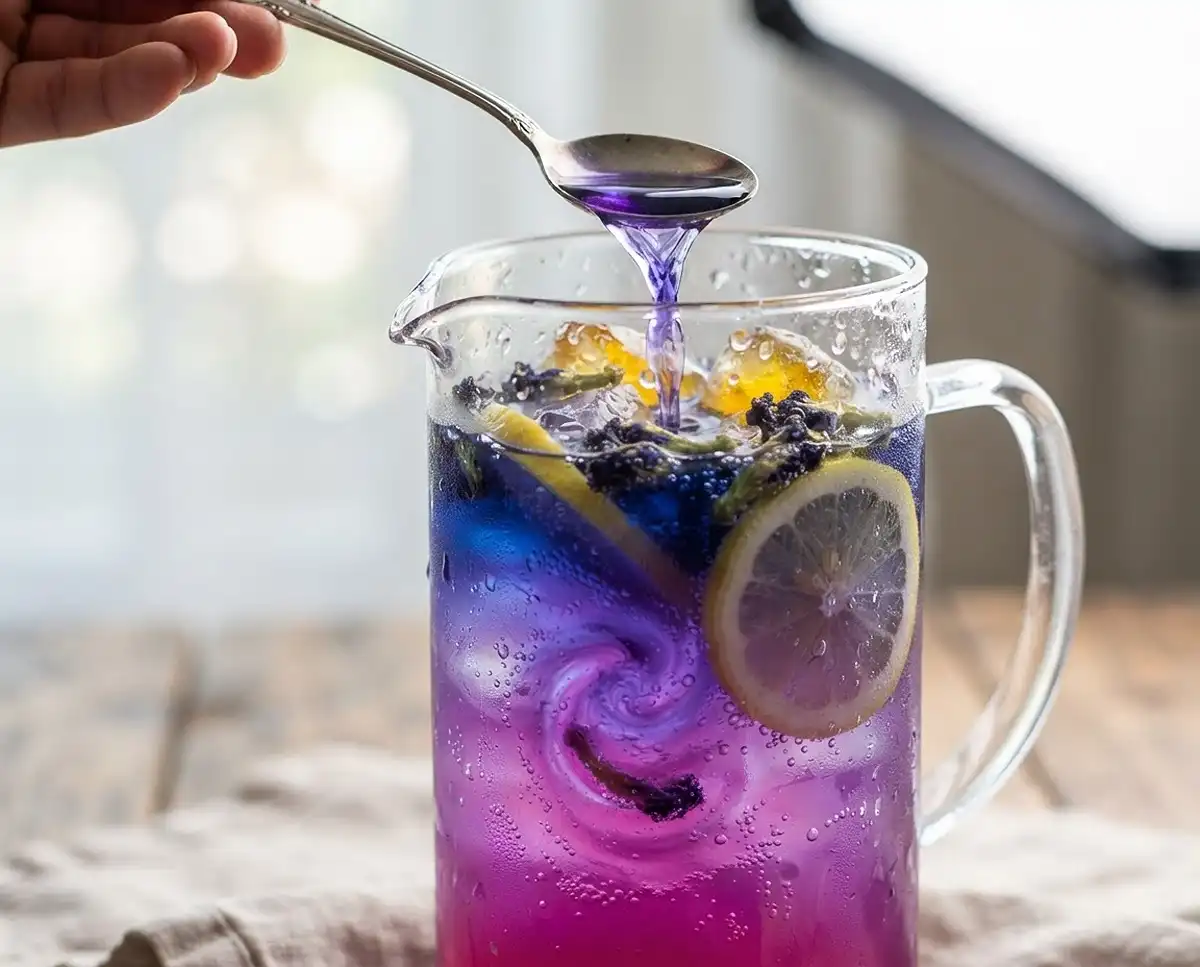
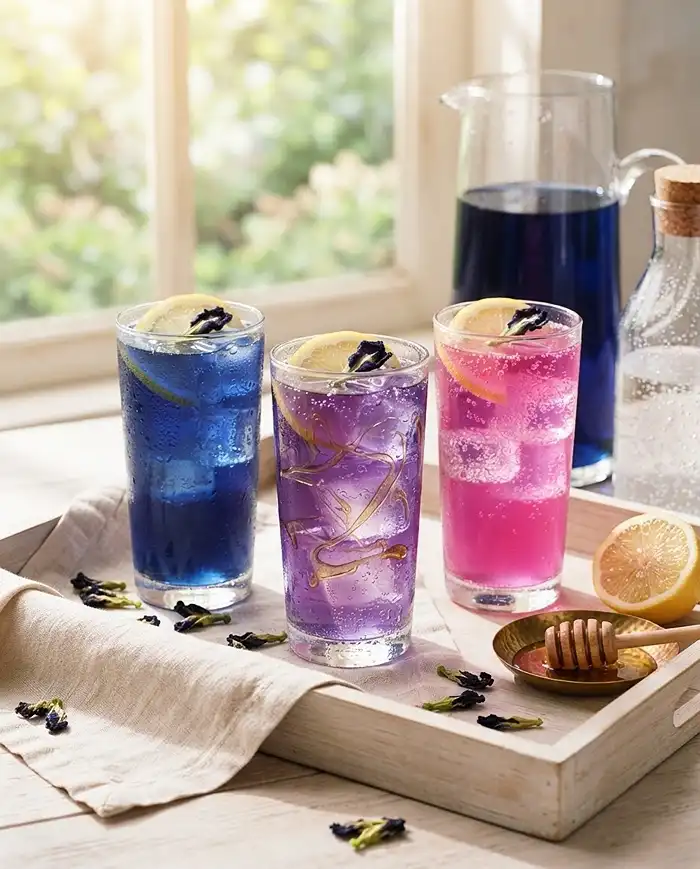
This Butterfly Pea Flower Lemonade starts out ocean-blue, then turns a dreamy purple the second lemon juice hits it, an easy honey-sweetened lemonade that’s basically edible magic in a glass.
Okay, so the first time I made this, I straight-up gasped in my own kitchen. I’d read about butterfly pea flower turning tea into a “potion,” but watching that inky blue liquid flip to lavender-purple right in front of me? I was hooked for life, and now I make an excuse to brew a batch every single summer.
Table of Contents
What Makes This Lemonade So Special
This isn’t your average lemonade. Butterfly pea flower lemonade gets its jaw-dropping color from dried blue pea blossoms, which brew into a deep sapphire tea before the lemon juice works its chemistry-class magic and shifts everything to purple or pink.
Beyond the visual drama, lemonade with butterfly pea flower is naturally caffeine-free, only needs five simple ingredients, and can be made three different ways depending on your mood: one giant pitcher, individually “color-changing” glasses for guests, or a bubbly sparkling version. It’s sweetened with honey instead of refined sugar, which keeps things feeling a little more wholesome without sacrificing that classic lemonade tang.
Butterfly Pea Flower Lemonade
Equipment
- Saucepan or Kettle
- Lid for Steeping
- Fine-mesh strainer
- citrus juicer
- Pitcher
- Whisk or Long Spoon
- Serving glasses
- Small Side Jars (for individual pours)
- Ice cube trays
Ingredients
For the Butterfly Pea Tea
- 8-10 dried butterfly pea flowers deep blue and whole rather than crumbled for the best color payoff
- 5 cups filtered water or 1 cup filtered water plus 4 cups sparkling water for the fizzy version
For the Lemonade
- 1/3-1/2 cup light-colored honey or more to taste; mild varieties let the floral tea flavor shine through
- 1 cup freshly squeezed lemon juice or more to taste
- ice cubes as needed
- lemon slices and/or extra butterfly pea flowers optional, for garnish
Instructions
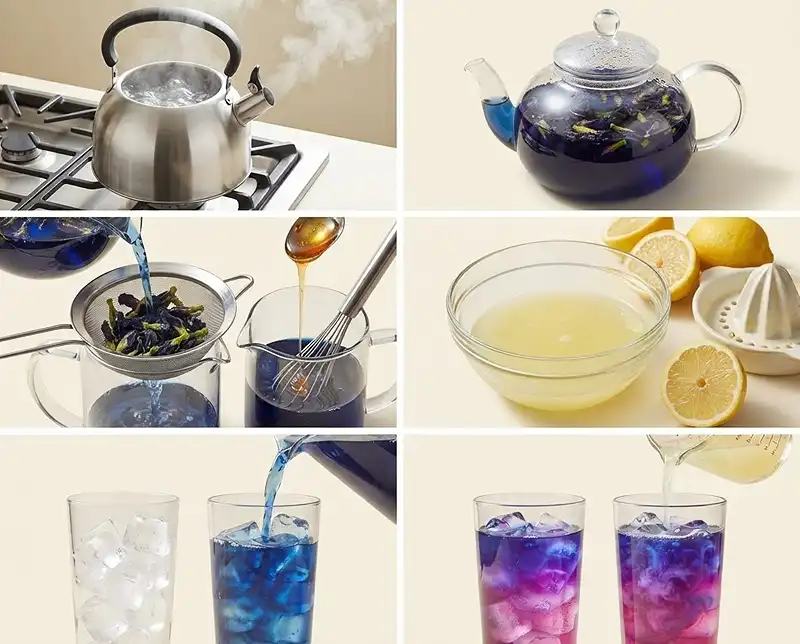
- Method 1 (One Big Batch): Bring 5 cups of water to a boil, then take it off the heat. Drop in the butterfly pea flowers, cover with a lid, and let them steep for a full hour. Resist the urge to rush it, since that hour is what gives you the deepest, most vivid blue.
- While the flowers steep, squeeze the lemon juice and set it aside. Once the tea is ready, strain out the flowers, then stir in the honey and lemon juice until everything is fully combined.
- Taste and adjust as needed, adding more honey if it’s too tart or more lemon if it needs brightness. Pour over ice and enjoy watching that gorgeous color settle in.
- Method 2 (Individual Glasses): Boil 5 cups of water and steep the flowers for an hour as above. While you wait, divide the lemon juice into five small containers, about 3 generous tablespoons each. You can pour the lemon juice straight into the serving glass, or into a small side jar so your guest can pour it in themselves and watch the color shift happen live, which makes the change much more dramatic.
- Once the tea is done, strain the flowers and whisk in the honey until fully dissolved. Fill the glasses with ice, pour in the sweetened blue tea, then let the lemon juice do its thing, either already waiting at the bottom or poured in gently right after. Stir and watch the blue melt into a stunning purple.
- Method 3 (Sparkling): Boil just 1 cup of water instead of 5. Steep the flowers for an hour as usual, then strain and stir in the honey and lemon juice.
- Add the remaining 4 cups of cold sparkling water to the sweetened tea concentrate, fill the glasses with ice, and pour. Garnish with lemon slices or extra butterfly pea flowers if desired.
Notes
Ingredients You’ll Need
Here’s everything that goes into this butterfly pea lemonade. Nothing fancy, just a handful of ingredients doing some seriously fun work together.
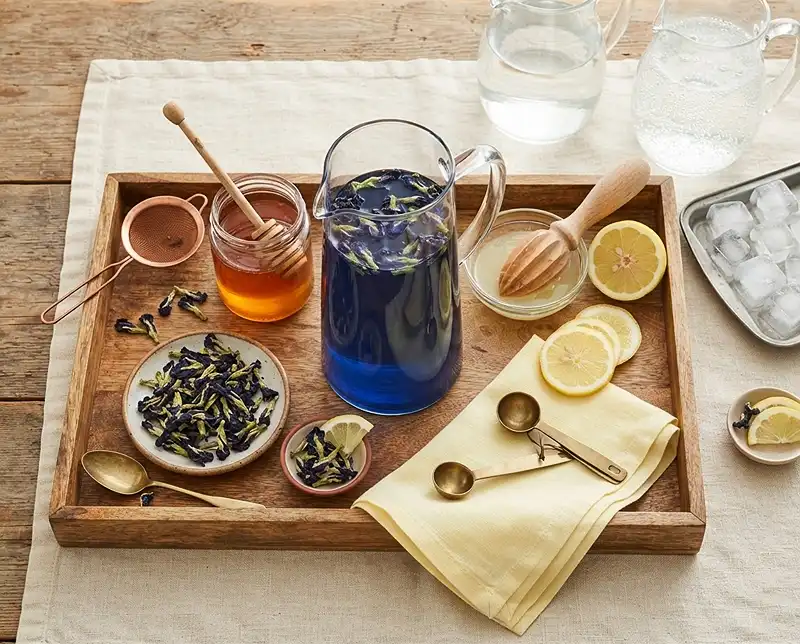
| For the Butterfly Pea Tea | Amount |
|---|---|
| Dried butterfly pea flowers | 8-10 flowers |
| Filtered water | 5 cups (or 1 cup filtered + 4 cups sparkling water for the fizzy version) |
| For the Lemonade | Amount |
|---|---|
| Light-colored honey | ⅓-½ cup, or more to taste |
| Freshly squeezed lemon juice | 1 cup, or more to taste |
| Ice cubes | As needed |
| Lemon slices and/or extra butterfly pea flowers | Optional, for garnish |
Quick tip on the honey: light, mild varieties let the floral, slightly earthy flavor of the tea shine through instead of overpowering it. If you’re curious why raw honey keeps showing up in recipes like this one, this breakdown of raw honey versus regular honey explains the difference well.
And please, if you’re using organic lemons, don’t toss those rinds. Zest them and save the peel to make homemade lemon pepper seasoning, it’s a great no-waste move and a fun little bonus project.
How to Make Butterfly Pea Flower Lemonade
You’ve basically got three paths here: one big pitcher, individual glasses for a fun reveal, or a sparkling version for something a little fancier. All three start the exact same way, so pick whichever fits your afternoon.
Method 1: One Big Batch
Bring five cups of water to a boil, then take it off the heat. Drop in your butterfly pea flowers, cover with a lid, and let them steep for a full hour. I know that sounds long, but resist the urge to rush it, that hour is what gives you the deepest, most vivid blue.
While the flowers steep, squeeze your lemon juice and set it aside. Once the tea is ready, strain out the flowers, then stir in the honey and lemon juice until everything’s fully combined.
Give it a taste and adjust as needed, more honey if it’s too tart, more lemon if it needs brightness. Pour over ice and enjoy watching that gorgeous color settle in.
Method 2: Individual Glasses (For the Wow Factor)
This one’s for when you want to impress people. Boil your five cups of water, steep the flowers for an hour just like before, and while you wait, divide your lemon juice into five small containers, about 3 generous tablespoons each.
You can pour the lemon juice straight into the serving glass, or into a small side jar so your guest can pour it in themselves and watch the color shift happen live. “Adding it slowly from a separate jar makes the color change so much more dramatic,” is basically my go-to party trick line every single time.
Once the tea is done, strain the flowers and whisk in the honey until fully dissolved. Fill your glasses with ice, pour in the sweetened blue tea, then let the lemon juice do its thing, either already waiting at the bottom or poured in gently right after. Stir and watch the blue melt into a stunning purple.
Method 3: Sparkling Butterfly Pea Flower Lemonade
For a fizzier, more refreshing take, boil just one cup of water instead of five. Steep your flowers for an hour as usual, then strain and stir in the honey and lemon juice.
Add the remaining four cups of cold sparkling water to your sweetened tea concentrate, fill your glasses with ice, and pour. The bubbles make this version feel extra celebratory, honestly perfect for a backyard party or a lazy Sunday brunch.
Expert Tips, Variations, and Troubleshooting
Tips for the Best Color and Flavor
Steep time really matters here. A shorter steep gives you a paler, softer blue, while the full hour gets you that deep, saturated color worth posting about. Also, always add the lemon juice last, it’s the acid that triggers the color change, so timing is everything for the “big reveal” moment.
Butterfly pea flower is also naturally rich in antioxidants called anthocyanins, which is part of why it’s become such a popular ingredient beyond just looking pretty. If you’re curious about the plant itself, this overview of butterfly pea flower benefits is a solid, easy read.
Fun Variations to Try
Want it herbal and a little more complex? Steep a slice of fresh ginger or a sprig of mint alongside the butterfly pea flowers for extra depth. If you love experimenting with bold, punchy flavors in general, you’ll probably enjoy the tangy kick in our fire cider recipe, it’s a great example of how a few strong ingredients can transform a drink.
You can also swap the honey for agave or maple syrup if that’s what you’ve got on hand, just know the flavor profile will shift slightly. For a fun dessert pairing, this lemonade is genuinely lovely alongside something rich and creamy, like a slice topped with our whipped mascarpone frosting.
Troubleshooting Common Issues
If your lemonade looks more gray-blue than vibrant, your flowers may be old or your water wasn’t hot enough when they went in. Fresh, good-quality dried flowers and a full rolling boil make a real difference.
If the color won’t shift to purple no matter how much lemon you add, double-check you’re using freshly squeezed juice and not a bottled substitute, fresh acidity is what triggers the reaction most reliably. Too tart? Add honey a tablespoon at a time until it’s balanced to your liking.
Storage, Reheating, and No-Waste Ideas
| Storage Method | How Long It Lasts |
|---|---|
| Refrigerator (sealed pitcher) | Up to 4 days |
| Freezer (as ice cubes) | Up to 2 months |
| Room temperature | Not recommended, serve chilled |
This lemonade is meant to be served cold, so there’s no real “reheating” step here, just give it a good stir before pouring since the honey can settle a bit. If it separates slightly in the fridge, that’s totally normal.
For a no-waste trick, freeze any leftover lemonade in ice cube trays. Drop those cubes into a fresh glass of sparkling water later for an instant, zero-effort refresher that won’t water down your drink.
Got leftover lemon rinds after squeezing? Don’t toss them. Between homemade lemon pepper seasoning and using citrus zest in baked goods, there’s a lot of life left in that peel, kind of like how we love repurposing textures and scraps in dishes like our fried panko crust egg ball bake.
Frequently Asked Questions
Why does my butterfly pea flower lemonade turn purple?
The color change happens because of a reaction between the anthocyanin pigments in the flowers and the acid in lemon juice. As the pH drops, the blue tea shifts to purple or pink right before your eyes.
Can I make butterfly pea flower lemonade ahead of time?
Yes, you can brew and sweeten the tea up to a day in advance and store it in the fridge. Just hold off on adding the lemon juice until right before serving so you still get that dramatic color-changing effect.
Where can I buy dried butterfly pea flowers?
Dried butterfly pea flowers are widely available online, at specialty tea shops, and in many Asian grocery stores. Look for flowers that are deep blue and whole rather than crumbled for the best color payoff.
Does butterfly pea flower lemonade taste different from regular lemonade?
The flower itself is very mild and slightly earthy, so the lemonade mostly tastes like classic honey lemonade with a subtle herbal undertone. The real difference is visual, not a big flavor departure.
Can I use bottled lemon juice instead of fresh?
Fresh lemon juice works best because its acidity is more reliable for triggering the color change. Bottled juice can work in a pinch, but you may notice a less dramatic color shift and a flatter flavor.
Conclusion
Honestly, butterfly pea flower lemonade is one of those recipes that feels way fancier than the effort it actually takes. Five simple ingredients, one dramatic color-changing moment, and a drink that tastes just as good as it looks.
If you give this a try, I’d love to see it. Snap a photo of that blue-to-purple transformation, pin it to Pinterest, and let me know in the comments how yours turned out. Cheers to sipping something a little bit magical this season.