Fire Cider
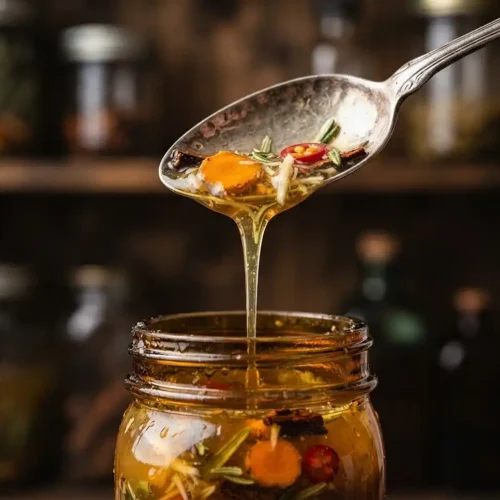
This fire cider recipe blends horseradish, ginger, turmeric, garlic, citrus, and honey into a spicy homemade tonic that's stupidly easy to make and even easier to fall in love with. You're basically infusing raw apple cider vinegar with immune-loving roots, herbs, and citrus, letting it sit for a few weeks, then straining and sweetening it with honey. No cooking required, just chopping and patience, and the result is spicy, sour, and a little sweet, perfect as a daily shot, a cocktail mixer, or a salad dressing base.
Equipment
- 1.5 to 2 Quart Glass Jar with Lid
- Box grater or microplane
- Cutting board
- Sharp knife
- Vegetable peeler
- Fine mesh strainer or cheesecloth
- Parchment Paper (for metal lids)
- Airtight Storage Bottles or Jars
Ingredients
Base Liquid
- 3 cups organic raw unfiltered apple cider vinegar plus more as needed to cover everything; the cloudy kind with the mother
Roots & Aromatics
- 7 oz fresh horseradish about 1 cup, peeled and grated or chopped
- 7 oz fresh ginger about 1 cup, grated or chopped
- 2 oz fresh turmeric about 1/4 cup, grated or chopped, or 1 tbsp turmeric powder
- 1 medium onion chopped
- 10 cloves garlic crushed or chopped
Citrus & Heat
- 1 lemon sliced
- 1 orange sliced
- 2-3 jalapeño peppers sliced, or 1/4 to 1/2 tsp cayenne powder
Herbs & Spices
- 3 cinnamon sticks
- 3 sprigs fresh rosemary about 0.1 oz
- 6 sprigs fresh thyme about 0.1 oz
- 1 tsp peppercorns optional
Sweetener (added after fermenting)
- ½ cup honey plus more to taste; or maple syrup for a vegan version
Instructions
- Peel and grate the horseradish. Fair warning, it's basically nature's tear gas, so crack a window or turn on the fan while you work.
- Grab a 1.5 to 2 quart jar and add the horseradish along with the sliced ginger, turmeric, jalapeños, onion, orange, lemon, and garlic. Add the fresh herbs, cinnamon sticks, and peppercorns on top.
- Pour the apple cider vinegar right over the top, making sure every single ingredient is fully submerged. Add more vinegar if needed, since exposed bits can spoil. If anything is poking out above the liquid line, push it down or pour in a splash more vinegar.
- Seal the jar. If your lid is metal, slide a piece of parchment paper underneath so the vinegar doesn't corrode it, or use a plastic lid instead.
- Give the jar a good shake to mix everything together, then tuck it into a dark, cool spot like a pantry or cupboard for up to four weeks. Shake it once daily to keep things mixing and infusing evenly.
- After three to four weeks, strain the liquid through a fine-mesh strainer or cheesecloth, squeezing out every last drop from the solids.
- Stir in the honey until fully dissolved, then taste. Add more honey if you want it sweeter, aiming for that hot, spicy, sweet combination that makes fire cider so addictive.
- Pour the finished tonic into a clean, airtight jar or bottle and store until ready to use.
Notes
Tips for the best batch: Use raw, unfiltered apple cider vinegar (the cloudy kind with the mother) since it has more good bacteria and flavor than the clear stuff. Don't rush the infusing time either, as the full three to four weeks is what lets all those roots and herbs really infuse into the vinegar. Fresh horseradish and turmeric are worth it for that sharp, nose-tingling kick.
Variations: For extra spice, add another jalapeño or a pinch more cayenne. For a milder version, skip the peppers entirely and lean on the ginger and horseradish for warmth. Swap the honey for maple syrup for a vegan-friendly version, or add a few slices of fresh beet for color and earthiness.
Troubleshooting: Mold on top usually means something wasn't fully submerged, and that batch needs to be tossed, so always double-check your liquid level. If the finished cider tastes too harsh, add a bit more honey; if it tastes flat, a splash more fresh lemon juice usually wakes it back up. A pungent, spicy, vinegary smell is expected, but a rotten or sulfurous smell means the batch should be discarded. Cloudiness is completely normal with raw, unfiltered vinegar.
How to use: Most people take one to two tablespoons a day, either straight, mixed into water, or drizzled over food. Start with a smaller amount if you're new to it. Stir a spoonful into hot water for an instant spicy tea, or use it as a cocktail mixer or salad dressing base.
Storage: Keeps up to 6 months sealed in an airtight jar or bottle in the refrigerator, or up to 6 months in a cool, dry pantry away from direct sunlight and heat. Shake before each use since the ingredients settle.
No-waste idea: Don't throw out the strained pulp. It's still packed with flavor and can be blended into a spicy marinade, added to soups for an extra kick, steeped in hot water for a quick spicy tea, or composted.
Note: Fire cider is a traditional folk tonic, not a medical treatment or cure for any illness.