
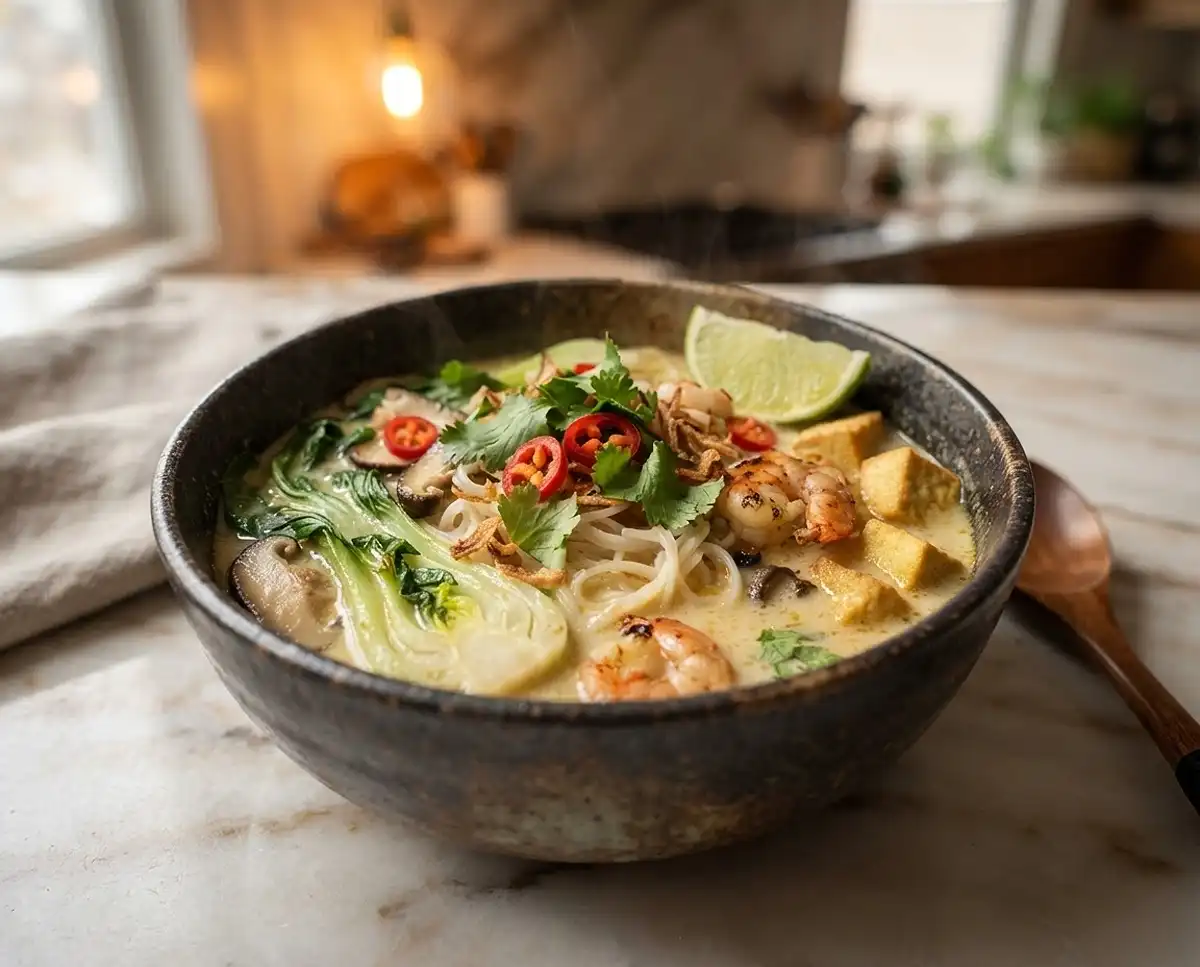
This coconut curry soup cilantro recipe comes together in one pot, tastes like a warm hug in a bowl, and it’s on the table in under 30 minutes flat.
Okay, real talk: this coconut curry soup is the recipe I text my friends when they’re having a rough week. It’s the kind of thing you make in your pajamas, eat straight from the pot (no judgment), and somehow feel instantly better after. One pot, one spoon, zero stress.
Table of Contents
Why You’re Going to Love This Coconut Curry Soup
This coconut curry soup is creamy, a little spicy, a little sweet, and packed with fresh cilantro that makes every bite taste bright instead of heavy. It’s the kind of coconut curry soup cilantro recipe that comes together with pantry staples and one can of coconut milk doing all the heavy lifting.
It’s naturally gluten-free if you use tamari, endlessly customizable with whatever protein or noodles you’ve got hanging around, and ready in about the same time it takes to convince yourself you don’t need takeout tonight. Spoiler: you don’t.
Coconut Curry Soup Origin: A Little History Lesson
If you’ve ever wondered about coconut curry soup origin history, it’s actually way older and cooler than you’d think. Archaeologists digging at the Oc Eo site in southern Vietnam found grinding stones and spices dating back roughly 1,800 to 2,000 years, evidence of curry-making that predates most of what we assumed about Southeast Asian food history.
According to Smithsonian Magazine’s coverage of the discovery, these ancient curry spices were part of a global maritime trading network linking India, Vietnam, and beyond.
Coconut milk, turmeric, and other aromatics traveled by ship long before anyone had a stovetop, let alone a blender for curry paste.
Over centuries, Indian curry traditions blended with local Southeast Asian ingredients like galangal, lemongrass, and, of course, coconut milk. Thailand’s tom kha gai is probably the most famous cousin of what we’re making today, but versions of coconut curry soup show up all over Thailand, Malaysia, and Indonesia, each with its own regional twist.
So when you’re standing at your stove stirring curry paste into coconut milk, you’re basically taking part in a two-thousand-year-old food tradition. No pressure, but also, kind of a big deal.
Quick Overview: What Makes This Recipe Great
This is a one-pot, dump-and-simmer situation. You’ll sauté a few aromatics, bloom some curry paste, pour in broth and coconut milk, and let it all simmer into something creamy and deeply flavorful.
It’s naturally adaptable for shrimp, chicken, tofu, or rice noodles, it uses simple grocery-store ingredients (no hunting down galangal required), and fresh lime juice plus cilantro at the end keeps it tasting bright instead of one-note rich.
If you love cozy, brothy bowls, this pairs beautifully with a bowl of potato and leek soup on your weekly soup rotation.
Coconut Curry Soup With Cilantro
Equipment
- Large soup pot or Dutch oven
- Wooden spoon or whisk
- Knife
- Cutting board
- Measuring cups and spoons
- Ladle
- Soup bowls
Ingredients
Aromatics
- as needed cooking oil for sautéing
- 1 small onion chopped
- 2 cloves garlic minced
- 1 tablespoon fresh ginger grated
- 2 to 3 tablespoons Thai red or yellow curry paste start with 2 tablespoons for mild to medium heat
Broth and Creamy Base
- 4 cups vegetable or chicken broth
- 1 13.5-ounce can full-fat coconut milk
Flavor Boosters
- 1 tablespoon soy sauce or tamari use tamari for a gluten-free option
- 1 tablespoon fish sauce replace with additional soy sauce or tamari for a vegetarian or vegan soup
- 1 tablespoon brown sugar or maple syrup
- ½ lime juiced
Finishing Touches
- ½ cup fresh cilantro chopped, plus more for garnish
Optional Add-Ins
- as desired cooked chicken, shrimp, tofu, or rice noodles add near the end and heat through; cook shrimp only until pink and opaque
- as desired mushrooms, bell peppers, or baby spinach optional vegetables
Instructions
- Heat a little oil in a large soup pot over medium heat. Add the onion, garlic, and ginger and cook for 2 to 3 minutes, until softened and fragrant.
- Add the curry paste and cook for about 1 minute, stirring constantly, to toast the paste and develop its flavor.
- Pour in the broth and coconut milk. Stir in the soy sauce or tamari, fish sauce, and brown sugar or maple syrup. Bring the soup to a gentle boil.
- Reduce the heat to low and simmer for 10 minutes, stirring occasionally.
- Add cooked chicken, tofu, rice noodles, or vegetables if using, and cook only until heated through. If using raw shrimp, simmer for a few minutes until pink and opaque.
- Remove the pot from the heat. Stir in the lime juice and chopped cilantro. Taste and adjust the seasoning with salt, more lime juice, tamari, or curry paste as needed.
- Ladle the soup into bowls and garnish with extra fresh cilantro. Serve hot.
Notes
Coconut Curry Soup Ingredients
Here’s everything you’ll need for this coconut curry soup cilantro ingredient recipe, grouped by how you’ll use them so shopping (and cooking) feels less chaotic.

Aromatics
| Ingredient | Amount |
|---|---|
| Onion, chopped | 1 small |
| Garlic, minced | 2 cloves |
| Fresh ginger, grated | 1 tbsp |
| Thai red or yellow curry paste | 2–3 tbsp |
Broth and Creamy Base
| Ingredient | Amount |
|---|---|
| Vegetable or chicken broth | 4 cups |
| Full-fat coconut milk (13.5 oz can) | 1 can |
Flavor Boosters
| Ingredient | Amount |
|---|---|
| Soy sauce or tamari | 1 tbsp |
| Fish sauce | 1 tbsp |
| Brown sugar or maple syrup | 1 tbsp |
| Lime, juiced | 1/2 lime |
Finishing Touches
| Ingredient | Amount |
|---|---|
| Fresh cilantro, chopped (plus extra for garnish) | 1/2 cup |
Optional Add-Ins
| Ingredient | Amount |
|---|---|
| Cooked chicken, shrimp, tofu, or rice noodles | your call |
If tofu is your go-to protein, you’ll want it nice and crispy so it doesn’t turn to mush in the broth. Our guide on how to bake chickpeas has the same crisping technique, and it works great on cubed tofu too.
How to Make Coconut Curry Soup, Step by Step
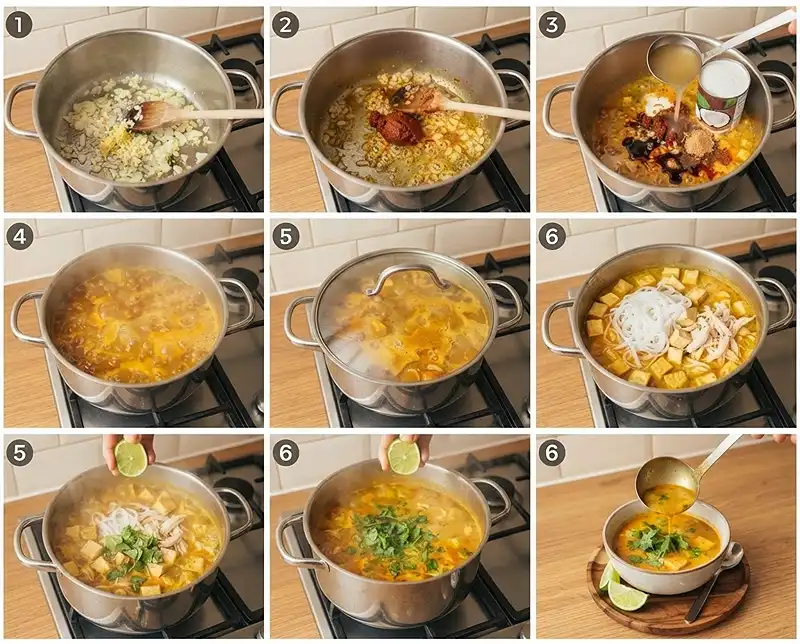
Sauté the Aromatics
Heat a little oil in a large pot over medium heat. Add the onion, garlic, and ginger, and cook for 2 to 3 minutes until soft and smelling like something amazing is about to happen. Your kitchen should smell incredible right about now.
Toast the Curry Paste
Stir in the curry paste and let it cook for about a minute. This is a small step, but don’t skip it. Toasting the paste wakes up all those deep, spicy flavors instead of leaving them stuck in a dull, raw-tasting soup.
Let It Simmer
Pour in the broth and coconut milk, then add the soy sauce, fish sauce, and brown sugar. Bring everything to a gentle boil, then turn the heat down low and let it simmer for 10 minutes. Give it a stir every now and then and just enjoy the smell filling your kitchen.
Add Your Protein or Noodles
If you’re using noodles, tofu, shrimp, or cooked chicken, stir them in now and cook just until everything is heated through. Shrimp only needs a few minutes, so keep an eye on it so it doesn’t overcook and turn rubbery.
Finish and Garnish
Take the pot off the heat, then stir in the fresh lime juice and chopped cilantro. Taste it and add salt if it needs a little more oomph. Serve it hot with extra cilantro on top, because you can never really have too much cilantro.
“I always taste before I add the salt,” is basically my kitchen motto with this coconut curry soup, since the fish sauce and soy sauce already bring plenty of salty depth on their own.
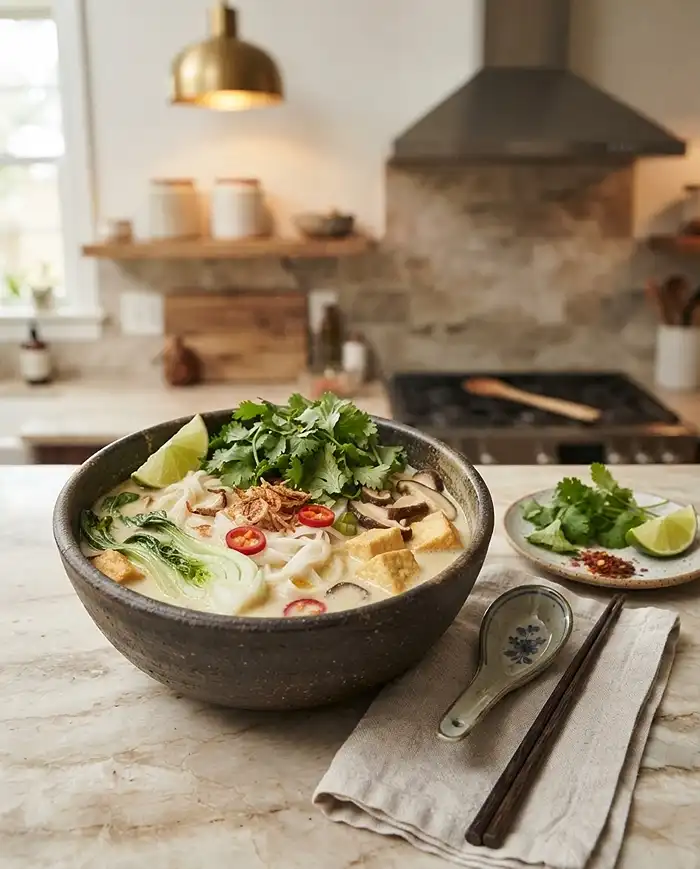
Expert Tips, Variations, and Troubleshooting
Getting the Flavor Balance Right
Coconut curry soup lives and dies on balance: salty, sweet, sour, and a little heat. If your soup tastes flat, it usually just needs more lime juice or a pinch more salt, not more curry paste.
Make It Vegetarian or Vegan
Swap the fish sauce for extra soy sauce or tamari, use vegetable broth, and load up on crispy tofu or even baked chickpeas for protein. If you like a chili-forward, hearty bowl in your rotation too, our Pepper Belly Pete chili recipe is another cozy, one-pot favorite worth bookmarking.
Spice Level Control
Start with 2 tablespoons of curry paste if you’re not sure how spicy your brand is, then add more at the end if you want extra heat. Different curry paste brands vary a lot in spiciness, so always taste as you go.
Troubleshooting a Broken or Oily Soup
If your coconut milk looks a little separated or oily on top, don’t panic. A quick whisk right before serving brings it back together, and it won’t affect how it tastes one bit.
Fun Variations to Try
Try swapping half the broth for extra coconut milk for a richer soup, or toss in mushrooms, bell peppers, or baby spinach for more veggies. A crunchy side like a Mediterranean chickpea salad is a surprisingly great contrast to this rich, creamy bowl.
Storage, Reheating, and No-Waste Tips
| Method | How Long It Lasts |
|---|---|
| Refrigerator (airtight container) | Up to 4 days |
| Freezer (without noodles) | Up to 2 months |
| Freezer (with noodles added) | Not recommended, noodles get mushy |
To reheat, warm it gently on the stove over medium-low heat, stirring occasionally so the coconut milk doesn’t split. If it’s a little thick after chilling, splash in some broth or water to loosen it back up.
For a no-waste move, save your leftover cilantro stems and toss them in next time you simmer the soup, they’ve got tons of flavor. Extra lime? Zest it before juicing and freeze the zest for another recipe.
Frequently Asked Questions
Can I make coconut curry soup ahead of time?
Yes, this coconut curry soup actually tastes even better the next day once the flavors have had time to meld. Store it in the fridge and add fresh cilantro and lime juice right before serving.
What curry paste works best for this recipe?
Thai red curry paste gives a deeper, spicier flavor, while yellow curry paste is milder and a little sweeter. Either works great, so just pick based on how much heat you’re in the mood for.
Can I use light coconut milk instead of full-fat?
You can, but the soup won’t be quite as creamy or rich. Full-fat coconut milk gives this coconut curry soup its signature velvety texture, so it’s worth using if you can.
Is this coconut curry soup gluten-free?
Yes, as long as you use tamari instead of regular soy sauce and double check your curry paste brand, since some contain gluten-based thickeners.
How spicy is this recipe?
It’s mild to medium with 2 tablespoons of curry paste, but you can easily dial it up or down depending on your curry paste brand and how much heat you like.
Final Thoughts
This coconut curry soup is proof that big, cozy flavor doesn’t need to be complicated. One pot, a handful of pantry staples, and a whole lot of cilantro, and you’ve got dinner that tastes like it took way more effort than it did.
Give this coconut curry soup a try this week, and if you love it, snap a pic and pin it to your favorite soup board on Pinterest so you can find it again next time you need a hug in a bowl. I’d love to hear how yours turns out, so drop a comment and let me know what add-ins you went with.