
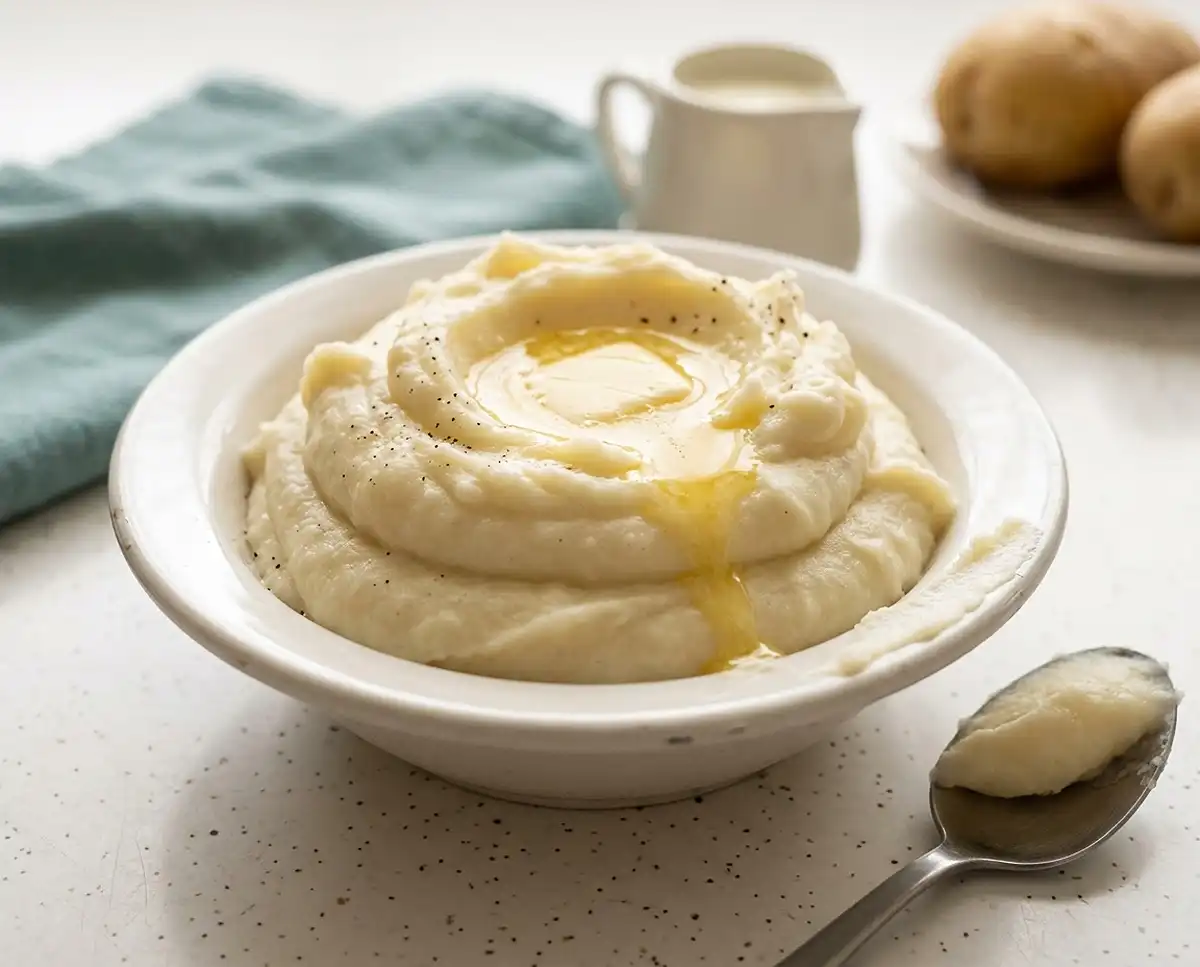
Make Bob Evans mashed potatoes at home that come out creamy and smooth, using russets, one pot, and a hand mixer. Here’s how I make them, plus leftover ideas.
The first time I made these Bob Evans mashed potatoes, my teenager hovered over the pot with a fork and sampled three times before I’d even found a bowl. Honestly, I took that as a review. This is my homemade version, and it takes one pot and a hand mixer.
Table of Contents
Why Bob Evans Mashed Potatoes Earn a Spot in the Rotation
Here’s the thing: these potatoes don’t need tricks. Russets go soft and fluffy in the pot, melted butter coats every piece, and a splash of half and half makes the whole bowl creamy and smooth.
If you’ve ever typed Bob Evans who into a search bar, it’s the restaurant chain with the refrigerated sides at the grocery store. This is my homemade nod to those mashed potatoes, built on a short ingredient list and one technique that matters.
The technique is mashing by hand first, then bringing in a hand mixer for a short burst. That order breaks up the big pieces without overworking the potatoes, which is the line between creamy and gummy.
On a weeknight, I want a side that barely adds to the sink pile. Between the single pot and the fact that it plays nicely with whatever else is on the stove, this one gets made a lot around here.
Bob Evans Who, Exactly
Bob Evans is the name on the restaurant signs and on the refrigerated sides at the grocery store, which is probably why so many people type Bob Evans who into a search bar. Mashed potatoes are one of the things it’s known for.
I won’t pretend to have the company’s history memorized. What I can tell you is what I was chasing: a bowl of mashed potatoes that tastes like the creamy, buttery kind you get next to a dinner plate.
Honestly, I can’t promise mine is identical, and I don’t think it needs to be. Think of it as a homemade nod, where you pick the salt and know exactly what went into the pot.
Bob Evans Mashed Potatoes with a Silky Half and Half Finish
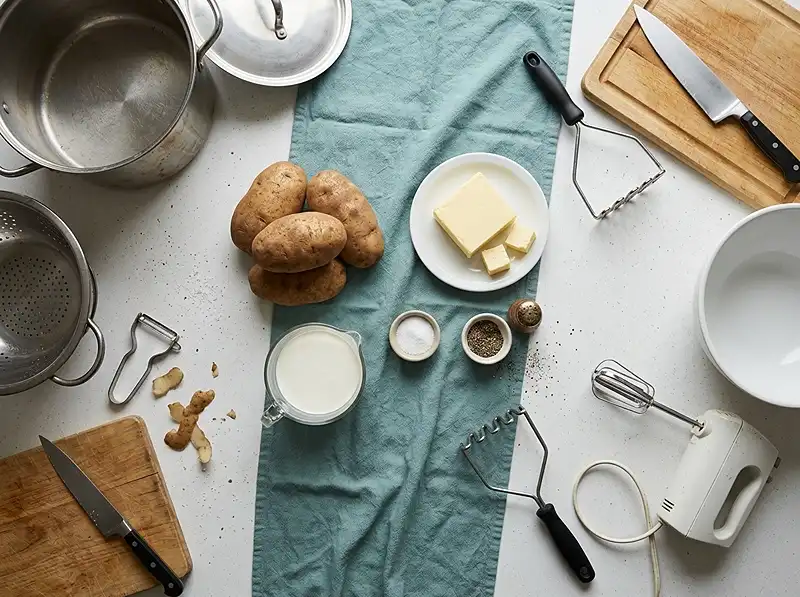
Equipment
- Vegetable peeler
- Cutting board
- Knife
- Medium or large pot
- Colander
- Potato masher
- hand mixer
Ingredients
For the Potatoes
- 2.5 lb russet potatoes peeled and diced
- water just enough to cover the potatoes
- 1 tsp salt for the boiling water
For the Mash
- 6 tbsp salted butter
- ½ tsp salt
- ⅛ tsp black pepper
- ½ cup half and half
Instructions
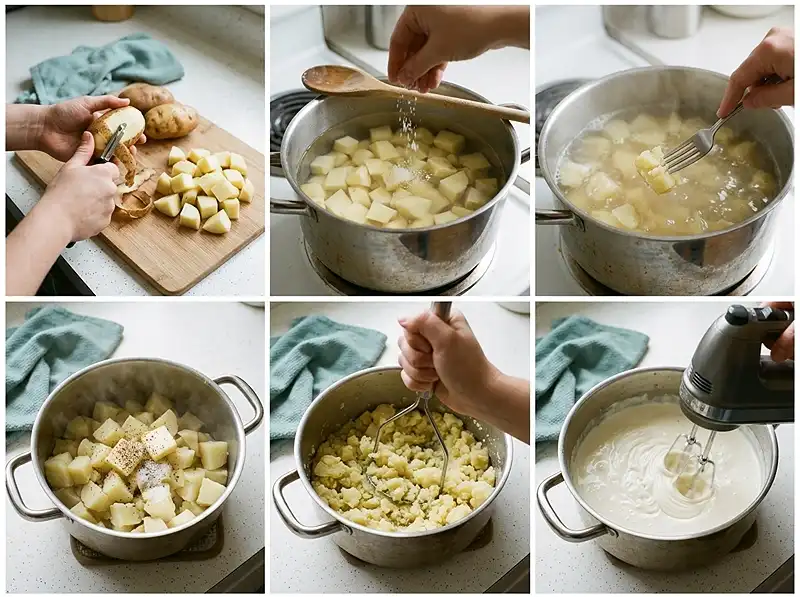
- Peel the russet potatoes and dice them into pieces of about the same size.
- Put the potatoes in a medium or large pot with just enough water to cover and 1 tsp salt. Boil for about 10 minutes, until tender.
- Drain the potatoes. Add the butter, 1/2 tsp salt and black pepper, and let the butter melt into the hot potatoes.
- Mash by hand to break up the big pieces. Add the half and half and beat with a hand mixer for 30 to 45 seconds, just until creamy and smooth. Don’t overmix. Serve hot.
Notes
What Goes in the Pot
| What You’ll Need | How Much |
|---|---|
| For the potatoes | |
| Russet potatoes, peeled and diced | 2.5 lb |
| Water | Just enough to cover the potatoes |
| Salt (for the boiling water) | 1 tsp |
| For the mash | |
| Salted butter | 6 tbsp |
| Salt | 1/2 tsp |
| Black pepper | 1/8 tsp |
| Half and half | 1/2 cup |
Here’s my Bob Evans mashed potatoes ingredients list in plain terms: potatoes, butter, half and half, salt, and pepper. That’s the whole lineup, so each one matters more than it would in a busier recipe.
I stick with russets and I’m stubborn about it. Their starchy insides break down fluffy, where waxy potatoes tend to stay dense. A regular vegetable peeler is faster than a paring knife, and it keeps more potato in the pot.
Salted butter is what the recipe calls for, and I buy the store brand. I’ve tried the fancy stuff, and with six tablespoons melting straight into hot potatoes, I couldn’t tell the difference. Your butter may be saltier than mine, so taste before you reach for extra salt.
The half and half is what keeps this creamy without making it heavy. In our house, 2.5 lb of russets counts as family size mashed potatoes, though your crew may go through them faster than mine.
Salt shows up twice here, 1 tsp in the water and 1/2 tsp in the mash. I skipped the water salt once to save a few seconds, and the potatoes tasted like an afterthought no matter how much I added later.
The pepper is only 1/8 tsp, which sounds like nothing. Good, because it’s there to wake up the butter, not to announce itself.
The Bob Evans Mashed Potatoes Recipe, Step by Step
Peel and Dice the Russets
Peel and dice the 2.5 lb of russet potatoes, and aim for pieces that are roughly the same size. Matching pieces cook at the same pace, so you won’t be fishing out soft ones while a few hard chunks hang around.
Salt the Water and Boil
Dump the potatoes into a medium or large pot and add just enough water to cover them, plus 1 tsp salt. Salting the water seasons the potatoes all the way through, which butter and pepper can’t fully do later.
Boil the potatoes until tender, which takes about 10 minutes. Your stove may run hotter or cooler than mine, so start checking early and go by tenderness instead of the timer.
The water will cloud up a little from the starch and the kitchen will start to smell like a diner. Both are normal, and both mean you’re on track.
Melt the Butter Into the Hot Potatoes
Remove the potatoes from the water, then add the 6 tbsp salted butter, 1/2 tsp salt, and 1/8 tsp black pepper to the potatoes. The heat does the melting for you, so give the butter a moment instead of rushing ahead. Fair warning, rushing this step leaves streaks of butter that never quite blend in.
Mash by Hand, Then Bring In the Mixer
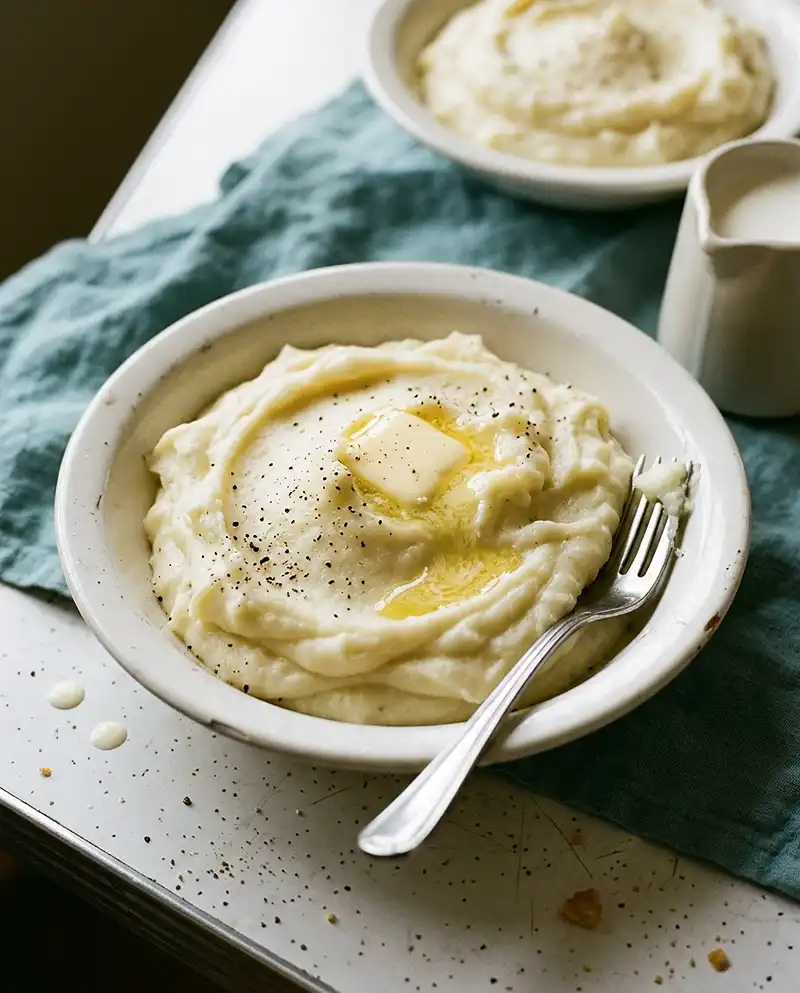
Begin mashing the potatoes by hand to break up the big pieces. Then add the 1/2 cup half and half and use a hand mixer for 30-45 seconds, until the mashed potatoes turn creamy and smooth.
Be careful not to beat them too long, because they’ll turn gummy. I once let the mixer run while I answered a text, and ended up with something closer to wallpaper paste than dinner. Once the bowl looks creamy and smooth, stop and serve!
Swaps, Tweaks, and What To Do When Things Go Sideways
Yukon Gold potatoes can stand in for russets if that’s what’s in your pantry. The mash comes out denser and a bit more buttery tasting, so you lose some of that light, fluffy texture. I only grab them when I’m out of russets, and that’s an optional swap, not a change to the recipe.
Unsalted butter works too, but you’d add more salt to taste, since the recipe counts on salted butter. Whole milk in place of half and half is a lighter option, though you give up some of that creamy richness.
On the Bob Evans mashed potatoes gluten free question, the ingredients in this homemade version don’t contain gluten by nature. Packaged butter and half and half deserve a label check, and the Celiac Disease Foundation has guidance for cooking around celiac disease.
If you want a twist on the classic, these French onion mashed potatoes are worth a look. I’d save them for a night when you want the potatoes to be the main event.
When you want crunch instead of creamy, these crispy parmesan accordion potatoes are the move. Different texture, same potato-forward comfort.
If your crowd is bigger than mine, I’d make a second batch instead of scaling up in one bowl. It means one more round with the mixer and a few more dishes, but it’s easier to control the mixing time that way.
If It Didn’t Come Out Right
If your mash turned gummy, the mixer ran too long. I haven’t found a real fix, so next time stop at the low end of the 30-45 seconds and check for smoothness before going back in.
If it’s lumpy, the big pieces probably skipped the hand mashing. Go back and mash those by hand instead of leaving the mixer running, since that’s how you end up gummy.
If it tastes flat, add a small pinch of salt at the end and stir it in. My partner does this at the table anyway, and I’ve stopped taking it personally.
Where the Leftovers Go
| Where | How | Keeps For |
|---|---|---|
| Room temperature | Covered, only while serving | Up to 2 hours |
| Fridge | Shallow airtight container | 3 to 4 days |
| Freezer | Airtight freezer container or bag | About 3 to 4 months for best quality |
Get leftover Bob Evans mashed potatoes into the fridge within 2 hours of cooking, and follow the USDA leftovers and food safety guidance for the details.
To reheat, warm the potatoes in the microwave or in a pot over low heat, stirring now and then, until they’re steaming hot. USDA says leftovers should reach 165°F, and a splash of half and half or milk loosens them up if they’ve stiffened in the fridge. Thaw frozen portions overnight in the fridge before reheating.
For leftover ideas, spoon cold mash into a hot buttered skillet and let the edges crisp, or spread it over leftover pot roast for a shepherd’s pie style dinner. My teenager eats it cold from the container, which I don’t recommend but also haven’t managed to stop.
Bob Evans Mashed Potatoes Questions, Answered
Is this mashed potatoes recipe gluten free?
None of the ingredients here contain gluten by nature, but check the labels on your butter and half and half to be safe. I can’t speak to the packaged Bob Evans mashed potatoes gluten free status, so read that label if you’re buying the store version.
What goes into this homemade version?
Russet potatoes, salted butter, half and half, salt, and black pepper, plus water and 1 tsp salt for the pot. For Bob Evans mashed potatoes ingredients in the packaged version, check that label, since I can’t speak to what’s in it.
Why did my mashed potatoes turn gummy?
Beating them too long is the usual cause. Mash by hand first, then use the hand mixer for just 30-45 seconds after the half and half goes in.
How long do leftovers keep?
Up to 3 to 4 days in the fridge in an airtight container, per USDA guidance. They freeze for about 3 to 4 months for best quality, and you should reheat them until steaming hot.
Can I use a different potato?
Yukon Golds work as an optional swap, though the texture comes out denser than with russets. The recipe itself is written for russets, so that’s where I’d start.
Go Make a Pot
If you make these Bob Evans mashed potatoes, save the recipe to Pinterest so it’s there on the next busy weeknight. Then leave a comment or a star rating, because it helps other cooks know what to expect.
Last tip: serve them hot, right after mixing, next to a Mississippi pot roast, where they can soak up whatever juices land on the plate.