
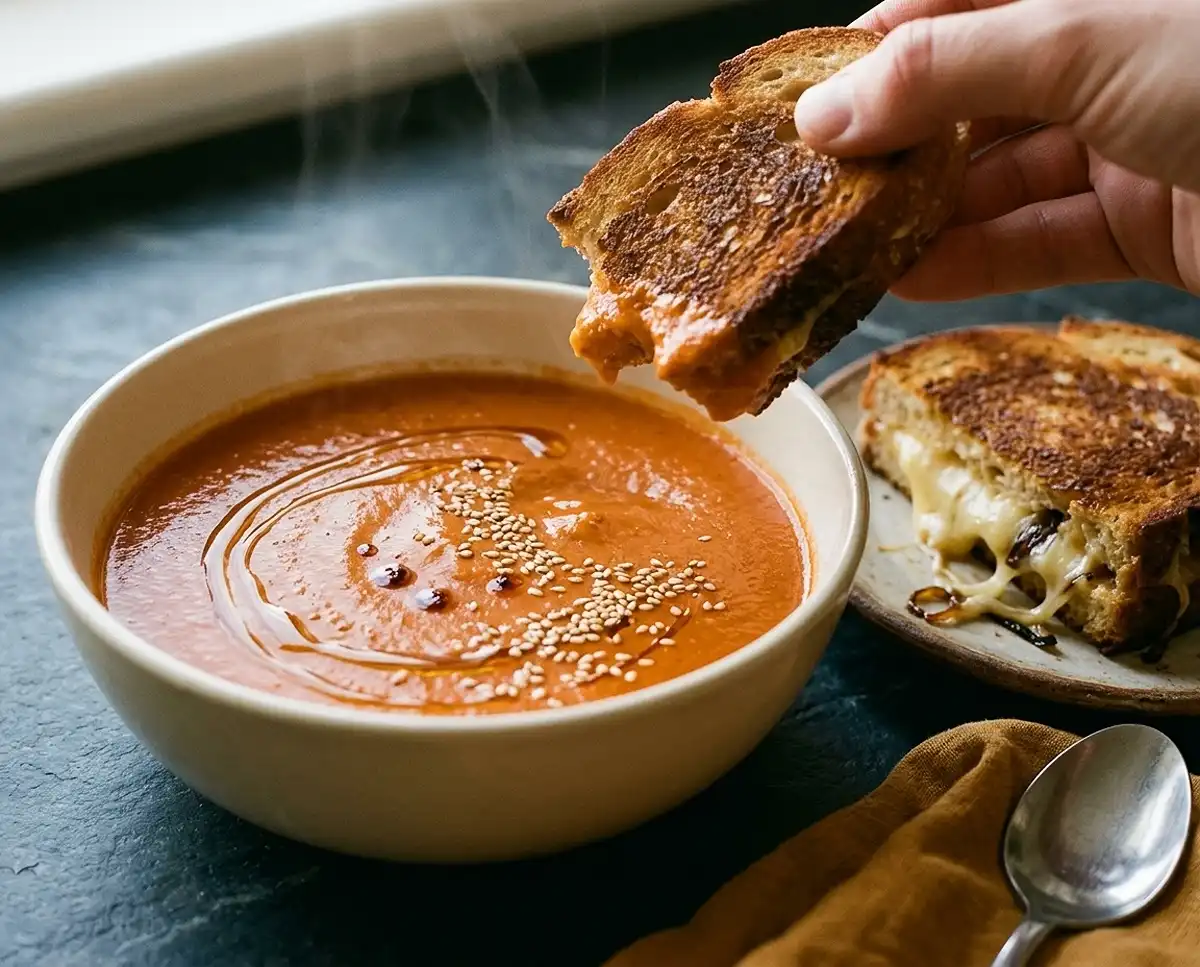
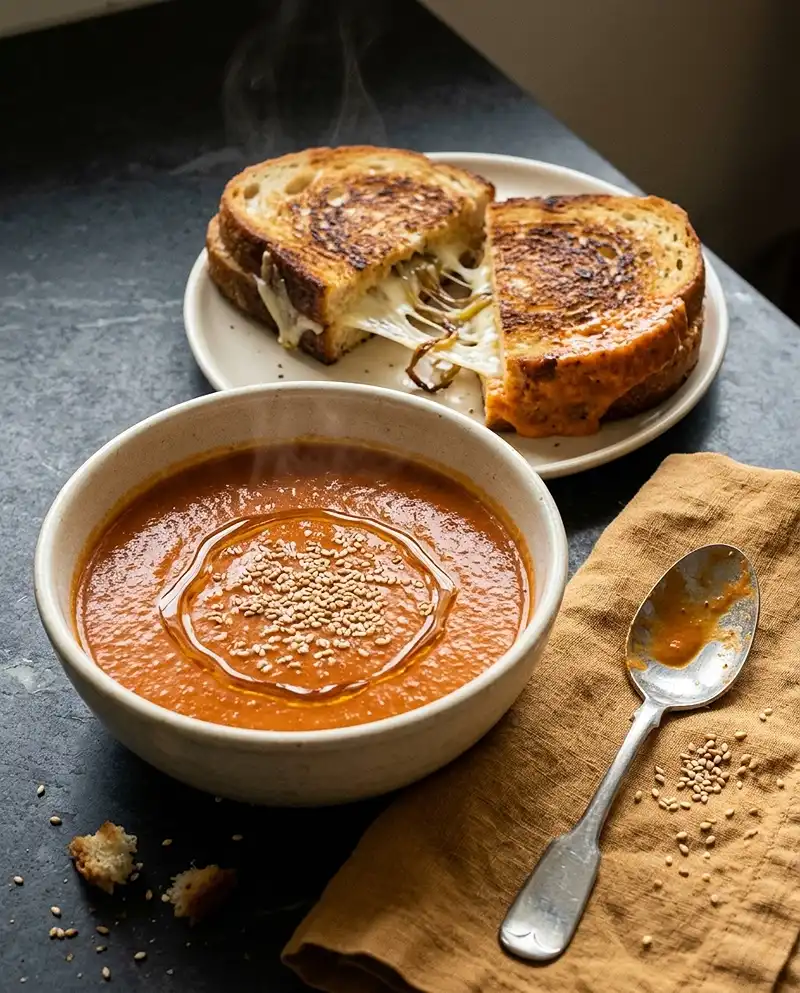
A red bowl of caramelized gochujang tomato soup with a crisp scallion grilled cheese on the side. Grab the recipe and my tips so you can dunk, serving two.
My husband asked for a second bowl of this caramelized gochujang tomato soup before he’d finished his first, and I’ve made it on repeat ever since. Spicy and rich, it begs for something crunchy to dunk. Enter the scallion grilled cheese!
Table of Contents
Why This Caramelized Gochujang Tomato Soup Is a Keeper
Canned tomatoes can taste a little flat on their own, and that’s where the gochujang earns its spot. Fried in oil with tomato paste until it starts to caramelize, it turns deep and a touch sweet. Every spoonful tastes like it simmered all afternoon. It didn’t!
A splash of soy sauce brings the salt and savor, then black vinegar and sesame oil go in at the end to brighten things up. Blended smooth, this tomato soup turns out creamy without a drop of cream, which is my favorite kind of trick.
Then there’s the grilled cheese. Scallions cooked slowly in oil turn soft and jammy, and they get tucked between layers of melty cheese on thick-ish sourdough. Dunk a corner into the bowl, and you’ll see why I keep making it.
Caramelized Gochujang Tomato Soup, Silky and Dunkable
Equipment
- Pot with lid
- High-speed blender or immersion blender
- Non-stick pan with lid
- Frying pan
- Cutting board
- Knife
- spatula
Ingredients
For the Soup
- 2 tbsp neutral oil sunflower, vegetable or canola
- 1 medium-sized white onion peeled and halved
- 4 garlic cloves peeled and crushed
- 1 tsp gochugaru
- 2 tbsp 1 tsp gochujang
- 2 tbsp tomato paste
- 300 ml water
- 1 large can whole peeled tomatoes 800g
- 2 tbsp light soy sauce
- 2 tsp mushroom stock powder optional; use more soy sauce or salt instead
- 1 tsp black vinegar or rice vinegar
- 1 tsp sesame oil
To Serve
- sesame oil for drizzling
- toasted sesame seeds for sprinkling
For the Caramelized Scallion Grilled Cheese (makes 2)
- 3-4 scallions thinly sliced
- 2 tbsp neutral oil for the scallions
- ½ tsp salt
- 4 pieces sourdough bread thick-ish slices
- cheese of your choice as much as you like
- 2 tbsp neutral oil or plant-based butter for frying the sandwiches
Instructions
Soup
- Peel and crush the garlic. Peel and halve the onion.
- Heat the neutral oil in a pot over medium heat. Cook the onion for 3 to 4 minutes, then add the garlic and fry for 1 to 2 minutes more, until fragrant.
- Add the gochugaru, gochujang and tomato paste. Cook for 2 to 3 minutes, until it starts to caramelize, and watch closely so it doesn’t burn.
- Pour in the water and scrape up the browned bits, then stir in the tomatoes. Season with the soy sauce and mushroom stock powder, if using. Partly cover and cook for 20 minutes, stirring every couple of minutes.
- Blend until smooth, being careful of hot steam. Taste and add more soy sauce or salt if needed, then stir in the black vinegar and sesame oil.
Caramelized Scallion Grilled Cheese
- Heat the neutral oil in a pan over medium heat. Add the sliced scallions and the salt and cook slowly for 10 minutes, until they start to caramelize. Transfer to a container.
- Spread cheese on the bread, layer on the scallions, and add more cheese on top. Close the sandwiches and press down firmly.
- Heat the oil or plant-based butter in a non-stick pan over medium heat. Add the sandwiches, cover, and cook for 2 to 3 minutes. Uncover, flip, and cook for 1 to 2 minutes more, until browned.
- Ladle the soup into bowls, drizzle with sesame oil, and sprinkle with toasted sesame seeds. Serve with the grilled cheese for dunking.
Notes
What Goes in the Pot (and the Pan)
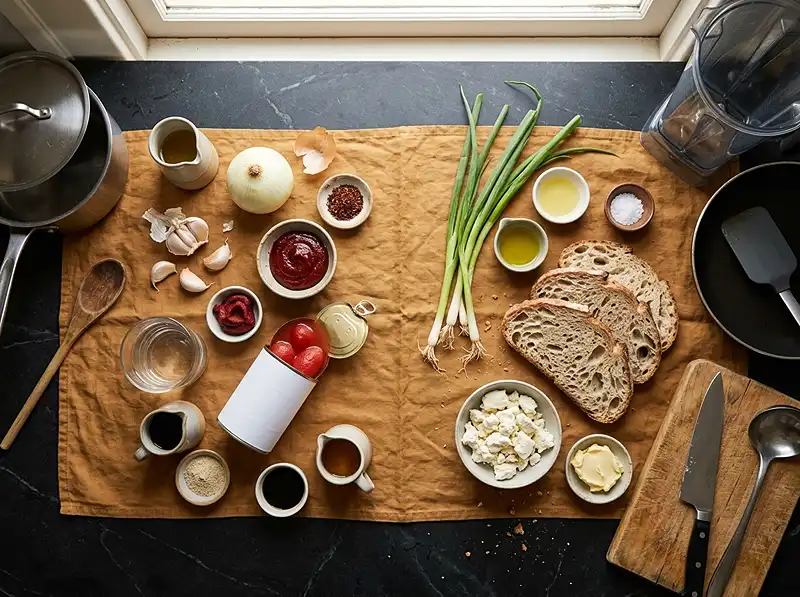
Gochujang and gochugaru do the heavy lifting in this soup, so grab those two first. The rest comes from onion, garlic, a big can of tomatoes, and a few bottles from the pantry.
| Ingredient | Amount |
|---|---|
| For the soup (serves 2) | |
| Neutral oil (sunflower, vegetable or canola) | 2 tbsp |
| White onion | 1 medium-sized |
| Garlic cloves | 4 |
| Gochugaru | 1 tsp |
| Gochujang | 2 tbsp 1 tsp |
| Tomato paste | 2 tbsp |
| Water | 300 ml |
| Whole peeled tomatoes | 1 large can (800g) |
| Light soy sauce | 2 tbsp |
| Mushroom stock powder (optional, substitute for more soy sauce or salt) | 2 tsp |
| Black vinegar (or rice vinegar) | 1 tsp |
| Sesame oil | 1 tsp |
| To serve | |
| More sesame oil | For drizzling |
| Toasted sesame seeds | For sprinkling |
| For the caramelized scallion grilled cheese (makes 2) | |
| Scallions | 3-4 |
| Neutral oil | 2 tbsp |
| Salt | 1/2 tsp |
| Sourdough bread | 4 pieces |
| Cheese of your choice | Whatever amount you find acceptable |
| Neutral oil/plant-based butter (for frying grilled cheese sandwich) | 2 tbsp |
Gochujang varies a lot from tub to tub in heat and sweetness, so taste yours before you commit. My hunch is that a milder one suits this recipe best, since cooking the paste concentrates it.
Whole peeled tomatoes are my pick for tomato soup. They blend up smooth, and to my taste they come out fresher than the chopped kind. Black vinegar is another firm favorite of mine, because its malty depth softens the tomatoes’ sharp edge (rice vinegar works if that’s what you’ve got!).
For the cheese, use whatever you like and whatever amount you find acceptable. I use School Night Vegan’s Mozzarella, and the OG recipe lives in his recipe notes. Skip the mushroom stock powder if you don’t have it, and season with extra soy sauce or salt instead.
Making It, Soup First and Sandwich Second
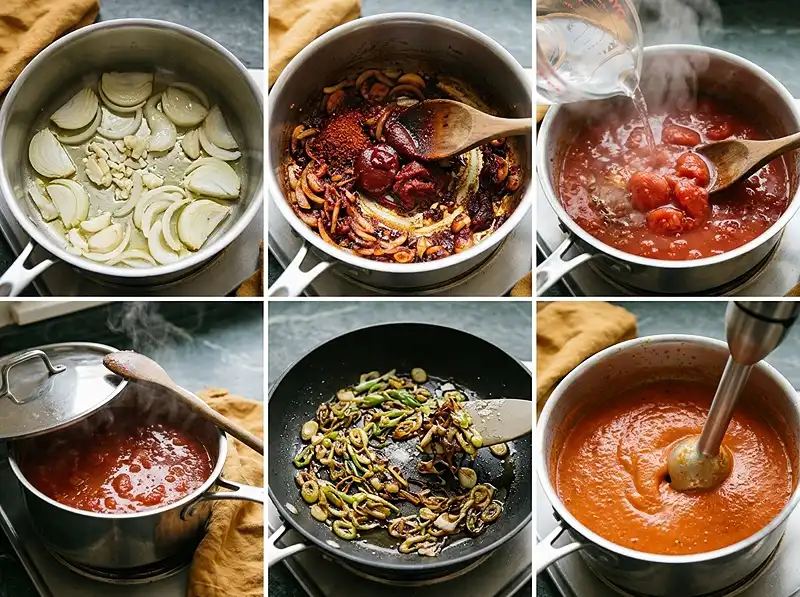
Prep Your Mise en Place
Peel and crush the garlic cloves, then peel and halve the onion. Doing it first matters, because once the pot is hot, nobody wants to be mincing mid-sizzle. Park everything beside the stove where you can grab it.
Build the Caramelized Gochujang Base
Heat the neutral oil in a pot over medium heat. Add the onion and cook for 3-4 minutes before adding the crushed garlic. Fry for another 1-2 minutes, until the garlic smells sweet instead of sharp.
Next, add the gochugaru, gochujang, and tomato paste. Cook for 2-3 minutes until it starts to caramelize. Stay close, because gochujang has sugar in it and burns fast (I once wandered off to answer a text, and the pot paid for it). Bitter soup is a sad soup.
Deglaze, Season, and Simmer
Deglaze the pan with the water, scraping up any browned bits, then stir in the canned tomatoes. Those bits are pure flavor, so don’t leave them behind!
Season with the soy sauce and mushroom stock powder (optional), then partly cover the pot with a lid. Cook for 20 minutes, stirring every couple of minutes to prevent burning. Leaving the lid slightly open lets steam escape while keeping splatters mostly in check.
Blend Until Smooth
Transfer the soup to a high-speed blender (an immersion blender works too) and blend until smooth. Go carefully, because steam can burst up when you blend hot liquids. I like holding the lid down with a folded towel and starting on low.
Taste and Finish
Taste the soup and season with more soy sauce or salt, if necessary. My grandmother always said you can add salt but you can’t take it out, so go slowly. Then stir in the black vinegar and sesame oil. Stirring them in at the end keeps their brightness and nuttiness from cooking off.
Caramelize the Scallions
Thinly slice the scallions, then cut the sourdough into thick-ish slices. Thicker bread holds the filling and takes a dunk without collapsing right away.
Heat the neutral oil in a pan over medium heat, add the sliced scallions, and season them with the salt. Cook slowly for 10 minutes, until they start to caramelize. Skip the urge to crank the heat, since scorched scallions turn bitter instead of jammy! Transfer them to a container once they’re done.
Assemble and Fry the Sandwich
Spread the cheese onto the bread, layer on the caramelized scallions, and add more cheese on top. Close the sandwich, pushing everything down. A firm press keeps the filling from sliding out when you bite or dunk.
Heat the neutral oil or plant-based butter in a non-stick pan over medium heat. Place the sandwich in the pan and cover it. Cook for 2-3 minutes before uncovering and flipping, then cook another 1-2 minutes until nicely browned. Covering the pan first helps the cheese melt before the bread gets too dark.
Serve and Dunk
Ladle the soup into a bowl, drizzle with more sesame oil, and sprinkle with toasted sesame seeds. Dunk the sandwich in, and for a moment life will be good. Fair warning, you may go quiet at the table!
Tips, Swaps, and Variations
Gochugaru is the easiest dial to turn if you want a gentler bowl. My hunch is that trimming it makes more sense than cutting the gochujang, since the paste also brings sweetness. Consider that an optional swap, not a change to the recipe.
Blender choice is a real tradeoff. A high-speed blender gives the silkiest soup, while an immersion blender means fewer dishes to wash but a slightly less smooth finish, at least in my kitchen. Either works, and the recipe is happy with both.
Frying fat matters for the sandwich too. Plant-based butter browns the bread with more richness but scorches faster, while oil is more forgiving and a bit plainer.
If you love slow-cooked onions as much as I do, this French onion orzo bake is worth a look. Both recipes reward patience at the stove.
Sourdough’s tang plays nicely against the tomatoes, so it’s what I’d reach for first. Other thick-ish bread should work, but my guess is it won’t stand up to dunking quite as well.
When Things Go Sideways
Burnt paste is the big one. If the gochujang mixture catches and tastes scorched, the bitterness carries through the whole pot, so I’d start that step over rather than hope the tomatoes cover it. A restart is mildly annoying, but not a dealbreaker.
If the soup tastes flat, it probably needs more soy sauce or salt, which is why you taste before finishing. A pot that’s thicker than you like can be thinned with a splash of water.
If the bread browns before the cheese melts, lower the heat a little and keep the pan covered. Gentle heat gives the cheese time to catch up!
Storing and Reheating Leftovers
Leftover soup keeps well, as long as you cool it first. The times below follow general guidance from FoodSafety.gov and the USDA’s Food Safety and Inspection Service, not my own stopwatch.
| Method | How to Store | How Long |
|---|---|---|
| Fridge (soup) | Cool it, then pack into an airtight container | 3 to 4 days |
| Freezer (soup) | Cool it, then freeze in airtight containers with a little room at the top | 2 to 3 months for best quality |
| Room temperature (soup) | Keep it covered, but don’t leave it out longer than needed | No more than 2 hours |
| Fridge (caramelized scallions) | Airtight container | 3 to 4 days |
Reheat the soup in a pot over gentle heat, stirring often, until it’s steaming hot (USDA says leftovers should reach 165°F). Thin it with a splash of water if it has thickened in the fridge. Frozen soup thaws best overnight in the fridge before it goes on the stove.
Grilled cheese leftovers, if you somehow have any, re-crisp best in a dry pan over medium-low heat. The microwave tends to turn the bread chewy.
Extra caramelized scallions are great on eggs or toast, and leftover soup makes a quick sauce for pasta or a spoonful over rice. Stale sourdough ends can be cubed and toasted into croutons, so don’t toss them!
For another soupy night, the creamy sausage Tuscan kale tortellini soup is next on my list. If you’re in the mood for a change of pace, there’s also Asian dumpling lasagna.
Questions You Might Have
Can I make this tomato soup ahead of time?
Yes. The soup keeps in the fridge for three to four days and tastes good reheated. Cook the grilled cheese right before serving, though, so the bread stays crisp!
What can I use if I don’t have mushroom stock powder?
Leave it out. The powder is optional, and you can season with a bit more soy sauce or salt instead. Taste before the vinegar and sesame oil go in, and adjust from there.
Is gochujang the same as gochugaru?
Not quite. Gochujang is a fermented chili paste, while gochugaru is dried chili flakes. This recipe uses both, and they play different roles, so I wouldn’t swap one for the other.
Can I use an immersion blender instead of a high-speed blender?
Yes, either works for this soup. A high-speed blender gives the smoothest result, but an immersion blender saves you from pouring hot liquid between containers. Whichever you pick, go carefully, since steam can burst up when you blend hot soup!
Can I use rice vinegar instead of black vinegar?
Yes, the recipe calls for 1 tsp of black vinegar or rice vinegar. Black vinegar has a deeper, maltier flavor, so rice vinegar will taste a little brighter and lighter. Add it after blending, then taste.
Time to Make Your Caramelized Gochujang Tomato Soup
Make a pot, then pin it on Pinterest so it’s waiting for the next cold evening! Come back afterward and leave a comment or a star rating, because I love hearing how yours turned out. If you want another big pot of comfort, try this cowboy chili recipe.
One last thing: fry the sandwich right before you ladle the soup, so the bread is still crisp when it meets the bowl. Keep the soup warm on low heat in the meantime.