
You’ve got spotty bananas and a craving. Moist banana bread cinnamon rolls get their softness from a cooked banana tangzhong. Get the recipe and the trick.
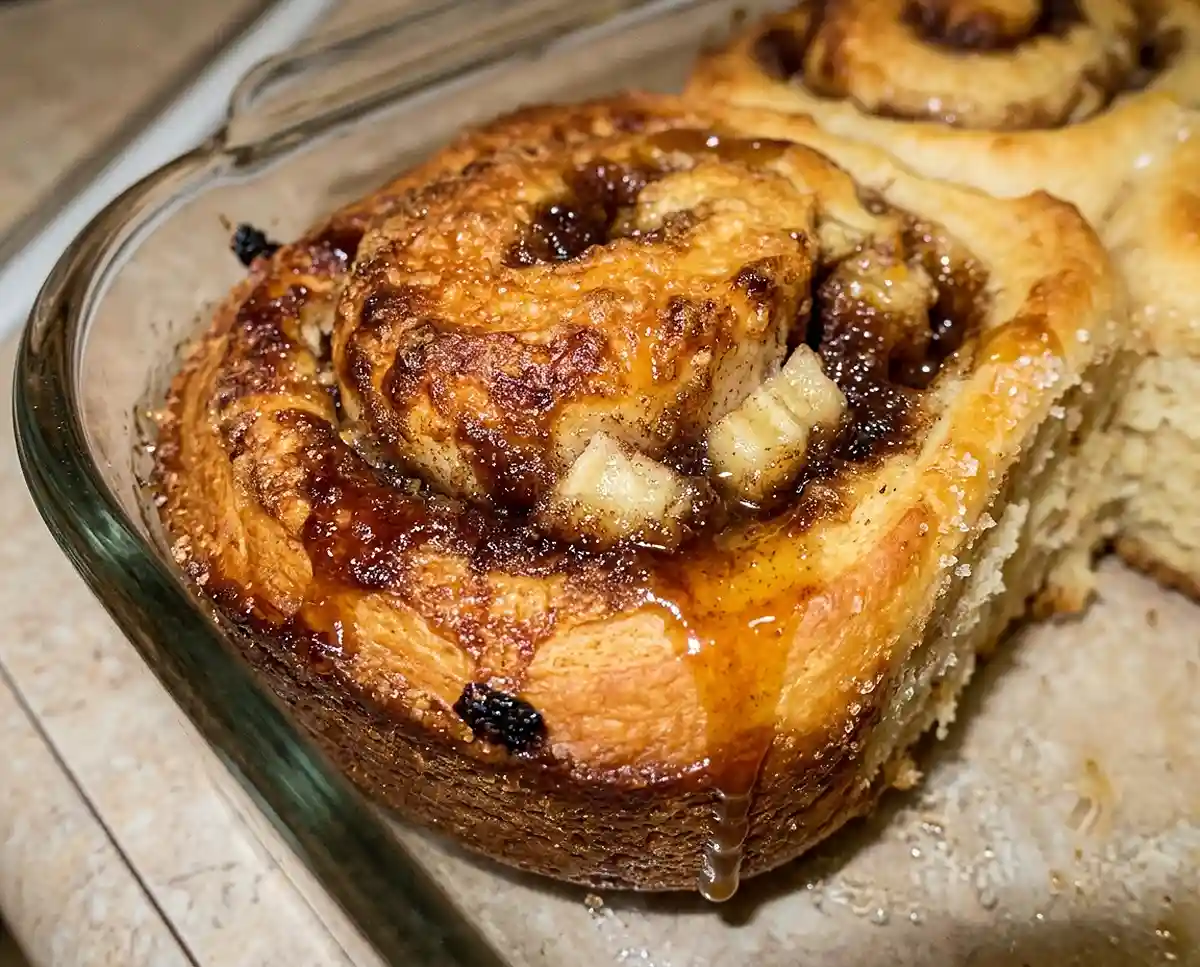
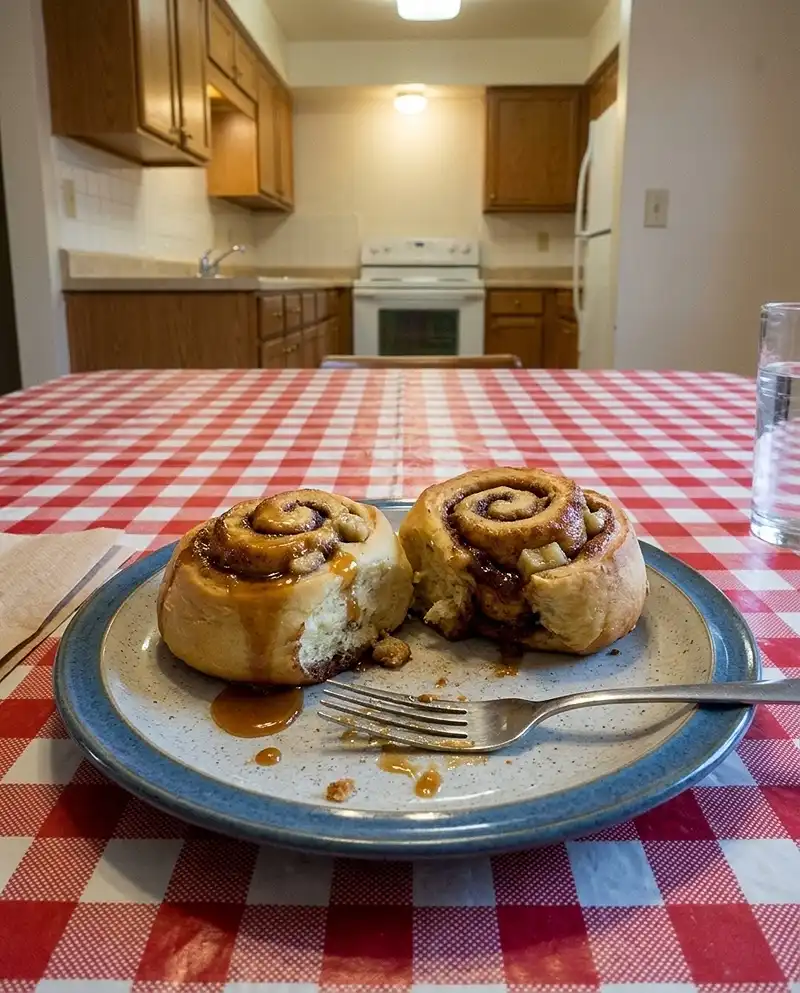
Moist banana bread cinnamon rolls smell like cinnamon and brown sugar first when they come out of the oven, with banana sweetness lingering underneath. My dad used to wander into the kitchen at exactly that moment, pretending he only wanted a glass of water. Now he walks out with a roll in one hand and caramel on his thumb!
Table of Contents
Why Moist Banana Bread Cinnamon Rolls Start in a Little Pot
Somewhere between a pile of overripe bananas and a craving for cinnamon rolls, this recipe took shape in my kitchen. I wanted the soft, swirly kind, but with banana in every layer instead of only on top. That turned out to mean banana in the starter paste, the dough, the filling, and the caramel!
Here’s the one reason it works, as far as I can tell. A tangzhong is a little banana, bread flour, and water cooked into a thick paste, and that paste holds onto moisture so the rolls stay soft. Basically, cooked flour grabs water and doesn’t let go easily.
You might know this idea as cinnamon roll banana bread, or you might have typed banana cinnamon roll bread recipe into a search bar and landed on loaves. Those are fair guesses. This one is individual rolls, though, not a banana bread cinnamon roll loaf.
Quick heads-up for anyone hunting 1 bowl banana bread cinnamon rolls: this recipe uses a small pot, a stand mixer bowl, and a medium bowl for the filling. So it isn’t a one-bowl situation. I’d still call the extra dishes worth the cleanup.
Moist Banana Bread Cinnamon Rolls: Sticky Banana Caramel
Equipment
- Small pot
- Stand mixer with dough hook
- Whisk
- Medium bowl
- Instant-read thermometer
- Rolling Pin
- unflavored floss or rubber band
- Bench scraper
- 9×13 inch baking pan
- Parchment paper
- Blender (optional)
- pastry brush or spoon
Ingredients
For the Banana Tangzhong
- 1 small very ripe banana 110g
- 2 ½ tablespoons bread flour 23g
- ½ cup water 120g
For the Dough
- 2 ½ teaspoons active dry yeast 8g
- 3 tablespoons granulated sugar 45g
- ½ cup whole milk 120g, between 100-110°F
- 2 tablespoons salted butter 28g, melted
- 1 large very ripe banana 125g, mashed very well
- 1 teaspoon vanilla bean paste or vanilla extract
- 3 cups and 1 tablespoon bread flour 430g
- 1 heaping teaspoon Diamond Crystal kosher salt 5g; weigh it if you use a different brand
For the Filling
- 1 cup dark brown sugar 200g, densely packed
- 2 tablespoons ground cinnamon 16g
- 2 tablespoons all-purpose flour 18g
- ½ teaspoon Diamond Crystal kosher salt
- 1 large very ripe banana 125g, cut into pea-sized pieces
- ¼ cup salted butter 57g, softened
For the Banana Caramel
- 1 large very ripe banana 125g
- ½ cup maple syrup 120g
- 1 tablespoon salted butter 14g
- ½ teaspoon Diamond Crystal kosher salt
Instructions
Banana Tangzhong
- In a small pot, mash the small banana with the 23g bread flour, then stir in the water. Cook over medium heat, stirring constantly, for 6-7 minutes, until it thickens into a gluey paste (170-190°F). Let it cool to room temperature.
Dough
- In the bowl of a stand mixer, whisk together the yeast, sugar, warm milk and melted butter. Whisk in the well-mashed large banana, the vanilla bean paste and the cooled tangzhong.
- Add the 430g bread flour and the salt. Mix with the dough hook on medium speed for 15-18 minutes, until the dough goes from slack to pulling away from the sides. It should be stretchy and tacky. To test it, stretch the dough with a damp hand. If it reaches about 18 inches without breaking, it’s ready.
- With a damp hand, shape the dough into a smooth ball. Cover it and let it rise in a warm place for 60-90 minutes, until doubled in size.
Filling, Shaping and Baking
- In a medium bowl, mix the brown sugar, cinnamon, all-purpose flour and 1/2 teaspoon salt. Quarter a banana lengthwise, then cut it crosswise into pea-sized pieces. Toss the pieces in the sugar mixture until fully coated.
- On a lightly floured surface, roll the dough into a 20×15-inch rectangle. Spread the softened butter evenly over it and scatter the filling on top. Roll it up from the 20-inch side into a 15-inch log.
- Trim the ends, then cut the log into 15 rolls about 1 inch thick, using floss or a rubber band rather than a knife. Transfer them with a bench scraper to a parchment-lined 9×13-inch pan in five rows of three.
- Cover and proof for about 1 hour, until the rolls look puffy and have grown by about a third.
- Set a rack in the center of the oven and preheat to 375°F convection or 400°F standard. Bake for 25-28 minutes, until golden.
Banana Caramel
- While the rolls bake, mash or blend the remaining banana with the maple syrup. Bring it to a boil in a small pot and boil for 60 seconds. Stir in the butter and salt and boil for another 60 seconds. Turn off the heat when it smells strongly of banana or reads 200-220°F.
- Let the rolls cool for a few minutes, then brush the tops with the banana caramel and serve.
Notes
Everything on My Counter (Yes, That’s Four Bananas)
| Ingredient | Quantity |
|---|---|
| For the banana tangzhong | |
| Very ripe banana | 1 small (110g) |
| Bread flour | 2 1/2 tablespoons (23g) |
| Water | 1/2 cup (120g) |
| For the banana bread cinnamon roll dough | |
| Active dry yeast | 2 1/2 teaspoons (8g) |
| Granulated sugar | 3 tablespoons (45g) |
| Whole milk, between 100-110°F | 1/2 cup (120g) |
| Salted butter, melted | 2 tablespoons (28g) |
| Very ripe banana, mashed | 1 large (125g) |
| Vanilla bean paste | 1 teaspoon |
| Bread flour | 3 cups and 1 tablespoon (430g) |
| Diamond Crystal kosher salt | 1 heaping teaspoon (5g) |
| For the filling | |
| Dark brown sugar, densely packed | 1 cup (200g) |
| Ground cinnamon | 2 tablespoons (16g) |
| All-purpose flour | 2 tablespoons (18g) |
| Diamond Crystal kosher salt | 1/2 teaspoon |
| Very ripe banana | 1 large (125g) |
| Salted butter, softened | 1/4 cup (57g) |
| For the banana caramel | |
| Very ripe banana | 1 large (125g) |
| Maple syrup | 1/2 cup (120g) |
| Salted butter | 1 tablespoon (14g) |
| Diamond Crystal kosher salt | 1/2 teaspoon |
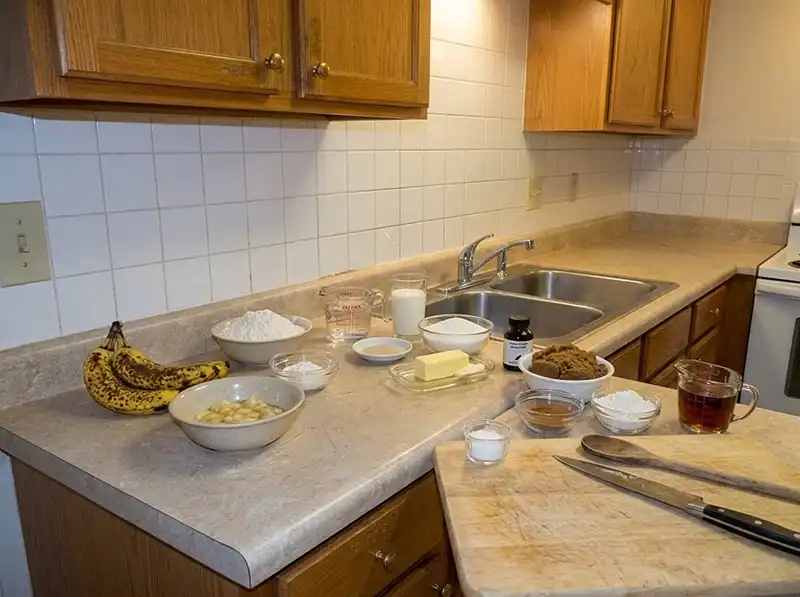
Let’s start with bananas, since four go in (one small, three large). The spotty ones people want to toss are the ones I use, because side by side with pale yellow bananas, they mashed softer and tasted sweeter. My best friend, who swears she hates banana in sweets, finished a roll and asked what the secret was.
Bread flour is the one swap I wouldn’t casually make in these banana bread cinnamon rolls, since its extra protein is what lets the dough stretch later. For salt, I use Diamond Crystal, partly because the recipe is written with it. A teaspoon of denser kosher salt can taste saltier, so weigh yours if it’s a different brand.
Dark brown sugar is my pick for the filling, since the extra molasses makes the banana taste almost toasted next to it. Vanilla bean paste is my pick for the dough, mostly because I like seeing the tiny specks. Maple syrup goes into the caramel, so choose one you’d happily pour over pancakes!
Rolling Out Moist Banana Bread Cinnamon Rolls, One Messy Step at a Time
Cook the banana tangzhong
Begin with the tangzhong. In a small pot, mash the small banana with 23 grams of bread flour, then pour in 120 grams of water. It looks thin and a little sad at this point, but have faith.
Cook it over medium heat, stirring constantly, until the mixture thickens into a paste that looks almost gluey, around 6-7 minutes. If you have a thermometer, it should read between 170-190°F. Cool this to room temperature before using, because warm paste could stress the yeast later.
Mix the dough
Make the dough. In the bowl of a stand mixer, add 8 grams of active dry yeast, 45 grams of sugar, 120 grams of milk (between 100-110°F), and 28 grams of melted butter, then whisk. Milk in that range wakes the yeast gently, while anything much hotter can kill it.
Mash one large banana very well. Whisk that into the wet ingredients along with 1 teaspoon of vanilla bean paste and the tangzhong. A fine mash means fewer stubborn banana bits in the finished crumb.
Add 430 grams of bread flour and 5 grams of salt. Use the hook attachment and mix on medium speed for 15-18 minutes, or until the dough goes from slack to pulling away from the sides of the bowl. It will be stretchy and tacky.
To check, dampen your hand and stretch the dough. If it reaches up to 18 inches without breaking, it’s ready. That stretch tells you the gluten can trap the gas the yeast makes, which is what keeps the rolls springy.
Confession time: on my first try I stopped mixing early because the dough looked fine to me, and the rolls came out heavier than I wanted. Now I trust the stretch test over my eyes. Weirdly, those extra minutes in the mixer are what make the rolls feel light!
Let it rise
Use a damp hand to gently lift the dough and set it down as a smooth ball, then cover it and let it rise in a warm place for 60-90 minutes, or until doubled in size. The damp hand keeps sticky dough from grabbing you. My aunt swears dough rises on its own schedule, so go by size, not the clock.
Build the filling
Make the filling. In a medium bowl, mix together 200 grams of brown sugar, 16 grams of cinnamon, 18 grams of flour, and 1/2 teaspoon of kosher salt. The flour is there, as far as I can tell, to soak up some of the banana’s juices.
Quarter a banana lengthwise, then cut crosswise so you get a bunch of pea-sized banana pieces. Toss these in the sugar mixture until they’re fully coated. Small pieces spread more evenly through the swirl, at least in my kitchen.
Roll, fill, and cut
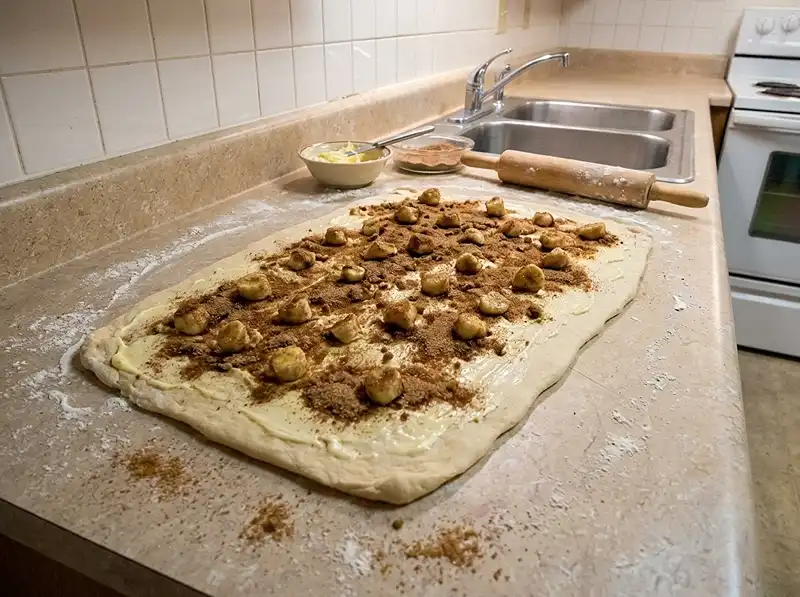
When the dough is done proofing, move it to a lightly floured work surface and roll it out into a 20-inch by 15-inch rectangle. Spread 57 grams of softened butter evenly across the dough, then scatter the filling all over.
Roll the dough up the 20-inch side, making a 15-inch long log. This dough is soft, so use floss or a rubber band to cut the rolls (a knife will be a bit messy!). Trim the ends, then cut the roll into 15 1-inch buns.
I ignored that advice once, grabbed a chef’s knife, and squished the first few swirls flat. Floss slips through soft dough without dragging it, which is the whole trick. Pull it snug around the log, cross the ends, and the cut comes out clean.
Pan up and proof again
Use a bench scraper to transfer these rolls to a parchment-lined 9 by 13-inch baking slab. You’ll have five rows of three. Cover the rolls and let them proof for another hour, or until they’ve increased around a third in size and look puffy.
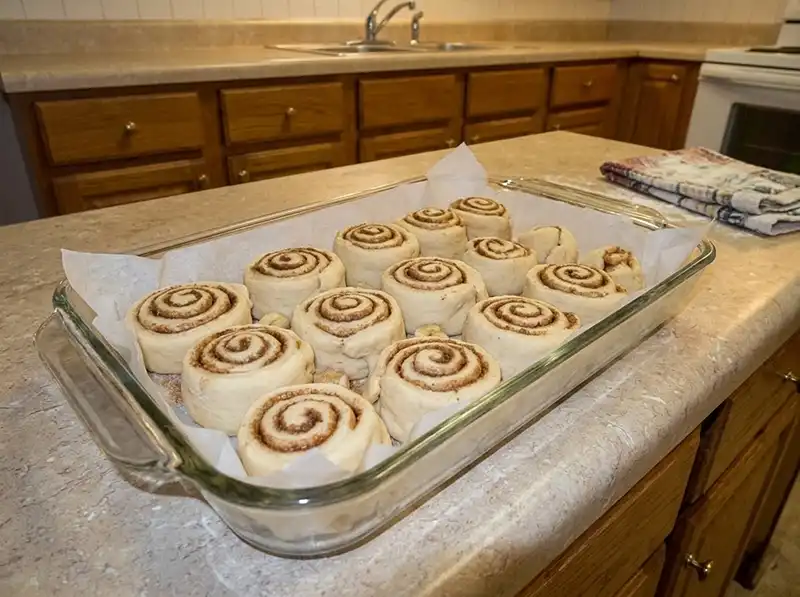
Bake the rolls
Position a rack in the center of the oven and preheat to 375°F convection, or 400°F standard. Bake the rolls for 25-28 minutes, or until they’re golden. Convection moves hot air around, which is why that setting runs a bit cooler.
Make the banana caramel
While the rolls bake, make the banana caramel. Either mash 1 banana very well and stir it in with 120 grams of maple syrup, or blend them together in a blender. I lean blender, since it leaves no banana bits to fish out later.
Pour the mixture into a small pot and bring it to a boil. Let it boil for 60 seconds, then stir in 1 tablespoon of butter and 1/2 teaspoon of salt. Give it another 60 seconds at a rolling boil.
Turn off the heat when it smells very banana-y, or when a thermometer reads between 200°F-220°F. Watch the pot closely, since sugary syrups foam up fast. Your nose is a decent guide here.
Glaze and eat
When the rolls are out of the oven, let them cool for a few minutes before glazing the tops with the banana caramel. Then cut, slice, and eat as you like. A few minutes of cooling keeps the caramel from sliding straight off the hot tops, I think.
When the Rolls Misbehave, and Other Ways to Play
What went wrong (and how to fix it)
If the dough still feels slack, keep the mixer going. It only starts pulling away from the sides near the end of the 15-18 minutes, and it should finish stretchy and tacky. Piling on extra flour is the tempting fix, and the one time I tried it, the rolls felt tight.
Flat, sluggish banana bread cinnamon rolls usually trace back to the yeast. Check that the milk landed between 100-110°F, that the tangzhong cooled fully, and that your yeast is fresh. If the rolls haven’t puffed after the hour, give them a little longer in a warm spot, since they’ll get there!
Tops browning too fast usually means the oven setting got mixed up. Remember, 375°F is for convection and 400°F is for standard. Not gonna lie, my oven runs hot, so I peek around the 25-minute mark.
A thin caramel just needs more time on the heat. Sugar syrups thicken as they cool, so judge it by the very banana-y smell or a thermometer reading between 200°F-220°F, not by how runny it looks in the pot.
Swaps and variations
Every swap for these banana bread cinnamon rolls is optional, and none of them change the recipe as written. Vanilla extract can stand in for vanilla bean paste, though you lose the tiny specks. Chopped walnuts scattered over the filling add crunch, but the log may be a little trickier to cut cleanly.
Related: if you want another soft roll next, try my ube sweet roll. For a classic comparison, there’s my cinnamon rolls with brown sugar and butter. Either way, the stretch test comes along for the ride.
Leftovers (If You’re Lucky Enough to Have Any)
| Storage | Method | Lasts Up To |
|---|---|---|
| Room temperature | Covered on the counter | 2 hours |
| Refrigerator | Airtight container | 3 to 4 days |
| Freezer | Wrapped tightly or in a freezer bag | 2 to 3 months for best quality |
For safety, I lean on the USDA Food Safety and Inspection Service and the FDA’s food safety resources. Both treat perishable food left out for more than two hours as a risk, and these rolls carry milk, butter, and banana.
To reheat, wrap a roll loosely in foil and warm it in a low oven, or microwave it in short bursts under a damp paper towel. Gentle heat melts the sugar and butter in the swirl, and the moisture keeps the bread from drying out. Heat until steaming hot (USDA says 165°F for leftovers), and the swirl goes soft and gooey again!
Creative leftover ideas: tear a roll over yogurt, or warm one and top it with ice cream. You can also cube stale rolls, toast them in a skillet, and scatter them over oatmeal. For a different bake, try my heavy cream cinnamon roll bake.
Questions People Ask While Leaning on My Counter
Are banana bread cinnamon rolls easy to make?
There are a few stages to plan around: the dough mixes for 15-18 minutes, rises for 60-90 minutes, and proofs again after cutting. Each stage has a clear visual cue, like a smooth ball doubled in size or puffy rolls, which makes it easier to know you’re on track.
Why use floss or a rubber band to cut the rolls?
The dough is soft, and a knife tends to drag and squish it, which gets messy. Floss or a rubber band slips through cleanly. Trim the ends first, then cut the log into 15 1-inch buns.
How ripe should the bananas be?
Very ripe, as the recipe calls for. Spotty skins mean soft, sweet fruit that mashes easily, and there are four bananas going in, so it’s worth waiting for the right ones!
Do I need a stand mixer for the dough?
The recipe is written for a stand mixer with a hook attachment, mixing on medium speed for 15-18 minutes. I haven’t tested it by hand, so I can’t promise how it would go. If you try another method, use the stretch test to know when the dough is ready.
Can I freeze the cinnamon rolls?
Yes, once they’ve cooled, wrap them tightly in an airtight container or freezer bag. For best quality, plan to use them within 2 to 3 months. Thaw them in the fridge, then reheat until steaming hot, since USDA recommends 165°F for leftovers.
Go Bake Some Moist Banana Bread Cinnamon Rolls
Make a pan of these, pin the recipe on Pinterest for the next time bananas go spotty, and tell me in the comments how yours turned out (or leave a rating if you’re short on time). I love hearing about the kitchen disasters and the quiet victories alike. Pin it, bake it, and report back!
When the caramel goes on and the cinnamon steam rises, you’ll get that first whiff all over again. Someone will wander into the kitchen pretending they only wanted a glass of water.