
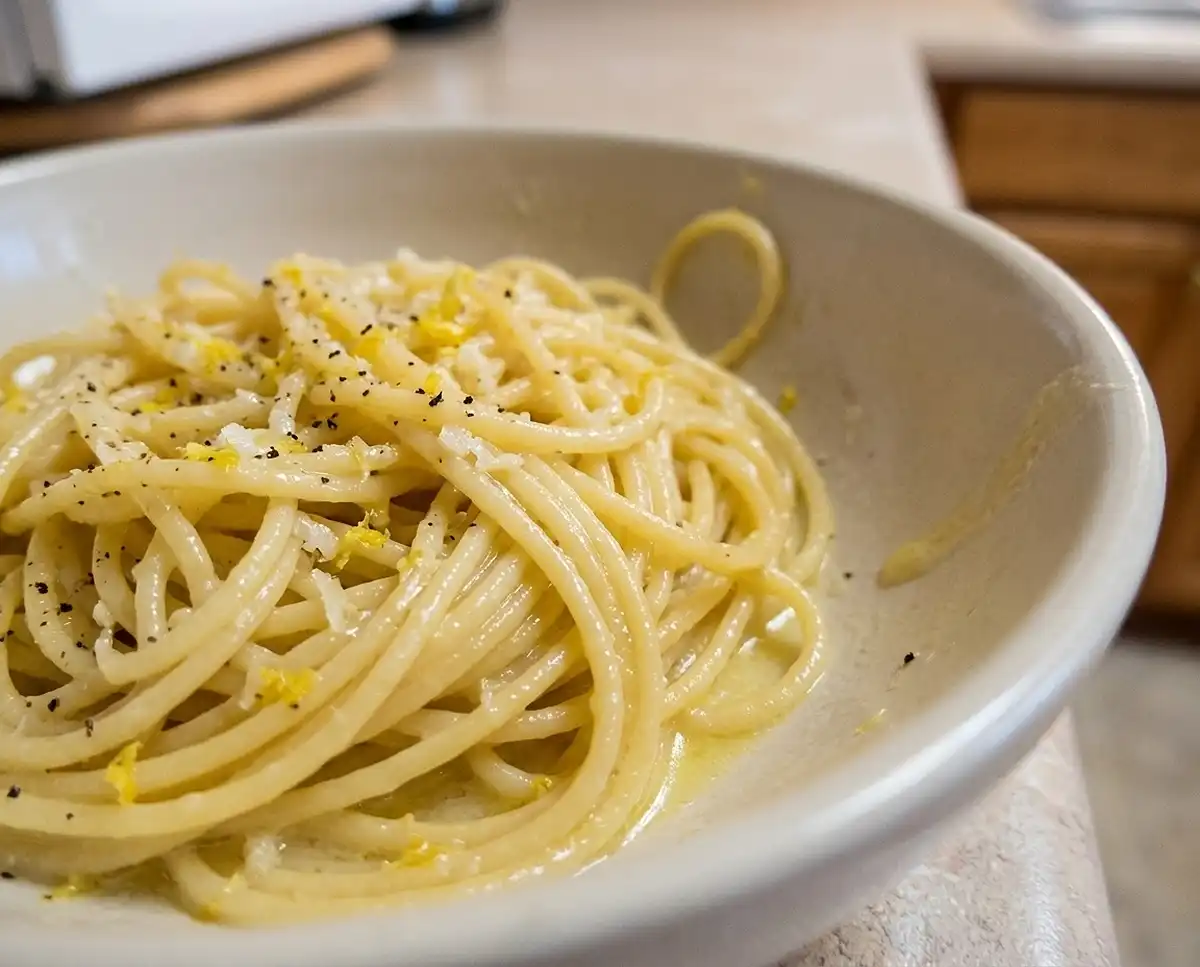
Frozen Grated Lemon Pasta gets its bright flavor from a lemon you grate from the freezer, peel and all. Here’s how I make it, plus what to do with leftovers.
The first time I grated a frozen lemon over a bowl of butter and Parmesan, I was pretty sure I was about to ruin dinner. Frozen Grated Lemon Pasta turned out to be the rare kitchen experiment that worked, and my partner went back for seconds before I’d even sat down. Honestly, I’m still a little suspicious of how little the lemon asks of me, but I’ll take the win.
Table of Contents
Why Frozen Grated Lemon Pasta Earns a Spot in the Rotation
Grating a lemon that’s frozen solid is the whole trick. Zest, juicy flesh, and a little white pith all come off in icy shreds, so one pass over the grater covers the entire lemon instead of juicing one half and zesting the other.
Those shreds melt into the butter and Parmesan as you toss, and that’s what turns the pasta water into a smooth, glossy sauce. I think the pith is the sneaky hero, since its faint bitterness keeps all that butter from tasting heavy. Heads up, it’s a lot of lemon, so you’ll either love it right away or grate a little less next time.
Everything else is basic stuff, which makes this my go-to when the fridge looks bare and my planning only stretched one night ahead. Dinner, basically sorted.
Frozen Grated Lemon Pasta with Silky Parmesan Sauce
Equipment
- freezer
- Large pot
- Colander
- Mug or measuring cup
- Large bowl
- Fine grater or microplane
- tongs
Ingredients
For the Lemon
- 1 large unsprayed lemon washed, dried and frozen overnight until completely solid
For the Pasta
- 320 g spaghetti or linguine
- 120 ml pasta cooking water about, reserved
For the Sauce
- 2 tablespoons unsalted butter
- 3 tablespoons Parmesan finely grated from a block, plus extra for serving
- freshly ground black pepper to taste
Instructions
- Wash and dry the unsprayed lemon thoroughly. Freeze it overnight, or until it is completely solid.
- Cook the spaghetti in salted boiling water until al dente. Before draining, reserve about 120 ml of the cooking water.
- While the pasta cooks, put the butter, Parmesan and black pepper in a large bowl.
- Grate about one-third of the frozen lemon straight into the bowl, including the zest, juicy flesh and a little of the white pith. Watch your knuckles. Put the rest of the lemon back in the freezer.
- Add the drained pasta and about 60 ml of the reserved cooking water. Toss well until the butter melts and the Parmesan forms a smooth, glossy sauce. Add more cooking water a little at a time if needed, until the sauce coats the pasta.
- Serve right away with extra grated Parmesan and, if you like, a little more grated frozen lemon.
Notes
What You’ll Want on the Counter
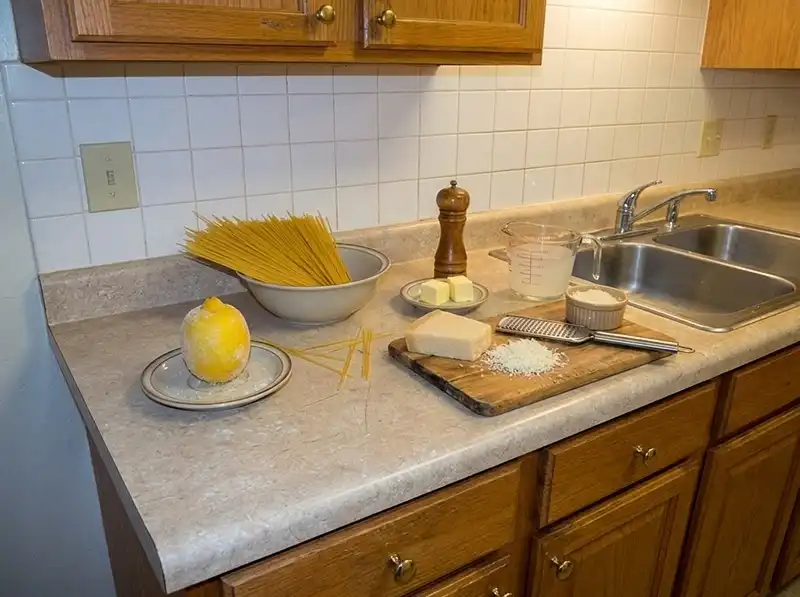
| What You’ll Need | How Much |
|---|---|
| For the lemon | |
| Large unsprayed lemon, frozen overnight | 1 |
| For the pasta | |
| Spaghetti or linguine | 320 g |
| Pasta cooking water | about 120 ml |
| For the sauce | |
| Unsalted butter | 2 tablespoons |
| Parmesan, finely grated, plus extra for serving | 3 tablespoons |
| Freshly ground black pepper | to taste |
Start with the lemon, because Frozen-Lemon Pasta lives or dies on it. Make sure it’s unsprayed, because you’re grating the peel straight into dinner, so give it a proper wash and dry before it goes in the freezer. If you want a refresher on washing produce, the FDA’s food safety pages cover it.
For the Parmesan, I buy a block and grate it finely myself. I’ve tried the tubs of pre-grated stuff, and the sauce came out grittier for me, probably because of whatever keeps those shreds from clumping.
Spaghetti or linguine both work. I lean spaghetti, mostly because the sauce clings to the round strands, though that’s a preference more than a rule.
Unsalted butter lets me control the seasoning, since the Parmesan already brings plenty of salt. As for the pepper, grind it fresh, because the pre-ground jar in my cabinet tastes like dust next to it.
Let’s Get Cooking
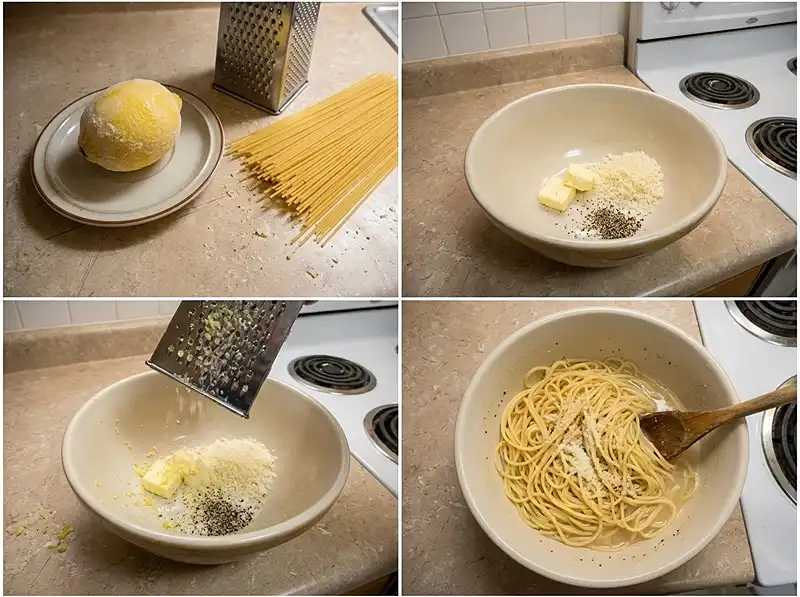
Freeze the Lemon Overnight
Wash and dry the unsprayed lemon thoroughly, then freeze it overnight or until completely solid. A lemon that’s frozen all the way through grates into fluffy shreds, while a half-frozen one just turns to slush against the grater.
Once the lemon is solid, cook the spaghetti until al dente, which just means it should still have a little bite. Before you drain it, scoop out about 120 ml of the cooking water (a mug works fine) and park it by the sink.
Fair warning, I once drained the pot without saving any water, stood there holding the colander, and ended up using tap water instead. The sauce came out thin and a little sad, so now the mug sits next to the pot before I even start.
Load the Bowl While the Pasta Cooks
While the pasta is cooking, put 2 tablespoons unsalted butter, 3 tablespoons finely grated Parmesan, and freshly ground black pepper to taste in a large bowl. Pick a bigger bowl than seems necessary, since you’ll be tossing a pile of spaghetti in there and you’ll want room to work.
Go easy on the pepper at first, because it’s simpler to add more later than to take any out. Okay, that’s the whole setup, and so far the sink is barely involved.
Grate the Frozen Lemon Right Into the Bowl
Pull the lemon out of the freezer and grate approximately one-third of it directly into the bowl. You want all of it: the zest, the juicy flesh, and a little of the white pith beneath the zest.
The shreds land on the butter like lemony snow. Then the smell hits you, fast.
Mind your knuckles, since a sharp grater and a rock-hard lemon make a mean pair. Slide the rest of the lemon back into the freezer once you’re done.
Toss Until the Sauce Turns Glossy
Add the cooked pasta and pour in about 60 ml of the reserved cooking water. Toss everything thoroughly until the butter melts and the Parmesan creates a smooth, glossy sauce.
It’ll look clumpy for the first few seconds, and that’s normal, so don’t panic. If necessary, gradually add more cooking water, a little at a time, until the sauce coats the pasta.
Serving Your Frozen Grated Lemon Pasta Right Away
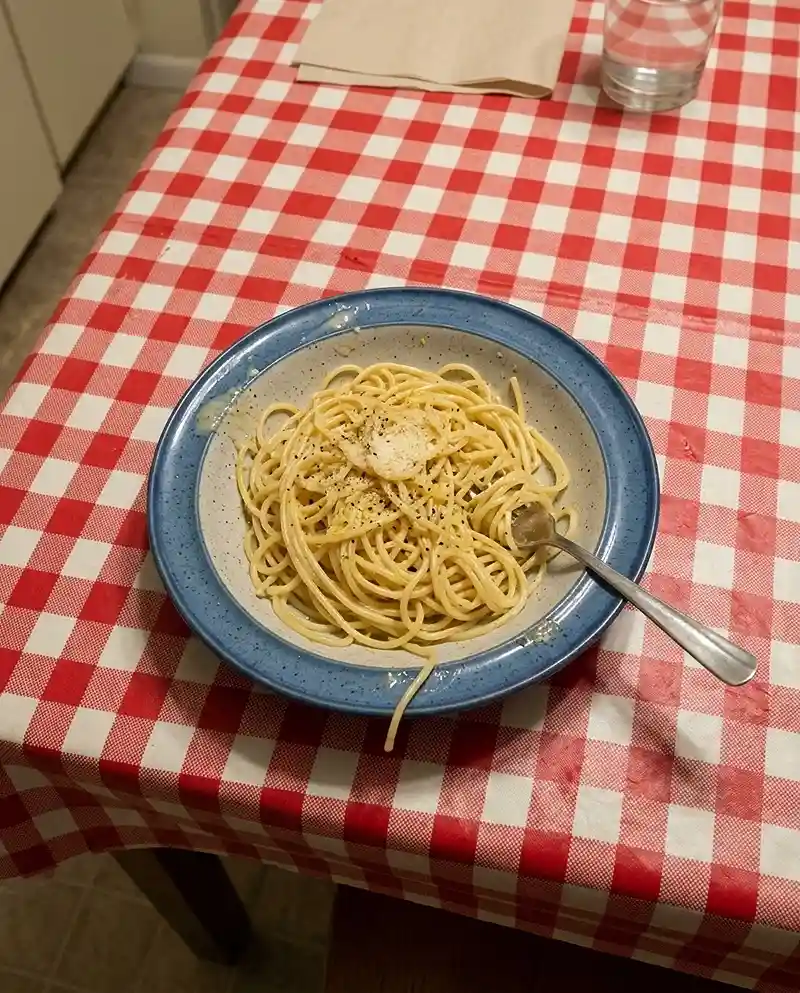
Serve immediately with a little more freshly grated Parmesan and, if desired, some extra grated frozen lemon. This sauce is at its best while it’s hot and loose, and in my experience it tightens up the longer it sits.
My partner now hovers near the stove the moment the pasta hits the bowl, fork in hand, which I’ve decided to take as a review. Nobody’s complained yet.
Tips, Swaps, and Variations
Optional swap: if you’ve got Pecorino Romano instead of Parmesan, it’ll work, but it’s saltier and sharper, so I’d taste before piling on extra at the end.
For a variation, add a pinch of chili flakes to the bowl along with the pepper. It brings a slow heat that plays nicely with the lemon.
If you’d rather skip the freezer, you can zest and juice a fresh lemon instead. It’s faster, but you lose the pith and the icy shreds that melt into that smooth sauce, so the flavor lands flatter.
Is the freezer space worth it? I’d say yes, since a lemon takes up almost no room, and the leftover two-thirds of the frozen lemon is ready whenever you want to make this again.
Side note, if your week turns into a pasta week, my viral Turkish pasta is the next one I’d try. It’s a different mood entirely, which keeps the rotation from getting boring.
If Your Frozen Grated Lemon Pasta Didn’t Come Out Right
If the sauce looks thin or greasy, keep tossing for another minute, because the butter and Parmesan need a little time to come together. A spoonful of extra grated Parmesan can help tighten it.
Clumpy or dry means you need more cooking water, added a little at a time with plenty of tossing between splashes. Dump in too much too fast and you’ll be chasing the sauce around the bowl.
A bitter edge usually means you grated deep into the white pith. Next time, ease off once you hit mostly white, and fix tonight’s bowl with a little extra Parmesan.
Slushy shreds instead of snow mean the lemon wasn’t frozen all the way. Give it more time in the freezer, because completely solid is the goal.
Leftovers, If You Have Any
Leftover Frozen Grated Lemon Pasta is fine to save, but the sauce does tighten up as it cools.
| Where | How | Keeps For |
|---|---|---|
| Fridge | Shallow airtight container, packed away within 2 hours of cooking | 3 to 4 days |
| Freezer | Airtight freezer container, leaving a little room at the top | About 2 months for best quality |
| Room temperature | Covered, and only while serving | Up to 2 hours |
| Freezer (leftover lemon) | Wrapped tightly or in an airtight bag | About 3 months for best flavor |
Reheat it in a skillet over low heat with a splash of water, stirring until the sauce loosens and the pasta is steaming hot. The microwave works too, in short bursts with a splash of water and a stir in between.
For the details, the USDA’s leftovers guidance covers the 2-hour rule and reheating to 165°F, and foodsafety.gov has storage charts.
As for ideas, I top reheated pasta with a fried egg, which turns it into breakfast. A handful of spinach stirred in at the end works too, since it wilts into the sauce right away.
Honestly, by day three I’m usually craving something different, and my one-pot French onion pasta is where I go next.
Quick Questions I Get
How much of the frozen lemon do I grate?
You grate about one-third of the frozen lemon into the bowl, and all of it counts: the zest, the juicy flesh, and a little of the white pith beneath the zest. Frozen, it grates into shreds that melt into the sauce, which in my experience beats chewy bits of peel. Put the rest back in the freezer for next time.
Why does the lemon have to be unsprayed?
Because you’re eating the peel, and unsprayed is what the recipe calls for. Wash and dry it thoroughly before it goes in the freezer. That’s all the prep it needs.
How long does the lemon need to freeze?
Overnight, or until it’s completely solid. Give it a squeeze before you grate, since any give means it needs more time. A lemon that’s solid all the way through grates like snow.
Can I use linguine instead of spaghetti?
Yes, the recipe works with either one. Cook it until al dente and save the cooking water no matter which you pick. I still lean spaghetti, but I won’t judge a linguine night.
How much pasta water do I use?
Start with about 60 ml of the reserved cooking water over the pasta, then toss. If the sauce isn’t coating the pasta yet, add more a little at a time, up to about 120 ml in total. Stop the moment it coats.
Go Make It
If you make this Frozen Grated Lemon Pasta, I’d love to hear how it went, so leave a comment or a star rating below. Pin it to Pinterest too, so it’s there on the night you open the freezer and find a lemon waiting.
And if you want a dressier night later in the week, my pappardelle burrata pasta is the one I’d pick.
Make-ahead tip: wash, dry, and freeze a lemon tonight, so tomorrow’s dinner is mostly sorted by the time the pasta water boils. When it’s time to eat, serve it straight from the bowl onto warm plates, with extra Parmesan on the table and the rest of the frozen lemon within grating reach.