
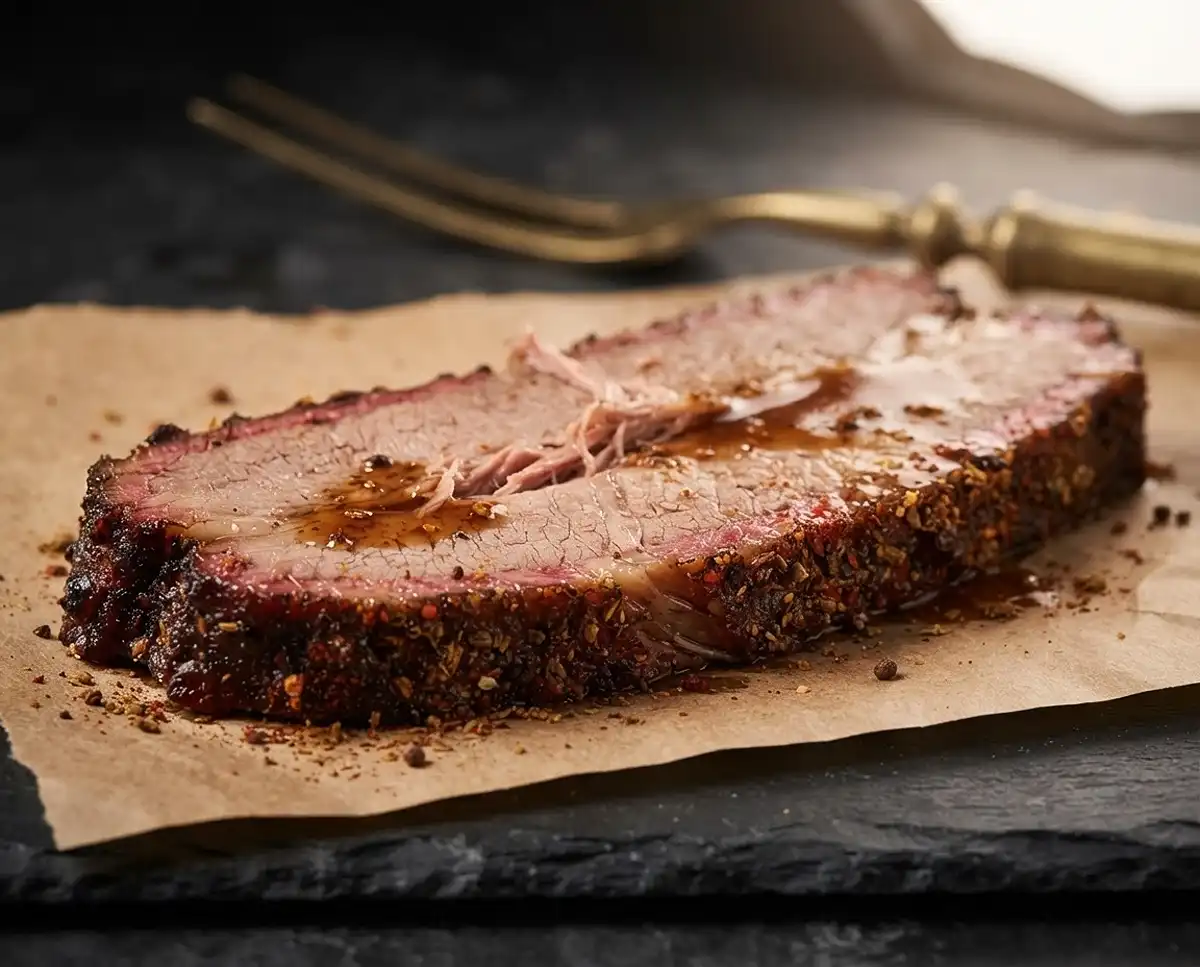
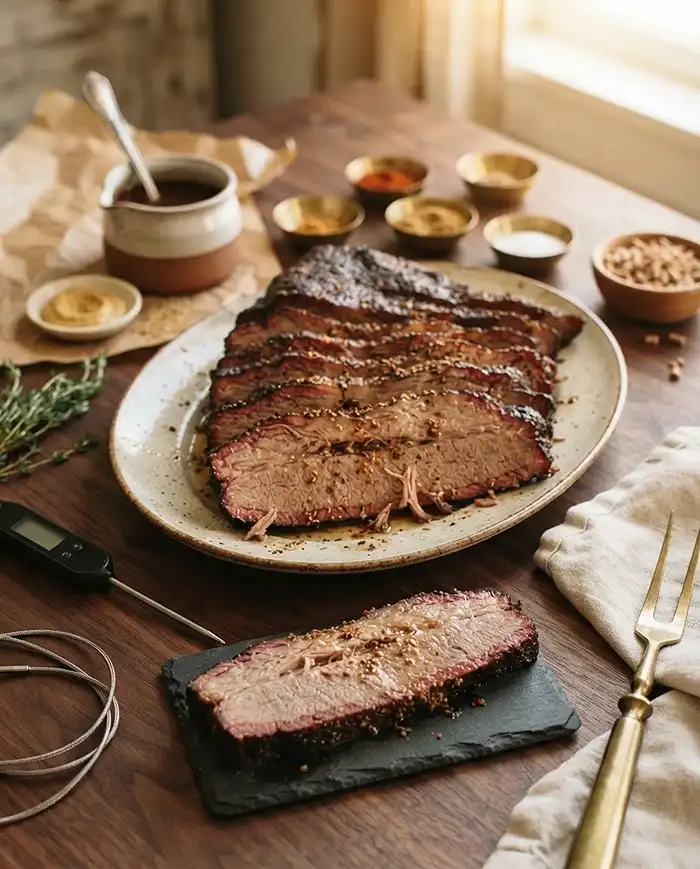
This Traeger brisket flat recipe walks you through an easy overnight rub, a low-and-slow smoke, and a foolproof way to get fall-apart, juicy beef every single time.
Okay, real talk: the first time I smoked a brisket flat, I stood outside in my pajamas at 5 a.m. staring at my Traeger like it owed me money. I was terrified I’d turn a ten-pound piece of beef into ten pounds of shoe leather. Spoiler — it turned out incredible, and now this is the recipe my family begs for every time there’s a reason to celebrate (or honestly, no reason at all).
This Traeger brisket flat has that low-and-slow payoff people get obsessed with after one good slice—if you’re already tempted, don’t stop here. There’s more to steal from these smoked brisket recipes.
Table of Contents
Quick Overview: Why You’re Going to Love This
Before we get into the nitty-gritty, here’s the deal with this Traeger brisket flat recipe in a nutshell:
- It’s a low-effort overnight marinade. You mix up the rub, slather the brisket, and let the fridge do the work while you sleep.
- It’s genuinely beginner-friendly. If you’ve never smoked a brisket before, this is a fantastic Beginner’s Smoked Beef Brisket to cut your teeth on — no fancy pitmaster tricks required.
- The mustard-and-spice combo builds a killer bark. Mustard sounds weird, I know, but it disappears into the meat and just leaves behind this tangy, savory crust.
- You get options. Smoke it during the day, or let it ride into what I like to call a Smoked Midnight Brisket if you’re feeding a crowd the next afternoon and want to start the cook while everyone’s asleep.
- There’s a sous vide shortcut for anyone who wants next-level tenderness with a little less guesswork.
Traeger Brisket Flat
Equipment
- Traeger or pellet smoker
- Aluminum pan
- aluminum foil
- Small mixing bowl
- Digital meat thermometer or probes
- Basting brush
- Sous vide immersion circulator (optional)
- Carving knife
Ingredients
- 10 lb Brisket, whole, flat cut
- 1 cup Beef broth
- ⅓ cup Mustard Helps the spices stick and disappears into the bark
- 2 tbsp Chili powder
- 1 tbsp Brown sugar
- 1 tbsp Salt
- 1 tbsp Onion powder
- 1 tbsp Paprika
- 1 tbsp Cumin
- 2 tsp Pepper
- 2 tsp Allspice
Instructions
- Optional sous vide step for extra-tender brisket: Place the brisket, still in its original plastic wrap and fully sealed, into a sous vide water bath set to 135 degrees F and let it hang for 48 hours. Once done, pull it out and continue with the prep step below.
- Prep the night before: In a small bowl, stir together the chili powder, brown sugar, salt, onion powder, paprika, cumin, pepper, allspice, beef broth, and mustard until it forms a thick, spreadable paste. Set the brisket in an aluminum pan and spread the paste all over it, top, bottom, and every nook and cranny. Place the brisket fat-side up in the pan, cover tightly with foil, and refrigerate overnight.
- Pull the brisket out of the fridge about an hour before cooking so it can come up to room temperature. Meanwhile, fill your smoker’s hopper with hardwood BBQ pellets (mesquite is the classic pick for beef), line the bottom of the smoker with two or three long sheets of foil under the rack for easy cleanup, and brush down the grill rack.
- Set your smoker to the smoke setting first, and once it is actively smoking, dial the temperature to 225 degrees F. Place the pan with the brisket inside and insert meat probes if using.
- At the start of hour two, begin basting the brisket every hour with the juices collecting in the pan to keep the surface moist and develop the bark. After about four hours, check the internal temperature, looking for 160 degrees F.
- Once the brisket hits 160 degrees F, cover the pan tightly with foil to push through the stall, where the temperature seems to stall out. Continue cooking until the internal temperature reaches 200 degrees F and the meat is fall-apart tender. Total cook time usually lands between 8 and 12 hours, roughly an hour per pound depending on the thickness of your cut.
- Pull the brisket from the smoker and let it rest at room temperature for a full hour so the juices redistribute. Slice against the grain and serve with the flavorful pan drippings spooned over the top, or your favorite barbecue sauce on the side.
Notes
What You’ll Need: Ingredients
Here’s everything on your shopping list for this Traeger Smoked Brisket Flat. Nothing fancy, just pantry staples and a good chunk of beef.
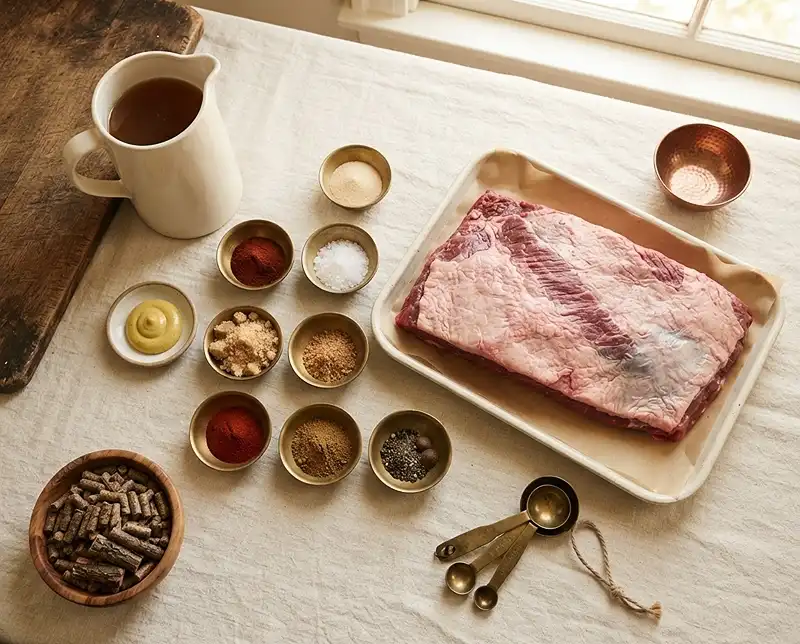
The Beef
| Ingredient | Amount |
|---|---|
| Brisket, whole, flat cut | 10 lb |
The Marinade & Rub
| Ingredient | Amount |
|---|---|
| Beef broth | 1 cup |
| Mustard | 1/3 cup |
| Chili powder | 2 tbsp |
| Brown sugar | 1 tbsp |
| Salt | 1 tbsp |
| Onion powder | 1 tbsp |
| Paprika | 1 tbsp |
| Cumin | 1 tbsp |
| Pepper | 2 tsp |
| Allspice | 2 tsp |
A quick note on that mustard — don’t skip it. It’s the secret handshake of good brisket rubs. It helps the spices stick and it quietly disappears into the bark as it cooks, so nobody’s going to accuse your brisket of tasting like a hot dog.
How to Make This Traeger Brisket Flat Recipe
Alright, let’s get into the fun part. This whole process breaks down into a few easy stages: prep the night before, fire up the smoker, smoke low and slow, then rest and slice. Take it one step at a time and you’ve got this.
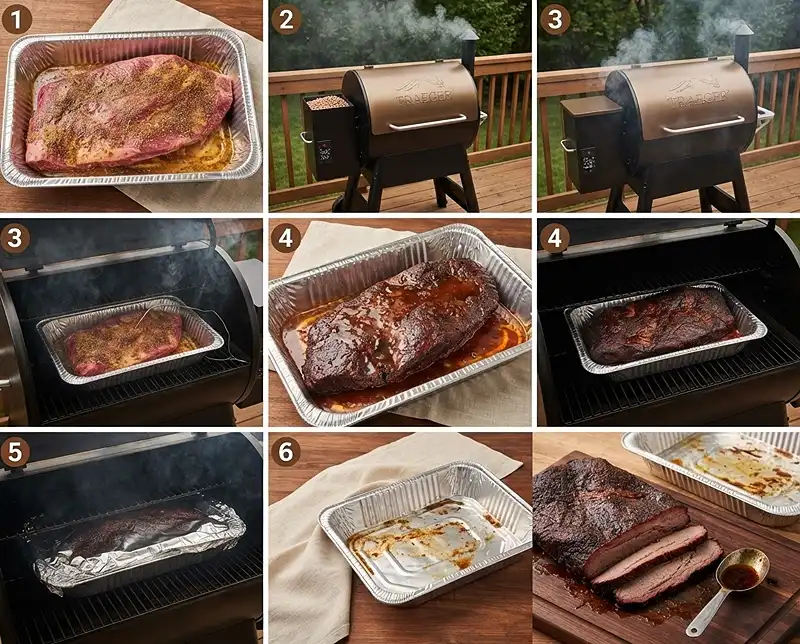
Optional: Sous Vide First for Extra-Tender Brisket
If you really want to guarantee a fork-tender result (or you’re nervous about your first brisket flat), this step is a game changer. Place the brisket — still in its original plastic wrap, fully sealed — into a sous vide water bath. Set it to 135°F and let it hang out for 48 hours. Once it’s done, pull it out and pick up the recipe at the prep step below. Think of it as giving your brisket a two-day spa day before it ever sees smoke.
Prep the Brisket the Night Before
This is where the magic starts, and it takes about ten minutes of actual work. In a small bowl, stir together the chili powder, brown sugar, salt, onion powder, paprika, cumin, pepper, allspice, beef broth, and mustard until it forms a thick, spreadable paste.
Set your brisket in an aluminum pan and spread that glorious paste all over it — top, bottom, every nook and cranny. Don’t be shy here; this is where all the flavor comes from. Place the brisket fat-side up in the pan, cover it tightly with foil, and slide it into the fridge overnight.
“Letting it sit overnight isn’t optional in my book — it’s the difference between good brisket and ‘oh my gosh, who made this’ brisket.”
Fire Up the Traeger
Pull the brisket out of the fridge about an hour before you plan to cook, so it can come up to room temperature. Cold meat hitting a hot smoker cooks unevenly, so don’t skip this part even if you’re impatient (I feel you, though).
While that’s happening, fill your smoker’s hopper with hardwood BBQ pellets. Mesquite is the classic pick for this recipe — it’s the wood that Texas pitmasters reach for on beef, and Traeger’s own mesquite pellet guidenotes it’s built specifically to pair with bold cuts like brisket. Line the bottom of the smoker with two or three long sheets of foil under the rack for easy cleanup later (future you will send present you a thank-you card), then give the grill rack a good brush-down.
Smoke It Low and Slow
Set your smoker to the smoke setting first, and once it’s actively smoking, dial the temperature to 225°F. Place the pan with your brisket inside, and if you’re using meat probes, now’s the time to insert them.
At the start of hour two, start basting the brisket every hour with the juices collecting in the pan. This keeps the surface moist and helps that bark develop something special. After about four hours, check the internal temp — you’re looking for 160°F.
Wrap It and Push Through the Stall
Once your brisket hits 160°F, cover the pan tightly with foil. This is the point in the process barbecue folks call “the stall,” where the temperature seems to just sit there and refuse to budge. It’s totally normal — don’t panic, just keep smoking.
Continue cooking until the internal temperature reaches 200°F, which is when the connective tissue has really broken down and the meat goes fall-apart tender. Total cook time usually lands somewhere between 8 and 12 hours, roughly an hour per pound, though this really depends on the thickness of your particular cut.
For a good reference on why internal temperature matters so much for both safety and texture, the USDA’s safe temperature chart is worth a bookmark if you’re new to smoking meat.
Rest, Slice, and Serve
Once your brisket hits that magic 200°F mark, pull it from the smoker and let it rest at room temperature for a full hour. I know, I know — the smell alone makes this the hardest hour of your life. But resting lets the juices redistribute instead of running straight out onto your cutting board.
When the hour’s up, slice against the grain and serve with those flavorful pan drippings spooned over the top, or your favorite barbecue sauce on the side. If you want a sauce with a little extra kick, our crack sauce recipe is a ridiculously good match for smoky beef.
Expert Tips, Variations & Troubleshooting
Tips for Nailing This Every Time
A good digital meat thermometer is worth every penny — eyeballing brisket doneness is basically a coin flip, even for experienced smokers. Also, resist the urge to peek constantly. Every time you open that smoker, you’re letting heat and smoke escape, which just adds more time to your cook.
If you’re brand new to smoking, treat this as your Beginner’s Smoked Beef Brisket training run. Write down your times and temps as you go, because your second brisket will always be better than your first, and your notes are how that happens.
Fun Variations to Try
Want a sweeter bark? Bump the brown sugar up to two tablespoons for a little extra caramelization. Craving more heat? A teaspoon of cayenne in the rub turns this into a brisket with some serious bite.
If you’re comparing cuts before you buy, it’s worth reading through a classic beef brisket recipe to see how the whole packer brisket differs from the flat-only cut we’re using here — the flat is leaner and slices up beautifully, while a full packer gives you the fattier point for burnt ends too.
And if brisket night turns into a whole spread, our enoki beef rolls recipe makes a fantastic starter while everyone’s waiting for the main event to finish smoking.
Troubleshooting Common Hiccups
My brisket is stuck at the same temperature for hours. That’s the stall, and it’s completely normal — it can last two hours or more. Wrapping in foil (like we do in this recipe) helps push through it faster.
It’s dry instead of juicy. This usually means it was pulled too early, before the collagen fully broke down, or it didn’t get that full hour of resting. Fat and connective tissue need time and heat to turn into that silky, moist texture.
The bark didn’t form. Make sure your smoker actually reached 225°F before the brisket went in, and don’t wrap it too early — the bark needs some naked smoke time first.
Storage, Reheating & No-Waste Ideas
Leftover brisket (if you’re lucky enough to have any) keeps beautifully. Here’s how to store it right.
| Storage Method | How Long It Lasts |
|---|---|
| Refrigerator, airtight container | 3 to 4 days |
| Freezer, wrapped tightly with drippings | 2 to 3 months |
| Reheat in oven at 300°F with a splash of broth | Until warmed through, about 20 minutes |
To reheat without drying it out, add a splash of beef broth or those reserved pan drippings before covering with foil and warming it low and slow in the oven. Microwaving works in a pinch, but it tends to toughen the meat, so treat it as a last resort.
For a no-waste kitchen win, don’t toss those leftover scraps and drippings. Chop up smaller pieces for brisket tacos, toss shredded bits into a pot of chili, or stir drippings into your next batch of baked beans for a smoky flavor boost. Even the fat trimmings can be rendered down into a beautiful beef tallow for roasting vegetables later.
Frequently Asked Questions
Can I use a whole packer brisket instead of just the flat?
Yes, though cook times will run longer since you’re dealing with two muscles of different thicknesses. You may also want to trim more fat off the point section before seasoning.
Do I really need to marinate it overnight?
It’s strongly recommended. The overnight rest lets the salt and spices penetrate the meat rather than just sitting on the surface, which makes a noticeable difference in flavor.
What if my Traeger doesn’t have a dedicated smoke setting?
Just set it to the lowest available temperature until you see steady smoke, then move up to 225°F as directed. Most pellet grills handle this similarly.
Can I skip the sous vide step?
Absolutely — it’s completely optional. The standard smoking method in this recipe produces a tender, delicious brisket on its own; the sous vide step is just an extra layer of insurance for beginners.
Is mesquite the only wood that works here?
Not at all. Mesquite gives you that classic bold, Texas-style flavor, but hickory or oak work great too if you want something a touch milder.
Give This One a Try
This Traeger brisket flat recipe has become one of those dishes that turns an ordinary weekend into an event, and I really hope it does the same for you and your crew. Fire up that smoker, trust the process through the stall, and get ready for some seriously good compliments.
If you make it, I’d love to hear how it turned out — drop a comment below and let me know your favorite wood pellet flavor or any twists you tried. And if you’re already planning your next cook, go ahead and pin this recipe to your BBQ board on Pinterest so you can find it again the next time that craving hits.
