
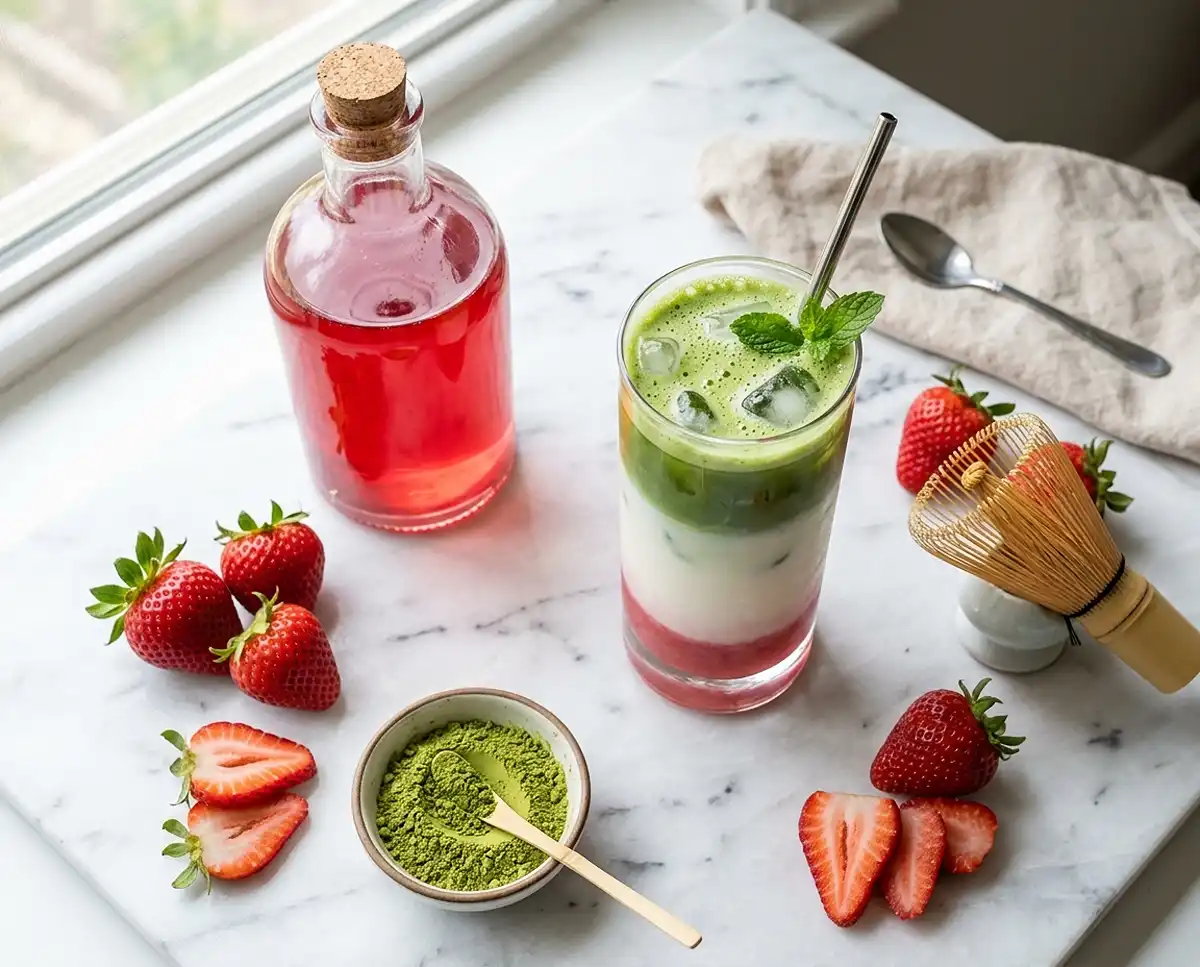
Learn exactly how to make strawberry syrup for matcha at home with three easy methods — cooked, honey-sweetened, and no-cook — so you can build that gorgeous pink latte any day of the week.
Okay, real talk: the first time I tried a strawberry matcha latte at a cafe, I nearly fainted from happiness. Then I saw the price tag and nearly fainted again — for very different reasons.
That was the moment I decided to figure out how to make strawberry syrup for matcha at home. Spoiler: it’s embarrassingly easy and tastes just as good (maybe better, honestly).
Table of Contents
Why You’ll Love This Strawberry Syrup for Matcha
This isn’t just a one-trick pony recipe. You’re getting three different methods depending on your mood, your pantry, and how much effort you feel like putting in on any given day.
The classic cooked syrup is rich, thick, and shelf-stable for a full month. The honey-sweetened version has this naturally floral sweetness that pairs beautifully with earthy matcha. And the no-cook macerated syrup? It’s pure, bright strawberry flavor with zero heat required.
All three make an incredible best strawberry syrup for matcha — it just depends on what you’re going for. And once you try homemade, you won’t go back to store-bought.
How to Make Strawberry Syrup for Matcha (The Dreamy Way)
Equipment
- Small saucepan
- fork
- Fine-Mesh Sieve
- Clean jar
- Bowl or zip-lock bag
- Spoon
- Ice cube trays
- Freezer bag
- Glass
Ingredients
Classic Cooked Syrup
- 1 cup fresh or frozen strawberries hulled and sliced
- 1 cup sugar
- 1 cup water
- ½ tsp lemon juice optional; brightens flavor and helps preserve color
Honey-Sweetened Variation
- 200 g frozen strawberries
- 50 g honey
- A splash water helps the syrup start cooking without scorching
No-Cook Macerated Syrup
- 226 g fresh strawberries chopped
- 100 g sugar
For Strawberry Matcha Latte
- 1 to 2 tablespoons strawberry syrup per latte, adjust to taste
- ice as needed
- milk of choice oat milk, almond milk, or whole milk all work
- whisked matcha pour slowly over the back of a spoon for layering
Optional Variations
- ½ teaspoon vanilla extract optional, add to classic cooked syrup before straining
- 1 thin slice fresh jalapeño optional, add during cooking for spicy strawberry syrup
- a few fresh mint leaves optional, steep in hot syrup for 5 minutes after cooking, then remove
Instructions
- For classic cooked syrup, add 1 cup strawberries, 1 cup sugar, and 1 cup water to a small saucepan and stir to combine.
- Bring the mixture to a gentle simmer over medium heat, stirring occasionally, until the water turns pinkish-red.
- Mash the strawberries against the side of the pan with a fork to release their juices.
- Simmer for 10 to 15 minutes, until the liquid thickens slightly into a pourable syrup. Stir in the optional 1/2 teaspoon lemon juice if using.
- Remove from the heat, cool for a few minutes, then strain through a fine mesh sieve into a clean jar. Press the pulp gently to extract the syrup.
- For honey-sweetened syrup, combine 200 g frozen strawberries, 50 g honey, and a splash of water in a small saucepan.
- Simmer over low heat, mashing the strawberries as they soften, and keep the heat low so the honey does not burn.
- Cook for 10 to 15 minutes, until thick and almost jam-like. Cool completely, then strain for a smooth syrup or leave chunky for a rustic texture.
- For no-cook macerated syrup, toss 226 g chopped fresh strawberries with 100 g sugar in a bowl or zip-lock bag until coated.
- Refrigerate for at least 2 hours, or overnight for deeper flavor, until the sugar draws out the strawberry juices.
- Strain through a fine mesh sieve for a smooth syrup, or skip straining if you prefer texture.
- To make a strawberry matcha latte, add 1 to 2 tablespoons strawberry syrup to the bottom of a glass.
- Fill the glass with ice, then pour in your milk of choice.
- Slowly pour whisked matcha over the back of a spoon so it layers over the milk and strawberry syrup.
- Taste and add more syrup if desired.
Notes
Ingredients
Here’s everything you need across all three methods. Pick your version and grab what you need — most of it is probably already in your kitchen.
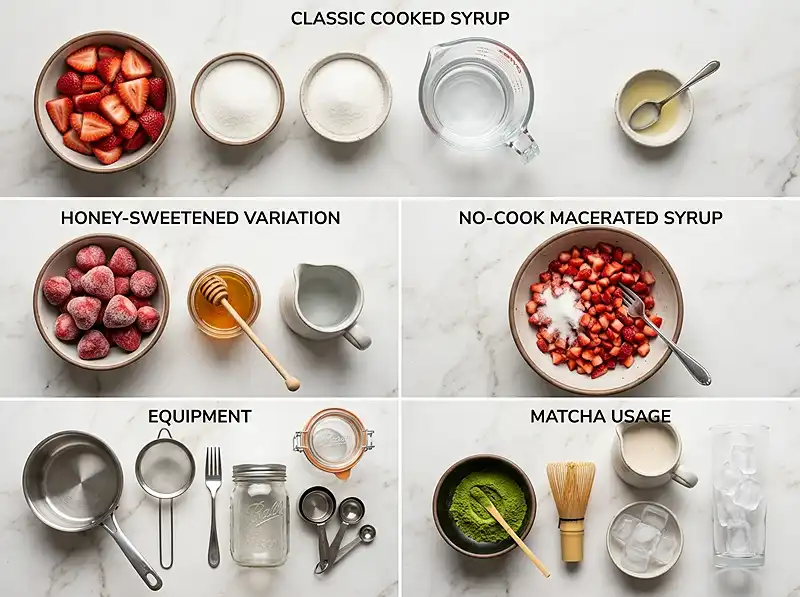
| Method | Ingredient | Amount |
|---|---|---|
| Classic Cooked Syrup | Fresh or frozen strawberries, hulled and sliced | 1 cup |
| Sugar | 1 cup | |
| Water | 1 cup | |
| Lemon juice (optional) | 1/2 tsp | |
| Honey-Sweetened Variation | Frozen strawberries | 200g |
| Honey | 50g | |
| Water | A splash | |
| No-Cook Macerated Syrup | Fresh strawberries, chopped | 226g |
| Sugar | 100g |
A quick note on strawberries: fresh and in-season berries give you the brightest color and flavor. But honestly, frozen strawberries work just as well for the cooked and honey methods — they’re picked at peak ripeness anyway.
If you love fruit-forward drinks, you might also enjoy this apple cinnamon water recipe for another naturally sweet sip.
How to Make Strawberry Syrup for Matcha — Step by Step
Ready? Let’s walk through each method. They’re all simple, I promise — even if you’re the kind of person who burns toast.
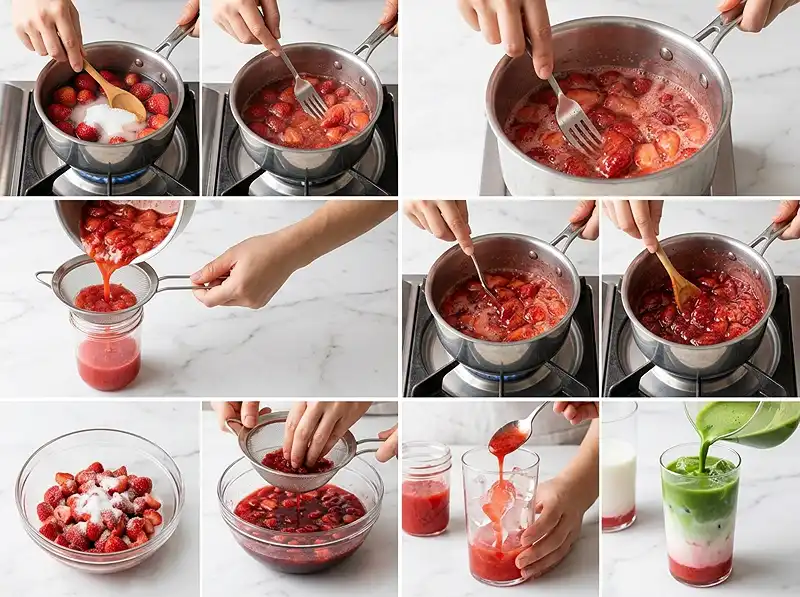
Method 1: Classic Cooked Strawberry Syrup
This is the OG method and the one I make most often. It gives you a glossy, jammy syrup that lasts up to a month in the fridge. Perfect if you want to batch it and have lattes on demand all week.
Step 1: Add your strawberries, sugar, and water to a small saucepan. Give it a quick stir to combine everything. It’ll look like a lot of liquid at first — that’s totally fine.
Step 2: Bring the mixture to a gentle simmer over medium heat, stirring occasionally. You’ll start to see the water turn a beautiful pinkish-red. That’s the magic happening.
Step 3: Once it’s simmering, grab a fork and start mashing the strawberries against the side of the pan. You want to break them down so they release all those gorgeous juices. No need to be precise here — embrace the mess.
Step 4: Keep simmering for about 10 to 15 minutes, until the liquid thickens slightly. It won’t be super thick like jam — more like a pourable, clingy syrup. Add the lemon juice here if you’re using it. It brightens everything up.
Step 5: Pull it off the heat and let it cool for a few minutes. Then strain it through a fine mesh sieve into a clean jar. Press the pulp gently to get every last drop of syrup. Store in the fridge for up to one month.
Pro tip: Don’t toss the strained strawberry pulp! It’s incredible stirred into yogurt, oatmeal, or spread on toast.
Method 2: Honey-Sweetened Strawberry Syrup
This version is for when you want something a little more natural and less sweet. The honey adds a floral depth that plays really nicely with matcha’s grassy notes. It’s also great if you’re trying to cut back on refined sugar.
Step 1: Combine your frozen strawberries, honey, and a small splash of water in a small saucepan. The water just helps things get moving without scorching.
Step 2: Simmer over low heat, mashing the strawberries as you go. This one needs a bit more patience — keep the heat low so the honey doesn’t burn.
Step 3: Cook for about 10 to 15 minutes until it reaches a thick, almost jam-like consistency. It’ll be chunkier than the classic version. Cool completely, then strain if you prefer a smooth syrup, or leave it as-is for a more rustic texture.
Store in the fridge and use within two weeks. The honey acts as a natural preservative, but without the extra sugar, it won’t keep quite as long as the classic.
Method 3: No-Cook Macerated Strawberry Syrup
This method is almost cheating, it’s so easy. No stove, no heat, no fuss. Just strawberries, sugar, and time. The result is incredibly fresh-tasting — bright, fruity, and intensely strawberry.
Step 1: Toss your chopped fresh strawberries with the sugar in a bowl or a zip-lock bag. Make sure everything is coated.
Step 2: Pop it in the fridge for at least 2 hours. Overnight is even better. The sugar draws out all the natural juices from the berries — a process called maceration. You’ll come back to a beautiful, ruby-red liquid pooling at the bottom.
Step 3: Strain through a fine mesh sieve if you want a smooth, seedless syrup. Or skip the straining if you don’t mind a little texture. Use within 5 to 7 days.
This macerated version tastes the most “fresh strawberry” of all three — it’s wonderful over ice in a strawberry taho-inspired drink too.
How to Use Strawberry Syrup in a Matcha Latte
This is the fun part. Building your strawberry matcha latte is genuinely satisfying — it looks like a cafe drink and takes about two minutes.
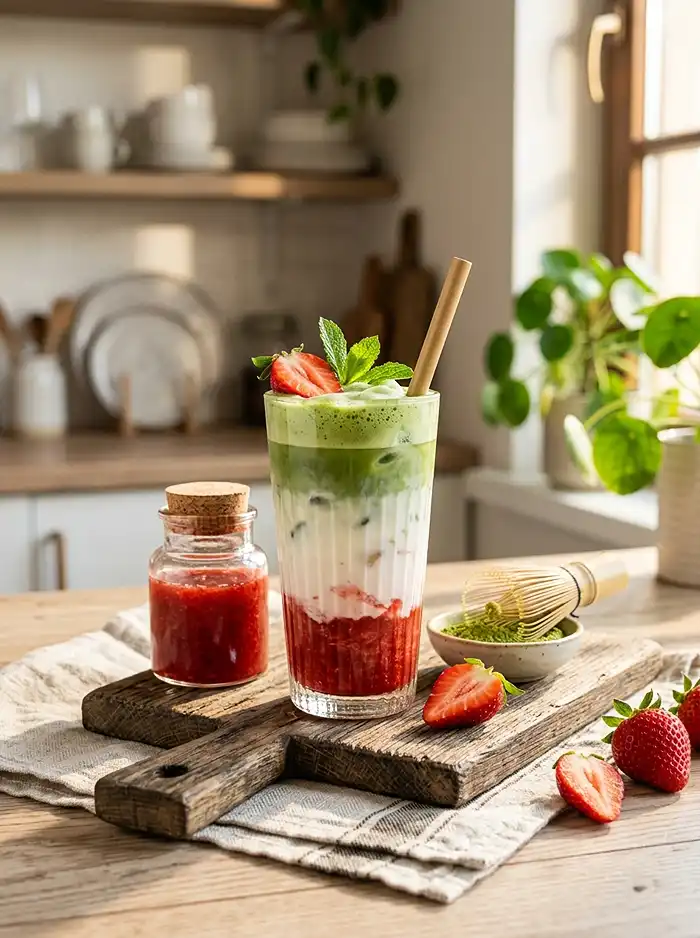
Add 1 to 2 tablespoons of your strawberry syrup to the bottom of a glass. Fill the glass with ice, then pour in your milk of choice — oat milk, almond milk, or regular whole milk all work beautifully here.
Finally, slowly pour your whisked matcha over the back of a spoon so it layers on top. That gorgeous green-on-pink gradient? That’s your reward for making homemade strawberry syrup for matcha instead of paying six dollars for it at a coffee shop.
Start with one tablespoon of syrup and taste — you can always add more. The sweetness of the syrup you made will vary slightly based on your strawberries and method, so adjust to your own palate.
Tips, Variations, and Troubleshooting
Expert Tips for the Best Strawberry Syrup
Use ripe, fragrant strawberries. The riper the berry, the more flavor your syrup will have. If your strawberries smell amazing, your syrup will too.
Don’t rush the simmer. Medium-low heat is your friend. Too high and you risk burning the sugar or making the syrup too thick too fast.
Lemon juice is a secret weapon. Even just a tiny squeeze brightens the flavor and helps preserve the color. Don’t skip it if you want that vivid red-pink hue.
Fun Variations to Try
Strawberry vanilla syrup: Add half a teaspoon of vanilla extract to the classic cooked syrup right before straining. It’s incredible.
Spicy strawberry syrup: Add a thin slice of fresh jalapeño during cooking for a subtle heat that surprisingly works with matcha.
Strawberry mint: Steep a few fresh mint leaves in the hot syrup for five minutes after cooking, then remove before storing. Refreshing and summery.
Feeling adventurous with your baking too? This double chocolate strawberry banana bread uses strawberries in an unexpected and delicious way.
Troubleshooting Common Issues
Syrup is too thin: Just simmer it a little longer, uncovered, until it reduces further. It also thickens as it cools, so give it time before panicking.
Syrup is too thick: Stir in a tablespoon of warm water at a time until it loosens up to a pourable consistency.
Syrup tastes bland: Your strawberries might have been low on flavor. Add a squeeze of lemon juice and a pinch of salt — both amplify fruit flavor significantly.
Syrup turned dark red: This usually means the heat was too high. It’s still usable, but next time keep it at a gentle simmer. A little lemon juice helps preserve that bright color.
According to Serious Eats’ guide to maceration, the process of drawing liquid from fruit with sugar is one of the most effective ways to concentrate natural fruit flavor without heat — which is exactly why that no-cook method tastes so fresh.
Storage Instructions
Made a batch and wondering how to keep it fresh? Here’s a handy breakdown:
| Method | Storage | How Long |
|---|---|---|
| Classic Cooked Syrup | Sealed jar in the fridge | Up to 1 month |
| Honey-Sweetened Syrup | Sealed jar in the fridge | Up to 2 weeks |
| No-Cook Macerated Syrup | Sealed jar in the fridge | 5 to 7 days |
| Any method (frozen) | Ice cube trays, then freezer bag | Up to 3 months |
Reheating and No-Waste Kitchen Ideas
To reheat a refrigerated syrup, just let it sit at room temperature for a few minutes or give the jar a quick warm water bath. Avoid microwaving directly in the jar if it’s glass.
Got leftover strawberry pulp from straining? Don’t waste it. Stir it into overnight oats, swirl it into plain yogurt, or dollop it onto pancakes. It’s basically strawberry jam at this point.
You can also freeze the syrup in ice cube trays for ultra-convenient single-serve portions. Each cube is roughly one to two tablespoons — perfect for dropping straight into a glass of milk with matcha. No measuring needed.
If you enjoy making your own flavored syrups and drinks, you might also love this ube halaya recipe — another stunning purple treat that makes gorgeous drinks and desserts.
Frequently Asked Questions
Can I use frozen strawberries to make strawberry syrup for matcha?
Absolutely. Frozen strawberries actually work great for the cooked and honey-sweetened methods since they break down easily. For the no-cook macerated version, stick to fresh strawberries so you get the best texture and natural juice release.
How much strawberry syrup should I add to a matcha latte?
Start with one tablespoon and taste as you go. Most people land between one and two tablespoons depending on how sweet they like their drink. The syrup you make at home may vary in sweetness, so always adjust to your own preference.
Can I make strawberry syrup without sugar?
Yes! The honey-sweetened variation skips refined sugar entirely. You can also try maple syrup as a one-to-one swap in the cooked method — it adds a mild caramel note that works surprisingly well with matcha.
Why did my strawberry syrup turn brown instead of staying pink?
This usually happens when the heat is too high or the syrup cooked too long. Keep the heat at a gentle simmer and add a small squeeze of lemon juice, which helps preserve that gorgeous bright pink-red color.
Can I use strawberry syrup in drinks other than matcha?
One hundred percent yes. This strawberry syrup is amazing in lemonade, sparkling water, iced tea, or drizzled over pancakes and waffles. It’s a versatile staple to keep in your fridge all summer long.
Final Thoughts
Once you know how to make strawberry syrup for matcha at home, you’ll wonder why you ever bought it from anywhere else. It’s cheaper, tastier, and honestly kind of fun to make.
Pick whichever method fits your day — the cooked classic if you want a big batch, the honey version for something a little more wholesome, or the no-cook macerated syrup when you want maximum freshness with minimum effort.
If you give any of these a try, I’d love to hear how it goes. Drop a comment below and let me know which method became your go-to. And if your latte turned out beautiful, please share it on Pinterest — tag us so we can admire your gorgeous layered creation!