
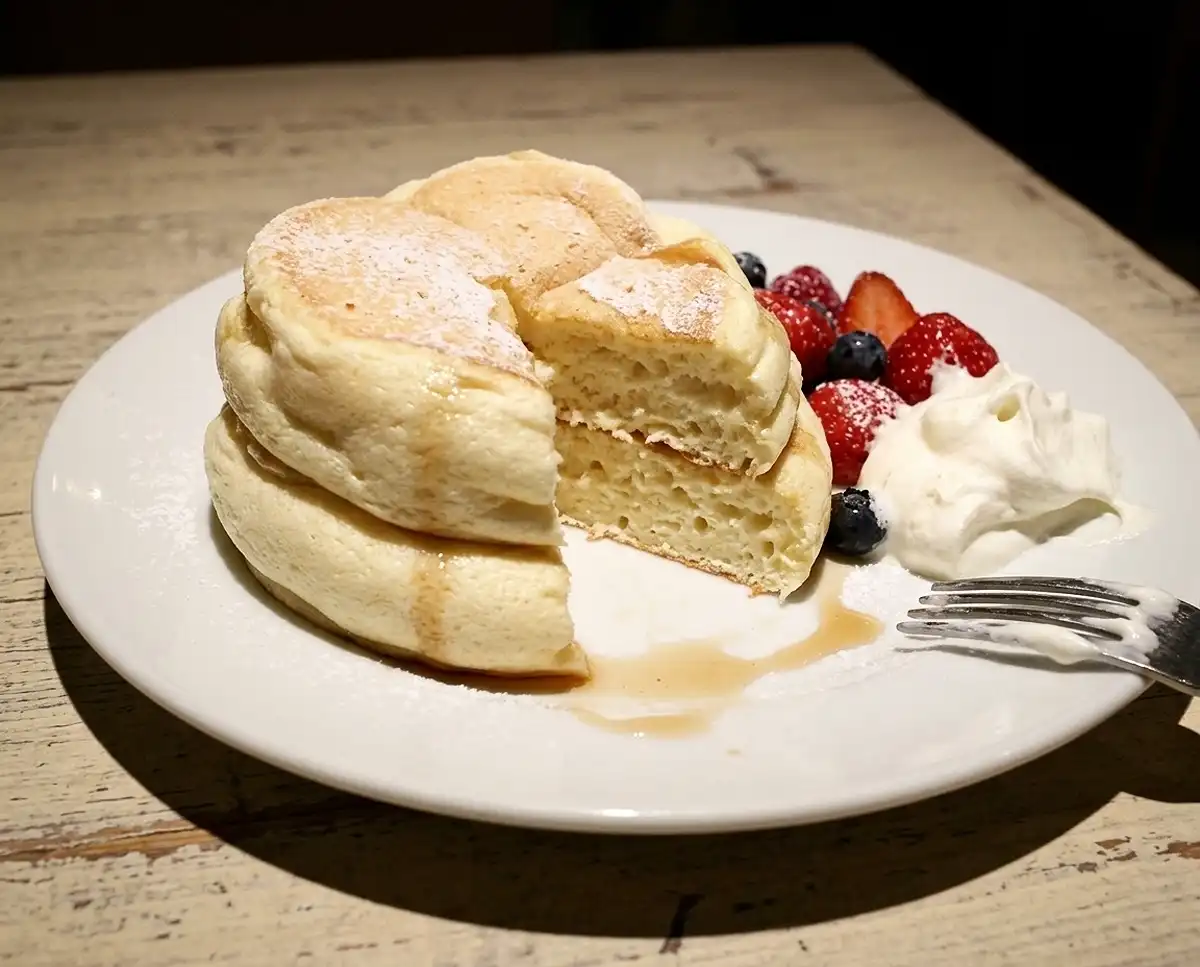
Make fluffy Japanese soufflé pancakes at home with tall, jiggly, cloud-like stacks. Simple steps and tips so they rise high and taste amazing every time.
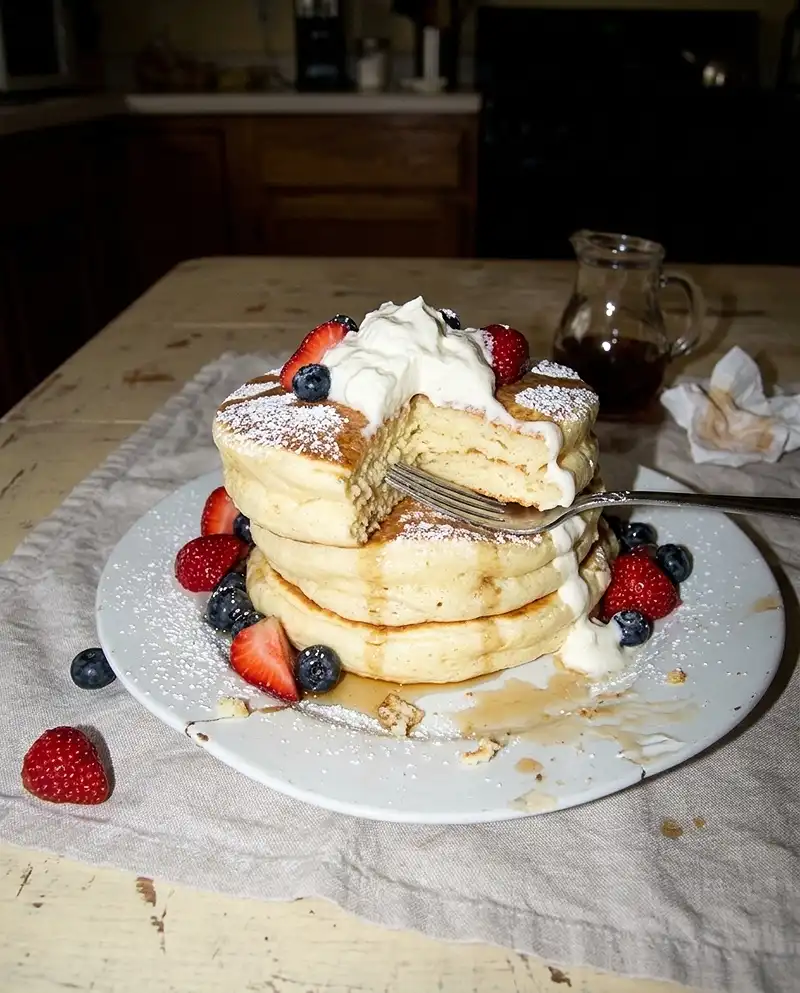
The first time I saw a stack of these wobble on a plate, I honestly thought someone was pulling my leg. Pancakes aren’t supposed to jiggle like a cloud with feelings. Now I make this fluffy Japanese soufflé pancakes recipe whenever breakfast needs to feel like a tiny celebration.
Table of Contents
Why You’ll Love These Fluffy Japanese Soufflé Pancakes
These are a totally different animal from your usual diner stack. Instead of leaning only on baking powder, you whip egg whites into a glossy meringue and fold it into a rich yolk batter. The result is tall, tender, and almost custardy in the middle.
Here’s the quick rundown of what you’re getting:
- Towering, jiggly pancakes with a melt-in-your-mouth center
- A golden, lightly crisp surface from a slow, gentle pan-cook
- Simple ingredients, with cake flour as the only specialty item
- A café-worthy breakfast that looks way fancier than it feels to make
Is it more work than pancake mix? Yes, a little. Is it worth it? Absolutely, and I’ll walk you through every step so nothing goes flat on you.
Fluffy Japanese Soufflé Pancakes
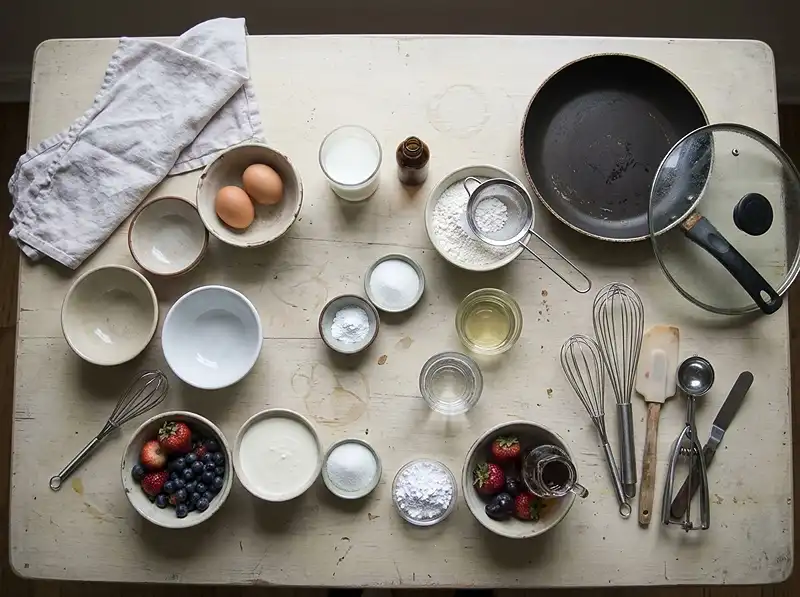
Equipment
- Nonstick frying pan with tight-fitting lid
- Kitchen scale
- Hand mixer or stand mixer
- balloon whisk
- Fine-mesh sifter
- Cookie scoop
- Offset spatula
- mixing bowls
Ingredients
For the Pancake Batter
- 2 large eggs 50 g each without shell, separated
- 1½ Tbsp whole milk
- ¼ tsp pure vanilla extract
- ¼ cup cake flour weighed for accuracy
- ½ tsp baking powder
- 2 Tbsp sugar for the meringue
- 1 Tbsp neutral oil for the pan
- 2 Tbsp water for steaming
For the Fresh Whipped Cream (Optional)
- ½ cup heavy (whipping) cream cold
- 1½ Tbsp sugar or more to taste
For the Toppings
- 1 Tbsp confectioners’ sugar
- fresh berries strawberries, blueberries, or your favorites
- maple syrup to drizzle
Instructions
Whipped Cream (Optional, Make Ahead)
- Set a clean, dry medium bowl over a larger bowl half filled with ice water. Add the cold cream and sugar, and whisk on high speed until medium-firm peaks form. Refrigerate until serving.
Batter and Meringue
- Separate the eggs, putting the yolks and whites in two different bowls. Put the bowl of egg whites in the freezer for 15 minutes.
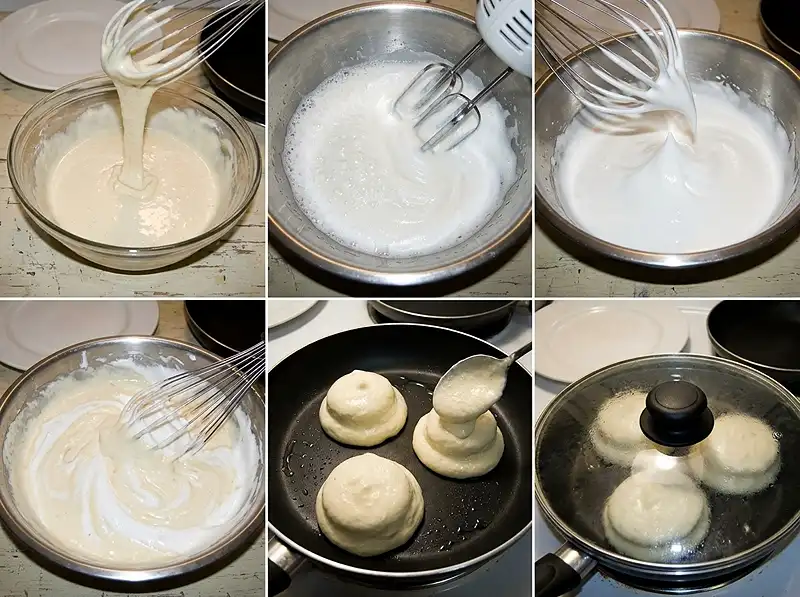
- Add the milk and vanilla to the yolks and whisk until pale, thick, and frothy. Sift in the cake flour and baking powder. Whisk only until smooth, without overmixing.
- Put the nonstick pan over the lowest heat so it slowly warms to about 300ºF (150ºC).
- Beat the half-frozen egg whites on low speed until foamy. Switch to medium speed and add the 2 Tbsp sugar one-third at a time. Raise the speed to medium-high and beat for about 2 minutes, until the peaks are stiff and glossy. Be careful not to overbeat.
- Whisk one-third of the meringue into the yolk mixture until smooth. Gently fold in half of the remaining meringue with a balloon whisk. Pour this mixture back into the bowl with the rest of the meringue and fold until no white streaks remain.
Cook and Serve
- Brush the pan lightly with oil, then blot with a paper towel so only a thin film remains. Scoop the batter into 3 tall mounds. When the surface of each mound looks slightly dry, stack another scoop on top.
- Pour 1 Tbsp water into the empty spaces of the pan, cover, and steam over low heat for 6 to 7 minutes. At the 2-minute mark, add a final scoop of batter to each pancake, plus a splash of water if the pan looks dry, then cover again quickly.
- Gently flip each pancake with an offset spatula using a rolling motion. If a pancake resists, wait another 30 to 60 seconds before trying again. Add 1 Tbsp water to the open spaces, cover, and cook for 4 to 5 minutes on the lowest heat, until the bottoms are golden and the sides feel set.
- Serve immediately, topped with confectioners’ sugar, fresh berries, whipped cream, and maple syrup.
Notes
Ingredients You’ll Need
These amounts make one batch of three tall pancakes. Because the batter deflates if it sits, plan to cook it fresh and right away.
For the Pancake Batter
| Ingredient | Amount | Why It Matters |
|---|---|---|
| Large eggs | 2 (50 g each without shell) | Yolks make the base rich, whites make the cloud |
| Whole milk | 1½ Tbsp | Adds a creamy softness to the yolks |
| Pure vanilla extract | ¼ tsp | Gives that warm, bakery-style aroma |
| Cake flour | ¼ cup | Light and tender; weigh it for accuracy |
| Baking powder | ½ tsp | Extra lift insurance |
| Sugar | 2 Tbsp | Sweetens and stabilizes the meringue |
| Neutral oil | 1 Tbsp | For a thin film on the pan |
| Water | 2 Tbsp | Creates steam so the pancakes stay moist |
For the Fresh Whipped Cream (Optional)
| Ingredient | Amount | Why It Matters |
|---|---|---|
| Heavy (whipping) cream | ½ cup | Cold cream whips up the fluffiest |
| Sugar | 1½ Tbsp, or more to taste | Just enough sweetness to balance the berries |
For the Toppings
| Ingredient | Amount | Why It Matters |
|---|---|---|
| Confectioners’ sugar | 1 Tbsp | A snowy, pretty finish |
| Fresh berries | Strawberries, blueberries, or your favorites | Bright, juicy contrast |
| Maple syrup | To drizzle | The cozy, sticky payoff |
Before You Start
Timing and temperature are everything with fluffy Japanese souffle pancakes. Read through the recipe once, then set up your station so you aren’t hunting for a spatula mid-flip.
- Grab a nonstick frying pan with a tight-fitting lid.
- Use a kitchen scale for the flour if you can, since a scoop can pack differently every time.
- Gather every ingredient before you crack the first egg.
- Make the whipped cream ahead so the pancakes go straight to the table.
One more thing: cook one batch of batter at a time. If you’re feeding a crowd, use several pans or a griddle rather than doubling the bowl.
How to Make Fluffy Japanese Soufflé Pancakes
Mix the Yolk Batter
Separate the yolks and whites of 2 large eggs into two different bowls. Be careful here, because even a speck of yolk in the whites can keep them from whipping up.
Slide the bowl of egg whites into the freezer for 15 minutes. Set a timer so you don’t forget them.
Tip: Partially freezing the whites strengthens their protein structure, so they whip faster and form a much steadier meringue.
Add the milk and vanilla to the yolks, then whisk by hand until the mixture turns pale, thick, and frothy. Sift the cake flour and baking powder right into the bowl.
Whisk just until the batter comes together smoothly. Stop there, because overmixing makes the pancakes tougher.
Preheat the Pan
Set your nonstick pan over the lowest heat to warm up to about 300ºF (150ºC). Let it sit and come up to temperature slowly while you work on the meringue.
Low and slow is the whole game. A pan that’s too hot browns the outside before the inside has time to set.
Whip the Meringue
Take the half-frozen egg whites out of the freezer. Beat them with a hand mixer or stand mixer on low speed until they look foamy with big bubbles, about the texture of cappuccino foam.
Switch to medium speed and add the 2 Tbsp sugar one-third at a time. Let each addition dissolve before adding the next, which keeps the meringue smooth and glossy.
Once all the sugar is in, bump the speed to medium-high and beat for about 2 minutes, until you see stiff, shiny peaks. Pause near the end to sweep any unwhipped whites from the edge into the center.
Finish on medium speed with a hand mixer. If you’re using a stand mixer, take off the whisk attachment and finish with a hand whisk so you can control it.
Lift the whisk straight up to check. The meringue should hold a firm peak that stands tall or folds over just slightly at the tip, looking smooth and glossy.
Tip: Don’t overbeat. Overwhipped meringue turns grainy and clumpy, and it’s much harder to fold into the batter.
Fold in the Meringue
Add one-third of the meringue to the yolk mixture and whisk until smooth. Don’t worry about losing a few bubbles here, since this first scoop just loosens the thick yolk base.
Now add half of the remaining meringue. Fold gently with a hand whisk using a slow bottom-to-top motion, and take your time so you don’t knock out the air.
Tip: A balloon whisk folds meringue more gently and evenly than a spatula, because the wires slice through without crushing the bubbles.
Pour the lightened yolk mixture right back into the meringue bowl with the last portion. Fold until no white streaks remain, then head straight to the stove. The batter should look pillowy and billowy.
Cook the Pancakes
By now your pan should be warm at 300ºF (150ºC). Brush it lightly with the neutral oil, then blot with a paper towel so only a thin, even film is left.
Use a cookie scoop to drop the batter into the pan, making 3 tall mounds. Nudge the heat up to low to hold the pan’s temperature steady. You’ll be adding more batter, so don’t use it all yet.
When the surface of each mound looks slightly dry, stack a second scoop right on top to build height. You should still have at least three scoops left in the bowl.
Pour 1 Tbsp of water into the empty spaces of the pan, avoiding the pancakes themselves. Cover with the lid and steam over low heat for 6 to 7 minutes, with a timer set.
Tip: The steam keeps the pancakes moist and helps them rise evenly without drying out.
At the 2-minute mark, quickly lift the lid and mound a final scoop of batter on each pancake. If the water has evaporated, add a small splash, then cover again right away.
Flip the Pancakes
When the timer rings, slide an offset spatula under one pancake. Gently pull it to the side to make a little room, then flip it over with a smooth rolling motion.
If a pancake resists, don’t force it. Give it another 30 to 60 seconds to set, or it may crack on you.
Flip the rest the same way, add another 1 Tbsp of water to the open spaces, and cover. Cook for 4 to 5 minutes on the lowest heat, again with a timer.
When it goes off, check that the bottoms are golden brown and the sides feel set when you touch them gently. Move them to plates right away.
Serve Right Away
Dust with the confectioners’ sugar, then add fresh berries, a dollop of whipped cream, and a generous drizzle of maple syrup. Serve immediately for the best texture.
These pancakes are at their tallest straight out of the pan. They naturally lose a bit of height as they cool, so don’t let them sit around looking pretty for too long.
Make the Whipped Cream (Optional)
Fill a large bowl halfway with ice and water, then nest a clean, dry medium bowl on top. Add the cold cream and sugar to the top bowl.
Tip: The ice bath keeps the fat in the cream firm. That helps trap air so your whipped cream doesn’t separate.
Whisk on high speed to medium-firm peaks. The cream should mound, hold its shape, and have tips that curl instead of flop. Chill it in the fridge until you’re ready to serve.
Expert Tips for Fluffy Japanese Souffle Pancakes
Control Your Heat
Your stove might run hotter than mine, so watch the first batch closely. If the bottoms are browning faster than the timer suggests, lower the heat or pull the pan off for a few seconds.
A heavy nonstick pan holds steady heat better than a thin one, which makes a real difference here.
Protect Your Meringue
Use a clean, dry bowl for the whites, since any grease can stop them from whipping. Fold as soon as the meringue is ready, because it starts to weep if it waits.
Since this recipe uses eggs, it’s smart to follow the FDA’s safe egg handling tips for buying and storing them.
Fun Variations
Once you’ve got the basic fluffy Japanese soufflé pancakes recipe down, play around a little. Sift 1 tsp of matcha in with the flour for an earthy green version, or add a pinch of lemon zest to the yolks for a bright twist.
For toppings, try sliced bananas with honey, or a spoonful of jam folded into the whipped cream. If you’re craving something heartier on another morning, these spinach cottage cheese oat pancakes are a great change of pace.
Troubleshooting
Pancakes deflated? The meringue was likely overfolded, or the batter sat too long before cooking. Fold gently and get it in the pan quickly.
Pancakes cracked? You probably flipped too soon. Give them another 30 to 60 seconds, and use that rolling motion with the spatula.
Gooey center? The heat may have been too high. Keep the pan on the lowest setting and let the steam do its work.
Grainy meringue? It was beaten a bit too far. Stop as soon as you see stiff, glossy peaks.
Storage, Reheating, and No-Waste Ideas
| Method | How Long | Notes |
|---|---|---|
| Refrigerator | Up to 2 days | Store in an airtight container |
| Freezer | Up to 1 month | They lose their soufflé height and thaw like regular flat pancakes |
| Whipped cream | Same day is best | Keep chilled until serving |
How to Reheat
Warm leftovers gently in a covered nonstick pan over low heat with a small splash of water to re-steam them. A microwave works in a pinch at 10 to 15 seconds, but the pan brings back the best texture.
For safe handling of egg-based leftovers, Clemson’s guide to safe egg handling is a handy reference.
No-Waste Kitchen Ideas
Leftover whipped cream is lovely stirred into hot coffee or spooned over yogurt. Extra berries can be mashed with a little sugar and swirled into oatmeal.
Flat reheated pancakes, once they’ve lost their height, are great torn into pieces and layered with yogurt and fruit as a quick parfait.
Frequently Asked Questions
Why did my fluffy Japanese souffle pancakes deflate?
Deflating usually comes from overfolding the meringue or letting the batter sit before cooking. Fold gently until no white streaks remain, then get the batter into the pan right away. Cooking on heat that is too high can also cause collapse.
Can I make the batter ahead of time?
No, this batter needs to be cooked right away. The meringue starts to lose its air as it sits, which means shorter, flatter pancakes. Prep your ingredients and toppings ahead instead, then mix the batter when you are ready to cook.
Do I really need cake flour?
Cake flour gives the lightest, most tender crumb, so it is worth using. In a pinch, you can make a homemade version by removing 1½ tsp from ¼ cup of all-purpose flour and replacing it with 1½ tsp of cornstarch. Sift it well before using.
Why do I need a lid and water in the pan?
The lid traps steam, and the water creates that steam. Together they cook the pancakes evenly and keep them moist while they rise. Without them, the outsides tend to dry out before the centers set.
Can I double this fluffy Japanese souffle pancakes recipe?
It is best to make one batch at a time, since the batter deflates if it waits too long. If you are cooking for a crowd, use several nonstick pans or a griddle and mix each batch fresh.
Final Thoughts
Once you’ve watched a stack of fluffy Japanese soufflé pancakes jiggle onto your plate, regular pancakes may never feel the same. Take it slow, trust your timer, and enjoy the little wobble.
If you’re in a savory-sweet mood next time, you might also like these cottage cheese and spinach pancakes or these spinach banana cottage cheese pancakes.
Give this fluffy Japanese souffle pancakes recipe a try and tell me how it goes in the comments. If you loved it, pin it on Pinterest so you can find it again, and share your photos so I can cheer for your tall stacks.