
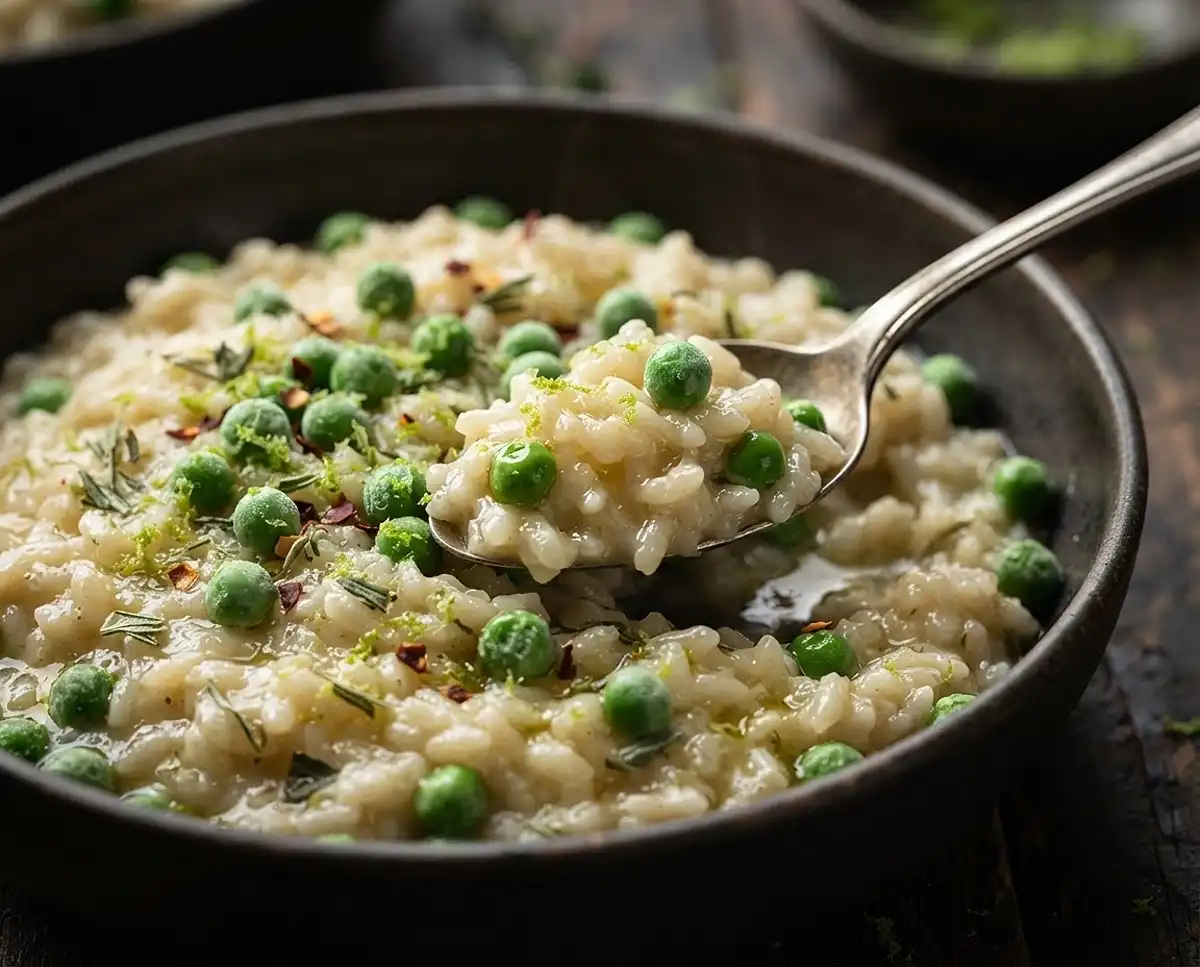
This lemongrass risotto recipe is creamy, citrusy, and way easier than you’d think—cozy comfort food with a fresh, fragrant twist that’ll make your kitchen smell incredible.
Okay, real talk: the first time I made this lemongrass risotto, I burned my thumb testing if the stock was hot enough (rookie move, I know). One spoonful of that citrusy, coconutty rice later, though, and I’d already forgiven myself—this stuff is dangerously good.
If you’ve never cooked with lemongrass before, don’t panic. It sounds fancy, but it’s basically a woodsy, lemony herb that turns plain old stock into something that tastes like a warm hug from a Thai kitchen. Pair that with the low-and-slow stirring ritual of classic risotto, and you’ve got a dinner that feels special without needing a culinary degree.
Table of Contents
Why You’ll Love This Lemongrass Risotto
Before we get into the nitty-gritty, here’s the quick rundown on why this lemongrass risotto recipe deserves a spot in your regular rotation.
- It’s creamy without a drop of heavy cream, thanks to light coconut milk doing all the heavy lifting.
- The lemongrass stock adds a bright, citrusy depth you just can’t get from bouillon alone.
- Green peas and lime zest keep things fresh instead of heavy, so it doesn’t sit like a brick in your stomach.
- It’s endlessly adaptable—swap veggies, add protein, or dial up the chili for heat.
- Every bite has that glossy, spoon-coating texture that makes risotto so satisfying in the first place.
Honestly, it’s the kind of recipe that makes people think you fussed for hours, when really you just stood at the stove stirring while listening to a podcast.
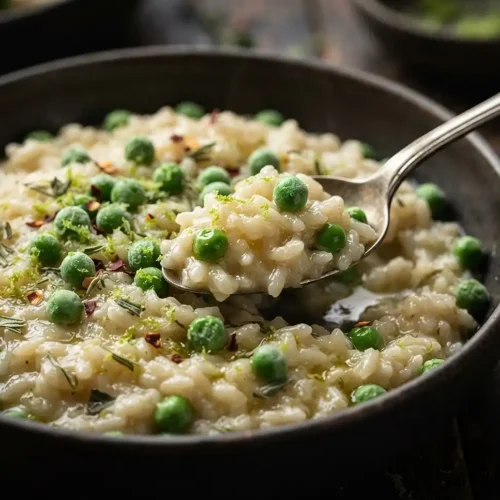
Lemongrass Risotto
Equipment
- Large stock pot with lid
- Large heavy-bottomed pot or Dutch oven
- Ladle
- Fine-mesh strainer
- wooden spoon
- Cutting board
- Sharp knife
- Citrus zester or microplane
- Small saucepan
Ingredients
For the Lemongrass Stock
- 8 stalks lemongrass roughly chopped; or 1/4 cup dried or frozen lemongrass
- 6 stalks fresh thyme leaves stripped and reserved, stalks used in the stock
- 5 cups water
- 1 ½ cubes bouillon cubes use vegetable bouillon to keep it vegetarian
For the Risotto
- 1 tablespoon olive oil
- 1 small onion finely chopped
- 3 cloves garlic minced
- 1 red chili finely chopped, optional; leave the seeds in for more heat
- 1 cup Arborio rice or Carnaroli or Vialone Nano
- ½ cup green peas or chopped asparagus, edamame, or diced zucchini
- ½ teaspoon dried rosemary
To Finish
- ¾ cup light coconut milk warmed
- 1 tablespoon lime zest
- 1 tablespoon lime juice
Instructions
- Simmer the lemongrass stock. Roughly chop the lemongrass stalks into small pieces. Strip the leaves off the thyme stalks and set the leaves aside for later. Pour the water into a large stock pot, then add the chopped lemongrass and the bare thyme stalks. If using dried or frozen lemongrass instead, add 1/4 cup and skip the fresh stalks.
- Cover the pot and bring it to a boil. Once bubbling, stir in the bouillon cubes, lower the heat, and let the stock simmer gently while you move on to the rice. Keep it at a simmer the entire time you’re cooking — cold stock shocks the rice and slows the creamy starch release.
- Build the base. In a separate large pot, heat the olive oil over medium heat. Add the finely chopped onion and red chili, if using, and sauté until the onion is soft and translucent. Stir in the minced garlic and cook another minute, just until fragrant — don’t let it brown or it will turn bitter.
- Toast the rice. Add the Arborio rice, green peas, and dried rosemary, stirring over low heat for a few minutes until the rice begins to stick slightly to the bottom of the pot. That’s your cue it’s ready for liquid.
- Ladle in the stock. Begin adding the simmering lemongrass stock, straining it as you pour so no woody bits sneak into the risotto. Add two large ladles at a time, stir, and let the rice drink it up before adding more. Repeat this ladle-stir-wait rhythm until the rice is cooked al dente — soft with a little bite left in the center. Stir often, but there’s no need to stir every single second.
- Finish with coconut milk and lime. Warm the light coconut milk in a small saucepan or the microwave and pour it into the rice, stirring constantly. Add the lime zest and the reserved thyme leaves. As soon as you see gentle bubbles forming, turn off the heat immediately so the coconut milk doesn’t scorch.
- Rest and serve. Drizzle in the lime juice and give it one last good stir. The risotto should look glossy and slightly runny at this stage — it thickens as it rests. Let it sit for 5 minutes before serving so the rice fully absorbs that last bit of liquid.
Notes
What You’ll Need
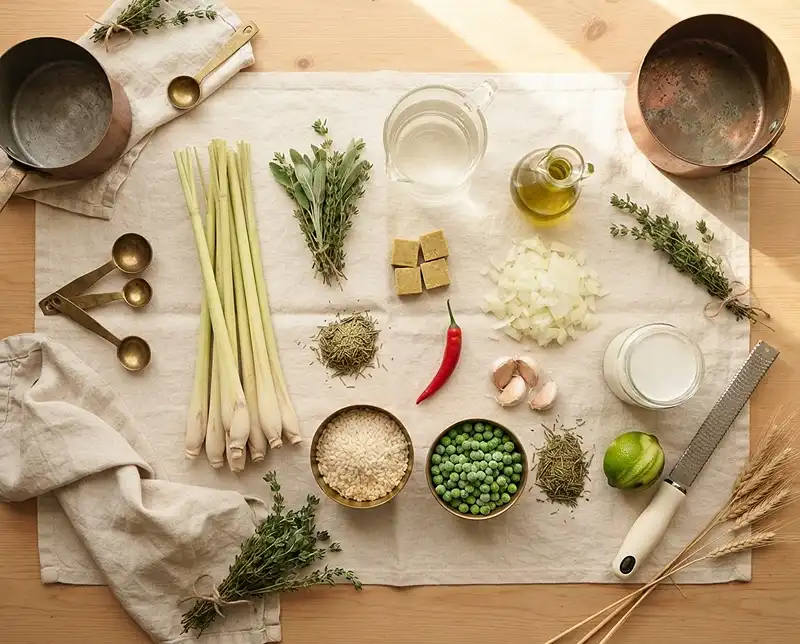
Here’s everything for this lemongrass risotto, grouped by what part of the process it belongs to. Nothing here is hard to find—most of it’s probably already hanging out in your pantry or fridge.
| For the Lemongrass Stock | Amount |
|---|---|
| Lemongrass stalks (or dried/frozen) | 8 stalks (or ¼ cup dried/frozen) |
| Fresh thyme | 6 stalks |
| Water | 5 cups |
| Bouillon cubes | 1½ cubes |
| For the Risotto | Amount |
|---|---|
| Olive oil | 1 tablespoon |
| Small onion, finely chopped | 1 |
| Garlic cloves, minced | 3 |
| Red chili, finely chopped (optional) | 1 |
| Arborio rice | 1 cup |
| Green peas | ½ cup |
| Dried rosemary | ½ teaspoon |
| To Finish | Amount |
|---|---|
| Light coconut milk | ¾ cup |
| Lime zest | 1 tablespoon |
| Lime juice | 1 tablespoon |
Quick note on the rice: Arborio is the classic choice here because of its starch content, which is exactly what gives risotto that signature creaminess. If you want to nerd out on why, Arborio rice’s short, plump grains are basically built for this job.
How to Make Lemongrass Risotto
This lemongrass risotto comes together in three easy stages: build the stock, cook the rice low and slow, then finish it off silky with coconut milk and lime. Grab a big spoon and let’s get into it.
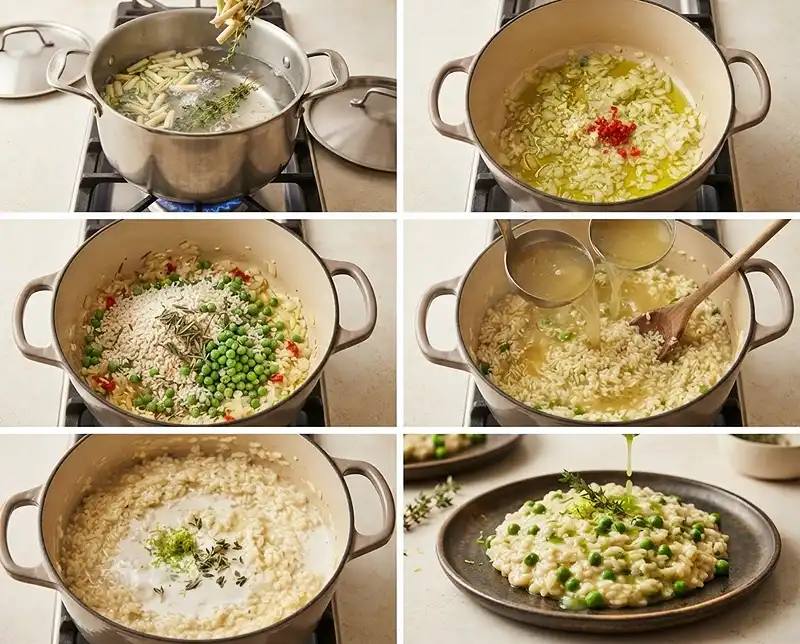
Step 1: Simmer the Lemongrass Stock
Start by roughly chopping your 8 stalks of lemongrass into small pieces. Strip the leaves off 6 stalks of thyme and set the leaves aside—you’ll want those saved for later, not tossed in now.
Pour 5 cups of water into a large stock pot, then add the chopped lemongrass and the bare thyme stalks. (Using dried or frozen lemongrass instead? Toss in ¼ cup and skip the fresh stalks.)
Cover the pot and bring everything to a boil. Once it’s bubbling, stir in the 1½ bouillon cubes, drop the heat down, and let it simmer gently while you move on to the rice. Your kitchen should already start smelling incredible around this point.
Step 2: Toast and Simmer the Rice
In a separate large pot, heat 1 tablespoon of olive oil over medium heat. Add your finely chopped onion and red chili (if you’re using it), and sauté until the onion turns soft and translucent.
Stir in the minced garlic and cook for another minute, just until fragrant—don’t let it brown or it’ll turn bitter on you. Add the Arborio rice, green peas, and dried rosemary, stirring on low heat for a few minutes until the rice starts sticking a little to the bottom of the pot. That’s your cue it’s ready for liquid.
Now the fun (and slightly meditative) part: start ladling in the simmering lemongrass stock, straining it as you pour so no woody bits sneak into your risotto. Add two large ladles at a time, stir, and let the rice drink it up before adding more.
“Keep the stock simmering the whole time—never let it go cold on you,” is basically the golden rule of risotto. Cold stock shocks the rice and slows down that creamy starch release you’re going for.
Repeat this ladle-stir-wait rhythm until the rice is cooked al dente, meaning it’s soft but still has a little bite in the center. This usually takes patience more than skill, so pour yourself a glass of wine and enjoy the process.
Step 3: Stir in Coconut Milk and Lime
Warm up the ¾ cup of light coconut milk (you can do this in a small saucepan or the microwave) and pour it into the rice, stirring constantly. This is where your lemongrass risotto turns from “nice” to “oh wow.”
Add the lime zest and those reserved thyme leaves you set aside earlier. Once you see gentle bubbles forming, turn off the heat immediately—you don’t want to scorch the coconut milk.
Finish with a drizzle of lime juice and one last good stir. The risotto should look glossy and slightly runny at this stage; it’ll thicken up as it rests. Let it sit for 5 minutes before serving so the rice can fully absorb that last bit of liquid.

Tips, Variations, and Troubleshooting
Risotto has a bit of a reputation for being finicky, but honestly, this lemongrass risotto recipe is pretty forgiving once you know a few tricks.
Pro Tips for Perfect Risotto
Always strain your stock as you add it—those lemongrass pieces are fibrous and not fun to bite into. Keep the stock at a gentle simmer the entire time you’re cooking the rice, since adding cold liquid stalls the cooking process and leads to gummy, uneven texture.
Stir often, but you don’t need to stir every single second like some recipes claim. A relaxed, regular stir is plenty to coax out that starchy creaminess.
Fun Variations to Try
Want more protein? Stir in shredded rotisserie chicken or seared shrimp right at the end with the coconut milk. Craving extra heat? Leave the seeds in your red chili, or add a second one if you’re brave.
Not a fan of peas? Swap them for chopped asparagus, edamame, or even diced zucchini for a different texture. This lemongrass risotto is basically a blank canvas once you’ve got the technique down.
Common Troubleshooting Fixes
Risotto too soupy? Just keep it on low heat a couple more minutes, stirring, until it tightens up. Rice still crunchy after all your stock is gone? Heat a bit of extra water or stock and keep adding until it’s fully tender.
If your risotto turns gluey instead of creamy, you likely added liquid too fast or let it sit too long without stirring. Next time, slow down the pace of your ladling and keep that gentle simmer going.
Storing, Reheating, and Zero-Waste Ideas
Got leftovers? Lucky you, because this lemongrass risotto reheats better than most rice dishes thanks to all that starchy creaminess.
| Storage Method | How Long It Lasts |
|---|---|
| Refrigerator (airtight container) | Up to 3 days |
| Freezer (airtight container) | Up to 1 month |
| Room temperature | Not recommended, discard after 2 hours |
To reheat, add a small splash of water or coconut milk to a pot and warm the risotto over low heat, stirring often so it doesn’t stick or dry out. The microwave works too in a pinch—just cover it loosely and stir halfway through.
For a zero-waste move, save any leftover lemongrass trimmings and thyme stems in the freezer for your next batch of stock. Leftover risotto also makes killer crispy rice cakes: just form it into patties and pan-fry until golden for a whole new meal.
Frequently Asked Questions
Can I make this lemongrass risotto ahead of time?
Risotto is best fresh, but you can prep the lemongrass stock up to 2 days ahead and store it in the fridge. This cuts your active cooking time down significantly on the day you actually make the risotto.
Can I use a different type of rice?
Arborio rice is recommended because its high starch content creates that classic creamy texture. Carnaroli or Vialone Nano rice will also work well, but avoid long-grain rice, since it won’t release enough starch.
What if I can’t find fresh lemongrass?
Dried or frozen lemongrass works great as a substitute—just use about ¼ cup in place of the fresh stalks. Some grocery stores also carry lemongrass paste, which can work in a pinch, though the flavor is slightly milder.
Is this lemongrass risotto recipe vegetarian?
It can easily be made vegetarian by using vegetable bouillon instead of a meat-based cube. Everything else in the recipe is already plant-based.
Why is my risotto too runny or too thick?
Risotto thickens as it rests, so if it looks slightly soupy right off the stove, that’s normal. If it’s too thick, simply stir in a splash of warm stock or water until it loosens back up.
Conclusion
This lemongrass risotto recipe is proof that a little patience at the stove pays off big time. It’s bright, creamy, a little tropical, and honestly just fun to make once you get into the rhythm of it.
If you’re building out a whole weeknight dinner lineup, check out our honey mustard turkey sandwich for an easy lunch the next day using any extra herbs you’ve got hanging around.
Craving something crunchier? Our air fryer fish sandwich recipe is a great contrast to this creamy risotto.
And if you’re into bold, savory flavors, don’t skip our veal parm sandwich recipe for another cozy night in.
Now go make this lemongrass risotto, snap a photo of that glossy, citrusy goodness, and pin it to your dinner-inspiration board on Pinterest so you (and your friends) can find it again. And if you try it, come back and let us know how it turned out—we genuinely love hearing about your kitchen wins.