
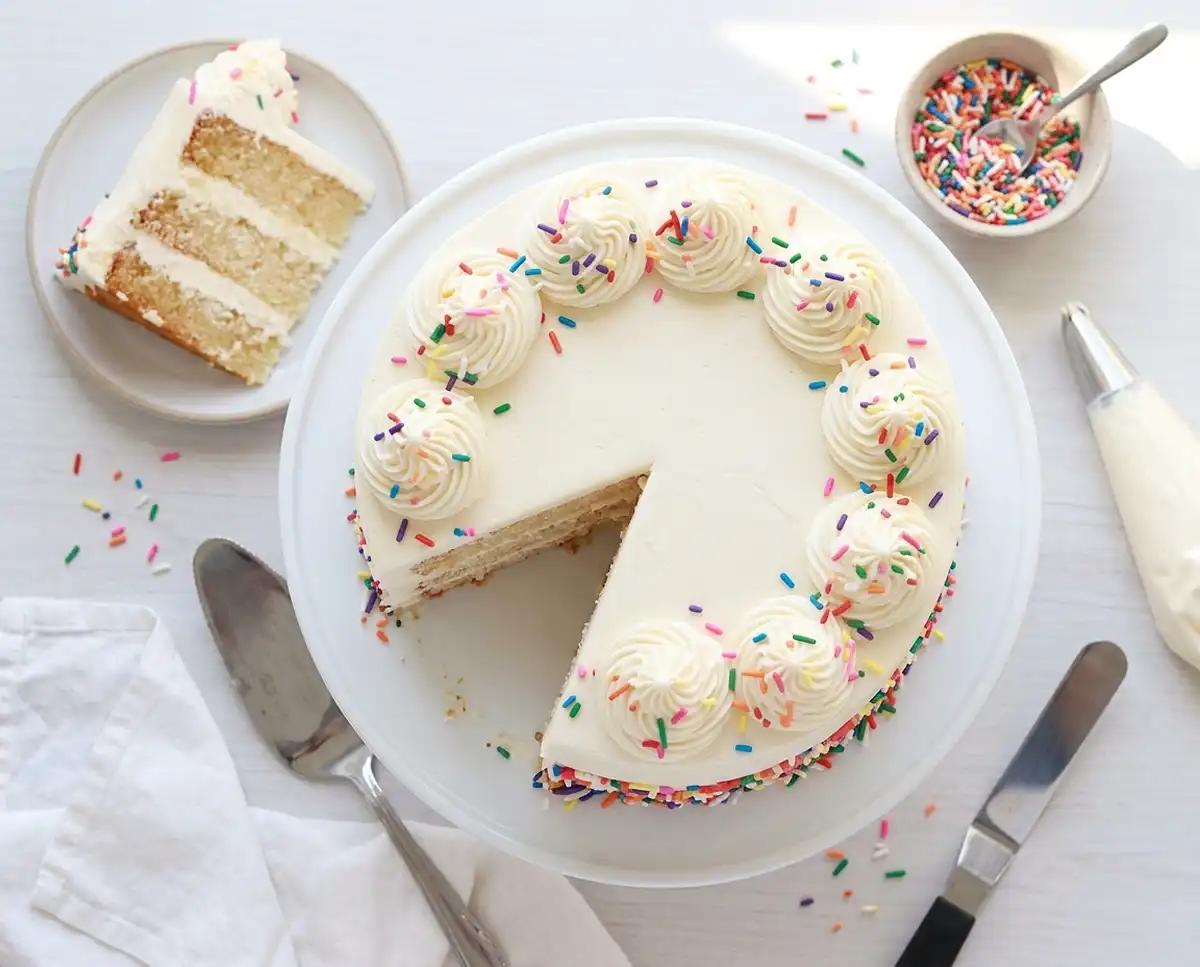
This easy eggless vanilla cake recipe makes a moist, fluffy, bakery-style cake from scratch — no eggs required and no compromises on flavor.
I first made this eggless vanilla cake for a friend who couldn’t have eggs, fully expecting it to come out dense and sad. Instead, it was the fluffiest, most vanilla-forward cake I had ever made. Now it’s my go-to for every birthday, potluck, and “I just want cake” Tuesday.
Whether you’re baking for someone with dietary needs or just ran out of eggs, this simple eggless vanilla cake recipe is proof you don’t need them at all.
Table of Contents
Why You’ll Love This Eggless Vanilla Cake
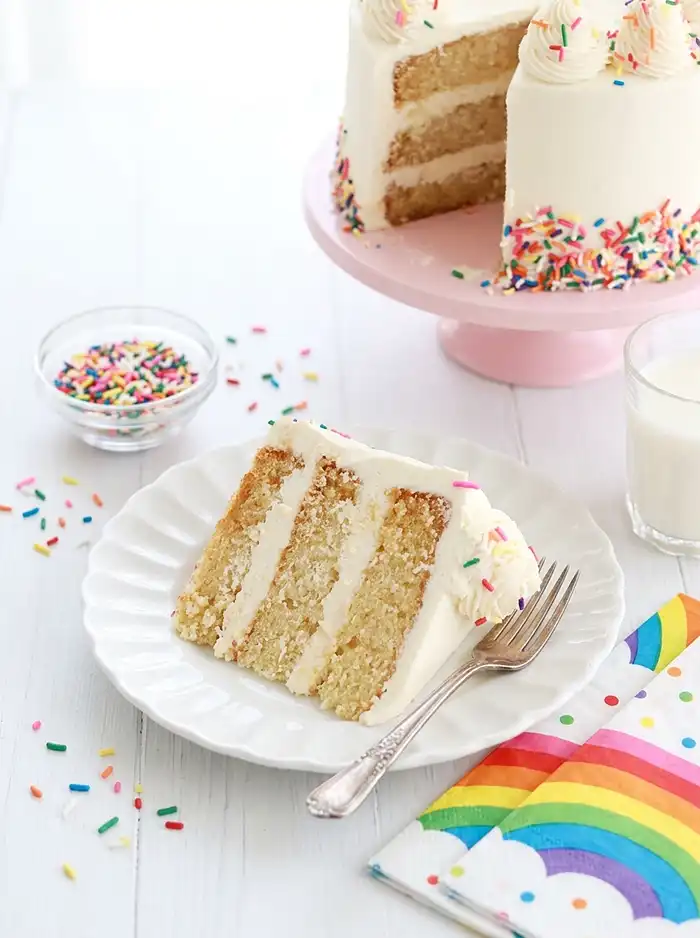
This cake is soft, tender, and beautifully moist — the kind of vanilla cake that disappears within hours of hitting the table. The crumb is light and fluffy, and the flavor is rich with real vanilla throughout.
It pairs with a dreamy vanilla buttercream that’s smooth, not too sweet, and pipes beautifully. You can dress it up with rainbow sprinkles or keep it simple and elegant.
Best of all, the method is genuinely straightforward. No complicated steps, no specialty ingredients (other than a bottle of white vinegar hiding in your pantry). If you’ve ever baked simple homemade recipes from scratch, you’ll find this totally manageable.
Easy Eggless Vanilla Cake Recipe
Equipment
- Oven
- Three 6-inch or two 8-inch cake pans
- Parchment paper
- cooking spray
- Stand mixer with paddle attachment
- Large mixing bowl
- Whisk
- Large liquid measuring cup
- spatula
- Wooden toothpick
- Serrated knife
- Cake turntable
- Cardboard cake circle
- Piping bag
- Wilton Tip 4B
Ingredients
Eggless Vanilla Cake
- 2 ½ cups Sifted cake flour 265g; use DIY cake flour if needed
- 1 ½ cups Granulated sugar 300g
- 1 ½ tsp Baking soda
- ½ tsp Salt
- 1 ½ cups Whole milk 360ml, room temperature; use soy milk for vegan version
- 1 Tbsp Pure vanilla extract
- ½ cup Vegetable oil 120ml
- 1 ½ Tbsp White distilled vinegar Do not skip; reacts with baking soda for lift
Vanilla Buttercream
- 1 ½ cups Unsalted butter 339g, room temperature; use plant-based butter for vegan version
- 5 cups Powdered sugar 600g, sifted
- 1 Tbsp Pure vanilla extract
- 3 Tbsp Whole milk Room temperature; use dairy-free milk for vegan version
- ¼ tsp Salt Or to taste
Garnish
- ½ cup Rainbow sprinkles Optional
Instructions
- Preheat the oven to 350°F (177°C).
- Prepare three 6-inch or two 8-inch light-colored cake pans by spraying the sides with cooking spray and lining the bottoms with parchment paper circles.
- In the bowl of a stand mixer fitted with the paddle attachment, combine the cake flour, granulated sugar, baking soda, and salt. Mix on low speed just to combine.
- In a large liquid measuring cup, whisk together the milk, vanilla extract, vegetable oil, and white distilled vinegar. The mixture may look slightly curdled.
- With the mixer on low speed, pour the wet ingredients into the dry ingredients in a slow, steady stream.
- Mix until just combined, then stop the mixer and scrape down the bowl and paddle.
- Gently stir by hand to catch any flour pockets at the bottom, being careful not to overmix.
- Divide the batter evenly between the prepared cake pans.
- Bake for 24 to 28 minutes, until a wooden toothpick inserted into the center comes out clean or with a few dry crumbs.
- Let the cake layers cool completely in the pans before turning them out.
- To make the buttercream, beat the room-temperature butter on medium-high speed for about 7 minutes, until creamy and almost white in color.
- With the mixer on low speed, add the sifted powdered sugar a few cups at a time, scraping down the bowl after each addition.
- Add the vanilla extract, milk, and salt, then mix on low for another minute until the frosting is smooth and slightly stiff.
- Level the cooled cake layers with a serrated knife if needed.
- Place a cardboard cake circle on a turntable, add a small swipe of buttercream, and set the first cake layer on top.
- Fill and stack the cake layers with vanilla buttercream.
- Apply a thin crumb coat over the outside of the cake and refrigerate for at least 20 minutes to firm up.
- Frost the cake with a smooth final layer of buttercream.
- If using sprinkles, press them onto the bottom third of the cake while the frosting is still slightly tacky.
- Pipe buttercream swirls on top using a piping bag fitted with a Wilton Tip 4B, then finish with more sprinkles if desired.
Notes
Ingredients You’ll Need
Here’s everything for the cake layers, buttercream, and that fun sprinkle garnish. I’ve grouped them so it’s easy to shop and prep ahead.
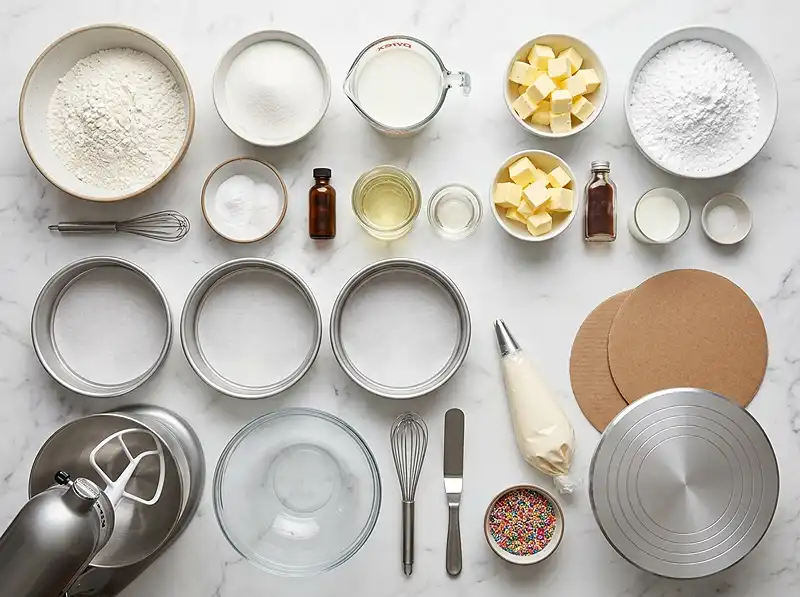
| Component | Ingredient | Amount |
|---|---|---|
| Eggless Vanilla Cake | Sifted cake flour (DIY recipe in notes) | 2 1/2 cups (265g) |
| Granulated sugar | 1 1/2 cups (300g) | |
| Baking soda | 1 1/2 tsp | |
| Salt | 1/2 tsp | |
| Whole milk, room temperature (use soy milk for vegan) | 1 1/2 cups (360ml) | |
| Pure vanilla extract | 1 Tbsp | |
| Vegetable oil | 1/2 cup (120ml) | |
| White distilled vinegar | 1 1/2 Tbsp | |
| Vanilla Buttercream | Unsalted butter, room temperature (see notes for vegan version) | 1 1/2 cups (339g) |
| Powdered sugar | 5 cups (600g) | |
| Pure vanilla extract | 1 Tbsp | |
| Whole milk, room temperature (see notes for vegan version) | 3 Tbsp | |
| Salt, or to taste | 1/4 tsp | |
| Garnish (Optional) | Rainbow sprinkles | 1/2 cup |
Quick note on the vinegar: Don’t skip it! White vinegar reacts with the baking soda to give the cake that light, airy lift that normally comes from eggs. It’s the secret weapon in every great eggless vanilla cake.
For a fully vegan version, swap whole milk for soy milk and use a plant-based butter in the frosting. The King Arthur Baking guide to vegan baking has great tips if you’re navigating this for the first time.
How to Make This Easy Eggless Vanilla Cake Recipe
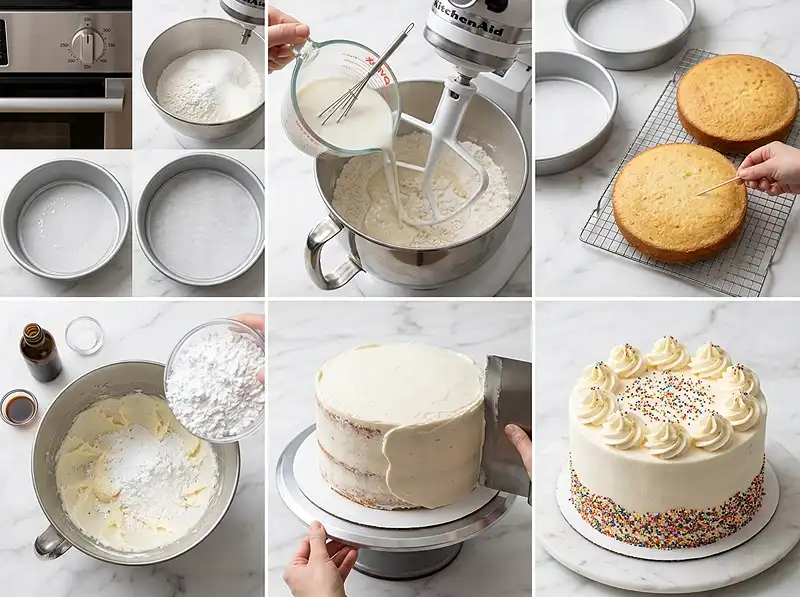
Step 1: Prep Your Pans and Oven
Preheat your oven to 350°F (177°C). Grab three 6-inch or two 8-inch light-colored cake pans and spray the sides with cooking spray.
Fit the bottoms with parchment paper circles. This makes the layers release cleanly — no sticking, no drama. Light-colored pans matter here because dark pans absorb more heat and can over-bake the edges before the center is done.
Step 2: Mix Your Dry Ingredients
In the bowl of your stand mixer fitted with the paddle attachment, combine the cake flour, granulated sugar, baking soda, and salt. Mix on low speed just to combine.
No stand mixer? No problem. A large bowl and a whisk work perfectly fine here. The dry ingredients are just getting acquainted at this stage.
Step 3: Whisk the Wet Ingredients
In a large liquid measuring cup, whisk together the whole milk, vanilla extract, vegetable oil, and white distilled vinegar. You might notice the milk looks slightly curdled — that’s exactly what’s supposed to happen.
The vinegar is doing its job, creating a simple homemade buttermilk effect. This is the foundation of what makes this vanilla cake so soft and moist without any eggs.
Step 4: Combine Wet and Dry
With the mixer on low speed, pour the wet ingredients into the dry in a slow, steady stream. Mix until just combined, then stop the mixer and scrape down the bowl and paddle.
Give it a few gentle stirs by hand to catch any flour pockets hiding at the bottom. Do not overmix — overdoing it develops the gluten and makes the cake dense rather than fluffy.
Step 5: Bake the Cake Layers
Divide the batter evenly between your prepared pans. Bake for 24 to 28 minutes, until a wooden toothpick inserted into the center comes out clean.
Your kitchen should smell incredible right about now — warm, sweet, and deeply vanilla. Let the layers cool completely in the pans before turning them out. Frosting a warm cake is a guaranteed frosting disaster.
Step 6: Make the Vanilla Buttercream
Beat the room-temperature butter on medium-high speed for about 7 minutes, until it’s creamy and almost white in color. Yes, 7 full minutes. This step is what makes the buttercream fluffy and light, not greasy.
With the mixer on low, add the sifted powdered sugar a few cups at a time. Scrape down the bowl after each addition and make sure each cup is fully incorporated before adding the next.
Add the vanilla extract, milk, and salt, and mix on low for another minute. The frosting should be smooth, silky, and just slightly stiff — perfect for piping and spreading.
Step 7: Assemble and Frost the Cake
Level your cooled cake layers with a serrated knife if needed. Place a cardboard cake circle on your turntable, add a small swipe of buttercream as glue, then set the first layer on top.
Fill and stack the layers with vanilla buttercream, then apply a thin crumb coat all over the outside. Refrigerate for at least 20 minutes to let the crumb coat firm up.
Once it’s set, frost with a smooth final layer of buttercream. For the sprinkle design, press rainbow sprinkles onto the bottom third of the cake while the frosting is still slightly tacky.
Pipe buttercream swirls on top using a piping bag fitted with a Wilton Tip 4B, then finish with more sprinkles. Step back and admire your work — you earned it.
Expert Tips, Variations, and Troubleshooting
Tips for the Best Eggless Vanilla Cake
Room temperature matters. Cold butter and cold milk don’t mix or bake the same way. Pull everything out of the fridge about an hour before baking for best results.
Sift the cake flour. Sifted flour prevents lumps and produces a finer, more delicate crumb. If you don’t have cake flour, you can make a DIY version using all-purpose flour and cornstarch — check the recipe notes for the ratio.
Don’t open the oven early. Resist the urge to check before 22 minutes. Opening the oven door too soon can cause the cake to sink in the center, and nobody wants a sad sunken cake.
Easy Variations to Try
Make it vegan: Swap whole milk for soy milk and use a plant-based butter in the frosting. The texture stays remarkably similar — this simple eggless vanilla cake recipe adapts beautifully.
Add a citrus twist: Mix 1 tablespoon of fresh lemon zest into the batter for a bright, sunny flavor. A lemon buttercream instead of vanilla would take it over the top.
Turn it into cupcakes: Pour the batter into lined muffin tins and bake at 350°F for 18 to 20 minutes. You’ll get about 24 cupcakes from this batch.
Troubleshooting Common Issues
Cake turned out dense? The most likely culprits are overmixing the batter or not measuring the flour correctly. Spoon flour into the measuring cup and level off — never scoop directly from the bag.
Frosting too runny? Add more powdered sugar, a tablespoon at a time. Too stiff? Add more milk, a teaspoon at a time. Buttercream is very forgiving once you know these tricks.
Layers stuck in the pan? Let them cool completely and run a thin spatula around the edge before flipping. Parchment paper on the bottom is your best insurance against sticking.
Storage Instructions
| Storage Method | How Long | Notes |
|---|---|---|
| Room temperature (covered) | Up to 2 days | Best for short-term storage; keep away from direct sunlight |
| Refrigerator (airtight) | Up to 5 days | Bring to room temperature before serving for best texture |
| Freezer (unfrosted layers) | Up to 3 months | Wrap each layer tightly in plastic wrap, then foil |
| Freezer (frosted slices) | Up to 2 months | Freeze slices individually on a sheet pan, then transfer to a bag |
Reheating and No-Waste Ideas
To bring refrigerated slices back to life, let them sit at room temperature for 30 to 45 minutes. A quick 10-second microwave warm-up also works beautifully.
Have leftover cake scraps from leveling the layers? Don’t throw them away. Crumble them into a bowl, mix with a spoonful of buttercream, roll into balls, and you have instant cake truffles. Roll them in sprinkles and call them a bonus dessert.
Leftover frosting keeps in the fridge for up to two weeks or in the freezer for three months. Let it come to room temperature and re-whip before using again.
Looking for more creative ways to use up pantry staples? Check out this cottage cheese tortilla wrap recipe and this cottage cheese chicken wrap recipe for satisfying meals that use simple ingredients just as cleverly.
Easy Eggless Vanilla Cake Recipe FAQs
Can I make this eggless vanilla cake ahead of time?
Yes! Bake the cake layers up to two days in advance and wrap them tightly in plastic wrap at room temperature. You can also make the buttercream ahead and refrigerate it for up to a week — just re-whip it before frosting the assembled cake.
Why does this easy eggless vanilla cake recipe use vinegar?
White distilled vinegar reacts with the baking soda to create carbon dioxide bubbles, which give the cake its light and fluffy texture. It mimics what eggs normally do in terms of leavening. You won’t taste the vinegar at all once the cake is baked.
Can I make this into a single-layer sheet cake?
Absolutely. Pour the batter into a greased and parchment-lined 9×13-inch pan and bake at 350F for 30 to 35 minutes, or until a toothpick comes out clean. Frost it directly in the pan for an easy, crowd-friendly option.
What is cake flour and can I substitute it?
Cake flour has a lower protein content than all-purpose flour, which produces a finer, more tender crumb. If you don’t have it, you can DIY it: for every 1 cup of all-purpose flour, remove 2 tablespoons and replace with 2 tablespoons of cornstarch. Sift well before using.
How do I know when my vanilla cake layers are done?
Insert a wooden toothpick into the center of the cake. If it comes out clean or with just a few dry crumbs, the cake is done. If there is wet batter on the toothpick, give it another 2 to 3 minutes and check again. Overbaking dries out the crumb, so check early.
Conclusion
This easy eggless vanilla cake recipe is the one to bookmark, print, and share. It’s soft, fluffy, and full of real vanilla flavor — and nobody will believe it was made without eggs.
If you give it a try, I’d love to hear how it went! Leave a comment below with your results, your variations, or any questions. And if you make it, please share it on Pinterest — it helps more people discover this recipe and makes my day every single time.
Happy baking, and enjoy every last crumb of that beautiful eggless vanilla cake.