
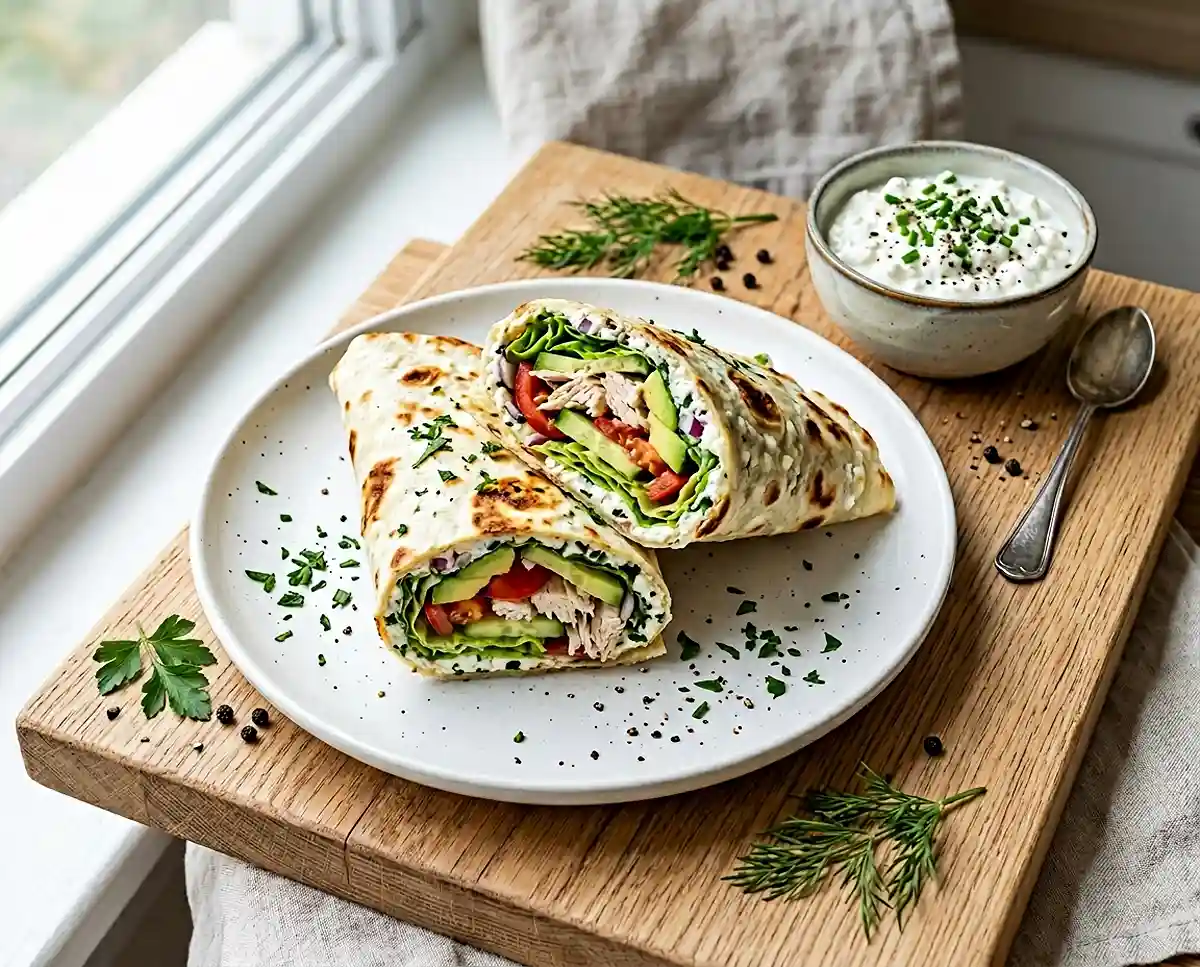
This easy cottage cheese bread wrap recipe is a high-protein, low-carb flatbread made with just two ingredients — perfect for wraps, sandwiches, or even pizza crust.
I stumbled onto this recipe during a late-night fridge raid, and honestly? It changed my lunch game forever. Two ingredients, one blender, and zero guilt — what’s not to love?
Table of Contents
Why You’ll Love This Cottage Cheese Bread Wrap
This cottage cheese wrap bread recipe is one of those rare finds that feels too good to be true. It’s soft, flexible, and holds up to all your favorite fillings without falling apart.
It’s naturally gluten-free, packs around 20 grams of protein per serving, and takes less than 45 minutes start to finish. Whether you’re eating low-carb or just want a smarter wrap option, this one delivers.
Think of it as your go-to base for cottage cheese tortilla-style wraps — but baked, not cooked on a skillet.
Quick Overview
This flatbread is light, slightly chewy, and subtly savory. It bakes into a sturdy sheet that you can roll, fold, or slice into pieces.
No yeast. No flour. No fuss. Just blend, pour, and bake. It’s one of the simplest cottage cheese bread recipes you’ll ever try — and one of the most satisfying.
Cottage Cheese Bread Wrap Recipe
Equipment
- Oven
- 10×15-inch baking sheet
- Parchment paper
- Cooking oil spray
- Blender
- spatula
- Thin spatula
- Dry skillet, optional
Ingredients
Base
- 1 cup Cottage cheese Low-fat or full-fat works best; avoid fat-free for best texture
- 2 large Eggs Adds moisture and helps bind the flatbread
Optional Seasonings
- ½ teaspoon Salt Adjust to taste
- 1/2-1 teaspoon Oregano or Italian seasoning Adds a savory herby flavor
- 1 teaspoon Garlic powder Great for savory wraps
- 1 teaspoon Onion powder Rounds out the flavor
Instructions
- Preheat the oven to 350°F (175°C).
- Line a 10×15-inch baking sheet with parchment paper and lightly spray the parchment with cooking oil.
- Add the cottage cheese, eggs, and any optional seasonings to a blender.
- Blend on high for 1 to 2 minutes, until the batter is completely smooth with no cottage cheese lumps.
- Taste the batter and adjust the seasoning if needed.
- Pour the blended mixture onto the prepared baking sheet.
- Use a spatula to spread the batter into an even rectangle or oval about 1/4 inch thick, keeping the thickness as consistent as possible.
- Bake for 35 to 40 minutes, until the flatbread looks set and dry on top with slightly golden edges.
- Remove from the oven and let the flatbread cool completely in the pan for at least 15 to 20 minutes.
- Gently slide a thin spatula under the cooled flatbread and slowly peel it away from the parchment.
- Cut the flatbread in half for two smaller wraps, if desired.
- Fill with your favorite veggies, proteins, spreads, or cheeses, then roll or fold like a tortilla.
- For a pizza crust variation, bake the flatbread for 30 minutes, add toppings, then bake at 400°F (204°C) for 10 to 15 minutes, until the cheese is bubbly and golden.
Notes
Ingredients
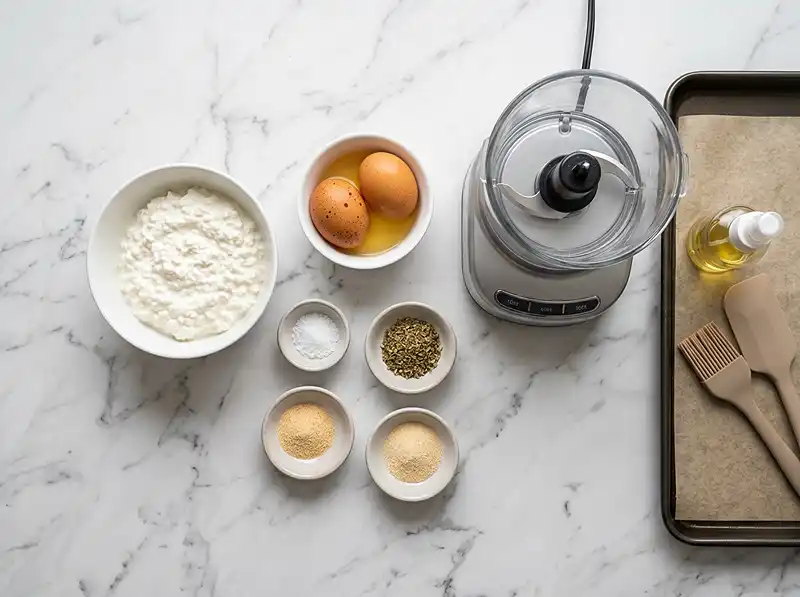
You only need two main ingredients for this cottage cheese bread wrap recipe. The optional seasonings are where you can get creative and make it your own.
| Category | Ingredient | Notes |
|---|---|---|
| Base | 1 cup cottage cheese | Low-fat or full-fat works best; avoid fat-free |
| Base | 2 large eggs | Adds moisture and binds the flatbread |
| Optional Seasoning | 1/2 tsp salt | Adjust to taste |
| Optional Seasoning | 1/2 – 1 tsp oregano or Italian seasoning | Adds a nice herby note |
| Optional Seasoning | 1 tsp garlic powder | Great for savory wraps |
| Optional Seasoning | 1 tsp onion powder | Rounds out the flavor |
The type of cottage cheese you choose does matter. Full-fat cottage cheese gives you a richer, more flexible flatbread, while low-fat keeps the calories down without sacrificing too much texture.
Fat-free versions tend to make the wrap a bit brittle and dry, so it’s best to skip those. According to the nutritional breakdown of cottage cheese, full-fat varieties also provide more satisfying healthy fats.
How to Make the Cottage Cheese Bread Wrap Recipe
The process is refreshingly simple. Here’s everything broken down step by step so your first attempt comes out perfect.
Step 1 – Preheat and Prep Your Pan
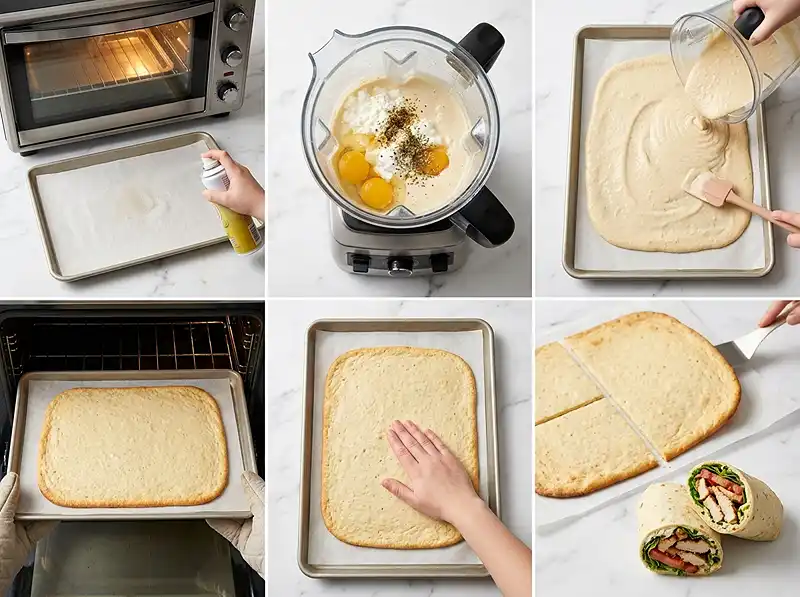
Preheat your oven to 350 degrees F (175 degrees C). Line a baking sheet with parchment paper and give it a light spray of cooking oil.
Don’t skip the oil on the parchment — even though it has a non-stick coating, the egg mixture can cling stubbornly. A 10×15-inch pan is ideal for getting a thin, flexible wrap.
Step 2 – Blend Until Smooth
Add your cottage cheese, eggs, and any seasonings to a blender. Blend on high for 1 to 2 minutes until the mixture is completely smooth with no lumps.
This step is non-negotiable. If you leave chunks of cottage cheese, the flatbread will have an uneven texture and may not bake evenly. A smooth, creamy batter is your goal here.
Pro tip: taste the batter before pouring. This is your best chance to adjust the seasoning before it hits the oven.
Step 3 – Pour and Spread
Pour the blended mixture onto your prepared baking sheet. Use a spatula to spread it into an even rectangle or oval shape, about 1/4 inch thick.
Try to keep the thickness consistent across the whole sheet. Thin edges will cook faster and may get too crispy before the center is done.
Step 4 – Bake to Golden Perfection
Slide the pan into your preheated oven and bake for 35 to 40 minutes. You’re looking for a flatbread that looks set and dry on top, with slightly golden edges.
It won’t look dramatically browned in the middle — that’s fine. The key visual cue is that the surface should look matte and firm, not shiny or wet.
Step 5 – Cool Completely (This Part Matters!)
Once it’s out of the oven, let the flatbread cool completely in the pan before touching it. I know, the smell is incredible and patience is hard.
But cooling is essential. This is when the structure fully sets and firms up. If you try to peel it off the parchment while it’s warm, it may tear.
Step 6 – Peel, Fill, and Roll
Gently slide a thin spatula under the flatbread and slowly peel it away from the parchment. Cut it in half if you’d like two smaller wraps.
Now comes the fun part — load it up! Add your favorite veggies, proteins, spreads, or cheeses, then roll it up like a tortilla. It’s surprisingly sturdy and flexible once cooled.
Need filling ideas? This flatbread pairs beautifully with the flavors in a German potato salad with egg tucked inside.

Expert Tips for the Best Results
Pan Size Matters
A 10×15-inch baking sheet is the sweet spot for flexible wraps. If you use a smaller pan, the batter will be thicker and may need 5 to 10 extra minutes in the oven.
A thicker flatbread works great as bread slices rather than a wrap. Think of it as a two-in-one recipe depending on what pan you reach for.
Don’t Rush the Cooling
Seriously, don’t skip the cooling step. The flatbread needs time to firm up after baking. Give it at least 15 to 20 minutes at room temperature before peeling.
Season to Your Filling
If you’re making a Mediterranean wrap, lean into oregano and garlic powder. For a milder wrap meant for sweeter fillings, skip the seasonings entirely.
This cottage cheese bread wrap is a blank canvas — season it to match whatever you’re putting inside. That versatility is a huge part of what makes these cottage cheese bread recipes so popular.
Creative Variations to Try
Pizza Crust Version
Want a quick low-carb pizza? Bake the flatbread for just 30 minutes, then pull it out and add your toppings — sauce, cheese, veggies, whatever you love.
Pop it back in at 400 degrees F (204 degrees C) for another 10 to 15 minutes until the cheese is bubbly and golden. The crust holds up surprisingly well under the toppings.
Sweet Wrap Variation
Leave out the savory seasonings and spread the finished wrap with almond butter, a drizzle of honey, and sliced bananas. It’s a great high-protein breakfast option.
For a protein-packed dessert wrap idea, try pairing it with the flavors from this angel food cake with lemon pie filling as a light, creamy filling.
Meal Prep Batch
Double the recipe and bake two sheets at once. Stack the cooled flatbreads with parchment paper between them and store in the fridge. You’ll have wraps ready to go all week.
If you’re tracking nutrition, this recipe fits nicely into a Weight Watchers lifestyle. Check out this Weight Watchers banana nut bread for another smart baking option.
Troubleshooting Common Issues
My Wrap Is Too Brittle
If your flatbread cracks when you try to roll it, it likely overbaked or cooled too long in a dry kitchen. Try pulling it from the oven at 35 minutes next time and rolling while still slightly warm.
The Center Is Still Wet
This usually means the batter was spread too thick, or the oven runs cool. Give it 5 more minutes and check again. The surface should look completely matte with no shine.
It Sticks to the Parchment
Make sure you oil the parchment before pouring the batter. If it still sticks, try a silicone baking mat instead — it releases cleanly every time.
Storage Guide
| Storage Method | Duration | Best Practice |
|---|---|---|
| Refrigerator | 2 to 3 days | Wrap tightly or store in an airtight container |
| Freezer | Up to 1 month | Wrap individually and separate with parchment |
Always store without fillings — once filled and rolled, the wrap gets soggy quickly. Keep the flatbread plain and fill it fresh when you’re ready to eat.
Reheating Tips
To reheat from the fridge, pop it in a dry skillet over medium heat for 30 to 60 seconds per side. This brings back a little flexibility and warms it through without drying it out.
From frozen, let it thaw in the fridge overnight or warm it directly in the oven at 300 degrees F for about 8 minutes. Avoid the microwave — it can make the texture rubbery.
No-Waste Kitchen Ideas
If a flatbread breaks or dries out, don’t toss it. Crumble it over a salad as a protein-rich crouton substitute, or crush it into breadcrumbs for coating chicken or fish.
Frequently Asked Questions
Can I use fat-free cottage cheese in this recipe?
It’s not recommended. Fat-free cottage cheese tends to produce a drier, more brittle flatbread that cracks when you try to roll it. Low-fat or full-fat varieties give you a much better texture and a more flexible wrap.
Can I make this cottage cheese bread wrap recipe without a blender?
A blender gives the smoothest result, but a food processor works well too. You can also use an immersion blender in a tall cup. The key is getting the batter completely lump-free before baking.
How do I know when the flatbread is fully baked?
The surface should look completely matte, dry, and slightly golden around the edges. It should not look shiny or feel wet when you gently press the center. If in doubt, give it 3 to 5 more minutes.
Can I freeze this cottage cheese wrap bread?
Yes, it freezes really well. Cool the flatbread completely, wrap each piece individually, and freeze for up to one month. Thaw overnight in the fridge or reheat directly in the oven at 300 degrees F for about 8 minutes.
What are the best fillings for this wrap?
The options are almost endless. Try grilled chicken, avocado, and salsa for a savory lunch. Or go for almond butter and banana for a sweet breakfast wrap. It pairs well with hearty sides like a classic potato salad too.
Final Thoughts
This cottage cheese bread wrap recipe is proof that simple ingredients can do seriously impressive things. Two ingredients, one blender, and about 40 minutes is all it takes.
Whether you use it as a sandwich wrap, a pizza crust, or a sweet breakfast roll, it’s endlessly versatile and genuinely delicious. It’s become a weekly staple in my kitchen — and I have a feeling it will in yours too.
Give it a try and let me know how it goes in the comments below. And if you love it, save it to Pinterest so other people can discover it too — the more people eating high-protein flatbread, the better!
