
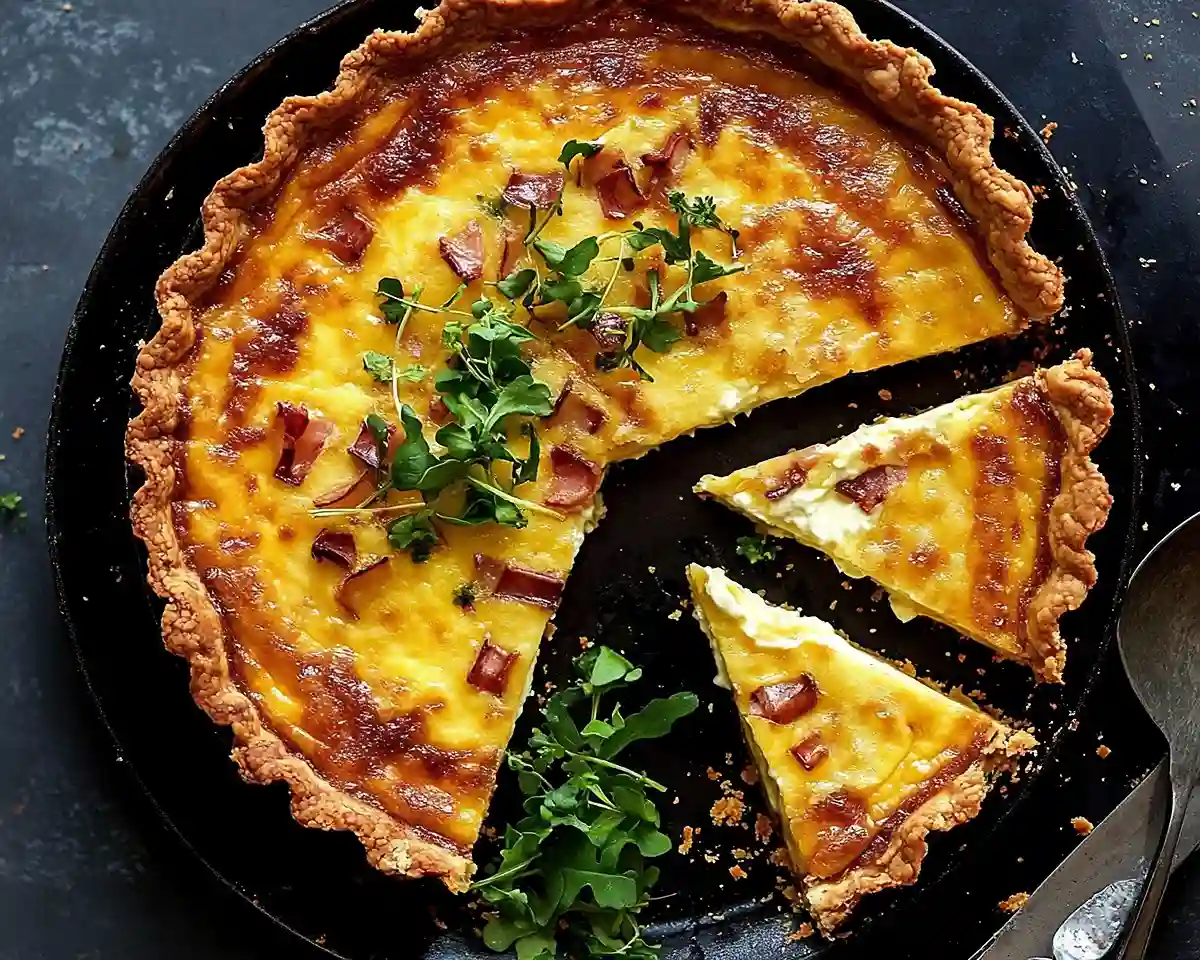
Discover this timeless quiche lorraine recipe — a buttery, golden crust filled with smoky bacon, silky egg custard, and melted Gruyere. Simple to make, impossible to resist.
There’s something magical about pulling a quiche lorraine out of the oven. The smell of sizzling bacon mingling with golden pastry and melted cheese? Honestly, it should be illegal. This recipe has saved me from countless “what do I make for brunch?” panic spirals.
This classic quiche is the kind of brunch staple people wish they had mastered sooner, and if you skip it now, you’ll miss more easy breakfast and brunch ideas.
Table of Contents
Why This Quiche Lorraine Recipe Is a Total Winner
This isn’t just any quiche — it’s the kind that makes people go quiet at the table. The custard is rich but not heavy, the bacon adds a smoky punch, and the Gruyere melts into everything beautifully.
It works as a lazy Sunday brunch, a light dinner, or even a “I need to impress someone” situation. Pair it with a simple green salad and you’ve got a meal that feels seriously fancy without much effort.
And the best part? You can use a homemade crust, frozen shortcrust pastry sheets, or a prepared pie shell — whatever your Saturday morning energy allows. No judgment here.

The Most Irresistible Quiche Lorraine Recipe You’ll Ever Make
Equipment
- Quiche tin
- Oven
- Skillet
- Mixing bowl
- Whisk
- Baking tray
Ingredients
Quiche Crust
- 1 crust Homemade shortcrust pastry 23cm / 9 inch
- 2 sheets Frozen shortcrust pastry sheets thawed
- 1 shell Prepared pie shell
Bacon Filling
- 1 tbsp (15g) Butter
- 1 Garlic clove minced
- ½ Onion finely chopped (~1/2 cup)
- 200 g Bacon cut into small strips
Egg Mixture
- 4 large Eggs
- 300 ml Heavy cream 1 1/4 cups
- Pinch Salt and pepper to taste
Cheese
- 125 g Gruyere cheese or cheddar/monterey jack
Garnish (optional)
- 50 g Extra bacon cooked until golden
Instructions
- Prepare and blind bake your chosen crust until lightly golden and dry, then set aside.
- Cook bacon with butter, onion, and garlic in a skillet until golden and softened, then cool.
- Whisk eggs, cream, salt, and pepper until smooth to form the custard mixture.
- Assemble quiche by layering bacon filling and cheese into the crust, then pour over the egg custard.
- Bake at 200°C/390°F for 35–40 minutes until golden with a slight center wobble. Rest before slicing.
Notes
Ingredients for Classic Quiche Lorraine

| Group | Ingredient | Quantity |
|---|---|---|
| Quiche Crust (choose one) | Homemade shortcrust pastry | 1 crust (23cm / 9″) |
| Frozen shortcrust pastry sheets, thawed | 2 sheets | |
| Prepared pie shell (fridge or frozen) | 1 shell | |
| Bacon Filling | Butter | 1 tbsp / 15g |
| Garlic clove, minced | 1 | |
| Onion, finely chopped | 1/2 (~1/2 cup) | |
| Bacon, cut into small strips | 200g / 6.5 oz | |
| Egg Mixture | Eggs (55–65g / 2 oz each) | 4 large |
| Heavy cream (thickened cream) | 1 1/4 cups / 300ml | |
| Salt and pepper | Pinch of each | |
| Cheese | Grated Gruyere (or cheddar, tasty, monterey jack) | 1 1/4 cups / 125g |
| Garnish (optional) | Extra bacon, chopped and cooked until golden | 50g / 2 oz |
Note on cream: Full-fat heavy cream gives the custard that luxurious, silky texture. Lower-fat alternatives can make the filling a bit watery. Trust the cream on this one — it’s worth it.
How to Make Quiche Lorraine Step by Step
Don’t be intimidated. Once you’ve done it once, this quiche lorraine recipe becomes total autopilot. Let’s walk through it together.
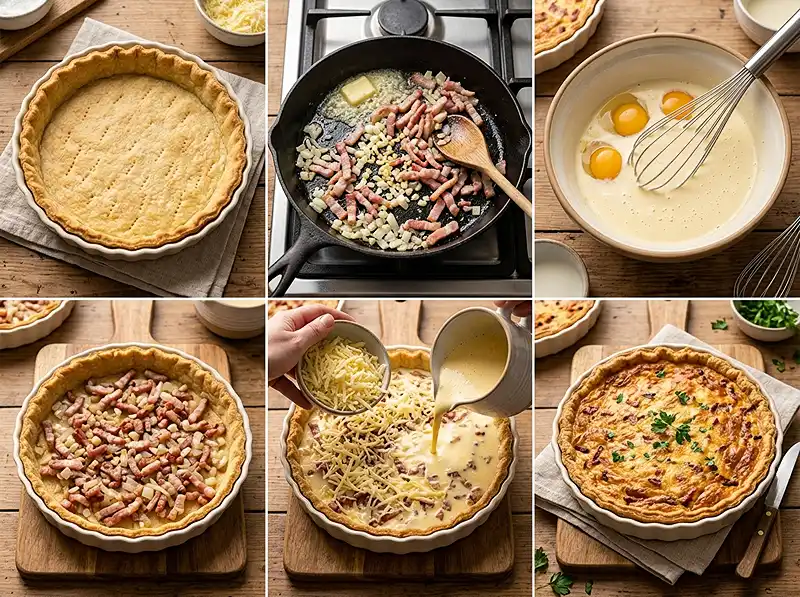
Step 1 — Prepare and Blind Bake the Crust
If you’re using homemade shortcrust pastry, prepare and blind bake it according to your favorite brunch-worthy base recipe. For frozen sheets, thaw and press into a 23cm / 9″ quiche tin, then bake per packet instructions.
A properly pre-baked crust is key. Skipping this step = soggy bottom. Nobody wants a soggy bottom. Blind bake until it’s lightly golden and dry to the touch before adding your filling.
Step 2 — Cook the Bacon Filling
Preheat your oven to 200C/390F (standard) or 180C/350F if you’re using a fan/convection oven. Get that oven hot and ready.
Melt butter in a skillet over medium-high heat. Add the onion, garlic, and bacon and cook until the bacon is lightly golden and the onion has softened. Your kitchen is going to smell absolutely incredible at this point.
Transfer the cooked bacon mixture to a paper towel-lined bowl. Let it cool completely before adding it to the crust — hot filling + eggs = scrambled eggs in a pastry shell. We don’t want that.
Step 3 — Whisk the Egg Custard
In a bowl, crack in all 4 eggs, pour in the heavy cream, and add a pinch of salt and pepper. Whisk it all together until smooth and well combined. That’s it — the egg mixture is gloriously simple.
“The custard should look silky and pale yellow. If it looks curdled before baking, give it another good whisk — it just needs some encouragement.”
Step 4 — Assemble the Quiche
Place your quiche tin (with the baked crust) on a baking tray — this makes it easier to move in and out of the oven without disaster. Scatter the cooled bacon filling evenly over the base.
Sprinkle the grated Gruyere cheese evenly on top. Then carefully pour the egg custard mixture over everything. Use a spoon or fork to gently push some of the cheese and bacon below the surface so it bakes into the custard.
Gruyere is the classic choice for a traditional quiche lorraine, but cheddar or monterey jack work beautifully too. According to Serious Eats’ guide to Gruyere cheese, its nutty, slightly sweet flavor makes it a perfect melting cheese for egg-based dishes.
Step 5 — Bake to Golden Perfection
Slide the tray into the oven and bake for 35–40 minutes. You’re looking for a beautifully golden top — but here’s the key: the center should still have a gentle jiggle when you shake the tray.
That wobble means the custard will finish setting as it cools. If it’s completely firm in the oven, it’ll be rubbery on the plate. Jiggle = good. Trust the jiggle.
If you’re using extra bacon as a garnish, scatter it over the top straight out of the oven while everything is still hot. Then — and this is important — rest the quiche for 10 minutes before cutting. Let it breathe. It’ll slice so much cleaner.

Expert Tips for the Best Quiche Lorraine
Getting the Custard Just Right
The ratio of eggs to cream is everything. Too many eggs and it goes rubbery. Too much cream and it won’t set. Stick to the recipe’s 4 eggs + 1 1/4 cups cream ratio for a perfectly tender, custardy result.
Always let the bacon filling cool before assembling. Warm filling can start to cook the eggs unevenly before the quiche even hits the oven — and nobody wants mystery scrambled eggs in their quiche lorraine.
Crust Tips That Make a Difference
Blind baking is non-negotiable. Use baking weights or dried beans to keep the crust from puffing up. The bottom should feel dry, not doughy, before you add the filling.
If you notice the crust edges browning too quickly during the main bake, tent them loosely with foil. No need to sacrifice a beautiful crust for a fully baked custard — you can have both.
Cheese Swaps and Flavor Variations
No Gruyere? No problem. Tasty cheese, sharp cheddar, or monterey jack all work well. Each brings its own personality — cheddar gives a sharpness, monterey jack keeps it mild and creamy.
Want to add a little freshness? Scatter some fresh thyme or chives into the egg mixture. They play really nicely with the smoky bacon. You could also add a handful of caramelized onions for extra depth — a little like a French onion quiche lorraine mashup.
Troubleshooting Common Issues
Custard didn’t set? Your oven might run cool. Pop it back in for another 5–8 minutes and check again. The jiggle test is your best friend — if it’s liquid in the center, it needs more time.
Soggy crust? Most likely the crust wasn’t fully blind-baked before filling. Next time, give it a few extra minutes until it looks genuinely dry and slightly golden. A light egg wash on the base after blind baking also helps seal it.
Filling sank or look uneven? That’s just quiche being quiche. Give everything a gentle push under the surface before baking and try not to overfill. A little rustic is part of the charm.
Storage and Reheating Guide
| Storage Method | How to Store | How Long |
|---|---|---|
| Refrigerator | Cover tightly with plastic wrap or store in an airtight container | Up to 3 days |
| Freezer (whole) | Wrap tightly in plastic wrap and foil, then freeze | Up to 2 months |
| Freezer (slices) | Individually wrap each slice, place in a zip-lock bag | Up to 2 months |
To reheat: For best results, warm slices in a 160C/320F oven for about 15 minutes. Microwaving works in a pinch but can make the custard a little rubbery. The oven keeps the crust crispy and the filling silky.
No-waste kitchen idea: Got leftover quiche scraps or a crumbled slice? Roughly chop and toss into a warm skillet with leftover veggies for a quick hash-style breakfast scramble. It’s not pretty, but it’s delicious — promise.
What to Serve with Quiche Lorraine
A simple green salad with a light vinaigrette is the classic companion. The fresh, acidic contrast cuts right through the richness of the quiche lorraine custard. Perfection.
If you’re going full brunch spread, this pairs beautifully alongside smoked salmon eggs benedict for a luxurious spread that’ll have everyone impressed. Need something sweet to finish? These lemon crinkle cookies are the perfect light dessert to round out the meal.
For a lighter morning that starts before the quiche, try these peanut butter and jelly overnight oats — they’re a great make-ahead option that frees you up to focus on your quiche game.
Quiche Lorraine Recipe FAQs
Can I make quiche lorraine the night before?
Absolutely, and it’s actually one of the best make-ahead recipes out there. Bake it fully, let it cool, then refrigerate overnight. Reheat gently in the oven before serving. The flavors actually deepen overnight, so next-day quiche lorraine is arguably even better than fresh.
Can I use milk instead of heavy cream?
You can use whole milk, but the custard won’t be as rich or silky. A mix of half milk and half cream is a decent middle ground if you want to lighten it up slightly. Avoid low-fat milk — it tends to make the custard watery and less satisfying.
How do I know when quiche lorraine is done?
The top should be golden and the edges fully set, but the center should still have a gentle wobble when you shake the tray. It’ll finish setting as it cools during the 10-minute rest. According to The Kitchn’s guide to baking quiche, an internal temperature of around 70C/160F is the sweet spot for a perfectly set custard.
Can quiche lorraine be frozen?
Yes! Let it cool completely, then wrap it tightly in plastic wrap and foil before freezing for up to 2 months. Thaw overnight in the fridge and reheat in the oven at 160C/320F until warmed through. The crust may soften slightly after freezing, but the flavor stays great.
What’s the difference between quiche lorraine and regular quiche?
Traditional quiche lorraine is specifically made with bacon (or lardons), eggs, and cream — and classically, no cheese, though most modern versions include Gruyere. A “regular” quiche is more of a catch-all term for any savory egg custard tart with various fillings. Quiche lorraine is the original, and honestly, the best starting point for anyone learning the dish.
Time to Bake Your New Favorite Quiche Lorraine
There you have it — everything you need to make a show-stopping quiche lorraine that’s buttery, custardy, bacony, and completely irresistible. It looks impressive, tastes incredible, and honestly isn’t that hard once you know the steps.
Give it a try this weekend and see for yourself. If you loved this recipe, save it to your Pinterest boards so you can find it again easily — and share it with a friend who deserves a really good brunch. Drop your thoughts in the comments below; I’d love to hear how yours turned out!
And if you’re on a roll with crowd-pleasing recipes, check out this crispy Japanese chicken karaage for your next dinner adventure.
