
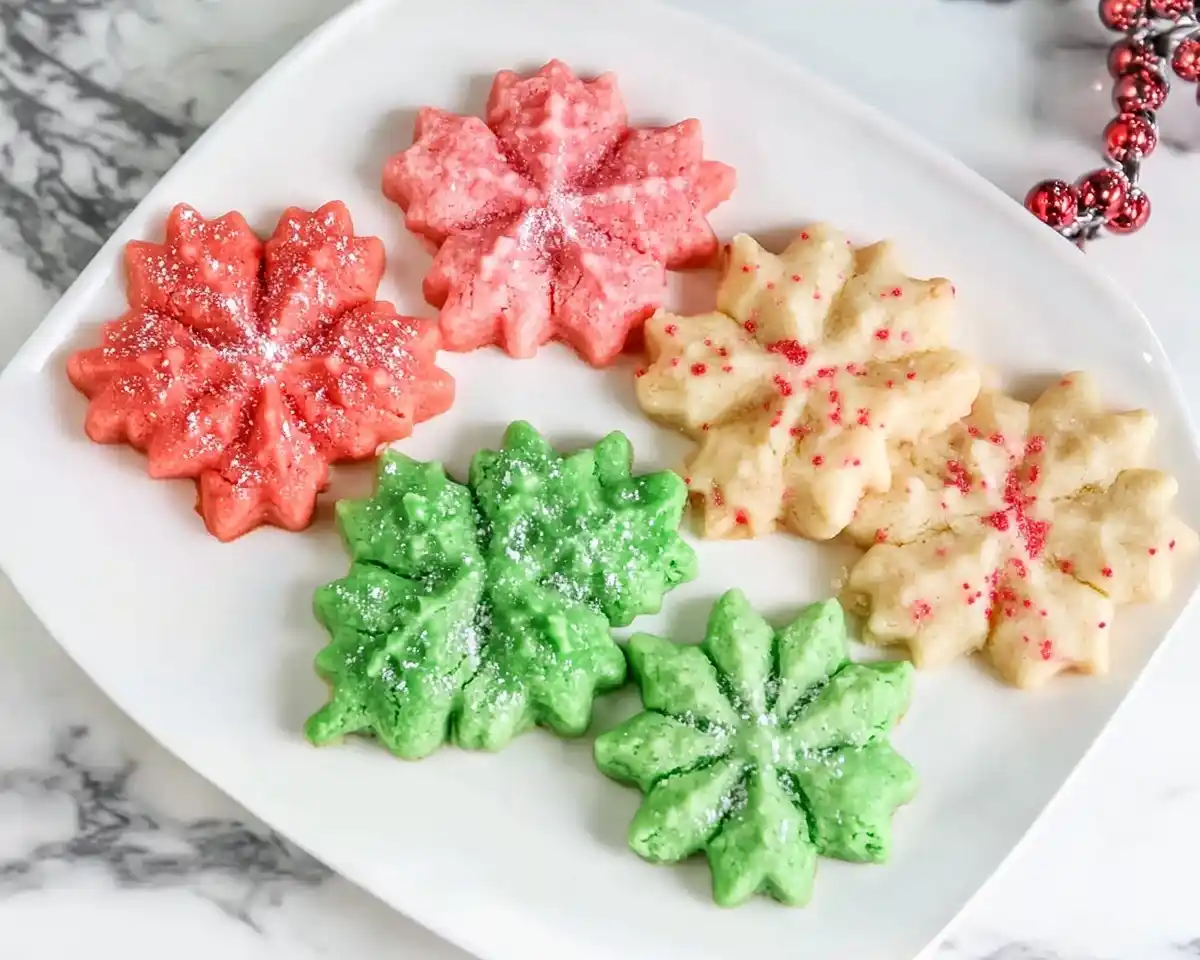
Traditional German Butter Cookies recipe with buttery texture. Learn easy spritz cookies secrets with step-by-step guide for perfect holiday baking.
Last December, my neighbor knocked on my door with a tin of the most beautiful cookies I’d ever seen. Little stars, trees, and wreaths—all golden and perfectly shaped. One bite, and I was hooked.
They weren’t just cookies. They were buttery, melt-in-your-mouth magic from her grandmother’s German kitchen. I begged for the recipe right there on my doorstep.
Fast forward three batches (and one epic dough disaster), and I’ve finally cracked the code. These traditional German butter cookies are now my holiday MVP. The dough comes together in minutes, shapes like a dream, and tastes like Christmas morning.
Tasty at Home – Where bold flavors meet everyday kitchens.
Table of Contents
What Makes This Buttery German Spritz Recipe Special

Traditional German butter cookies, or Spritzgebäck, have been a European holiday staple for generations. This recipe uses both butter and margarine—a secret combination that creates incredible texture. The butter brings rich flavor while the margarine keeps the dough soft enough to press through a cookie gun.
I tested this recipe eight times to nail the perfect balance. Too much butter, and the dough won’t hold its shape. Too little, and you lose that signature melt-in-your-mouth quality.
Here’s what sets this version apart: chilled pans. It sounds simple, but pressing dough onto a cold baking sheet makes these cookies stick perfectly. No sliding, no warping, no frustration.
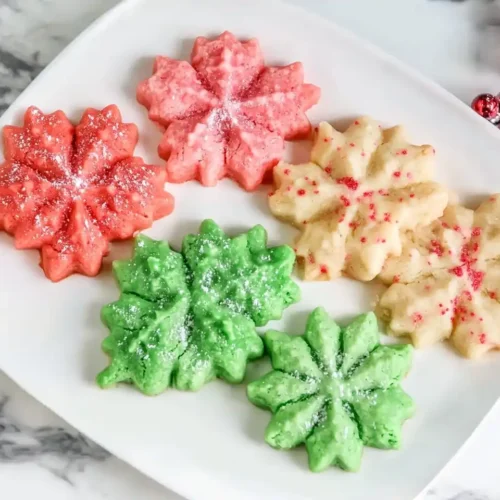
Traditional German Butter Cookies
Equipment
- electric stand mixer
- hand mixer
- wooden spoon
- Baking sheets
- Cookie press
Ingredients
Cookie Dough
- 1 stick Unsalted butter, softened
- 1 stick Margarine, softened
- ¾ cup Sugar
- 2 large Eggs
- 1 tsp Vanilla extract
- 1 pinch Salt
- 3 ½ cups All-purpose flour
- 1 heaping tsp Baking powder
- Optional Gel food coloring
Instructions
- Cream the softened butter and margarine on medium-high speed for 3-4 minutes until fluffy.
- Add sugar gradually, alternating with eggs. Beat well after each addition and add vanilla extract.
- Mix flour, salt, and baking powder in a separate bowl.
- Fold the flour mixture into the butter mixture gently until no dry streaks remain.
- Chill dough for 15 minutes. Chill baking sheets in the fridge.
- Load dough into the cookie press according to manufacturer’s instructions.
- Press cookies onto ungreased baking sheets, spacing 1 inch apart. Decorate as desired.
- Bake at 350°F for 10-15 minutes until edges are just golden. Cool on pan for 2 minutes, then transfer to wire rack.
Notes
Ingredients Table

| Ingredient | US Measurement | Metric |
|---|---|---|
| Unsalted butter, softened | 1 stick (8 tbsp) | 113g |
| Margarine, softened | 1 stick (8 tbsp) | 113g |
| Sugar | 3/4 cup | 150g |
| Eggs | 2 large | 2 large |
| Vanilla extract | 1 tsp | 5ml |
| Salt | 1 pinch | 1 pinch |
| All-purpose flour | 3 1/2 cups | 438g |
| Baking powder | 1 heaping tsp | 6g |
| Gel food coloring | Optional | Optional |
Ingredient Selection & Shopping Tips
For best results, use European-style butter with higher fat content. Your eggs should be large and at room temperature for proper emulsification. Quality vanilla extract makes a noticeable difference—skip the imitation stuff.
Look for fresh baking powder at your local grocery store. Check the expiration date on the can. Old leavening agents won’t give you that tender, slightly crisp texture these buttery German spritz deserve.
Essentials: The butter-margarine duo is non-negotiable here. Some traditional recipes use all butter, but margarine keeps the dough workable. Choose a stick margarine, not the spreadable tub variety.
Bold Add-ins: Want colored cookies? Divide your dough and add gel food coloring. Liquid food coloring adds moisture and ruins the texture. You can also fold in finely ground almonds for a nutty variation on Danish spritz cookies.
Substitutions: International readers can substitute the margarine with additional softened butter, but you’ll need to chill the dough longer. For a recipe for spritz cookies without eggs, try 1/2 cup of softened cream cheese instead—it’s unconventional but works beautifully.
Equipment & Preparation
You’ll need an electric stand mixer or hand mixer for this recipe. A wooden spoon won’t cut it—you need that fluffy, whipped texture. Grab your best casserole-worthy baking sheets (the heavy-duty kind that won’t warp).
The star of the show? A cookie press or spritz cookie gun. I use a manual press with multiple discs. If you don’t have one, you can pipe these with a large star tip, though they won’t be quite as crisp or traditional.
Step 1: Cream the Butter Mixture
Put softened unsalted butter and margarine in an electric mixer fitted with the paddle attachment. Beat on medium-high speed for 3-4 minutes until the mixture is fluffy and nearly white. This step incorporates air, which gives these easy spritz cookies their signature tender crumb.
Don’t rush this. Proper creaming takes at least three minutes. The mixture should look like whipped frosting and leave ribbons when you lift the paddle.
Step 2: Add Sugar and Eggs
Add the sugar 1/2 cup at a time, alternating with the eggs. Beat well after each addition—about 30 seconds per increment. This gradual method prevents the mixture from separating and ensures everything emulsifies smoothly.
Scrape down the bowl between additions. You want zero butter clumps hiding on the sides. Add vanilla extract and beat for another 10 seconds.
Step 3: Combine Dry Ingredients
Mix the flour, salt, and baking powder in a separate bowl. Whisk these together thoroughly—you want the leavening distributed evenly. Sifting isn’t necessary, but a good whisk does the trick.
Well, here’s where many bakers go wrong. They dump all the flour in at once and overmix. Don’t do that.
Step 4: Fold in Flour Mixture
Add the flour mixture to the butter mixture a little at a time—about half a cup per addition. Use a wooden spoon or silicone spatula and fold gently. Stop as soon as you see no more dry streaks.
Do not overwork the dough. Overmixing develops gluten and makes tough cookies. The dough should be soft, smooth, and slightly sticky to the touch.
Step 5: Chill Everything
Chill the dough for about 15 minutes. Meanwhile, pop your baking pans in the fridge too. This is the game-changer Julia Child would appreciate—cold pans help the shaped dough stick immediately without spreading.
I learned this trick after my first batch slid into formless blobs. Chilled surfaces create instant grip, and your beautiful shapes stay intact through baking.
Step 6: Load the Cookie Press
Load your spritz cookie press per the manufacturer’s instructions. Choose your favorite disc—I love the classic star and wreath shapes for the holidays. Make sure the press is completely dry before loading.
If the dough is too soft and won’t hold its shape, chill it a little more—another 5-10 minutes. If too stiff, let it sit out for 5 minutes. The ideal texture should feel like soft playdough.
Step 7: Press and Decorate
Press the cookies onto an ungreased cookie sheet, spacing them about 1 inch apart. Hold the press perpendicular to the pan and apply firm, steady pressure. Lift straight up to release.
Add any sprinkles or sanding sugar at this time before baking. Colored sugars add festive flair. You can also leave them plain—they’re gorgeous either way.
Step 8: Bake to Golden Perfection
Bake at 350°F for 10 to 15 minutes. Watch closely after the 10-minute mark. You want just barely golden edges with pale centers. Overbaking turns these cookies dry instead of buttery and tender.
Let them cool on the pan for 2 minutes before transferring to a wire rack. They’re delicate when hot but firm up as they cool.

Expert Tips & Creative Variations
Pro Tip: Always use softened, not melted, butter. Melted fat changes the structure and makes cookies spread too much. Your butter should leave a fingerprint but not feel greasy.
Storage Secret: These cookies stay fresh for up to two weeks in an airtight container at room temperature. Layer them with parchment paper to prevent sticking. They also freeze beautifully for up to three months.
Make-Ahead Magic: Prepare the dough up to three days in advance and refrigerate it. Let it sit at room temperature for 15 minutes before pressing.
Creative Variations
Almond Spritz: Swap 1/2 teaspoon vanilla extract for almond extract and fold in 1/3 cup finely ground almonds. This creates a luxurious, marzipan-like flavor perfect for elegant holiday parties.
Chocolate-Dipped Elegance: After cooling, dip half of each cookie in melted dark chocolate. Sprinkle with crushed candy canes or pistachios. These look straight from a European bakery window.
Lemon Zest Twist: Add the zest of one lemon to the butter mixture. This bright variation pairs beautifully with afternoon tea and feels lighter than traditional versions.
Spiced Holiday Version: Mix in 1/2 teaspoon cinnamon and 1/4 teaspoon nutmeg with the dry ingredients. These taste like Christmas in cookie form and make your kitchen smell incredible.
Jam-Filled Centers: Press the cookies, then use your fingertip to create a small indent before baking. Fill with a tiny dollop of raspberry or apricot jam after they cool.
Storage & Serving Guide
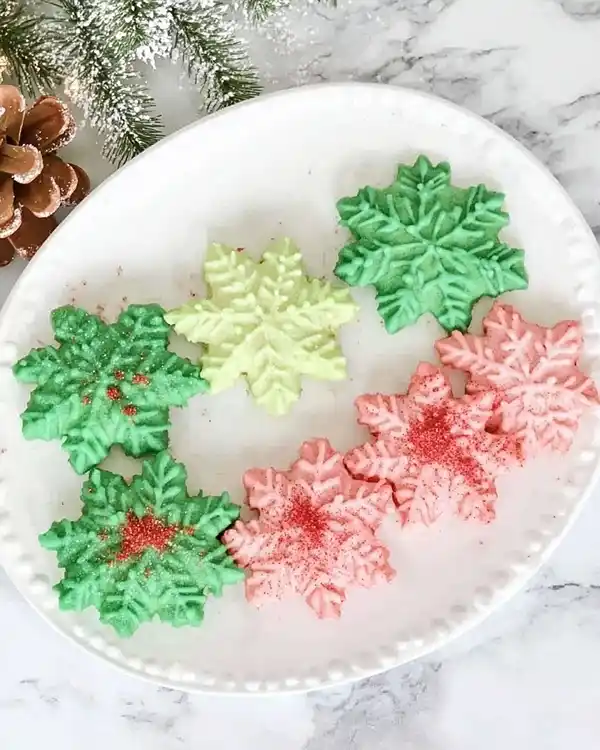
| Storage Method | Duration | Notes |
|---|---|---|
| Room temperature (airtight) | 2 weeks | Best texture |
| Refrigerated (airtight) | 3 weeks | Stays fresh longer |
| Frozen (freezer bag) | 3 months | Thaw at room temp |
| Dough (refrigerated) | 3 days | Bring to room temp before using |
Perfect Pairings
Serve these alongside hot breakfast casserole spreads for holiday morning gatherings. They’re also terrific with coffee, hot chocolate, or mulled wine. Try them with vanilla ice cream for an unexpected dessert twist.
These cookies shine on holiday cookie platters. Pair them with gingerbread, peppermint bark, and shortbread for variety. Check out more traditional holiday recipes> to round out your menu.
Traditional German Butter Cookies FAQs
What is the secret to making Spritz cookies?
The secret to making spritz cookies is using the right fat ratio and chilled pans. Combining butter and margarine creates dough that’s flavorful yet soft enough to press smoothly. Always chill your baking sheets before pressing—this helps the shaped dough stick immediately and prevents spreading.
What is the most famous Christmas cookie?
The most famous Christmas cookie varies by region, but gingerbread and sugar cookies dominate American holiday tables. Traditional German butter cookies like spritzgebäck rank among Europe’s most beloved festive treats. Their buttery richness and elegant shapes make them a timeless holiday classic.
What is the difference between a spritz cookie and a sugar cookie?
A spritz cookie uses a cookie press to create decorative shapes and contains more butter for a tender, melt-in-your-mouth texture. Sugar cookies are rolled and cut with cookie cutters, and typically have a firmer dough. Spritz cookies are richer and more delicate than standard sugar cookie recipes.
What is the difference between spritz and shortbread cookies?
Spritz cookies contain eggs and baking powder, giving them a lighter, more tender crumb. Shortbread uses only butter, flour, and sugar—no leavening or eggs—resulting in a denser, crumblier texture. Both are buttery, but spritz cookies have more structure for pressed shapes.
Conclusion
These traditional German butter cookies have earned permanent space in my holiday rotation. They’re beautiful, delicious, and surprisingly simple once you master the technique. The buttery texture melts away on your tongue like a winter snowflake.
Serve them at your next holiday gathering with international menu favorites for an eclectic spread. They pair wonderfully with mulled cider or a cup of strong coffee. You know what? They’re just as good on a random Tuesday in January.
Try making a double batch—these disappear fast. Experiment with different shapes and decorations to match your holiday theme. What’s your favorite cookie press design?
Let me know how your buttery German spritz turn out! Drop a photo in the comments and tell me which variation you tried. I’d love to see your beautiful cookie creations this season.
Make these traditional German butter cookies your new holiday tradition—your kitchen will smell amazing and your cookie tin will empty fast.
