
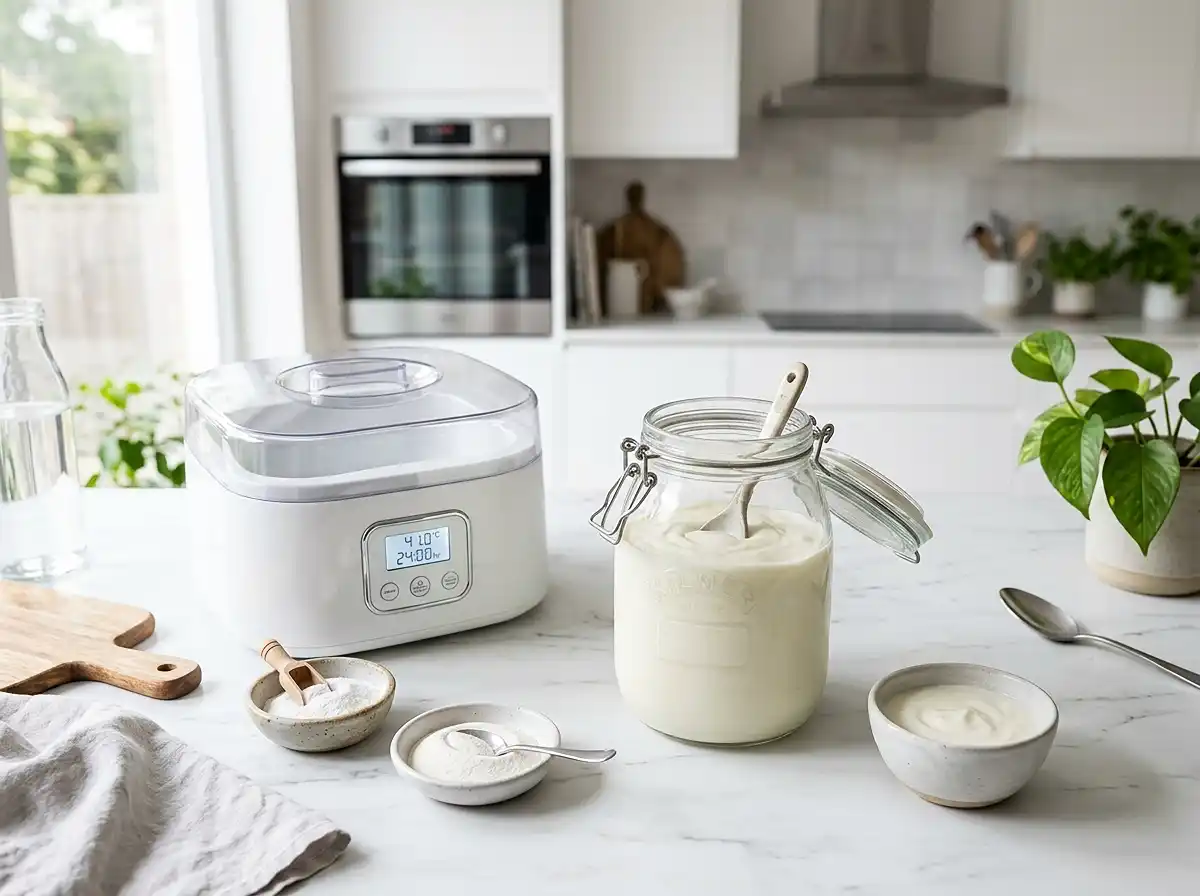
This gut-healing SIBO yogurt recipe uses L. Gasseri and L. Reuteri strains to flood your digestive system with beneficial bacteria — and it’s surprisingly easy to make at home.
I still remember the first time I stumbled across the Dr. Davis SIBO yogurt recipe. I was knee-deep in SIBO diet recipes, feeling overwhelmed, when a friend said, “Just try the yogurt.” Reader, it changed things.
This isn’t your average supermarket yogurt. This is a long-fermented, probiotic-packed powerhouse built around two very specific bacterial strains. If you’ve been dealing with gut issues, this SIBO recipe might just become your new best friend.
This homemade yogurt is one of those gut-friendly staples people wish they had started sooner, and if you only try this one, you’ll want to explore more sibo diet recipes.
Table of Contents
What Makes This SIBO Yogurt So Special
The Dr. Davis SIBO yogurt recipe is different from regular yogurt because it ferments for a full 36 hours at a lower temperature. That extended time allows the bacteria to multiply into the hundreds of billions — way more than any store-bought probiotic.
It’s based on research by clinical studies on Lactobacillus reuteri and its gut-healing effects, and many people following a SIBO diet report meaningful improvements in bloating, digestion, and overall comfort.
This recipe uses two powerhouse strains — L. Gasseri and L. Reuteri — along with a prebiotic powder to help those good bugs thrive. Think of it as a cozy little incubator for your gut’s best allies.
Quick Overview
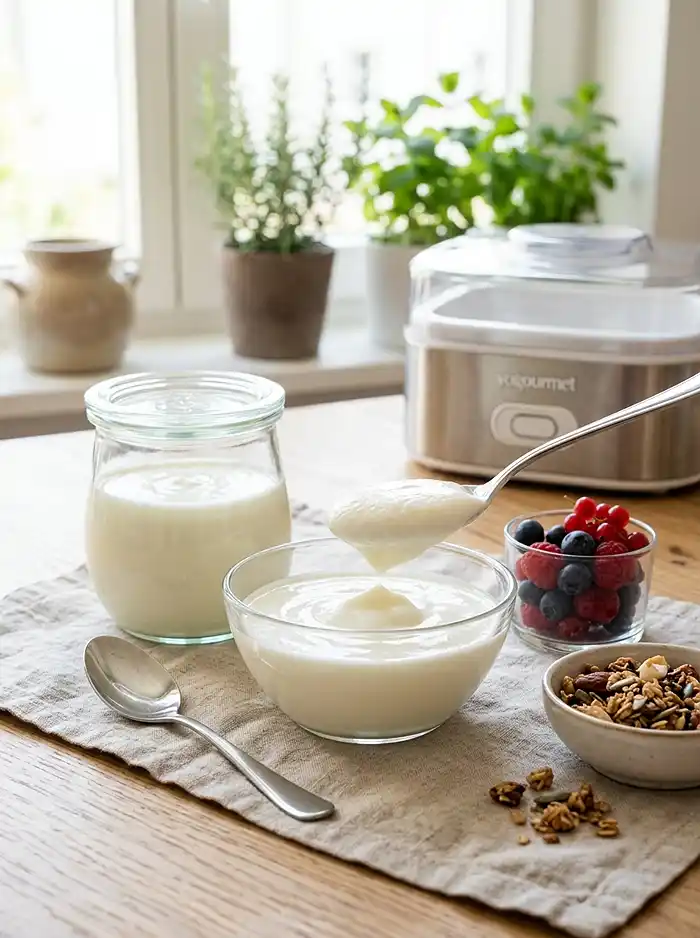
This davis SIBO yogurt recipe produces a thick, creamy, mildly tangy yogurt loaded with beneficial bacteria. It’s gentle on a sensitive gut, fits beautifully into any SIBO diet plan, and takes almost zero active effort — just a little patience.
The texture is somewhere between Greek yogurt and a soft set custard. It’s wonderfully versatile — eat it plain, drizzle it with a little honey, or pair it with something from your SIBO-friendly rotation like a gut-supportive Budwig protocol breakfast.
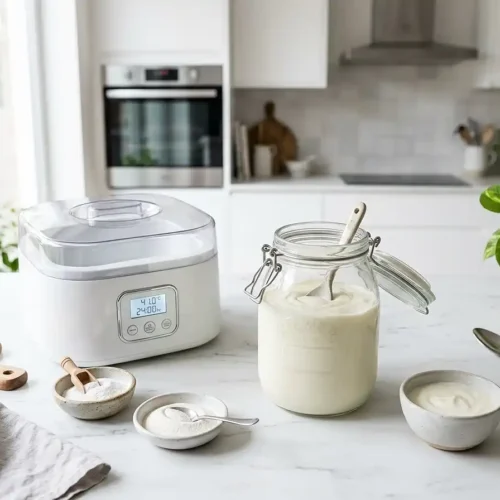
SIBO Yogurt Recipe
Equipment
- Yogurt maker
- Saucepan
- thermometer
- glass jar
- Whisk
Ingredients
Base
- 2 litres Half and Half (Ultra-Pasteurized) or full cream whole milk
Starter Culture
- 1 tablespoon L. Gasseri Superfood Yogurt (already made)
- 1 tablespoon L. Reuteri Superfood Yogurt (already made)
Prebiotic
- 2 tablespoons Prebio Plus prebiotic powder
Instructions
- If using whole milk, heat it to 82°C (180°F) and optionally hold for 10–20 minutes. If using ultra-pasteurized Half and Half, skip heating.
- Cool the milk to below 42°C (107°F) before adding any starter cultures to preserve beneficial bacteria.
- Transfer milk to a clean jar. Add L. Gasseri and L. Reuteri starters plus Prebio Plus, then whisk well to combine evenly.
- Place the jar in a yogurt maker and incubate at 36°C (96°F) for 36 hours without disturbing it.
- After fermentation, remove carefully and refrigerate for at least 6 hours to fully set before stirring or serving.
- For future batches, use 2 tablespoons of finished yogurt as the starter and repeat the same fermentation process.
Notes
Ingredients
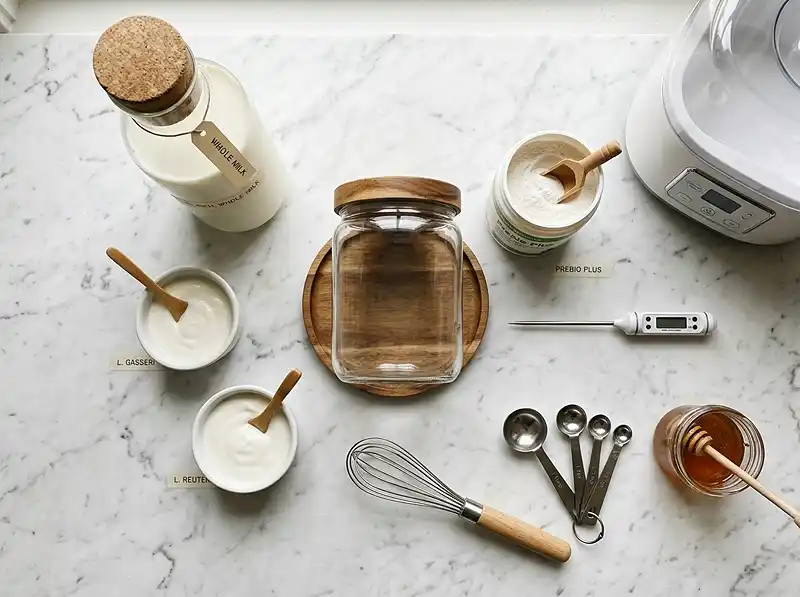
| Category | Ingredient | Amount |
|---|---|---|
| Base | Half and Half (Ultra-Pasteurized) or full cream whole milk | 2 litres |
| Starter Culture | L. Gasseri Superfood Yogurt (already made) | 1 tablespoon |
| Starter Culture | L. Reuteri Superfood Yogurt (already made) | 1 tablespoon |
| Prebiotic | Prebio Plus prebiotic powder | 2 tablespoons (2 scoops) |
A note on the milk: Half and Half Ultra-Pasteurized is the easiest option — you can skip the heating step entirely. Full cream whole milk works beautifully too, but you’ll want to heat it first to denature the proteins and get a thicker set.
Step-by-Step Instructions
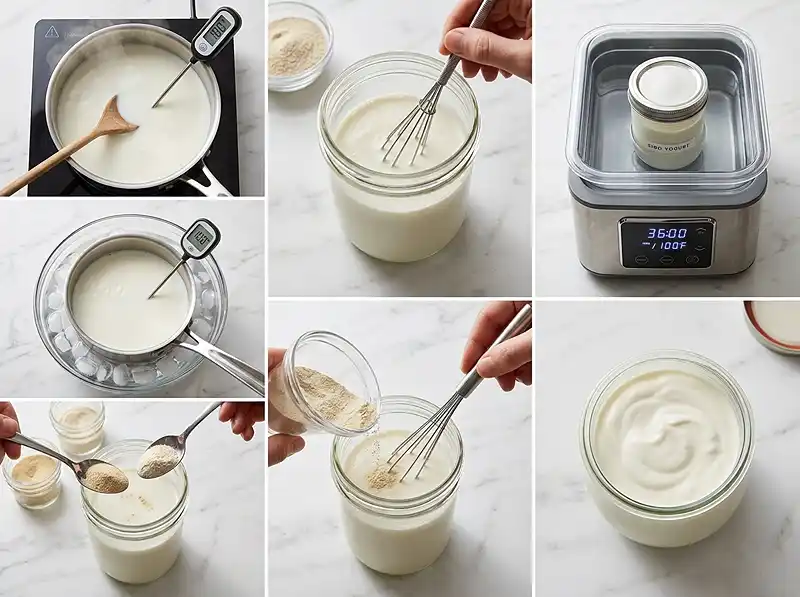
Step 1: Heat the Milk (Skip If Using Half and Half)
If you’re using whole milk and want to denature it for a thicker yogurt, pour the milk into a large clean saucepan. Heat it on the stovetop to 82°C (180°F), using a thermometer for accuracy.
You can hold the milk at this temperature for 10–20 minutes — it’s optional, but it does improve texture. A double boiler pot filled with boiling water makes this easier. And if the milk briefly boils? Don’t stress. Just reduce the heat and carry on.
Step 2: Cool the Milk
Remove the pan from the heat and let the milk cool to below 42°C (107°F). You can speed this up by setting the pot in a sink or bowl filled with cold water and ice.
Here’s the key rule: the milk must NOT be hot when you add the starter. Anything above 43°C will kill your bacteria — and that would be a sad, sad yogurt. Cold is totally fine. Even room temperature works.
A skin may form on top as it cools. You can leave it — it won’t affect your yogurt at all.
Step 3: Transfer and Add Your Starter
Pour the cooled milk into your yogurt-making glass jar. Add 1 tablespoon of L. Gasseri yogurt and 1 tablespoon of L. Reuteri yogurt as your starter cultures.
Next, add 2 scoops of Prebio Plus prebiotic powder. Whisk everything together well so the starter and prebiotic are evenly distributed throughout the milk.
“Think of the Prebio Plus as the food that feeds your bacteria. You’re not just adding probiotics — you’re giving them everything they need to thrive.”
Step 4: Set Up the Yogurt Maker
Place the lid on your jar and set it inside the yogurt maker. Slowly pour water into the base — but don’t fill it past the tall line marked on the inside wall. Place the cover lid on top.
Using the digital control panel, set the temperature to 36°C / 96°F and the time to 36 hours. Press confirm to begin incubation.
Using an older Luvele yogurt maker? Set it for 24 hours first, then reset it for another 12 hours once that cycle completes.
Step 5: Fermentation Time
Now comes the hard part: waiting. The yogurt will ferment quietly for 36 hours. Try not to jostle or open the maker during this time — you want those bacteria undisturbed while they do their thing.
This long ferment is what sets the dr davis SIBO yogurt recipe apart from conventional yogurt. By the end, you’ll have a product rich in probiotics that typical 8-hour recipes simply can’t match.
Step 6: Remove and Chill
When fermentation is done, condensation will have collected under the cover lid. Carefully remove it and let the water drip into the water bath — not onto your bench. Switch off the maker and lift out the jar.
The yogurt will be warm and slightly loose right out of the maker. Do not stir it while it’s warm — this is important. Stirring at this stage will prevent it from setting into a perfect creamy mass.
You may notice a thin layer of cream on top depending on the milk you used. That’s completely normal and honestly a little luxurious.
Transfer the jar to the fridge and leave it for at least 6 hours to set. Then it’s ready to enjoy.
Reculturing for Your Next Batch
Here’s the beautiful part — your yogurt becomes its own starter. To make a fresh batch of this SIBO recipe, simply use 2 tablespoons of your finished yogurt as the new starter culture.
Also use 2 tablespoons of Prebio Plus when reculturing (a little more than the first batch). Then repeat the full process from Step 1. Many people keep a continuous cycle going week after week.
Expert Tips and Variations
Getting the Best Texture
Half and Half Ultra-Pasteurized tends to produce a creamier, more pourable yogurt. Full cream whole milk that’s been properly heated and cooled gives a thicker, firmer set. Both are delicious — it really comes down to preference.
If your yogurt comes out thinner than expected, don’t panic. It may just need longer in the fridge to set fully. Give it 8–10 hours rather than the minimum 6.
Temperature Matters More Than You Think
The lower fermentation temp — 36°C rather than the usual 40–43°C — is deliberate. L. Reuteri and L. Gasseri thrive at body temperature, and this keeps the environment just right for them to multiply safely.
According to research on probiotic fermentation temperatures, maintaining species-specific temp ranges significantly impacts bacterial yield and survival. So trust the process.
Variations Worth Trying
Some people add a tiny pinch of inulin powder alongside the Prebio Plus for extra prebiotic support. Others blend in a spoonful of raw honey after chilling for a mild, gut-friendly sweetness.
For a dairy-free version, coconut cream can work as a base — though the texture and fermentation dynamics differ. It’s worth experimenting if you’re dairy-sensitive.
Troubleshooting Common Issues
If the yogurt smells off or shows any mold, discard it and start fresh with clean equipment. Contamination usually comes from residue in jars or utensils — a hot soapy wash plus rinse does the trick.
Separation of liquid (whey) at the top is totally normal. You can stir it back in or pour it off — both options are fine. Whey is actually nutritious and can be used in smoothies or added to homemade naan bread dough for a subtle tang.
Storage Instructions
| Storage Method | Container | Duration |
|---|---|---|
| Refrigerator | Airtight glass jar or container | Up to 7 days |
| Freezer | Freezer-safe container | Up to 3 months |
Reheating and No-Waste Ideas
This yogurt is best enjoyed cold or at room temperature — don’t heat it directly, as temperatures above 43°C will kill the beneficial bacteria. If you want to use it in a warm dish, stir it in off the heat at the very end.
Got leftover whey from the top of the jar? Don’t pour it down the drain. It’s rich in protein and probiotics. Use it as a liquid base in smoothies, stir it into soups after cooking, or use it as a tangy substitute for buttermilk in baking.
For a satisfying SIBO-friendly breakfast pairing, try your yogurt alongside something nourishing like this honey butter cornbread cookie recipe made with wholesome ingredients.
Sibo Yogurt Recipe FAQs
What exactly is a SIBO yogurt recipe?
A SIBO yogurt recipe is a long-fermented homemade yogurt designed to deliver extremely high concentrations of specific probiotic strains — particularly L. Reuteri and L. Gasseri. Unlike regular yogurt, it ferments for 36 hours at a lower temperature to maximize bacterial count. It was popularized by Dr. William Davis as part of a broader gut-healing protocol.
Can I use regular yogurt as the starter instead of SIBO yogurt?
For your very first batch, you’ll need a starter that contains the correct strains — L. Gasseri and L. Reuteri. Regular store yogurt won’t work because it uses different bacterial strains. You can source the initial starter from specialty probiotic suppliers. Once you’ve made your first batch, your own yogurt becomes the starter for every future one.
How does the dr davis SIBO yogurt recipe differ from regular yogurt making?
The two biggest differences are the bacterial strains and the fermentation time. Dr. Davis SIBO yogurt uses specific gut-targeted strains and ferments for 36 hours at 36°C, versus the typical 6–8 hours at 40–43°C for standard yogurt. This produces a far higher concentration of beneficial bacteria per serving.
Is this yogurt safe to eat every day?
For most people following a SIBO diet, yes — small daily servings are well tolerated and encouraged. It’s usually recommended to start with a small amount (a few tablespoons) and gradually increase to allow your gut to adjust. As always, check with your healthcare provider if you have specific health conditions or concerns.
Why does my yogurt seem thin or runny?
A thinner consistency usually comes down to the milk type or insufficient chilling time. Half and Half naturally sets softer than whole milk. Make sure the yogurt has had at least 6–8 hours in the fridge before judging the texture. If it’s still too thin, try using full cream whole milk with the heating step next time.
Ready to Make Your Own SIBO Yogurt?
This SIBO yogurt recipe is genuinely one of those things that sounds more complicated than it is. Once you’ve done it once, it becomes second nature — and the results are worth every hour of that 36-hour ferment.
Give the dr davis SIBO yogurt recipe a try this week and see how your gut responds. If you make it, I’d love to hear how it goes.
Share this recipe on Pinterest so other gut-health seekers can find it, and leave a comment below with your experience. Did you use Half and Half or whole milk? Any tweaks that worked for you? Let’s talk!