
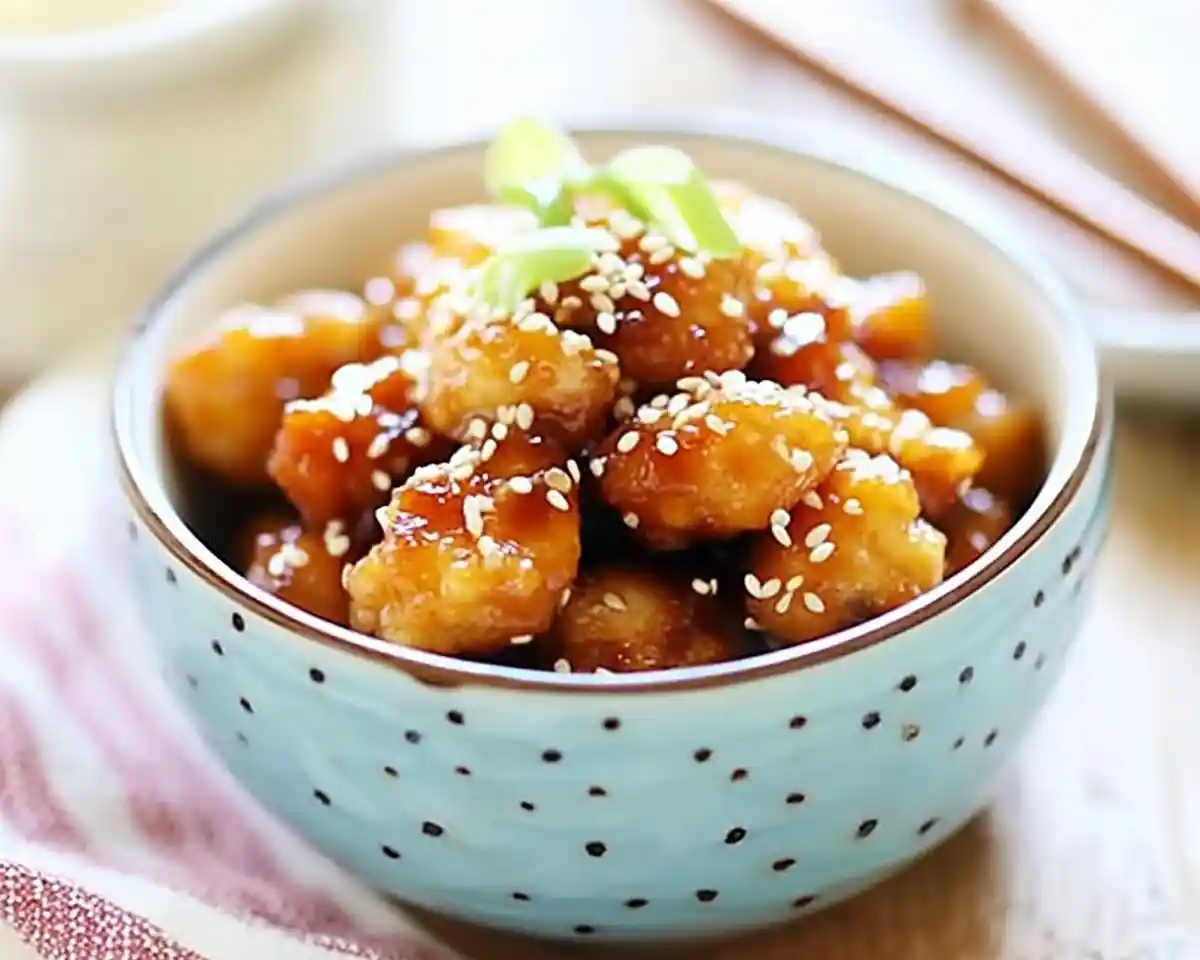
Sesame Chicken recipe with crispy coating and sweet-savory sauce. Learn homemade Chinese food secrets with this authentic sesame chicken sauce guide.
Let me tell you, my first attempt at homemade sesame chicken was a complete disaster. The batter slid right off the chicken, pooling sadly at the bottom of my wok. I stood there, spatula in hand, wondering why I’d even tried to recreate my favorite takeout dish at home.
Fast forward three years and countless kitchen experiments later, and I’ve cracked the code. This sesame chicken recipe delivers that signature crispy coating and glossy, finger-licking sauce you crave from your favorite Chinese restaurant. The secret? A perfectly balanced frying batter with cornstarch and a cold-water technique that creates an impossibly light, crunchy shell.
I’m Sofia, and here at Tasty at Home, I believe anyone can master restaurant-quality Asian dishes in their own kitchen. This recipe proves it. The aroma of garlic sizzling in hot oil, followed by that intoxicating sweet-salty fragrance when the sauce hits the pan—it’s pure kitchen magic.
Tasty at Home – Where bold flavors meet everyday kitchens.
Table of Contents
What Makes This Sesame Chicken Recipe Special
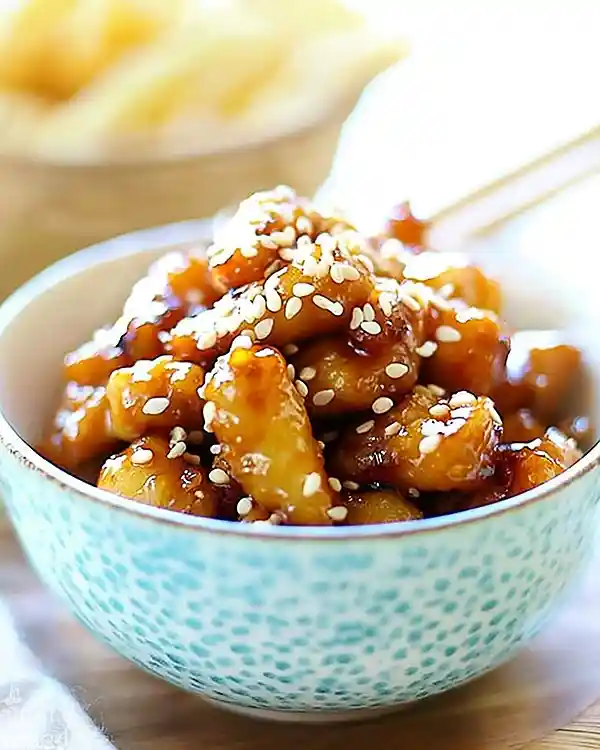
This isn’t your average weeknight chicken dinner. We’re talking about a certified Chinese-American classic that’s been perfected through generations of home cooks and restaurant chefs.
The magic happens in three distinct stages. First, the frying batter creates an ultra-crispy shell that stays crunchy even after saucing. Second, the homemade sesame chicken sauce balances sweet, tangy, and savory notes without that artificial, overly sugary taste you sometimes get from takeout. Third, the quick stir-fry technique coats every piece evenly while preserving that essential crunch.
What sets this recipe apart is the carefully calibrated batter ratio. Too much flour and you’ll get a doughy coating. Too much cornstarch and it’ll taste papery. The combination of sifted all-purpose flour, cornstarch, and a touch of baking powder creates the ideal texture—light, crispy, and structurally sound enough to hold the glossy sauce.
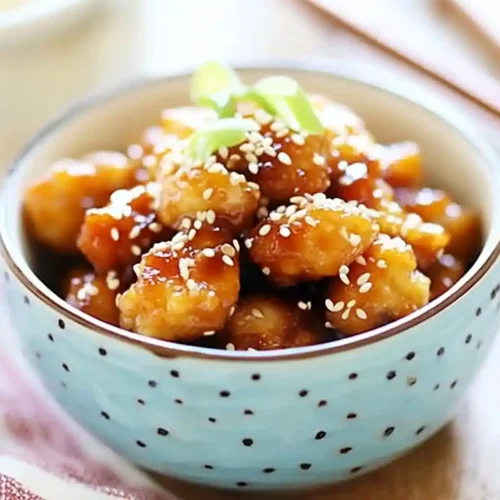
Sesame Chicken
Equipment
- Wok
- Cooking thermometer
- Wire-mesh strainer
- Slotted spoon
- Mixing bowl
- Whisk
- spatula
Ingredients
Chicken
- 8 oz Boneless, skinless chicken breast Cut into strips
- ~3 cups Oil for deep-frying Vegetable or peanut oil
- 2 tbsp Oil for stir-frying
- 1 clove Garlic Minced, fresh only
- 1-2 tbsp White sesame seeds Toasted preferred, for garnish
Frying Batter
- ½ cup All-purpose flour Sifted
- ¼ cup Cornstarch
- ½ tsp Baking powder Fresh
- 1 large Egg white Room temperature
- ⅓ cup Cold water Ice cold
- 1 tbsp Oil
- 1 pinch Salt
Sesame Chicken Sauce
- 2 tbsp Soy sauce Low-sodium preferred
- 1 tbsp Chinese rice vinegar Or apple cider vinegar
- 4 tbsp Sugar White granulated
- 2 tsp Cornstarch For thickening
- ⅓ cup Water Room temperature
Instructions
- Mix the soy sauce, rice vinegar, sugar, cornstarch, and water in a small bowl. Whisk until fully dissolved and set aside.
- Sift the flour into a mixing bowl, add cornstarch, baking powder, and salt. Mix in egg white, cold water, and oil until smooth. Coat chicken strips evenly.
- Heat 2–3 inches of oil in a wok to 350°F (175°C). Test by dropping a small amount of batter; it should sizzle and float.
- Deep-fry chicken in batches for 3–4 minutes until golden brown. Remove with a strainer and drain on paper towels.
- Wipe wok, add 2 tbsp oil, and heat. Stir-fry minced garlic for 10 seconds, then pour in prepared sauce. Thicken for 30–45 seconds.
- Add fried chicken to the sauce, stir for 30 seconds to coat evenly. Remove from heat, garnish with sesame seeds, and serve immediately with rice.
Notes
Ingredient Quality Selection Guide
For the frying batter, always use fresh baking powder—check the expiration date. Old baking powder won’t give you that light, airy texture. Choose boneless, skinless chicken breast from reputable sources, and look for pieces with uniform thickness for even cooking.
The sauce ingredients matter tremendously. Use authentic soy sauce (I prefer low-sodium varieties so you can control the salt level), and opt for Chinese rice vinegar rather than regular white vinegar—the flavor profile is gentler and more complex. Quality sesame seeds make a surprising difference; toast them yourself for maximum nutty fragrance.
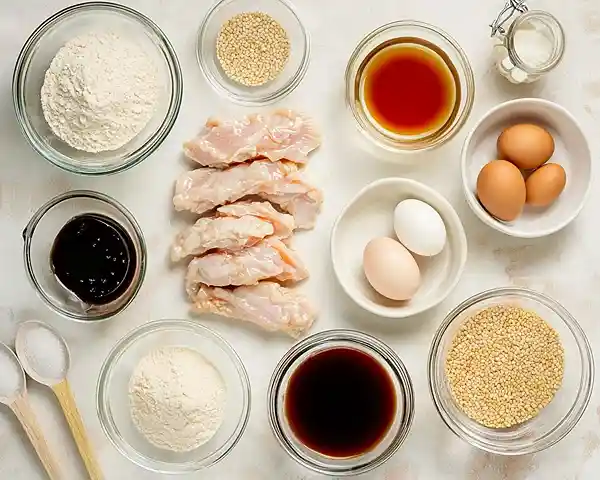
Essential Ingredients with Measurements
| Ingredient | US Measurement | Metric | Notes |
|---|---|---|---|
| For the Chicken | |||
| Boneless, skinless chicken breast | 8 oz. | 230g | Cut into strips |
| Oil for deep-frying | 2-3 inches in wok | ~3 cups | Vegetable or peanut oil |
| Oil for stir-frying | 2 tablespoons | 30ml | |
| Garlic | 1 clove, minced | ~1 teaspoon | Fresh only |
| White sesame seeds | For garnish | 1-2 tablespoons | Toasted preferred |
| Frying Batter | |||
| All-purpose flour | 1/2 cup | 60g | Sifted |
| Cornstarch | 1/4 cup | 30g | |
| Baking powder | 1/2 teaspoon | 2.5g | Fresh |
| Egg white | 1 large | ~30g | Room temperature |
| Cold water | 1/3 cup | 80ml | Ice cold |
| Oil | 1 tablespoon | 15ml | |
| Salt | 1 pinch | ~0.5g | |
| Sesame Chicken Sauce | |||
| Soy sauce | 2 tablespoons | 30ml | Low-sodium preferred |
| Chinese rice vinegar | 1 tablespoon | 15ml | Or apple cider vinegar |
| Sugar | 4 tablespoons | 50g | White granulated |
| Cornstarch | 2 teaspoons | 5g | For thickening |
| Water | 1/3 cup | 80ml | Room temperature |
Shopping Tips for US Grocery Stores
You’ll find most ingredients in any major supermarket. Head to the international aisle for authentic Chinese rice vinegar and quality soy sauce—brands like Kikkoman or Lee Kum Kee deliver consistent results. Pick up sesame seeds from the spice section or bulk bins at stores like Whole Foods or Trader Joe’s.
For the chicken, I recommend air-chilled chicken breasts from the butcher counter rather than pre-packaged options. They tend to have better texture and less added moisture, which means a crispier final result.
Bold Add-Ins and Creative Variations
Want to amp up the flavor? Add a teaspoon of freshly grated ginger to the sauce for a zingy kick. Some home cooks swear by adding a splash of authentic sesame oil at the end for extra nutty depth.
For a spicier version, throw in some red pepper flakes or a drizzle of sriracha. Looking for extra vegetables? Toss in blanched broccoli florets, snap peas, or bell pepper strips during the final stir-fry stage.
Substitutions for Different Dietary Needs
For gluten-free: Replace all-purpose flour with a gluten-free flour blend and use tamari instead of soy sauce. The texture will be slightly different but still delicious.
For lower sugar: Cut the sugar in the sauce to 2 tablespoons and add a touch of honey or a low-calorie sweetener alternative. Note that this changes the authentic flavor profile slightly.
For the vinegar: Apple cider vinegar works in a pinch, though it’s slightly more assertive than rice vinegar.
Equipment You’ll Need
Essential Tools
You don’t need fancy equipment for this recipe, but a few key items make the process smoother. A deep wok or heavy-bottomed stockpot works best for frying—you want something that maintains consistent heat. A reliable cooking thermometer is non-negotiable; oil temperature makes or breaks this dish.
Grab a wire-mesh strainer or slotted spoon for safely removing chicken from hot oil. A wide spatula helps separate chicken pieces during frying, preventing them from clumping together. For mixing the batter, a standard mixing bowl and whisk do the job perfectly.
DIY Alternatives
No thermometer? Drop a wooden chopstick into the oil—if small bubbles form immediately around it, you’re at the right temperature. No wok? A large, deep skillet works fine, though you might need to fry in smaller batches.
Can’t find a wire strainer? Use tongs, though they’re slightly less efficient. Paper towels on a plate serve as your oil-draining station—no special equipment needed there.
Step-by-Step Cooking Instructions
Prepare the Sesame Chicken Sauce
Mix the soy sauce, rice vinegar, sugar, cornstarch, and water in a small bowl. Whisk thoroughly until the sugar and cornstarch dissolve completely—no lumps allowed. Set this aside while you prepare the chicken. The cornstarch will settle at the bottom, so give it another quick stir right before adding it to the wok.
Create the Perfect Frying Batter
Sift the all-purpose flour into a large mixing bowl. Add the cornstarch, baking powder, and a pinch of salt. Crack the egg white into the mixture, then pour in the ice-cold water and oil.
Whisk everything together until you have a smooth, lump-free batter. The consistency should resemble thin pancake batter—it should coat the back of a spoon but still drip off easily. Well, let me tell you, I learned this the hard way: cold water is absolutely essential here. Room temperature water creates a heavier coating that won’t crisp up properly. Add the chicken strips to the batter and stir gently until every piece is evenly coated.
Heat the Oil to Perfect Temperature
Pour 2 to 3 inches of oil into your wok or stockpot. Heat it over medium-high heat until it reaches exactly 350°F (175°C). This is where precision matters—too cool and your chicken absorbs oil and turns greasy; too hot and the coating burns before the chicken cooks through.
Test the temperature by dropping a tiny bit of batter into the oil. It should sizzle immediately and float to the surface within seconds. Once you hit that sweet spot, you’re ready to fry.
Deep-Fry the Chicken to Golden Perfection
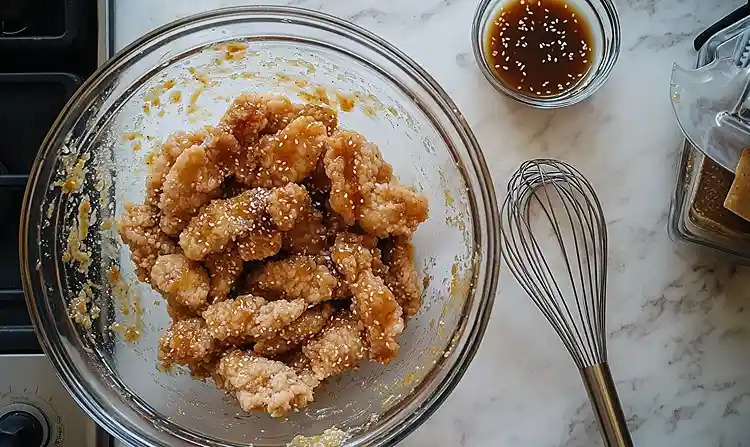
Working in batches, carefully lower the battered chicken pieces into the hot oil using a slotted spoon or tongs. Immediately use a spatula to gently separate any pieces that want to stick together—this prevents clumping and ensures even cooking.
Fry for 3 to 4 minutes, turning occasionally, until the coating turns a gorgeous golden brown. As Julia Child always emphasized, don’t crowd the pan; give each piece room to breathe. Remove the chicken with your strainer and let excess oil drip back into the wok. Transfer to a paper towel-lined plate. The coating should crackle slightly as it cools—that’s your sign of success.
Build the Sauce and Finish the Dish
Discard the frying oil (or save it for another use if you’re frugal like me). Wipe out the wok with paper towels, then add 2 tablespoons of fresh oil. Heat it over high heat until it shimmers.
Toss in the minced garlic and stir-fry for about 10 seconds, just until it becomes fragrant. Man, oh man, don’t walk away during this step—garlic burns in a heartbeat. Immediately pour in your prepared sauce.
The sauce will bubble vigorously and thicken within 30 to 45 seconds, thanks to the cornstarch. Once it reaches a glossy, syrupy consistency, quickly add all the fried chicken pieces back to the wok. Stir continuously for about 30 seconds, tossing to coat every piece evenly.
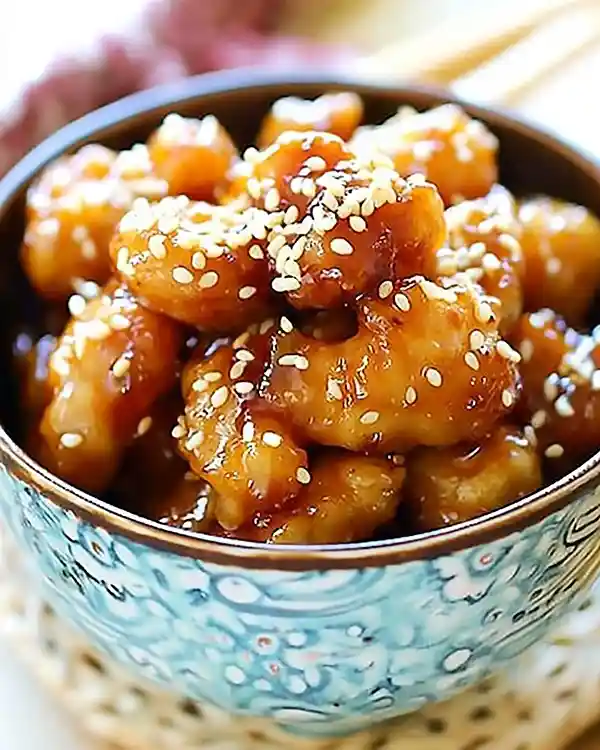
Remove from heat immediately to prevent the coating from softening. Transfer to a serving platter, garnish generously with white sesame seeds, and serve right away with steamed rice.
My Biggest Cooking Mistake (and How You Can Avoid It)
Here’s a confession: the first time I made this, I added the sauce and then let the chicken sit in the wok while I answered a phone call. Big mistake. The crispy coating turned completely soggy within two minutes. This dish demands you work quickly at the end—have your serving plate ready, your sesame seeds measured, and your rice already cooked before you start the final stir-fry. Timing is everything here, just like Thomas Keller emphasizes in his French Laundry techniques: mise en place (everything in its place) isn’t just fancy chef talk; it’s practical wisdom.
Expert Tips for Restaurant-Quality Results
Oil Temperature Control
Maintain that 350°F sweet spot throughout frying. The temperature will drop when you add chicken, so work in small batches and let the oil reheat between batches. If you rush this step, you’ll end up with greasy, undercooked chicken instead of crispy perfection.
Professional Chinese restaurant kitchens keep their wok burners screaming hot. While home stoves can’t match that intensity, you can compensate by ensuring your oil is properly heated before adding chicken. Deep-frying at high temperatures creates that signature crispy texture without excessive oil absorption, which is key to authentic sesame chicken.
The Secret to Sauce Consistency
Your sauce should coat the chicken like a glossy glaze, not puddle at the bottom of the serving dish. The cornstarch slurry creates this magic, but only if you stir the sauce mixture right before adding it to the hot wok. Cornstarch settles quickly, so that final stir redistributes the thickening power evenly.
Once the sauce hits the hot wok, it thickens almost instantly. Don’t overthink it—as soon as you see that syrupy consistency, add the chicken immediately.
Make-Ahead and Storage Strategies
Honestly, sesame chicken tastes best fresh from the wok. However, life happens and leftovers are inevitable. Store fried chicken and sauce separately in airtight containers in the refrigerator.
The coating will soften in storage—that’s unavoidable. To revive it somewhat, reheat the chicken in a 400°F oven for 8 to 10 minutes until it crisps up slightly. Then warm the sauce separately on the stovetop and toss together just before serving.
| Storage Method | Duration | Best Reheating Technique |
|---|---|---|
| Refrigerate (separated) | 3 days | Oven at 400°F for 8 minutes |
| Refrigerate (combined) | 2 days | Microwave covered, 2-minute intervals |
| Freeze (chicken only) | 1 month | Thaw overnight, oven reheat |
| Freeze (complete dish) | Not recommended | Texture degrades significantly |
Creative Variations to Try
Spicy Sesame Chicken: Add 1-2 teaspoons of chili garlic sauce to the finished sauce for a fiery kick that rivals Szechuan-style preparations.
Honey Sesame Chicken: Replace 2 tablespoons of sugar with honey for a more complex sweetness. This variation pairs beautifully with General Tso’s-style spicy elements.
Orange Sesame Fusion: Add 1 tablespoon of fresh orange zest and 2 tablespoons of orange juice to the sauce for a citrusy twist on the classic.
Sesame Chicken Bowl: Serve over cauliflower rice instead of white rice for a lower-carb option. Add shredded cabbage, sliced cucumbers, and pickled ginger for a deconstructed bowl approach.
Holiday Party Skewers: Thread the fried chicken onto bamboo skewers before saucing, creating an elegant appetizer for Thanksgiving or Christmas gatherings. Serve the sauce on the side for dipping.
Perfect Pairings and Serving Suggestions
This sesame chicken shines brightest when served immediately over fluffy steamed white rice. The rice soaks up that incredible sauce like a sponge. For a more complete Chinese-American feast, pair it with crispy chicken fried rice or vegetable lo mein.
Side dishes matter. Steamed broccoli with oyster sauce provides a welcome vegetable component without overwhelming the main dish. Lightly sautéed bok choy or snap peas add color and crunch.
For beverages, iced green tea cuts through the richness beautifully. If you’re serving this for a dinner party, a slightly sweet Riesling or off-dry rosé complements the sweet-savory sauce profile surprisingly well.
Want to round out the meal with other homemade Chinese food favorites? Consider egg rolls, crab rangoon, or hot and sour soup as appetizers. You know, creating a full takeout-style spread at home impresses guests more than you’d expect—it shows effort and culinary confidence.
Sesame Chicken FAQs
What are the ingredients of sesame chicken?
What are the ingredients of sesame chicken? The core components include boneless chicken breast, a frying batter made from flour and cornstarch, and a sweet-savory sauce combining soy sauce, rice vinegar, sugar, and sesame seeds. The sauce typically contains cornstarch for thickening, while garlic adds aromatic depth.
What does sesame chicken taste like?
What does sesame chicken taste like? This dish delivers a complex flavor profile that balances sweet, salty, and slightly tangy notes with a nutty sesame undertone. The coating provides textural contrast through its crispy exterior, while the sauce adds glossy richness. It’s sweeter than General Tso’s chicken but less spicy.
What’s the difference between General Tso’s and sesame chicken?
What’s the difference between General Tso’s and sesame chicken? The main distinction lies in the sauce—General Tso’s features a spicier, more savory profile with dried red chilies and less sugar, while sesame chicken emphasizes sweetness with higher sugar content and nutty sesame notes. Both dishes share similar fried chicken preparations, but sesame chicken contains slightly more carbohydrates due to its sweeter sauce.
Is sesame chicken crispy?
Is sesame chicken crispy? Yes, when properly prepared, sesame chicken features an exceptionally crispy coating from the cornstarch-flour batter that’s deep-fried at 350°F. The texture stays somewhat crunchy even after tossing with sauce, though it gradually softens. Serving immediately after saucing ensures maximum crispiness.
Final Thoughts on Mastering Homemade Chinese Food
You’ve just unlocked one of the most beloved Chinese-American recipes in existence. This sesame chicken recipe transforms your kitchen into a personal takeout counter, minus the delivery fees and MSG-laden sauces. The crispy coating, glossy sauce, and that irresistible sweet-savory balance—you’ve got all the tools now.
Remember that first disaster I mentioned? Every cooking failure teaches you something valuable. In this case, it taught me that patience, proper technique, and respecting ingredient ratios matter more than expensive equipment or exotic ingredients.
What will you serve alongside your sesame chicken? Will you try the spicy variation or stick with the classic? Drop a comment below and share your results—I’d love to see how your version turns out.
Ready to expand your homemade Chinese food repertoire even further? Why not tackle delectable molasses cookies or perfect peanut brittle for dessert?
Now go make some magic happen in that kitchen of yours.