
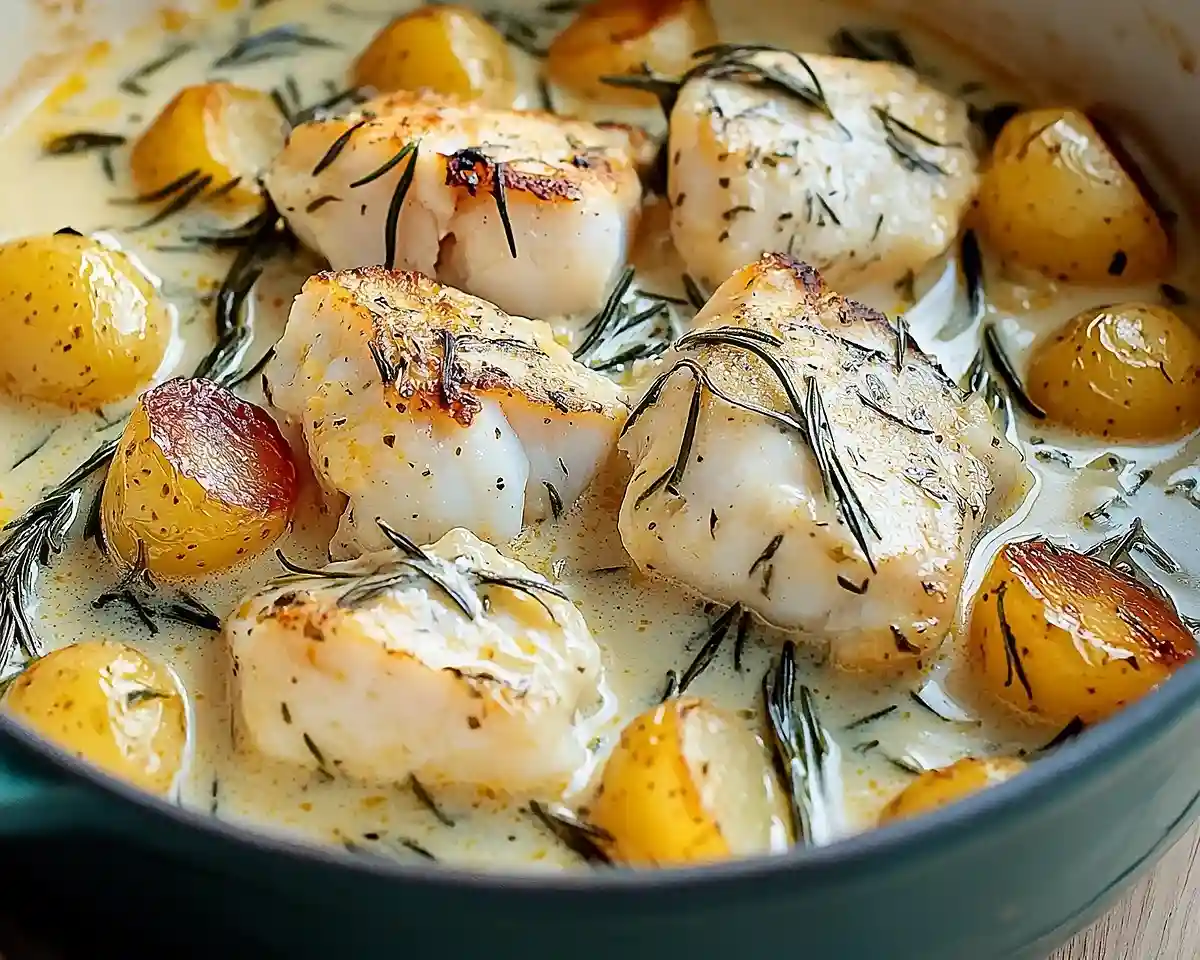
Rosemary Cream Sauce Cod and Potatoes transforms weeknight dining. Tender white fish meets herb-infused cream in this minimalist dinner masterpiece.
You know that moment when a fancy restaurant dish clicks and you think, “I could totally make this at home”? That’s exactly what happened to me last spring at a coastal bistro in Maine.
I ordered their signature cod with herb cream sauce, and after one bite, I was hooked. The delicate fish, velvety sauce, and tender potatoes felt like something reserved for special occasions. But here’s the twist—it was shockingly simple.
Fast-forward two months and about seven kitchen experiments later, I nailed it. This rosemary cream sauce cod became my go-to minimalist dinner for busy Wednesdays and lazy Sundays alike. The smell of fresh rosemary hitting warm cream? Man, oh man, it fills your kitchen like a European café.
Table of Contents
What Makes This Creamy White Fish Recipe Special
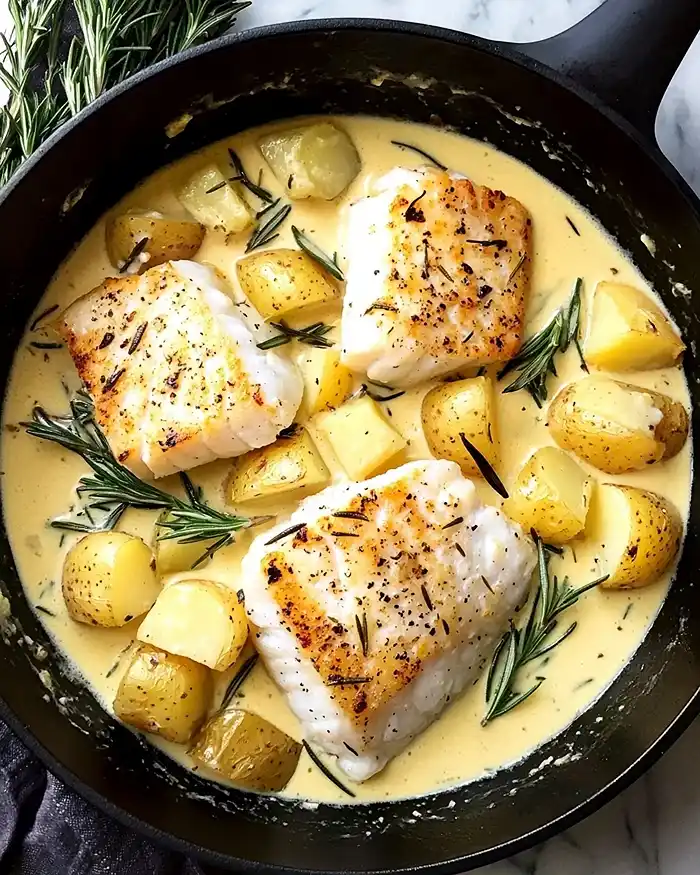
This isn’t your average fish dinner. We’re talking restaurant-quality elegance with grocery-store-aisle ingredients and a 30-minute timeline.
The secret lies in building layers of flavor without overwhelming the delicate cod. Each element serves a purpose: the lemon brightens, the rosemary adds earthiness, and the cream brings everything together in silky harmony. I learned this technique from watching how Thomas Keller approaches seafood—let the ingredient shine, then enhance it thoughtfully.
The potatoes aren’t just a side here. They soak up the rosemary cream sauce like little flavor sponges, turning into the best part of the plate. Trust me on this one.
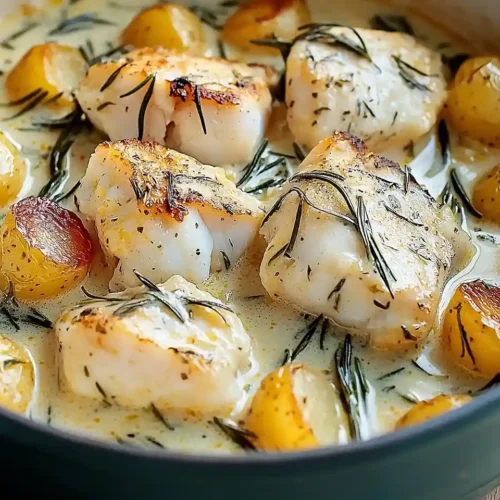
Rosemary Cream Sauce Cod & Potatoes
Equipment
- Large skillet
- Medium pot
- Sharp knife
- Cutting board
- measuring cups
- wooden spoon
Ingredients
Main Ingredients
- 4 fillets Cod fillets Skinless, boneless, fresh or thawed
- 1 lb Baby potatoes Or Yukon Gold, halved
- 2 tbsp Olive oil (cooking) Extra virgin preferred
- 1 tbsp Butter Unsalted
- 1 tbsp Lemon juice Fresh squeezed
- 1 lemon Lemon zest Organic if possible
- 1 tbsp Olive oil (sauce) For aromatics
- 3 cloves Garlic Minced fine
- 1 small Shallot Or half a yellow onion
- 1 tbsp Fresh rosemary Finely chopped
- 1.5 cups Heavy cream Full-fat only
- 0.5 cup Chicken broth Halal-certified or vegetable
- 0.5 tsp Dijon mustard Optional but recommended
- To taste Salt & pepper Kosher salt works best
- For garnish Fresh parsley Or chives
Instructions
- Wash and cut potatoes into uniform halves or quarters. Boil in salted water for 8–10 minutes until fork-tender. Drain and set aside.
- Pat cod fillets dry. Season with salt, pepper, lemon juice, and zest. Let sit 5–10 minutes.
- Heat skillet over medium-high. Add olive oil and butter. Sear cod 3–4 minutes per side until flakes easily. Transfer to a warm plate.
- Add olive oil to skillet, sauté garlic and shallot 2–3 minutes. Add rosemary and cook 1 minute.
- Deglaze skillet with broth, add heavy cream and Dijon mustard. Simmer 6–8 minutes until sauce thickens.
- Toss boiled potatoes into cream sauce. Simmer 3–4 minutes to absorb flavors.
- Return cod to skillet, spoon sauce over. Simmer 2–3 minutes until flavors marry.
- Garnish with parsley or chives and serve immediately.
Notes
Ingredient Breakdown: Quality Matters
Let’s talk about what goes into your skillet. Fresh fish makes all the difference—look for fillets that smell like ocean breeze, not fishy funk. Your cod should be firm to the touch with translucent, moist flesh.
For the potatoes, I prefer baby potatoes or Yukon Golds for their creamy texture and ability to hold their shape. The rosemary must be fresh if possible—dried works in a pinch, but fresh releases those piney oils that make this dish sing.
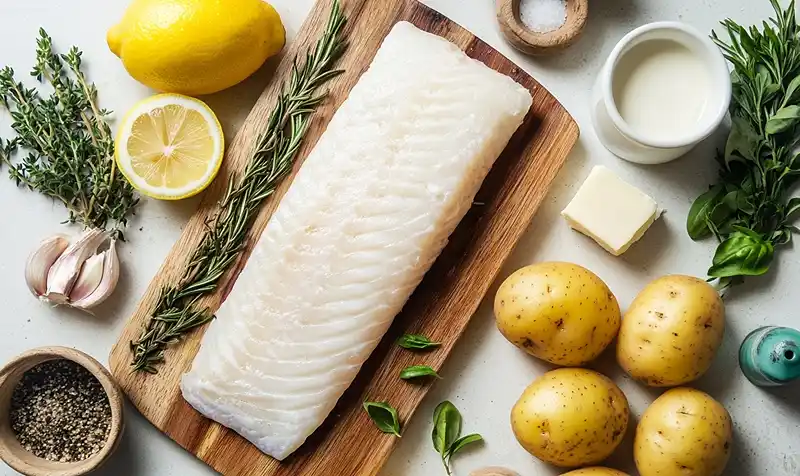
Essential Ingredients Table
| Ingredient | Amount | Metric | Notes |
|---|---|---|---|
| Cod fillets | 4 (5-6 oz each) | 4 (150-180g each) | Skinless, boneless, fresh or thawed |
| Baby potatoes | 1 lb | 500g | Or Yukon Gold, halved |
| Olive oil (cooking) | 2 tbsp | 30ml | Extra virgin preferred |
| Butter | 1 tbsp | 14g | Unsalted |
| Lemon juice | 1 tbsp | 15ml | Fresh squeezed |
| Lemon zest | 1 lemon | 1 lemon | Organic if possible |
| Olive oil (sauce) | 1 tbsp | 15ml | For aromatics |
| Garlic cloves | 3 | 3 | Fresh, minced fine |
| Shallot | 1 small | 1 small | Or half a yellow onion |
| Fresh rosemary | 1 tbsp | 1 tbsp | Finely chopped |
| Heavy cream | 1½ cups | 360ml | Full-fat only |
| Chicken broth | ½ cup | 120ml | Halal-certified or vegetable |
| Dijon mustard | ½ tsp | 2.5ml | Optional but recommended |
| Salt & pepper | To taste | To taste | Kosher salt works best |
| Fresh parsley | For garnish | For garnish | Or chives |
Shopping Tips for Your Local Grocery Store
Head to the seafood counter first and ask what arrived fresh that morning. Frozen cod works beautifully if you thaw it properly—just move it to the fridge 24 hours before cooking. Never use hot water to thaw fish unless you enjoy rubbery texture.
At Whole Foods or your neighborhood market, grab organic lemons for the zest since you’re using the peel. The essential oils in that yellow skin pack serious flavor punch. For broth, I keep halal-certified chicken stock on hand, but vegetable broth works perfectly for a lighter version.
Bold Add-Ins & Creative Variations
Want to experiment? Add a tablespoon of capers for briny brightness, or swap rosemary for fresh thyme if you prefer a gentler herb note. Sun-dried tomatoes bring Mediterranean flair, while a pinch of red pepper flakes adds subtle heat.
For international readers using different measurements, remember that 150g of cod equals roughly 5.3 ounces. Heavy cream can be substituted with half-and-half mixed with a tablespoon of flour for thickness, though the result will be lighter.
Equipment You’ll Need (Plus DIY Alternatives)
This recipe keeps it refreshingly simple. You’ll need one large skillet—I use a 12-inch stainless steel pan for even heat distribution and gorgeous browning. Cast iron works too, just watch your heat levels.
A medium pot handles the potato boiling. Sharp knives, cutting boards, measuring cups, and a trusty wooden spoon round out the essentials. No fancy gadgets required.
Don’t have a proper zester? Use the smallest holes on a box grater or carefully peel thin strips of lemon skin with a vegetable peeler, then mince them finely. Works like a charm.
Step-by-Step Instructions: From Pan to Plate
Step 1: Get Those Potatoes Ready
Wash your potatoes under cold running water, scrubbing away any dirt with your hands. Cut them into uniform halves or quarters—this ensures even cooking and maximum sauce absorption later.
Fill your medium pot with water, add a generous pinch of salt (about a tablespoon), and bring it to a rolling boil. Drop in the potatoes and cook for 8 to 10 minutes until fork-tender. You want them cooked through but not falling apart.
Drain them in a colander and set aside. They’ll finish cooking in that luxurious rosemary cream sauce later.
Step 2: Season Your Cod Like a Pro
Pat each cod fillet completely dry with paper towels. This step is crucial—moisture is the enemy of a good sear, as Julia Child always reminded us when teaching proper fish preparation.
Season both sides with salt and freshly cracked black pepper. Drizzle the lemon juice over each fillet, then sprinkle the lemon zest evenly across the top.
Let them sit on your counter for 5 to 10 minutes while you prep the pan. This brief marination allows the citrus to penetrate the flesh.
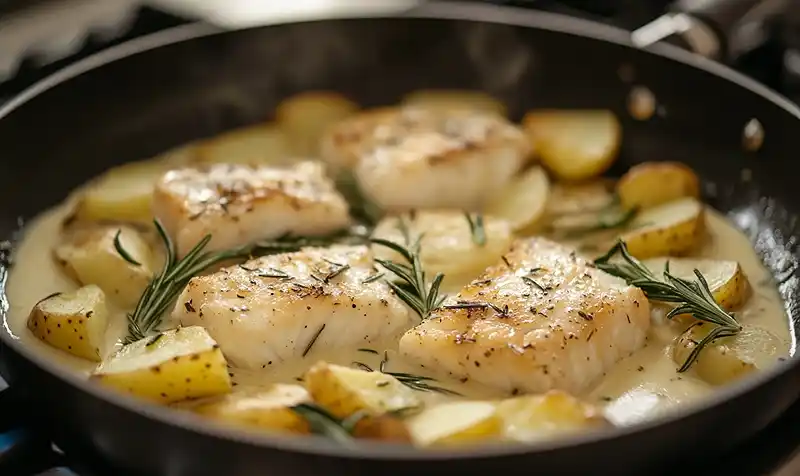
Step 3: Achieve That Perfect Golden Sear
Heat your large skillet over medium-high heat for about 2 minutes. Add the 2 tablespoons of olive oil and 1 tablespoon of butter, swirling to coat the bottom evenly.
When the butter foam subsides and the oil shimmers, carefully lay each cod fillet in the pan. Don’t crowd them—work in batches if necessary. Sear for 3 to 4 minutes on the first side without moving them.
Flip gently with a fish spatula and cook another 3 to 4 minutes until the flesh flakes easily with a fork. The internal temperature should reach 145°F. Transfer to a warm plate and cover loosely with foil.
Step 4: Build Your Aromatic Base
Reduce your heat to medium and add that tablespoon of olive oil to the same skillet. Let all those beautiful browned bits stay put—they’re flavor gold.
Toss in your minced garlic and chopped shallot. Sauté for 2 to 3 minutes, stirring frequently, until they turn fragrant and translucent but not brown. Burned garlic tastes bitter, and trust me, I’ve learned this lesson the hard way.
Add the finely chopped rosemary and stir for another minute. The herb’s oils will bloom in the heat, filling your kitchen with that unmistakable piney aroma.
Step 5: Create the Cream Sauce Magic
Pour in the halal-certified broth and use your wooden spoon to scrape up all those fond bits stuck to the pan bottom. This technique, called deglazing, adds incredible depth to your sauce.
Stir in the heavy cream and Dijon mustard if you’re using it. The mustard adds subtle tang and helps emulsify the sauce, though it’s optional. Bring everything to a gentle simmer—bubbles should barely break the surface.
Let it cook for 6 to 8 minutes, stirring occasionally, until the sauce visibly thickens and coats the back of your spoon. You’re aiming for a consistency slightly thinner than gravy.
Step 6: Unite Potatoes and Sauce
Return your boiled potatoes to the skillet and toss them gently in the cream sauce. Use a folding motion rather than aggressive stirring to keep them intact.
Let them simmer in the sauce for 3 to 4 minutes, absorbing those rosemary-infused flavors. They’ll take on a gorgeous creamy coating while softening even more.
This is where the magic happens—the potatoes transform from simple boiled spuds into restaurant-worthy sides.
Step 7: Bring Back the Cod
Carefully nestle your seared cod fillets back into the skillet, arranging them on top of or between the potatoes. Spoon some of that glorious sauce over each piece of fish.
Reduce heat to low and let everything simmer together for 2 to 3 minutes. This final step allows the flavors to marry while keeping the cod tender and moist.
You’ll notice the sauce clinging beautifully to both the fish and potatoes. That’s exactly what you want.
Step 8: Plate and Garnish
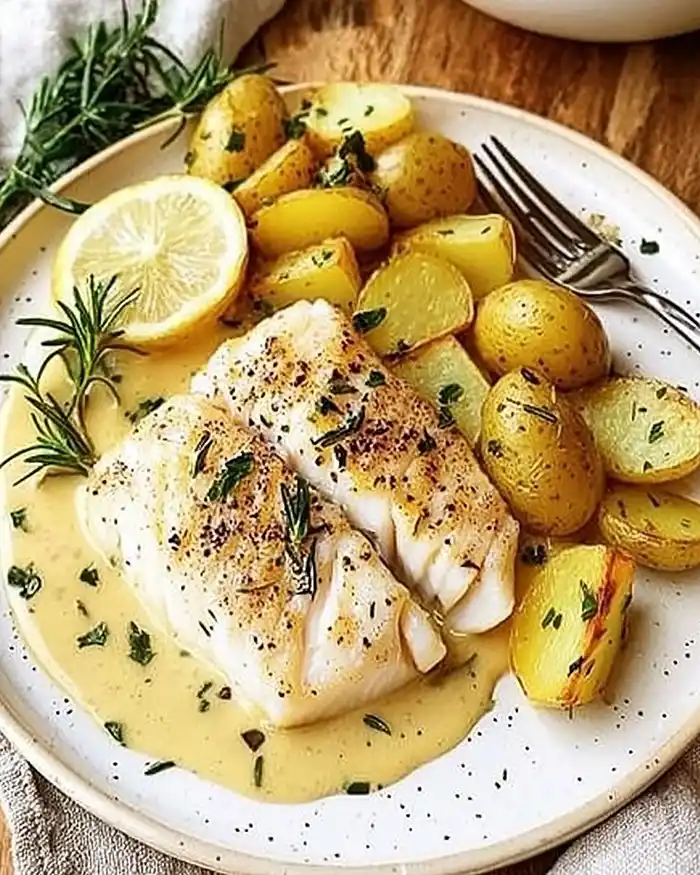
Turn off the heat and take a moment to appreciate what you’ve created. Sprinkle freshly chopped parsley or chives over everything for a pop of color and fresh herb brightness.
Serve immediately while hot, either plated individually for an elegant presentation or family-style in the skillet for casual dining. A crusty baguette or simple green salad alongside completes the meal perfectly.
Expert Tips for Next-Level Results
Choose the Right Fish: While cod is perfect here, halibut, sea bass, or even thick tilapia fillets work beautifully. Just adjust cooking times based on thickness—the general rule is 10 minutes per inch.
Don’t Skip the Sear: That golden crust on your cod adds textural contrast and locks in moisture. Well, it also creates fond in the pan that flavors your entire sauce.
Control Your Heat: Medium heat is your friend for the sauce. Too high and the cream might break or scorch. Too low and you’ll wait forever for it to thicken.
Fresh Herbs Make the Difference: I tried this recipe once with dried rosemary and honestly, it was fine but not spectacular. Fresh rosemary releases aromatic oils that dried versions can’t match.
Taste and Adjust: Before serving, taste your sauce and adjust the seasoning. Sometimes it needs an extra pinch of salt or a squeeze of lemon to brighten everything up.
Creative Variations to Try
Mediterranean Twist
Add ½ cup of halved cherry tomatoes and 2 tablespoons of capers during the sauce-making step. Swap rosemary for fresh oregano and serve with crusty garlic bread for dipping.
Holiday Feast Version
Double the recipe for a stunning Christmas Eve dinner. Add a splash of white wine when deglazing and garnish with pomegranate seeds for festive color. Pair it with roasted asparagus and your favorite Chardonnay.
Dairy-Free Adaptation
Replace heavy cream with full-fat coconut milk and the butter with additional olive oil. The sauce becomes slightly sweeter and works wonderfully with the rosemary. Check out this coconut curry salmon for more coconut-based inspiration.
Spicy Southwest Style
Add 1 teaspoon of smoked paprika and ½ teaspoon of cumin to the aromatics. Replace rosemary with fresh cilantro and finish with a squeeze of lime instead of lemon.
Make-Ahead Meal Prep
Cook everything except the final fish searing up to 2 days ahead. Store the potatoes in sauce separately from the seasoned raw cod. When ready to serve, sear the fish fresh and reheat the potato mixture gently, then combine.
Storage and Reheating Guidelines
Leftovers keep beautifully in an airtight container in the refrigerator for up to 3 days. The potatoes actually get better as they absorb more sauce overnight.
Reheat gently in a skillet over low heat with a splash of broth or cream to loosen the sauce. Microwaving works in a pinch but can make the fish rubbery—use 50% power and check every 30 seconds.
Storage Times Reference
| Storage Method | Duration | Best For | Notes |
|---|---|---|---|
| Refrigerator | 3 days | All components | Store in airtight container |
| Freezer (sauce only) | 2 months | Sauce without fish | Thaw overnight in fridge |
| Freezer (complete) | Not recommended | N/A | Fish texture suffers |
I don’t recommend freezing the complete dish because cod becomes watery and mushy when frozen after cooking. However, the sauce alone freezes wonderfully—just make fresh fish when you’re ready to serve.
Perfect Pairings for Your Minimalist Dinner
This creamy white fish pairs beautifully with crisp white wines like Sauvignon Blanc or unoaked Chardonnay. The acidity cuts through the cream while complementing the delicate cod.
For sides, keep it simple. A honey-glazed salmon bowl inspired approach with mixed greens and cherry tomatoes works perfectly. Roasted green beans with almonds or sautéed spinach with garlic round out the plate without overwhelming it.
Crusty sourdough bread is non-negotiable in my house. You’ll want something to soak up every last drop of that rosemary cream sauce. According to food pairing principles that Ina Garten champions, simple proteins shine brightest with uncomplicated, high-quality accompaniments.
Rosemary Cream Sauce Cod and Potatoes FAQs
How do I make fresh horseradish sauce?
Combine ½ cup sour cream with 2 tablespoons freshly grated horseradish root, 1 tablespoon lemon juice, and salt to taste. This tangy sauce cuts through rich dishes beautifully and takes just 5 minutes to prepare. Check out our complete homemade horseradish sauce guide for variations and storage tips.
What is horseradish sauce made of?
Traditional horseradish sauce contains grated horseradish root, sour cream or mayonnaise, vinegar or lemon juice, and salt. Some versions add Dijon mustard or prepared horseradish for convenience. The sauce complements beef, fish, and roasted vegetables with its sharp, pungent flavor.
What is real horseradish made of?
Real horseradish is simply the grated root of the horseradish plant (Armoracia rusticana), sometimes mixed with vinegar to preserve its pungency. Fresh horseradish root has a sharp, sinus-clearing heat that mellows once exposed to air. You’ll find it in the produce section of most grocery stores.
What to use if you don’t have horseradish sauce?
Try Dijon mustard mixed with sour cream, wasabi paste thinned with cream, or even a squeeze of lemon over your fish for brightness. These alternatives won’t replicate horseradish’s exact bite, but they add complementary sharpness that enhances creamy white fish dishes like this rosemary cream sauce cod.
Your New Weeknight Winner
This rosemary cream sauce cod with potatoes proves that elegant doesn’t mean complicated. You’ve got a restaurant-worthy dish that comes together in 30 minutes with ingredients you can grab on any grocery run.
The beauty of this minimalist dinner lies in its versatility. Make it exactly as written for a classic experience, or explore those variations we talked about to match your taste. Either way, you’re serving something that looks and tastes like you spent hours in the kitchen.
Remember that Maine bistro that inspired this whole adventure? Oops, turns out their version couldn’t compete with homemade. There’s something magical about cooking in your own kitchen, tweaking flavors to your exact preference, and serving it fresh from your own skillet.
Give this recipe a try tonight and let me know how it turns out! Drop a comment below with your favorite variation or what you served alongside. I love hearing how you make these recipes your own.
Pair it with a chilled glass of white wine, light some candles, and transform your regular Tuesday into something special. That’s what cooking at home should feel like—bold flavors meeting everyday moments, creating memories one delicious meal at a time.
