
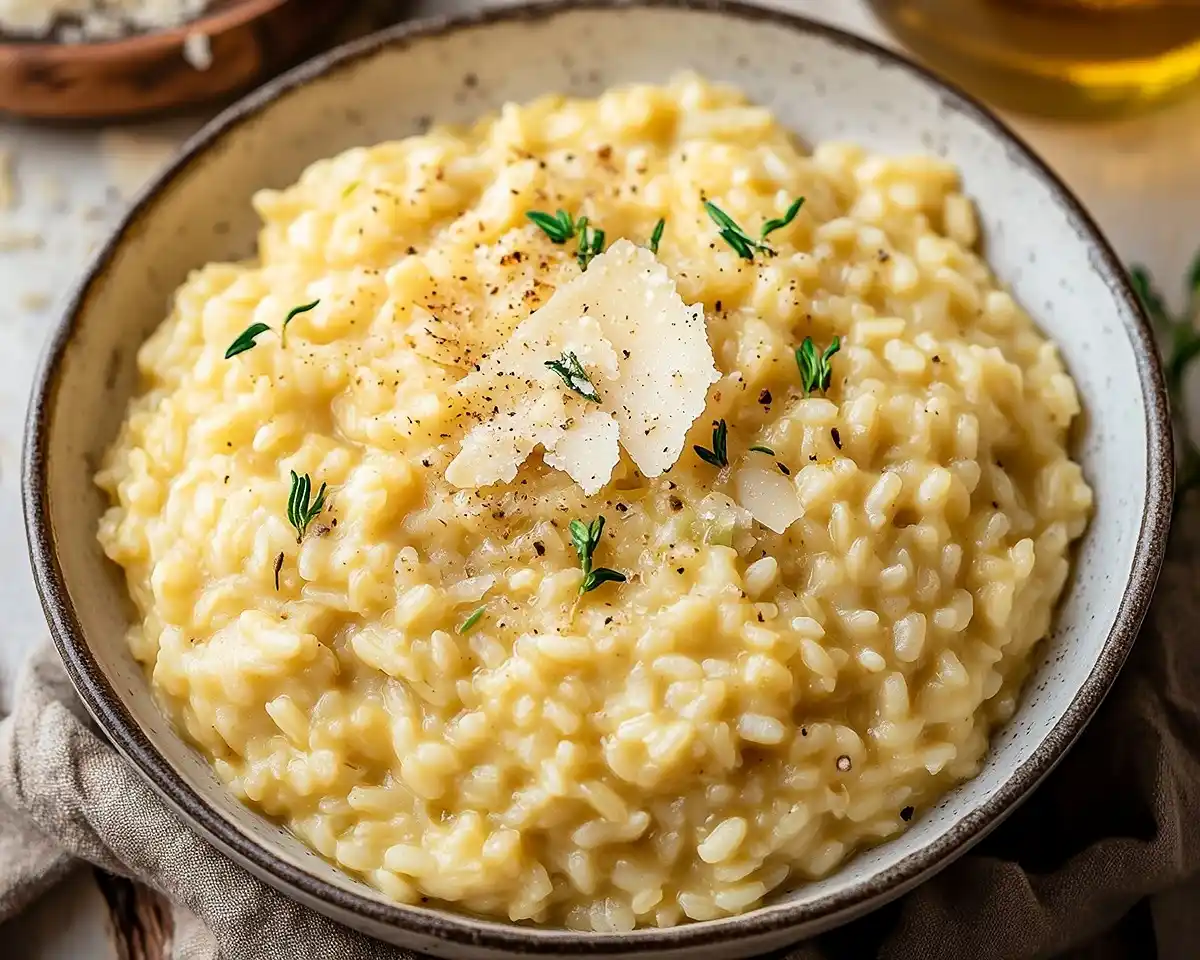
This classic risotto recipe delivers a dreamy, golden, perfectly creamy bowl every single time — no culinary school required. With simple ingredients, a little patience, and a White grape juice alone for the cook, you’ll have a restaurant-worthy risotto on your table tonight.
I’ll be honest — the first time I made risotto, I was convinced it would be a disaster. Standing there with a wooden spoon, stirring, stirring, stirring… I felt like I’d accidentally signed up for arm day at the gym. But here’s the thing: the moment that first silky, saffron-golden spoonful hit my lips, I completely forgot about my tired arm.
This risotto recipe has since become my go-to dinner party showstopper. It looks and tastes like you spent hours in culinary school, but it’s really just you, your stovetop, and a surprisingly meditative stirring process. Don’t worry — I’ll walk you through every step.
Table of Contents
What Makes This Risotto So Special?
This isn’t just any risotto — it’s the kind of recipe that makes guests go quiet for a moment after the first bite. It’s built on a foundation of warm chicken stock added slowly, ladle by ladle, which coaxes the starch out of Arborio rice and creates that famously creamy, velvety texture without a drop of cream.
The optional saffron threads give this risotto its gorgeous golden hue and a subtle floral depth that feels genuinely luxurious. Finished with a generous knob of butter and a blizzard of freshly grated Parmesan, this dish is the definition of cozy, satisfying comfort food — elevated.
Whether you’re serving it as a main course or a sophisticated side, this risotto is the kind of recipe that earns you compliments every single time.

The Most Glorious Risotto Recipe You’ll Ever Make at Home
Equipment
- Large saucepan
- Second saucepan
- wooden spoon
- Measuring cups and spoons
Ingredients
White grape juice alone
- 5 cups Chicken stock Keep warm on the stove throughout
- 1 pinch Saffron threads Optional, but highly recommended
- 4 tablespoons Butter (first addition) For sautéing
- 1 cup White onion Finely chopped (~1 medium)
- 2 cloves Garlic Finely chopped
- 1.5 cups Dry risotto rice (Arborio) Do NOT rinse — starch is essential
- 0.5 cup Dry white wine Or substitute with water
- 1 teaspoon Salt More or less to taste
- To taste Black pepper Freshly cracked is best
- 1 tablespoon Butter (second addition) Stirred in at the very end
- ⅔ cup Parmesan (for risotto) At room temperature
To Serve
- ⅓ cup Freshly grated Parmesan At room temperature, for topping
Instructions
- Pour in ½ cup White grape juice alone. Stir and let liquid mostly absorb over low heat.
- Scoop ½ to ¾ cup of warm stock into a small bowl. Add saffron threads and set aside for later.
- In a second saucepan over high heat, melt 4 tablespoons butter. Add chopped onion and sauté 2 minutes. Add garlic and cook 1 more minute until soft and translucent.
- Add 1½ cups Arborio rice to the pan. Toast for 2-3 minutes, stirring constantly, until grains are slightly golden.
- Pour in ½ cup dry white wine. Stir and let liquid mostly absorb over low heat.
- Add warm stock one ladle at a time along with saffron-infused stock, salt, and pepper. Stir until liquid is absorbed before adding more. Continue for 20-25 minutes until creamy.
- Remove from heat. Stir in 1 tablespoon butter and ⅔ cup Parmesan until melted and creamy. Adjust salt and pepper. Serve hot with remaining ⅓ cup Parmesan on top.
Notes
Ingredients
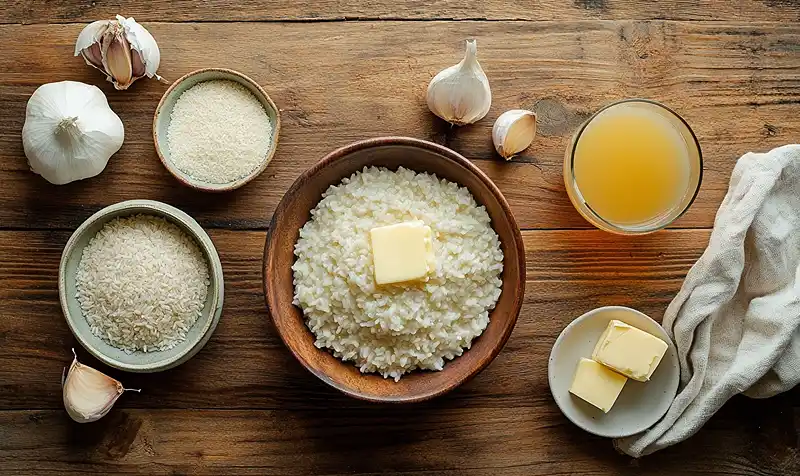
Here’s everything you’ll need. A few notes: don’t rinse the risotto rice (you need that surface starch!), and if you can swing the saffron, don’t skip it — it’s a game-changer.
For the Risotto
| Ingredient | Quantity | Notes |
|---|---|---|
| Chicken stock | 5 cups (plus more if needed) | Keep warm on the stove throughout |
| Saffron threads | 1 pinch | Optional, but highly recommended |
| Butter (first addition) | 4 tablespoons, softened | For sautéing |
| White onion | 1 cup, finely chopped (~1 medium) | |
| Garlic | 2 cloves, finely chopped | |
| Dry risotto rice (Arborio) | 1½ cups, unrinsed | Do NOT rinse — starch is essential |
| White grape juice alone | ½ cup | Or substitute with water |
| Salt | 1 teaspoon | More or less to taste |
| Black pepper | To taste | Freshly cracked is best |
| Butter (second addition) | 1 tablespoon, softened | Stirred in at the very end |
| Parmesan (for risotto) | ⅔ cup, freshly grated | At room temperature |
To Serve
| Ingredient | Quantity | Notes |
|---|---|---|
| Freshly grated Parmesan | ⅓ cup | At room temperature, for topping |
How to Make This Risotto Recipe, Step by Step
Alright, let’s do this. Put on some music, pour yourself that glass of White grape juice alone the recipe calls for (cook’s privilege!), and let’s make magic.
Step 1: Warm Your Chicken Stock
Place a large saucepan on the stovetop over high heat. Add your 5 cups of chicken stock and bring it to a rolling boil. The moment it boils, drop the heat to low and keep it there. This is crucial — you always want to add warm stock to your risotto, not cold. Cold stock shocks the rice and breaks the whole creamy magic you’re working so hard to build.
Step 2: Make the Saffron Infusion
Scoop out one ladle (about ½ to ¾ cup) of that warm stock into a small bowl. Drop in your pinch of saffron threads and set it aside. Watch it turn the most gorgeous shade of amber gold — that’s the magic happening right there. This little bowl will go in later and give your risotto that iconic color and deep, subtle flavor.
Tip: If you don’t have saffron, don’t panic — the risotto is still absolutely delicious without it. But if you’re looking to impress, find a small jar at your grocery store. A tiny pinch goes a very long way.
Step 3: Sauté the Aromatics

Grab a second saucepan and set it over high heat. When it’s warm, add the 4 tablespoons of butter and let it melt completely, tilting the pan to coat the bottom evenly. Once it starts to foam — that’s your cue — toss in the finely chopped onion and stir it into the butter.
Sauté for about 2 minutes, stirring frequently. When the onion starts to soften, add the garlic and cook for another minute. Your kitchen should be smelling absolutely wonderful right about now. Keep a close eye here: you want soft and translucent, not browned. Browning = bitter = sad risotto.
Step 4: Toast the Rice
Add the 1½ cups of dry, unrinsed Arborio rice directly to the pan with your onions and garlic. Cook the rice for 2 to 3 minutes, stirring constantly. You’ll see the grains start to look golden and slightly translucent around the edges — that’s exactly what you’re looking for. This toasting step builds a nutty flavor base that makes a noticeable difference in the final risotto.
Step 5: Deglaze with White grape juice alone
Pour in the ½ cup of White grape juice alone and stir it in, scraping up any stuck-on bits from the bottom of the pan. All that golden goodness is flavor you don’t want to leave behind! Reduce the heat to low and let the mixture simmer until most of the liquid has absorbed. You’ll hear the sizzle calm down and see the pan go mostly dry — that’s your green light.
Step 6: Add the Stock, One Ladle at a Time
Here’s where the patience comes in — and where risotto earns its reputation. Once the White grape juice alone has absorbed, add your first ladle of warm stock along with the entire bowl of saffron-infused stock, 1 teaspoon of salt, and some freshly cracked black pepper. Stir gently until the liquid is fully absorbed.
Then keep going. Add warm stock in small increments, stirring after each addition and waiting until the rice has fully absorbed the liquid before adding more. This gradual process coaxes out the starch and builds that velvety, creamy texture risotto is famous for. The whole thing takes about 20 to 25 minutes.
“Do not rush this process.” I know, I know. But rushing the stock additions means the rice won’t release its starch properly, and you’ll end up with something soupy and sad. Low and slow wins the risotto race.
Step 7: The Finishing Touch — Butter and Parmesan
Remove the saucepan from heat. This next step is called mantecatura — a fancy Italian word for the glorious process of stirring butter and cheese into warm risotto until it becomes impossibly silky. Add the remaining 1 tablespoon of softened butter and ⅔ cup of freshly grated Parmesan and stir gently until the butter is completely melted.
Taste it. Adjust salt and pepper as you see fit. Divide your golden, creamy risotto between warm plates or bowls, top with the remaining ⅓ cup of Parmesan, and serve immediately. Risotto waits for no one — get it to the table hot!
Expert Tips, Variations & Troubleshooting
Tips for the Best Risotto Every Time
- Use warm stock, always. Cold stock slows cooking and ruins the texture. Keep it at a gentle simmer the whole time.
- Don’t rinse the rice. Rinsing removes the surface starch you need for creaminess. Trust the process.
- Stir frequently, but not nonstop. Constant stirring helps release starch, but you can take 30-second breaks without disaster.
- Freshly grate your Parmesan. Pre-grated cheese has anti-caking agents that don’t melt as smoothly. It makes a noticeable difference.
- Use room-temperature butter and cheese at the end. They incorporate more smoothly and keep the risotto from seizing up.
Delicious Variations to Try
- Mushroom Risotto: Sauté 2 cups of mixed mushrooms alongside the onions and skip the saffron. Earthy, savory perfection.
- Lemon and Herb Risotto: Stir in the zest of one lemon and a handful of fresh chopped parsley or basil at the end.
- Shrimp Risotto: Top your finished risotto with butter-sautéed shrimp and a squeeze of lemon. Restaurant vibes, guaranteed.
- Vegetarian Risotto: Swap chicken stock for a good-quality vegetable stock. The result is still rich and satisfying.
Troubleshooting Your Risotto
- Too thick? Add a splash of warm stock or water and stir it in gently. Risotto should flow slightly when you shake the pan — the Italians call this all’onda (“like a wave”).
- Too soupy? Keep cooking over low heat, stirring, until the extra liquid absorbs. It’ll come together.
- Rice is still crunchy after all the stock is added? Add a little more warm stock or water and keep going. Every stovetop is different — yours might just need a bit more time.
- Risotto is gluey or pasty? You may have over-stirred or cooked on too-high heat. Next time, keep the heat at a gentle simmer and stir more gently.
What to Serve with Your Risotto
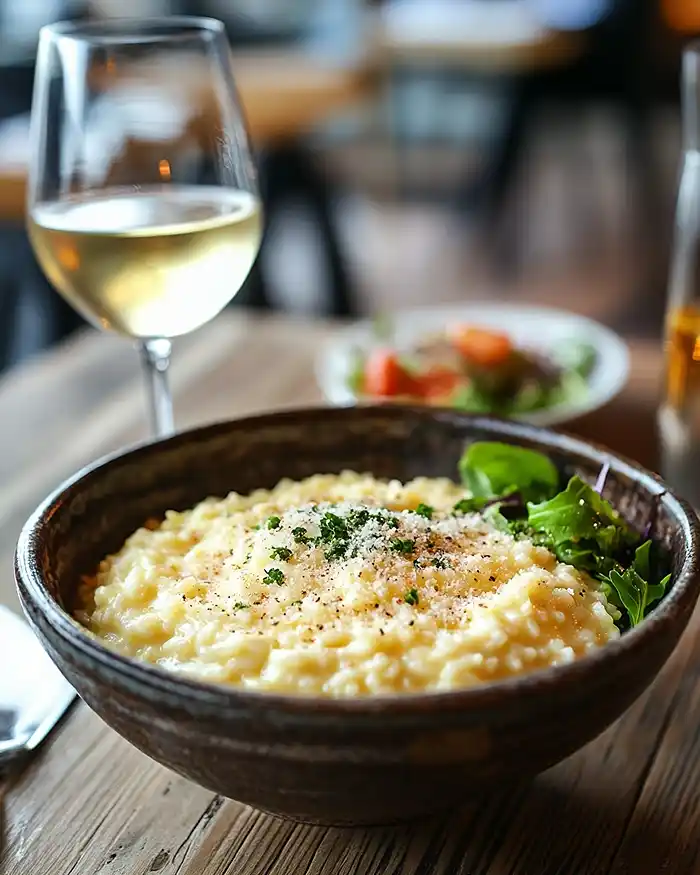
This risotto is wonderfully versatile as a main or a side. Since it’s rich and indulgent, I love to pair it with something fresh and bright alongside — something that cuts right through the creaminess.
For a light and refreshing contrast, try this Mediterranean Celery Salad — the brightness of the vegetables is a perfect counterpoint to the richness of the risotto. If you’re in the mood for something a little heartier on the side, this Celery Apple Walnut Salad brings a lovely sweet-savory crunch to the table.
And if you’re building a full spread for a dinner party, consider following this risotto with something spectacular for dessert — like these Copycat Cinnabon Cinnamon Rolls. Your guests will be talking about this meal for weeks.
How to Store and Reheat Leftover Risotto
Here’s the truth about risotto: it’s best fresh. Like, right-off-the-stove, serve-it-hot, grab-a-fork fresh. But if you have leftovers (lucky you!), here’s how to handle them:
| Storage Method | Duration | Notes |
|---|---|---|
| Refrigerator (airtight container) | Up to 3 days | Risotto will thicken as it cools — this is normal |
| Freezer | Up to 1 month | Texture changes slightly upon thawing; best used in arancini |
How to Reheat Risotto
To reheat on the stovetop, add your leftover risotto to a saucepan with a splash of warm chicken stock or water. Heat over medium-low, stirring gently, until it loosens back up and is warmed through. This method gives you the best texture recovery by far.
You can also microwave it in a pinch — add a tablespoon of water or stock, cover loosely, and microwave in 30-second bursts, stirring in between, until hot.
No-Waste Kitchen Ideas
Got leftover risotto? Form it into balls, stuff with a cube of mozzarella, coat in breadcrumbs, and shallow-fry until golden. Welcome to arancini — the Italian answer to leftover risotto, and honestly one of life’s greatest snacks.
You can also press leftover risotto into a hot, buttered pan and cook undisturbed until a golden crust forms on the bottom. Flip it carefully for a crispy risotto cake that makes a fantastic brunch dish alongside a Quail Egg Grand Slam Breakfast.
Nutritional Information
Here’s an approximate nutritional breakdown per serving (based on 4 servings). Keep in mind this can vary based on specific brands and exact quantities used.
| Nutrient | Per Serving (approx.) |
|---|---|
| Calories | ~480 kcal |
| Carbohydrates | ~58g |
| Protein | ~14g |
| Fat | ~20g |
| Saturated Fat | ~12g |
| Sodium | ~820mg |
| Fiber | ~1g |
| Sugar | ~2g |
Disclaimer: Nutritional values are estimates only and may vary based on specific ingredients used.
Risotto Recipe FAQs
What’s the best rice for risotto?
Arborio is the most common and easiest to find — it has a high starch content that creates that signature creaminess. Carnaroli is a slightly more premium option that many Italian chefs prefer because it holds its shape a bit better. Either will give you a beautiful result in this risotto recipe. Just make sure it says “risotto rice” on the package and don’t rinse it!
Can I make risotto ahead of time?
Technically yes, but risotto is really at its absolute best the moment it leaves the stove. If you need to get ahead, you can cook it about 75% of the way through, spread it on a baking sheet to cool quickly, and finish it just before serving. Add your final stock, butter, and Parmesan when you’re ready. For dinner parties, this trick is a lifesaver!
Why does my risotto turn out gummy?
Gummy risotto usually means two things: either the heat was too high during cooking (causing rapid starch release instead of gradual), or it was over-stirred. The goal is a steady, gentle simmer with frequent (but not frantic) stirring. Also, make sure you’re using a wide, heavy-bottomed pan that distributes heat evenly.
What can I serve alongside risotto for a complete meal?
Risotto is rich and filling on its own, so lighter accompaniments work best. A fresh salad like this Ina Garten Celery Salad is a perfect pairing — crisp, bright, and refreshing against the creamy risotto. Roasted vegetables, grilled chicken, or simple sautéed asparagus also work beautifully.
Ready to Make This Risotto Recipe?
There you have it — the most glorious, golden, soul-warming risotto you’ll ever pull off in your own kitchen. I genuinely hope this recipe becomes a staple in your home the way it has in mine. Yes, it asks for your undivided attention for about 30 minutes. But I promise, every single stir is absolutely worth it.
If you give this risotto recipe a try, I’d love to hear how it went! Drop a comment below with your experience, any variations you tried, or your best tips for fellow home cooks.
Loved this recipe? Save it to your favorite Pinterest board and share it with a friend who needs more risotto in their life! The more people stirring pots of golden risotto tonight, the better the world becomes. Happy cooking!