

Discover the simple, nourishing ray peat gelatin recipe that’s taken the health community by storm — made with just orange juice, gelatin, and a touch of sweetness.
Okay, so I’ll be honest — I never thought I’d be this excited about gelatin. It’s not exactly the most glamorous health food, right? But once I fell down the rabbit hole of Dr. Ray Peat’s nutritional philosophy, this wobbly little dessert became a daily ritual I genuinely look forward to.
It’s sweet, it’s refreshing, and it takes about five minutes of hands-on effort. That’s my kind of wellness routine.
This Brilliant Ray Peat Gelatin Recipe is the kind of simple wellness trend you’ll want to try before everyone else catches on. Discover more smart gelatin recipes for weight loss before your healthy routine starts feeling stale.
Table of Contents
What Is Ray Peat Gelatin and Why Does It Matter?
Dr. Ray Peat was a biologist and researcher who emphasized the importance of glycine-rich proteins for metabolic health. Gelatin is loaded with glycine, which he believed helped balance the amino acid profile of a modern diet heavy in muscle meats.
The dr ray peat gelatin approach is less about a strict recipe and more about a philosophy: get more gelatin into your diet in an enjoyable, digestible way. Mixing it with fruit juice — especially orange juice — was one of his go-to suggestions.
If you’re curious how gelatin stacks up against collagen powder, check out this deep dive on how gelatin supports weight loss goals — it’s a fascinating read.
Quick Overview: What You’re Getting Into
This ray peat gelatin recipe is a lightly sweet, jiggly orange gelatin that doubles as a snack, dessert, or even a between-meal protein boost. It’s made with real orange juice, which brings natural sugars, vitamin C, and a bright, fruity flavor.
The texture is smooth and satisfying — not rubbery like old-school Jell-O, but tender and almost melt-in-your-mouth. It sets up beautifully in a dish or individual molds, making it as cute as it is nourishing.
And yes — it’s actually delicious. No holding your nose required.
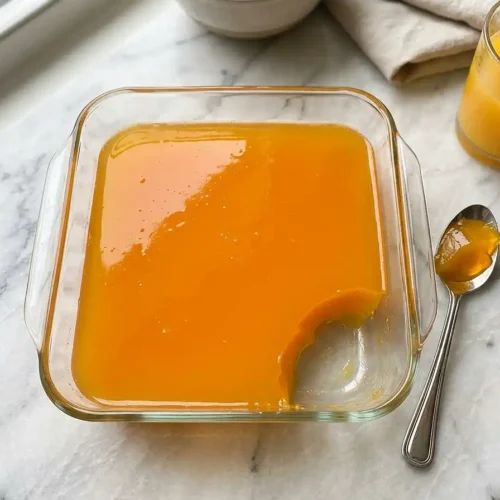
Ray Peat Gelatin
Equipment
- Mixing bowl
- Saucepan
- Spoon
- measuring cups
- Refrigerator
Ingredients
Ingredients
- 2 cups orange juice divided
- 2 tablespoons unflavored gelatin powder
- 2-4 tablespoons sugar or raw honey optional
Instructions
- Pour 1/2 cup of cold orange juice into a bowl and sprinkle gelatin evenly over the surface. Let it sit for 3 to 5 minutes to bloom.
- Heat the remaining 1 1/2 cups of orange juice in a saucepan over medium-low heat until hot but not boiling.
- Pour the hot juice over the bloomed gelatin and stir for about 2 minutes until fully dissolved and smooth.
- Add sugar or honey if desired and stir until fully dissolved.
- Pour the mixture into a dish or molds and refrigerate for 2 to 4 hours until fully set.
Notes
Ingredients
Here’s everything you need for this simple gelatin ray peat inspired treat. The ingredient list is beautifully short — no weird additives, no obscure supplements, just real food.
| Category | Ingredient | Amount |
|---|---|---|
| Base Liquid | Fresh or store-bought orange juice | 2 cups (divided) |
| Protein | Unflavored gelatin powder | 2 tablespoons |
| Sweetener (optional) | Sugar or raw honey | 2–4 tablespoons |
A quick note on the gelatin: Look for a high-quality unflavored gelatin — grass-fed options are widely available online and in health stores. If you’re wondering whether your gelatin is gluten-free, this guide on Knox unflavored gelatin and gluten-free diets has you covered.
As for the orange juice, freshly squeezed is ideal for maximum nutrients, but a good-quality store-bought version works perfectly fine. Ray Peat himself appreciated the natural sugars in fruit juice for supporting metabolism — so don’t feel guilty about the sweetness.
How to Make Ray Peat Gelatin: Step-by-Step Instructions
Step 1: Bloom the Gelatin
Pour 1/2 cup of cold orange juice into a medium mixing bowl. Sprinkle the 2 tablespoons of unflavored gelatin powder evenly over the surface.
Don’t stir it yet — just let it sit for 3 to 5 minutes. This “blooming” process lets the gelatin absorb the liquid and swell up, which helps it dissolve evenly later. You’ll notice it transforms from powdery to a thick, spongy mass. That’s exactly what you want.
“If you skip the bloom step, you risk lumpy gelatin. Trust the process — five minutes is worth it.”
Step 2: Heat the Remaining Juice
While the gelatin blooms, pour the remaining 1 1/2 cups of orange juice into a small saucepan. Heat it over medium-low heat until it’s hot and steaming — but do not let it boil.
Boiling can break down some of the delicate nutrients in fresh juice and may affect the gelatin’s setting ability. You’re looking for that “too hot to touch but not bubbling” stage. A kitchen thermometer around 160–170°F (71–77°C) is perfect if you want to be precise.
Step 3: Dissolve the Gelatin
Pour the hot juice slowly over the bloomed gelatin. Stir gently but consistently for about 2 minutes until the gelatin is completely dissolved. No lumps, no grainy bits — just smooth, glossy liquid.
If you hold a spoon up to the light and still see undissolved particles, keep stirring. A few extra seconds now saves you from a weird-textured final result.
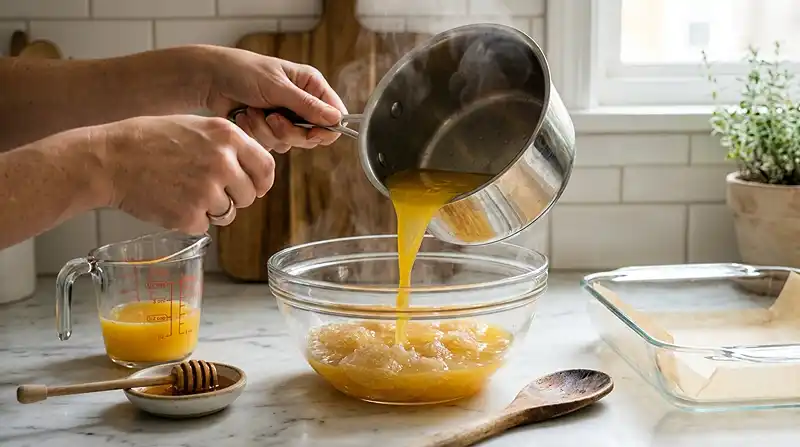
Step 4: Add Sweetener (Optional)
If you’d like a touch more sweetness, stir in 2 to 4 tablespoons of sugar or raw honey at this stage. The liquid is still warm enough to dissolve either sweetener easily.
Raw honey adds a subtle floral note that pairs beautifully with orange. If you’re keeping things simple, the natural sweetness of the OJ is often enough on its own — especially if you’re using a riper, sweeter variety of juice.
Step 5: Pour and Refrigerate
Pour the mixture into a shallow dish, a loaf pan, or individual silicone molds. Give the dish a gentle shake to settle any bubbles on the surface.
Transfer to the refrigerator and let it set for 2 to 4 hours, or overnight if you’re prepping ahead. You’ll know it’s ready when the surface is firm to a light touch and the gelatin no longer jiggles like liquid — just that satisfying, gentle wobble.
Ray Peat Collagen vs Gelatin: What’s the Difference?
People often ask about ray peat collagen vs gelatin — and it’s a fair question since both come from the same source. The main difference is solubility: collagen peptides dissolve in cold water, while gelatin only dissolves in hot liquid and gels when cooled.
Ray Peat tended to favor gelatin specifically because of the way it behaves in the gut and its high glycine content. Collagen peptides are more convenient, but gelatin’s gelling properties may offer additional digestive benefits.
For a comparison of gelatin-focused health approaches, the Dr. William Li gelatin recipe offers another interesting perspective on how different health experts use this ingredient.

Expert Tips for the Best Results
Choosing Your Gelatin
Quality matters here. Go for a grass-fed, unflavored gelatin powder with no additives. The bloom strength (measured in “grams”) affects how firm your gelatin sets — standard grocery store gelatin works fine, but higher bloom gelatin will give you a firmer texture with the same amount of powder.
Getting the Ratio Right
Two tablespoons of gelatin per 2 cups of liquid gives a firm, sliceable set. For a softer, spoonable texture — more like a panna cotta — reduce to 1.5 tablespoons. For a very firm, Jell-O-style result, go up to 2.5 tablespoons.
Flavor Variations
While orange juice is the classic ray peat gelatin recipe choice, you can experiment with other juices. Pineapple juice adds a tropical brightness, and apple juice makes a milder, crowd-pleasing version. Just avoid fresh pineapple or kiwi juice — they contain enzymes that prevent gelatin from setting properly.
You can also stir in a teaspoon of vanilla extract after dissolving the gelatin for a dessert-leaning flavor. Some people add a small pinch of sea salt to balance the sweetness — it sounds odd, but it works.
Troubleshooting
If your gelatin isn’t setting after 4 hours, it likely didn’t fully dissolve. Next time, make sure the liquid is hot enough and stir longer. You can also gently reheat a failed batch, re-dissolve, and try again — gelatin is very forgiving that way.
If it’s too rubbery or dense, reduce the gelatin amount slightly next time. Every brand has slightly different bloom strengths, so a little trial and error is normal when you switch brands.
Storage Instructions
| Storage Method | Container | Duration |
|---|---|---|
| Refrigerator | Covered dish or airtight container | Up to 5 days |
| Freezer | Not recommended | Freezing changes the texture significantly |
Reheating and Repurposing
If you want to repurpose leftover gelatin, you can gently melt it in a small saucepan over low heat and pour it into new molds. It re-sets perfectly and you’re not wasting anything.
Leftover gelatin also makes a great topping for yogurt or cottage cheese — just chop it into cubes and spoon it over. The slight sweetness and fruity flavor pair really well with tangy dairy.
If the gelatin starts to weep (release liquid), it’s still safe to eat — just give it a stir or drain lightly before serving.
Ray Peat Gelatin Recipe FAQs
Can I use any brand of unflavored gelatin for this recipe?
Yes — any unflavored, unsweetened gelatin powder will work. Grass-fed brands like Great Lakes or Vital Proteins are popular choices in the Ray Peat community for quality reasons, but standard Knox gelatin works perfectly well for the recipe itself.
Is this recipe actually from Dr. Ray Peat’s writings?
Not verbatim. Dr. Peat’s actual written guidance was broader: dissolve gelatin in hot water and mix it into fruit juice. This recipe is Ray Peat-inspired — it follows his principles closely while giving you a specific, easy-to-follow method. For more recipes in a similar spirit, check out the Dr. Gupta bariatric gelatin recipe for another health-focused approach.
How much gelatin should I eat per day?
Ray Peat suggested that gelatin could make up a significant portion of daily protein intake, often mentioning around 5 to 15 grams per day as a starting point. Two tablespoons of gelatin powder contains roughly 12 to 14 grams of protein, so this recipe covers a solid daily dose in one serving.
Can I make this without sugar or honey?
Absolutely. The sweetener is fully optional — orange juice has natural sugars that give the gelatin plenty of flavor on its own. If you prefer a less sweet version, try a less sweet juice variety or dilute slightly with water. You’ll still get all the benefits of the gelatin ray peat approach without added sweeteners.
Are there other gelatin recipes I can try for variety?
Definitely. Once you’re comfortable with this base recipe, it’s fun to explore other gelatin-focused approaches. The Kelly Clarkson Jello recipe and the Jello Ozempic recipe both offer popular variations that have gone viral for good reason.
Give This Recipe a Try
This ray peat gelatin recipe is one of those rare things: it’s genuinely good for you AND actually enjoyable to eat. No choking down supplements, no unpleasant textures — just a light, refreshing, wiggly little treat that fits seamlessly into a health-conscious lifestyle.
Whether you’re new to Dr. Peat’s ideas or you’ve been following his philosophy for years, this recipe is the easiest possible entry point. Five ingredients. Five minutes of effort. Big nutritional payoff.
Give it a try this week — I’d love to know how it goes for you! If you make it, share a photo on Pinterest and drop a comment below with your experience. Did you tweak the sweetener? Try a different juice? I’m always looking for new variations to test.
And if you found this helpful, please share it with a friend who loves simple, nourishing recipes. The more people discover the magic of dr ray peat gelatin, the better.
