
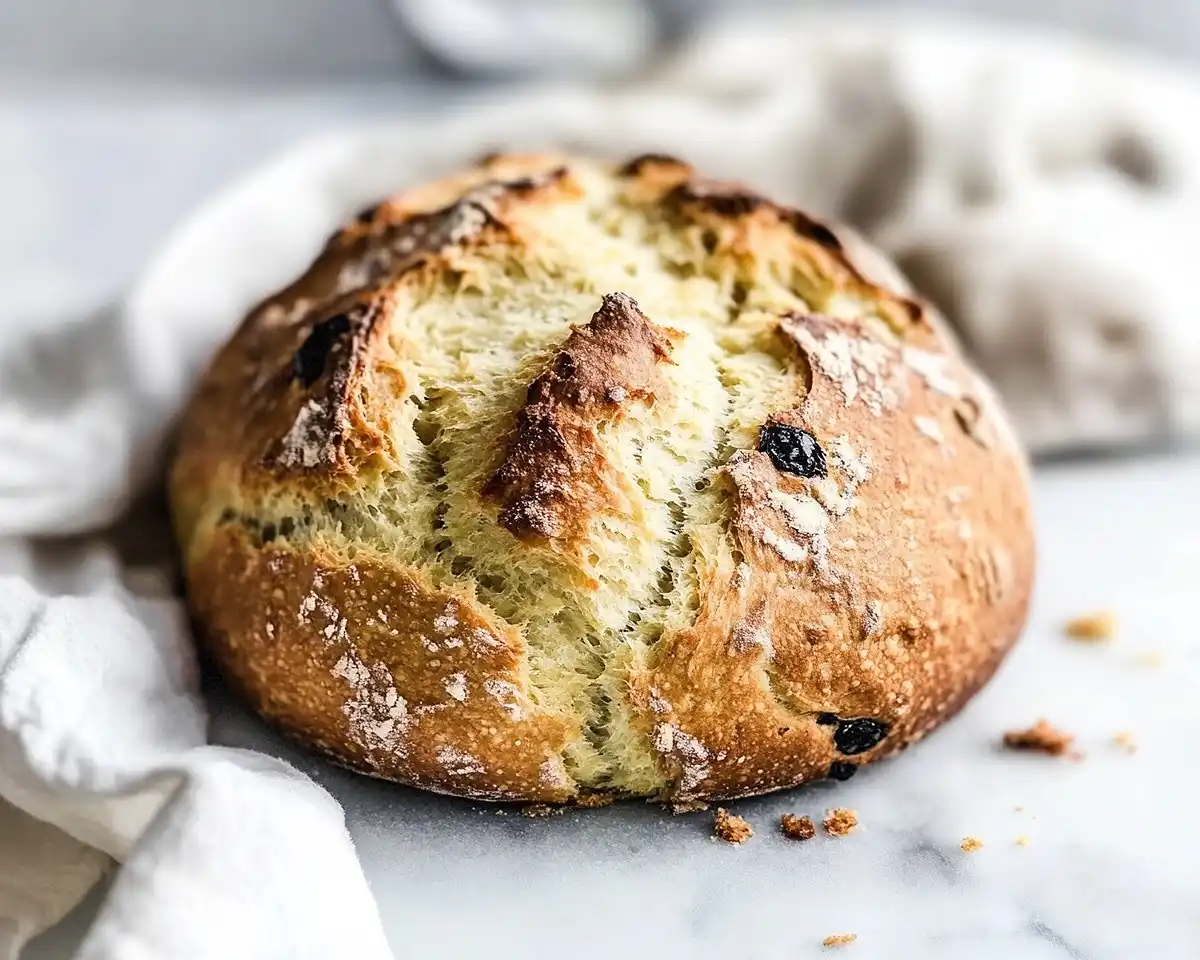
Craving a warm, crusty loaf that comes together in under an hour? This Irish soda bread recipe is the real deal — no yeast, no fuss, just pure homemade magic that’ll have your kitchen smelling absolutely incredible.
There’s something about Irish soda bread that just feels like a hug in loaf form. My grandmother used to make this every St. Patrick’s Day without even glancing at a recipe — just flour, buttermilk, and pure confidence.
I finally wrote it all down so you don’t have to wing it like she did (although, honestly, it’s hard to mess up).
Table of Contents
What Makes This Irish Soda Bread So Good
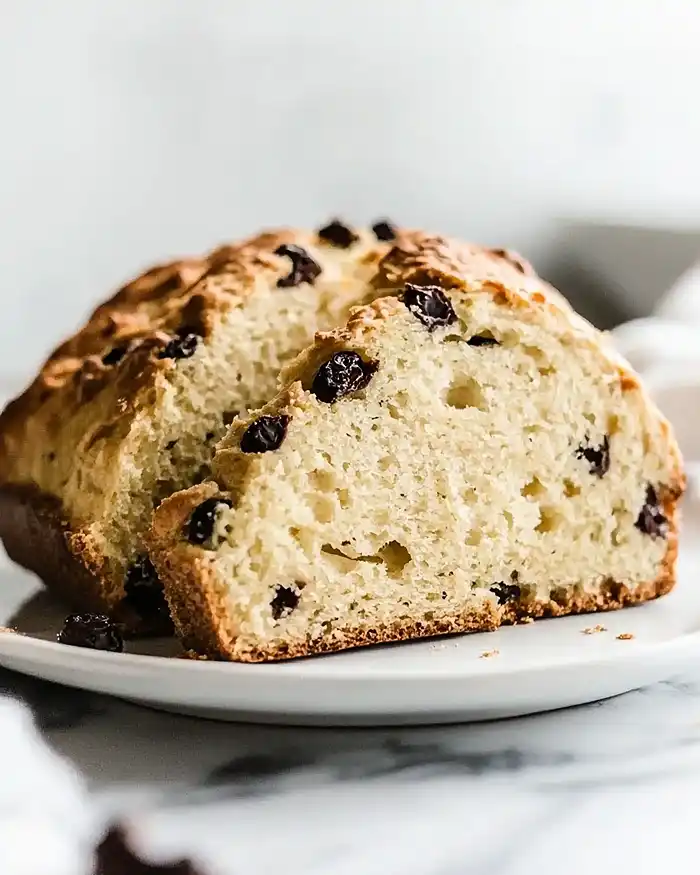
This is the kind of Super Simple Irish Soda Bread that doesn’t ask much of you — no proofing yeast, no stand mixer, no bread-baking experience required. What you do get is a golden, slightly tangy loaf with a tender crumb, a crackly crust, and optional plump raisins tucked inside for a little sweetness. It’s rustic, hearty, and honestly better than most bakery versions.
Pair it with something cozy like this slow cooker corned beef and cabbage for the ultimate St. Paddy’s Day spread. Or honestly? Toast a slice, slather it with butter, and call it dinner. No judgment here.
Grandma’s Irresistible Irish Soda Bread
Equipment
- Mixing bowl
- Whisk
- Pastry cutter or fork
- Baking sheet or cast iron skillet
- Knife
Ingredients
Wet Ingredients
- 1¾ cups Buttermilk
- 1 Large egg optional
Dry Ingredients
- 4¼ cups All-purpose flour spooned and leveled
- 3 tablespoons Granulated sugar
- 1 teaspoon Baking soda
- 1 teaspoon Salt
Fat
- 5 tablespoons Unsalted butter cold and cubed
Optional Mix-In
- 1 cup Raisins
Instructions
- Preheat oven to 400°F (204°C) and prepare a baking sheet, cast iron skillet, or cake pan.
- Whisk together buttermilk and egg in a small bowl. In a large bowl, whisk flour, sugar, baking soda, and salt.
- Cut in cold butter using a pastry cutter or fingers until the mixture resembles coarse crumbs.
- Add raisins if using, then pour in the wet mixture. Gently mix until a stiff dough forms.
- Turn dough onto a lightly floured surface, shape into a ball, and knead lightly for about 30 seconds. Transfer to pan and score an X on top.
- Bake for 45–55 minutes until golden brown and cooked through. Cool slightly before serving.
Notes
Ingredients
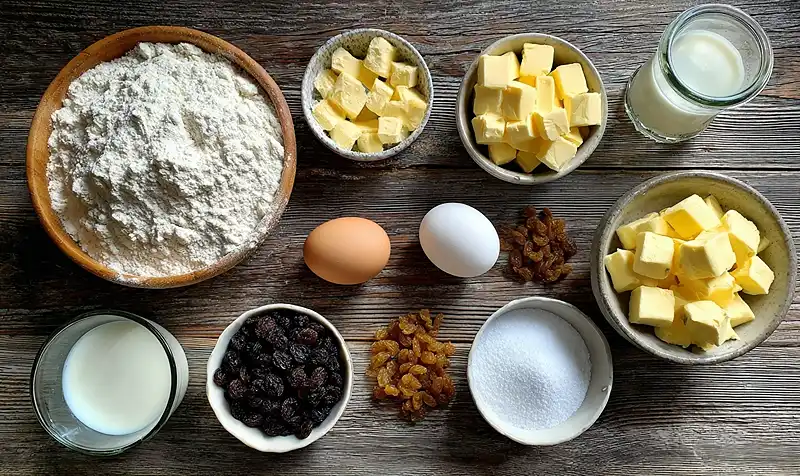
| Category | Ingredient | Amount |
|---|---|---|
| Wet | Buttermilk | 1¾ cups (420ml) |
| Large egg (optional) | 1 | |
| Dry | All-purpose flour, spooned & leveled | 4¼ cups (531g) |
| Granulated sugar | 3 tablespoons (38g) | |
| Baking soda | 1 teaspoon | |
| Salt | 1 teaspoon | |
| Fat | Unsalted butter, cold and cubed | 5 tablespoons (71g) |
| Optional Mix-In | Raisins | 1 cup (150g) |
Buttermilk note: No buttermilk? Add 1 tablespoon of white vinegar or lemon juice to a measuring cup, then fill to the 1¾ cup line with regular milk. Let it sit for 5 minutes. Boom — DIY buttermilk.
Egg note: The egg adds richness and helps bind the dough, but the bread works without it if you’re in a pinch. Either way, it’s delicious.
Step-by-Step Instructions
Step 1: Get Your Oven and Pan Ready
Preheat your oven to 400°F (204°C). Now, this is where you get to choose your own adventure — you’ve got options! A lined baking sheet works great (the bread spreads a little more, giving you wider slices).
A seasoned 10–12 inch cast iron skillet gives you that gorgeous bakery-style round. A greased 9–10 inch cake pan or pie dish also works beautifully. Even a 5-quart Dutch oven (lid off!) will do the trick.
Honestly, a cast iron skillet is my personal favorite — it gives the bottom a little extra crunch that’s chef’s kiss.
Step 2: Mix Your Wet and Dry Ingredients
Whisk the buttermilk and egg together in a small bowl or measuring cup and set it aside. In a large bowl, whisk together the flour, sugar, baking soda, and salt. It smells weirdly satisfying — very bread-like already.
Now cut in the cold, cubed butter using a pastry cutter, fork, or just your fingers (the old-fashioned way). Work it until the butter looks like pea-sized crumbles. The mixture will be very heavy on flour — that’s totally normal. Don’t panic.
Step 3: Bring the Dough Together
Stir in the raisins if you’re using them, then pour in the buttermilk mixture. Gently fold everything together until the dough gets too stiff to stir with a spoon.
“Gently” is key here — overworking soda bread dough makes it tough. Treat it like it’s a little fragile.
Turn the crumbly dough out onto a lightly floured surface. With floured hands, work it into a rough ball, then give it about 30 seconds of kneading — just enough to bring it all together. If it’s sticking to your hands, dust on a little more flour. You want a shaggy but workable dough.
Step 4: Score It
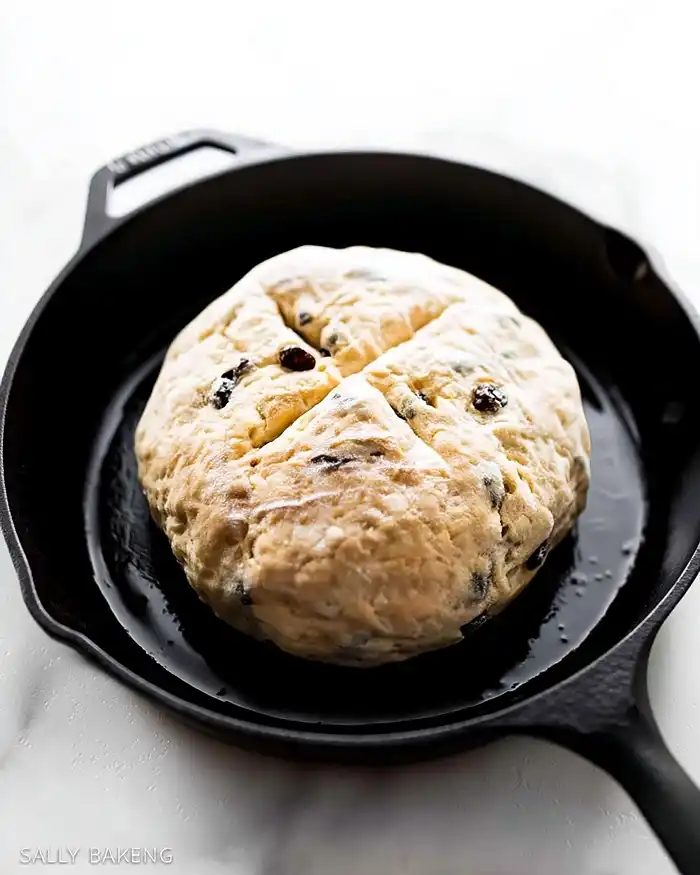
Transfer your dough ball to the prepared pan. Using a sharp knife or bread lame, cut a deep slash or X across the top — about ½ inch deep. This isn’t just for looks (though it does look very dramatic and artisan). Scoring helps the bread expand evenly as it bakes.
Step 5: Bake Until Golden
Bake for 45–55 minutes until the bread is deep golden brown and cooked through. If the top is browning too quickly, tent it loosely with aluminum foil — no big deal.
Want to be precise about doneness? An instant-read thermometer inserted into the center should read 195°F (90°C). That’s your green light.
Step 6: Cool and Serve
Let the bread rest in the pan for 10 minutes, then transfer to a wire rack. Serve it warm, at room temperature, or toasted with butter, jam, or honey. It’s glorious all three ways.
Expert Tips, Variations & Troubleshooting
Tips for the Best Results
Keep the butter cold. Cold butter = flaky, tender crumb. If your kitchen is warm, pop the cubed butter back in the fridge for 10 minutes before using.
Don’t over-knead. Unlike yeast bread, soda bread relies on baking soda for lift. The more you work the dough, the tougher the final loaf. Thirty seconds of kneading is plenty.
Buttermilk is non-negotiable (kind of). The acidity in buttermilk activates the baking soda — it’s what makes this Grandma’s Irish Soda Bread rise without yeast. Use the DIY version if needed, but don’t skip it entirely.
Fun Variations
Add caraway seeds — about 1–2 teaspoons mixed into the dry ingredients gives a classic, slightly earthy flavor that’s very traditional.
Go savory — skip the sugar and raisins, add shredded cheddar and fresh rosemary for a savory version that’s incredible alongside this baked balsamic chicken or a big pot of soup.
Whole wheat swap — replace up to half the all-purpose flour with whole wheat flour for a nuttier, heartier loaf. Goes beautifully with this sweet potato and ground turkey bake.
Troubleshooting
Bread too dense? You likely over-kneaded or used warm butter. Both can prevent proper rise.
Raw in the middle? Give it more time and use that thermometer. Every oven is different, and soda bread can look done on the outside before the center catches up.
Spread too flat? Next time try a cake pan or cast iron skillet instead of a baking sheet — they keep the loaf contained and taller.
Storage Instructions
| Method | How Long | Notes |
|---|---|---|
| Room temperature | Up to 2 days | Wrap tightly in aluminum foil |
| Refrigerator | Up to 1 week | Still wrap in foil, then slice as needed |
| Freezer | Up to 3 months | Slice first, then freeze in a zip-lock bag |
Reheating Tips
Slices toast up beautifully in a toaster or under the broiler for 1–2 minutes. For a whole leftover loaf, wrap in foil and warm in a 300°F oven for about 10–15 minutes. It tastes almost freshly baked.
No-Waste Kitchen Ideas
Got a stale end piece? Cube it, toss with olive oil and herbs, and bake into croutons. Stale soda bread also makes surprisingly good bread pudding — the slightly tangy flavor is excellent in a sweet custard base. You can also blend dry scraps into breadcrumbs for topping casseroles.
Nutritional Information
Based on 10 servings, with egg and raisins included. Values are approximate.
| Nutrient | Per Serving |
|---|---|
| Calories | ~285 kcal |
| Carbohydrates | 48g |
| Protein | 7g |
| Fat | 7g |
| Saturated Fat | 4g |
| Cholesterol | 35mg |
| Sodium | 320mg |
| Fiber | 2g |
| Sugar | 9g |
Irish Soda Bread Recipe FAQs
Can I make this Irish soda bread recipe without buttermilk?
Yes! The easiest swap is to make your own by adding 1 tablespoon of lemon juice or white vinegar to a measuring cup and filling it to the 1¾ cup mark with regular milk. Let it curdle for 5 minutes before using. Plain yogurt thinned with a splash of milk also works really well.
Can I make this Super Simple Irish Soda Bread ahead of time?
Absolutely. Soda bread is best fresh, but it holds up well for a couple of days wrapped tightly at room temperature. You can also bake it, cool it completely, wrap tightly, and freeze for up to 3 months — then thaw overnight and toast slices as needed.
Do I have to add raisins?
Nope! Traditional Irish soda bread in Ireland is actually often made without raisins — that’s the American-Irish version. Leave them out if you prefer a more savory, everyday loaf. You’ll still get all the same texture and flavor magic.
What can I serve with Irish soda bread?
So many things! It’s amazing with butter and jam, alongside soup and stew, or paired with hearty mains like this slow cooker corned beef and cabbage. Even this street corn chicken rice bowl is great with a warm slice on the side for soaking up all that sauce.
Ready to Bake?
This Irish soda bread recipe is one of those rare gems that feels impressive but takes almost zero effort. Whether it’s St. Patrick’s Day or just a random Tuesday when you need something warm and homemade, this loaf has your back.
Give it a try — and then come tell me how it went! Pin this recipe on Pinterest so you can find it again, and drop a comment below with your results. Did you add raisins? Go savory? I want to hear all about it!
