
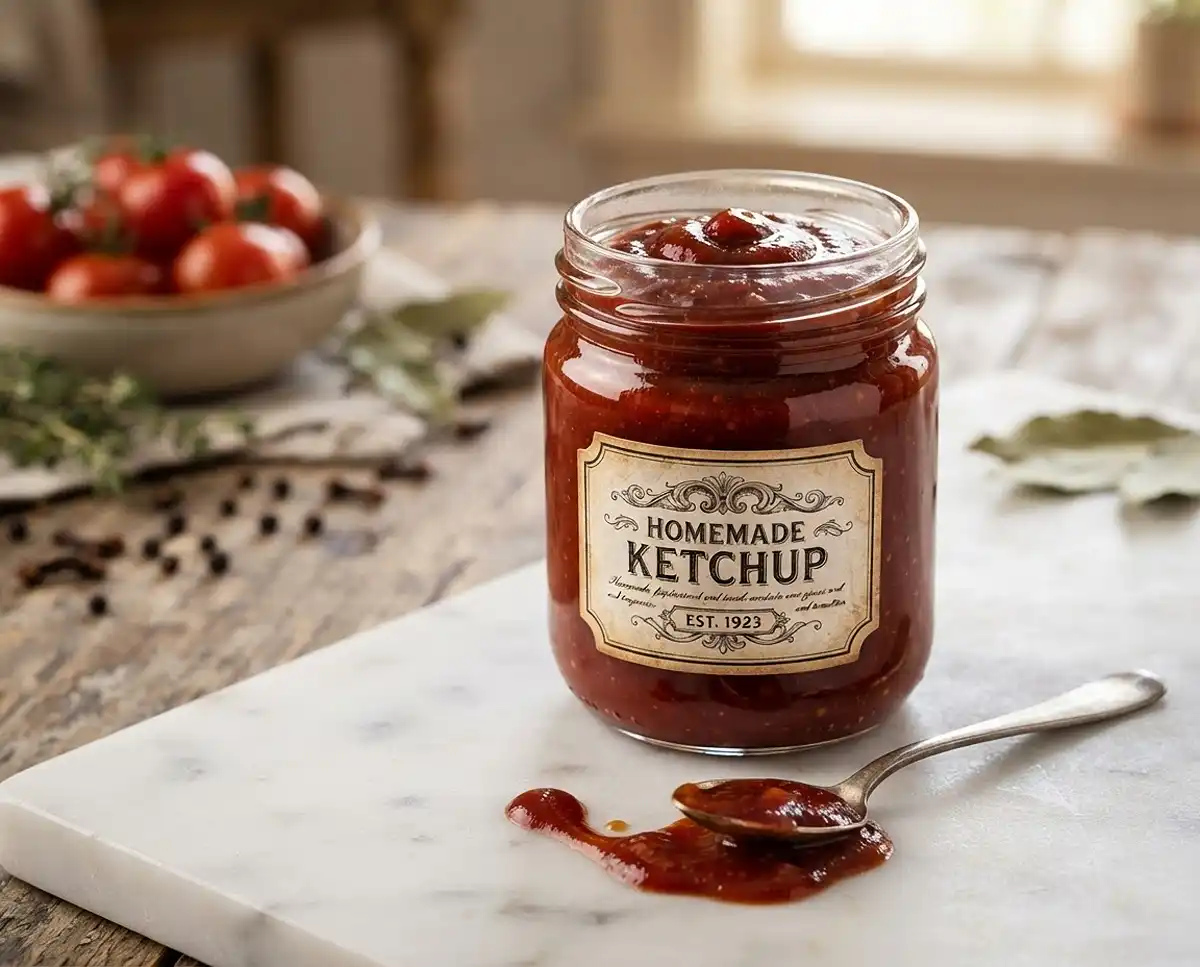
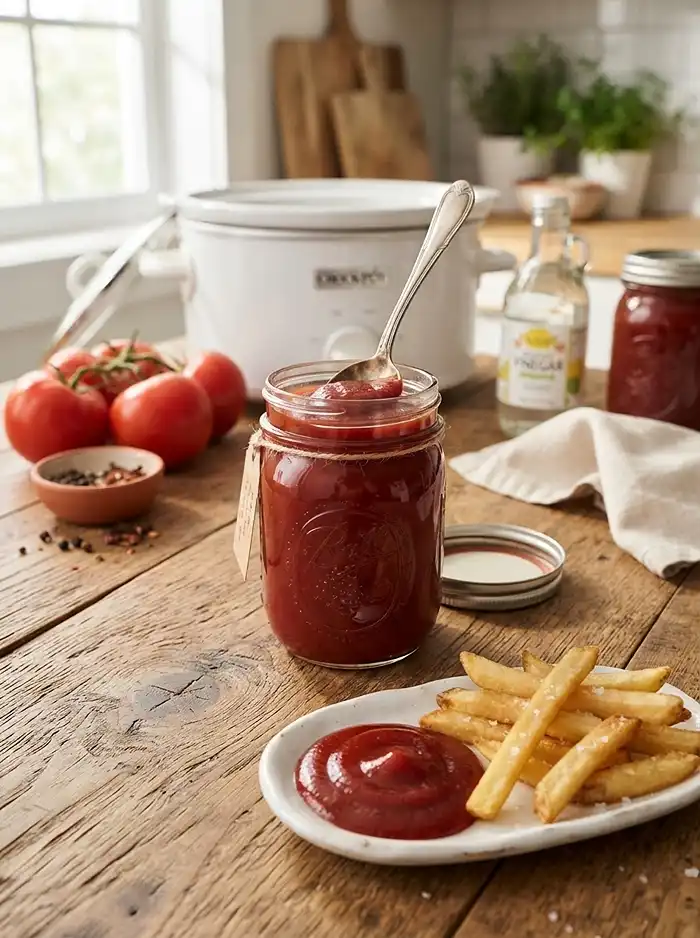
Learn how to make homemade ketchup in your slow cooker with this easy, cozy recipe. Rich, tangy, and way better than anything from a bottle.
My grandma used to say a good sauce takes patience, and honestly, she was right about homemade ketchup too. I started making this one lazy Sunday when I had a mountain of canned tomatoes and nothing else to do, and now I can’t imagine going back to store-bought.
Table of Contents
Why You’ll Fall for This Homemade Ketchup
This homemade ketchup is thick, glossy, and packed with way more flavor than anything squeezed from a plastic bottle. The slow cooker does all the heavy lifting while you go live your life.
You get that classic tangy-sweet balance, but you’re the one controlling the sugar, the salt, and the spice level. No mystery ingredients, no weird aftertaste, just real food.
It’s also one of those recipes that makes your whole kitchen smell like something wonderful is happening. Trust me, your neighbors might come knocking.
How to Make Homemade Ketchup
Equipment
- Slow cooker
- Whisk
- Immersion Blender
- Fine-mesh strainer
- Bowl
- Ladle
- Jar or bottle
Ingredients
Tomato Base
- 2 28-ounce cans Crushed tomatoes
- ½ cup Water Divided; use to rinse tomato cans
Sweet and Tangy
- ⅔ cup White sugar Adjust to taste or swap with honey or brown sugar for variation
- ¾ cup Distilled white vinegar Adds classic ketchup tang
Spices and Seasonings
- 1 teaspoon Onion powder
- ½ teaspoon Garlic powder
- 1 ¾ teaspoons Salt Adjust to taste after cooking
- ⅛ teaspoon Celery salt
- ⅛ teaspoon Mustard powder
- ¼ teaspoon Finely ground black pepper
- ¼ teaspoon Cayenne pepper Or to taste
- 1 Whole spice clove
Instructions
- Pour both cans of crushed tomatoes into the slow cooker.
- Swirl 1/4 cup water in each empty tomato can to collect the remaining tomato, then pour the water into the slow cooker.
- Add the sugar, vinegar, onion powder, garlic powder, salt, celery salt, mustard powder, black pepper, cayenne pepper, and whole clove.
- Whisk everything together until evenly combined.
- Cook on High, uncovered, for 10 to 12 hours, stirring every hour or so, until the mixture reduces by about half and becomes thick and glossy.
- Once reduced, blend the ketchup with an immersion blender for about 20 seconds, until smoother.
- Ladle the ketchup through a fine mesh strainer set over a bowl, pressing with the back of the ladle to push the smooth sauce through and catch any skins, seeds, or spice pieces.
- Let the strained ketchup cool completely in the bowl.
- Taste and adjust the salt, pepper, cayenne, sugar, or vinegar as desired.
- Transfer the cooled ketchup to clean jars or bottles and refrigerate.
Notes
What You’ll Need
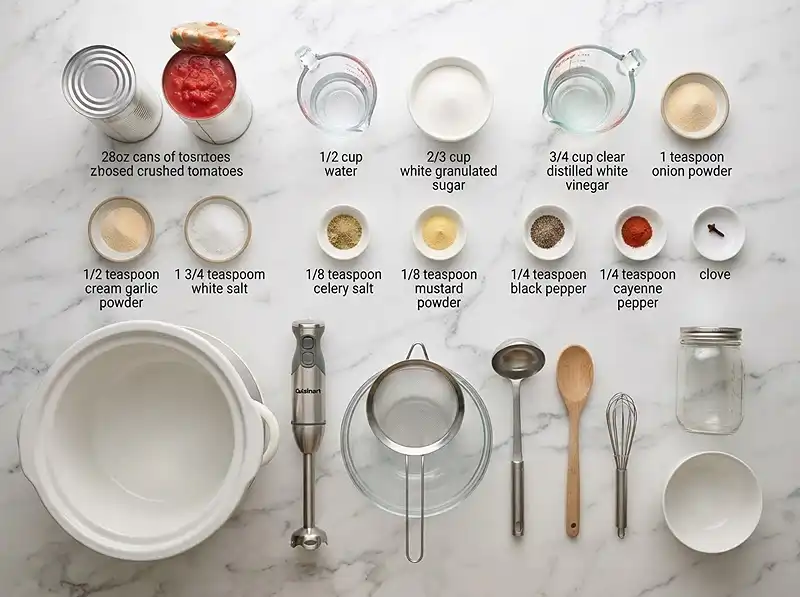
Here’s everything that goes into this batch of homemade ketchup. Most of it is probably already sitting in your pantry right now.
| Tomato Base | Amount |
|---|---|
| Crushed tomatoes (28 ounce cans) | 2 cans |
| Water, divided | ½ cup |
| Sweet and Tangy | Amount |
|---|---|
| White sugar | ⅔ cup |
| Distilled white vinegar | ¾ cup |
| Spices and Seasonings | Amount |
|---|---|
| Onion powder | 1 teaspoon |
| Garlic powder | ½ teaspoon |
| Salt | 1 ¾ teaspoons |
| Celery salt | ⅛ teaspoon |
| Mustard powder | ⅛ teaspoon |
| Finely ground black pepper | ¼ teaspoon |
| Cayenne pepper, or to taste | ¼ teaspoon |
| Whole spice clove | 1 |
Let’s Make Homemade Ketchup
Don’t worry, this recipe is basically “dump it in and walk away” territory. Here’s how it goes from canned tomatoes to that glossy red condiment you know and love.
Get Everything Into the Slow Cooker
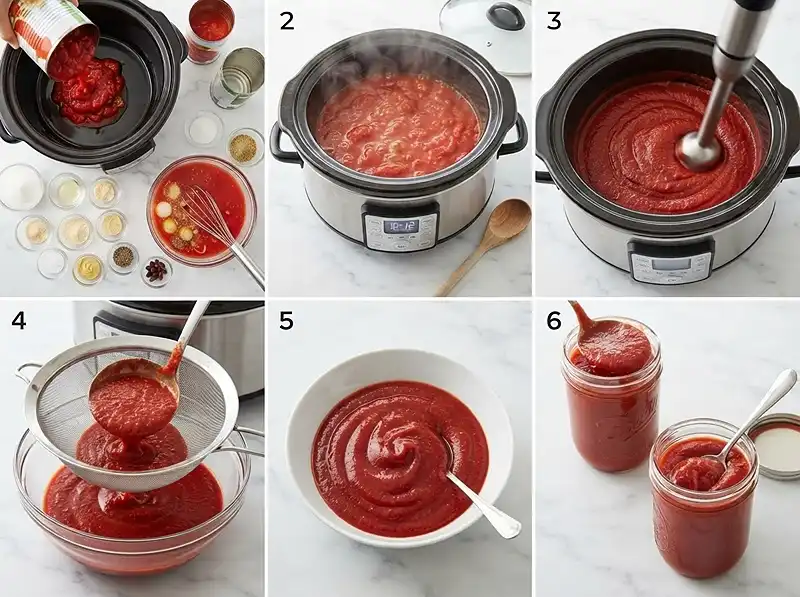
Pour both cans of crushed tomatoes into your slow cooker. Swirl a quarter cup of water in each empty can to grab every last bit of tomato clinging to the sides, then pour that in too. Waste not, want not.
Add the sugar, vinegar, onion powder, garlic powder, salt, celery salt, mustard powder, black pepper, cayenne, and that single whole clove. Whisk it all together until it looks like a somewhat thin, spiced tomato soup.
The Long, Slow Simmer
Cook on High, uncovered, for 10 to 12 hours, stirring every hour or so. I know that sounds like forever, but this is where the magic happens: the mixture reduces by half and turns thick and glossy.
“Leave the lid off,” is the one instruction I’d tattoo on my kitchen wall for this recipe. Uncovered cooking lets all that extra liquid evaporate, which is exactly what turns thin tomato soup into real homemade ketchup.
Your kitchen will smell incredible around hour six. Resist the urge to taste too early, it needs that full reduction time to really concentrate the flavor.
Blend, Strain, and Cool
Once it’s thick and reduced, blitz it with an immersion blender for about 20 seconds to smooth everything out. This is oddly satisfying to watch happen.
Ladle the ketchup into a fine strainer set over a bowl, pressing with the back of the ladle to push the smooth sauce through while catching any skins and seeds left behind.
Let the strained homemade ketchup cool completely in the bowl before bottling it up. Give it a final taste and adjust the salt, pepper, or cayenne however you like it.
Tips, Tweaks, and Fixes
A few small tricks make a big difference with this homemade ketchup recipe. Here’s what I’ve learned from a few too many batches.
Getting the Texture Right
Want it thicker? Prop the lid slightly ajar during the last hour so more steam can escape. Want it thinner? Stir in up to a quarter cup of hot water right after blending until it loosens up.
If you’re chasing that ultra-smooth, restaurant-style texture, strain the mixture twice or run it through a high-speed blender before it cools. It’s a small extra step that makes a noticeably silkier homemade ketchup.
Fun Variations to Try
Feeling smoky? Swap in smoked paprika for part of the black pepper for a barbecue-leaning homemade ketchup. Craving heat? Bump up the cayenne or toss in a pinch of chipotle powder.
You can also play with the sweetness by swapping white sugar for honey or brown sugar, which adds a deeper, almost caramel-like note to the finished sauce.
Troubleshooting Common Hiccups
If your ketchup tastes flat, it usually just needs more salt or a splash more vinegar to wake up the flavors. If it’s too thin even after the full cook time, keep it uncovered a little longer to reduce further.
Too spicy? A touch more sugar can mellow out the cayenne without changing the overall flavor much. Homemade ketchup is very forgiving, so don’t be afraid to adjust as you go.
Storing Your Homemade Ketchup
Good news, this homemade ketchup keeps well and travels nicely too. Here’s how to store it so it stays fresh and tasty.
| Storage Method | How Long It Lasts |
|---|---|
| Refrigerator, sealed jar or bottle | Up to 1 month |
| Freezer, airtight container | Up to 3 months |
Ketchup’s natural acidity actually makes it pretty resistant to spoiling, which is part of why store-bought versions can sit out on the counter for a while. Your homemade batch skips the preservatives though, so the fridge is your safest bet.
To reheat, just let it come to room temperature or give it a quick 10-second zap in the microwave if it’s gone a bit thick from the cold. No-waste tip: freeze small portions in an ice cube tray so you always have a perfect single-serving dollop ready to go.
Frequently Asked Questions
Can I make homemade ketchup without a slow cooker?
Yes, you can simmer the mixture in a heavy pot on the stovetop over low heat, stirring often, until it reduces and thickens. It will likely cook faster than the slow cooker method, so keep a close eye on it.
Why does my homemade ketchup taste too acidic?
A touch more sugar usually balances out extra tanginess. You can also let it cook a bit longer, since the reduction process mellows out sharp vinegar notes over time.
Can I use fresh tomatoes instead of canned?
You can, though you will need to peel, seed, and cook them down first since fresh tomatoes hold more water than canned. This recipe is built around canned crushed tomatoes for consistency and convenience.
Is homemade ketchup healthier than store-bought?
It can be, since you control the sugar and salt and skip preservatives or artificial flavoring found in some commercial brands. It is still a treat though, so enjoy it in moderation like any condiment.
Can I can this homemade ketchup for long-term storage?
This recipe is designed for refrigerator or freezer storage rather than shelf-stable canning. If you want to can it for pantry storage, follow a tested canning-specific recipe and processing time for food safety.
Conclusion
Homemade ketchup might sound fancy, but it’s really just tomatoes, spices, and a little patience doing all the work. Once you taste that fresh, tangy flavor, that plastic squeeze bottle is going to look a little sad in comparison.
This condiment actually has a surprisingly wild backstory, starting as a fermented fish sauce in Southeast Asia long before tomatoes ever entered the picture, according to Smithsonian Magazine’s deep dive into ketchup’s history. Making your own at home is basically carrying on centuries of kitchen tradition.
Give this recipe a try, snap a photo of that glossy red batch, and pin it on Pinterest so you can find it again later. I’d love to hear how your homemade ketchup turned out, so drop a comment and let me know.
Craving more homemade goodness? Try these vintage Southern cheese appetizers, cool off with homemade fudgesicles, or sip on a strawberry acai energy refresher.
