
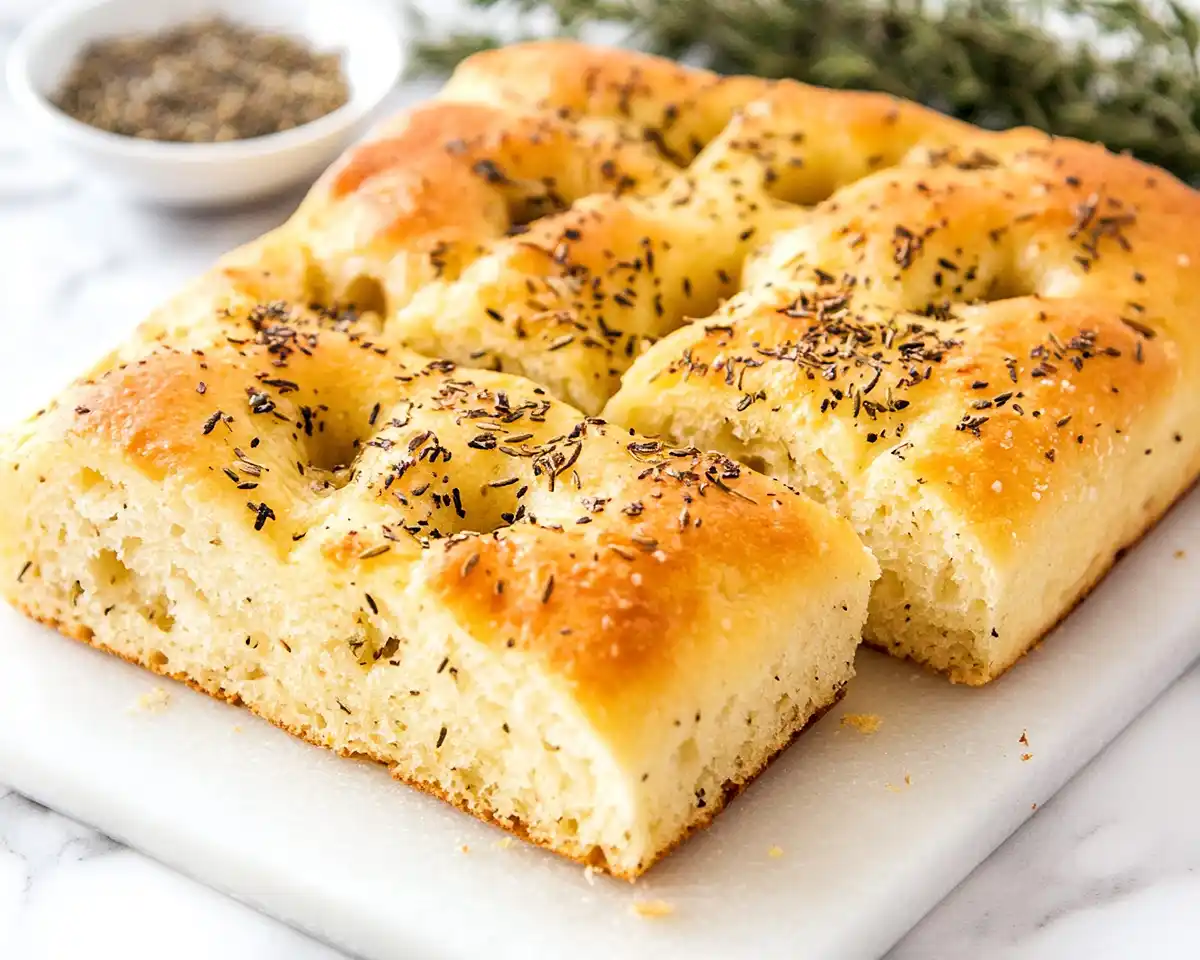
Forget everything you think you know about bread baking being hard. This homemade focaccia bread is the gateway recipe that turns nervous beginners into confident bakers — and it’s dangerously good.
I first made this on a rainy Sunday afternoon with zero plan, a half-used bottle of olive oil, and a desperate need for something warm and carby. One bite of that golden, herb-scented slab and I was completely hooked.
Table of Contents
Why You’ll Love This Homemade Focaccia Bread
This easy focaccia bread recipe delivers a crispy-on-the-outside, pillowy-on-the-inside result that feels wildly impressive for how little effort it actually takes.
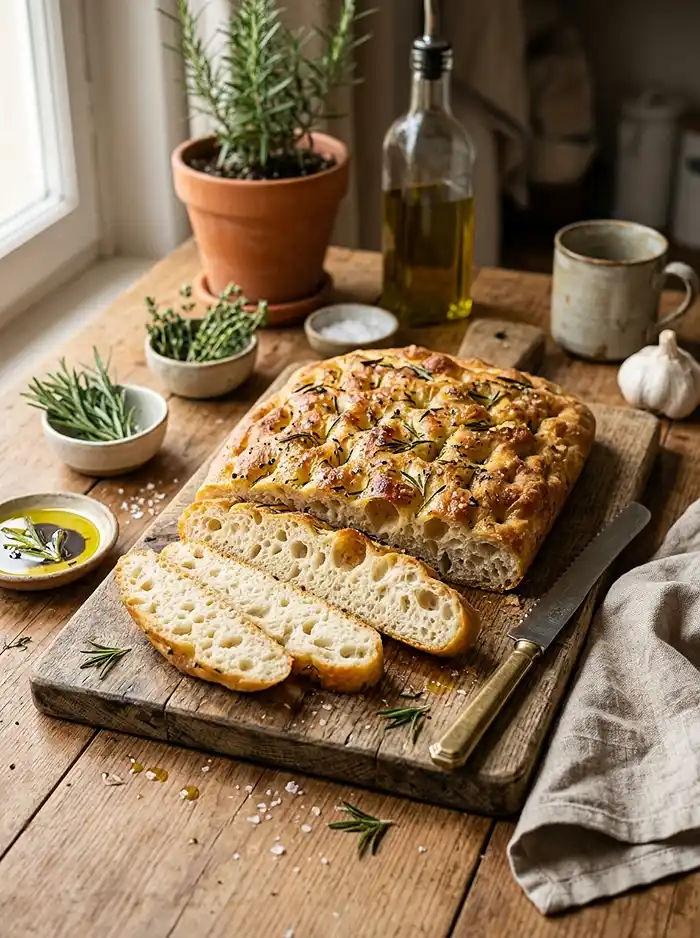
Think golden crust, bubbling olive oil pooling in every dimple, and that gorgeous garlic-herb perfume filling your whole kitchen. It’s simple artisan bread that looks like it came from a fancy Italian bakery — but you made it in your pajamas. No judgment.
The dough is forgiving, the technique is beginner-friendly, and the flavor payoff is enormous. Whether you serve it with soup, use it for sandwiches, or eat it plain straight off the pan, this herb focaccia bread never lasts long.
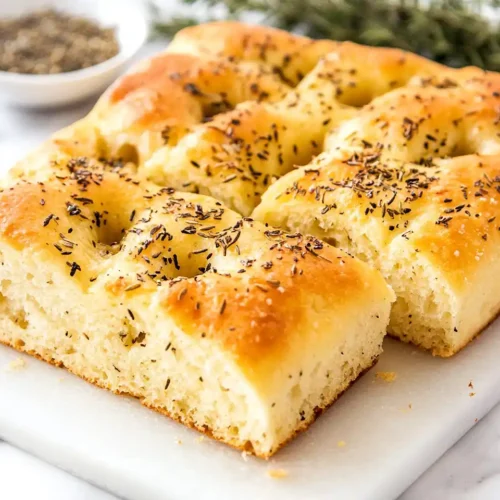
Irresistible Homemade Focaccia Bread
Equipment
- Medium skillet
- Large mixing bowl
- 9×13 inch baking pan
- wire rack
- Kitchen towel
Ingredients
Herb-Infused Oil
- ½ cup extra-virgin olive oil 120ml
- 2 cloves garlic cloves finely minced
- 1 tablespoon fresh rosemary chopped or 1 tsp dried
- 1 tablespoon fresh thyme chopped or 1 tsp dried
- ¼ teaspoon fresh ground black pepper
Dough
- 1 cup lukewarm water 110-115°F / 43-46°C
- 2 ¼ teaspoons instant yeast one 1/4-oz packet
- ¼ teaspoon sugar, honey, or maple syrup
- 2 ½ cups all-purpose flour 325g
- 1 teaspoon fine sea salt
Instructions
- Combine olive oil, minced garlic, rosemary, thyme, and black pepper in a cold medium skillet. Warm over low heat for 5 to 10 minutes, stirring occasionally, until fragrant and lightly golden. Remove from heat and let cool.
- In a large bowl, combine warm water, yeast, and sugar. Stir briefly and let sit for 5 minutes until foamy.
- Add 1 cup flour and 1/4 cup cooled garlic oil to the yeast mixture. Stir a few times until moistened and let rest for 5 minutes.
- Stir in the remaining flour and salt until a shaggy dough forms.
- Turn the dough onto a lightly floured surface and knead gently 10 to 15 times until smooth and slightly tacky.
- Transfer dough to an oiled bowl, cover with a damp towel, and let rise for 1 to 2 hours until doubled in size.
- Preheat oven to 450°F (232°C). Pour 2 tablespoons garlic oil into a 9×13-inch baking pan.
- Transfer dough to the pan and gently press it out to fit. Dimple the surface deeply with your fingertips.
- Drizzle remaining garlic oil over the dough and let rest for 20 to 30 minutes until slightly puffed.
- Bake for 15 to 20 minutes until deeply golden and crisp around the edges.
- Transfer the pan to a wire rack and let the focaccia cool completely before slicing and serving.
Notes
Ingredients You’ll Need
Everything here is pantry-friendly. No fancy equipment, no hard-to-find ingredients — just good olive oil, fresh herbs, and a little patience.
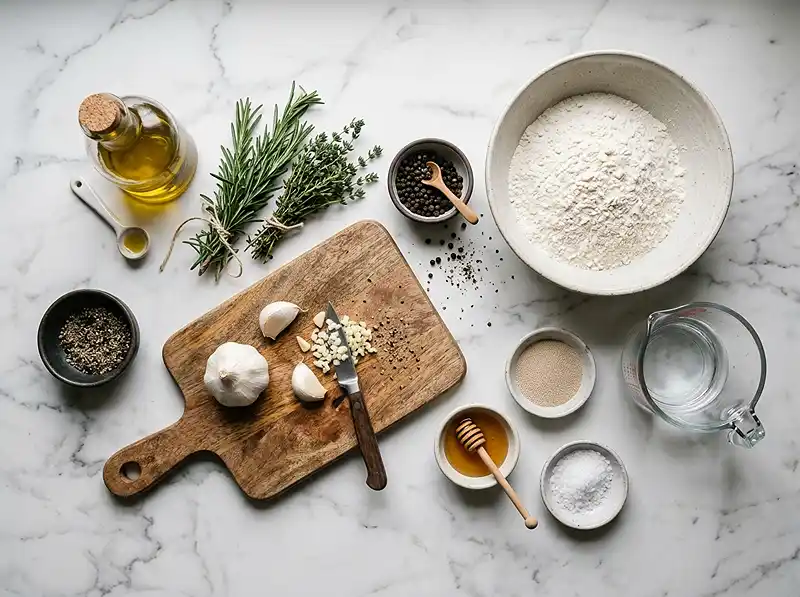
| Category | Ingredient | Amount |
|---|---|---|
| Herb-Infused Oil | Extra-virgin olive oil | 1/2 cup (120ml) |
| Herb-Infused Oil | Garlic cloves, finely minced | 2 cloves |
| Herb-Infused Oil | Fresh rosemary, chopped (or 1 tsp dried) | 1 tablespoon |
| Herb-Infused Oil | Fresh thyme, chopped (or 1 tsp dried) | 1 tablespoon |
| Herb-Infused Oil | Fresh ground black pepper | 1/4 teaspoon |
| Dough | Lukewarm water (110-115°F / 43-46°C) | 1 cup (235ml) |
| Dough | Instant yeast (one 1/4-oz packet) | 2 1/4 teaspoons |
| Dough | Sugar, honey, or maple syrup | 1/4 teaspoon |
| Dough | All-purpose flour | 2 1/2 cups (325g) |
| Dough | Fine sea salt | 1 teaspoon |
Pro tip: Splurge on a good extra-virgin olive oil here — it’s the star of the show. You’ll taste the difference, especially in the crust.
How to Make Homemade Focaccia Bread — Step by Step
Don’t let the multi-step process intimidate you. Most of the time is hands-off rising time where the dough does all the work while you relax with a cup of tea. Or wine. No judgment.
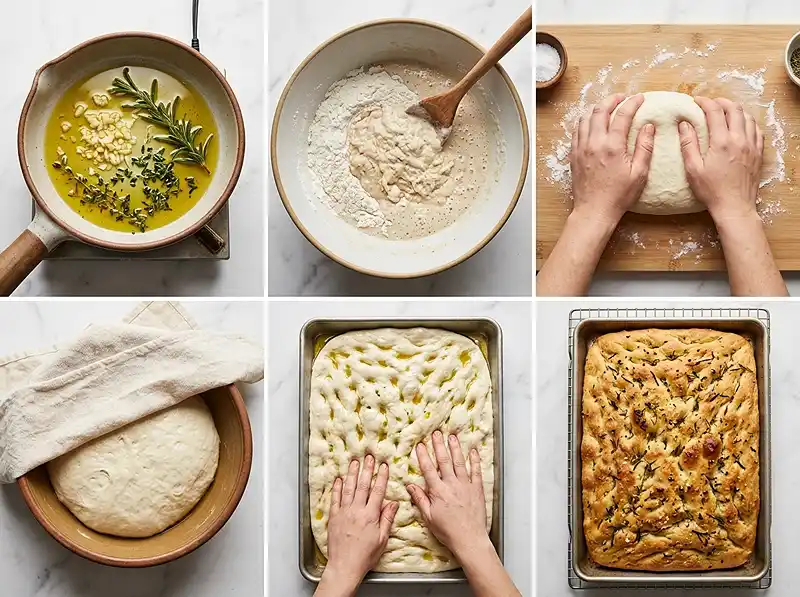
Step 1: Make the Herb-Infused Garlic Oil
Combine the olive oil, minced garlic, rosemary, thyme, and black pepper in a cold medium skillet. Turn the heat to low and let everything gently warm together, stirring occasionally, for 5 to 10 minutes.
You’re not trying to fry the garlic — you want it soft, fragrant, and lightly golden at most. The moment it starts to brown, pull it off the heat. Burnt garlic will ruin the whole batch, so keep a close eye on it.
“Low and slow is the move here. Think of it like coaxing the flavor out of the garlic, not blasting it into submission.”
Set the infused oil aside and let it cool before using. This step alone is what gives your herb focaccia bread that deep, savory richness that makes people ask “wait, what IS that flavor?”
Step 2: Wake Up the Yeast
In a large bowl, combine your warm water, yeast, and a pinch of sugar (or honey or maple syrup — all work). Give it a quick stir and then walk away for 5 minutes.
After 5 minutes, it should look foamy and slightly bubbly. That’s your yeast waking up and saying it’s ready to party. If nothing happens after 10 minutes, your water was probably too hot or the yeast is old — start fresh.
Step 3: Build the Dough in Stages
Add 1 cup of the flour and 1/4 cup of your cooled garlic-olive oil mixture to the yeast bowl. Stir it together 3 to 4 times until the flour is moistened, then leave it alone for another 5 minutes.
This little rest lets the flour hydrate and gives you a head start on gluten development. After the rest, stir in the remaining 1 1/2 cups of flour and the salt until a shaggy dough forms.
Step 4: A Quick, Light Knead
Turn the dough out onto a lightly floured surface and knead it gently 10 to 15 times. You’re not trying to work it aggressively — just bring it together into a smooth, slightly tacky ball.
This is not a no knead focaccia situation, but it’s close. The kneading here is minimal and relaxed. The dough should feel soft and a little sticky, not stiff. If it’s tearing, it needs more kneading. If it’s rock solid, you’ve gone too far — but that’s very hard to do.
Step 5: First Rise (The Waiting Game)
Transfer the dough to a large oiled bowl, cover with a warm, damp kitchen towel, and let it rise at room temperature until it doubles in size — about 1 to 2 hours.
The time will depend on how warm your kitchen is. A warm spot like the top of your fridge or near the oven is ideal. If you’d rather do this slowly overnight, pop the covered bowl in the fridge and let it rise there for up to 18 hours — this cold-proof method actually develops even better flavor.
Step 6: Pan and Dimple
Once doubled, preheat your oven to 450°F (232°C). Pour 2 tablespoons of the remaining garlic oil into a 9×13-inch baking pan and spread it around.
Transfer your dough to the pan and press it out gently with your fingers. It might spring back a bit — that’s normal. Give it a minute, then keep pressing. Once it’s roughly filling the pan, use your fingertips to poke those signature focaccia dimples all over the surface. Don’t be shy — go deep.
Drizzle the remaining garlic oil over the top (yes, all of it — this is not the time to hold back). Let the dough rest and puff up for another 20 to 30 minutes before baking.
Step 7: Bake Until Golden
Bake at 450°F for 15 to 20 minutes until the top is deeply golden and the edges look crisp. Your kitchen is going to smell absolutely incredible right about now.
Transfer the pan to a wire rack and let the bread cool completely before slicing. I know it’s tempting to tear into it immediately, but letting it cool helps the crumb set properly. Worth the wait — promise.
Expert Tips for Perfect Herb Focaccia Bread
Get the Water Temperature Right
Too hot and you’ll kill the yeast; too cold and it won’t activate. Aim for 110-115°F — it should feel warm on your wrist, like bathwater for a baby. A cheap kitchen thermometer takes all the guesswork out of it.
Don’t Skip the Garlic Oil Rest
Using the infused oil while it’s still warm can mess with your yeast. Let it cool to room temperature before adding it to your dough. Patience here pays off big time in flavor.
Oil the Pan Generously
This is focaccia — oil is not the enemy. A well-oiled pan gives you that crispy, almost fried bottom crust that makes this bread so addictive. Don’t skimp.
Try an Overnight Cold Proof
If you want even more complex flavor in your simple artisan bread, let the dough rise slowly in the fridge overnight. This long, cold fermentation gives you a deeper, slightly tangy taste. Just pull it out an hour before you’re ready to bake.
Tasty Variations to Try
Tomato and Olive Focaccia
After dimpling the dough, press in halved cherry tomatoes and pitted kalamata olives before baking. The tomatoes burst and get jammy in the oven — absolutely unreal.
Caramelized Onion Focaccia
Slowly caramelize a couple of sliced onions in butter until golden and sweet, then spread them over the dough before baking. Pair with a sprinkle of fresh thyme and a drizzle of balsamic for a fancier vibe.
Cheesy Focaccia
Scatter shredded parmesan or crumbled feta over the top right before baking. The cheese gets golden and slightly crispy on the edges — it’s ridiculous how good this is.
Sweet Focaccia
Skip the garlic and herbs, use plain olive oil, and top with sliced grapes, fresh rosemary, and a drizzle of honey. This sweet version is a surprisingly elegant dessert or brunch bread.
If you love this kind of rustic, satisfying baking, you might also enjoy this Southern-style baked beans with bacon for your next cozy family spread.
Troubleshooting Your Focaccia
The Dough Won’t Rise
Check your yeast — if it didn’t foam in step 2, it’s probably dead. Also check your water temperature. Anything above 120°F will kill yeast instantly. Start fresh with a new packet if in doubt.
The Bottom Is Too Dark
You likely had too much oil in the pan, or your oven runs hot. Use an oven thermometer to verify your actual temp, and try reducing the oil in the pan slightly next time. You can also place the pan on a higher rack to slow the bottom crisping.
The Bread Is Dense and Gummy Inside
This usually means it was underbaked or you cut into it too soon. Let it bake until deeply golden — pale focaccia is underdone focaccia. And always let it cool on a rack before slicing.
The Dough Springs Back When I Press It
Totally normal! The gluten is just tight. Walk away for 5 minutes and try again. It will relax and let you press it into the pan without a fight.
Storage Instructions
| Method | How To | Duration |
|---|---|---|
| Room Temperature | Wrap tightly in plastic wrap or store in an airtight container | Up to 2 days |
| Refrigerator | Wrap in plastic and place in an airtight bag | Up to 5 days |
| Freezer | Slice, wrap individually in plastic, then foil | Up to 3 months |
How to Reheat Focaccia
To bring leftover focaccia back to life, pop slices in a 375°F oven for 5 to 8 minutes. This crisps the bottom back up and warms everything through without drying it out. A quick drizzle of fresh olive oil before reheating doesn’t hurt either.
Avoid the microwave if you can — it makes focaccia soft and chewy in a sad way, not the good chewy way.
No-Waste Kitchen Ideas
Stale focaccia is not trash — it’s opportunity. Tear it into chunks and toast in the oven with olive oil for incredible croutons. Pulse it into breadcrumbs. Or cube it for a savory Italian-style bread salad (panzanella) that’s absolutely stunning.
You can also use leftover focaccia as the base for a killer open-faced sandwich. Layer it with fresh mozzarella, tomatoes, and basil for a quick bruschetta-style lunch that takes less than 5 minutes.
Looking for more comforting, crowd-pleasing recipes to round out your table? This birria tacos recipe is another showstopper worth bookmarking.
Homemade Focaccia Bread FAQs
Can I make this a no knead focaccia?
Almost — this recipe uses very minimal kneading, just 10 to 15 folds. But if you want a true no knead focaccia, you can skip the kneading entirely and simply fold the dough in the bowl a few times, then let it cold-proof in the fridge overnight. The longer rest compensates for the skipped kneading and you still get a gorgeous result.
Can I use bread flour instead of all-purpose flour?
Yes, and it’ll give you a slightly chewier, more structured crumb — which some people love. All-purpose flour gives a softer, more tender bite. Either works great in this easy focaccia bread recipe, so use whatever you have on hand.
How do I know when the focaccia is done baking?
Look for a deep golden-brown top and crispy, golden edges that have pulled slightly away from the sides of the pan. If you’re not sure, use an instant-read thermometer — the internal temperature should be around 190-200°F when fully baked. A pale top means more time is needed.
Can I make the dough ahead of time?
Absolutely — and honestly, the overnight fridge method is my favorite. After kneading, place the dough in an oiled bowl, cover tightly, and refrigerate for up to 18 hours. Pull it out 1 hour before you want to bake, let it come to room temp, then press into the pan, dimple, and bake as usual.
What should I serve with homemade focaccia bread?
This bread goes with practically everything. Dip it into good olive oil and balsamic, serve alongside soups and stews, or slice it for sandwiches. It’s also wonderful as a side for a big slow-cooked meal. Try pairing it with this warming dandelion root tea for a cozy, nourishing combo. And if you’re after a sweet finish, this coconut cream poke cake makes a dreamy dessert to follow.
Give This Homemade Focaccia Bread a Try
If you’ve been nervous about baking bread, this is the recipe that will change your mind. It’s forgiving, flexible, and deeply satisfying to make from scratch.
Whether you stick to the classic herb focaccia bread version or riff on the variations, the result is always something worth sharing. Warm, golden, and generously drizzled in garlicky olive oil — this simple artisan bread has a way of making any meal feel like a special occasion.
Made this recipe? I’d love to hear how it turned out! Drop your experience in the comments below. And if you loved it, please share it on Pinterest — your friends and family will thank you.