

Forget spending Sunday mornings stressed over a temperamental double boiler. This hollandaise sauce recipe uses a blender, takes five minutes flat, and tastes like something straight off a brunch menu.
I made this for the first time on a lazy Easter weekend, fully expecting to fail. Instead, I ended up with silky, buttery, lemony magic — and I haven’t looked back since.
Table of Contents
Why You’ll Love This Hollandaise Sauce
This is the kind of sauce that makes everything taste fancy. Eggs Benedict, steamed asparagus, roasted veggies — hollandaise sauce makes them all feel like a restaurant meal.
The blender method is basically foolproof. No double boiler, no whisking your arm off, no scrambled eggs. Just rich, velvety sauce in minutes.
It’s got that perfect balance of buttery richness, bright lemon, and just a tiny kick of cayenne. Once you try this, you’ll never buy the packet version again.

The Most Dreamy Hollandaise Sauce Recipe You’ll Ever Make in 5 Minutes
Equipment
- Blender
- Microwave-safe bowl
- Small saucepan
- measuring spoons
- Serving bowl
Ingredients
Hollandaise Sauce
- 3 large egg yolks
- ½ cup unsalted butter or ghee melted and hot, add more for thinner sauce
- 1 tablespoon fresh lemon juice or more to taste
- 1 teaspoon Dijon mustard
- ¼ teaspoon salt
- 1 pinch cayenne pepper
Instructions
- Melt the butter in a microwave-safe bowl for about 1 minute or in a small saucepan over low heat until hot.
- Add the egg yolks, lemon juice, Dijon mustard, salt, and cayenne pepper to a blender. Blend for about 5 seconds until combined.
- With the blender running on medium-high speed, slowly drizzle in the hot melted butter until the sauce becomes thick and creamy.
- Taste and adjust with more lemon juice or melted butter if desired. Serve immediately while warm.
Notes
Ingredients You’ll Need
Here’s everything that goes into this classic hollandaise sauce. Nothing fancy, nothing hard to find.
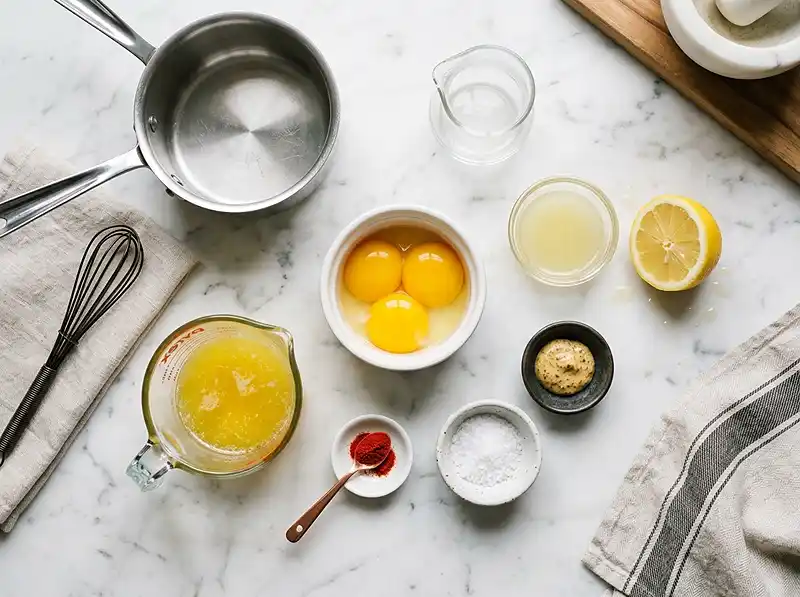
| Category | Ingredient | Amount |
|---|---|---|
| Base | Egg yolks | 3 large |
| Base | Unsalted butter or ghee, melted and hot | 1/2 cup (add more for a thinner sauce) |
| Flavor | Fresh lemon juice | 1 tablespoon (or more to taste) |
| Flavor | Dijon mustard | 1 teaspoon |
| Seasoning | Salt | 1/4 teaspoon |
| Seasoning | Cayenne pepper | Pinch |
A quick note on the butter: use unsalted butter so you control the salt level. Ghee works beautifully too and gives the sauce a slightly nuttier flavor. Either way, make sure it’s hot when you pour it in — that heat is what gently cooks the egg yolks.
How to Make This Hollandaise Sauce Recipe
Seriously, this is so much easier than it sounds. Let’s walk through it step by step.
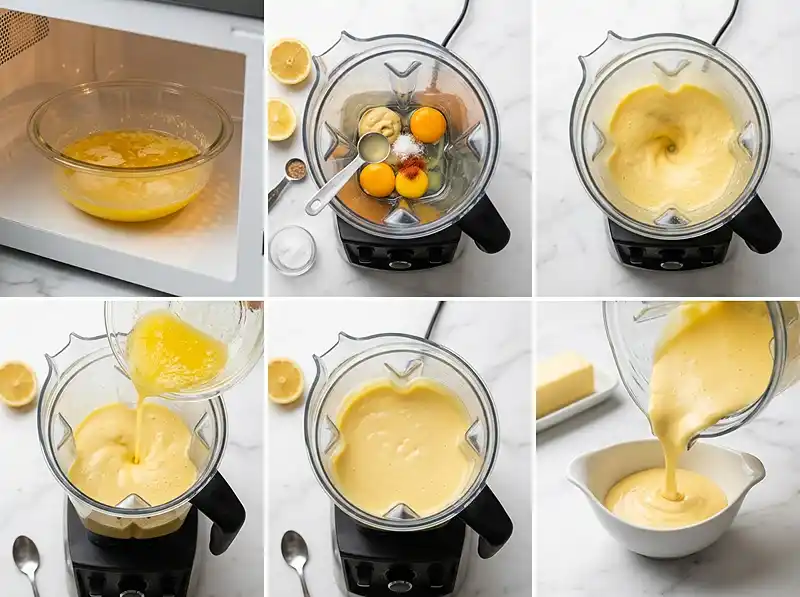
Step 1: Melt Your Butter
Pop the butter in a microwave-safe bowl and heat for about 1 minute. Make sure you cover it — butter is dramatic and will splatter everywhere.
Alternatively, melt it in a small saucepan on the stove over low heat. The key is that the butter needs to be hot, not just melted and lukewarm. That heat does important work in the next step.
Step 2: Blend the Base
Add the egg yolks, lemon juice, Dijon mustard, salt, and cayenne pepper into a high-powered blender. Blend for just 5 seconds — you’re not trying to whip it into a frenzy, just combine everything evenly.
Tip: Use room-temperature egg yolks if possible. Cold yolks straight from the fridge can make the sauce thicker than you’d like.
Step 3: Stream In the Hot Butter
With the blender running on medium-high, slowly drizzle in the hot melted butter. Go slow here — this is where the magic happens. The hot butter gently cooks the yolks and creates that gorgeous, thick emulsion.
If you dump the butter in all at once, you’ll end up with a greasy mess instead of hollandaise sauce. Slow and steady wins the race. Think of it like making a vinaigrette, but fancier.
Step 4: Taste, Adjust, and Serve
Pour the finished hollandaise sauce into a small bowl and taste it. Want more lemon? Add a splash. Want it thinner? Stream in a touch more melted butter and blend again.
Serve immediately while it’s still warm. Hollandaise sauce is a “right now” kind of sauce — it’s at its best fresh off the blender.

What to Serve With Hollandaise Sauce
Oh, where to begin. The classic pairing is, obviously, a classic eggs Benedict — poached eggs, Canadian bacon, English muffins, all drizzled with hollandaise. Absolutely iconic.
But don’t stop there. This sauce is stunning over steamed asparagus, roasted broccoli, grilled salmon, or even baked potatoes. It makes ordinary vegetables feel indulgent.
For a full brunch spread, pair it alongside something hearty like a cozy Sunday dinner and finish with something refreshing like a ginger pineapple tea.
Expert Tips for Perfect Hollandaise Sauce Every Time
Use a High-Powered Blender
A regular blender works, but a high-powered one (like a Vitamix or Blendtec) creates the smoothest, most stable emulsion. If you’re using an immersion blender, that works great too — just use a tall, narrow container.
Keep the Butter Hot
This is the most important tip. The butter needs to be genuinely hot when it hits the egg yolks — not just warm. That temperature is what safely cooks the yolks and creates a stable, thick hollandaise sauce.
According to the USDA food safety guidelines, egg yolks should reach at least 160°F for safety. The hot butter helps get you there.
Adjust Consistency Like a Pro
Too thick? Blend in a teaspoon of warm water or more melted butter. Too thin? You may have added the butter too quickly — try blending in another egg yolk to help it bind.
Season at the End
Always taste after blending and before serving. A pinch more salt or an extra squeeze of lemon can completely transform the flavor. Trust your palate here.
Variations Worth Trying
Spicy Hollandaise
Double the cayenne or add a few dashes of hot sauce for a sauce that brings the heat. This version is incredible over fried chicken or a breakfast sandwich.
Herb Hollandaise
Blend in a tablespoon of fresh tarragon or chives for a French-inspired twist. This pairs beautifully with fish and steamed vegetables.
Dairy-Free Hollandaise
Swap the butter for ghee or even a high-quality vegan butter. Ghee actually gives a slightly richer, more caramelized flavor that’s genuinely delicious.
Troubleshooting Common Hollandaise Problems
The Sauce Is Too Thin
You likely added the butter too fast. Try blending in an extra egg yolk — it adds more lecithin (the natural emulsifier in egg yolks) and can rescue a thin sauce.
The Sauce Broke and Looks Greasy
Don’t panic! Start with a fresh egg yolk in a clean blender, then slowly drizzle in the broken sauce as if it were the butter. It almost always comes back together.
The Sauce Tastes Too Rich
Add a bit more lemon juice. Acid cuts through richness and brightens up the whole flavor. A tiny pinch of extra salt also helps balance it out.
How to Store Hollandaise Sauce
Hollandaise is best fresh, but here’s how to handle leftovers if you happen to have any (lucky you).
| Storage Method | How Long | Notes |
|---|---|---|
| Refrigerator (airtight container) | Up to 2 days | Press plastic wrap directly onto the surface to prevent a skin from forming |
| Freezer | Not recommended | The emulsion breaks upon thawing |
| Room temperature | Up to 2 hours | Keep warm in a bowl set over warm (not hot) water |
How to Reheat Hollandaise Sauce
Gently reheat in a small saucepan over very low heat, whisking constantly. You can also set the bowl over a pot of warm water and stir until it loosens up. Avoid the microwave — it tends to scramble the yolks.
No-Waste Kitchen Ideas
Got leftover hollandaise? Use it as a dipping sauce for roasted veggies, stir it into mashed potatoes for the most luxurious side dish ever, or drizzle it over a crispy broccoli bacon salad. Waste nothing, enjoy everything.
Hollandaise Sauce Recipe FAQs
Can I make hollandaise sauce ahead of time?
You can make it up to a day ahead and store it in the fridge. Just reheat it gently over warm water while whisking. It won’t be quite as silky as fresh, but it’s still delicious and gets the job done for meal prep.
Is hollandaise sauce safe to eat with raw egg yolks?
The hot butter in this blender method heats the yolks enough to make them safe for most people. If you’re immunocompromised, pregnant, or cooking for young children, use pasteurized eggs for extra peace of mind.
Why did my hollandaise sauce turn out lumpy?
Lumps usually mean the butter was too hot and partially scrambled the yolks, or you added it too fast. Let the butter cool just slightly (still hot, but not boiling) and pour it in a slow, steady stream next time.
Can I use salted butter for hollandaise sauce?
You can, but unsalted butter gives you full control over the seasoning. If you use salted butter, skip the added salt in the recipe and taste before adding any more. You’d be surprised how salty it can get.
What can I substitute for lemon juice in hollandaise sauce?
White wine vinegar is the classic alternative and works beautifully. It gives a slightly sharper tang compared to lemon. Apple cider vinegar is another option, though it adds a subtle fruitiness that not everyone loves.
Ready to Make the Best Hollandaise Sauce of Your Life?
There you have it — a simple, foolproof hollandaise sauce recipe that’ll make your brunches legendary. Five minutes, one blender, and a handful of ingredients stand between you and liquid gold.
Give it a try this weekend and let us know how it goes! Drop your thoughts, questions, or “I can’t believe how easy that was” moments in the comments below.
And if this recipe made your morning better, share it on Pinterest so your fellow brunch lovers can find it too. They’ll thank you for it.