
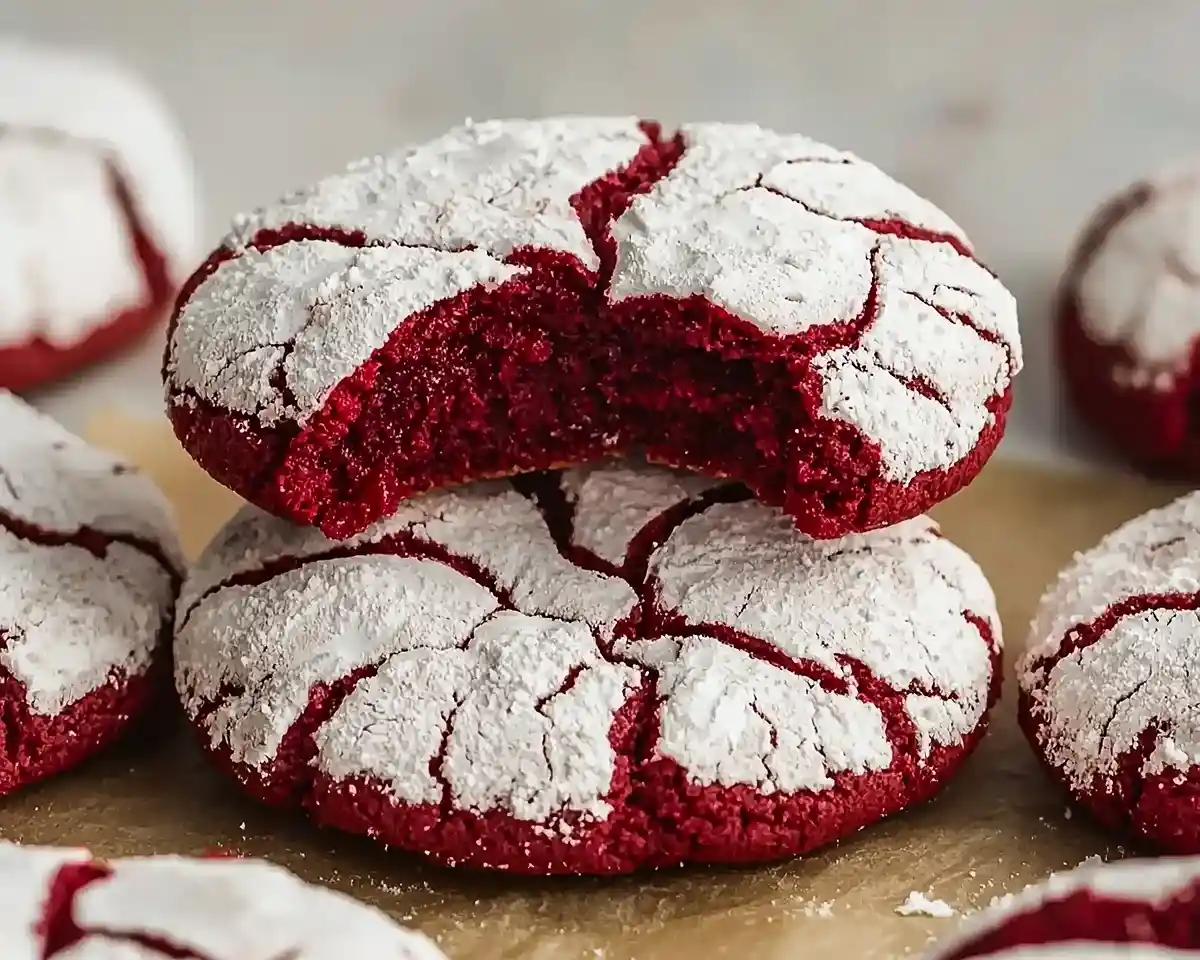
Fudgy Red Velvet Crinkle Cookies recipe with chocolate and festive red color. Perfect homemade red velvet cookies for Christmas baking and holiday treats.
Last December, I melted chocolate too aggressively and nearly torched my first batch of these beauties. You know what? That disaster taught me the secret to perfect crinkle cookies—low heat and patience win every time.
These Fudgy Red Velvet Crinkle Cookies changed my entire Christmas baking lineup. The dramatic crimson color meets snow-white sugar cracks, creating cookies that look like they belong in a bakery window. They taste like biting into a fudge brownie wrapped in velvet—rich, soft, and impossible to stop eating.
I’ve tested this recipe seventeen times (yes, seventeen) to nail the perfect texture. The result? Cookies with crispy edges and centers so fudgy they practically melt on your tongue. Whether you’re baking for a holiday cookie swap or just craving something spectacular, these homemade red velvet cookies deliver pure magic.
Tasty at Home – Where bold flavors meet everyday kitchens.
Table of Contents
What Makes These Red Velvet Crinkle Cookies Extraordinary
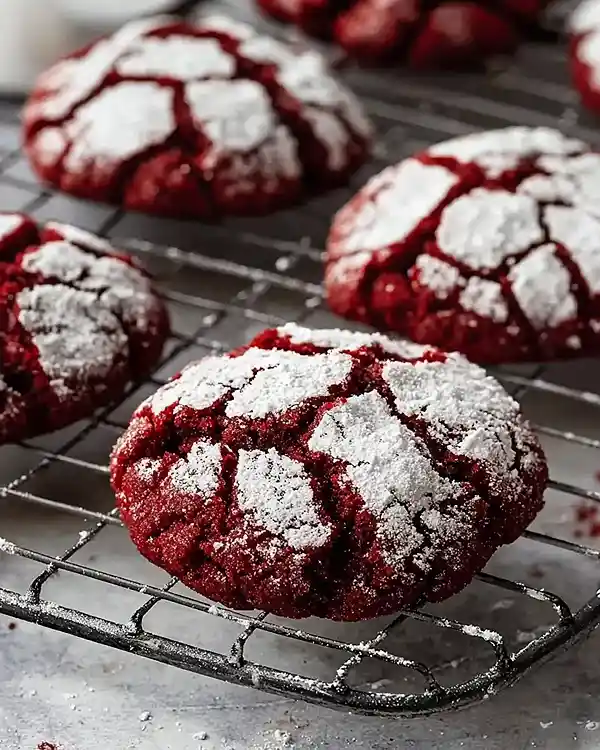
The secret lies in the double chocolate base combined with Red Velvet Bakery Emulsion. Unlike regular food coloring, bakery emulsion adds subtle vanilla notes while keeping that vibrant red hue through baking. I learned this technique from testing various colorants—trust me, the emulsion makes all the difference.
These Christmas red velvet cookies skip the cream cheese frosting found in traditional red velvet cake. Instead, they showcase pure chocolate intensity with a tender crumb that stays soft for days. The confectioners’ sugar coating creates those signature cracks, revealing gorgeous red valleys beneath white peaks.
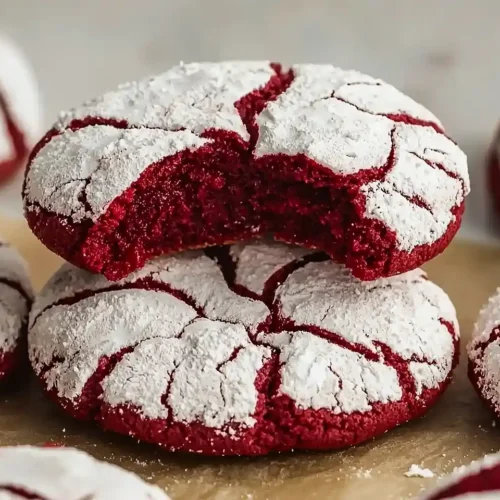
Fudgy Red Velvet Crinkle Cookies
Equipment
- Saucepan
- mixing bowls
- Whisk
- Rubber spatula
- Cookie scoop
- Sheet pans
- Parchment paper
- Wire cooling rack
Ingredients
Ingredients
- 1½ cups all-purpose flour
- 1 teaspoon baking powder
- ⅛ teaspoon baking soda
- ¾ cup + 3 tbsp granulated sugar 3 tbsp reserved for coating
- ½ cup light brown sugar packed
- 2 eggs + 2 yolks large eggs room temperature
- 1 tablespoon canola oil
- 1 tablespoon Red Velvet Bakery Emulsion
- 1 teaspoon pure vanilla extract
- ½ teaspoon salt
- 4 tablespoons unsalted butter cut into pieces
- 3 ounces semisweet chocolate chopped
- ¼ cup cocoa powder unsweetened
- ½ cup confectioners’ sugar for coating
Instructions
- Whisk together flour, baking powder, and baking soda in a small bowl and set aside.
- Whisk granulated sugar, brown sugar, eggs, yolks, oil, emulsion, vanilla, and salt until slightly lightened.
- Melt butter and chocolate over low heat until smooth. Stir in cocoa powder until thickened.
- Whisk warm chocolate mixture into egg mixture until glossy, then fold in dry ingredients until no streaks remain.
- Cover dough with plastic wrap and refrigerate for at least 6 hours or overnight.
- Preheat oven to 350°F (180°C) and line sheet pans with parchment.
- Roll 1½-tbsp dough portions into balls and coat generously in confectioners’ sugar and reserved granulated sugar.
- Bake cookies for 12–14 minutes, rotating halfway, until cracked on top and edges are set.
- Cool on the pan for 2 minutes, then transfer to a wire rack to cool completely.
Notes
Essential Ingredients for Success
When selecting chocolate, choose quality semisweet or bittersweet varieties with at least 60% cacao content. Fresh eggs at room temperature blend smoothly without streaking. For the bold red color, use professional-grade Red Velvet Bakery Emulsion from specialty baking stores or online retailers—it won’t fade like liquid food coloring.
The cocoa powder must be unsweetened and Dutch-processed if possible. This creates deeper chocolate flavor without bitterness. For the sugars, light brown sugar adds moisture while granulated sugar contributes structure and those beautiful surface cracks.
Ingredient Table
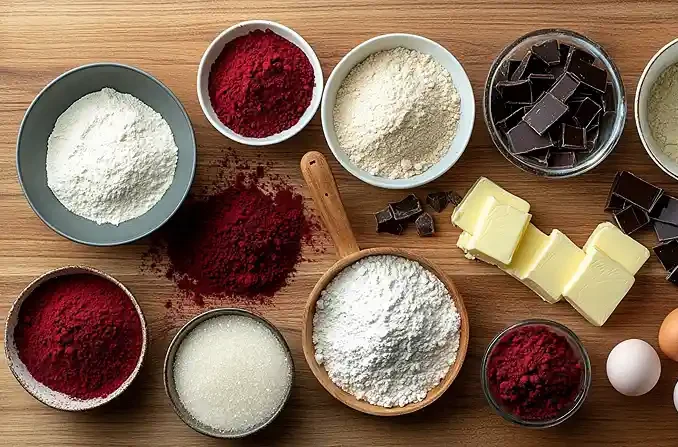
| Ingredient | US Measurement | Metric | Notes |
|---|---|---|---|
| All-purpose flour | 1½ cups | 213 grams | Spoon and level for accuracy |
| Baking powder | 1 teaspoon | 5 grams | Fresh, not expired |
| Baking soda | 1/8 teaspoon | 0.6 grams | Tiny amount for lift |
| Granulated sugar (divided) | ¾ cup + 3 tablespoons | 150g + 38g | Reserve 3 tbsp for coating |
| Light brown sugar | ½ cup | 100 grams | Packed measurement |
| Large eggs + yolks | 2 eggs + 2 yolks | Room temperature | Essential for emulsification |
| Canola oil | 1 tablespoon | 15 ml | Keeps cookies tender |
| Red Velvet Bakery Emulsion | 1 tablespoon | 15 ml | Or red food coloring |
| Pure vanilla extract | 1 teaspoon | 5 ml | Real extract only |
| Salt | ½ teaspoon | 3 grams | Balances sweetness |
| Unsalted butter | 4 tablespoons | 57 grams | Cut into pieces |
| Semisweet chocolate | 3 ounces | 85 grams | Chopped roughly |
| Cocoa powder | ¼ cup | 25 grams | Unsweetened |
| Confectioners’ sugar | ½ cup | 60 grams | For coating |
Smart Shopping Tips for US Grocery Stores
Find Red Velvet Bakery Emulsion at Michaels, Hobby Lobby, or order from King Arthur Baking online. Regular grocery stores carry Wilton brand in the baking aisle. Target and Walmart stock quality chocolate chips in their baking sections—Ghirardelli 60% cacao works perfectly.
Bold Add-ins: Try mini chocolate chips folded into the dough for extra richness. Swap half the cocoa powder with black cocoa for deeper color. Add ½ teaspoon espresso powder to amplify chocolate notes without coffee flavor.
International Substitutions: Replace Red Velvet Bakery Emulsion with 1 tablespoon liquid red food coloring plus ½ teaspoon vanilla. Use plain flour instead of all-purpose if outside the US. Substitute caster sugar for granulated if in the UK.
Equipment You’ll Need
A heavy-bottom saucepan prevents chocolate from scorching during melting. If you don’t own one, use a double boiler by placing a heatproof bowl over simmering water. You’ll need three sheet pans lined with parchment paper—never use wax paper, which can smoke.
Grab two mixing bowls (one small, one large), a whisk, and a rubber spatula. A cookie scoop ensures uniform 1½ tablespoon portions, which bake evenly. Don’t have a scoop? Use a tablespoon measure and slightly heap it. A wire cooling rack lets air circulate under cookies, preventing soggy bottoms.
Preparing Your Dough: The Foundation of Perfect Crinkles
Combine Dry Ingredients
Whisk flour, baking powder, and baking soda in a small bowl. This distributes leavening agents evenly throughout the dough. Set aside while you tackle the wet ingredients.
Build the Egg Base
In your large bowl, whisk together ¾ cup granulated sugar, brown sugar, whole eggs, egg yolks, canola oil, Red Velvet Bakery Emulsion, vanilla, and salt. Whisk vigorously for 30 seconds until the mixture lightens slightly and sugar begins dissolving. Room temperature eggs incorporate faster and create better structure.
Melt Chocolate with Care
Place butter and chopped chocolate in your heavy-bottom saucepan over low heat. Stir frequently with a wooden spoon or silicone spatula—chocolate scorches easily if left unattended. Well, I learned this the hard way last Christmas when I answered a phone call and came back to seized chocolate!
Continue stirring until the mixture turns completely smooth with no visible chunks, about 3 to 4 minutes. Remove from heat immediately. Add cocoa powder and whisk continuously for 45 seconds. The mixture will thicken dramatically and look almost paste-like—that’s exactly right.
Marry Wet and Dry
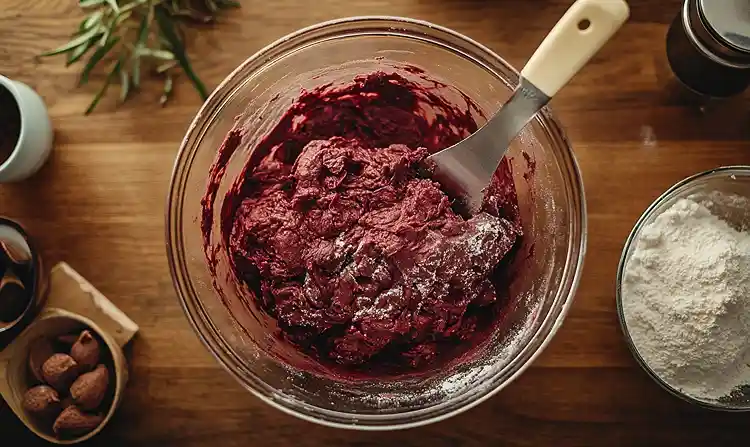
Pour the warm chocolate-butter mixture into your egg mixture. Whisk together until completely combined and glossy, about 20 seconds. The warmth helps everything blend smoothly without cooking the eggs.
Add flour mixture all at once. Switch to a rubber spatula and fold gently using broad strokes. Mix just until no white streaks remain—overmixing develops gluten and creates tough cookies. The dough will look thick and fudgy, like brownie batter.
Chill for Structure
Cover the bowl with plastic wrap pressed directly onto the dough surface. Refrigerate for at least 6 hours or overnight. This chilling step is non-negotiable—it firms up the dough so cookies hold their shape instead of spreading flat. I typically make dough after dinner and bake the next morning. As Dorie Greenspan emphasizes in her cookie techniques, proper chilling creates superior texture and those dramatic surface cracks.
Shaping and Baking: Where Magic Happens
Prepare Your Workspace
Position an oven rack in the center and preheat to 350°F (180°C). Line three sheet pans with parchment paper—this prevents sticking and ensures even browning. Never skip parchment; these cookies are too precious to lose to a sticky pan.
Create the Sugar Coating
Combine confectioners’ sugar and remaining 3 tablespoons granulated sugar in a small bowl. The granulated sugar adds sparkle while powdered sugar creates those white cracks. Mix thoroughly with a fork.
Shape and Coat
Scoop dough into 1½ tablespoon portions using a cookie scoop or measuring spoon. Roll each portion briefly between your palms to form a ball—don’t overwork it. Drop each ball into the sugar mixture and roll until completely coated. The coating should be thick and generous for maximum crinkle effect.
Place eight cookies on each prepared sheet pan, spacing them 2 inches apart. They’ll spread moderately during baking. Bake one pan at a time for consistent results—rotating two pans creates uneven temperatures.
Bake to Perfection
Slide one pan into the oven and set a timer for 6 minutes. Rotate the pan 180 degrees at the halfway point for even baking. Continue baking until edges look set and tops are puffed with visible cracks, 12 to 14 minutes total.
The centers will appear slightly underdone—that’s perfect! They’ll firm up as they cool. Overbaking creates dry cookies instead of fudgy centers. Watch for the moment when cracks form and cookies lose their shiny surface. That’s your signal they’re done.
Cool Completely
Let cookies rest on the sheet pan for 2 minutes before transferring. They’re delicate when hot. Move the entire sheet pan to a wire rack and let cookies cool completely, about 20 minutes. As Thomas Keller teaches in his pastry methods, patience during cooling prevents structural collapse.
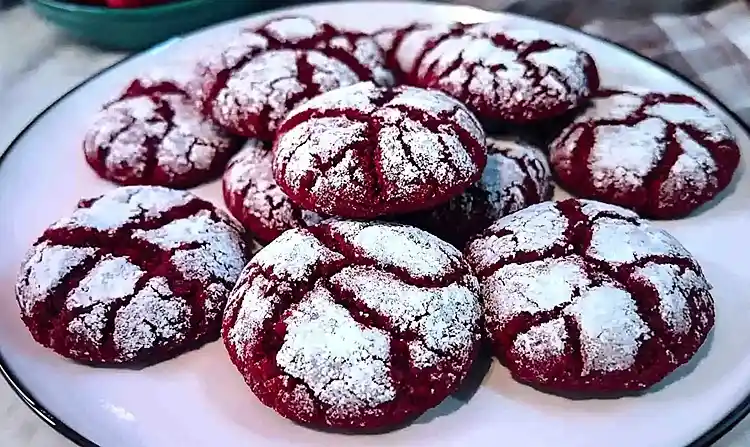
Expert Tips for Show-Stopping Christmas Cookies
Temperature Matters: Room temperature eggs blend smoother than cold eggs. Set them out 30 minutes before starting. If you forget, place eggs in a bowl of warm water for 5 minutes.
Don’t Skip Chilling: I once tried baking these immediately after mixing. The cookies spread into flat pancakes. The overnight rest is essential for proper texture and those signature cracks.
Emulsion vs. Food Coloring: Red Velvet Bakery Emulsion provides richer color that won’t fade. If using liquid food coloring, you’ll need about 2 tablespoons for comparable vibrancy. Gel food coloring works too—start with 1 teaspoon and adjust.
Portion Control: Consistent sizing ensures even baking. Larger cookies need 14 to 16 minutes while smaller ones finish in 10 to 12 minutes. Stick with 1½ tablespoons for the perfect ratio of crispy edges to fudgy centers.
Storage Secrets: Store cooled cookies in an airtight container with parchment paper between layers. They stay soft at room temperature for up to 3 days. The sugar coating may dissolve slightly—that’s normal and doesn’t affect taste.
Creative Variations for Every Occasion
Double Chocolate Crinkles: Replace Red Velvet Bakery Emulsion with 1 tablespoon additional vanilla extract. Skip the red color for classic chocolate crinkle cookies. Add ½ cup mini chocolate chips for extra indulgence.
Peppermint Red Velvet: Add ½ teaspoon peppermint extract along with vanilla. Crush 3 candy canes and mix into sugar coating for festive sparkle. These Christmas’s cookies shine at holiday parties.
White Chocolate Twist: Fold ½ cup white chocolate chips into finished dough before chilling. The creamy chips contrast beautifully with rich red color. This variation pleases kids especially.
Gluten-Free Adaptation: Substitute 1½ cups gluten-free all-purpose flour blend (with xanthan gum) for regular flour. Add 1 extra tablespoon canola oil to maintain moisture. Texture will be slightly more delicate.
Espresso Enhanced: Mix 1 teaspoon espresso powder into cocoa powder before adding to chocolate. This deepens chocolate flavor without making cookies taste like coffee. Coffee lovers go wild for this version.
Storage and Make-Ahead Strategy
Store baked cookies in an airtight container at room temperature for up to 3 days. Place parchment paper between layers to prevent sticking. They actually taste better on day two when flavors meld.
Freeze baked cookies for up to 2 months in freezer-safe containers. Thaw at room temperature for 30 minutes before serving. The texture returns to perfect softness.
| Storage Method | Duration | Best Practice |
|---|---|---|
| Room temperature | 3 days | Airtight container with parchment |
| Refrigerator | 5 days | Not recommended—dries them out |
| Freezer (baked) | 2 months | Wrap individually in plastic wrap |
| Freezer (dough balls) | 3 months | Freeze on tray, then transfer to bag |
| Dough (refrigerated) | 3 days | Press plastic wrap on surface |
Perfect Pairings and Serving Ideas
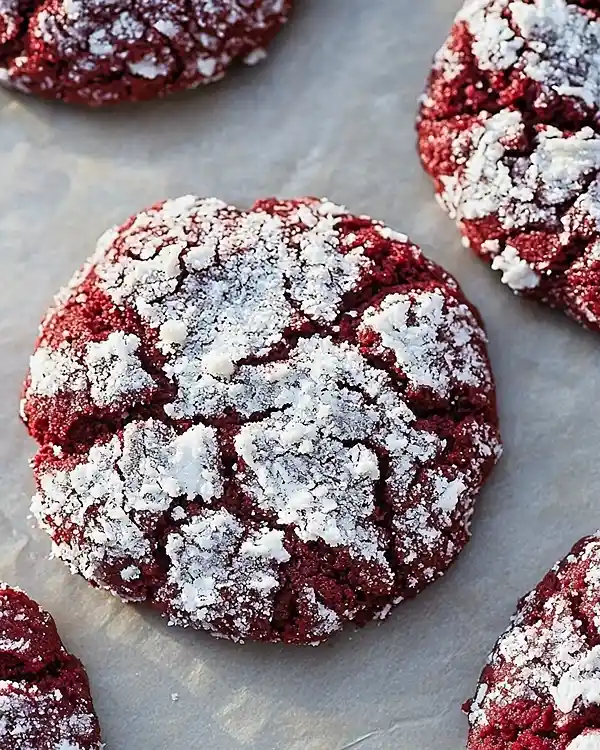
Serve these cookies with cold milk, hot cocoa, or eggnog during the holidays. They complement berry pavlova with lemon whipped cream beautifully on a dessert spread. The rich chocolate pairs wonderfully with vanilla ice cream for an elevated treat.
Create a stunning cookie platter by combining these with cookies and cream cookies and traditional German butter cookies. The color contrast makes gorgeous holiday presentations. Package them in clear cellophane bags tied with ribbon for homemade gifts.
Add them to your Christmas cookie exchange alongside candy cane fudge snowballs for variety. Kids love the dramatic appearance while adults appreciate the sophisticated chocolate flavor. According to King Arthur Baking’s holiday cookie guide, red velvet variations consistently rank among the most requested festive treats.
Fudgy Red Velvet Crinkle Cookies FAQs
Can I make the dough ahead of time?
Yes, you can make fudgy red velvet crinkle cookie dough up to 3 days ahead. Keep it tightly covered in the refrigerator with plastic wrap pressed directly on the surface. Let it sit at room temperature for 10 minutes before scooping—this makes portioning easier.
What causes cookies to spread too much during baking?
Cookies spread excessively when dough isn’t chilled long enough or oven temperature runs too low. Always refrigerate dough for at least 6 hours and verify your oven temperature with an oven thermometer. Melted butter that’s too hot when added can also cause spreading issues.
How do I get more pronounced cracks in the sugar coating?
More pronounced cracks form when you generously coat dough balls in the sugar mixture. Roll each ball twice in the sugar for thicker coverage. Baking at the correct 350°F temperature also helps—higher heat creates surface tension that produces dramatic cracks.
Why are my cookies turning out cakey instead of fudgy?
Cakey texture happens when you overbake the cookies or add too much flour. Remove cookies when centers still look slightly underdone—they’ll firm up during cooling. Make sure you measure flour by spooning it into the measuring cup and leveling off, never scooping directly from the bag.
Make These Your New Holiday Tradition
These Fudgy Red Velvet Crinkle Cookies transform ordinary Christmas baking into something extraordinary. The dramatic presentation takes minimal effort while delivering bakery-quality results. Every bite brings rich chocolate flavor wrapped in tender, fudgy texture.
Ready to create cookies that’ll have everyone asking for the recipe? Grab your ingredients and start that dough tonight—tomorrow, you’ll be pulling stunning red and white beauties from your oven. They pair perfectly with Tini’s mac and cheese at holiday dinners if you want a complete comfort food menu.
What’s your favorite way to serve these gorgeous cookies? Drop your ideas in the comments—I love hearing how you make these recipes your own. Happy baking, friends!