
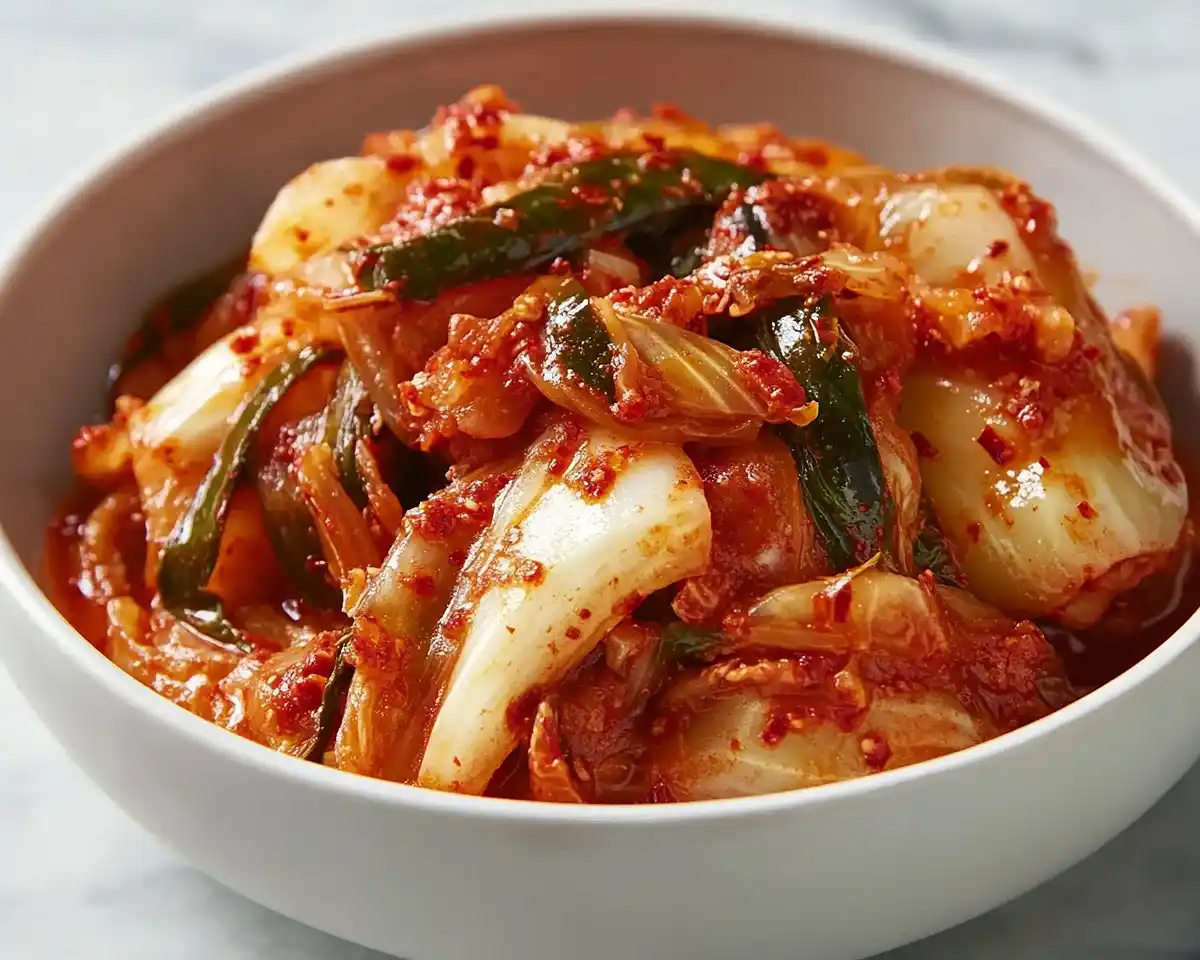
Discover how to make the most brilliant fermented cabbage kimchi recipe at home — tangy, spicy, probiotic-packed, and surprisingly simple once you know the steps.
I still remember the first time I tasted homemade kimchi at a friend’s place. One bite and I was completely hooked — that funky, spicy, deeply savory punch was like nothing I’d had before. I had to make it myself, and now I make a jar every few weeks without fail.
This traditional napa cabbage kimchi — known in Korean as Tongbaechu-kimchi — is the classic version. It’s the one you see at every Korean table, and honestly, once you’ve made it yourself, store-bought will never be the same.
This tangy fermented favorite is the kind of gut-focused recipe people wish they’d tried sooner, and if you skip it now, you’ll miss more sibo recipes.
Table of Contents
Why You’ll Love This Kimchi Recipe
This isn’t just a condiment — it’s practically a lifestyle upgrade. You’re making a living, fermented food that gets better with every passing day.
It’s versatile enough to eat with rice, tuck into a sandwich, toss into crispy air fryer chicken thighs, or just eat straight from the jar at midnight. No judgment here.
The recipe uses simple pantry staples, requires zero special equipment, and the hands-on time is actually pretty short. The fermentation does all the heavy lifting for you.

Fermented Cabbage Kimchi (Tongbaechu-kimchi)
Equipment
- Large bowl
- Colander
- Knife
- Cutting board
- 1-quart jar
Ingredients
Cabbage Base
- 1 medium head Napa cabbage about 2 lbs
- ¼ cup Iodine-free sea salt or kosher salt
- Water enough to cover cabbage
Spice Paste
- 1 tablespoon Grated garlic 5–6 cloves
- 1 teaspoon Grated fresh ginger peeled
- 1 teaspoon Granulated sugar
- 2 tablespoons Fish sauce or salted shrimp paste or 3 tbsp water for vegan
- 1-5 tablespoons Korean red pepper flakes (gochugaru)
Vegetables
- 8 ounces Korean radish or daikon cut into matchsticks
- 4 medium Scallions cut into 1-inch pieces
Instructions
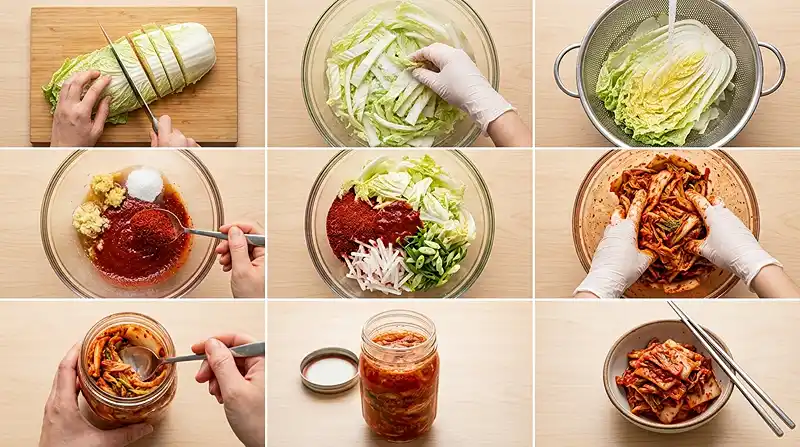
- Cut napa cabbage into quarters, remove cores, and slice into 2-inch pieces. Toss with salt and massage until softened. Cover with water and weigh down. Let sit 1 to 2 hours.
- Rinse cabbage three times under cold water. Drain in a colander for 15 to 20 minutes.
- Mix garlic, ginger, sugar, and fish sauce (or water) into a paste. Stir in gochugaru.
- Squeeze excess water from cabbage. Combine with spice paste, radish, and scallions. Mix thoroughly, coating all vegetables.
- Pack mixture tightly into a clean jar, pressing down until brine covers vegetables. Leave 1 inch headspace.
- Seal jar and let ferment at room temperature for 1 to 5 days. Check daily, pressing vegetables under brine and releasing gases.
- Transfer to refrigerator when desired sourness is reached. Let develop further flavor for 1 to 2 weeks if possible.
Notes
Ingredients You’ll Need
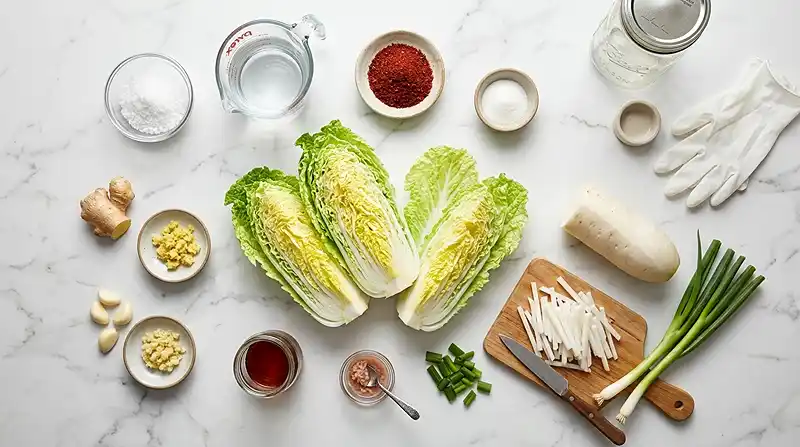
Here’s everything laid out clearly. A few notes: use iodine-free salt (regular table salt can mess with fermentation), and get Korean gochugaru if you can — it’s not the same as regular chili flakes.
| Category | Ingredient | Amount |
|---|---|---|
| Cabbage Base | Napa cabbage | 1 medium head (about 2 lbs) |
| Cabbage Base | Iodine-free sea salt or kosher salt | 1/4 cup |
| Cabbage Base | Water (distilled or filtered preferred) | Enough to cover cabbage |
| Spice Paste | Grated garlic | 1 tablespoon (5–6 cloves) |
| Spice Paste | Grated fresh ginger, peeled | 1 teaspoon |
| Spice Paste | Granulated sugar | 1 teaspoon |
| Spice Paste | Fish sauce or salted shrimp paste (or water for vegan) | 2 tablespoons (or 3 tbsp water) |
| Spice Paste | Korean red pepper flakes (gochugaru) | 1 to 5 tablespoons |
| Vegetables | Korean radish or daikon, cut into matchsticks | 8 ounces |
| Vegetables | Scallions, cut into 1-inch pieces | 4 medium |
How to Make Fermented Cabbage Kimchi Step by Step
This traditional napa cabbage kimchi comes together in a few clear stages. Take it one step at a time and you’ll have a gorgeous jar of fermenting magic on your counter before you know it.
Step 1 — Prep and Salt the Cabbage
Cut your napa cabbage lengthwise into quarters through the stem, then remove the cores. Slice each quarter crosswise into 2-inch-wide strips — you want hearty, chunky pieces, not shreds.
Toss the cabbage into a large bowl and sprinkle the salt all over. Get your hands in there and massage the salt into the leaves until the cabbage starts to soften slightly.
Pour in enough water to just cover the cabbage. Set a plate on top and weigh it down with something heavy — a big jar of beans works perfectly. Let it sit for 1 to 2 hours.
Step 2 — Rinse and Drain
After salting, rinse the cabbage under cold running water three times. This removes the excess salt and bitterness. Don’t skip the triple rinse — it really matters for the final flavor.
Transfer the rinsed cabbage to a colander and let it drain for 15 to 20 minutes. Use this time to make your spice paste.
Step 3 — Make the Spice Paste
Rinse and dry your large bowl, then add the grated garlic, ginger, sugar, and fish sauce (or water if you’re keeping it vegan). Stir everything together into a smooth paste.
“The smell at this stage is intense in the best way possible — garlicky, spicy, funky. Your kitchen will smell amazing… or terrifying. Maybe both.”
Now stir in the gochugaru. Use 1 tablespoon for mild heat, up to 5 tablespoons for seriously spicy. I love it at about 3.5 tablespoons — deeply flavorful with a good kick. Set the paste aside.
Step 4 — Mix Everything Together
Squeeze any remaining water from the drained cabbage and add it to the spice paste. Add the radish matchsticks and scallion pieces too.
Now use your hands to gently work the paste into all the vegetables until everything is thoroughly coated. Wear gloves for this step — gochugaru stains skin orange and the garlic smell lingers for hours. You’ve been warned.
If you want to see how fermentation plays a role in other gut-friendly snacks, check out this guide on the Jillian Michaels gelatin trick for another fun probiotic-adjacent tip.
Step 5 — Pack the Jar
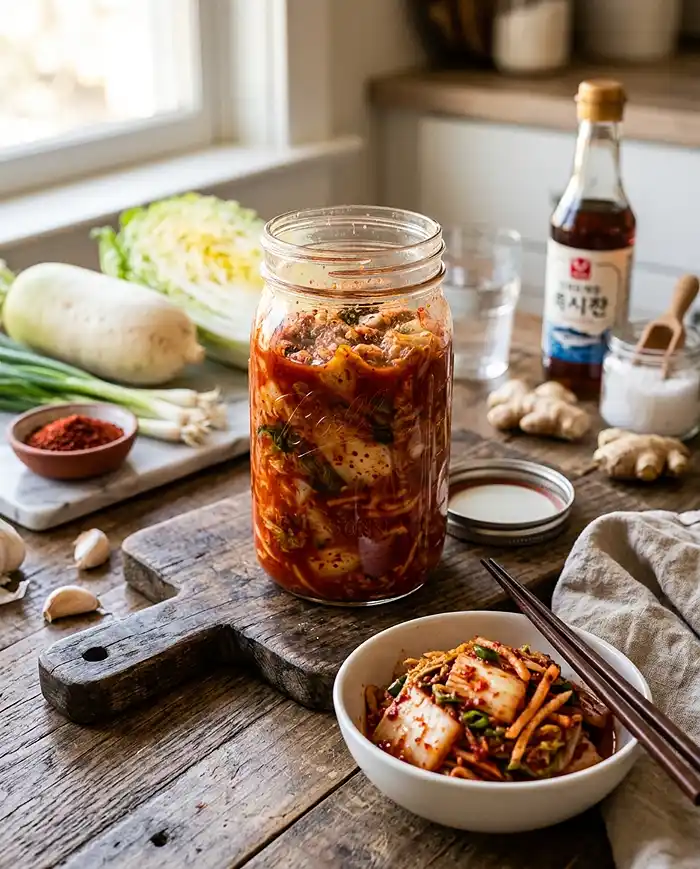
Pack the kimchi tightly into a clean 1-quart jar. Press it down firmly so the brine (the liquid the vegetables release) rises up to cover the kimchi. Leave at least 1 inch of headspace at the top.
The vegetables must stay submerged under the brine during fermentation — this is what keeps everything safe and delicious.
Step 6 — Ferment at Room Temperature
Seal the jar and place it in a bowl or on a plate (it may bubble over — this is a good sign!). Leave it at cool room temperature, out of direct sunlight, for 1 to 5 days.
Check the jar once a day. Open it and press the vegetables back down under the brine with a clean finger or spoon. This also releases the fermentation gases so your jar doesn’t get too pressurized.
Taste a little bit each day — you’ll notice it getting tangier and more complex. When it tastes ripe and sour enough for you, move it to the fridge.
Step 7 — Refrigerate and Wait (If You Can)
You can eat the kimchi right away once it’s in the fridge, but it’s honestly at its absolute best after another week or two. The flavor deepens, the tang mellows and rounds out, and the whole thing becomes incredibly complex.
Think of it like a good cheese — patience is rewarded.
Expert Tips for the Best Napa Cabbage Kimchi
Salt Matters More Than You Think
Always use iodine-free salt. Regular iodized table salt can inhibit the beneficial bacteria you need for fermentation. Sea salt or kosher salt are your best friends here.
Gochugaru Is Non-Negotiable
Korean red pepper flakes have a distinct fruity, smoky heat that regular chili flakes just can’t replicate. Look for gochugaru at a Korean grocery store or order it online. It makes a huge difference in your Tongbaechu-kimchi.
Temperature Controls Speed
Warmer rooms ferment faster, cooler rooms slower. In summer, your kimchi might be ready in 1 to 2 days. In winter, it could take 4 to 5 days. Taste daily and trust your palate.
Keep Veggies Submerged
If any vegetables poke above the brine, they can develop mold. Always press everything back down under the liquid when you do your daily check. If you’re low on brine, you can add a tiny splash of salted water.
Variations to Try
Vegan Kimchi
Swap the fish sauce or shrimp paste for 3 tablespoons of water. Some people also use soy sauce or miso for a deeper umami kick. It’s just as delicious — and completely plant-based.
This vegan version pairs beautifully with crispy air fryer kale chips for an incredibly satisfying healthy snack board.
Extra Vegetables
Feel free to add julienned carrots, thin-sliced cucumber, or even Asian chives to your kimchi. The base recipe is very forgiving and welcomes extra vegetables with open arms.
White Kimchi (Baek-kimchi)
Skip the gochugaru entirely for a mild, pale kimchi. It’s subtly tangy with a delicate flavor — great for kids or anyone who’s sensitive to heat. Still totally delicious.
Storage Instructions
| Storage Method | Container | How Long |
|---|---|---|
| Room temperature (fermenting) | Sealed jar with plate underneath | 1 to 5 days |
| Refrigerator (fresh/young kimchi) | Sealed glass jar | Up to 3 months |
| Refrigerator (well-fermented) | Sealed glass jar | Up to 6 months |
| Freezer | Airtight freezer-safe container | Up to 3 months |
Reheating and Using Leftover Kimchi
Cold kimchi is perfect straight from the jar, but it’s also magical when cooked. Fry it in a little sesame oil until slightly caramelized for an incredible side dish or topping for rice bowls and noodles.
Older, more sour kimchi is especially great for cooking — use it in kimchi fried rice, kimchi pancakes (kimchijeon), or kimchi soup (kimchi-jjigae). The sourer it gets, the better it cooks.
No-Waste Kitchen Ideas
Don’t throw away the kimchi brine! It’s liquid gold. Use it as a salad dressing base, stir it into a bloody mary, drizzle it over tacos, or mix it into dipping sauces. It has all that fermented, spicy, garlicky flavor in concentrated form.
You can also use a spoonful of kimchi juice to kick-start your next batch of fermented cabbage kimchi — it speeds up fermentation naturally.
Fermented Cabbage Kimchi FAQs
Can I use regular green cabbage instead of napa cabbage?
Technically yes, but the texture and flavor will be quite different. Napa cabbage has a softer, more delicate leaf that absorbs the paste beautifully. Green cabbage is crunchier and denser, so it takes longer to ferment and has a different bite. For the most authentic napa cabbage kimchi, stick with the real thing.
How do I know if my kimchi has gone bad?
Kimchi that’s fermenting properly will smell sour, garlicky, and funky — but in a good way. If you see fuzzy mold on the surface or smell something truly rotten (not just sour), discard it. Keeping the vegetables submerged under the brine is the key to preventing spoilage.
Is fermented cabbage kimchi actually good for you?
Yes! Kimchi is loaded with probiotics from the fermentation process, which support gut health. It’s also rich in vitamins A, B, and C, plus antioxidants from the garlic, ginger, and gochugaru. It’s basically a superfood disguised as a condiment. You can also explore similar gut-friendly recipes like this strawberry rhubarb galette for a balance of indulgence and wholesome ingredients.
What can I eat kimchi with?
Honestly, almost everything. Kimchi is incredible alongside steamed rice, in fried rice, tucked into grilled cheese sandwiches, served with eggs, piled onto burgers, or eaten straight from the jar. Once you have a jar in your fridge, you’ll find yourself reaching for it constantly. It also goes surprisingly well alongside sweet bakes like these s’mores cookie bars as part of a snack spread.
Can I make a smaller or larger batch of this kimchi recipe?
Absolutely. This recipe scales up or down easily. Just keep the ratios consistent — the key is getting the right balance of salt during the salting stage and enough gochugaru paste to coat all the vegetables. Use a larger jar (or multiple jars) if you’re scaling up.
Ready to Make Your Own Kimchi?
There’s something deeply satisfying about making your own fermented cabbage kimchi at home. It’s one of those recipes that sounds intimidating but is actually totally manageable — and the reward is a jar of something truly special.
Once you’ve made it once, you’ll wonder why you ever bought it from a store. Give it a try this week and let the fermentation magic happen on your counter.
