
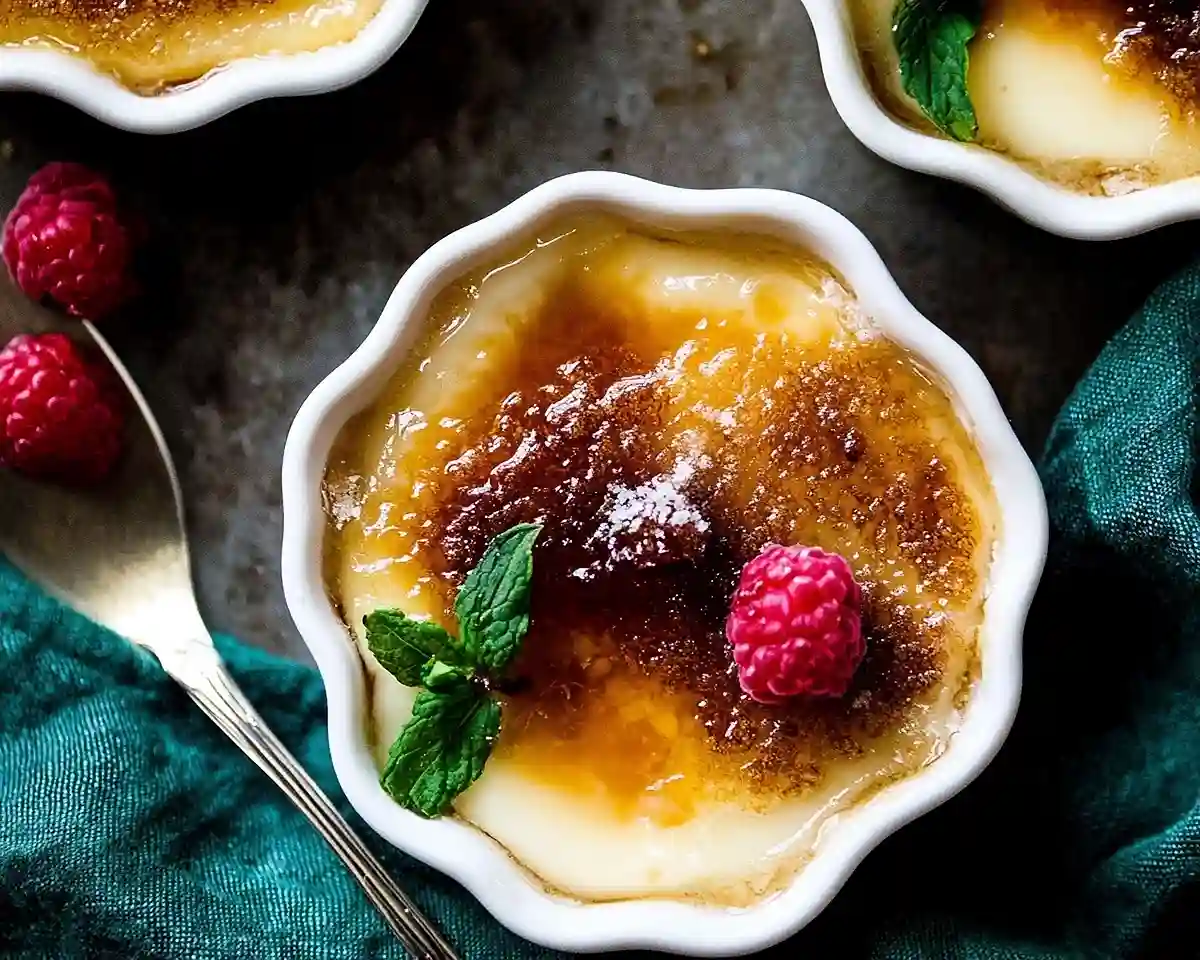
Okay, so the first time I cracked through a creme brulee with a spoon, I genuinely felt like I’d unlocked a superpower. That little tap-tap-crack of caramelized sugar giving way to the most velvety, dreamy custard underneath? Pure magic. And the best part? This easy crème brûlée is so much simpler to make at home than its fancy restaurant price tag would have you believe.
If you’ve been saving crème brûlée for special occasions out, it’s time to bring that French bistro energy right into your kitchen. You only need 6 ingredients, a handful of ramekins, and a kitchen torch (or your oven broiler — we’ll talk about that). Let’s do this.
Table of Contents
Why You’ll Love This Crème Brûlée Recipe
This isn’t just any custard dessert. This is that ultimate crème brûlée — the kind with a gloriously rich, barely-wobbling center and a caramel crust so thin and even it practically shatters on contact. It’s elegant, it’s indulgent, and it’s surprisingly chill to make once you know the steps.
A few things that make this recipe a total keeper:
- The espresso powder is optional, but trust me — it takes this French vanilla custard from great to unforgettable without making it taste like coffee.
- You can make the custard up to 2 days ahead. Hello, stress-free dinner party dessert.
- Individual ramekins mean everyone gets their own satisfying crack moment. No sharing required.
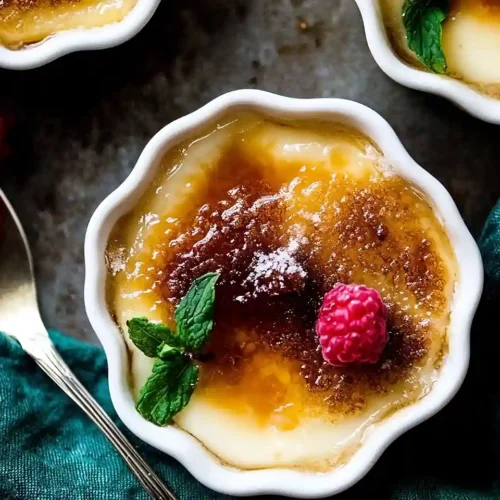
Crème Brûlée
Equipment
- Shallow 4-ounce oval ramekins
- Oven
- Kitchen torch (optional)
- Mixing bowl
- Saucepan
- Whisk
- baking pan
- wire rack
Ingredients
Custard Base
- 5 Large egg yolks
- ¾ cup Granulated sugar, divided
- 3 cups Heavy cream or heavy whipping cream
Flavor Boosters
- ½ teaspoon Espresso powder (optional) highly recommended
- ¼ teaspoon Salt
- 1 ½ teaspoons Pure vanilla extract
Instructions
- Preheat oven to 325°F (163°C) and heat water for a water bath.
- Whisk egg yolks and 1/2 cup sugar until pale and creamy.
- Warm cream with espresso powder and salt, remove from heat, stir in vanilla, and temper egg yolks with warm cream. Combine all together.
- Place ramekins in a baking pan, divide custard evenly, and pour hot water 1/2 inch up the sides.
- Bake for 30–35 minutes until edges are set and centers slightly wobbly.
- Cool on a wire rack for at least 1 hour, then refrigerate at least 4 hours.
- Sprinkle remaining sugar on top and caramelize with a kitchen torch or broiler before serving.
Notes
Ingredients You’ll Need
Here’s the beautiful simplicity of crème brûlée — short ingredient list, big flavor payoff. Here’s everything laid out:
| Category | Ingredient | Amount |
|---|---|---|
| Equipment | Shallow 4-ounce oval ramekins | 8 ramekins |
| Custard Base | Large egg yolks | 5 |
| Custard Base | Granulated sugar, divided | 3/4 cup (150g) |
| Custard Base | Heavy cream or heavy whipping cream | 3 cups (720ml) |
| Flavor Boosters | Espresso powder (optional but highly recommended) | 1/2 teaspoon |
| Flavor Boosters | Salt | 1/4 teaspoon |
| Flavor Boosters | Pure vanilla extract | 1½ teaspoons |
Quick ingredient notes: If you can’t find heavy cream, 3 cups of half-and-half works as a swap — the custard will just be a touch lighter. And for vanilla, you can use seeds from half a vanilla bean or a teaspoon of vanilla bean paste in place of the extract. Both are gorgeous choices for this French vanilla custard.
How to Make This Easy Crème Brûlée — Step by Step
Don’t let the French name intimidate you. Once you’ve done it once, you’ll wonder why you ever paid $15 for it at a restaurant. Here’s how it goes:
Step 1: Heat Things Up
Preheat your oven to 325°F (163°C). While that’s warming up, get a kettle or small pot of water going — you’ll need it hot for the water bath later. Don’t skip this step or you’ll be standing at the stove waiting with hot custard in hand. Ask me how I know.
Step 2: Whisk the Egg Yolks and Sugar
In a mixing bowl, whisk together the 5 egg yolks and 1/2 cup (100g) of the granulated sugar. You’re looking for a pale, slightly thickened mixture — it should look creamy and smooth. Set this aside while you work on the cream.
Step 3: Warm the Cream and Temper the Eggs
In a medium saucepan over medium heat, warm the heavy cream with the espresso powder and salt. The moment it starts to simmer — bubbles just forming around the edges — pull it off the heat and stir in the vanilla extract. Now comes the important part: tempering.
Ladle out about 1/2 cup of that warm cream and pour it into the egg yolks in a slow, steady stream while whisking constantly. This gradually brings up the temperature of the eggs without cooking them (scrambled egg crème brûlée is not a thing we want). Once combined, pour and whisk the egg mixture back into the rest of the cream in the saucepan. Nice and slow — you’ve got this.
Step 4: Fill the Ramekins and Set Up the Water Bath
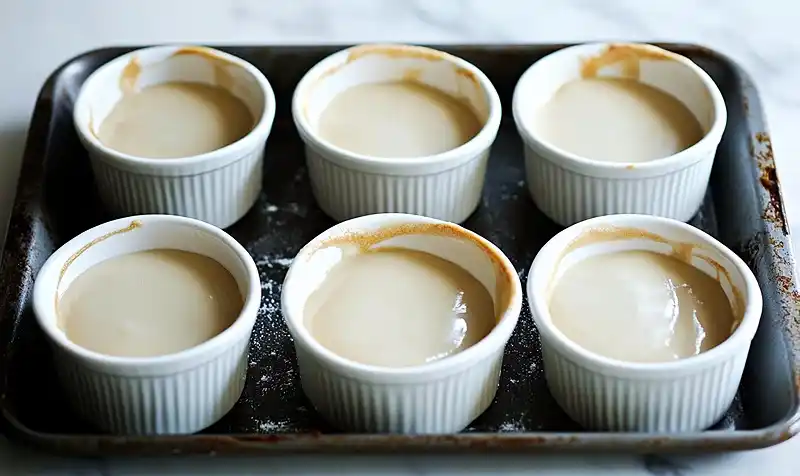
Place your ramekins into a large baking pan — a 9×13 works great. Divide the custard evenly between all 8 ramekins, filling each one right to the top. Then carefully pour hot water into the pan until it comes about 1/2 inch up the sides of the ramekins.
This water bath is what gives crème brûlée that silky, even texture. Without it, the edges cook too fast and you end up with a rubbery custard situation. Nobody wants that. Use an oven mitt — the pan will already be warm — and slide it into the oven.
Step 5: Bake Until Just Jiggly
Bake at 325°F for around 30–35 minutes. The edges should look set, but the centers should still have a little wobble when you gently shake the pan — think Jell-O, not liquid. If you want to be precise, an instant-read thermometer should read 170°F (77°C). Start checking at 30 minutes so you don’t overbake.
Pro tip: The depth of your ramekins matters. Deeper ramekins take longer; shallow ones cook faster. Mine are 1-inch deep and take exactly 35 minutes.
Step 6: Cool, Then Chill (Patience Required)
Remove the ramekins from the water bath and let them cool on a wire rack for at least an hour. Then cover them loosely and refrigerate for at least 4 hours — or up to 2 full days. Honestly, making these a day ahead is the move if you’re entertaining. All the work’s done and you just torch-and-serve. Chef’s kiss.
Step 7: The Best Part — Torching the Sugar
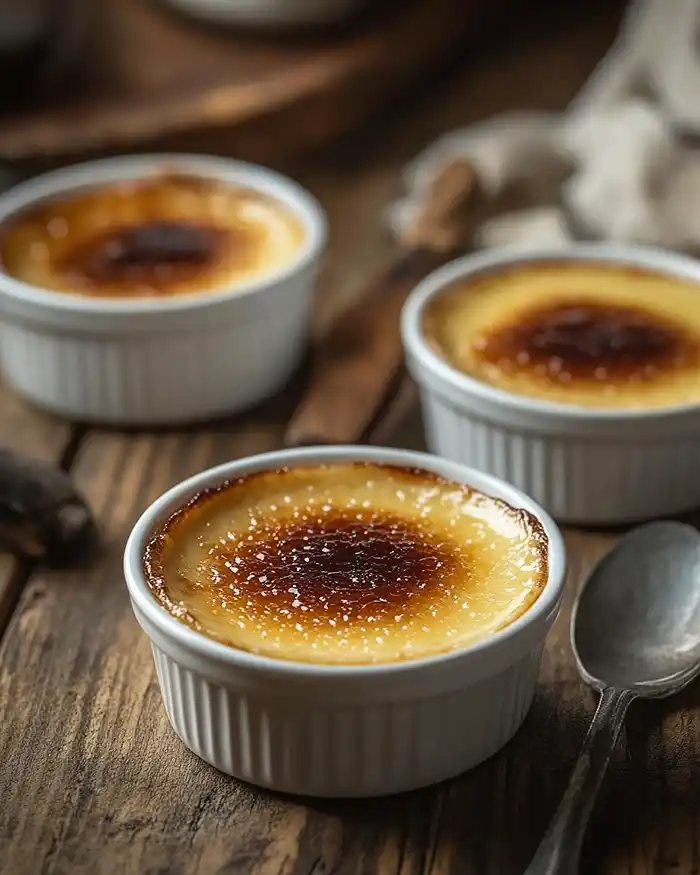
Right before serving, sprinkle a thin, even layer of that remaining granulated sugar over each cold custard. Then fire up your kitchen torch and move it in slow, circular motions over the sugar until it melts and turns a deep amber color. You’ll hear it sizzle and see it bubble — that’s the magic happening in real time.
Serve immediately for the crispiest crack, or pop them back in the fridge for up to an hour if you need a little more time. The caramelized topping is really best eaten right away though — it softens as it sits.
No torch? No problem. Set your oven to broil on high. After sugaring the tops, place the ramekins on a baking sheet directly under the broiler and watch closely. It caramelizes fast — we’re talking 2–3 minutes. Don’t walk away.
Expert Tips, Variations & Troubleshooting
Tips for the Perfect Crème Brûlée
Use room-temperature egg yolks if you can — they blend more smoothly into the cream. Cold yolks can shock when hit with warm liquid, even when tempering.
Don’t rush the sugar layer. A thin, even layer caramelizes evenly. If you pile it on thick, you end up with uneven patches and burnt spots. One light pass is all you need.
The espresso powder tip is real. I know it sounds counterintuitive, but adding 1/2 teaspoon of espresso powder (or 2 teaspoons of instant coffee) to this creme brulee recipe deepens the flavor in the most incredible way. The custard doesn’t taste like coffee — it just tastes richer and more complex. Find it in the coffee aisle or grab it online.
Fun Variations to Try
Lavender Crème Brûlée: Steep 1 tablespoon of dried culinary lavender in the warm cream for 10 minutes before straining. It gives the custard a floral, slightly sweet note that’s absolutely stunning.
Citrus Twist: Add a teaspoon of orange zest or lemon zest into the cream as it warms. It brightens the whole flavor profile and pairs beautifully with the caramel top.
Chocolate Crème Brûlée: Whisk 2 tablespoons of high-quality cocoa powder into the cream mixture. Rich, dark, and honestly a little dangerous.
Troubleshooting Common Issues
Custard is too liquidy after baking: It probably needed more time. Next time, start checking at the 30-minute mark and use a thermometer. The center should read 170°F.
Eggs scrambled in the mixture: You added the hot cream too fast. Go slower next time, and keep whisking the whole time. A little patience in step 3 goes a long way.
Sugar won’t caramelize evenly: Try holding the torch about 2 inches from the surface and keeping it moving. Staying in one spot too long causes burning. Even, slow circles are your friend.
Make-Ahead & Storage Instructions
This is one of the best make-ahead desserts out there. Here’s how to store it:
| Storage Method | How Long | Notes |
|---|---|---|
| Refrigerator (unbaked custard mixture) | Up to 1 day | Cover tightly before refrigerating |
| Refrigerator (baked, un-torched) | Up to 2 days | Cover loosely with plastic wrap |
| Refrigerator (torched) | Up to 1 hour | Best enjoyed immediately after torching |
| Freezer | Not recommended | Texture suffers significantly |
Reheating: Crème brûlée is served cold — no reheating needed! Just torch the sugar right before you’re ready to eat. If the custard has been in the fridge, it’s already at the perfect serving temperature.
No-waste tip: Got leftover egg whites from separating those yolks? Don’t toss them! They’re perfect for making meringue, pavlova, or even a fluffy egg-forward breakfast like this quail egg grand slam. Zero waste, full flavor.
Nutritional Information
Here’s an approximate breakdown per serving (1 ramekin) based on the recipe as written:
| Nutrient | Per Serving (approx.) |
|---|---|
| Calories | ~390 kcal |
| Total Fat | ~33g |
| Saturated Fat | ~20g |
| Cholesterol | ~230mg |
| Carbohydrates | ~22g |
| Sugar | ~19g |
| Protein | ~4g |
| Sodium | ~90mg |
Nutritional values are estimates and can vary depending on exact ingredients used.
What to Serve With Crème Brûlée
Crème brûlée is rich and luxurious on its own, but if you’re building a full meal around it, you’ll want something fresh and light to balance things out. A crisp, refreshing salad is the perfect counterpoint — something like this Mediterranean celery salad or this gorgeous celery apple walnut salad would be a total crowd-pleaser before the main event.
If you’re hosting a full dinner party, consider starting with a bright salad course — like this Ina Garten-inspired celery salad — and ending with your showstopper crème brûlée. Your guests will be talking about it for weeks. And if you’re in the mood for something indulgent to start the day on a sweet note, these copycat Cinnabon cinnamon rolls pair beautifully with a weekend brunch spread.
Creme Brulee FAQs
Can I make crème brûlée without a kitchen torch?
Yes! Use your oven broiler set to high. After the custards have chilled, sugar the tops and place them on a baking sheet directly under the broiler element. It only takes a few minutes, so watch them closely — the sugar can go from golden to burnt really fast. It won’t give you the exact same even caramel as a torch, but it absolutely works and still delivers that satisfying crack.
Why did my crème brûlée come out rubbery or curdled?
This usually means it was overbaked. The custard should still have a gentle wobble in the center when you pull it from the oven — it firms up more as it chills. Also make sure you’re using the water bath, which regulates the heat and keeps the texture silky. Without it, the eggs cook unevenly and you’ll get that rubbery texture.
Can I use whole eggs instead of just yolks in this easy crème brûlée?
It’s best to stick with just egg yolks for the traditional French vanilla custard result. Egg whites make the custard firmer and slightly less creamy. The richness and silkiness you expect from a classic crème brûlée recipe comes specifically from those yolks — don’t swap them out if you can help it.
How do I know when the custard is done baking?
The edges should look set and the center should have a slight jiggle — like Jell-O, not liquid. The most accurate method is using an instant-read thermometer: 170°F (77°C) means you’re done. Start checking around the 30-minute mark so you don’t accidentally go too far.
Can I make this ultimate crème brûlée dairy-free?
Full-fat coconut cream is the best dairy-free substitute for heavy cream in this recipe. It gives a similar richness, though the flavor will have a subtle coconut note. The texture is a little different from traditional crème brûlée but still delicious — especially if you pair it with the citrus or lavender variations mentioned above.
Ready to Crack Into It?
There is nothing quite like the moment you tap through that caramel shell and dig your spoon into a perfectly chilled, silky crème brûlée. It’s one of those desserts that feels genuinely impressive — and the secret is that it’s actually not that hard. You’ve totally got this.
Give this creme brulee recipe a try this weekend and let me know how it goes! Did you go classic, or try one of the fun variations? Drop a comment below — I love hearing how it turns out for you. And if you made it and loved it, please share it on Pinterest so more people can discover how doable (and absolutely delicious) homemade crème brûlée really is. 🍮
