
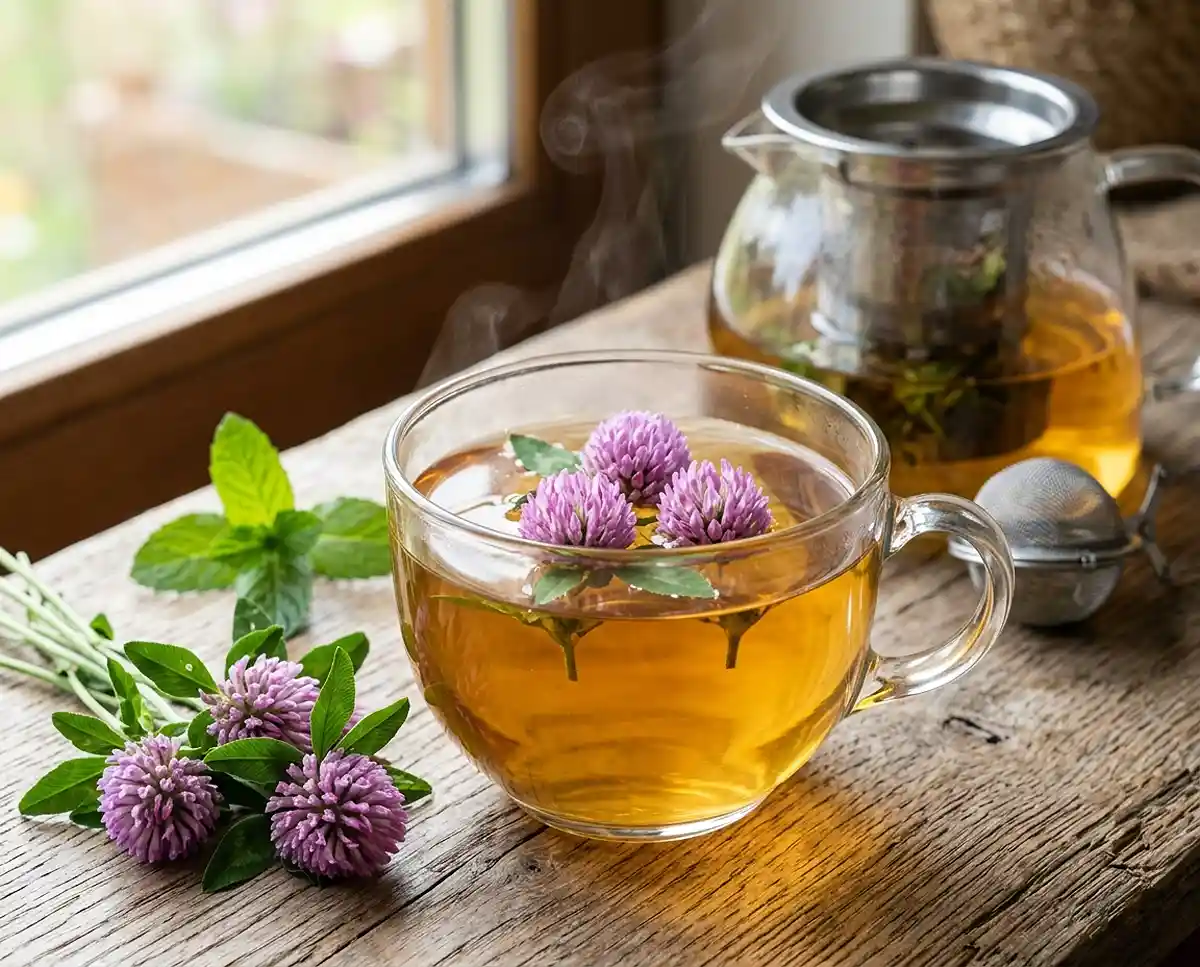
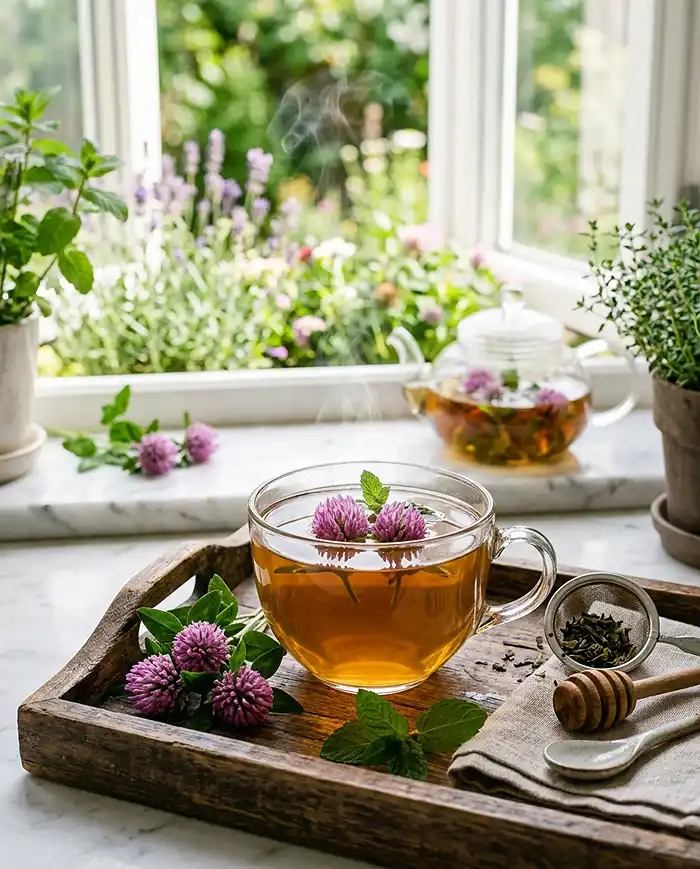
Discover the magic of a simple clover tea recipe — a soothing, wildflower brew that’s as beautiful as it is delicious. Made with just fresh clover blossoms and boiling water, this tea is nature in a cup.
I still remember the first time I made this — I’d spotted a patch of clover in the backyard and thought, “wait, can you actually drink that?” Turns out, yes, and it’s absolutely lovely.
There’s something so satisfying about turning a common wildflower into something genuinely delicious. This clover tea recipe is one of those little kitchen surprises that makes you feel like a woodland herbalist with zero effort.
Table of Contents
What Makes This Clover Tea So Special
This isn’t your average store-bought herbal tea. Fresh clover blossoms give the brew a naturally sweet, floral flavor — soft, light, and just a tiny bit earthy.
It’s also incredibly simple. No fancy equipment, no long ingredient list. Just flowers, hot water, and a few quiet minutes to let it steep.
Whether you’re into red clover tea recipes for their wellness reputation or you just love a good wildflower brew, this one’s a keeper.
Clover Tea
Equipment
- Tea infuser
- cup
- kettle
- Strainer
Ingredients
Main
- 3-4 blossoms Fresh clover flowers fresh, pesticide-free
Optional Add-in
- 2 leaves Fresh mint leaves optional
Base
- 1 cup Boiling water
Instructions
- Remove the stems and leaves from the clover flowers, keeping only the blossom heads. Check for debris or insects.
- Place the clover blossoms and optional mint leaves into a tea infuser or directly into a cup.
- Pour boiling water over the blossoms and let steep for 5 to 10 minutes depending on desired strength.
- Remove the infuser or strain the tea. Serve warm as-is or sweeten with honey if desired.
Notes
Ingredients
Here’s everything you need for this easy clover tea recipe. Keep it simple — that’s the whole vibe here.
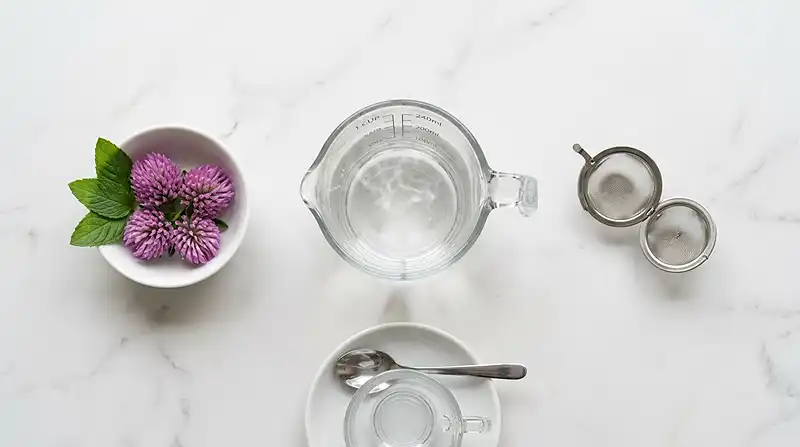
| Ingredient Group | Ingredient | Amount |
|---|---|---|
| Main | Fresh clover flowers | 3 to 4 blossoms |
| Optional Add-in | Fresh mint leaves | 2 leaves |
| Base | Boiling water | 1 cup |
A quick note on the clover: use blossoms that are fresh, fully open, and pesticide-free. If you’re picking from your garden or a clean patch of lawn, give them a gentle rinse before using.
The mint leaves are optional but genuinely worth adding. They brighten the tea and give it a refreshing finish that pairs perfectly with the sweet clover flavor.
How to Make Clover Tea — Step by Step
This clover tea recipe comes together in about 10 minutes, and most of that is just waiting. Here’s how to do it right.
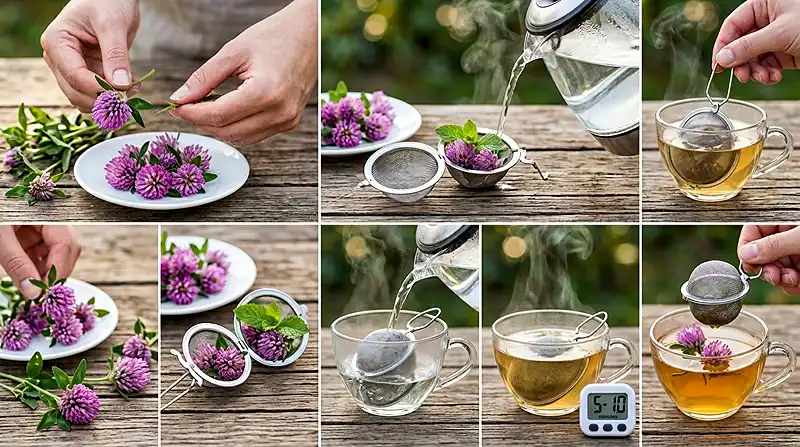
Step 1 — Prep the Blossoms
Remove the stem and leaves from each clover flower, keeping just the blossom head. You don’t need the green bits — the petals are where all the flavor lives.
Give them a quick visual check for any sneaky little bugs. They love clover as much as we do.
Step 2 — Load the Infuser
If you have a tea infuser, place the clover blossoms and mint leaves inside. This keeps things tidy and makes cleanup a breeze.
No infuser? No problem at all. Just drop the blossoms and mint straight into the cup. You’ll strain the tea after steeping — easy fix.
“Think of the infuser as a tiny flower spa. The blossoms just chill in the hot water and do their thing.”
Step 3 — Pour and Steep
Place the infuser in your cup, then pour one full cup of boiling water over the clover blossoms. Watch the water turn the most gorgeous pale golden color as it steeps.
Let it sit for 5 to 10 minutes. The longer you steep, the more intense the flavor. Five minutes gives you something light and delicate; ten minutes brings out a fuller, earthier taste.
Step 4 — Remove and Enjoy
Pull out the infuser (or strain your tea if you went the no-infuser route), and that’s it. Your clover tea recipe is done.
Sip it as-is, or add a small drizzle of honey. If you’re a fan of floral honey pairings, you might love this Dr. William Li honey recipe for inspiration.
Expert Tips for the Best Clover Tea
Choosing Your Clover
Red clover blossoms are the classic choice for a red clover tea recipe — they’re sweeter and more aromatic than white clover. Both work great, though, so use whatever you have access to.
Always pick from areas you know are free from pesticides and herbicides. Roadside clover is a hard pass. Garden or meadow clover? Perfect.
Steeping Sweet Spot
Don’t over-steep past 10 minutes or the tea can turn slightly bitter. Set a little timer so you don’t forget about it — we’ve all been there.
If you like your clove tea recipe a bit stronger, add an extra blossom rather than steeping longer. More flowers equals more flavor without the bitterness.
Flavor Variations to Try
Love a citrusy twist? Add a thin slice of lemon to the cup before you pour the water. It lifts the whole flavor profile beautifully.
For a cooling summer version, try making a double-strength brew and pouring it over ice. Pair it alongside this refreshing mint julep mocktail for a gorgeous non-alcoholic spread.
You can also try combining clover with chamomile for a sleepy, soothing bedtime blend. It’s the herbal tea equivalent of a cozy blanket.
Sweetener Options
Clover tea is naturally lightly sweet, so you may not need anything extra. But if you do want to sweeten it, raw honey is the ultimate choice — it enhances the floral notes without overpowering them.
Maple syrup is another lovely option if you’re keeping things vegan. Just a tiny drizzle is all it takes.
Troubleshooting Your Clover Tea
Tea Tastes Too Bitter
This usually means you steeped too long or used too many blossoms for the water volume. Stick to 3 to 4 blossoms per cup and keep the steeping time under 10 minutes.
Tea Has No Flavor
This can happen if the blossoms aren’t fresh enough. Wilted or dried-out flowers won’t give you much flavor at all. Always use freshly picked, fully open blossoms for the best results.
Tea Looks Murky
A little cloudiness is totally normal — it’s just the natural compounds from the flowers. If it bothers you, strain the tea through a fine mesh sieve or cheesecloth before drinking.
Storage and Reheating
This clover tea recipe is best enjoyed fresh, but here’s how to store it if you make extra.
| Storage Method | Container | Duration |
|---|---|---|
| Refrigerator (brewed tea) | Covered glass jar or pitcher | Up to 2 days |
| Freezer (as ice cubes) | Ice cube tray, then freezer bag | Up to 1 month |
| Fresh blossoms | Damp paper towel in fridge | 1 to 2 days |
To reheat, just warm the tea gently in a small saucepan over low heat. Don’t microwave it if you can help it — the flavor stays better on the stove.
No-Waste Kitchen Ideas
Don’t toss those steeped blossoms! The spent clover flowers can go straight into your compost bin, where they’ll break down beautifully and feed your garden.
You can also freeze fresh clover blossoms in water to make floral ice cubes. Pop one into a glass of lemonade, sparkling water, or alongside a fruity black bean and corn salad for a gorgeous table presentation.
Leftover cold clover tea also makes a wonderful hair rinse — it’s said to add shine and softness. Just something to consider before you pour it down the drain!
What to Serve With Clover Tea
This tea pairs wonderfully with light, fruity baked goods. The floral sweetness of the brew is a natural match for anything with a bit of tartness.
Try it with a slice of this gorgeous rhubarb custard tart — the contrast between the creamy filling and the floral tea is just perfect.
Or grab a freshly baked rhubarb muffin and settle in for a proper little afternoon tea moment. You deserve it.
Red Clover Tea Recipe
Can I use dried clover instead of fresh blossoms?
Yes, you can use dried clover blossoms if fresh ones aren’t available. Use about 1 to 2 teaspoons of dried blossoms per cup of water. The flavor will be slightly less vibrant than fresh, but still delicious.
Look for dried clover at health food stores or online herbal suppliers. Make sure it’s food-grade and pesticide-free.
What does clover tea taste like?
Clover tea has a naturally sweet, floral flavor with a very mild earthy undertone. It’s gentle and light — nothing overpowering at all.
The red clover tea recipe tends to be slightly richer in flavor than white clover. Adding mint lifts the whole thing and makes it feel fresh and bright.
Is clover tea the same as clove tea?
Great question — these are totally different! Clover tea is made from clover plant blossoms (Trifolium), while a clove tea recipe uses dried clove spice (Syzygium aromaticum), which has a warm, spicy, almost medicinal flavor.
Both are wonderful herbal teas, but they taste completely different. This recipe is all about the sweet, floral clover blossom.
Can I make a larger batch of clover tea?
Absolutely. Just scale up proportionally — about 3 to 4 blossoms per cup of water. You can brew a whole pot using a standard tea pot or a large heat-safe pitcher with a fine strainer.
Serve it warm or let it cool for an iced version. It’s a lovely option for a garden party or a quiet afternoon with friends.
Are there any precautions with clover tea?
Clover tea is generally considered safe for most healthy adults when consumed in moderate amounts. However, red clover contains natural plant compounds called isoflavones, so those who are pregnant, breastfeeding, or on certain medications should check with a healthcare provider first.
As always, only use blossoms you’re certain are free from pesticides, herbicides, and other chemicals.
Make This Clover Tea Today
There’s something genuinely joyful about making tea from flowers you picked yourself. This clover tea recipe is proof that the simplest things are often the most special.
Whether you try the classic version or add mint and honey for your own spin, we’d love to hear how it goes. Drop a comment below and let us know what you think!
If you loved this recipe, please save it to your favorite Pinterest board and share it with a friend who could use a little wildflower moment in their day. Happy brewing!
