
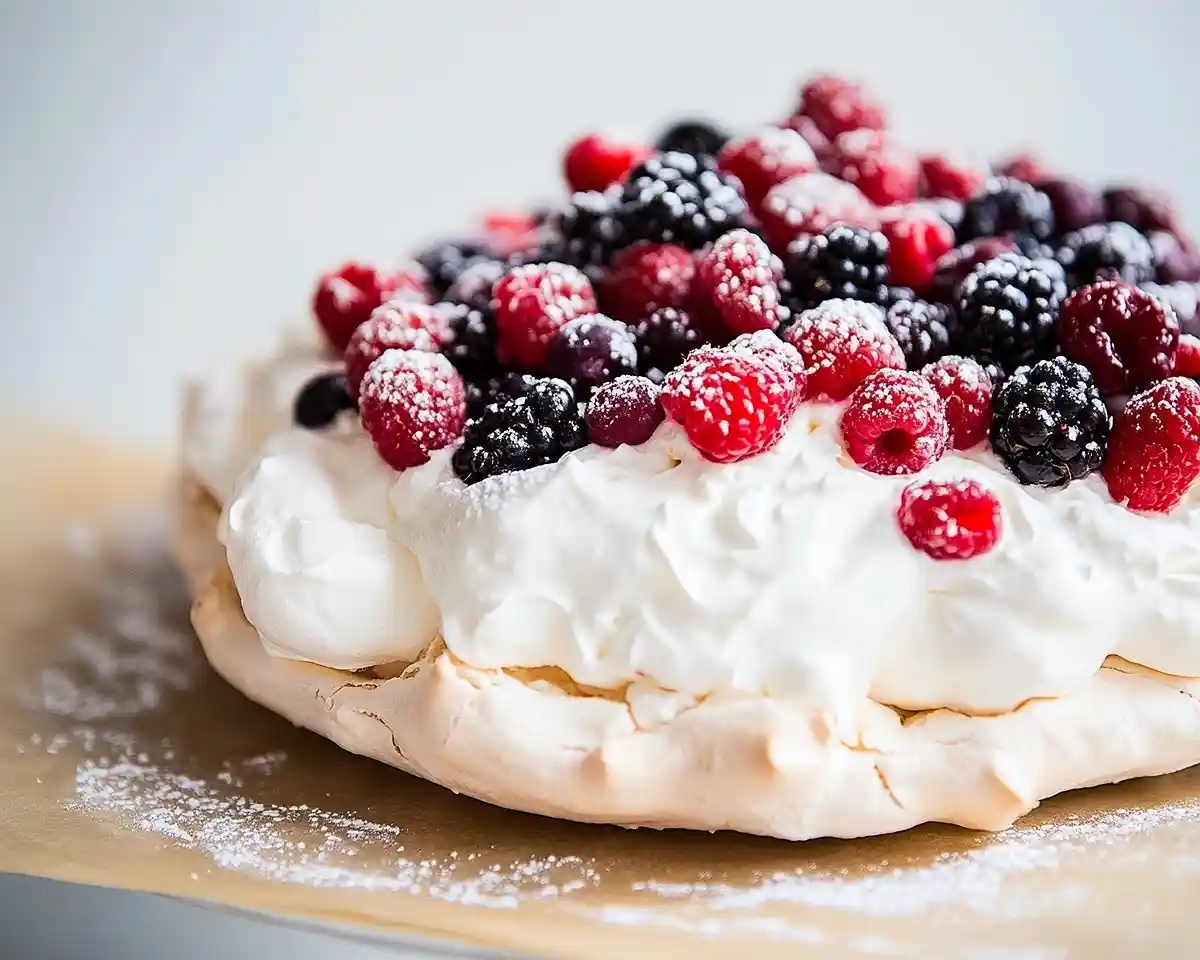
Berry Pavlova with Lemon Whipped Cream is a stunning meringue dessert with whipped cream and fruit. Light, crisp, and crowned with tangy lemon curd cream.
Hey, I’m Linda! Welcome to Tasty at Home, where bold flavors meet everyday kitchens.
Last summer, I served this Berry Pavlova with Lemon Whipped Cream at a backyard barbecue, and my neighbor literally gasped when I sliced into that cloud-like meringue. The crisp shell crackled under my spoon, revealing a marshmallow-soft center crowned with tangy lemon cream and jewel-toned berries. Man, oh man—it was gone in minutes.
Here’s the thing: I used to think pavlova was reserved for fancy restaurants or TV cooking shows. My first attempt? A weeping, deflated mess that stuck to the parchment like superglue. But after testing this recipe twelve times (yes, twelve), I finally cracked the code to a perfect meringue dessert with whipped cream and fruit that rises tall, stays crisp, and never cracks prematurely.
This berry pavlova recipe transforms simple egg whites into an elegant centerpiece that looks complicated but comes together with just seven ingredients. The bright lemon curd cuts through the sweetness while fresh berries add bursts of summer flavor. You’ll love how forgiving this dessert actually is—a few cracks on top? That’s exactly how pavlova should look.
Table of Contents
What Makes This Berry Pavlova Recipe Absolutely Irresistible
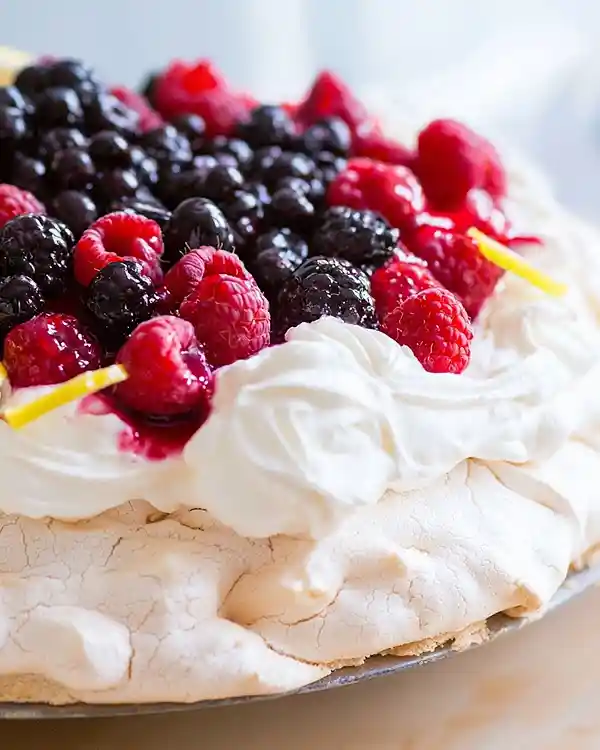
What is a Pavlova?
Pavlova is a meringue-based dessert with a crisp exterior and soft, marshmallow-like interior, traditionally topped with whipped cream and fresh fruit. Named after the Russian ballerina Anna Pavlova, this dessert captures the lightness and grace of a ballet performance on your plate.
This version elevates the classic with tangy lemon curd folded into freshly whipped cream and a rainbow of berries. The secret lies in the cornstarch and lemon juice added to the meringue—they create stability and that signature chewy center that makes pavlova different from ordinary meringue cookies.
Meringue Dessert with Whipped Cream and Fruit
I’ve tested this recipe with both fine caster sugar and regular granulated sugar. Caster sugar dissolves faster and creates a glossier meringue, but granulated works beautifully if you take your time adding it slowly. The key is patience—rushing the sugar addition creates a grainy texture instead of that silky-smooth finish (as Julia Child always emphasized for perfect meringues).
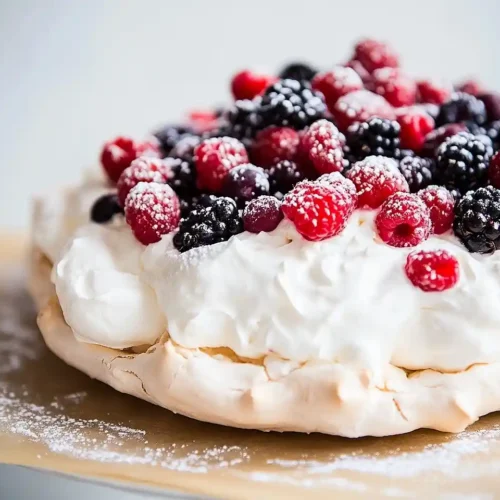
Berry Pavlova with Lemon Whipped Cream
Equipment
- stand mixer with whisk attachment
- hand mixer
- Sheet pan
- Parchment paper
- Offset spatula
- mixing bowls
Ingredients
For the Meringue:
- 4 Large egg whites Room temperature
- Pinch Kosher salt Stabilizes foam
- 1 cup Fine caster or granulated sugar Caster preferred
- ½ teaspoon Pure vanilla extract Not imitation
- 2 teaspoons Cornstarch Creates chewiness
- 1 teaspoon Fresh lemon juice Stabilizes meringue
For the Lemon Berry Filling:
- 1¼ cups Heavy whipping cream Cold, 36% fat
- 3 tablespoons Lemon curd Wilkin & Sons or Stonewall Kitchen
- 1 teaspoon Fresh lemon juice Just squeezed
- 1 lemon Lemon zest Organic preferred
- 2 cups Fresh mixed berries Raspberries, blueberries, blackberries
- Optional Confectioner’s sugar For garnish
Instructions
- Preheat oven to 275°F (135°C). Line a sheet pan with parchment paper and trace an 8-inch circle.
- Whip egg whites and salt to soft peaks, about 3 minutes.
- Gradually add sugar, continue beating until stiff, glossy peaks form, 3–5 minutes.
- Fold in vanilla extract, cornstarch, and lemon juice, whisk 1 minute until incorporated.
- Shape meringue into a 2½–3 inch tall disk on the parchment-lined pan, create a slight dip in center.
- Bake 1 hour 15 minutes, then let cool in oven 1–1½ hours.
- Beat heavy cream to soft peaks, fold in lemon curd, zest, and lemon juice.
- Assemble pavlova: top cooled meringue with lemon cream and fresh berries, dust with confectioner’s sugar if desired.
Notes
Ingredients for Berry Pavlova with Lemon Whipped Cream
For best results, use room-temperature egg whites for maximum volume and fresh lemon juice for bright acidity. Older eggs actually whip better than fresh ones because their proteins relax over time, creating more stable foam. Select berries that are firm, brightly colored, and fragrant—avoid any with soft spots or mold.
| Ingredient | US Measurement | Metric | Notes |
|---|---|---|---|
| For the Meringue: | |||
| Large egg whites | 4 | 120 mL | Room temperature |
| Kosher salt | Pinch | Pinch | Stabilizes foam |
| Fine caster or granulated sugar | 1 cup | 200 g | Caster preferred |
| Pure vanilla extract | ½ teaspoon | 2.5 mL | Not imitation |
| Cornstarch | 2 teaspoons | 6 g | Creates chewiness |
| Fresh lemon juice | 1 teaspoon | 5 mL | Stabilizes meringue |
| For the Lemon Berry Filling: | |||
| Heavy whipping cream | 1¼ cups | 300 mL | Cold, 36% fat |
| Lemon curd | 3 tablespoons | 45 mL | Wilkin & Sons or Stonewall Kitchen |
| Fresh lemon juice | 1 teaspoon | 5 mL | Just squeezed |
| Lemon zest | 1 lemon | 1 lemon | Organic preferred |
| Fresh mixed berries | 2 cups | 300 g | Raspberries, blueberries, blackberries |
| Confectioner’s sugar | Optional | Optional | For garnish |
Shopping Tips for US Grocery Stores: Find caster sugar in the baking aisle near specialty sugars, or pulse granulated sugar in a food processor for 30 seconds. Wilkin & Sons lemon curd is available at Whole Foods and Target. For berries, check farmers’ markets from May through September for peak flavor and vibrant color.
Substitutions: Can’t find caster sugar? Regular granulated works—just add it more slowly. No lemon curd? Whisk 2 tablespoons powdered sugar with 1 tablespoon lemon juice into the cream. International readers can use caster sugar (UK), berry mix (strawberries work beautifully), and double cream (48% fat) whipped to soft peaks.
Essential Equipment and Preparation Steps
You’ll need a stand mixer with whisk attachment (or hand mixer), sheet pan, parchment paper, offset spatula, and mixing bowls. Don’t have an offset spatula? A butter knife works for spreading—just dip it in hot water and wipe dry between strokes for smoother results.
Step 1: Set Up Your Oven and Pan
Preheat your oven to 275°F (135°C) with the rack in the center position. Line a sheet pan with parchment paper and trace an 8-inch circle using a cake pan as a guide. Flip the parchment so the pencil mark faces down—this prevents graphite from transferring to your meringue.
Well… I forgot to flip the parchment once, and my pavlova had faint gray marks on the bottom. Not a disaster, but definitely not Instagram-worthy.
Step 2: Whip the Egg Whites to Soft Peaks
Place the egg whites and salt in your stand mixer bowl fitted with the whisk attachment. Start whisking on medium speed until soft peaks form—about 3 minutes. The peaks should curl over gently when you lift the whisk.
Make sure your bowl is completely grease-free. Even a tiny amount of fat will prevent the egg whites from whipping properly. Wipe your bowl and whisk with white vinegar on a paper towel before starting.
Step 3: Add Sugar Gradually for Glossy Stiff Peaks
Increase the mixer speed to high and slowly sprinkle in the sugar, one tablespoon at a time. Continue beating for roughly 3 minutes. Scrape down the bowl with a spatula, then keep whisking on high until stiff, glossy peaks form—an additional 3 to 5 minutes.
The meringue should look thick, shiny, and hold its shape completely. Rub a bit between your fingers—if you feel sugar granules, keep beating. Thomas Keller insists on this test for foolproof meringues in his famous French Laundry techniques.
Step 4: Fold in Stabilizers
Add the vanilla extract, cornstarch, and lemon juice to the meringue. Whisk on high speed for 1 minute until completely incorporated. Use a spatula to fold from the bottom, ensuring no streaks of cornstarch remain visible.
The cornstarch is your secret weapon here—it absorbs excess moisture during baking and creates that signature marshmallow center. Let me tell you, this simple addition transformed my pavlova from flat to fabulous.
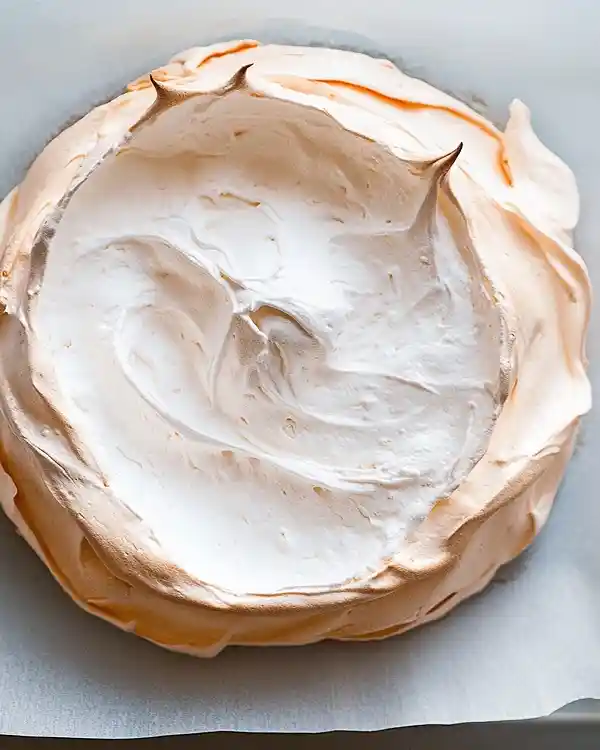
Step 5: Shape the Meringue Shell
Transfer the meringue to the center of your traced circle on the parchment-lined sheet pan using a spatula. Spread it into a thick disk about 2½ to 3 inches tall, using the circle as a rough guide. Create a slight dip in the center with your offset spatula to cradle the whipped cream filling later.
Don’t worry about perfect edges—rustic charm is part of pavlova’s appeal. The natural cracks and swirls that form during baking add character and prove it’s homemade, not store-bought.
Step 6: Bake Low and Slow
Bake the meringue until crisp, pale in color, and dry to the touch—roughly 1 hour and 15 minutes. Check by gently tapping the surface; it should feel firm, not tacky. If still soft, bake for an additional 10 to 15 minutes.
Turn off the oven and prop the door open with a wooden spoon or heat-proof spatula. Let the meringue cool completely inside the oven for 1 to 1½ hours. This gradual cooling prevents sudden temperature shock that causes major cracking.
You know what? The slow cooling is non-negotiable. I once rushed this step and ended up with a pavlova that looked like it survived an earthquake.
Step 7: Prepare the Lemon Whipped Cream Filling
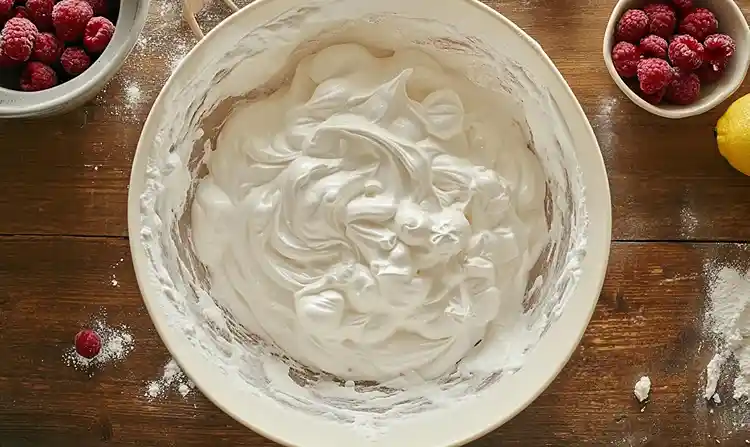
Just before serving, place cold heavy cream in a clean stand mixer bowl fitted with a whisk attachment (or use a hand mixer). Beat starting at low speed, gradually increasing to high, until soft peaks form—about 2 to 3 minutes.
Fold in the lemon curd, lemon zest, and lemon juice with a spatula using gentle strokes. The filling should taste bright and tangy, cutting through the sweetness of the meringue like a citrus sunrise in every bite.
Step 8: Assemble and Serve
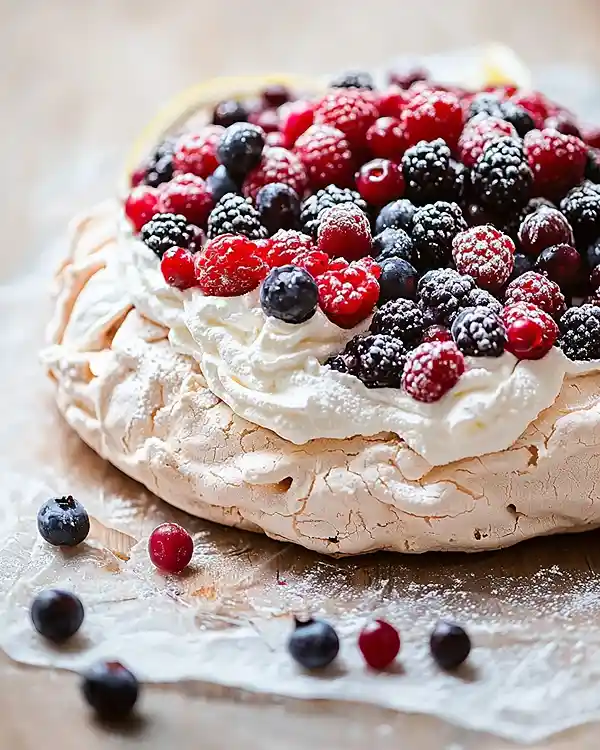
Carefully transfer the cooled meringue shell to a flat serving platter using the parchment paper as a sling—these beauties are fragile. Top with the lemon curd cream, spreading it into the center depression. Arrange fresh berries on top and dust with confectioner’s sugar if desired.
Serve immediately in large scoops, letting your spoon crack through the crisp shell to reveal the soft interior. Each serving should include meringue, cream, and berries in one perfect bite.
Expert Tips for Pavlova Perfection
Stabilize Your Meringue: The combination of cornstarch and lemon juice creates a stable foam that holds up during baking. Don’t skip these ingredients—they’re the difference between success and a sticky mess.
Room Temperature Matters: Cold egg whites won’t whip to their full volume. Let them sit on the counter for 30 minutes before starting. This simple step increases your meringue volume by almost 30%.
Sugar Timing is Everything: Adding sugar too quickly creates a grainy texture instead of silky-smooth meringue. Sprinkle it slowly, giving each tablespoon time to dissolve completely. Patience here pays off with that gorgeous glossy finish.
The Toothpick Test: Insert a toothpick into the side of your baked meringue. It should come out clean and dry. If you see any sticky residue, bake for 10 more minutes.
Creative Variations on Berry Pavlova
Tropical Pavlova: Replace berries with diced mango, passion fruit pulp, and toasted coconut flakes. The exotic fruits pair beautifully with the tangy lemon cream for a vacation on a plate.
Chocolate Berry Pavlova: Fold 2 tablespoons cocoa powder into the meringue with the cornstarch. Top with chocolate whipped cream and raspberries for a decadent twist perfect for Valentine’s Day celebrations.
Mini Pavlovas: Pipe or spoon individual 3-inch meringue nests on your sheet pan. Bake for 45 minutes, then cool completely. These personal-sized portions are ideal for dinner parties and holiday gatherings.
Autumn Spice Pavlova: Add ½ teaspoon cinnamon to the meringue and top with caramelized apples, pears, and a drizzle of salted caramel. This variation shines at Thanksgiving when fresh berries aren’t in season.
Make-Ahead Strategy: Bake the meringue shell up to 2 days ahead and store it in an airtight container at room temperature. Whip the cream and assemble just before serving for maximum crispness. Never refrigerate an unfilled meringue—humidity destroys that crisp texture.
Storage and Serving Guidelines
| Storage Method | Duration | Instructions |
|---|---|---|
| Assembled pavlova | Same day | Best enjoyed within 4 hours of assembly |
| Leftover pavlova | Up to 2 days | Cover with plastic wrap, refrigerate |
| Meringue shell only | Up to 2 days | Store in airtight container at room temperature |
| Lemon whipped cream | 1 day | Refrigerate in covered bowl, re-whip before using |
| Fresh berries | 3-5 days | Keep refrigerated in original container |
Perfect Pairings: Serve this berry pavlova recipe alongside our breakfast sausage casserole for a beautiful brunch spread. The light, fruity dessert balances richer breakfast dishes beautifully. For dinner parties, pair with Korean noodles or chilli paneer as an elegant contrast to spicy mains.
Consider serving champagne or sparkling lemonade with your pavlova—the bubbles complement the airy meringue texture. For more elegant entertaining ideas, check out this complete guide to hosting memorable dinner parties from Serious Eats.
Frequently Asked Questions About Pavlova
What dessert has meringue and whipped cream?
Pavlova is the famous dessert featuring crisp meringue shells topped with whipped cream and fresh fruit. Other meringue desserts with whipped cream include Eton mess, meringue roulade, and baked Alaska, but pavlova’s signature marshmallow center makes it unique among these classic treats.
What is the dessert a fruit cream and meringue?
The dessert combining fruit, cream, and meringue is called pavlova, created in honor of Russian ballerina Anna Pavlova during her 1920s tour of Australia and New Zealand. Both countries claim to have invented this iconic meringue dessert with whipped cream and fruit that remains a beloved centerpiece for celebrations.
What is the British dessert with meringue?
Eton mess is the traditional British dessert made with crushed meringue, whipped cream, and strawberries, originating from Eton College. While pavlova also appears in British cuisine, Eton mess embraces a deliberately messy presentation with broken meringue pieces folded throughout, creating a delightfully casual alternative to structured pavlova.
A Dessert Worth Celebrating
This Berry Pavlova with Lemon Whipped Cream proves that stunning desserts don’t require complicated techniques or professional equipment. You’ve got this—just follow the steps, trust the process, and watch ordinary egg whites transform into an extraordinary centerpiece.
The combination of crisp meringue, tangy lemon cream, and fresh berries creates the perfect ending to summer barbecues, holiday dinners, or casual weekend gatherings. Every crack and swirl tells the story of a homemade treasure that tastes even better than it looks.
Ready to impress your guests? Grab those egg whites and start whisking. Share your pavlova masterpiece in the comments below—I’d love to see how yours turns out!
For your next brunch menu, try pairing this with our crack breakfast casserole or green bean casserole from scratch for a complete spread. And if you’re looking for more show-stopping desserts, explore these expert-approved meringue techniques from King Arthur Baking for even more confidence in the kitchen.
Now go create some magic—your perfectly crisp, marshmallow-centered Berry Pavlova with Lemon Whipped Cream is waiting!
