
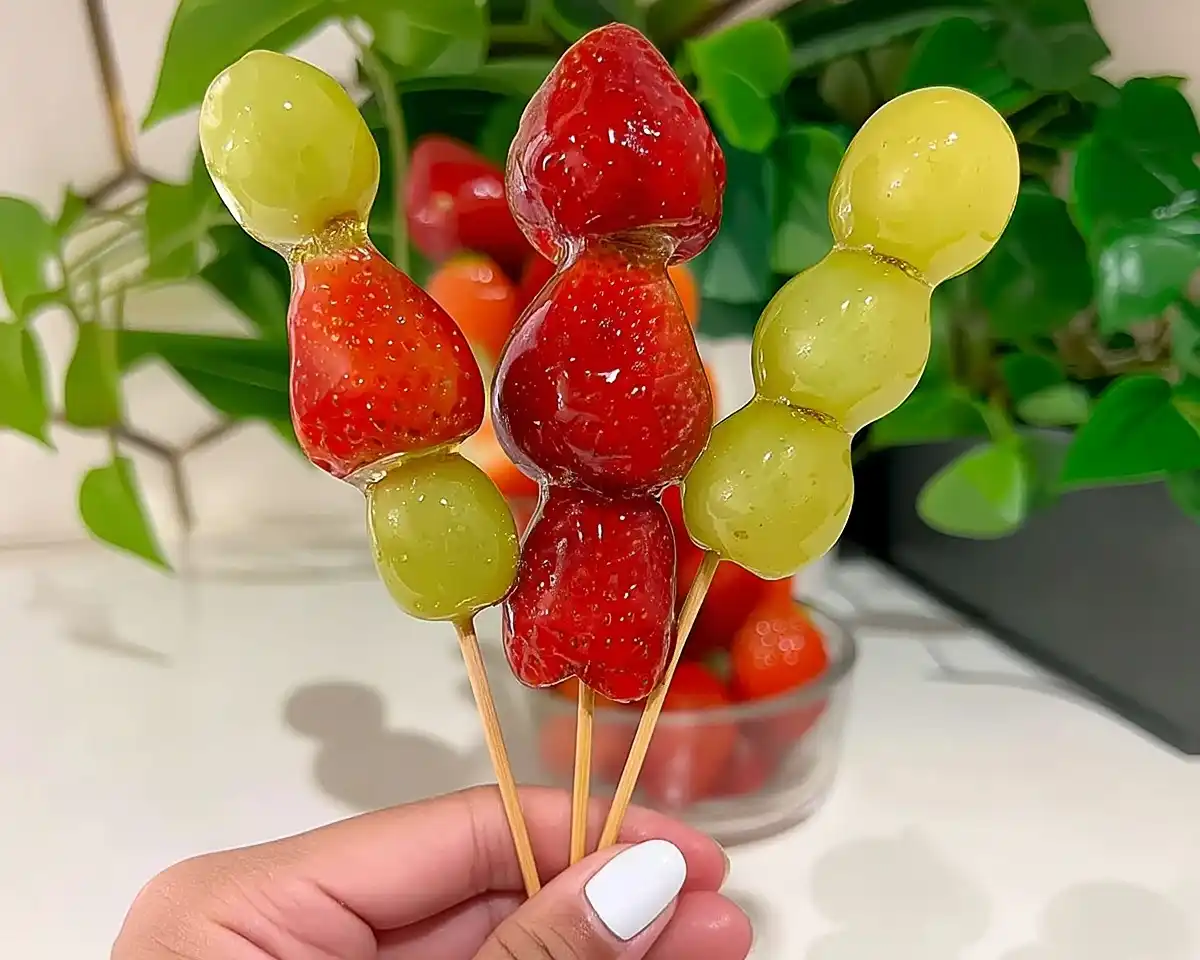
Craving Tanghulu, the iconic Chinese candied fruit that’s crunchy, glossy, and totally addictive? This easy Tanghulu recipe uses just 3 ingredients and comes together in under 30 minutes — no fancy equipment needed!
Okay, I’ll be real — the first time I saw Tanghulu on a street food video, I watched it probably six times in a row. That satisfying crack when someone bites through the glassy sugar shell? I was absolutely obsessed. So naturally, I had to figure out how to make Chinese candied fruit at home, and honestly? It’s way easier than it looks.
Table of Contents
What Is Tanghulu, Exactly?
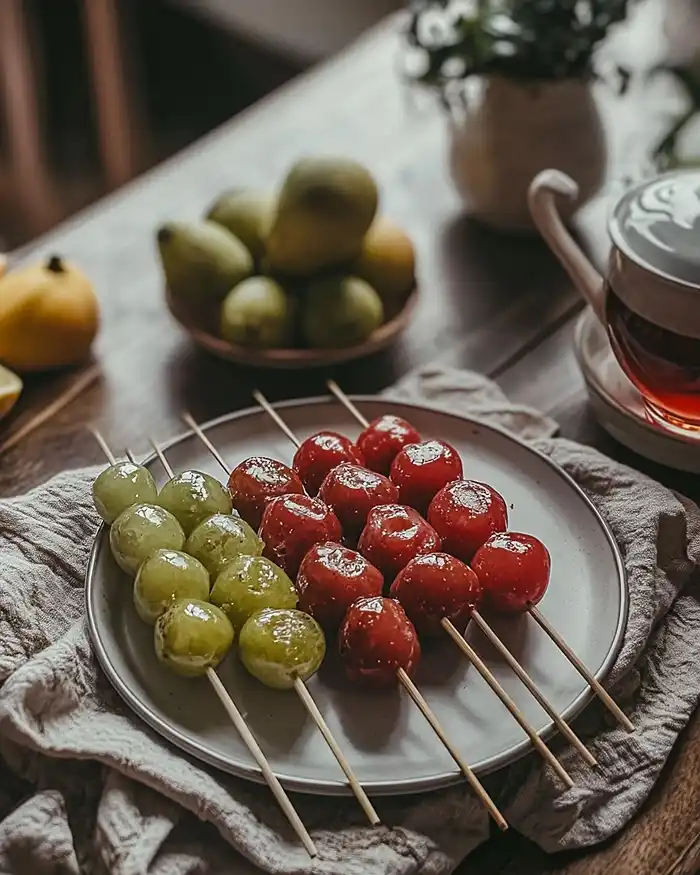
Tanghulu is a traditional Chinese street food treat made by coating fresh fruit in a hard, crystal-clear sugar shell. It originated in northern China and has been around for centuries — basically the OG candy apple. The magic is in that thin, glass-like sugar coating that shatters when you bite into it, revealing the juicy, tart fruit underneath.
Think of it as nature’s candy bar, but way prettier and honestly more fun to eat.
Why You’ll Love This Easy Tanghulu Recipe
This recipe delivers on every level — it’s visually stunning, insanely satisfying to make, and somehow tastes even better than it looks. The contrast between the crunchy, sweet candy shell and the fresh, slightly tart fruit is genuinely next-level.
It’s also a total crowd-pleaser. Bring these out at a party and watch everyone completely lose their minds.
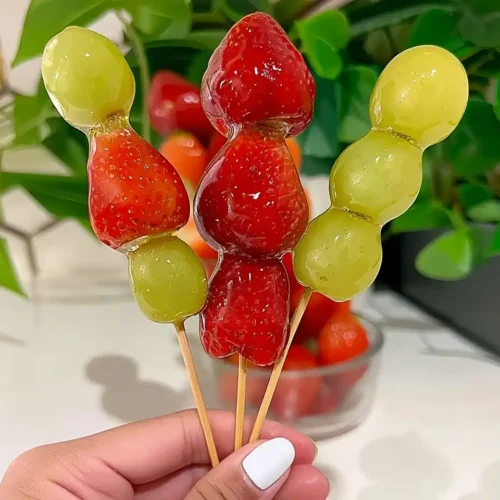
Tanghulu (Chinese Candied Fruit)
Equipment
- Heavy-bottomed pot
- Bamboo skewers
- Candy thermometer (optional)
- Mixing bowl
Ingredients
Fruit
- 1 lb Strawberries or mixed fruit about 30 pieces
Sugar Syrup
- 2 cups White sugar
- 1 cup Water
Instructions
- Wash the fruit thoroughly and dry completely. Remove stems and thread up to 3 pieces onto each skewer.
- In a heavy-bottomed pot, combine sugar and water over medium-low heat. Do not stir. Let it boil and simmer until slightly amber and syrupy (about 10–20 minutes).
- Test the syrup by dropping a small amount into ice water. If it hardens instantly and snaps, it is ready.
- Dip each fruit skewer into the hot syrup, coating evenly. Work quickly to avoid thick buildup.
- Immediately place the coated skewer into an ice water bath for a few seconds to harden the sugar shell.
- Place finished skewers on parchment paper and serve immediately for best texture.
Notes
Ingredients
| Group | Ingredient | Amount |
|---|---|---|
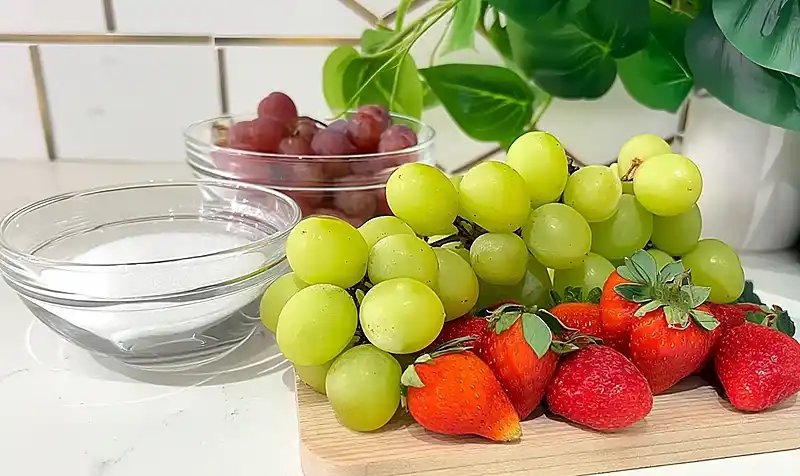
| Fruit | Strawberries, grapes, or fruit of choice | 1 lb (~30 pieces) |
| Sugar Syrup | White sugar | 2 cups |
| Sugar Syrup | Water | 1 cup |
That’s genuinely it. Three ingredients. No food coloring, no corn syrup, no mystery additives — just fruit, sugar, and water doing beautiful things together.
A quick note on fruit: strawberries are the classic choice for this easy Tanghulu recipe, but grapes, mandarin segments, kiwi slices, and even blueberries work wonderfully. Just make sure whatever you pick is completely dry before you dip it — we’ll talk more about that in the tips section.
Step-by-Step Instructions
Step 1: Prep Your Fruit
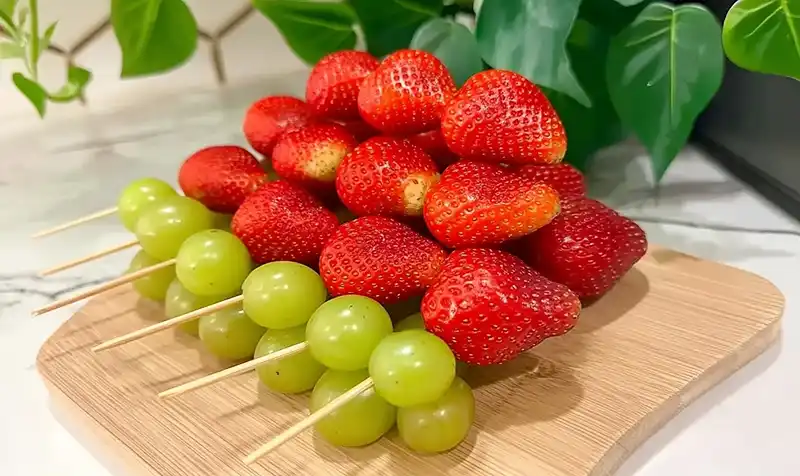
Wash your fruit thoroughly and pat it completely dry with paper towels. And I mean completely dry — any moisture will interfere with the sugar coating and you’ll end up with a cloudy, sticky mess instead of that gorgeous glass finish.
Remove any stems, leaves, or inedible bits. Then thread your fruit onto bamboo skewers, keeping it to 3 pieces or fewer per skewer. Trust me on this — fewer pieces means more control when you’re dipping, and you’re way less likely to lose a strawberry to the sugar pot.
Step 2: Make the Sugar Syrup
In a small, heavy-bottomed pot, combine the sugar and water over low to medium heat. Here’s the golden rule: do not stir. I know it feels wrong to just stand there watching a pot of sugar, but stirring can cause crystallization and your syrup will go grainy instead of glassy.
Let it come to a boil, then keep it simmering. You’re watching for it to turn slightly amber and thicken up like a light syrup — this takes about 10–20 minutes. If you have a candy thermometer, you’re aiming for 300°F (hard crack stage). If you don’t have one, don’t worry — that’s what the next step is for.
Pro tip: Keep the heat consistent. If it’s too high, the sugar burns fast. If it’s too low, it takes forever and can crystallize. Medium-low is your sweet spot.
Step 3: Test the Syrup
This is the old-school candy maker’s trick: drop a small spoonful of hot syrup into a bowl of ice water. If it hardens almost instantly and snaps cleanly when you bend it, the syrup is ready. If it’s bendy or sticky, it needs more time.
Don’t skip this step — it’s the difference between a perfect glassy Tanghulu coating and a sad, gummy one.
Step 4: Dip the Fruit
Now the fun part! Working quickly, dip each skewer into the hot syrup and give it a gentle swirl to coat the fruit in a thin, even layer. You don’t want a thick glob — thin and even is the goal for that classic Chinese candied fruit look.
Immediately after dipping, plunge the skewer into your ice water bath for a few seconds. You’ll hear a little hiss and the coating will harden almost instantly into that iconic glass shell.
Step 5: Plate and Enjoy!
Set each finished skewer on a plate or parchment-lined tray and repeat with the rest. Work quickly — the syrup will continue cooking in the pot and can go from perfect to burnt in just a minute or two if you’re not keeping an eye on it.
Once they’re all done, eat them right away or within the hour. These are definitely a “make and eat immediately” kind of treat — the sugar shell softens as it sits, especially in humid weather.
Expert Tips for Perfect Tanghulu Every Time
Dry Fruit Is Non-Negotiable
I cannot stress this enough: wet fruit will ruin your Tanghulu. The sugar syrup and water don’t play nicely together, and you’ll end up with a foggy, sticky coating instead of that stunning clear glass finish. After washing, let the fruit air dry for at least 30 minutes, or pat it super well with paper towels.
Temperature Is Everything
If you have a candy thermometer, use it. Getting to 300°F (hard crack stage) is what gives you that satisfying crack. Below that and the coating stays soft and tacky — still tasty, but not quite the right texture for authentic Chinese candied fruit.
Keep Your Ice Bath Ready
Have your bowl of ice water sitting right next to your pot before you start dipping. Once that skewer is coated, you’ve got maybe two seconds before the syrup starts dripping or setting unevenly. Speed is your best friend here.
Variations Worth Trying
If you want to branch out, try mandarin orange segments (peel them and dry them well), pineapple chunks, or even halved kiwis. Each fruit brings its own personality — grapes pop in the most satisfying way, and strawberries give you that beautiful red-against-clear contrast that’s basically made for photos.
Feeling adventurous? Try a drizzle of melted dark chocolate over the hardened sugar shell for a next-level treat. It pairs especially well if you’re already experimenting with fun desserts like these Churro Cruffins or this dreamy Banana Pudding Cheesecake.
Troubleshooting Common Problems
My Sugar Is Crystallizing
This usually happens if you stirred the syrup, if there was residual sugar on the sides of the pot, or if the heat was too low for too long. Start fresh if this happens — unfortunately, crystallized syrup can’t be saved. Next time, use a pastry brush dipped in water to brush down the sides of the pot as it cooks.
My Coating Is Cloudy, Not Clear
Cloudy coating is almost always caused by moisture — either from the fruit or from the ice water bath. Make sure your fruit is bone dry before dipping. Also, don’t leave the skewer in the ice water too long — just a few seconds to set the shell is plenty.
My Sugar Is Burning
If your syrup is going dark brown quickly, your heat is too high. Pull the pot off the burner immediately and let it cool slightly. A true amber is fine — deep brown means it’s overcooked and will taste bitter.
Storage & Make-Ahead Info
| Method | Details |
|---|---|
| Room Temperature | Best eaten within 1–2 hours of making |
| Refrigerator | Not recommended — humidity softens the shell |
| Freezer | Not recommended |
Tanghulu is a “make it, eat it” situation — it doesn’t store well because the sugar shell is sensitive to moisture and humidity. That said, the syrup itself can be made a bit in advance and kept warm on the lowest heat setting while you prep your fruit.
No-Waste Tip: If you have leftover syrup, don’t toss it! Let it cool slightly and drizzle it over ice cream, pancakes, or fresh fruit. You can also use it as a glaze for something like these Springtime Crinkle Cookies — the sweetness plays really nicely with a simple buttery cookie.
Nutritional Information
Per serving (approximately 5 pieces / 1–2 skewers)
| Nutrient | Amount |
|---|---|
| Calories | ~180 kcal |
| Carbohydrates | 46g |
| Sugar | 44g |
| Protein | 0.5g |
| Fat | 0g |
| Fiber | 1g |
Note: Nutritional values are estimates and will vary depending on the fruit used and how much syrup coats each piece.
Frequently Asked Questions
What fruit works best for Tanghulu?
Strawberries are the most traditional and popular choice for Chinese candied fruit — they’re the right size, tart enough to balance the sweetness, and look absolutely gorgeous. Grapes, mandarin segments, blueberries, and kiwi are all great alternatives. Just make sure the fruit is firm and completely dry before dipping.
Why isn’t my sugar shell cracking?
If your Tanghulu coating is bendy instead of crackly, the syrup didn’t reach the hard crack stage (300°F). It probably needed more cooking time. Do the ice water test before you start dipping — if the syrup bends instead of snaps, it needs more heat.
Can I make Tanghulu without a candy thermometer?
Absolutely! The ice water test is super reliable. Drop a small spoonful of syrup into ice water — if it hardens instantly and snaps when you bend it, you’re good to go. If it’s soft or flexible, keep simmering.
Is Tanghulu the same as How To Make Sour Strawberry Gummies?
Nope, totally different! Tanghulu is a hard candy-coated fresh fruit on a skewer, while sour strawberry gummies are a chewy, gelatin-based candy. Both are delicious strawberry-based treats, but the texture and process are completely different. If you love fruity sweets, you might also enjoy this Fresh Raspberry Tiramisu Recipe for your next dessert adventure.
How do I keep the sugar from burning while I’m dipping multiple skewers?
Keep your pot on the lowest heat setting while you dip. This slows the cooking just enough to buy you some time without letting the syrup cool down and thicken too much. Work efficiently and have all your skewers prepped and ready before the syrup hits temperature.
Ready to Make Your Own Tanghulu?
Seriously — if you’ve been watching Tanghulu videos on repeat like I was, just make it. It’s one of those recipes that looks way more impressive than the effort involved, and the payoff is absolutely worth it. That first crack when you bite through the sugar shell? Completely addictive.
Give it a try this weekend, and if you make it, I’d love to see how it turned out! Share your Tanghulu on Pinterest and tag your creations — nothing makes my day more than seeing your beautiful, glassy fruit skewers. Drop a comment below and let me know which fruit you used and how it went. Happy candying!
