
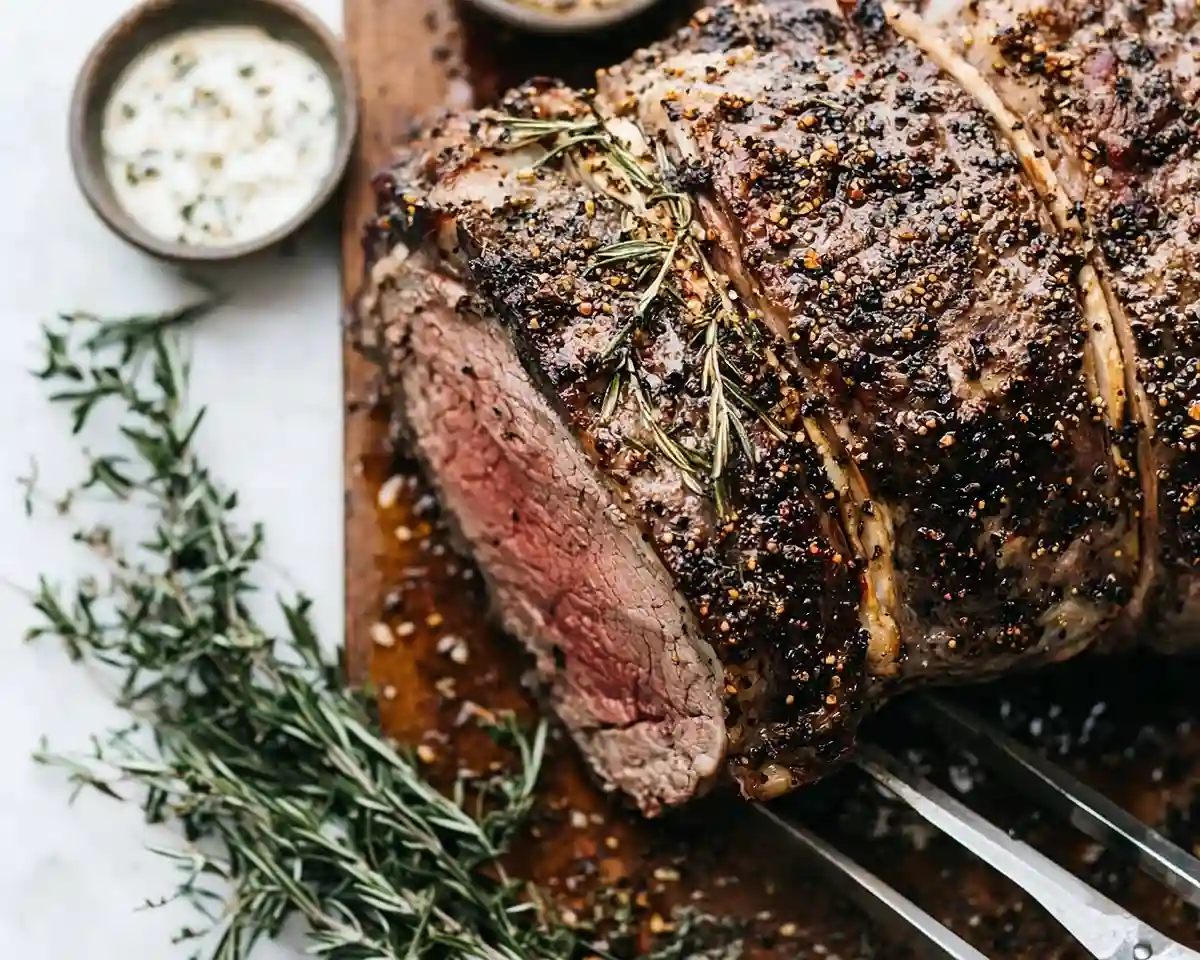
Standing rib roast recipe with garlic herbs creates perfect bone-in ribeye roast. Master this show-stopping centerpiece with expert tips. (149 characters)
Last Christmas, I stood in my kitchen staring at a massive bone-in standing rib roast, wondering if I’d bitten off more than I could chew. My family expected perfection for our holiday dinner. Well… let me tell you, that first attempt taught me everything about what NOT to do with expensive beef.
I’ve spent three years perfecting this standing rib roast recipe, testing temperatures, timing, and herb combinations until I nailed it. Now? This bone-in standing ribeye roast turns out flawlessly every single time—crusty on the outside, perfectly pink inside, and so tender it practically melts on your tongue.
Tasty at Home – Where bold flavors meet everyday kitchens.
Table of Contents
What Makes This Standing Rib Roast Recipe Unforgettable
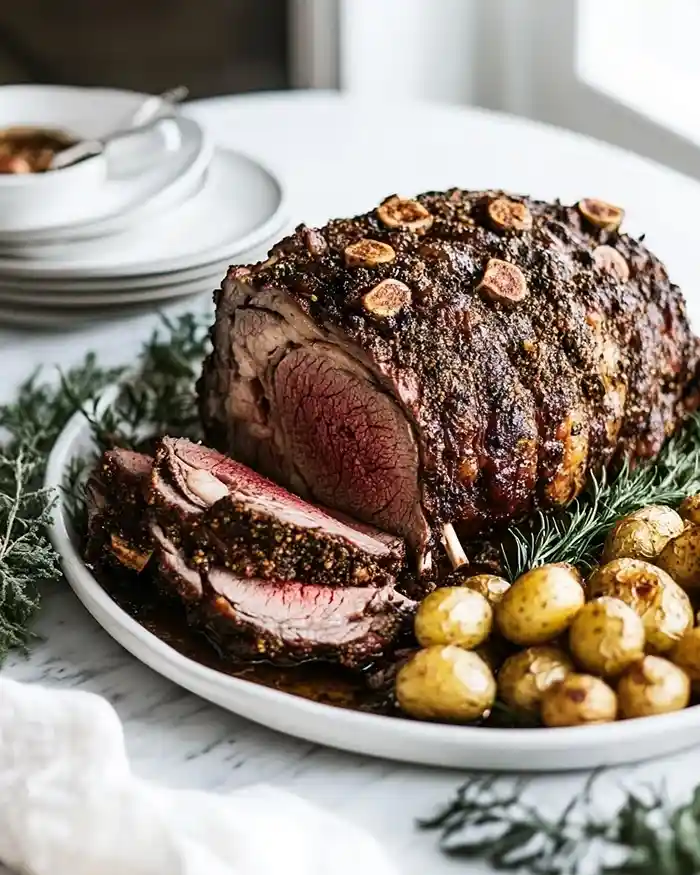
This isn’t just another ribeye roast recipe. The secret lies in the herb butter paste that transforms the exterior into a golden, aromatic crust while keeping the interior incredibly juicy. I’ve tested this method against traditional approaches, and the results speak for themselves.
The combination of fresh thyme, rosemary, and whole garlic cloves creates layers of flavor that penetrate deep into the meat. Plus, roasting baby potatoes alongside the beef captures all those incredible drippings for a complete perfect meal.
This recipe delivers restaurant-quality results at home. You’ll impress your guests without spending hours in the kitchen or stressing over complicated techniques.
Standing Rib Roast
Equipment
- Roasting pan with rack
- Instant-read meat thermometer
- Food processor
- Large mixing bowl
Ingredients
For the Roast
- 8-10 lb Bone-in standing rib roast Trussed and Frenched
- 20 sprigs Fresh thyme Do not substitute dried
- 3 sprigs Fresh rosemary Leaves only
- 12-14 cloves Garlic Peeled
- 1 medium Shallot Peeled and halved
- 5 tbsp Extra virgin olive oil Divided
- 1 cup Unsalted butter Cut into pieces
- 2 lb Baby potatoes Assorted colors
- Kosher salt To taste
- Black pepper Freshly ground, to taste
- Horseradish sauce For serving
Instructions
- Preheat the oven to 450°F. Remove the standing rib roast from the refrigerator 60 minutes before cooking. Season all sides generously with salt and pepper and place in a roasting pan with bones down and fat cap up.
- In a food processor, combine thyme, rosemary, garlic, shallot, 3 tablespoons olive oil, butter, salt, and pepper. Pulse until a thick herb paste forms.
- Spread the herb paste generously over the entire roast, massaging it into all surfaces.
- Roast at 450°F for 30 minutes. Without opening the oven door, reduce temperature to 325°F and continue roasting for 80–90 minutes until internal temperature reaches 110–115°F.
- Toss baby potatoes with remaining olive oil, salt, and pepper. Add them to the roasting pan about 45 minutes before the roast is finished.
- Remove roast and potatoes from the oven and let rest for 10–15 minutes. Slice between bones or carve and serve with potatoes and horseradish sauce.
Notes
Ingredients You’ll Need
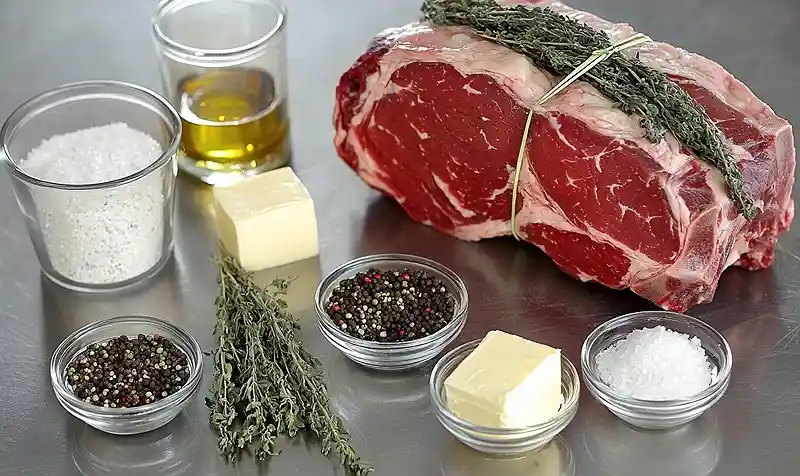
The quality of your ingredients directly impacts your final results. Choose USDA Prime or Choice grade beef with good marbling throughout. Fresh herbs make a noticeable difference compared to dried versions—their essential oils create that signature aromatic crust.
Look for firm, unblemished garlic cloves with tight skins. Select baby potatoes of similar size to ensure even cooking. European-style butter with higher fat content creates a richer, more luxurious herb paste.
Ingredients Table:
| Ingredient | US Measurement | Metric | Notes |
|---|---|---|---|
| Bone-in standing rib roast | 8-10 pounds | 3.6-4.5 kg | Trussed and Frenched |
| Fresh thyme | 20 sprigs | 20 sprigs | Do not substitute dried |
| Fresh rosemary | 3 sprigs (leaves only) | 3 sprigs | Strip leaves from stems |
| Garlic cloves | 12-14 cloves | 12-14 cloves | Fresh, peeled |
| Shallot | 1 medium | 1 medium | Peeled and halved |
| Extra virgin olive oil | 5 tablespoons | 75 ml | Divided use |
| Unsalted butter | 2 sticks (1 cup) | 227g | Cut into pieces |
| Baby potatoes | 2 pounds | 900g | Assorted colors |
| Kosher salt | To taste | To taste | Plus additional for seasoning |
| Black pepper | To taste | To taste | Freshly ground |
| Horseradish sauce | For serving | For serving | Store-bought or homemade |
Shopping Tips for US Grocery Stores
Order your bone-in standing ribeye from the butcher counter at least three days ahead. Ask them to French the bones (clean the rib bones) and truss the roast for even cooking. Most butchers at Whole Foods, Wegmans, or your local meat market provide this service free when you purchase the roast.
Find fresh thyme and rosemary in the produce section’s herb area. Buy more than you think you need—20 sprigs sounds like a lot, but fresh herbs shrink significantly when processed. Baby potatoes usually come in mesh bags near regular potatoes.
Essentials: Standing rib roast, fresh herbs, garlic, butter, olive oil
Bold Add-ins: Try mixing in fresh sage for an earthier profile, or add a tablespoon of Dijon mustard to the herb paste for tanginess. Swap baby potatoes for root vegetables like carrots, parsnips, and turnips for seasonal variety.
Ingredient Substitutions
International readers: If you can’t find baby potatoes, cut regular Yukon Gold or red potatoes into 1.5-inch chunks. Replace kosher salt with sea salt using slightly less volume. Substitute shallots with a small yellow onion.
Dietary modifications: Use ghee instead of butter for dairy-sensitive guests. The clarified butter provides similar richness without lactose. For a lower-fat version, reduce butter to one stick and increase olive oil by two tablespoons.
Essential Equipment and Step-by-Step Instructions
Equipment You’ll Need
A heavy-duty roasting pan with a rack keeps your standing rib roast elevated for even heat circulation. I prefer a stainless steel pan that goes from oven to stovetop for making pan gravy later. Don’t have a roasting rack? Create one using aluminum foil rolled into thick ropes arranged in a grid pattern.
You’ll need a reliable instant-read meat thermometer—this is non-negotiable for perfect results. A food processor makes quick work of the herb paste, though you can mince everything by hand if needed. Keep a large mixing bowl ready for tossing the potatoes.
How to Cook Standing Rib Roast
Step 1: Set Up Your Oven and Season the Beef
Preheat your oven to 450°F. Remove the standing rib roast from refrigeration 60 minutes before cooking to bring it to room temperature. This ensures even cooking throughout.
Season all sides of the bone-in standing ribeye generously with salt and pepper. Don’t be shy—this large roast needs assertive seasoning. Place it in your roasting pan with the bones facing down and the fat cap facing up.
Oops! I once forgot to let my roast come to room temperature, and the center stayed too cold while the outside overcooked. Always plan ahead for this crucial step.
Step 2: Create the Magical Herb Paste
Add thyme sprigs, rosemary leaves, garlic cloves, and peeled shallot to your food processor. Pour in three tablespoons of olive oil and add the cut-up butter. Season with salt and pepper.
Pulse on high speed until the mixture forms a thick, fragrant paste. Scrape down the sides as needed to ensure everything combines evenly. The paste should look like rough pesto with visible herb flecks throughout.
This herb mixture creates the signature crust that makes this ribeye roast unforgettable. Thomas Keller uses a similar technique for his famous roasts, understanding that fat carries flavor directly into the meat.
Step 3: Apply the Herb Paste Generously
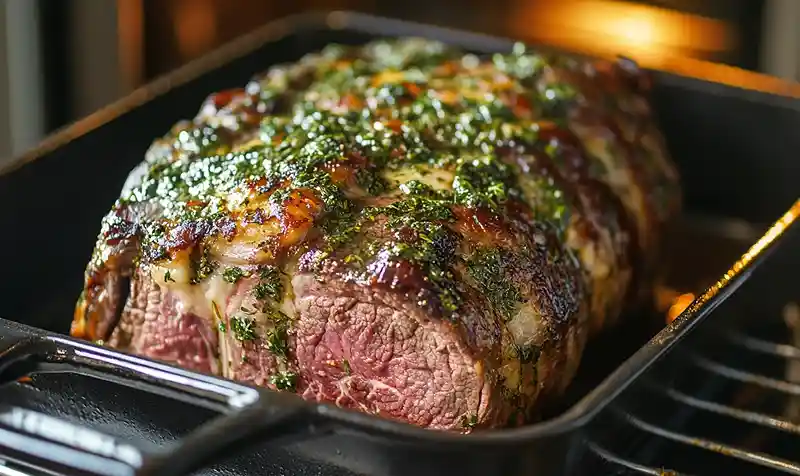
Spread the herb paste all over the standing rib roast, starting with the fat cap on top. Use your hands to really massage it into every surface—the sides, ends, and even between the bones where you can reach.
Don’t leave any bare spots. The paste not only flavors the meat but also protects it during the high-heat sear, creating that gorgeous golden-brown crust everyone loves.
Man, oh man, the aroma when this hits the hot oven is absolutely intoxicating. Your whole house will smell like a high-end steakhouse.
Step 4: High-Heat Sear and Temperature Reduction
Place the roasting pan in your preheated 450°F oven immediately. Roast at this high temperature for exactly 30 minutes. This initial blast creates the flavorful crust and seals in juices.
After 30 minutes, reduce the oven temperature to 325°F without opening the door. Continue roasting for 80-90 minutes for rare to medium-rare doneness, targeting an internal temperature of 110°F-115°F.
Check the temperature after 60 minutes by inserting your thermometer into the thickest part of the meat, away from the bone. Remember that the roast will continue cooking during the resting period, rising another 5-10 degrees.
Julia Child always emphasized the importance of accurate temperature monitoring for perfect roast beef. She knew that guessing never produces consistent results.
Step 5: Add the Baby Potatoes
When your standing rib roast has about 45 minutes of cooking time remaining, prepare the potatoes. Toss them in a large bowl with the remaining two tablespoons of olive oil, salt, and pepper.
Carefully remove the roasting pan from the oven. Arrange the seasoned baby potatoes around the roast, making sure they’re in a single layer for even browning. Return the pan to the oven.
The potatoes will absorb all those incredible herb-infused drippings, becoming crispy outside and creamy inside. They’re practically a side dish and sauce combined.
Step 6: Rest and Serve Your Perfect Meal
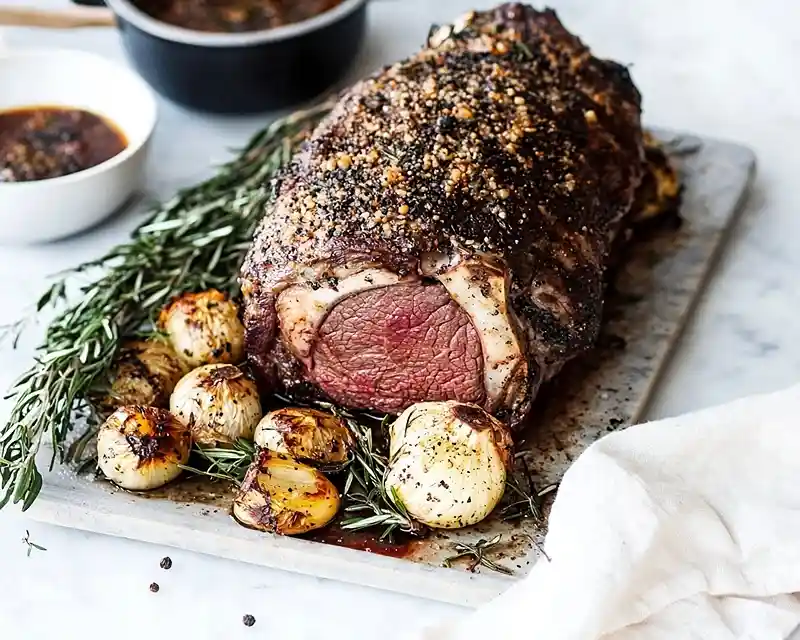
Remove the bone-in standing ribeye roast and potatoes from the oven when the thermometer reads 110°F-115°F internally. Transfer everything to a cutting board or serving platter.
Let the roast rest for 10-15 minutes before slicing. This resting period allows the juices to redistribute throughout the meat, ensuring every slice stays moist and tender. Cover loosely with foil if your kitchen is cold.
Slice between the bones to create individual ribeye steaks, or carve the meat off the bones and slice against the grain. Serve immediately with the roasted potatoes and horseradish sauce on the side.
Expert Tips for Restaurant-Quality Results
Temperature is Everything
Invest in a quality instant-read thermometer and check multiple spots in the roast. The thicker end cooks slower than the thinner end, so you might need to rotate your pan halfway through cooking. Remove the roast when it’s 5 degrees below your target temperature—carryover cooking finishes the job.
Never rely on cooking times alone. Oven temperatures vary, and roast size affects timing significantly. Your thermometer tells the truth every time.
Choosing the Right Cut
Ask your butcher for ribs six through twelve for the most tender, flavorful bone-in standing ribeye. This section comes from the center of the rib primal and offers the best marbling. Request two or three ribs for smaller gatherings, or the full seven-rib roast for large holiday crowds.
Look for bright red meat with white, not yellow, fat. The bones should be cleanly Frenched with at least two inches of exposed bone for presentation. You know what? A good butcher makes all the difference in your final results.
Make-Ahead Strategy
Season your standing rib roast up to 24 hours ahead and refrigerate uncovered. This dry-brining technique enhances flavor penetration and creates an even better crust. Prepare the herb paste the morning of cooking and store it covered at room temperature.
Bring the roast to room temperature for 60-90 minutes before cooking. The potatoes can be washed and dried up to four hours ahead, but toss them with oil just before adding to the pan.
Creative Variations for Every Occasion
Holiday Spice Version: Add one tablespoon of whole grain mustard and one teaspoon of crushed black peppercorns to your herb paste. This creates a bold, steakhouse-style crust perfect for New Year’s Eve celebrations.
Mediterranean Twist: Replace thyme with fresh oregano and add the zest of two lemons to the herb mixture. Swap baby potatoes for quartered fennel bulbs and red onion wedges for a lighter spring version.
Smoky Ranch Style: Mix two tablespoons of smoked paprika into your herb paste and serve with chimichurri instead of horseradish sauce.
Garlic Lover’s Dream: Double the garlic cloves to 24-28 and add six anchovy fillets to the herb paste for intense umami flavor. The anchovies melt completely and add incredible depth without fishiness.
Holiday Prime Version: Request USDA Prime grade beef for special occasions. The increased marbling creates even more tender, buttery results that justify the higher price for once-a-year celebrations.
Storage and Reheating Guidelines
Storage Table:
| Storage Method | Duration | Best For | Reheating Instructions |
|---|---|---|---|
| Refrigerator (covered) | 3-4 days | Leftover slices | Gentle oven reheat at 250°F for 15-20 minutes |
| Freezer (vacuum-sealed) | 2-3 months | Meal prep portions | Thaw overnight, then reheat as above |
| Room temperature | 2 hours max | Serving period only | Do not store at room temp |
Let leftover standing rib roast cool to room temperature before refrigerating. Wrap tightly in plastic wrap, then aluminum foil to prevent freezer burn. Slice leftover meat for incredible roast beef sandwiches with horseradish aioli and arugula.
Reheat slices gently in a 250°F oven with a splash of beef broth to maintain moisture. Never microwave—it turns the meat gray and tough.
Perfect Pairings and Serving Suggestions
Serve your bone-in standing ribeye roast with classic steakhouse sides like creamed spinach, roasted asparagus with lemon, or a simple arugula salad with shaved Parmesan. The richness of the beef pairs beautifully with acidic, bright vegetables.
Offer both horseradish sauce and au jus for dipping. Make quick au jus by deglazing your roasting pan with red wine and beef stock, scraping up all those flavorful brown bits.
Wine pairing matters with premium beef. Choose a full-bodied Cabernet Sauvignon, Malbec, or aged Bordeaux. The tannins cut through the richness while complementing the herb crust beautifully.
Standing Rib Roast FAQs
How long do you cook a bone-in ribeye roast?
How long do you cook a bone-in ribeye roast? Cook a bone-in ribeye roast for approximately 110-120 minutes total: 30 minutes at 450°F for the initial sear, then 80-90 minutes at 325°F until the internal temperature reaches 110°F-115°F for rare to medium-rare. Always use a meat thermometer rather than relying solely on time, as roast size and oven variation affect cooking duration significantly.
What is the best way to cook a standing rib roast?
What is the best way to cook a standing rib roast? The best way to cook a standing rib roast uses the high-heat sear method followed by low-temperature roasting. Start at 450°F for 30 minutes to develop a flavorful crust, then reduce to 325°F until the internal temperature reaches your desired doneness. This two-temperature technique, endorsed by professional chefs, ensures a perfectly caramelized exterior while maintaining a juicy, evenly cooked interior throughout the roast.
How should a bone-in ribeye be cooked?
How should a bone-in ribeye be cooked? A bone-in ribeye should be cooked with the bones facing down and the fat cap facing up to allow natural basting during roasting. Season generously with salt, pepper, and herb butter paste, then roast using the two-temperature method. Remove from heat when the thermometer reads 110°F-115°F for medium-rare, and always rest the meat for 10-15 minutes before slicing to retain maximum juiciness.
Is a bone-in ribeye roast the same as a prime rib roast?
Is a bone-in ribeye roast the same as a prime rib roast? Yes, a bone-in ribeye roast and prime rib roast refer to the same cut from the beef rib primal section. The term “prime rib” describes the cut location rather than USDA Prime grade, though many butchers reserve this name for standing rib roasts from ribs six through twelve. Both terms indicate a bone-in standing ribeye that includes the ribeye muscle with rib bones attached.
Create Your Own Standing Rib Roast Masterpiece
You’ve got everything you need to create an unforgettable bone-in standing ribeye roast that’ll have your guests asking for seconds. Remember that first nervous Christmas when I nearly ruined mine? Now this recipe is my go-to for every special occasion, and it never disappoints.
The combination of garlic and herbs creates magic when it meets perfectly roasted beef. Pair this show-stopping centerpiece with a robust Cabernet Sauvignon and classic twice-baked potatoes for the ultimate steakhouse experience at home.
Ready to become the hero of your next holiday dinner? Grab that gorgeous standing rib roast from your butcher and let’s make something spectacular. Drop a comment below and tell me how your ribeye roast turned out—I love hearing your success stories and creative variations!
