
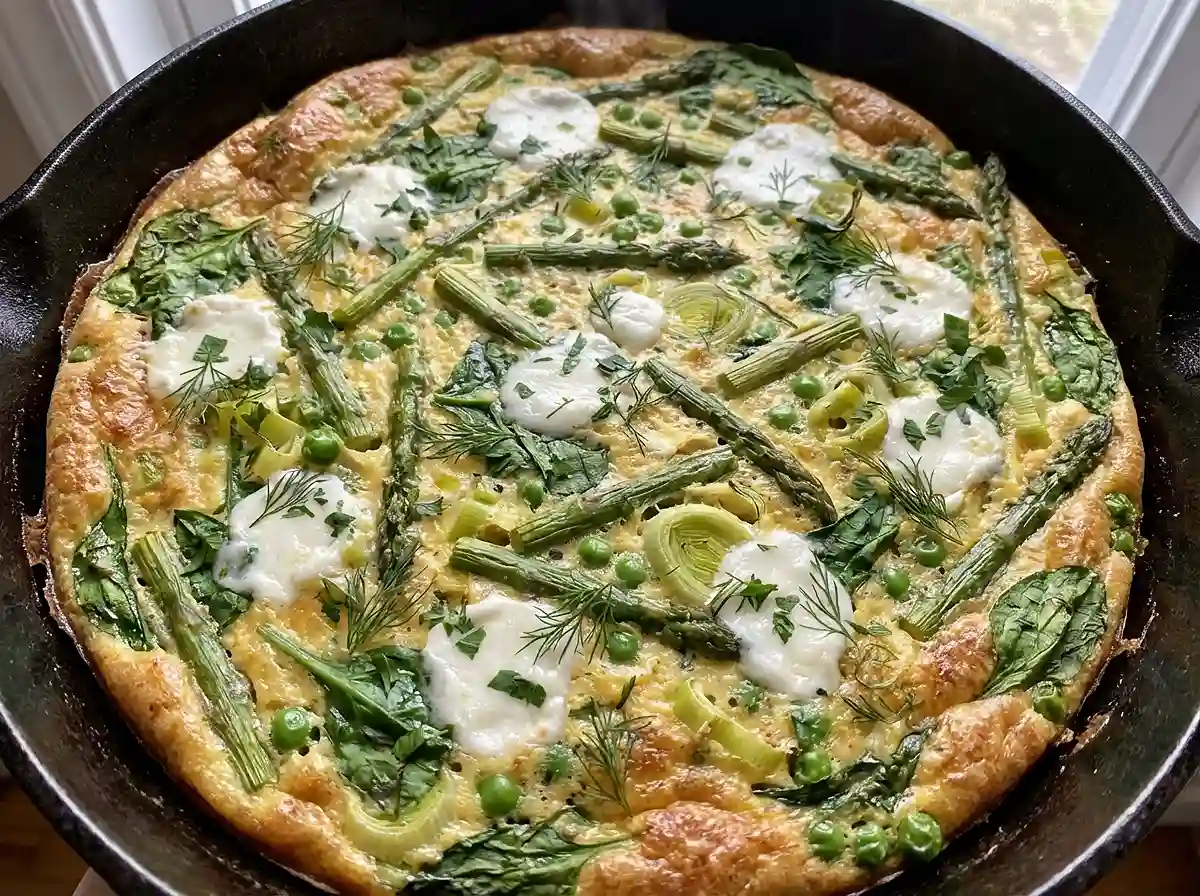
This spring vegetable frittata is the kind of dish that makes you feel like you actually have your life together — even if you just threw it together on a Sunday morning.
It’s loaded with leeks, asparagus, peas, spinach, and creamy goat cheese, and it goes from stovetop to oven in under 30 minutes. Honestly? It’s my go-to for lazy brunches, light dinners, and yes, it makes an absolutely stunning spring vegetable frittata for Mother’s Day too.
Table of Contents
Why You’ll Love This Frittata
This isn’t just another egg dish. It’s fluffy, colorful, packed with fresh spring veggies, and that swoosh of goat cheese on top makes it look like something from a fancy cafe.
It’s also incredibly flexible. Swap in whatever vegetables you have, use feta instead of goat cheese, or go dairy-free with a yogurt alternative. Learning how to make a frittata recipe like this one is one of those kitchen skills that pays off forever.
And cleanup? One skillet. That’s it. You’re welcome.
Spring Vegetable Frittata
Equipment
- 10-inch oven-safe skillet
- Mixing bowl
- Whisk
Ingredients
Eggs & Dairy
- 10 large eggs
- ½ cup yogurt or dairy-free yogurt
- 4 oz goat cheese or feta/other cheese
Vegetables
- 1 medium leek white and light green parts, chopped
- ½ pound asparagus trimmed and cut into pieces
- 1 cup frozen peas
- 1 cup baby spinach packed
Pantry
- 2 tablespoons olive oil
- salt and pepper to taste
Optional
- fresh dill and parsley for garnish
Instructions
- Preheat the oven to 400°F (200°C). Heat olive oil in an oven-safe skillet over medium heat and sauté the chopped leek for 3–4 minutes until softened.
- Add asparagus and cook for 1–2 minutes. Stir in peas, spinach, salt, and pepper, cooking until the spinach wilts.
- Whisk together eggs, yogurt, salt, and pepper in a bowl until smooth and slightly frothy.
- Spread vegetables evenly in the skillet and pour the egg mixture over them. Cook on the stovetop for 2–3 minutes until the edges begin to set.
- Top with reserved vegetables and dollops of goat cheese. Transfer the skillet to the oven and bake for 15–20 minutes until the center is set.
- Let rest briefly, garnish with fresh herbs, slice, and serve.
Notes
Ingredients
Here’s everything you’ll need to pull this beauty together. I’ve grouped it so it’s easy to shop and prep.
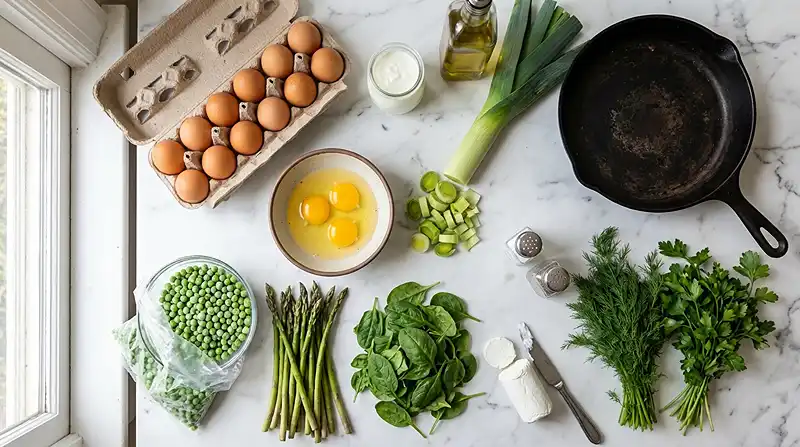
| Category | Ingredient | Amount |
|---|---|---|
| Eggs & Dairy | Large eggs | 10 |
| Eggs & Dairy | Yogurt (or dairy-free yogurt) | 1/2 cup |
| Eggs & Dairy | Goat cheese (or feta/other cheese) | 4 oz |
| Vegetables | Leek, white and light green parts, chopped | 1 medium |
| Vegetables | Thin asparagus, trimmed and cut into 1/2-inch pieces | 1/2 pound |
| Vegetables | Frozen peas | 1 cup |
| Vegetables | Baby spinach, packed | 1 cup |
| Pantry | Olive oil | 2 tablespoons |
| Pantry | Salt and pepper | To taste |
| Optional | Fresh dill and parsley (garnish) | As desired |
Tip on the yogurt: Don’t skip it! The yogurt is the secret to getting that light, almost soufflé-like texture in the eggs. Even a couple tablespoons of a plain Greek yogurt makes a real difference.
How to Make a Spring Vegetable Frittata
This comes together in two easy stages — stovetop first, then the oven finishes the job. Here’s how it goes.
Step 1: Preheat and Prep Your Pan
Start by preheating your oven to 400°F (200°C). You want it nice and hot before the frittata goes in.
Heat 2 tablespoons of olive oil in a 10-inch oven-safe skillet over medium heat. Cast iron is amazing here, but any oven-safe pan works. Add the chopped leek and sauté for 3 to 4 minutes until it softens and smells absolutely wonderful — kind of sweet and oniony.
Step 2: Build the Veggie Base
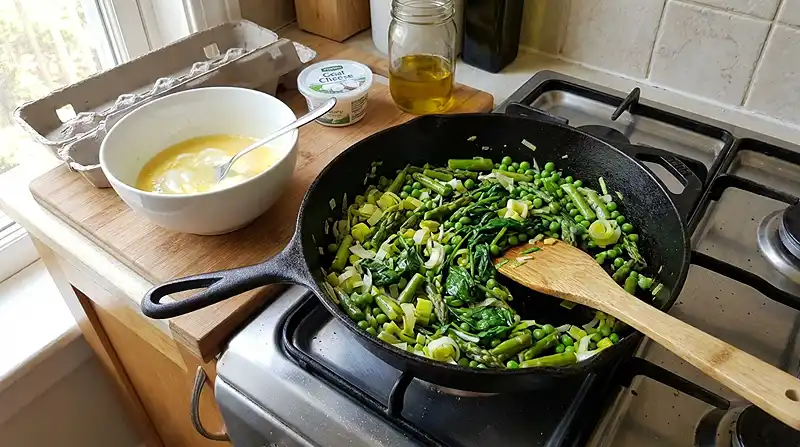
Add the asparagus pieces and cook for another 1 to 2 minutes. You’re not trying to fully cook them here, just get them going.
Then toss in the frozen peas, baby spinach, salt, and pepper. Stir everything together and cook for 1 to 2 minutes until the spinach wilts down. The whole pan will look gorgeous — bright green, vibrant, and so spring-y.
“I always scoop out about a third of the veggies and set them aside. When you layer them back on top later, the frittata looks layered and beautiful — totally worth the extra step.”
Step 3: Whisk the Eggs
In a large bowl, whisk together the 10 eggs, yogurt, salt, and pepper until smooth and well combined. The mixture should look pale and a little frothy — that’s what gives you the fluffy texture.
Make sure your remaining veggies are spread evenly across the bottom of the pan before you pour the eggs in. Every bite deserves a little bit of everything.
Step 4: Cook on the Stovetop First
Pour the egg mixture over the vegetables in the skillet. Let it cook on the stovetop over medium heat for 2 to 3 minutes without touching it.
You’ll notice the edges starting to set while the center is still jiggly — that’s exactly what you want. This sets the base so the frittata holds its shape in the oven.
Step 5: Add Toppings and Bake
Now for the fun part. Scatter the reserved vegetables on top of the egg mixture, then dollop the goat cheese all over. Be generous — those creamy pockets of cheese are the best bites.
Carefully transfer the skillet to the oven (use oven mitts — the handle is hot!) and bake for 15 to 20 minutes, until the eggs are fully set in the center. Give it a little shake — if it doesn’t jiggle, it’s done.
Step 6: Garnish and Serve
Let the frittata rest for a couple of minutes before slicing. Then scatter on fresh dill, parsley, or whatever herbs you love. Slice it like a pie and serve straight from the skillet for serious table drama.
This spring vegetable frittata pairs beautifully with a simple green salad, some crusty bread, or even alongside my Mediterranean chickpea salad for a light, satisfying meal.

Expert Tips, Variations, and Troubleshooting
Tips for the Best Frittata Every Time
Use a well-seasoned or nonstick oven-safe skillet. This prevents sticking and makes serving so much easier. Cast iron holds heat beautifully and gives you those gorgeous golden edges.
Don’t overcook on the stovetop. The stovetop phase is just to set the bottom slightly. The oven does the heavy lifting — if you cook it too long on the stove, the eggs can turn rubbery.
Taste your vegetables before adding eggs. Season the veggies as you go, not just at the end. Layered seasoning makes a huge difference in flavor depth.
Easy Variations to Try
Make it dairy-free: Use a plain dairy-free yogurt (coconut or oat-based works well) and swap the goat cheese for a dairy-free alternative or just omit it altogether.
Add more protein: Stir in some cooked, crumbled sausage or diced smoked salmon before pouring in the eggs. It turns this into an even heartier dish — perfect if you’re serving it as a spring vegetable frittata for Mother’s Day brunch.
Change up the cheese: Feta is sharper and saltier than goat cheese. Ricotta gives a creamier, milder result. All of them are delicious — you really can’t go wrong.
If you love Mediterranean-style meals, you might also enjoy my Mediterranean quesadillas with spinach for another easy weeknight option.
Troubleshooting Common Issues
Frittata is rubbery: This usually means it was overbaked. Next time, start checking at the 13-minute mark and pull it as soon as the center is just barely set.
Bottom is browning too fast: Your stove heat may be too high. Keep it at medium — not medium-high — during the stovetop phase.
Watery frittata: Make sure you cook out most of the moisture from the vegetables before adding the eggs. Frozen peas especially release water, so don’t rush that step.
Storage and Reheating
Frittata is one of those magical dishes that’s almost as good the next day. Here’s how to store it properly.
| Storage Method | Container | How Long |
|---|---|---|
| Refrigerator | Airtight container or wrapped tightly | Up to 4 days |
| Freezer | Wrapped individually in plastic, then foil | Up to 2 months |
How to Reheat
Oven method (best): Place slices on a baking sheet and reheat at 300°F (150°C) for about 10 minutes. This keeps the texture fluffy without drying it out.
Microwave (quick): Heat individual slices for 60 to 90 seconds. Cover with a damp paper towel to keep moisture in. It won’t be quite as fluffy, but it still hits the spot.
No-Waste Kitchen Ideas
Got leftover frittata? Slice it thin and tuck it into a wrap with some greens and hummus for an easy lunch. You can also crumble it over a salad as a protein-packed topping.
Leftover vegetables from your prep? Toss them into a frittata the next day or fold them into a grain bowl. Nothing needs to go to waste here.
Looking for more fresh springtime inspiration? These pastel Easter sugar cookies make a perfect sweet finish to a spring brunch spread.
Serving Suggestions
This frittata is a total showstopper on its own, but a few simple sides take it over the top. A light arugula salad dressed with lemon and olive oil is perfection alongside it.
For a bigger spread — especially if you’re making this spring vegetable frittata for Mother’s Day — pair it with crusty sourdough, a fruit platter, and something bubbly. It also goes wonderfully with dishes like my chicken shawarma with garlic sauce if you want to go full Mediterranean feast mode.
And if you want something a little more elegant for a special occasion dinner, my Mediterranean-style chicken piccata is a stunning companion dish.
Spring Vegetable Frittata FAQs
Can I make this spring vegetable frittata ahead of time?
Yes! Frittata is actually great made ahead. Bake it fully, let it cool, then refrigerate. Reheat gently in the oven or microwave before serving. It holds up beautifully for up to 4 days in the fridge.
What’s the difference between a frittata and a quiche?
Great question! A quiche has a pastry crust and typically uses a cream-heavy custard filling. A frittata is crustless and uses a lighter egg base — which makes it easier, faster, and a bit healthier. Learning how to make a frittata recipe means you can have brunch on the table in about 30 minutes, no pastry skills needed.
Can I use different vegetables in this recipe?
Absolutely — frittata is one of the most flexible dishes out there. Zucchini, bell peppers, mushrooms, sun-dried tomatoes, or roasted cherry tomatoes all work beautifully. Just make sure to sauté watery vegetables first to cook off excess moisture before adding the eggs.
Is this spring vegetable frittata good for meal prep?
It’s genuinely one of the best meal prep dishes you can make. Bake it on Sunday, slice it into wedges, and you’ve got protein-packed breakfasts or lunches ready for the whole week. It reheats well and stays satisfying.
What size skillet do I need?
A 10-inch oven-safe skillet is ideal for this recipe with 10 eggs. If you only have a 12-inch skillet, the frittata will be thinner and may cook a few minutes faster — start checking around the 12-minute mark in the oven.
Give It a Try
This spring vegetable frittata is one of those recipes that genuinely earns a permanent spot in your rotation. It’s fast, fresh, flexible, and honestly looks way more impressive than the effort it takes to make.
Whether you’re brunching solo, feeding a crowd, or putting together a special spring vegetable frittata for Mother’s Day, this dish delivers every single time. The colors alone will have everyone reaching for their phones to snap a photo before digging in.
Give it a go this weekend and let me know how it turns out! Leave a comment below with your favorite cheese or veggie swaps — I love hearing how you make it your own. And if you loved it, please share it on Pinterest so other home cooks can find it too. It really does make a difference!