
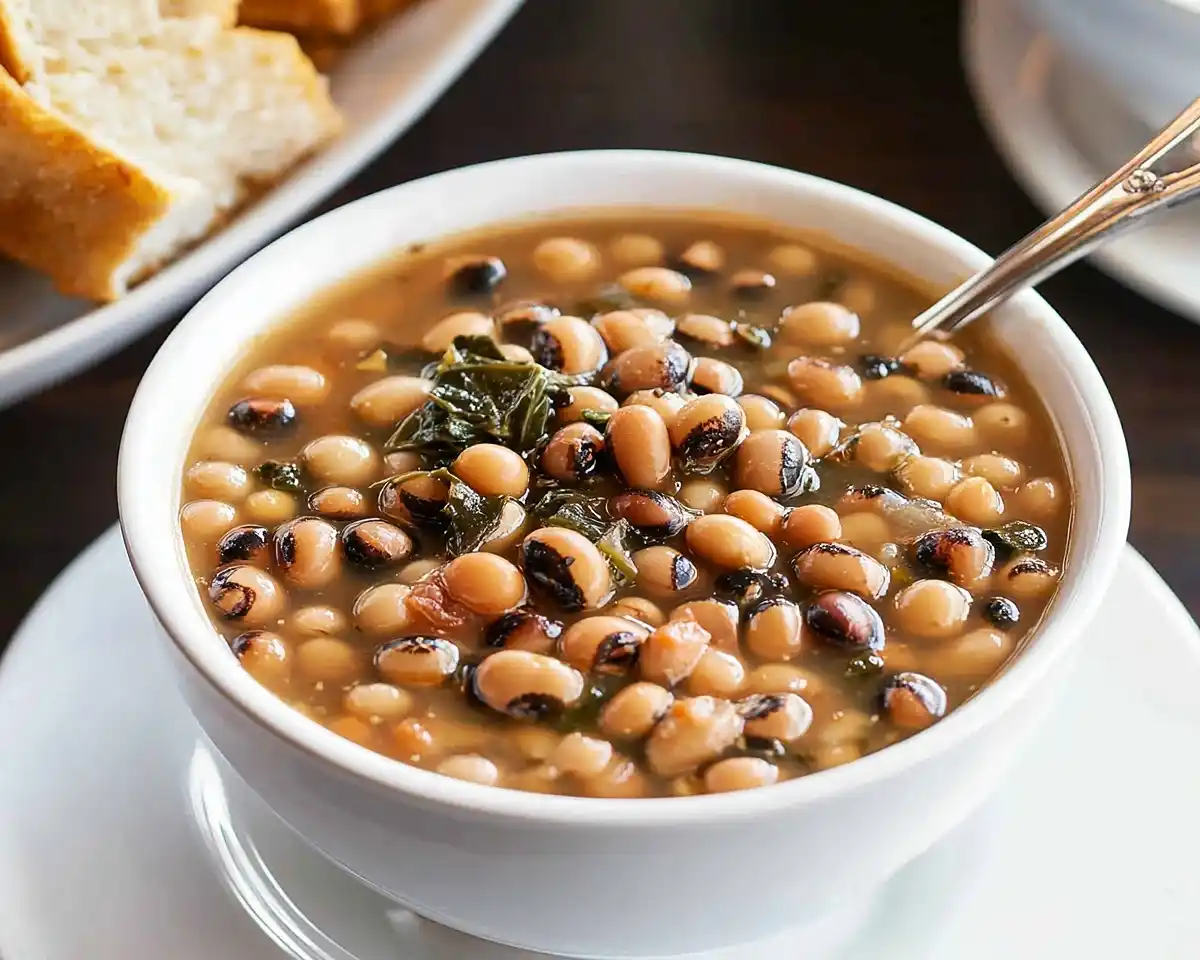
Southern Black Eyed Peas Recipe with smoky bacon, sausage, and tender greens. Perfect Southern-style black-eyed peas for New Year’s or any day. Ready in 90 minutes.
Hey there! I’m Sofia, and welcome to Tasty at Home, where cooking should never feel intimidating.
This Southern black eyed peas recipe? It changed everything for me. I first tasted this dish at my college roommate’s family gathering in Charleston, and man, oh man, the smoky, savory flavors completely transformed my understanding of comfort food. The bacon sizzled in the pot, filling the kitchen with an aroma that made everyone gather around before dinner was even ready.
I spent three years perfecting this recipe through countless Sunday dinners and New Year’s Day celebrations. Each batch taught me something new about layering flavors and achieving that perfect creamy texture without losing the beans’ integrity. Now it’s my go-to for family gatherings, potlucks, and those cold winter nights when you need something that hugs you from the inside out.
Table of Contents
What Makes This Southern Black Eyed Peas Recipe Authentic
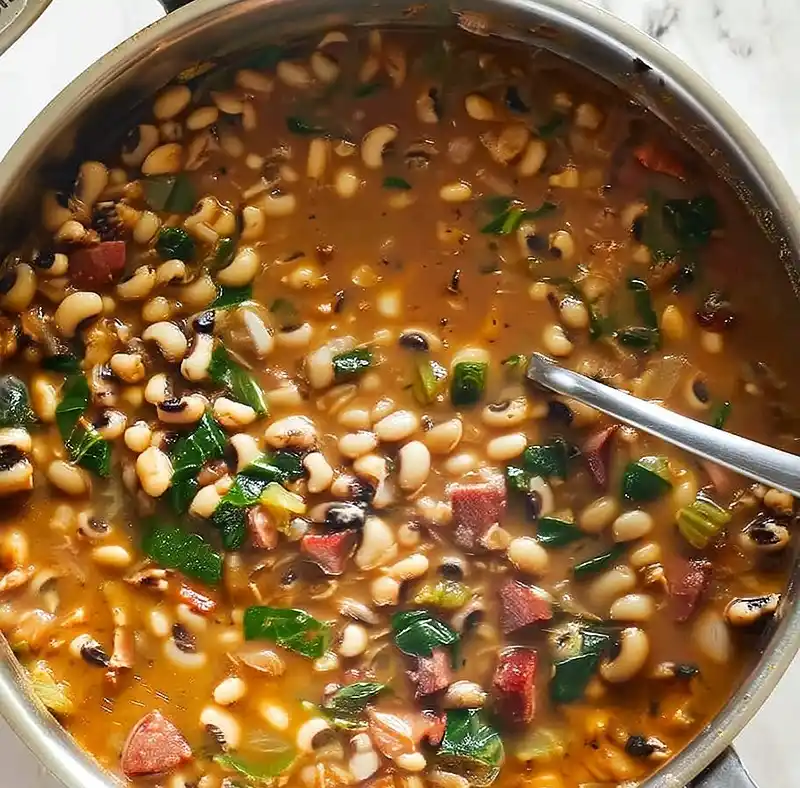
This isn’t your average bean recipe. Southern-style black-eyed peas represent generations of culinary wisdom passed down through Southern kitchens.
The secret lies in building layers of flavor. You start with bacon fat, add smoky sausage, then introduce aromatics that create a foundation so rich you’ll wonder why you ever settled for plain beans. The collard greens add earthiness and nutrition, while the Creole seasoning ties everything together with that distinctive Louisiana flair.
Most importantly, this recipe respects tradition while remaining accessible to home cooks. You don’t need fancy equipment or hard-to-find ingredients—just quality basics and a bit of patience.
Why This Recipe Works Every Time
The soaking process softens the beans and reduces cooking time significantly. Meanwhile, rendering the bacon first creates a flavor base that commercial shortcuts simply cannot replicate. The chicken broth adds depth, and cooking the beans uncovered allows the liquid to reduce into a thick, luxurious pot liquor that coats every spoonful perfectly.
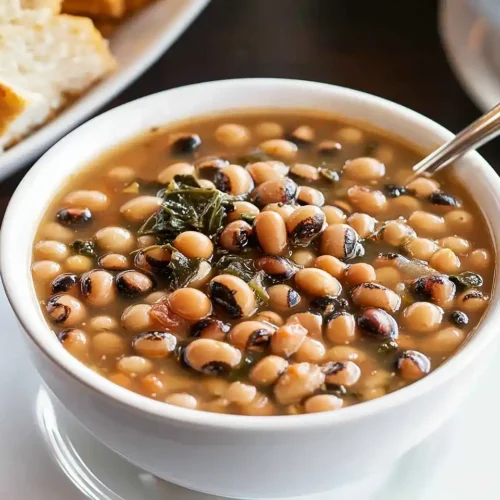
Southern Black Eyed Peas
Equipment
- Large heavy-bottomed pot or Dutch oven
- Sauté pan
- wooden spoon
- Knife
- Cutting board
- measuring cups
Ingredients
Protein & Meat
- 1 lb Dried black-eyed peas Look for uniform size
- 4-5 slices Thick-cut bacon Chopped into ½-inch pieces
- 5 oz Smoked sausage or turkey Andouille preferred, diced
Vegetables & Aromatics
- 1 whole Large onion Yellow or white, diced
- 1 stalk Celery Diced fine
- 2-3 tsp Fresh garlic Minced (about 3-4 cloves)
- 1 pepper Jalapeño Optional, or ¼ tsp cayenne
- 2 tsp Fresh thyme Minced
- 1 leaf Bay leaf Turkish or California
- 1-2 tsp Creole seasoning Tony Chachere’s or homemade
Liquids & Greens
- 7-8 cups Chicken broth Low-sodium recommended
- 2 cups Collard greens Chopped, kale works too
- To taste Salt and pepper Season at the end
Instructions
- Rinse and soak black-eyed peas in cold water for 2-3 hours or overnight. Drain before cooking.
- Render bacon in a sauté pan until crispy, then add diced smoked sausage and cook until caramelized. Remove and set aside, leaving 2 tbsp fat.
- Sauté onions, celery, garlic, jalapeño, thyme, and bay leaf in the reserved fat for 3-5 minutes until translucent and fragrant.
- Add chicken broth to the aromatics, scrape browned bits, then combine with drained beans in a large pot. Season with Creole seasoning and salt.
- Bring to a boil, then reduce to a gentle simmer and cook uncovered for 20 minutes, stirring occasionally.
- Add collard greens and reserved bacon and sausage. Cook 10-15 minutes until beans are tender and broth thickens.
- Remove bay leaf, taste, and adjust seasoning. Serve hot over rice or with cornbread, garnished with chopped green onions.
Notes
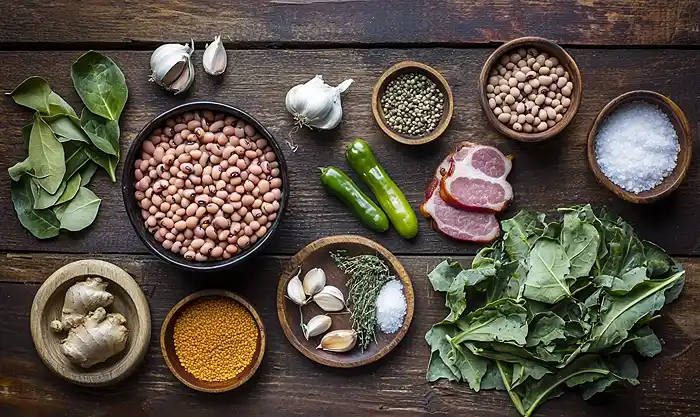
Essential Ingredients for Perfect Southern Black-Eyed Peas
For the protein base, select thick-cut bacon with visible marbling—this renders better fat and creates crispier bits. Quality smoked sausage matters too; look for varieties with minimal fillers and authentic smoke flavor. Andouille works beautifully, though kielbasa makes an excellent substitute.
The aromatics foundation requires fresh vegetables. Choose firm onions without soft spots, crisp celery stalks, and plump garlic cloves. Fresh thyme brings an herbal brightness that dried versions cannot match.
For the beans themselves, inspect packages carefully at the grocery store. Reject any with excessive broken pieces or debris, and check the date—fresher beans cook more evenly.
| Ingredient | US Measurement | Metric | Notes |
|---|---|---|---|
| Dried black-eyed peas | 1 pound | 453g | Look for uniform size |
| Thick-cut bacon | 4-5 slices | ~150g | Chopped into ½-inch pieces |
| Smoked sausage or turkey | 5 ounces (1 cup diced) | 140g | Andouille preferred |
| Large onion | 1 whole | ~200g | Yellow or white |
| Celery stalk | 1 whole | ~40g | Diced fine |
| Fresh garlic | 2-3 teaspoons | 6-9g | Minced (about 3-4 cloves) |
| Jalapeño (optional) | 1 pepper | ~15g | Or ¼ teaspoon cayenne |
| Fresh thyme | 2 teaspoons | ~2g | Minced |
| Bay leaf | 1 whole | 1 leaf | Turkish or California |
| Creole seasoning | 1-2 teaspoons | 5-10g | Tony Chachere’s or homemade |
| Chicken broth | 7-8 cups | 1.7-1.9L | Low-sodium recommended |
| Collard greens | 2 cups or more | ~140g | Chopped (kale works too) |
| Salt and pepper | To taste | To taste | Season at the end |
Smart Shopping Tips for American Grocery Stores
Most major chains like Kroger, Publix, and Safeway stock dried black-eyed peas in the beans and legumes aisle. You’ll find them near pinto and navy beans. During December and early January, stores often create New Year’s displays featuring black-eyed peas alongside collard greens and cornbread mix.
For smoked sausage, head to the refrigerated meat section near hot dogs and kielbasa. Andouille sausage appears in both the regular sausage area and sometimes in the specialty or international foods section.
Fresh collard greens typically sit in the produce section near kale and Swiss chard. If you cannot find fresh, frozen collard greens work perfectly—just thaw and squeeze out excess moisture before adding.
Bold Add-Ins and Creative Variations
Transform this classic with unexpected additions. Diced ham hock adds incredible depth and richness. A splash of apple cider vinegar brightens the entire pot at the end. Hot sauce enthusiasts should keep a bottle of Crystal or Texas Pete nearby for customizing heat levels at the table.
For a smokier profile, add ½ teaspoon of smoked paprika with the Creole seasoning. Some Southern cooks swear by a ham bone simmered alongside the beans—this traditional method creates unmatched flavor complexity.
International Ingredient Substitutions
UK/Europe readers: Use streaky bacon instead of American bacon, and substitute smoked Polish sausage for andouille. Replace Creole seasoning with a mix of paprika, garlic powder, onion powder, and cayenne.
Asian markets: Find black-eyed peas labeled as “lobia” or “chawli.” Chinese lap cheong can substitute for smoked sausage in a pinch.
Australia/NZ: Look for black-eyed beans in health food stores or Indian grocers. Use middle bacon and kransky sausage as substitutes.
Equipment and Preparation Steps
You’ll need a large, heavy-bottomed pot or Dutch oven—at least 6-quart capacity works best. A sturdy sauté pan helps for rendering bacon. Additionally, keep a wooden spoon, sharp knife, cutting board, and measuring cups within reach.
If you lack a Dutch oven, a large stockpot works fine, though you may need to stir more frequently to prevent sticking. Well, you could even use a slow cooker, though you’ll miss the caramelization that stovetop cooking provides.
Step 1: Soak the Black-Eyed Peas
Rinse one pound of dried black-eyed peas under cold running water in a colander. Spread them out on a clean kitchen towel and pick through carefully, removing any shriveled beans, small stones, or debris—I once bit into a pebble and learned this lesson the hard way.
Transfer the cleaned beans to your large pot and cover with cold water by 3-4 inches. The beans will expand significantly, so generous water coverage prevents them from peeking above the surface. Let them soak at room temperature for 2-3 hours, or cover and refrigerate overnight for even better results.
Step 2: Render the Bacon Until Crispy
Heat a large, heavy sauté pan over medium heat—no oil needed. Add the chopped bacon in a single layer, spreading pieces out so they cook evenly. Cook for 4-5 minutes, stirring occasionally, until the bacon turns golden brown and releases most of its fat.
Listen for that satisfying sizzle and watch for the edges to curl and crisp. As Julia Child often emphasized, patience during this step develops the foundational flavor for your entire dish. Once the bacon reaches crispy perfection, add the diced smoked sausage and cook for 2-3 more minutes until the sausage develops light caramelization on the edges.
Use a slotted spoon to transfer the bacon and sausage to a paper towel-lined plate. Leave approximately 2 tablespoons of rendered fat in the pan—this liquid gold becomes your cooking medium for the aromatics.
Step 3: Build the Aromatic Base
Keep the heat at medium and add the diced onions to the bacon fat remaining in your pan. The onions should immediately start sizzling—if they don’t, your pan isn’t hot enough yet. Stir in the celery, minced garlic, diced jalapeño (if using), fresh thyme, and bay leaf.
Sauté this aromatic mixture for 3-5 minutes, stirring frequently to prevent the garlic from burning. You’ll know the vegetables are ready when the onions turn translucent and release their sweet aroma, and the entire kitchen smells like a Southern grandmother’s house. The celery should soften slightly while maintaining some texture.
Step 4: Add Broth and Combine with Beans
Pour the chicken broth into your sauté pan with the aromatics. Scrape the bottom of the pan with your wooden spoon to release any browned bits—those caramelized flavor deposits add serious depth to your final dish.
Meanwhile, drain your soaked beans in a colander and rinse them under cold water one final time. Transfer the beans to your large pot, then pour the hot broth mixture over them. Season with 1-2 teaspoons of Creole seasoning and about 1 teaspoon of salt to start—remember, you can always add more later but cannot remove excess salt.
Stir everything together thoroughly and bring the pot to a rolling boil over high heat. This typically takes 5-7 minutes depending on your stove.
Step 5: Simmer Until Tender
Once the mixture reaches a boil, reduce the heat to maintain a gentle simmer. You want to see small bubbles breaking the surface consistently, but not a violent bubbling action. Leave the pot uncovered—this allows moisture to evaporate and concentrates the flavors while thickening the cooking liquid.
Cook for approximately 20 minutes, stirring every 5 minutes or so to ensure even cooking and prevent beans from sticking to the bottom. The beans should start softening but won’t be fully tender yet. This partial cooking stage sets up the perfect texture for the final step.
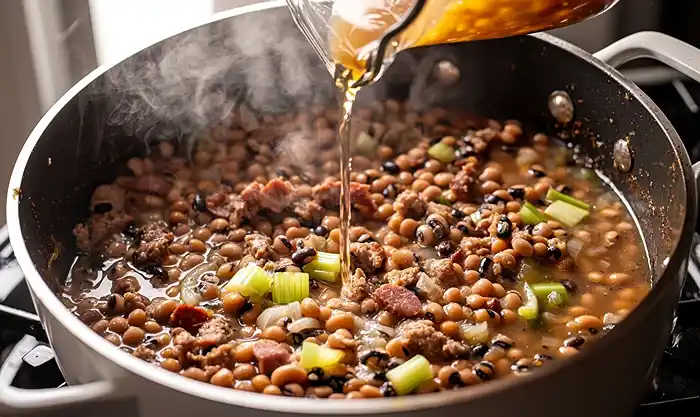
Step 6: Add Greens and Finish Cooking
Toss the chopped collard greens into the pot along with your reserved bacon and sausage mixture. Stir everything together gently but thoroughly, making sure the greens get submerged into the hot liquid. The greens will seem like a lot at first but will wilt down significantly within minutes.
Continue cooking for another 10-15 minutes, stirring occasionally, until the beans reach your desired tenderness. Test a few beans from different areas of the pot—they should be creamy inside but hold their shape. The broth should thicken to a consistency similar to thin gravy, coating a spoon lightly without being watery.
If the mixture becomes too thick or dry before the beans finish cooking, add broth or water ½ cup at a time. Conversely, if it seems too soupy, increase the heat slightly and cook uncovered for a few extra minutes to reduce excess liquid.
Step 7: Final Seasoning and Serving
Fish out and discard the bay leaf—this is important since bay leaves never soften and can be unpleasant to bite into. Taste your black-eyed peas carefully, then adjust the seasoning with additional salt, black pepper, and Creole seasoning as needed. The flavor should be robust, slightly smoky, with a gentle heat that builds gradually.
Serve the Southern-style black-eyed peas hot over fluffy white rice or with cornbread on the side. Garnish each bowl with chopped green onions for a fresh, bright contrast to the rich, smoky beans.
Expert Tips for Perfect Southern Black-Eyed Peas Every Time
Don’t skip the soaking step, even though black-eyed peas cook faster than most dried beans. Soaking ensures even cooking and prevents some beans from turning mushy while others remain tough. Additionally, soaked beans are easier to digest and less likely to cause discomfort.
Season your beans gradually throughout cooking rather than all at once at the beginning. Salt added too early can toughen the bean skins and extend cooking time. Build layers of flavor by seasoning lightly at the start, then adjusting at the end once the beans have softened completely.
Use low-sodium chicken broth to control the final salt level better. Regular broth combined with bacon, sausage, and Creole seasoning often results in an overly salty dish. You can always add salt, but removing it is impossible.
Creative Variations to Try
Vegetarian Southern Black-Eyed Peas: Replace bacon and sausage with smoked paprika, liquid smoke (just ¼ teaspoon), and 2 tablespoons of olive oil. Use vegetable broth instead of chicken broth. Add extra mushrooms or diced sweet potato for heartiness and umami depth.
Spicy Cajun Style: Double the jalapeños and add ½ teaspoon of cayenne pepper along with a few dashes of your favorite hot sauce. Include diced tomatoes and okra during the last 10 minutes of cooking for a gumbo-inspired twist.
Holiday Feast Version: Use a ham hock or smoked turkey leg instead of bacon and sausage. This creates an even richer, meatier flavor perfect for New Year’s Day or Christmas dinner gatherings.
Instant Pot Quick Method: Sauté bacon, sausage, and aromatics using the Instant Pot’s sauté function. Add unsoaked beans, broth, and seasonings, then pressure cook on high for 25 minutes with natural release.
Slow Cooker Hands-Off Approach: Brown bacon and sausage on the stovetop, then transfer everything to a slow cooker with soaked beans, broth, and seasonings. Cook on low for 6-8 hours or high for 3-4 hours. Add greens during the last 30 minutes. This works beautifully for busy weekdays or when you need to feed a crowd.
Storage and Make-Ahead Instructions
Southern black-eyed peas taste even better the next day after the flavors have melded together overnight. Let the cooked beans cool to room temperature, then transfer them to airtight containers. Refrigerate for up to 5 days or freeze for up to 3 months.
When reheating, add a splash of broth or water since the beans absorb liquid as they sit. Warm them gently on the stovetop over medium-low heat, stirring occasionally, until heated through completely. Alternatively, microwave individual portions in 1-minute intervals, stirring between each interval.
For make-ahead meal prep, cook the recipe through step 5, then cool and refrigerate. When ready to serve, reheat the beans, add the greens, bacon, and sausage, and finish cooking for 10 minutes. This ensures the greens stay vibrant and the meat retains its texture.
| Storage Method | Duration | Best Practice |
|---|---|---|
| Refrigerator (airtight container) | 5 days | Cool completely before storing |
| Freezer (freezer-safe container) | 3 months | Leave 1 inch headspace for expansion |
| Room temperature (not recommended) | 2 hours maximum | Discard after 2 hours at room temp |
Perfect Pairings and Serving Suggestions
Serve Southern black-eyed peas over steaming white rice, cornbread, or alongside collard greens for a traditional Southern feast. The combination represents the classic New Year’s Day meal that supposedly brings luck and prosperity for the coming year—the beans symbolize coins, greens represent paper money, and cornbread represents gold.
This dish pairs beautifully with crispy shrimp balls with sweet chili sauce for a Southern-Asian fusion appetizer spread. For a complete seafood-focused meal, try serving alongside easy baked cod recipe or garlic butter baked cod.
Round out your menu with classic Southern sides like coleslaw, mac and cheese, or fried okra. Sweet iced tea or lemonade makes the perfect beverage pairing, though a cold beer works wonderfully for adult gatherings.
Southern Black Eyed Peas Recipe FAQs
Can you make Southern black-eyed peas without soaking the beans overnight?
You can make Southern black-eyed peas without soaking, though it extends cooking time significantly. Unsoaked beans require 45-60 minutes of simmering instead of 30 minutes total. They also cook less evenly, with some beans turning mushy while others remain firm. The quick-soak method offers a compromise: boil beans for 2 minutes, remove from heat, cover, and let sit for 1 hour before proceeding with the recipe.
What is the best way to thicken Southern-style black-eyed peas if they turn out too watery?
The best way to thicken Southern-style black-eyed peas involves increasing the heat slightly and cooking uncovered for an additional 10-15 minutes. This reduces excess liquid through evaporation while intensifying flavors. Alternatively, mash about ¼ cup of the cooked beans against the side of the pot with a wooden spoon, then stir this paste back into the mixture—the bean starches naturally thicken the pot liquor beautifully.
How do I know when black-eyed peas are fully cooked and ready to serve?
Black-eyed peas are fully cooked when they’re tender enough to mash easily between your fingers but still hold their shape on a spoon. The texture should be creamy inside without any chalky or grainy bite. Additionally, the cooking liquid should have reduced to a thick, slightly creamy consistency that coats the beans. Taste several beans from different parts of the pot to ensure even cooking throughout.
Why do Southern black-eyed peas need Creole seasoning specifically?
Southern black-eyed peas use Creole seasoning because this blend captures the essential flavor profile of Louisiana and Southern cooking in one spice mix. It typically contains paprika, garlic powder, onion powder, cayenne, oregano, and thyme—ingredients that complement the smoky meat and earthy beans perfectly. However, you can substitute with a combination of these individual spices if Creole seasoning isn’t available in your pantry.
Bring Southern Comfort to Your Table Tonight
This Southern black eyed peas recipe delivers authentic flavors that transport you straight to a warm Southern kitchen. The smoky bacon, tender beans, and savory pot liquor create comfort food that satisfies on every level.
Whether you’re celebrating New Year’s Day, hosting Sunday dinner, or simply craving something hearty and delicious, these black-eyed peas deliver every single time. The recipe scales easily for crowds or intimate family meals. For an international twist, pair this dish with baked cod in coconut curry for an unexpected fusion dinner.
What’s your favorite way to enjoy black-eyed peas? Drop a comment below and share your family’s traditions with our Tasty at Home community. Let’s keep these wonderful Southern food traditions alive together, one delicious pot at a time.