

Discover the rich, velvety world of salmorejo — Spain’s beloved cold tomato soup that’s thicker, creamier, and honestly more satisfying than you’d expect from five simple ingredients.
I first tried salmorejo on a sweltering afternoon in Cordoba, and I was completely hooked. It’s one of those dishes that sounds almost too simple, but somehow tastes like pure magic.
Table of Contents
What Is Salmorejo?
Salmorejo is a traditional Spanish cold soup from Andalusia, made by blending ripe tomatoes, crusty bread, olive oil, and garlic into a silky-smooth puree. Think of it as gazpacho’s thicker, richer cousin.
Unlike cucumber gazpacho, salmorejo skips the cucumber and pepper entirely. The result is a deeply concentrated tomato flavor with a luxurious, almost creamy texture.
It’s served chilled and usually topped with diced hard-boiled egg and crispy serrano ham. Simple, stunning, and incredibly refreshing on a hot day.
Why You’ll Love This Recipe
This Spanish cold soup is the kind of recipe that looks impressive but takes barely any effort. Blend, sieve, chill — that’s genuinely it.
It’s naturally dairy-free and packed with fresh tomato goodness. You can make it ahead of time, which makes it perfect for entertaining or meal prepping lunches for the week.
The garnishes — silky egg and salty serrano ham — take it from a simple soup to something that feels properly restaurant-worthy. And once you’ve made it, you’ll wonder why you ever ate a sad desk lunch.

Salmorejo
Equipment
- Food processor or blender
- Fine sieve
- Pot
Ingredients
Salmorejo Base
- 1 kg Roma or plum tomatoes
- 200 g Breadcrumbs or stale bread
- 300 ml Extra virgin olive oil
- 3 cloves Garlic
Optional / Garnish
- 50 ml Sherry vinegar optional
- 50 g Serrano ham optional
- 2 Eggs
Instructions
- Quarter the tomatoes and blend them with olive oil and garlic until completely smooth, about 2 to 3 minutes.
- With the blender running, gradually add breadcrumbs until the mixture becomes thick and creamy. Taste and adjust with sherry vinegar if needed.
- Pass the mixture through a fine sieve to remove skins and achieve a silky texture.
- Chill the soup in the refrigerator for at least 1 hour, preferably longer for better flavor.
- Boil the eggs for 10 minutes, cool, peel, and dice the whites and yolks separately.
- Dice the serrano ham into small pieces.
- Serve the chilled salmorejo in bowls or glasses, topped with diced egg and serrano ham. Drizzle with olive oil if desired.
Notes
Ingredients
Here’s everything you’ll need to make an authentic salmorejo at home. The quality of your tomatoes really does matter here — ripe, in-season plum or Roma tomatoes will give you the best flavor.
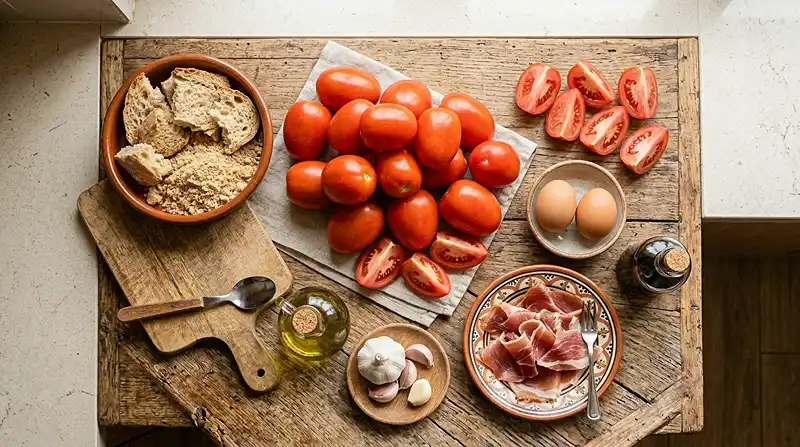
| Category | Ingredient | Amount |
|---|---|---|
| Salmorejo Base | Roma or plum tomatoes | 1 kg / 35 oz |
| Salmorejo Base | Breadcrumbs or stale bread | 200 g / 7 oz |
| Salmorejo Base | Extra virgin olive oil | 300 ml |
| Salmorejo Base | Garlic cloves | 3 cloves |
| Optional / Garnish | Sherry vinegar | 50 ml |
| Optional / Garnish | Serrano ham | 50 g / 1.7 oz |
| Optional / Garnish | Eggs | 2 |
How To Make Salmorejo — Step By Step
This traditional Spanish cold soup comes together in three easy stages. The blending takes minutes; the chilling is where patience pays off.
Step 1: Blend the Salmorejo Base
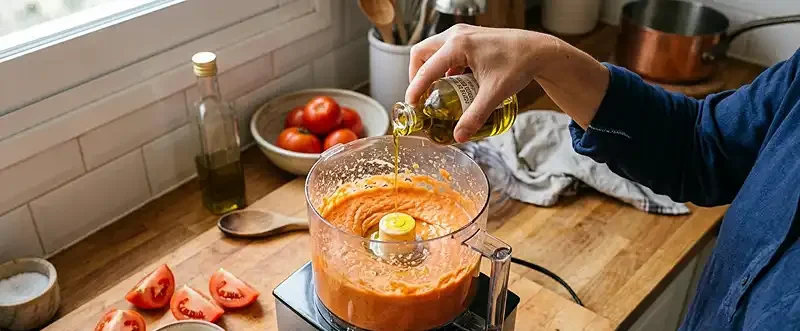
Quarter your tomatoes and add them to a food processor along with the olive oil and garlic cloves. Blitz everything together for a good 2 to 3 minutes until completely smooth.
Keep the food processor running and slowly add the breadcrumbs a little at a time. You’re looking for a thick, creamy consistency — kind of like a very smooth hummus but pourable.
Taste it and season as needed. If it tastes a touch bitter (this can happen depending on your tomatoes), add a splash of sherry vinegar and blend for another minute or two.
“Don’t rush the blending — the longer you go, the smoother and silkier your salmorejo will be.”
Step 2: Sieve for That Velvety Texture
Pour the blended soup through a fine sieve. Use a pestle or the back of a spoon to push it through — this removes the tomato skins and any remaining bits.
This step is what separates a good salmorejo from a great one. Don’t skip it. That smooth, glossy finish is worth the two extra minutes of effort.
Once sieved, pop the soup in the fridge to chill for at least one hour. Overnight is even better — the flavors meld beautifully.
Step 3: Prepare the Garnishes
Bring a pot of water to a boil and add your eggs. Let them cook for a full 10 minutes, then remove them and let them cool completely before peeling.
Once peeled, separate the yolk from the white and dice both parts separately. The contrast of golden yolk and white against the red soup is genuinely beautiful.
Dice your serrano ham into small pieces and set aside. A little goes a long way — those salty, slightly crispy bits are the finishing touch that makes the whole dish sing.
Step 4: Serve and Enjoy
Pour your chilled salmorejo into small glasses or bowls. This Spanish soup looks gorgeous served in clear glasses so you can see that rich red color.
Top each serving with diced egg white, a sprinkle of golden yolk crumbles, and a few pieces of diced serrano ham. Drizzle a tiny bit of olive oil over the top if you’re feeling fancy.
Serve immediately and watch everyone around the table go very quiet — in the best way possible.

Expert Tips for the Best Salmorejo
Choose the Right Tomatoes
Roma and plum tomatoes are your best friends here. They’re meatier and less watery than regular round tomatoes, which means a thicker, more flavorful traditional Spanish cold soup without any extra effort.
If your tomatoes are slightly underripe, let them sit at room temperature for a day or two first. Cold, hard tomatoes straight from the fridge will give you a flat, disappointing result.
Use Stale Bread for Better Texture
Day-old or stale crusty bread works much better than fresh. It absorbs into the soup more evenly and gives you that dense, velvety body that proper salmorejo is known for.
If your bread is too fresh, tear it up and leave it out on the counter for an hour to dry out a little. Sourdough works brilliantly if you want a slightly tangy depth of flavor.
Don’t Skimp on the Olive Oil
Three hundred milliliters sounds like a lot, but this is what makes salmorejo genuinely luxurious. Use the best extra virgin olive oil you can afford — you’ll taste the difference.
Good olive oil is what transforms this from a basic blended soup into something that feels rich and indulgent. This is not the moment to reach for the cheap stuff.
Chill It Properly
One hour in the fridge is the minimum. Two to four hours is ideal. Overnight is honestly the best — the garlic mellows, the tomato deepens, and everything comes together beautifully.
If you’re serving it at a dinner party, make it the night before and thank your past self in the morning.
Variations to Try
Salmorejo Without Ham
Going vegetarian? Just skip the serrano ham and double up on the egg garnish. You can also top it with toasted pine nuts or a handful of crispy croutons for some texture.
Roasted Tomato Salmorejo
Roast your tomatoes at 200°C for 20 minutes before blending. This adds a deeper, slightly smoky sweetness to the Spanish soup that feels like a whole different experience.
Add a Smoky Twist
A tiny pinch of smoked paprika blended into the base gives your salmorejo a subtle smokiness that pairs beautifully with the serrano ham garnish. Go easy — a little goes a long way.
If you enjoy bold, punchy flavors, you might also love these Peruvian grilled chicken skewers as a main course to serve alongside.
Storage Instructions
| Method | Container | Duration |
|---|---|---|
| Refrigerator | Airtight container or jug | Up to 3 days |
| Freezer | Freezer-safe container | Up to 2 months |
| Garnishes (stored separately) | Small airtight containers | Up to 2 days in fridge |
Reheating and Serving Tips
Salmorejo is always served cold, so no reheating needed — that’s literally the whole point. Just stir it well before serving, as it may separate slightly in the fridge.
If it thickens up too much after chilling, whisk in a small splash of cold water or a little extra olive oil to loosen the consistency back up.
No-Waste Kitchen Ideas
If you have leftover salmorejo, use it as a dipping sauce for crusty bread or as a base for shakshuka-style eggs. It also makes a brilliant pasta sauce — just warm it gently and toss with spaghetti.
Any leftover hard-boiled egg can go into a quick salad, and leftover serrano ham is wonderful crisped up in a pan and crumbled over a simple green salad.
What to Serve with Salmorejo
This traditional Spanish soup works beautifully as a starter before a larger meal. Follow it up with something hearty like garlic parmesan chicken or a vibrant quick beef and broccoli stir-fry for a full feast.
For something a little sweeter to finish the meal, mini egg nest brownies make a fun and indulgent dessert that everyone loves.
Spanish cold soup FAQs
What is the difference between salmorejo and gazpacho?
Both are cold Spanish soups made with tomatoes, but they’re quite different in texture and taste. Gazpacho is thinner and usually includes cucumber, pepper, and onion, while salmorejo is a thicker, creamier puree made mostly from tomatoes and bread.
Can I make salmorejo without a food processor?
Yes, a high-powered blender works just as well. The key is blending long enough to get a completely smooth result before passing it through the sieve.
Why is my salmorejo bitter?
Bitterness usually comes from the tomato skins or underripe tomatoes. Add a splash of sherry vinegar or a pinch of sugar and blend again — this typically balances things out nicely.
Can I make salmorejo ahead of time?
Absolutely — in fact, it’s better when made ahead. The flavors develop and deepen as it chills, so making it the night before is genuinely the ideal approach for this Spanish cold soup.
Is salmorejo healthy?
It’s packed with lycopene from the tomatoes, healthy fats from the olive oil, and it’s naturally gluten-adaptable if you use gluten-free bread. It’s filling, nutritious, and honestly pretty balanced as a starter.
Time to Make Your Salmorejo
This salmorejo recipe is proof that the most satisfying food doesn’t have to be complicated. A handful of quality ingredients, a good blender, and a bit of patience in the fridge — that’s all you need to pull off a stunning traditional Spanish cold soup.
Whether you’re hosting a summer dinner party or just need a brilliantly easy lunch option, this Spanish soup delivers every single time.
Give it a try and let us know what you think in the comments below. If you loved it, we’d absolutely love it if you saved this recipe to Pinterest and shared it with your friends — the more people eating great salmorejo, the better the world becomes.
