
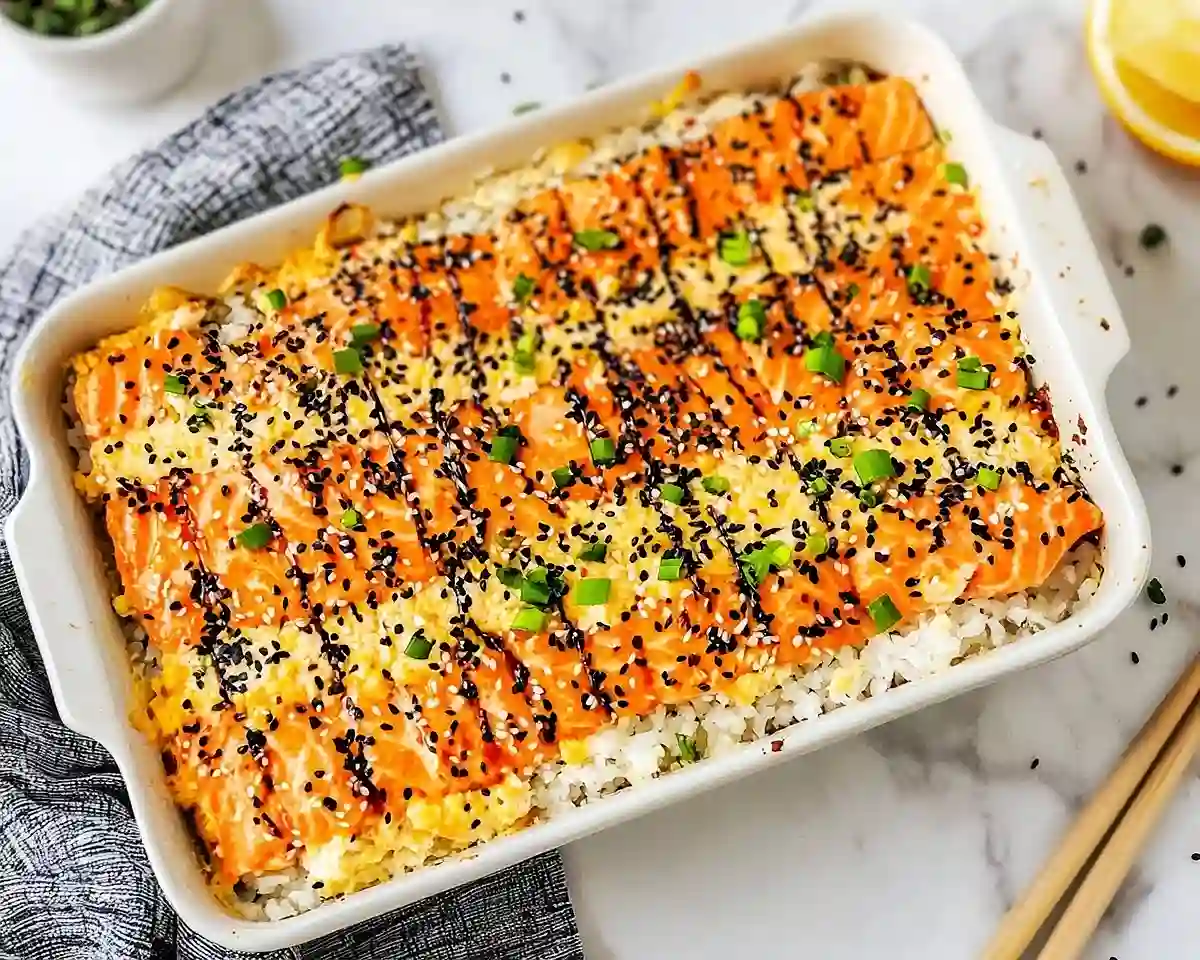
Salmon Sushi Bake transforms your favorite roll into a shareable casserole. This deconstructed sushi recipe feeds a crowd with minimal effort.
Hey, I’m Linda! Welcome to Tasty at Home, where bold flavors meet everyday kitchens.
Last spring, my neighbor brought over this bubbling casserole dish that smelled like heaven. One bite, and I was hooked. It tasted exactly like my favorite spicy salmon roll, but I didn’t need chopstick skills or a sushi mat. I burned my first attempt (forgot to watch the broiler—oops!), but after testing this recipe twelve times, I’ve cracked the code.
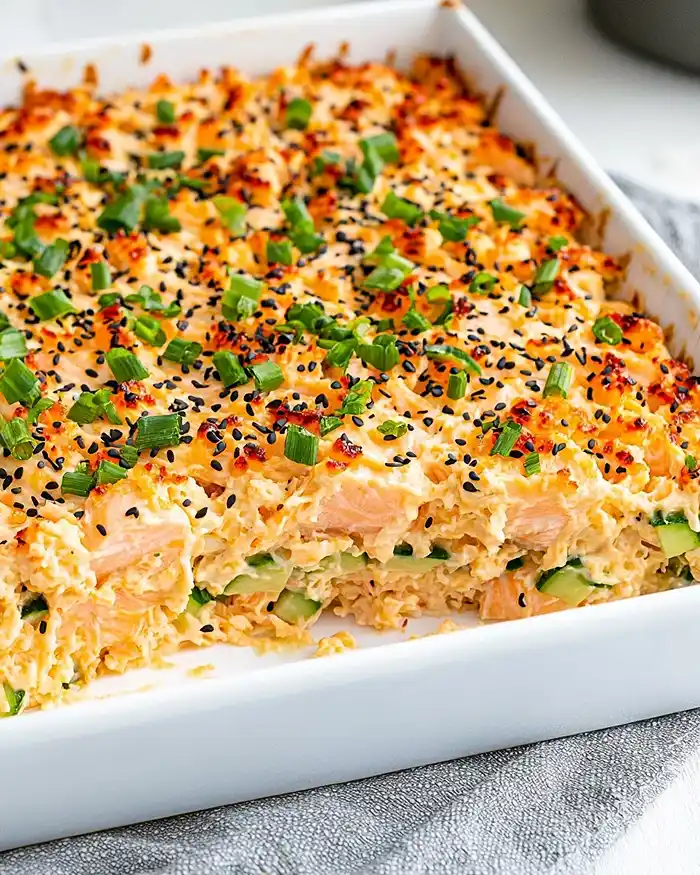
This Salmon Sushi Bake delivers all the creamy, spicy, umami-packed goodness of restaurant sushi without the intimidation factor. You layer seasoned sushi rice, bake flaky salmon with a creamy filling, then broil everything until the top gets those irresistible golden edges. It’s comfort food meets Japanese flavors, and it feeds eight people with less effort than rolling individual pieces.
Table of Contents
What Makes This Salmon Sushi Bake Special
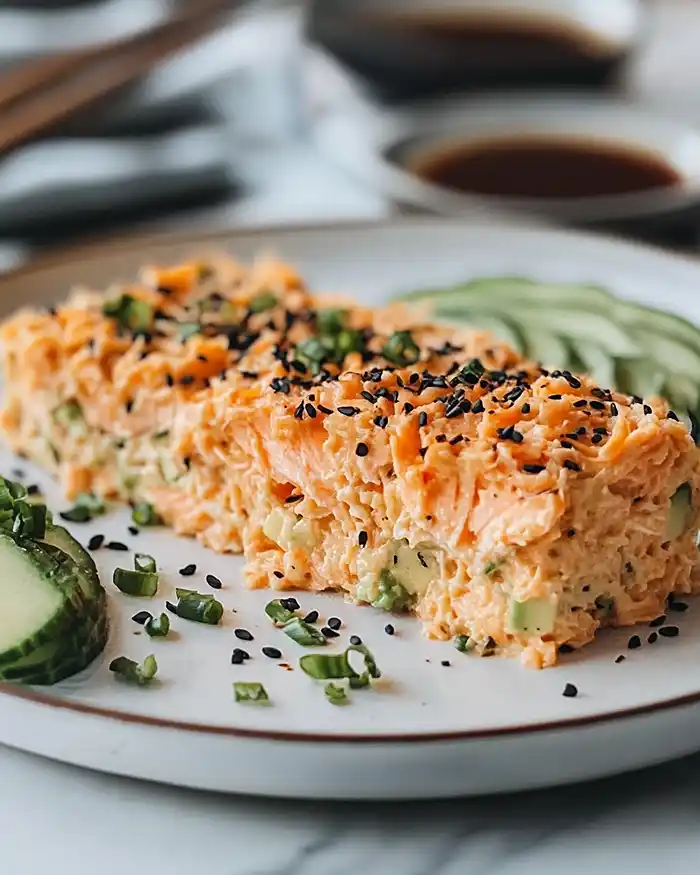
This recipe takes everything you love about seared salmon sushi and transforms it into a shareable bake that’s perfect for game nights, potlucks, or Tuesday dinners when you need something exciting.
The secret lies in three layers. First, you’ve got perfectly seasoned sushi rice as your base—tangy from rice vinegar and sturdy enough to hold everything together. Next comes the star: flaky baked salmon mixed with cream cheese, Japanese mayo, and just enough sriracha to wake up your taste buds. Finally, that quick broil creates a bubbly, golden top that adds textural contrast to every scoop.
I tested this with both wild-caught sockeye and farm-raised Atlantic salmon. Both work beautifully, but sockeye gives you richer color and a slightly firmer texture. For the rice, authentic Japanese sushi rice (often labeled Calrose) is non-negotiable—it has the perfect starch content to create that sticky, cohesive base without turning mushy.
Salmon Sushi Bake
Equipment
- rice cooker
- Fine-Mesh Sieve
- Rimmed baking sheet
- Rice paddle
- 9×13 inch baking dish
- Large mixing bowl
- Instant-read thermometer
- Pastry brush
- Kitchen torch
Ingredients
Rice
- 2 cups Dry sushi rice Use Calrose or Japanese short-grain
- 2 cups Water Adjust for rice cooker
- ¼ cup Seasoned rice vinegar Look for Marukan or Mizkan brands
Salmon
- 1.5 lb Salmon fillet Wild-caught or farm-raised
- to taste Salt & pepper Season generously
- ½ tsp Garlic powder Adds savory depth
Filling
- 8 oz Imitation crab meat Chopped into small pieces
- ½ cup Japanese mayonnaise Kewpie brand recommended
- 4 oz Cream cheese Softened to room temperature
- 1 Tbsp Sriracha Adjust for heat preference
- 1 Tbsp Low sodium soy sauce Adds umami depth
- 2 Tbsp Furikake Rice seasoning blend
Topping
- as needed Spicy mayo Mix mayo + sriracha + lime juice
- 2-3 stalks Green onion Thinly sliced
- 1 Tbsp Sesame seeds Black and white mixed
Serve With
- 1 package Roasted seaweed Nori sheets, cut into squares
- as desired Unagi sauce Eel sauce for drizzling
- 1 medium English cucumber Sliced thin
- 1-2 Avocado Ripe but firm
Instructions
- Rinse the sushi rice thoroughly and cook with water. Once cooked, transfer to a rimmed baking sheet and fold in seasoned rice vinegar. Let cool to room temperature.
- Preheat oven to 400°F. Season salmon with salt, pepper, and garlic powder. Bake for 15-20 minutes until flakey. Let rest 5 minutes, then flake into pieces.
- In a large bowl, combine flaked salmon, chopped imitation crab, Japanese mayo, cream cheese, sriracha, and soy sauce. Mix until combined but slightly chunky.
- Lightly oil a 9×13-inch baking dish. Spread cooled rice evenly, sprinkle furikake, then layer creamy salmon mixture. Smooth the top.
- Broil on high for 4 minutes until bubbly and golden. Watch carefully to avoid burning.
- Drizzle spicy mayo, sprinkle green onions and sesame seeds. Serve with roasted seaweed, cucumber, avocado, and unagi sauce.
Notes
Ingredients for Salmon Sushi Bake
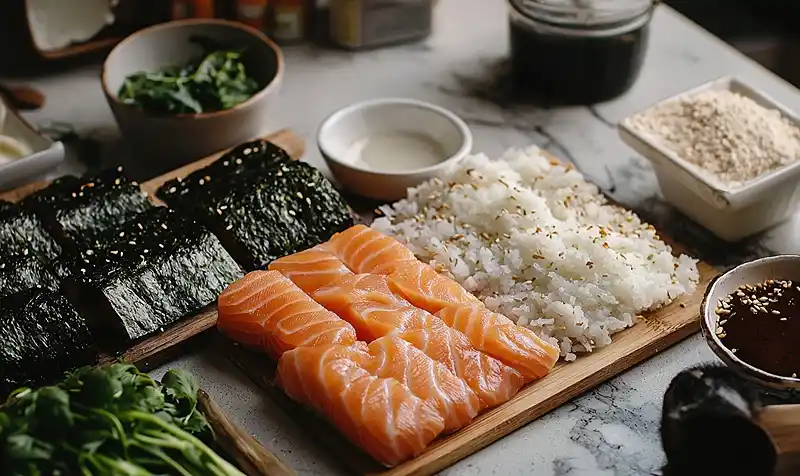
The rice foundation needs short-grain sushi rice for proper stickiness, while seasoned rice vinegar adds that classic sushi tang. For your salmon filling, choose fresh fillets with bright color and firm flesh. Japanese mayonnaise (like Kewpie) delivers a richer, slightly sweeter flavor than American mayo, and cream cheese adds luxurious creaminess that ties everything together.
| Ingredient | US Measurement | Metric | Notes |
|---|---|---|---|
| For the Rice | |||
| Dry sushi rice | 2 cups | 400g | Use Calrose or Japanese short-grain |
| Water | 2 cups | 475ml | Adjust for your rice cooker |
| Seasoned rice vinegar | 1/4 cup | 60ml | Look for Marukan or Mizkan brands |
| For the Salmon | |||
| Salmon fillet | 1 1/2 lb | 680g | Wild-caught or farm-raised |
| Salt & pepper | To taste | To taste | Season generously |
| Garlic powder | 1/2 tsp | 2.5ml | Adds savory depth |
| Filling | |||
| Imitation crab meat | 8 oz | 225g | Chopped into small pieces |
| Japanese mayonnaise | 1/2 cup | 120ml | Kewpie brand recommended |
| Cream cheese | 4 oz | 115g | Softened to room temperature |
| Sriracha | 1 Tbsp | 15ml | Adjust for heat preference |
| Low sodium soy sauce | 1 Tbsp | 15ml | Adds umami depth |
| Furikake | 2 Tbsp | 10g | Rice seasoning blend |
| Topping | |||
| Spicy mayo | As needed | As needed | Mix mayo + sriracha + lime juice |
| Green onion | 2-3 stalks | 2-3 stalks | Thinly sliced |
| Sesame seeds | 1 Tbsp | 8g | Black and white mixed |
| Serve With | |||
| Roasted seaweed | 1 package | 1 package | Nori sheets, cut into squares |
| Unagi sauce | As desired | As desired | Eel sauce for drizzling |
| English cucumber | 1 medium | 1 medium | Sliced thin |
| Avocado | 1-2 | 1-2 | Ripe but firm |
Shopping Tips for US Grocery Stores
You’ll find sushi rice in the international aisle at most supermarkets, though Asian markets offer better prices and variety. Japanese mayonnaise lives near regular mayo or in the Asian section—it’s worth seeking out because American mayo won’t give you the same creamy richness.
Furikake seasoning contains dried seaweed, sesame seeds, and umami flavor. Target, Whole Foods, and Trader Joe’s all stock it now. If your local store doesn’t carry it, order online or visit an H-Mart or 99 Ranch Market.
For imitation crab, grab the refrigerated sticks rather than frozen chunks. They’re easier to chop and have better texture. Fresh salmon fillets should smell like the ocean, not fishy—that’s your quality indicator right there.
Equipment You’ll Need
Essential Tools
- Rice cooker (or medium saucepan with tight-fitting lid)
- Fine-mesh sieve for rinsing rice
- Rimmed baking sheet for cooling rice
- Rice paddle (or wooden spoon)
- 9×13-inch baking dish (glass or ceramic)
- Large mixing bowl
- Instant-read thermometer
Optional But Helpful
- Pastry brush for spreading spicy mayo
- Kitchen torch for extra browning (fancy, but fun!)
Don’t have a rice cooker? No problem. Use the stovetop method: combine rinsed rice and water in a pot, bring to a boil, reduce to low, cover, and simmer for 18 minutes. Let it rest off the heat for 10 minutes before fluffing.
Step-by-Step Instructions for Perfect Salmon Sushi Bake
Step 1: Prepare Your Sushi Rice Foundation
Start by rinsing your dry sushi rice thoroughly. Place 2 cups of rice in a fine-mesh sieve and run cold water over it for about one minute, stirring constantly with your fingers or a spoon. You’re washing away excess starch that would otherwise make your rice gummy and clumped together.
Transfer the rinsed rice to your rice cooker, add 2 cups of water, and press start. Once it’s done cooking (usually 20-25 minutes), transfer the hot rice to a rimmed baking sheet—spreading it out helps it cool faster and more evenly.
Pour 1/4 cup of seasoned rice vinegar over the rice. Use a rice paddle or wooden spoon to fold the vinegar into the rice with a gentle cutting and folding motion, like you’re incorporating air into whipped cream (as Julia Child would demonstrate with her patient, sweeping gestures). Never stir vigorously or you’ll break the grains and create mush. Let the rice cool to room temperature, about 15-20 minutes.
Pro tip: Fan the rice while folding in the vinegar if you want to speed up cooling. Traditional sushi chefs do this to create glossy, separated grains.

Step 2: Season and Bake Your Salmon
Preheat your oven to 400°F. Line a baking sheet with parchment paper or lightly oil it to prevent sticking.
Place your salmon fillet skin-side down on the prepared sheet. Season both sides generously with salt, freshly cracked black pepper, and 1/2 teaspoon garlic powder. Don’t be shy here—the seasoning creates a flavorful base that won’t get lost when mixed with the creamy ingredients.
Bake for 15-20 minutes, depending on thickness. A 1-inch thick fillet usually needs 15 minutes, while thicker cuts may need the full 20. Use an instant-read thermometer to check—you’re aiming for an internal temperature of 145°F. The salmon should flake easily with a fork but still look slightly glossy in the center.
Let the cooked salmon rest for 5 minutes, then use a fork to flake it into bite-sized pieces. Remove the skin if present. Well… I learned the hard way that skipping this cooling time makes the cream cheese melt into a soupy mess instead of staying creamy.
Step 3: Create the Creamy Salmon Filling
In a large mixing bowl, combine your flaked salmon, 8 ounces of chopped imitation crab, 1/2 cup Japanese mayonnaise, 4 ounces of softened cream cheese, 1 tablespoon sriracha, and 1 tablespoon low-sodium soy sauce. Mix everything together until well combined but still slightly chunky—you want texture, not a paste.
Taste and adjust seasoning. Need more heat? Add another squeeze of sriracha. Want more umami? A splash more soy sauce works wonders.
The cream cheese should be soft enough to blend easily but not melted. Room temperature is perfect. If you forgot to soften it, microwave for 10-15 seconds, checking frequently.
Common mistake I made: Using regular American mayonnaise instead of Japanese mayo. The difference is massive—Kewpie has more egg yolks and a touch of MSG, which creates that addictive restaurant-quality richness you can’t quite replicate otherwise.
Step 4: Assemble Your Sushi Bake Layers
Lightly spray or brush your 9×13-inch baking dish with neutral oil. This prevents sticking and makes serving easier later.
Spread the cooled sushi rice evenly across the bottom of the dish. Press it down gently with the back of your rice paddle or a spatula—you want it compressed enough to hold together when scooped but not smashed flat. Sprinkle 2 tablespoons of furikake evenly over the rice layer. This adds pops of umami, sesame flavor, and visual appeal.
Spread your creamy salmon mixture over the rice and furikake, creating an even layer that reaches all corners. Use a spatula to smooth the top—presentation matters, even for comfort food.
Step 5: Broil to Golden Perfection
Set your oven to broil on high and position the rack about 6 inches from the heating element. Slide your assembled dish into the oven and broil for 4 minutes, watching carefully.
You’re looking for a bubbly, golden surface with darker spots forming at the peaks—those caramelized bits add incredible flavor. The salmon mixture should be heated through and the top should have visible browning.
Safety note: Stay near the oven during broiling. The line between perfectly golden and burned happens fast. Thomas Keller always emphasizes that broiling requires constant attention, not multitasking.
Step 6: Add Final Touches and Serve
Remove your Salmon Sushi Bake from the oven and let it rest for 2-3 minutes. This allows the layers to set slightly, making serving cleaner and easier.
Drizzle spicy mayo across the top in a zigzag pattern—mix regular mayo with sriracha and a squeeze of fresh lime juice for the perfect finishing sauce. Sprinkle sliced green onions and a mixture of black and white sesame seeds over everything.
Serve immediately with squares of roasted seaweed (nori), sliced English cucumber, fresh avocado slices, and unagi sauce on the side for drizzling. Let everyone scoop their portion onto seaweed sheets and customize their bites.
Expert Tips for the Best Salmon Sushi Bake
Rice Perfection Matters
The quality of your sushi rice makes or breaks this dish. Always rinse until the water runs mostly clear—this removes surface starch that causes gumminess. If you’re using a rice cooker, follow the manufacturer’s water ratio for sushi rice specifically, which may differ from regular white rice.
Never skip the rice vinegar. It’s not just for flavor—the acidity helps the rice maintain its texture and prevents it from turning mushy when baked. The slight tang also cuts through the richness of the creamy salmon layer beautifully.
Salmon Selection and Cooking
Both wild-caught and farm-raised salmon work here, but they cook slightly differently. Wild salmon has less fat and can dry out faster, so lean toward the shorter cooking time. Farm-raised Atlantic salmon is more forgiving and stays moist even with an extra minute or two.
For the most impressive presentation and easiest cooking, buy a center-cut fillet of even thickness. Tail pieces taper thin and can overcook while the thick end stays underdone.
Make-Ahead Magic
This Salmon Sushi Bake is perfect for entertaining because you can prep components ahead. Cook your rice up to one day in advance and store it covered in the refrigerator—bring it back to room temperature before assembling. You can also bake the salmon the morning of your event, keep it chilled, and mix the filling when you’re ready to assemble.
Assemble the entire dish (minus the broiling step) up to 4 hours ahead. Cover tightly with plastic wrap and refrigerate. When you’re ready to serve, let it sit at room temperature for 15 minutes, then broil as directed.
Creative Variations to Try
Spicy Tuna Sushi Bake
Swap the salmon for sushi-grade tuna (about 1 1/2 pounds). Dice it into small cubes instead of baking it. Mix with the same creamy filling, adding an extra tablespoon of sriracha for heat. This version stays closer to traditional poke bowls and offers a fresher, lighter taste.
Vegetarian Sushi Bake
Replace the salmon and imitation crab with diced shiitake mushrooms, edamame, and finely chopped carrots. Sauté the mushrooms first to concentrate their flavor. Add 2 tablespoons of miso paste to the creamy mixture for umami depth. This plant-based version is surprisingly satisfying and packed with umami.
California Roll Sushi Bake
Skip the salmon and use only imitation crab (increase to 16 ounces). Add diced avocado and cucumber to the creamy layer just before baking. Reduce broil time to 2-3 minutes since there’s no salmon to heat through. This version tastes exactly like California rolls but serves a crowd.
Holiday Salmon Sushi Bake
For Thanksgiving or Christmas gatherings, mix 2 tablespoons of everything bagel seasoning into the rice layer instead of furikake. Add 1/4 cup of finely diced jalapeño to the salmon mixture for a festive kick. Top with pomegranate arils and extra green onions for holiday colors that pop.
Low-Carb Cauliflower Rice Version
Replace sushi rice with riced cauliflower (about 4 cups, cooked and drained extremely well). Season with rice vinegar and a pinch of salt. Press it firmly into the pan since it doesn’t stick like rice. This adaptation cuts carbs significantly while maintaining the satisfying textures of healthy meals for those watching their intake.
Storage and Reheating Instructions
Refrigerator Storage
Store leftover Salmon Sushi Bake in an airtight container for up to 3 days. The rice will firm up in the fridge, which actually makes it easier to reheat individual portions. Press plastic wrap directly onto the surface before sealing to prevent drying out.
Freezing Instructions
This dish freezes surprisingly well for up to 2 months. Let it cool completely, then wrap tightly in plastic wrap followed by aluminum foil. Label with the date and reheating instructions.
Thaw overnight in the refrigerator before reheating. For best texture, reheat in a 350°F oven for 15-20 minutes until warmed through.
Reheating Methods
Oven method (best for larger portions): Preheat to 350°F. Cover the dish with foil and bake for 15 minutes. Remove foil and broil for 1-2 minutes to re-crisp the top.
Microwave method (quick but less crispy): Place a portion on a microwave-safe plate. Heat on 70% power in 45-second intervals until warmed through. The top won’t be crispy, but the flavors remain delicious.
Toaster oven method (perfect for single servings): Heat to 350°F. Place your portion on an oven-safe dish and warm for 8-10 minutes. Broil for the final minute for texture.
| Storage Method | Duration | Best Reheating Method |
|---|---|---|
| Refrigerator | 3 days | Oven at 350°F for 15 min |
| Freezer | 2 months | Thaw overnight, then oven method |
| Room temperature | 2 hours max | Consume immediately or refrigerate |
Perfect Pairings and Serving Suggestions
Serve your Salmon Sushi Bake alongside miso soup and seaweed salad for a complete Japanese-inspired meal. The soup’s salty, warming broth balances the rich, creamy casserole beautifully. You might also love pairing this with our crispy honey garlic glazed salmon for a salmon-focused feast.
For drinks, cold Japanese beer (like Sapporo or Asahi) cuts through the richness perfectly. Sake also pairs wonderfully—choose a crisp, dry style rather than sweet. If you prefer non-alcoholic options, unsweetened iced green tea or sparkling water with yuzu works beautifully.
Side dishes should be light and fresh to contrast the creamy main. Try cucumber sunomono (quick-pickled cucumbers), edamame with sea salt, or a simple green salad with ginger dressing. If you’re feeding a crowd, our cheesy sour cream beef noodle bake makes an excellent complementary option for variety.
This dish shines at potlucks, game day gatherings, and casual dinner parties. It’s the kind of food that sparks conversation—everyone wants to know how you made sushi so approachable. For more crowd-pleasing baked dishes, check out our 5-ingredient mushroom swiss meatball bake for equally impressive entertaining options.
Salmon Sushi Bake FAQs
Can I use brown rice instead of white sushi rice for this Salmon Sushi Bake?
You can technically substitute brown rice, but the texture and authenticity will change significantly. Brown rice lacks the sticky, cohesive quality that sushi rice provides, which helps hold everything together when scooping. If you do use brown rice, increase the rice vinegar to 1/3 cup and press the rice layer very firmly into the pan.
What’s the best way to prevent my sushi rice from getting mushy in the bake?
The key is letting your cooked rice cool completely to room temperature before assembling the dish. Hot rice continues to absorb moisture and will turn gummy when you add the salmon layer. Also, rinse your rice thoroughly before cooking to remove excess surface starch—this single step prevents that gluey, overcooked texture completely.
How do I know when the cooked salmon is done broiling?
Look for a golden-brown surface with visible bubbling around the edges and darker caramelized spots on the peaks of the salmon mixture. The top layer should look slightly crusty while the mixture beneath stays creamy. This usually takes 4 minutes under a high broiler, but watch carefully since oven temperatures vary and things can go from perfect to burnt in seconds.
Can I make this Salmon Sushi Bake without imitation crab?
Absolutely—just increase the shredded salmon to 2 pounds total and proceed with the recipe as written. You can also substitute real lump crabmeat for a more luxurious version, or add diced cooked shrimp for variety. The imitation crab adds sweet flavor and stretches the salmon, but it’s not essential to the dish’s success.
What can I substitute for Japanese mayonnaise if I can’t find it?
Mix regular mayonnaise with a tiny squeeze of lemon juice and a pinch of sugar to approximate Kewpie’s tangy-sweet profile. For every 1/2 cup of regular mayo, add 1 teaspoon lemon juice and 1/2 teaspoon sugar. The texture won’t be quite as rich, but the flavor comes close enough for this recipe.
Final Thoughts: Your New Go-To Party Dish
This Salmon Sushi Bake transforms intimidating sushi-making into a simple, shareable dish that feeds eight people with minimal fuss. You get all the flavors you crave from your favorite sushi roll—creamy, spicy, umami-rich—without needing knife skills or years of practice.
The best part? Everyone customizes their own bites. Set out the toppings, grab some nori sheets, and let your guests build their perfect scoops. It’s interactive, delicious, and so much more interesting than another casserole.
Man, oh man, once you taste that crispy, broiled top layer against the creamy salmon and vinegared rice, you’ll understand why this recipe has become my most-requested dish. It’s comfort food with sophistication, weeknight-easy with weekend-impressive results.
Try this Salmon Sushi Bake this weekend and let me know how it turns out in the comments below. Did you add extra sriracha? Try one of the variations? I love hearing how you make these recipes your own.
Pair this with our bang bang salmon bites bowls for a salmon-centric dinner party menu, or save room for our candied yams recipe if you’re planning a holiday spread. Both dishes complement the flavors here beautifully and create a memorable meal your guests won’t forget.
Ready to dive in? Grab your ingredients and let’s make something incredible together.
Learn proper salmon preparation and food safety guidelines at the USDA Food Safety and Inspection Service for reliable temperature recommendations.
